Prayer Changes Me
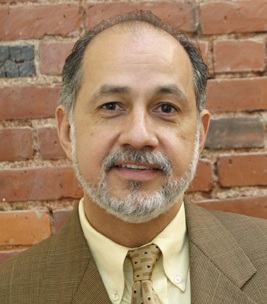
Author
Dr. Roberto Miranda
Summary: Prayer should saturate our entire lives and become our instinctive response to affliction, joy, sickness, temptation, and sin. We can bring specific, persistent, and passionate requests before God, trusting that He hears and answers; but prayer is not merely a transaction for receiving something. Its continual practice transforms our minds, emotions, and perspective; makes us sensitive to God’s voice, repentance, holiness, and the needs of others; and prepares us to serve effectively.
Therefore, we should pray proactively for our health, family, marriage, work, finances, congregation, and ministry, not only when a crisis arises. Although we may sometimes pray without feeling like it or without knowing what to ask for, that discipline strengthens our spirit and forms within us a supernatural mindset that depends on God’s power, not merely on human resources. As a church, we must persevere in crying out, intercession, and worship without turning them into rituals, seeking a genuine visitation of the Holy Spirit. Constant prayer builds a spiritual foundation that enables us to stand firm, flow with God, and manifest His power in a world in need.
Let us turn to the Word of the Lord in James chapter 5, verses 13 through 18, and I am going to share a meditation that I shared last Sunday with the English ministry in the morning. I was going to share it that same day in the afternoon with the Spanish ministry, but I felt the Lord leading me in another direction, and you will remember that we ended up touching on another subject also related to this idea of prayer and spirituality, but in a different way. Still, I want everyone to receive the same teaching.
This morning I preached the second part of that sermon on the subject I am going to discuss with you now, and I am also going to try to bring you up to date on the second part of that sermon about prayer. Remember that last week, last Sunday, we concluded a week of fasting, crying out, and prayer. And by the way, this past Sunday we had a beautiful prayer vigil that was glorious. Many different churches from the community came, there was a very, very beautiful sense of the Lord’s presence, and I am so glad to have been part of that event. I congratulate the brothers and sisters who initiated it and who were spearheading this glorious effort.
I left at three, dragging myself to the car because I had to do something else yesterday afternoon, but some people stayed, and at five they finally brought the party to an end. And I believe we felt the Lord’s blessing, amen? We felt that blessing from God, and let me tell you, those nutrients are going to remain there. I am glad to have seen so many of you there receiving that anointing we so desperately need from the Lord. I congratulate you, and we are going to continue crying out to the Lord, amen? We are going to keep knocking on heaven’s door until we see more and more of His glory descend upon our lives. Prayer is not wasted time at all; it is an investment we make in the mindset of our spiritual life.
And I want to speak on a subject entitled, “Prayer Changes Me.” Prayer changes me, and I am going to explain the reason for that title. James 5, verses 13 through 18, says the following: “Is anyone among you afflicted?” How many afflicted people are here? Do not raise your hand, but just answer there in your heart. We may come with problems and difficulties—that is what it means. To be afflicted is to be sad, needy, with a need that causes affliction, heaviness, pain, and anguish, and many of us come that way. Glory to God that instead of remaining there beaten down in our homes, we come to seek God.
“If anyone is afflicted, let him pray.” I love that expression, “let him pray”—not merely to pray, but to engage in prayer. It is more active: let him pray. “Is anyone cheerful?” Are there cheerful people here? Glory to God! All the bills are paid, the house payments are up to date, the wife is cooking good meals, the children are behaving well, or whatever it may be. Glory to God! It says, “If anyone is cheerful, let him sing praises; let him praise the Lord.” God has answers for every situation; there is an answer for every state of mind, every situation we may be going through.
“Is anyone among you sick? Let him call for the elder of the church, and let them pray over him, anointing him with oil in the name of the Lord.” It is a promise from the Lord, and sometimes it does not have to be one of the elders who are here; it can simply be a person who has spiritual authority. That is ultimately what a spiritual elder is. We can seek one another out and pray. Find someone; find a companion.
Are you struggling with a temptation in your life? Are you under some kind of spiritual bondage? Find someone who can help you, ask that person to pray for you, and share the burden with someone. “Anointing him with oil in the name of the Lord, and the prayer of faith will save the sick, and the Lord will raise him up; and if he has committed sins, he will be forgiven.” What power prayer has! What tremendous power!
“Confess your trespasses to one another, and pray that you may be healed. The effective prayer of a righteous person avails much.” And it gives the example of Elijah, who was subject to passions like ours. Elijah was not a superman. We see him in the pages of the Old Testament. On one occasion he became depressed, lost his nerve, went into the wilderness to isolate himself, and asked the Lord to take his life because he was already tired. The Lord ministered to him, restored him, and sent him back into spiritual service.
He was a man subject to passions like ours, “and he prayed fervently for something as great as this: that it would not rain; and it did not rain on the earth for three years and six months. And he prayed again, and the heaven gave rain, and the earth produced its fruit.”
“Brother: if anyone among you wanders from the truth and someone turns him back, let him know that whoever turns a sinner back from the error of his way will save a soul from death and cover a multitude of sins.” I believe that this also refers to intercession. We can play a very important role by interceding for one another and asking the Lord to bring someone out of a deeply sinful practice or a sinful situation of some kind, and the Lord can do that work as well.
What I also like about this passage is that it shows us a congregational life and a human life saturated with the practice of prayer, in which we can address any situation through prayer: joy, affliction, sickness, sin. What does the Christian do? He prays. For us, prayer should be an instinct; it should be a reflex, something we do without thinking much about it in any situation in which we find ourselves. It should be something that saturates the whole of our life.
And as we come to the conclusion of this time of fasting and prayer, I want our congregation to continue reflecting, right? You might say, “Well, we have finished that, and now we go back to business as usual; now we carry on with our ordinary lives.” No. We have to continue crying out to the Lord. I have seen the blessing this week of remaining in prayer and, as a church, being more deeply committed to fasting and prayer in our lives.
Prayer is an extremely complex subject. We could spend weeks discussing and exploring it, but there is one subject that I want us to explore on this occasion, and that is how prayer changes us and how the practice of prayer leads to a more effective life in the spiritual realm.
Without a doubt, the most obvious and direct reason to pray is that the Lord commands us to pray. On many occasions we see Jesus Christ’s directive: let us pray. The apostle Paul tells us to pray without ceasing. The Bible speaks of praying at all times. The Lord told the disciples, “Watch and pray, lest you enter into temptation.” And the Bible commands us to pray—as we see here in this passage—to saturate every dimension of our lives with the practice of prayer.
But unless we understand the different reasons for praying, unless we have a biblical theology of prayer, prayer can often become something sterile, an exercise we do because the pastor says it has to be done that way. We reluctantly go to a prayer vigil, or we kneel there for two minutes, but we do not really feel an emotional and spiritual connection with the act of prayer. We simply pray because the Bible says we have to, and I believe that leads to sterility and distaste for the act of prayer.
But one of the great, important reasons why we should pray is what I have been telling you: prayer is systemically of great benefit in our lives. Yes, the Lord hears the specific prayers we offer Him, but there is also a kind of secondary benefit, an indirect, systemic benefit that penetrates every area of our being, and that is what I want to direct our attention to.
One of the most important reasons for prayer is that it brings about changes in me. It changes my spiritual perspective and makes me a much more powerful instrument through which the Spirit of God can manifest Himself in my life. It is like an athlete who works out and trains, doing all kinds of agility and endurance exercises to produce an effect on his muscles, his body, and his state of mind that enables him to withstand the rigors of his athletic life.
A soldier enters boot camp, which is a soldier’s initial period of training. What are they trying to do there? They put that recruit through a series of exercises, situations, and pressures. They yell at him, get him up at five in the morning, and many times literally abuse him emotionally in order to give him that mettle, that soldier’s mindset. The exercises are simply means of producing that mettle and that bearing of a soldier. I believe that prayer is the exercise that shapes our personality, our mind, and our perspective and gives us the outlook of a true Christian as we practice it continually.
One might think that the only reason to pray is so that God will answer our requests—so that if I have a need, the Lord will provide the answer to that need—as though it were a transaction: “Lord, I pray to You, I ask You for something, I present what I need to You, and You give me what I need.” And certainly, in Scripture we have occasions when people did exactly that, and Scripture actually commends it. There is nothing wrong with coming before God with needs like the ones we brought to Him here and asking the Lord to intervene—to bless our finances, bring us out of a financial or material problem, a family or material problem, a marital problem, a work problem, or whatever it may be. We can come to the Lord so that He may give us something specific.
King Hezekiah prayed specifically for the Lord to heal him of a serious illness, as we saw, and the Lord answered him immediately. The very prophet Isaiah who came and told him that he would inevitably die had to turn around in response to that desperate prayer offered by King Hezekiah and tell him, “You know what? The Lord has heard your prayer. He is giving you fifteen more years of life, and He promises peace for your nation as long as you are alive.” Glory to God for that answer. Hezekiah asked Him for something specific, and it almost changed—this is scandalous to say, but we could almost say that it changed God’s heart. I do not necessarily believe that God merely wanted to test him. One might say that in an attempt to defend God’s sovereignty and total dominion, but what this tells us is that Hezekiah prayed and God’s decree was changed in response to his prayer. So there is no problem with praying for specific things.
Matthew 7, verses 7 through 8, says, “Ask, and it will be given to you; seek, and you will find; knock, and it will be opened to you. For everyone who asks receives, and to the one who knocks it will be opened.” So I do not want to be more Catholic than the Pope by saying, “No, do not ask the Lord for anything.” Ask! Ask desperately, ask persistently, ask specifically, ask passionately, ask boldly—and that is all right. God likes us to ask, addressing ourselves to His Heart.
But having said that, there are deeper reasons to pray, one of which is that prayer has a direct impact on us—on our minds, our emotions, and our perspective. Often we are praying for the Lord to give us something and God holds back His answer, and over time we discover that we truly do not need it, do not want it, and that it is not for our good. Then we change our prayer and ask the Lord for other things. Prayer has totally unexpected effects on our lives. Prayer has a powerful effect on our personal perspective; it changes our inner posture, reconfigures our minds, and allows us to acquire an eternal Kingdom perspective so that we become more receptive to the messages and emanations that come from the Holy Spirit, preparing us to be truly useful to the Lord in our lives and in our ministry.
As I tell you, many times I pray not because I have a special request. In fact, there are times, brothers and sisters, when I really have nothing to ask the Lord for. That is unusual, but I tell Him, “Lord, You have blessed me in so many ways, and different areas of our lives are in order.” I do not have anything specific to ask the Lord for, but I pray because I know it is good and that it is for my benefit, and that when I connect with God, something happens in my spirit.
It is like a diabetic getting hooked up to a machine that purifies his blood. Are you diabetic? Dialysis—but what is the disease? It is a kidney disease. Well, I am not going to get too deeply into that; that is why I am not a doctor. But the point is, you know what? There are cases in which a person receives a transfusion or is hooked up to a machine, and that machine has an effect on his body. The same thing often happens with us: through that spiritual connection, it is as though the Lord gives us a mental transfusion. Sometimes we enter the prayer room desperate and anguished, thinking there is no answer, and the Lord changes our perspective, and we come out of there strengthened, blessed, with hope in our hearts.
Next Sunday we may talk about a case in which a prayer changed a perspective, but I am referring to that aspect of prayer: prayer helps us see things from an eternal perspective. Yes, it blesses us with answers to specific prayers, but something takes place in our spirit through the systematic practice of prayer, and that is why I am referring to that aspect—to the systematic practice of prayer—not so much to the particular effect of a specific prayer, but to what happens to the general condition of our life and our mind as we immerse everything we do, every aspect of our life—our work, marriage, finances, physical health, social relationships, spiritual life, and our formation—in an environment, in an atmosphere of prayer.
When our entire life is bathed in the practice of prayer, prayer begins to have a kind of cumulative effect. Our repeated exercise of praying continually is reaching the Throne of God, and His blessings are continually reaching us; God is always answering an earlier prayer and blessing us in that way. That is what I mean.
There are many people who pray only when the water is already up to their necks, when there is nothing else that can be done. I like to think that what we should do instead is pray proactively, pray for every area of our life. For example, we should not pray only when we are sick, but pray preventively for our body’s healing and health; pray for every aspect. I have told you before—and I believe it is very important—that we should pray for our body and its different components, visualize them, and lift them up before the Lord: pray for our hormonal system, our muscles, our tendons, our bones, our circulatory system, our heart, our veins.
I even got to the point of reading a little anatomy so I would know what things to pray for, because my body has so many parts that sometimes you do not even know everything you have—pray for it. And someone might say, “Well, the Lord knows, and we only need to pray for health for our body.” No. We must saturate our bodies with preventive prayer; we must call down God’s blessing upon us, and trust and believe: “No, the Lord is powerful enough to bless me and strengthen my body.”
We must also pray preventively for our children, pray for their future spouses, for their children, for their finances, for their studies. We have to pray for all those things, pray and wage war in advance, and get on our knees before the Lord so that He may bless our marriages and everything pertaining to the ministry.
I have to pray continually for my Congregation, that the Lord may bless its future and its present, and even bless its past as well—the memories of our Congregation’s past—and heal any wounds that may be there. Our finances—we must always be praying.
And what happens? A sediment, a foundation of blessing, then begins to build up in our life. It is like medicine, you know? There are medications that you take, and you do not take them to obtain an immediate response, but in order to build yourself up over time. Why do we take vitamin C, for example? When winter comes, we take vitamin C for the colds that may come, but it is not as though you are going to take a vitamin C pill now and immediately be protected from a cold. You have to develop a foundation.
There are many medicines, vitamins, and other kinds of medication about which the doctor will tell you, “Look, you are going to have to take this for four weeks before it takes effect.” Why? Because the body needs to build up that medicinal element, and then, once the body has that substrate of medicine, it begins to send its benefit to the affected part. So what do you have to do? Keep taking that medicine so you can experience those long-term benefits, rather than waiting until you have an illness, taking a pill, and having the problem solved all at once. No, it has to be done systematically.
Brothers and sisters, I encourage you to live lives of prayer, to exercise yourselves. Prayer is an exercise and a discipline that one sometimes practices reluctantly. There are times when, frankly, I do not want to pray, and it is not that I am unspiritual; it happens to all of us, if you are honest. There are moments when praying is like drinking a glass of lukewarm water: you do not want to do it, but you do it because you know it is good, that it is necessary. Then you plug into the dimension of the spirit, and there the Lord begins to minister to your life, speaks to you, counsels you, strengthens you spiritually, and you receive things from the Lord. You come out of there strengthened simply because you prayed.
Apart from any specific benefit you may wish to receive, you are formed into a person with a spiritual perspective. I believe that our Christian mindset is often oriented toward crisis, and when life’s crises come, that is sometimes the worst time to pray because you do not want to pray. And unless you have already been formed in prayer, the temptation will often be to run away from the situation, stop praying, become irritated with God, and get upset with God over what you are going through, instead of simply doing what a soldier does: standing firm until the evil day has passed, so that at the end it may find us still standing, on our feet, as Ephesians chapter 6 says.
Prayer has to be something continual that fills every aspect of our life. That is why, this past week, we revisited the foundations of prayer: because at a time like this, when a Church is talking about prayer and we intensify the process of prayer, and we come to cry out to the Lord and seek the Lord’s Face, we are giving ourselves a subliminal message. We are telling ourselves: “This is a Church that depends on the Lord, a Church that depends on the power of the Spirit. It is a Church that trusts that if we bring our needs to the Lord, the Lord will answer—a Church that knows that it is not by sword or by army, as the Word says, but by the mighty Spirit of God.” We send a message to ourselves and acquire what I call a supernatural mindset.
What is a supernatural mindset? It is when you look at the experiences of your life through supernatural, spiritual lenses, and when you seek solutions that come from the spirit and not solely from the material realm; when you know that the prosperity of your life depends on God and not on your own efforts or your own cleverness.
A supernatural mindset allows a Church to spend time in worship, for example, because we know that worship is an eminently spiritual process, and that when we are before the Presence of the Lord and are worshiping Him, things also happen within us along the way: God speaks to us; God sets people free. How many times has God spoken to us in a moment of prayer and crying out? How many times have we arrived at Church bound and afflicted, and something happened? We do not know how, but through worship we were set free from our worry, and we left with hope that God has a solution. The same thing happens with prayer.
When you spend time there in prayer—in fact, there are times when you do not even know how you are going to pray. And that is precisely one of the benefits of praying in tongues, because prayer in tongues is simply like prayer in its raw state; it is naked prayer. It is prayer that you bring before the Lord, and it is simply your own biology crying out to the Lord. You do not know how, but your spirit is crying out through you, and in that act of connecting with God through prayer in tongues, something breaks, and you plug into the things of the Spirit. That is what prayer is: plugging ourselves in, connecting ourselves to the life that comes from God. We need prayer to be a continual platform in our life, one that puts us in contact with God.
Why did Jesus pray? Why did the Son of God spend entire nights in prayer? I believe that, in part, it was for that reason: because He was simply there delighting in the Presence of His heavenly Father—that perfect communion that had been broken by the incarnation. Now Jesus was a man; He was among impure men and impure women, and the Lord needed, as it were, to separate Himself for a while and simply seek the Presence of His Father and commune with Him.
On many occasions, He did that in order to make the great decisions He had to make in His Ministry. One of the passages shows us that the Lord spent an entire night in prayer, and the next day He went and chose His twelve disciples; there is a connection between those two moments. By connecting with the Father simply through the act of prayer, He was able to receive nourishment from the heavenly Father and then make a firm decision about each of those individuals who would accompany Him in His spiritual journey. I believe that congregations today need to exercise themselves in that way.
And sometimes, as we have said—I shared it with you last Sunday—there are times when we have to engage in exercises of spiritual thinking in which we decide to plunge into the abyss, experiment with the techniques and technologies of the Holy Spirit, and dare to flow in the Spirit and do unexpected things. Now, that requires precisely a Congregation with a spiritual mindset, because if there are people in the Church who are not mature in the faith and they see that the program suddenly changed, and perhaps there was no sermon and everything was devoted to praise, they may say, “Oh! There was no sermon today. That is a Church that does not love the Word of God.” But no. What happened was that the Word of the Lord was embodied through worship and ministry.
Brothers and sisters, much more is often accomplished in a time of spiritual outpouring than through ten sermons—and look who is telling you that. It requires people who understand what is happening and who are there worshiping, praising the Lord, and engaging in spiritual warfare on behalf of those who are praying here at the front; people who know that when we come to Church, we do not come to be entertained, and we do not come to be given something. We come to exercise ourselves in the Lord.
And I hope the day comes when we have such spiritual courage that we are not afraid of what is going to happen. Speaking for myself, I will tell you that many times my concern as a Pastor is the order of the Church: that the purposes we have be carried out, that the tithes and offerings be collected, that the announcements be made, that the babies be presented—you know, that things get done. And that is natural. But you know what? Many times it is a burnt offering to the Lord when we simply cast off our restraints and say, “We are going to be the people of God. We are going to make a spiritual mess,” metaphorically speaking. “We are going to let our hair down and simply flow in the spirit, and let God do whatever He wants through us and in our life.”
And I ask the Lord for that spiritual and ministerial courage, and pray that the Lord will give me more of that courage, brother, because I believe that this is how God manifests Himself in a Church, you know? It happens when we stop measuring time, stop giving God little spoonfuls of time, and simply let God be God in our life.
And you know what? You do not arrive at that perspective except by practicing prayer. I have never seen anyone who is truly effective in the Kingdom of heaven who does not have a life nourished by prayer.
Brothers and sisters, as never before, the world needs churches and congregations with a supernatural mindset nourished by a life of crying out, prayer, and the use of the gifts of the Spirit. Frankly, I do not see how this modern culture of the twenty-first century can be reached except through a supernatural mindset.
I wonder, how will those nations of the Middle East be reached—Pakistan itself, India itself? I will say this respectfully: the enemy has erected a metal helmet over the minds of those nations and has very cleverly joined culture and family to religion, so that for you to change religions is a total death: you have lost your identity, you have lost your past, you have lost your relatives. The sacrifice is immediate, and you are asking a person who does not even know the full benefits of the Gospel to swallow a deadly pill, lose their identity completely, and endanger their own life and the life of their family by accepting Jesus Christ. It is terrible, and that is what happens in many Muslim countries, in many societies where parents disown their children and completely erase their existence for accepting Jesus Christ.
Now, I believe that when there is supernatural power, when there is a Church filled with the Holy Spirit, where there are miracles and interventions of the Spirit, then God can do something to break the enemy’s inertia and resistance. And that is what happened in Jerusalem in the first century. That Jewish culture was not going to be conquered by well-developed teachings from a merely intellectual point of view. That is why Paul said in Corinthians, in the passage we looked at last Sunday: “When I came to you, I did not come with excellence of speech or human wisdom, but I resolved to teach nothing except Christ and Christ crucified, so that your spirituality would not be founded on the words of men but on the power of the Holy Spirit.” He removed all the human scaffolding and left only the power of Jesus Christ and His cross laid bare, so that he could teach these people how to be effective Christians.
I believe that this twenty-first-century culture is worse than any other culture. Here in the United States we talk about Muslim countries, but in this country there are tens of millions of people who are captive to intellectualism, secularism, an anti-Christian mindset, and a totally secular way of seeing the world with no absolute foundations. They are completely confused, sometimes highly developed, but morally confused; and spiritually they are worse than babies—they are bound. Read many of this nation’s intellectual magazines; read The New York Times. I read it practically every day, and I read it reluctantly because of the garbage I read there from people who are highly developed intellectually but have scarcely two brain cells’ worth of spiritual understanding. They have no understanding; they have an incredibly well-developed intellectual arsenal, but they know nothing of the things of the Spirit.
That is why I ask the Lord: Pour out Your Holy Spirit; give us a second revival like the one experienced at Pentecost, a fresh visitation of Your Power, because I believe that the miracle in our time will come through signs and wonders, through a powerful ministry of the Holy Spirit.
I have nothing against the intellect, brothers and sisters. The intellect is beautiful, and I celebrate what reason can provide. But I tell you, brothers and sisters, that in the spiritual world the rules are very different, and fire is required, the power of the Holy Spirit is required, a life that knows God is real and that He answers the prayers of His people is required. And I will not be content in my spiritual life until I see those miracles, those signs, and those wonders manifested among His people.
There is a great deal of boasting among the evangelical people out there, a great deal of boasting about many things; but frankly, brothers and sisters, very often I do not see the power and effectiveness that are supposed to exist among the people of God. I say this because—do you know what I am saying?—I know what the true power of God is, and it exists, and it is real, and we must ask the Lord to manifest it. We cannot settle for mere displays that only resemble power; we must cry out to the Lord and ask Him to visit His people with the true Power of the Holy Spirit.
And we must generate within ourselves the spiritual strength, the capacity to draw that power of God; and many times the power of God does not come down until the people have cried out, laid themselves bare before the Lord, and asked again and again. It does not happen until a people have reached that level of steam, and many times it takes a long time for that to occur; we must keep knocking on the Lord’s door. I have spent years knocking on the Lord’s door and saying, “Father, visit us with this power,” and prayer, for me, is essential in that regard.
We must pray out of obedience; we must pray because we know it is important; we must pray for the Lord to change us, to make us more sensitive to His Voice, more sensitive to our sin, more sensitive to the call to holiness and integrity; for the Lord to bring repentance to our hearts; for the Lord to strip away the layers of secularism in us, our attachment to appearances, our attachment to the vanities of the world, and make us people who simply long desperately for the Lord. And for me, the practice of prayer is one of those disciplines that we practice and that, little by little, cleanses us, strips away those layers of secularism in our personal lives, and brings about a different kind of attitude.
I ask the Lord: Lord, help us to incorporate the element of prayer and intercession more and more into our services, and not turn it into just another ritual, because many times it can become just another ritual. We are here, we pass the microphone to three or four people, and we think that by doing that we have fulfilled our duty. No, it is something different. It has to be something through which the Spirit brings something different into our lives every day. Father, help us; Lord, help us.
Let me pray right now: Father, in the Name of Jesus, regarding this Word, Lord, we cry out to You; we cry out for revival, Lord; we cry out for an explosion of Your Power in this place, Father. We are fully aware that we need more than what we already have; it is not enough. We bring our limitations as a Church before You, Father.
Send a spirit of crying out; send a spirit of holiness and surrender, Lord. Do something different among Your people, Father; visit us, Lord. And we ask Your forgiveness because many times we need technological aids and human appeal when the only thing we need is for the glory of God to descend all around us, for Your Holy Spirit to descend and fill us.
Father, we hunger for You; we have an appetite and thirst for You. Visit us, Father; impregnate us with Your Power, Father, and make us a people who cry out to You, Lord, and seek Your Face above all things. Change us, Father; shape our minds, shape our mindset, and help us to be a Church that commands the respect of unbelievers, solely for the glory of Your Name. Make us a Church that is a prophetic and apostolic presence in this city, Lord. Make us a desperate people who cry out to You, who continually seek Your Face in prayer. Teach us to be those soldiers of Yours, those military personnel trained by You. Give us a spirit of prayer, Father; help us each day to seek more and more of Your Power and Your Grace, Lord. Create spiritual understanding in us, Lord, so that we may see life and the world through the eyes of the Spirit, Father, in order to be effective people for the glory of Your Name.
We cry out to You, Father. Change us, and change our patterns of prayer and crying out, Father. We need You, Lord; we need You, Father. We want to see Your Glory, Lord. Send Your Power, in the Name of Jesus, in the Name of Jesus, amen and amen.