Prayer Changes Destinies
Author
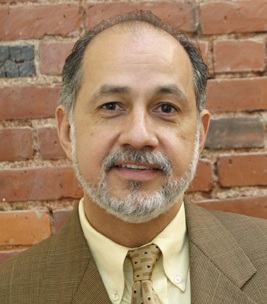
Dr. Roberto Miranda
Summary: Prayer changes destinies, renews our minds, and connects us with God’s grace and energy. It is not merely a resource for times of crisis or a list of needs; it is a continual, preventive, and transformative practice that strengthens the spirit, cultivates gifts, and sustains our lives. Fasting accompanies this cry as a spiritual weapon; it can be practiced gradually, expressing through the body that we prefer God’s blessing to immediate satisfaction.
Hezekiah shows that no situation is too final. When told that he would die, he withdrew, cried out passionately, and laid before God a life of faithfulness. God heard him, added fifteen years to his life, and promised to protect his city. Therefore, we should find a place and time to pray without distractions, unite prayer with holiness, service, and knowledge of the Word, and reverently present God’s promises before him. Let us pray about both small and great matters, in times of well-being as well as in times of need. As a congregation, let us return to our foundations, break free from routine, and earnestly seek, through fasting and prayer, a renewed visitation of the Holy Spirit.
I want to impress upon your spirit here the matter of prayer and the power of prayer to change destinies, the power of prayer to impact the heart of God and evoke, to stir up from his heart a word in response to our needs, to radically change our situation. Prayer changes destinies.
Through an event, an episode in the life of King Hezekiah, I want to place something in your heart; I want to encourage all of us to live a life of prayer, a life of crying out. And we want to frame what we are doing this week with an image that will be engraved upon our hearts concerning why we should pray.
Congregations need to set aside times like these, because activities like this, times like these, underscore our dependence upon God. The Bible continually encourages us to pray.
In 1 Thessalonians, chapter 5, verses 16 through 18, the apostle Paul tells us to pray without ceasing, to pray continually, because praying is like breathing; praying is an essential function of the human spirit of a believer. Prayer is the atmosphere that allows the miracles of the Christian life to take place.
The Lord Jesus Christ says in Luke 21:36 that we should always be watchful and pray. When he was ready to go to the cross and had been arrested, he was in the Garden of Gethsemane, and he told his disciples, “Pray and watch so that you do not enter into temptation.” Prayer, spiritual vigilance, is an incredible preventive measure; it not only resolves problems when we have them, but also strengthens our spirit and prepares us. It is like exercise: exercise is not only for when you are already in crisis and your muscles are already worn out from lack of exercise. No, you exercise while you are healthy, while you have strength, in order to maintain your health and keep your muscles strong and agile. It is preventive, and it is also remedial; it is both. Prayer is like that.
Fasting is the same. We do not practice it only when the devil is trying to knock down the door of our house to get in and we are in a crisis; we also practice it to safeguard the foundations of our homes and our spiritual life. If we look throughout all of Scripture, we see images and accounts of men and women who, when faced with difficult situations, prayed and cried out to the Lord, and the Lord responded in absolutely astounding ways.
Prayer is the source of our vitality. Without the continual practice of prayer, there is no energy, no effectiveness in the realm of the spirit, no authority. The gifts of the Spirit are cultivated through prayer. Prayer is the means, the platform from which we launch out to carry out the operations and transactions of the life of the spirit.
I tell you, my brothers and sisters, that for me prayer is essential to maintaining my sanity. My wife can tell you that without prayer I turn into a monster who has to be put in an insane asylum or something like that, or placed in a straitjacket. Prayer keeps me sane; prayer is what renews my mind and my perspective, what reminds me that there is a spiritual world around me and that eternity surrounds me. Prayer is what reminds me that God is with me. Prayer is what reminds me that I am a mere human being and that without the grace of God I cannot take a single step forward. Prayer is what connects me with the realm of the spirit and with divine energy.
Sometimes we reduce prayer to a mere list of needs, a shopping list, where we tell the Lord, “I want this, I want that,” but prayer is much more than that. Prayer changes us first of all. Prayer strengthens us. Prayer renews our perspective. It is like taking your cell phone after a great deal of use—which is what I am going to have to do with my iPad. I have used it today and have been using it since I got up—and plugging it in, and a transaction takes place. The iPad is not conscious, but the technology that powers it knows that when you plug it in, something mathematical and electronic takes place; it receives nourishment directly, blindly, unconsciously, and that is what happens with prayer.
When you invest time in prayer, divine energy is immediately transmitted into your life, and you receive strength, you receive vigor, and your perspective is renewed. When you spend time with the Lord and, as you verbalize your needs, stretch out on the divine psychiatrist’s couch, confide in him, and unload your needs and your confessions, something therapeutic takes place purely through the act of expressing yourself before God. It has nothing to do with what you may or may not receive. When you verbalize before the Lord and submit your life and your spirit to the presence of God, there is a direct impact that takes place immediately.
Let us learn to enjoy prayer as a pleasure—simply like a glass of wine that you drink to receive encouragement, rest, and relaxation. Do it spiritually. The Bible likewise says that we should not become drunk with wine, but should be filled with the Spirit. Prayer is the instrument that makes that possible.
We see that the great men and women of God prayed in the Bible. We have Elijah’s prayer when he cried out to the Lord for fire to come down from above. We have Nehemiah’s prayer, which I greatly admire. When Nehemiah realized that the walls of Jerusalem had been torn down and lay in ruins, Nehemiah took the situation of his people to heart and cried out to the Lord. There is that beautiful prayer of confession by Nehemiah. And that changed and prepared the situation so that when Nehemiah appeared the next day—as he was the king’s cupbearer—the king and his own wife asked him, “What is wrong with you?” They opened the door for him to submit his request to leave and go with aid and resources from the kingdom to restore the walls of Jerusalem.
We have the wonderful prayer of Esther. When she wanted to appear before the king but did not have the authority to do so, because it required a miracle, she had her maidservants pray and fast for several days. She said, “Tell my maidservants to pray and fast.” And when she entered the king’s chamber without authorization, at the risk of death, the king was ready to extend his scepter to her and say, “I will give you up to half of the kingdom—whatever you want.”
We have Paul’s prayer when he was about to be shipwrecked toward the end of the book of Acts. Paul told the entire crew to pray and fast, and Paul remained in fasting and prayer, and the Lord gave him his entire crew; the man who was a prisoner ended up becoming the savior of those who were guarding him.
And we have the prayer of Peter himself when he was... Peter was not dancing in a nightclub when he had that vision of the great sheet coming down, which changed the history of Christianity and Judaism, because there, in prayer and fasting, Peter received a fundamental revelation about the destiny of the church: that it was not only for the Jews, but for all the Gentiles and for all the people of God. And because of that, Peter had the strength to go and meet Cornelius and his relatives.
And Cornelius, for his part, was also praying and fasting when the angel appeared to him and said, “Get ready; send for so-and-so, because he has a word for you as well.”
And what shall we say about Jesus? He spent entire nights praying. The Bible tells us that when the disciples were on the raging sea, thinking that they were going to perish in the waters, rowing all night and unable to escape the stormy whirlpool they were in, the Lord was up in a high place, watching them from where he was and praying for them.
And what about the Lord, who prayed so intensely in Gethsemane that the Lord might strengthen him for the great trial awaiting him on the cross, and who also prayed while he was on the cross, reciting psalms, the Bible says?
We see, then, that prayer is everywhere. One of my favorites, Jehoshaphat, prayed when that great army was coming to destroy Israel, and he offered that wonderful prayer: “Lord, we do not know what to do, and we turn our eyes toward you.” And the voice of the prophet was heard, giving them very clear instructions; and while the people prayed and praised the Lord, God turned the enemy’s swords against one another, and a great victory took place for the Kingdom of God.
And we could spend hours and hours pointing out all the moments when prayer—and fasting—made the great difference among the people of God. The Lord Jesus Christ, as we were saying a little while ago, told his disciples that spirit did not come out because evidently the idea was... the implication was: you do not pray and fast enough. Do you know that there are bondages in your life? Do you know that there are struggles in our lives that will respond only to crying out and fasting?
Fasting is a weapon of war. Fasting is the nuclear arsenal. Fasting is the Marines among the resources of the Kingdom of God. Fasting is what you bring out when the giant is ready to cut off your head, and you shoot that stone directly into his forehead. Fasting is something that violates every principle of logic: by weakening yourself, you become strong; by abstaining from enjoyment, you receive gifts and blessings from God; through emptiness, you create things that are important for life.
And it is one of the most important paradoxes of the Christian life: when we become weak, we become strong; when we crucify ourselves, we are exalted, just as Jesus himself was. Fasting does not come naturally to any of us. I have to fight for every hour of fasting. What happens, however, is that the more you fast, the easier it becomes.
By the way, let me say to those who want to take some time this week to fast and pray that you can fast partially, as it says in that pamphlet we have. You do not have to fast for the entire week or completely abstain from food. Those who do not have much experience with fasting can begin one morning and continue until noon or until five in the afternoon, drinking juices or having something light, and you dedicate that time, that abstinence, to the Lord.
As you practice fasting, remember that you are praying with your body. With every beat of your heart, every time your heart pumps blood and that blood flows through your veins while you are abstaining from food, your body itself is crying out. The abstinence itself, which is a continual state while you fast, is saying to the Lord, “Father, I prefer your blessing and your pleasure over food itself.” And you are praying and crying out to the Lord.
One can pray in any way. You can pray—you can stop eating chocolate for a week. I know that for many of you that is really the ultimate sacrifice. I can ask many of you not to eat for ten days, but giving up chocolate for a week or even one day is tremendously dangerous. But we can fast from desserts, we can fast from many different things, we can fast from television. Now, do not come to me saying, “Oh, well, I am going to fast from television.” No, fast from food and television as well—from both.
But there are many creative ways to fast. I suggest that you enter into a life of fasting and prayer. Fasting sets you free, lightens the mind, and lightens the spirit, and all of those things are important for growth. One cannot be truly vital and effective in the Christian life without praying, without crying out to the Lord, without setting aside time for a devotional life.
I believe I have told you this in the past, and later I am going to touch briefly on Hezekiah, but many years ago I was in Maine on vacation with our family, and I had a dream. It was a very palpable, very real dream in which the Lord showed me a Volkswagen from the 1960s, called a Love Wagen or something like that. The point is that the van had four wheels, but all four wheels were bicycle wheels instead of car wheels.
And the Lord told me... In the dream, I received that word from the Lord. I cannot identify how it happened, but I clearly understood him to say, “Roberto, you carry a great burden upon your life as a pastor and upon your ministry, but the foundations are weak.” And those bicycle wheels were like a sign of the state of spiritual weakness I was in. And in the dream, I had been given the meaning of one or two of the wheels, but the Lord spoke to me about how one of those wheels had to be prayer, another fasting, another holiness, and I do not remember the fourth one right now.
But in other words, when a person—as a husband, a mother, the director of a department, a homemaker, a worker, someone who leads a ministry in the church, someone responsible for children or other things, or simply within the family—often has burdens or struggles upon them, these are loads that our physical and spiritual vehicle brings into our lives. And if the foundations of our spiritual life are not solid, we are going to suffer; there will be a collapse. What strengthens us, gives us wisdom, gives us spiritual discernment, and allows us to receive revelation from the Lord is that prayer, that crying out to God.
Prayer, brothers and sisters, must be continual in our lives. I am going to tell you something interesting. I will not reveal much, but last night I had a burden, and I felt led by the Lord to pray that the Lord would do something in this service, although it seemed very unlikely to happen. I said, “Lord, since I am saying that you do unusual things in response to prayer, enable me to testify that you do so by giving me an illustration.” The Lord gave it to me. I am not going to give you many details because I do not want to reveal much, but something that seemed inevitable—this is why I ask the questions—happened, at least in this service, which was what concerned me most.
But it is something minor in a sense, yet God changed it. I asked Him, “Lord, do that as a sign of what I am preaching—that prayer changes things that seem irreversible.” I did not feel comfortable with something… it is nothing extraordinary, but brothers and sisters, prayer… I pray to the Lord about everything, about every detail, and I tell you that I have learned that prayer breaks down walls and destroys the devil’s bonds. Get into the habit of praying about small things and great things.
Continually breathe prayer into your life. Bathe your marriage in prayer; bathe your health in prayer… This morning I was speaking to a sister, a lady who is here, my dear sister Gloria, who has been with us for 30 years, Sister Gloria Nabas. Gloria is a woman who does not look her age; I tell her that she is going to bury us all, in the best sense of the expression. Gloria was telling me how the Lord answered a prayer of hers concerning her health and her need, and I told her, “That is right, sister: pray for every muscle in your body; pray for your heart, pray for your lungs, pray even for your intestines, pray for everything, pray for your veins, pray for your back, for your brain, for your spine. Bathe it in prayer, point it out before God, saturate your body part by part in the power of prayer and grace.”
We have to pray that way so that later illness does not… “Lord, deliver me from this; deliver me from that.” No. Pray while you are healthy so that you may have even better health. Pray for your finances when your finances are doing well so that the Lord may continue to bless them. Put vitamins into that soil. Do not wait to pray only… No, pray to keep the devil at bay, to drive him away, and to surround your land with strong walls in the Lord.
This story of Hezekiah is interesting because chapter 20 says that in those days— it says, “In those days Hezekiah became mortally ill…” We know the story. Hezekiah was a godly king, a man of God. He came from a terrible family, but when he ascended the throne, he served the Lord, and in chapters 18 and 19 of that book, Second Kings, God delivered him from a terrible invasion. A wicked Assyrian king wanted to destroy the Hebrew nation, and Hezekiah was a man of prayer and cried out to God. When he received a letter from Sennacherib, the king of Assyria, saying that he was coming to invade and that they should surrender because their God was not going to deliver them, what Hezekiah did at that moment was take that letter to the temple, throw it down before the Lord on the temple floor, and cry out to the Lord.
And the Word says that God gave him a great deliverance and that the angel of death killed 185,000 soldiers. Because the offense of this man Sennacherib was so great—cursing God, tempting the Lord, and speaking so emphatically against the God of Israel—the Lord gave Hezekiah a great victory. But then the trial came.
That is why it says that in those days the Lord allowed an illness to come into Hezekiah’s life, and Hezekiah found himself in a terrible trial in which God Himself sent a prophet to pronounce a sentence of death upon him. The prophet Isaiah went to Hezekiah as he lay on his deathbed and said to him, “Set your affairs in order, because you are going to die”; and so that there would be no doubt, “You will not live.” In other words, so that you are left with no doubt whatsoever about what is going to happen.
And then the Bible says that Hezekiah was filled with great terror and fear, turned his face toward the wall, and cried out to the Lord; he cried out in terrible anguish. And it is interesting—I believe God chose this passage to point out something very important: no matter how final a sentence upon your life may seem, no matter how irreversible a situation may appear, God can change your destiny. You can move the heart of God; you can do something different. And in this case the situation seemed impossible to resolve; it seemed that there was no answer. And yet the Lord gave a word.
Look at what Isaiah did. First, it says that Hezekiah turned his gaze toward the wall, and I see something very important here: when we are in a situation of great urgency and great need, we have to concentrate on one thing alone. We have to ask the Lord to intervene in our lives, and we have to isolate ourselves so that our prayer may be clear before the Lord.
One of the things I always do during my time of prayer is find a secluded place, somewhere I can rest my head against something, set my cell phone aside, and simply cry out to God. We need to set aside time. Find yourself a space; find yourself a place where you can pray freely to the Lord. Take your cell phone and, if you can, turn it off. You know, when I am praying, that is when the cell phone most insists on ringing, when I am most likely to remember the people I need to call or the things I need to do; and it truly is a spiritual battle. I believe that part of it is human, but part of it is also purely spiritual. The devil does not want you to pray. And you have to turn your face toward the wall, figuratively speaking. You have to ask the Lord directly. I seek out the early morning hours because that is the only time when I can pray in peace. Sacrifices have to be made.
Hezekiah turned his gaze toward the wall. Hezekiah cried bitterly to the Lord and spoke to the Lord out of all his bitterness. What would you do? What would I do if we received a sentence of death and illness directly from God? Because it is one thing when you do not know what is going to happen and you do not know whether it is from God, from the devil, or simply a biological condition—an illness. But what about when God Himself sends His prophet and tells you, “Set your affairs in order, because you will certainly die and will not live”?
I believe that this paradigm God presents to us through this text was left there to show us graphically and dramatically that no matter how irreversible a situation may seem, no matter how tightly the walls of a situation may be closed in around you, your prayer can move the heart of God; your prayer can change a destiny. And Hezekiah decided to cry out to the Lord, to negotiate with the Lord, and Hezekiah framed his prayer in this way. He said, “Lord, You know that I have served You faithfully.”
And this is very important, brothers and sisters: prayer is not disconnected from the other events and practices of our lives. We have to strengthen our prayer with a life of holiness, with a life of service to the Lord, as Pastor Jonathan was saying, with a life of surrender to the Lord and of seeking God. We must be committed to the Lord.
Why did Hezekiah feel that he had the right and the freedom to come before the throne of God? Because he had served the Lord; he had broken with his family and his family tradition; he had gone against the religious traditions of Israel at that time. He had decided to be a man of God, and when the time of trial came, Hezekiah possessed that entire store of spiritual authority and was able to say, “Lord, look: I have done everything possible to serve You and defend the interests of Your kingdom.”
And I believe this is important, brothers and sisters. It is not that our righteous deeds make us more deserving of the Lord’s grace, but I believe that when we are faithful to the Lord and honor Him through thick and thin, we can then come before God with authority, and the Lord breaks the enemy’s bonds and gives us the answer we need.
I believe that the church of Christ needs more men and women like Hezekiah, who will go against the tide, who will go against the cultural and spiritual currents, and who will do the Lord’s will, so that when the time of war comes, they may have the authority required to confront the enemy.
So we see here that Hezekiah reasons with God. Do not refrain from presenting your case to the Lord reverently, because God likes it when we bring our arguments to Him. Hezekiah brought his arguments to the Lord. When the Syrophoenician woman came before Jesus Christ, she said to Him, “Lord, my daughter is terribly afflicted by a demon.” The Lord countered with an argument to test her and said, “It is not right to give the children’s food to the little dogs.” And what did she do then? In a sense, she answered Him with an argument from the Lord’s own words and said, “Yes, Lord, that is true, but even the little dogs eat the crumbs that fall from a table.” And the Lord said, “Great is your faith, woman; let it be done according to your faith.” And her daughter was healed immediately, at that very moment.
And to me, that has always been an example showing that in prayer we have to take time to develop our arguments before the Lord. We must set aside time to fill our prayers with support from the Spirit.
That is why prayer must also be joined with the study of God’s Word, because through the Word you gain knowledge of the legal arguments with which you can come before the Father and say, “Lord, Your Word says this and that. You have promised in Your Word, Lord, that You will do this and do that. You have said, ‘Call to Me, and I will answer you and show you great and hidden things that you do not know.’ Therefore, Father, I come to ask You for wisdom. Your Word says, ‘If you lack wisdom, ask God, who gives abundantly and without reproach, and it will be given to you.’ Therefore, Father, I come before You seeking counsel for this marital situation, for this family situation, for this financial situation.”
“Lord, You say in Your Word, ‘Ask, and it will be given to you; seek, and you will find; knock, and it will be opened to you.’ Father, I am knocking at Your door right now. Respond to my cry and answer my prayer. Your Word says, Lord, that though our sins are red like scarlet, they will become white as wool. Therefore, I ask You to purify me and heal me, Lord, to forgive my sins and cleanse me. Create in me, O God, a clean heart, and renew a spirit within me.”
How wonderful it is when we pray and bring our arguments before the Lord. The Lord hears our cry. And how wonderful it is when, like Hezekiah, we cry out to God with passion in our hearts—when our prayers are not mediocre, lukewarm, and mentally absent, but have been stirred up and cultivated through repetition, through sleeplessness, through continually knocking on the Lord’s door until He answers our prayer. It is like a snowball that keeps growing and growing, becoming more concentrated, more refined, stronger, more powerful; and then, when we finally launch it, it is like a laser beam that goes straight to the heart of God and elicits a response from the Kingdom of God.
Hezekiah cried bitterly to the Lord. Brothers and sisters, let us cry out passionately to God; let us not be lukewarm Christians. That is why prayer is one of the things that helps us to be fervent in spirit. God loves what is hot. God does not like what is lukewarm. And sometimes, to heat things up, we have to cultivate them in the spirit until they become a reality in our lives.
And that is why I believe that passion… when Hezekiah cried out to the Lord and wept bitterly, his passion, together with his faithfulness to the Lord, caused God to hear his prayer. Isaiah had barely walked a short distance when he heard the voice of God, and the prophet heard, “Go back to where Hezekiah is and tell him first of all that I am going to protect his city.” Hezekiah did not ask Him for that in his prayer, but God said, “I am going to bless you in more ways than you have asked of Me. I am going to give you strength, and I am going to give you protection from your enemies. I will protect your city; I will protect your land. And not only that, but I will add 15 years to your life so that you may go to My temple and worship Me there.”
Brothers and sisters, how important it is that in our spiritual lives we be able to receive more than we ask of the Lord. The Bible says that God gives abundantly and without reproach. Sometimes we pray to the Lord for one thing, and God gives us 10 times more than we asked of Him. When we are continually in prayer and practice and cultivate prayer, let us not be surprised when God continually blesses us in ways we did not even imagine. There have been times when God has blessed me in ways that made me say, “Lord, is this how You deal with us?”
It is like what David said to the Lord when God promised him an unending line of descendants that would come through Jesus Christ, from the line of David. Astonished by God’s mercy, David said to Him, “Lord, is this how You deal with men?” And sometimes, when you live a life of prayer and of seeking the Lord, God will surprise you with much more than you asked of Him.
He surprised Hezekiah with years of life, with national prosperity, and with the protection of his nation, when all Hezekiah wanted was perhaps a little more time to live. And I believe those are the Lord’s blessings for those who cry out to Him, who seek Him in prayer, and who do not allow themselves to be defeated by the urgency of a situation.
Let us be a church of prayer and supplication, brothers and sisters. I ask that during this week of fasting and prayer—I would like the musicians to come up here—during this week of fasting and prayer, you learn what it is to experience God’s blessing in your life; that you learn what it is to seize blessings from heaven for yourself, for your family, for your home, for our community, and for our church.
Let us ask the Lord to make this week a week that marks us as a congregation for the rest of the year, for the rest of our history. May we, like Hezekiah, also experience our own miracles before God and see the Lord open the windows of heaven and pour out blessing until it overflows in our lives. Amen.
Let us stand, brothers and sisters; let us cry out to God this afternoon; let us say to the Lord, “Lord, we want more of you.” Leave here with a determination in your spirit to be a man or woman of prayer, to learn what it means to pray before God. I encourage you, I urge you, in the name of the Lord, to come to our meetings this week, to come to our services, and to set aside time at home to seek the face of the Lord. We are going to make our mark on the history of this congregation.
Last night, while I was meditating on today’s service, for some reason I came across two things on the church’s website that reminded me that we had to return to the foundations of this church and that we had to seek once again the anointing that has so often marked this congregation, because I believe that we are in a time of transition. As I said at the service on the night of December 31, I feel that there is an inertia we have to break and that God wants to break.
Of these two videos, I had seen the first one years ago, and I had actually never seen the second. It was a video, about four or five minutes long, of a time of worship we had in 2011 in the original sanctuary. Sister Laura was leading, in fact, and it was a time of great exaltation in worship. I cannot remember right now which chorus we were singing, but we lingered on that chorus for a long time, and there was a beautiful sense of exaltation in the air during that time of worship. And I could see people embracing one another and looking at one another with joyful smiles because of what God was doing in the service at that moment.
You could feel the spiritual energy that was present in the service at that moment. And it was as though the Lord were saying to me, “Roberto, that is the goal: for our church to be a church with that kind of anointing in worship, in seeking the face of the Lord, with that spirit of exaltation and surrender to the Lord.” And God convicted me that we have to do everything possible so that our services may always have, to the fullest extent possible, that sense of commitment and surrender to the Lord; and that God wants a revival among us, brothers and sisters, and we have to seek that revival, we have to fight for it, we have to wage war so that revival may come, and that will happen through these spiritual disciplines.
The other video was of the dedication of this sanctuary. A video had been made showing the progress of the construction, and the chorus chosen for the background was “God Will Do Great Things in This City.” And as I watched, I could see the building rising through the course of the video that had been made. One day we are going to show it. I said to Meche, “We have to show that video again,” because we often forget the miracle God performed and how the framework of this building was put together, along with its different components, until we held one of the first services dedicating our sanctuary, and the joy and worship that filled the people.
And those two videos, which are on YouTube and on the church’s website, reminded me that God’s children must periodically return to the foundations. Revival is something that must take place continually in the life of a church. We must periodically fall in love with the Lord all over again, because it is easy to sink into routine; it is easy to settle into simply being church, and we come on Sundays and do what we have to do and go home, and that is it until the next Sunday…
God wants us to be in love with him. God wants passion; God wants surrender. God wants spiritual fire among his people, and from time to time we must recharge the batteries of the spirit, consecrate ourselves to the Lord once again, and revisit the ancient places. We must return to Bethel, where the Lord once revealed himself to us. We must return to those places of the ancient foundations.
A church must be in perpetual revival, brothers and sisters, because revival can be lost in an instant. Thanks be to the Lord, our church has always been able to discern when those times of need arrive, and right now this is one of those moments. I tell you, my pastoral instincts tell me that we are in need—we are engaged in spiritual warfare, and we need a visitation of the Holy Spirit.
And I want you to commit yourselves alongside me so that we may pay the price. As Pastor Jonathan said, we must pay the price. That means we are going to have to cry out more during our services. We have to seek the face of the Lord in prayer. May God grant that it be so, my brothers and sisters. Raise your hand to the Lord now and cry out to God.
In the spirit of Hezekiah and in the spirit of prayer to the Lord and crying out to God, we ask: Father, visit us and immerse us in your waters, Lord. Immerse us in your waters. Immerse us in your Spirit, Lord. We want your glory to fill this congregation, Father. We want to be an instrument in your hands to bless this city and even this nation, Father. But that will happen because your Spirit descends upon us, visits us, and fills us. So, Holy Spirit, be pleased to use us, Lord, and thank you for the privilege of serving you, to whom we give all the glory and all the honor, in the name of Jesus. And God’s people say amen. I bless you, my brothers and sisters.