If It Is Not Done in Love, It Is Worth Nothing
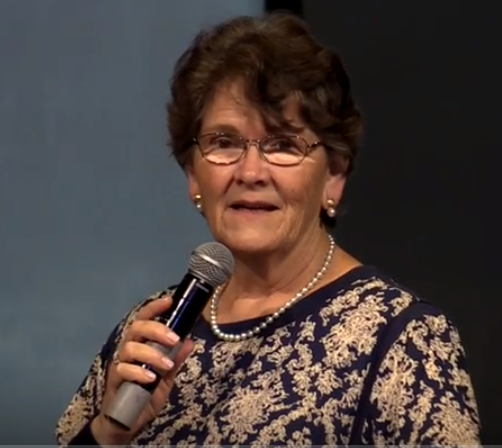
Author
Susan Combs
Summary: Everything we do for God is worthless if it does not spring from love. It is not enough to prophesy, have faith, give away our possessions, or sacrifice ourselves: our works are judged according to the motivation of the heart. True love is not feigned or limited to a feeling; it is expressed in words, deeds, and attitudes, and together with forgiveness it is a powerful weapon for breaking down barriers and healing lives.
We are called to love three groups. First, believers, even though we are imperfect and close relationships can lead to hurts and conflicts. God can use those “hammers” to break our pride and shape our character. Second, we must love those who do not know Christ, without approving of sin or demanding that they live like believers, showing the fragrance of Christ through our lives. Third, we are to love, bless, do good to, and pray even for our enemies; forgiveness can restore both victims and offenders.
Loving means risking rejection, but we can do so because we are deeply loved. When we know that we are sculpted, rooted, grounded, and sealed in God’s love, we receive the security and courage to love from the heart.
Well, uh, they told me to introduce myself, and I always define myself as an American graft onto the Colombian branch of Jesus Christ’s vine, and happily single for Jesus. Thank the Lord. And this morning—or rather, this afternoon—we are going to open the Word to a passage of Scripture as we begin a very simple subject which, at the same time, is what I consider the greatest challenge in our lives as Christians. Please join me in 1 Corinthians 13, and we are going to read verses 1 through 3.
The Word says, “...though I speak with the tongues of men and of angels, but have no love, I become like sounding brass or a clanging cymbal. And though I have the gift of prophecy, and understand all mysteries and all knowledge, and though I have all faith, so that I could move mountains, but have no love, I am nothing. And though I give away all my possessions to feed the poor, and though I surrender my body to be burned, but have no love, it profits me nothing.”
Lord, thank you for your Word this morning. I ask that this Word be like a double-edged sword, that it penetrate deep into our hearts, that it challenge us, Lord, and change us. I ask that no one walk out that door the same way they came in this morning. Lord, I ask that your Word and your Spirit do a deep work in our hearts. In the name of Jesus Christ. Amen.
Now, in this passage the Lord mentions many things we do for him. It says that we could prophesy, understand the mysteries of knowledge, and exercise such complete faith that we could move mountains. It says that we could even give all our possessions to the poor, and could even give our lives for him as martyrs, but it says that if it is not done with love, it is worth nothing. It is worth nothing.
Now, we know that when we pass into eternity we are not going to be judged for salvation or damnation, because we have Christ in our hearts. Hallelujah! We have been washed in the blood of the Lord Jesus Christ; we have been born again. But the Word speaks about the judgment seat of Christ, and at the judgment seat of Christ, the works we do here on earth will be judged. And those works will earn a reward in heaven only according to the motivation of the heart with which we did them here on earth. Whatever the work may be—making breakfast for the family, giving a glass of water to someone in need, or doing the things on this list—if it is not done with love, it is worth nothing. It is worth nothing. What matters is the heart with which we do it.
Please turn to someone beside you and tell them, “Whatever is not done with love is worth nothing.” Whatever is not done with love is worth nothing. And this sounds so simple this morning, but in my own life, at least, I see walking in love as the greatest challenge in the Christian life.
How many of you have discovered that walking in love is not so easy? And the Word commands us to love. Now, in Romans 12, verses 9 through 11, the Word says, “...let love be without hypocrisy. Abhor what is evil. Pursue what is good. Love one another with brotherly affection. In showing honor, prefer one another....”
And it continues in verse 11 and says, “...not lagging in diligence.”
Now, let love be without hypocrisy. The Lord wants true love, sincere love, in our hearts. And true love, truly loving, is not merely a feeling; love expresses itself. It expresses itself in words, yes; it expresses itself in deeds; it expresses itself in attitudes. And many times it is not so easy. It is not merely a feeling.
I am convinced—we talk so much about spiritual warfare nowadays, and I believe in spiritual warfare—but I am convinced that God’s love and forgiveness are the two most powerful weapons God has given us to win battles. True love breaks barriers, tears down walls, and destroys things the enemy has erected.
The Word says that loving an enemy is like heaping burning coals on his head. It is something he cannot withstand. Love is tremendously strong, and it wins battles.
Now, this morning we are going to look at three groups that I have been able to identify. There may be more, but in Scripture I have found three groups whom the Lord commands us to love. And he begins here in a way—well, perhaps we will begin with the group that is supposedly the easiest to love.
Let us turn to 1 John 2, please, verses 9 through 11. And let us all read this aloud together, please.
“He who says he is in the light and hates his brother is still in darkness. He who loves his brother remains in the light, and there is no cause for stumbling in him. But he who hates his brother is in darkness and walks in darkness, and does not know where he is going, because the darkness has blinded his eyes.”
Here the Lord speaks to us about the family of God, about our brothers and sisters. And you walk into church and think, wow, it is going to be incredibly easy to love people here. And we quickly discover that it is not. How many of you quickly discovered that it is not? And how many of you have realized that sometimes you are not easy to love? I should raise both hands here.
Please turn to someone beside you—and it is even better if you are with a family member—and tell them, “Sometimes I am not easy to love.” And now tell them, “And sometimes you are not easy to love either.”
What is our problem? We are forgiven, but we are not perfect. Sometimes we still have problems here in the heart; our character is being carved by the Lord. God is working on us, working on us. And the place where the Lord truly does the most adjusting in us is in the family and in the church, because that is where we form our closest relationships.
It is very easy to display all the fruit of the Holy Spirit around people you spend one hour a week with. They can see you as super holy there, because it is not hard to control yourself for one hour. But when you enter your home, when you begin working closely here in the church and having close fellowship, what begins to happen? There are clashes. Right? There are differences, there are misunderstandings, and many times the fiercest attacks against our lives come from our own brothers and sisters in the church, from other sheep. And that is where we discover that we are not so easy to love. May God forgive us. Forgive us, Lord. He is very patient with us, with his people.
Now, some time ago in Colombia, a sister—a pastor, a missionary—suddenly turned against me, and honestly, I do not know what I did to her. I must have done something to her, but I was never able to find out what it was. She was my friend. I did everything I could to help her become established in ministry, and as David said, if it had been a stranger from the street who had risen against me, it would not have hurt me so much; but it was my brother, David says, with whom we entered the presence of God together. That is what happened to me. And she began to slander me; she began to say many things and speak with the pastors. Thank God that at that time some of the pastors knew me and did not believe her. But others who did not know me believed her, so she did everything she could to destroy me. And the Lord came to me time and again and said, “Forgive her,” and I did not want to. I did not want to. And I would say to him, “But, but, she is still talking, God.” And he would say again, “Forgive her.” And I would say, “Lord, didn’t you hear what she said yesterday?” “Forgive her,” he would say. “But Lord, she is still talking. I don’t want to; I don’t want to.” And the Lord loves us so much that he will not allow us to continue down that road, because if we continue down the road of unforgiveness, we could lose everything; our hearts will be damaged.
And for a year I did not forgive her—for a year. For a year, under God’s gentle hand, I refused to forgive her. But how many of you know that God knows how to give a really good spanking? And after a year had passed, I received my good, well-deserved heavenly spanking. I was flying in a small plane over the Amazon rainforest, over a department in Colombia called Vaupés. It is nothing but jungle, nothing but jungle. You can fly for hours over that jungle without seeing anywhere to land, any place where you could land in an emergency. We were in a little single-engine, six-seat plane. There was a missionary pilot, a missionary woman who worked with the indigenous people, and yours truly, who was heading to another indigenous tribe there in the jungle. It was a little plane with very few instruments; the pilot had to be able to see in order to fly. And suddenly, in a matter of seconds, a blue sky gave way to what I am convinced may have been the worst storm since the days of Noah. It was terrible. Rain poured down and poured down; the wind was terrible; that little plane went up and down, up and down. The few instruments it had went haywire because of the violence of the storm. The metal sounded as though the wings were about to tear off. My heart was in my throat; I was absolutely terrified, and inwardly I was praying. But at the same time I was comforting myself and thinking, well, the Lord must be used to this. Just then, the Christian pilot turned around and looked at us. He was pale, he was sweating, and he did not use exactly these words, but the message was, “Pray, or we are going to die!”
So right there I began to cry out in a voice of...... I began to cry out aloud, “Lord, help us, Lord!” And as soon as I began praying aloud, the Lord reminded me of that sister whom I did not want to forgive. Very aware that I probably had, at most, minutes—and perhaps only seconds—left on this earth, I did not want to arrive with that sin in my heart, and with that excellent motivation, I forgave her. But I forgave her thoroughly. As the Guatemalans say, I forgave her completely and utterly; I left it all there, but truly, truly, I forgave her with all my heart.
And do you know what happened? The storm stopped. The instant I forgave her, the storm stopped. You remember the story of Jonah, how Jonah was walking in rebellion and how the entire crew of that ship had to go through that storm. To this day, I have not dared to tell that pilot that the storm was my fault. I am going to tell him in heaven, where there will be no more anger.
I forgave her, and it was so beautiful because a burden lifted from me. But the woman kept talking, and then, a few weeks after that, the Lord gave me a vision of her that completely healed my heart. And in that vision, I saw this woman in God’s hand, and in God’s hand this woman had the shape of a hammer. And with that hammer, God was pounding on me—whack, bam, boom, boom—and shaping me. He was forming his character in me. And I understood that, thank God, I have many people who are blessed by the ministry, blessed through my life, who encourage me and speak to me. But I understood that I need hammers too.
I understood that I need someone to bring me down. Are you with me this morning? Because I understood that I was capable of rising up in pride and that everything could be destroyed, so I need the hammers.
How many of you have hammers in your life right now? Oh, and when the Lord showed me this woman as a hammer, the next time I saw her—she always avoided me; she would not let me hug her, she would not let me greet her, and she would turn her back on me. But a few days passed, and I saw her at an event. She had her back to me, and before she could stop me, I ran over, grabbed her, turned her around, hugged her, and said, “I love you. You are a blessing in my life.” And I let her go. And she just stood there... and that relationship was healed. But I never told her that she had been a blessing by being a hammer.
We need to be dealt with by God. We need it, and sometimes the attacks come from our own brothers and sisters in the church, but God can use those things to form God’s character in us.
The Word says that we are vessels of clay. The Word says that our purpose in this life is for my vessel of clay to carry God’s presence, to carry his glory. But I learned something at the university while studying art. When you are going to make a piece of pottery, you almost have to spend more time working and preparing the clay than forming the piece itself. You have to take that clay, throw it, strike it, flatten it, throw it again, and flatten it, and the clay ought to be saying, “I am not going to survive this.” But do you know why? Because all the air bubbles have to be removed. If even one little bubble remains in that clay, the piece is shaped and placed in the kiln, and the heat will cause the entire piece to explode because of that bubble.
In our lives, there are bubbles of pride. In our lives, there are bubbles of self-sufficiency. In our lives, there are bubbles of jealousy, envy, and so many other things. So God allows those hammers to come—wham, wham, wham—crushing bubbles.
If you have a hammer in your life, take this moment, raise your hand, look to the Lord, and tell him, “Lord, thank you for the hammer.” Tell him, “Thank you, Lord, for the hammer.” And tell him, “Lord, teach me to love this hammer.” Amen.
In this process with this woman, do you know what developed in my heart? A determination to love her, whatever her reaction might be. That was the first group. With the second group, the Lord now extends the boundaries of our love.
Let us turn to Matthew 22, beginning with verse 37. Everyone, please read with me. Well, first, in verse 36, they ask him, “Teacher, what is the greatest commandment in the law?” Verse 37: “...Jesus said to him, ‘You shall love the Lord your God with all your heart, with all your soul, and with all your mind.’ This is the first and greatest commandment. And the second is like it: ‘You shall love your neighbor as yourself.’ On these two commandments hang all the Law and the Prophets.”
Two commandments: You shall love the Lord your God with all your heart, with all your soul, and with all your mind; and the other: You shall love your neighbor as yourself. The first is easy to keep, because God is easy to love. It is not difficult at all to love God. The Lord never does anything against us. The Lord never has a wrong motive toward us. The Lord never slanders us. The Lord is never cruel toward us. How many of you have realized that God is very easy to love? He is not difficult to love. He is incredibly, unbelievably fantastic. Wonderful. He is unique.
But the second commandment is where things get complicated for us. And you shall love your neighbor as yourself. You shall love your neighbor—it is no longer speaking only of the brothers and sisters in the church; it goes beyond that, to loving unbelievers as yourself as well. We, as Christians, have a problem in the way we treat unbelievers, and our problem is this: we demand that they live as though they were believers, and they are not.
Many times we criticize and reject them because they are committing adultery, because they are involved in homosexuality these days, because they are drunkards, because they are drug addicts, because they are involved in this or that; but the person’s problem is not that they are an adulterer—the person’s problem is that they do not know Christ. And many times we are the only vessel through which God can demonstrate His presence, His character, His love, and His glory so that person can see. And many times we do not do it.
And I have a question for you this morning: in your family and among those around you, in whatever secular workplace you may be in, can unbelievers see Christ in you? Can they see Christ in you?
Please join me here in a passage of Scripture, 2 Corinthians 2:14. Thank You, Lord. Everyone together, please: “But thanks be to God, who always leads us in triumph in Christ Jesus and through us manifests in every place the fragrance of the knowledge of Him.”
Please turn to someone and tell them, “You have a certain smell.” And now tell them, “Don’t worry, it is the fragrance of Christ that you have.” This is our goal. Say it with me: “This is my goal: to smell like Christ everywhere.” It is the greatest goal of my life: to smell like Christ, to give off the fragrance of Christ wherever I go. And my question this morning is: can the unbelievers around you sense the fragrance of Christ in your life?
I have a cousin. My cousin got involved in everything except God. Whatever there was, had ever been, or was yet to come, she got involved in it. She was involved in witchcraft, the New Age, so many things, atheism, humanism; and then there were my mother and her four children, all Christians, baptized in the Holy Spirit. My father was the exception; he came to the Lord only recently, thank God. But in our home, my mother and her children, we were all Christians; we loved the Lord with all our hearts. And this cousin went to attend university in our state, and on Saturdays my mother would invite her to come have lunch with us.
From the moment she walked through the door, she was looking for a fight. It was incredible. She would come in and act... practically the only thing she did not do was physically slam the door. She struck out with her words, insulted us, offended us; it was really awful, and my brothers and I were ready to tear her apart. And do you know what my mother would do? When she said her crazy things, my mother would go over and hug her, even though she practically had to hug her by force, and she would tell her, “Don’t worry, sweetheart. One day you will understand these things.”
Lunch would end, and all of us would be thanking God in our hearts that the time was over, and my mother would say, “You’ll come back next Saturday, won’t you?” And inwardly we were saying, “May she not come back! What do you mean she’s coming back?” This went on for a long time. During the four years my cousin studied there in our state, she never showed even a drop of interest in God. But when my mother died in the year 2000, my aunt was there with us and my cousin was in the state where she lived. My aunt, her mother, called to tell her that my mother had died. And let me tell you, throughout the entire house there in Colorado, we could hear my cousin screaming over the phone. And this is what she was screaming: “It can’t be! It can’t be! The only person on this earth whom I was sure loved me has just died. It can’t be! It can’t be!”
And right there where she was, my cousin dropped the phone, got into her car, and drove off blinded by tears; and there, crying and calling out to God, she had an encounter with the Lord Jesus Christ that day. Thank You, Lord. Thank You, Lord. That day my mother died and my cousin was born, but I am ashamed to stand here today, brothers and sisters, and tell you that if it had depended on my testimony, my cousin would not be walking in the ways of the Lord today. She would not. I could not stand the sight of her. No. I did not want to see her. She irritated me; I wanted to keep her away.
But I know that this is what happens to us with many of our relatives and many of those around us. But we are called to love them; we are called to love them—not to approve of their sin, but to reject the sin while loving the sinner. It is a challenge. The Lord has called us to love unbelievers too.
Now, with the third group that we want to look at this morning, the Lord goes even further, beyond that. In Matthew 5:44–48. Thank You, Lord. “But I say to you, love your enemies, bless those who curse you, do good to those who hate you, and pray for those who mistreat you and persecute you, that you may be children of your Father who is in heaven, who makes His sun rise on the evil and the good and sends rain on the just and the unjust. For if you love those who love you, what reward will you have? Do not even the tax collectors do the same? And if you greet only your brothers, what more are you doing than others? Do not even the Gentiles do the same? Therefore, be perfect, just as your Father who is in heaven is perfect.”
He is telling us, “Be perfect in love.” And He begins by saying, “Love your enemies.” Now, enemies are not only those who oppose our beliefs; they are those who set themselves against our lives. They are the ones who hate us; they are the ones who do things against us. A true enemy wants the very worst for you, the very worst, and the Word here tells us that we should love them. I believe this is one of the greatest challenges there is: loving our enemies. But when we make this decision and when we begin to love them, we are going to see very, very great victories.
Some time ago, while ministering in Peru, I saw the Lord do one of the greatest things I have ever seen Him do. If there are Peruvians here this morning, they know the stories of the Shining Path. For reasons that only they and the devil can understand, the Shining Path in Peru rose up against Christians in a terrifying way. They massacred pastors. I do not know how many pastors were murdered—very many, from all the missions. The attack was so severe that the churches had to take down their signs; anything indicating that they were a Christian group had to be removed during that time.
They were arrested and sentenced to several life sentences. Several life sentences were imposed on them so that they could never get out of prison. But there in those prisons the Holy Spirit came, and God did beautiful things. Some were saved in prison, transformed in prison, and God performed miracles to get them out of there. And when I went to minister, I ministered at a pastoral school for pastors and for those who were training to become pastors. It was a large group, and over the course of the week three men came to see me separately. They asked for counseling. Now, when I counsel a man, I never do it alone. I do it in a place where others can see us but cannot hear us, for the sake of my testimony. So that is what I did with each of them. All three had belonged to the Shining Path. They had been saved in prison, and God had performed a miracle to get them out; now they were preparing for ministry. And one morning the subject was forgiveness. That morning, at the end, when I gave people an opportunity to forgive their enemies, I did not know that others there knew these three men. And I saw Hilda, an Assemblies of God widow, a short woman. Her husband had been murdered by the Shining Path. And I saw Hilda leave her place on this side and go straight over to one of these three men. He was tall and she was short. She tugged on his arm so that he would bend down, and she whispered something in his ear. When she whispered it in his ear, the man fell to his knees with a heart-rending cry. It was overwhelming, but what he cried out was, “Thank you!” And he began shouting, “Thank you, thank you!” He said, “I knew that God had forgiven me, but I never thought that you could forgive me for killing your husband. Thank you,” he said. “Thank you.”
And when that happened, widows and orphans began coming from this side—orphans who had already inherited their fathers’ churches, now grown and serving as pastors. They came over and surrounded those three men. They all knew them, and they began to proclaim forgiveness over them. It was so beautiful. There, the families who had been victimized by these men ended up embracing and loving the former murderers, who were now their brothers in Christ. And when it was over, I watched it all and wept. I thought, “Lord, there is no stronger power, there is no greater power, Lord, than Your love and Your forgiveness, because You can heal everything, everything, God.” And when they had finished ministering, Hilda said to this man, “Son, I know about your home life. I know that you never had a mother to look after you.” And she told him, “Today I want to take you as my son. I want you to count on me the way you would count on a mother.” And he threw himself into her arms. There, the victims’ families were completely healed, and so were the former murderers.
Loving our enemies. And when I saw that and thought about what the things we normally face really are—now, there may be people here who have lived through what the Peruvians lived through—but in our normal, everyday lives, what are our struggles when it comes to forgiving and loving? Compared with that, they are silly little things; they are silly little things. But the power of God’s love and forgiveness is available to us today so that we can win great, tremendous battles in our lives.
Those are the three groups: believers, unbelievers, and enemies. Now, loving is a risk. When I open myself up to love, I take a risk, because I risk being rejected; they may make fun of me, take advantage of me, or do many things to me. It is a risk. But do you know why we can love? Because we are loved. And when we know our position in God and understand how much He loves us, we are no longer afraid to take the risk. We are so secure in our position in Him that I do not care if someone rejects me, because I know there are arms here surrounding me, and they are His arms. Now I can be brave enough to love. Now I can take the risk. I no longer care what they may say to me; what matters to me is that person and that person’s need, because I know my position.
Please come with me very quickly to a few passages of Scripture, and we are going to pray in just a moment. Let us go to Isaiah 49. Thank You, Lord. Verses 14 through 16. Everyone together: what is my position in the Lord? Everyone together, out loud, please: “But Zion said, ‘The Lord has forsaken me, and the Lord has forgotten me.’ Can a woman forget the child she bore, so that she would cease to have compassion on the son of her womb? Even if she should forget, I will never forget you. Behold, I have engraved you on the palms of My hands; your walls are continually before Me.”—It is written in the feminine form because it is addressed to Jerusalem, but it applies to our lives.
Then He says, “I have engraved you on the palms of My hands.” Please raise your hand for a moment and look at that palm, and pretend that this is God’s hand. And see yourself engraved on that hand. Not glued on—engraved.
Now turn your hand over and shake it. Can what is engraved fall off? No, it cannot come loose from there. That is how the Lord holds you.
Now let us go to Ephesians 3:16–19. “That He would grant you, according to the riches of His glory, to be strengthened with power in the inner being through His Spirit.” Paul is praying for them.
“That Christ may dwell in your hearts through faith, so that, being rooted and grounded in love, you may be fully able to comprehend with all the saints what is the width and length and depth and height, and to know the love of Christ, which surpasses all knowledge, that you may be filled with all the fullness of God.”
Rooted and grounded in love. Raise your hand again, please, and see yourself there, engraved on that hand, and now rooted. Now see yourself putting down roots. Deep roots. Turn your hand over and shake it. Can what is engraved and rooted fall off? No way. But the Lord does not stop there; He says, “grounded.”
Raise your hand again. We are acting like children this morning so that this truth will remain in your heart. Now see yourself again. See yourself engraved, see yourself rooted, and now see yourself grounded on that hand. Now turn your hand over and shake it. Can what is engraved, rooted, and grounded fall off? No, but the Lord does not stop there. His love for us is so great.
Let us go to Ephesians 1:13, please. And read with me: “In Him you also, having heard the word of truth, the gospel of your salvation, and having believed in Him, were sealed with the promised Holy Spirit.”
Raise your hand again. And see yourself engraved, rooted, and grounded; now take your other hand and say with me, “And sealed.” Hallelujah! Sealed in the love of God. Say with me, “God has me engraved, rooted, grounded, and sealed.” Hallelujah!
Thank You, Lord. Thank You, God. Thank You, God. Oh, thank You, Lord. Tell someone beside you, “I am greatly loved, supremely loved.” If someone could please go get the children and the teenagers and call them in, God wants to do something in us here this morning.
If, through this message, you have realized—as I realize every time I give this message or speak on this subject—that you have lacked love in the way you treat others, I invite you to stand right where you are. Thank You. Thank You, Lord.