Fill Me with Your Glory! Are You Ready to Receive It?
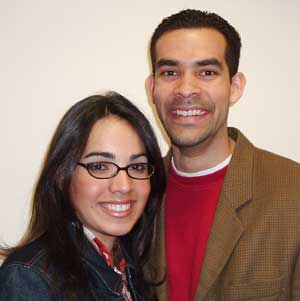
Author
Omar Soto
Summary: The glory of God is not a light experience: His presence reveals what is hidden, confronts our impurity, and exceeds our human capacity. Yet God neither abandons His people nor focuses first on their sin; instead, He draws near to cleanse, restore, and make visible the beauty and purpose He placed within us. Just as He purified Isaiah’s lips and replaced Joshua’s filthy garments, He also wants to deal with even those things we consider insignificant or keep hidden.
God chooses precisely those whom the world considers weak, foolish, or despised. Neither imperfection, shame, opposition, nor accusations can thwart what He has determined, but we must allow Him to purify us and walk in His ways. Asking for His glory means accepting the process of sanctification that accompanies His visitation.
After purifying us, God commissions us. He knows those whom He has marked, but He awaits a willing response: “Here I am; send me.” Although we may have limitations, struggles, or scarce resources, we can offer ourselves to be His spokespeople, trusting in His strength, discerning His work through our circumstances, and allowing Him to work in us both to will and to act.
Isaiah, chapter 6, my brothers and sisters, look at this. I believe this is one of the most interesting mysteries of God. Yet, even so, it is one of the ways in which He works. It is something that comes from His heart: to intervene in humanity, to intervene in human beings, to place His hand upon them in one way or another. This chapter, Isaiah 6, is the chapter where God meets Isaiah and gives him, so to speak, his commission, his calling. But the thing is that Isaiah’s perspective at first was something like, Who am I for this? And there are many people in the Bible who responded that way when they encountered God face to face. Moses himself said, “Ah, but who am I? I stutter,” and he quickly began making excuses.
And Isaiah obviously was no exception, which is why I want to direct you to this text. I am going to begin, obviously, by reading verse 1 so that we have the full context of the story. It says:
“In the year that King Uzziah died, I saw the Lord sitting upon a throne, high and lifted up; His robes filled the temple…”
First, I want you to notice that. Isaiah saw the Lord. “…Above Him were seraphim; each one had 6 wings: with two they covered their faces, with two more they covered their feet, and with the other two, well, they flew. And one called out to another, saying, ‘Holy, holy, holy, Jehovah of hosts; the whole earth is full of His glory.’ And the doorposts shook at the voice of the one who cried out, and the house was filled with smoke. Then I said, ‘Woe is me! I am dead, because I am a man of unclean lips and dwell among a people who have unclean lips, for my eyes have seen the King, Jehovah of hosts…’”
I want to stop there. This is where I want to refer to something, my brothers and sisters, because obviously, in the time when Isaiah was living—in the biblical context here—remember that the people of Israel were in exile. While the people of Israel were in exile, it was as though they had completely forgotten everything God had commanded them: following the law, which was the Torah. They completely forgot about that. The Babylonians seized all their instruments of worship. Everything involved in their prayer before God—they took it all, and the people of Israel were left with nothing. They were an enslaved people; they were a people with nothing.
And that caused far more than half of the people of Israel to forget everything involved in having a relationship with God. And in the midst of all that forgetting, when you do not have that structure, that system that shapes your life, that gives it meaning and direction, that defines the way a person speaks or expresses themselves and the way one person treats another, then what happens? In its absence, everything else from the secular world in which they are living begins to take that system’s place. And that is where the people of Israel were corrupted by everything that made up the Babylonian system.
They began worshiping other gods; they went after other idols—the Baals, the jackals, the… all the others that were around. No, the jackal did not exist back then… right? As far as I know. Unless he had a trumpet around there. But the point is that they went after other gods. Am I allowed to say that here? The point is that Isaiah is in the midst of that situation, and Isaiah recognizes that he is a sinful man, unclean of lips. God only knows the kind of vocabulary he had. But God decided to give him a revelation that He was not going to give to anyone else.
Look how interesting this is. Even though God Himself was the one who sent those people of Israel into exile, despite all that, God had not disconnected Himself from His people. Although His people insisted on walking with their backs turned to Him, He remained there, watching over them. And through it all, He identified this one person so that he could take responsibility for proclaiming God’s word, intentions, and the purpose of His heart to His people.
And here is Isaiah, faced with such a revelation, and it is very interesting because what was the first thing he said? “Woe is me, for I am”—what?—“a dead man.” That sounds like a dead dog lying there in the street, like a dead dog. But do you know what, my brothers and sisters? This expression is very interesting because, throughout the biblical account, whenever God revealed His glory to someone, that person could not contain it; they could not bear the weight of God’s glory. And they would either fall to their knees—what happened when Moses came face to face with the bush? Everything lit up, and what did God tell him? Come on, Discipleship 1, what did God tell Moses? “Take off your sandals, because the place where you are standing is holy.” And what happened? He had to fall facedown because he knew he could not look in that direction.
When the apostle John was on the island of Patmos and Jesus revealed Himself to him, what was one of the first things he said? “I fell as though dead.” I dropped like a soursop, right there. When Jesus revealed Himself to Paul on the road to Damascus, what does Scripture say? That he fell off his horse? Is that what Scripture says? No, ladies and gentlemen, read carefully. It does not say that he fell off his horse; it says that he fell. It says that he fell. It does not say that he fell off a horse; he fell. Read carefully.
If he was on the horse, well, fine, I understand that he fell off the horse. But since the biblical text does not say that he was on the horse and only says that he fell, I assume he was walking along with the horse’s rope in his hand, but that he was traveling on foot. I do not know; make up your own story.
The point is that the glory of God is so, so heavy, my brothers and sisters, that it cannot be contained. Let me ask you a question. Let us be honest; let us speak honestly here: How many of us, at some point during our time of prayer, have asked the Lord, “Lord, show me Your glory. I want more of Your glory, Lord. Fill me, fill me; here I am. Here is the target. Fill me with Your glory”? How many of us have said that? Huh? No? You have not asked for that? Well, goodness! Okay, if you have not asked for it, why haven’t you? Someone explain it to me. Why haven’t you asked for that in prayer? Huh? Out of fear—that is a good answer. I liked that.
But, aha, very good. I am glad you gave that answer. I hope that today you learn how to ask for it, then. I am getting to that right now. I am getting to that right now. So I am glad you made that comment. But look, brothers and sisters, do you know what? There are times when—and it is not that we ask with bad intentions—it is good to ask to live under the glory, under the covering, even under the very presence of God. But the thing is that we cannot contain that power.
If God suddenly decided right now to send down His Shekinah, His glory, His presence, and come down here, I would be the first one to fall to the floor. And after me, it would be a domino effect. Everyone else would go down all over the place. In fact, I think we would have to run out of here because it would be something so, so heavy. No? Haven’t you read the biblical text? When Solomon finished dedicating the temple, when they restored all the praise through the Levites and God commanded them to sanctify themselves, and when those Levites began to worship in the temple, what does the text say happened? That the presence of God descended in such a way that the people had to leave because they could not contain the glory of God.
It is interesting because, as I watch everything God is doing now at Congregación León de Judá, and the messages He has been conveying through our pastor, one of the things He has emphasized is that part of—or one of—God’s intentions and purposes for the church at this moment is to renew and revitalize praise and worship in the church. Do you know what, my brother, my sister? And I know that I have musicians here as well, and members of the praise and prayer group, but I long for it—and perhaps I do not know what I am asking for; I identify with you. Even as a pastor, I think that perhaps I do not know what I am asking for. But if it is God’s will for it to happen here, may praise and prayer be renewed to such a degree that the presence of God manifests itself in this place and everyone has to run out of here because it is like… that’s too much!
Can you imagine the fire alarms going off or something because the presence is so, so strong, and the temperature in this place rising to such a degree that either we fall down or we leave here dying? And I am not saying this negatively, my brothers and sisters; I am not saying that. But I am saying that the visitation God wants to bring among us in these days is of such magnitude that, even though we desire it, our human limitations will be unable to contain or withstand what God wants to do. We are going to have to try to say, so to speak, “Take it easy on me. Woe is me, for I am a dead man.” Isn’t that right?
Do you understand where Isaiah’s expression is coming from? Look at what the presence of God does in a place: the presence of God reveals everything that is hidden. I can hide many things from all of you. There are things about Pastor Omar Soto that you do not know and will never know because I am not going to tell you. That is the point of a secret, right? But I am certain that if, among those secrets Omar is holding on to, there is something God needs to deal with, and if Omar happens to be here on the day when the presence of God manifests itself, I know I will have to say, “Woe is me, Lord! I am a man of unclean lips; I am a man with an unclean heart.” But the beautiful and mysterious thing about all this is that, despite everything, God longs to reveal Himself to His people.
Although we live behind this deeply fallen façade, God still longs and desires to reveal Himself to each one of us. In one way or another, my brothers and sisters, do you know what? It is interesting because when God looks at you—when God looks at you—the first thing God sees is not the sin that might harm us; what God sees is the beauty He placed within you.
Look at what the text says, verse 6: “…Then one of the seraphim flew toward me, holding in his hand a burning coal taken from the altar with tongs, and what did he do? Touching my mouth with it, he said, ‘Behold, this has touched your lips; your guilt is taken away, and your sin is cleansed…’”
Before Isaiah could perhaps begin reciting the list of all his sins to God, God said, “Wait. Before you say anything, let Me tell you what I think of you.” In Zechariah—turn with me to the book of Zechariah. Have you ever met someone named Zechariah Stones-of-the-River? He is here in the Bible. That is the Zechariah we are talking about. The thing is that Zechariah is one of those books whose pages stick together, so it is kind of hard to find quickly… Okay, here it is.
Zechariah, chapter 3—look at this. Zechariah, chapter 3: the vision of Joshua the high priest. Let us begin with verse 1. It says:
“He showed me Joshua the high priest, who was standing before the angel of Jehovah, and Satan was standing at his right hand to accuse him…”
Look at that scene—how interesting. The devil himself was standing beside this man chosen by God, ready to beat him down. And what did Jehovah say to Satan himself? “Jehovah rebuke you, boy—Satan, sorry.” I got carried away there.
“…Jehovah, who has chosen Jerusalem, rebuke you”—He says it twice. “Is not this man, Joshua, a brand snatched from the fire? And Joshua was dressed in filthy garments and stood before the angel.” That image—being dressed in filthy garments—means that he was unclean before the very presence of God. “But the angel spoke and commanded those who stood before him, saying, ‘Take those filthy garments off him.’ And to him, to Joshua, he said, ‘See, I have taken your sin away from you, and I have dressed you in festive robes.’ Then he said, ‘Put a clean turban on his head.’ And they put a clean turban on his head and clothed him in the robes. And the angel of Jehovah was”—what? Keep going, keep going—“and the angel of Jehovah then admonished Joshua, saying, ‘Thus says Jehovah of hosts’”—this is the part that gets me…—“‘If you walk in My ways, and if you keep My ordinance, then you shall also govern My house and guard My courts, and I will give you a place among those standing here.’”
Look at what God can do with a person for whom He has, so to speak, an intention and a purpose. Look, even if the devil himself stands before you to make your life impossible, if the Lord has something for you, you’ll come through; in other words, it is going to happen.
Do you know what? There is something special about that encounter, because I imagine Joshua perhaps feeling ashamed, as though saying, “Do not look at me.” Why? Because of the confrontation he had with the angel. In other words, “Look, I recognize that there was something wrong in you, but it is taken away from you so that you may truly enter into what God has intended for you.” It would have been very interesting if Joshua had said, “No, no, no. I am fine in these filthy clothes, stinking and ragged like this. I am fine this way. Leave me like this.” It is interesting because some people respond that way. Some people are so accustomed to those filthy, dirty, stinking clothes that when someone wants to help them change… These clothes of mine—I press the button, and they take themselves off and put themselves back on, as Roberto sometimes says. The clothes put themselves on, and everything falls into place. But look, as I said last Wednesday, when God has His eyes fixed on you and His heart is there as well, look, there is nothing that can stand in the way of God’s desire.
I want to finish by reading you this last passage, which I know many of us are familiar with, my brothers and sisters. First Corinthians, chapter 2—sorry, chapter 1—First Corinthians chapter 1. This is where we find the mysteries of God that, no matter how much I rack my brain, I will never manage to understand. But it says in verse 25, First Corinthians, chapter 1, verse 25, it says:
“...For the foolishness of God is wiser than men, and the weakness of God is stronger than men....” and women too, of course; let’s not turn this into a gender issue—let’s include both of them there. Consider your calling, brothers and sisters: not many of you are wise according to the flesh, not many are powerful, and not many are noble, but the foolish things of the world—listen, I hope you have healthy self-esteem, because Paul himself is saying, “the foolish, the foolish.” Paul called me a fool—what’s going on? Maybe some of you—Omar, perhaps you say that he called you a fool, but not me.
“...But God chose the foolish things of the world to shame the wise, and God chose the weak things of the world to shame the strong. And God chose the vile and despised things of the world, and the things that are not, to bring to nothing the things that are....”
You tell me whether that isn’t an amazing mystery. That is an amazing mystery, my brothers and sisters, because only God would think of saying something like that. I mean, we are so accustomed to thinking the other way: that what matters here is being strong, what matters here is being noble, what matters here is being the person who has all their PhDs from the best university—that is how this world works. And the tendency, or the idea they want to plant in us, is that if you want to function at that level, you will have to obtain all those things in order to function, so that people will pay attention to you, listen to your voice, and take you into account, and so that they can then give you the credit when a good idea comes along.
But God does not operate that way. What are we Hispanics here in the United States? What are we? That is the political term they give us: a minority. Let’s see whether that will still be the case when the 2010 census comes around now, right? Let’s see whether we really are a minority. Right? We are the largest minority. Look at that coincidence, that irony—what irony, the ironies of God. We are the majority minority here in the United States.
And, my brothers and sisters, it is so interesting. You know what? As I mention all these things, my brothers and sisters, I am sharing this from my heart because I have to tell you that the last few weeks have been, for me, a time of—how can I put it?—racking my brain. But I know I am not going to find the answer. Yet the mere fact that I keep hearing more and more and more that God has intentions, that God has purposes, that God is going to do something—you know what? I have been hearing that ever since I arrived here in the United States, 10 or 11 years ago. I have kept hearing the same thing, the same thing, the same thing; it sounds like a broken record. God is going to do something, and every prophet who happens to show up, every Apostle who happens to show up, says the same thing, the same thing, the same thing, and the same thing.
And there are times when you say something like, “That’s it, enough is enough. When is it really going to come?” But there is something, my brothers and sisters; there is something in the air. There is something in the atmosphere, and I do not know how to tell you or explain it to you in words, but there is something in the atmosphere. Something is taking place in the spiritual realm. I imagine that when Daniel began to pray, when he devoted himself to prayer and fasting for 21 days, and that angel appeared and revealed himself to him, the first thing he said was, “Look, Daniel, forgive me for taking so long, but I had to go through a battle in the spiritual realm against the hosts of Satan.” And I imagine that right now, in the spiritual realm, a battle is being unleashed between the forces of good and the forces of evil. Something is happening; there is a sword that God is using to pierce the darkness and truly bring his light. A holy judgment is drawing near to the earth today, and it is something already written; in Hebrews itself it says, “It is time for the judgment of God to begin,” and where is it to begin? With the house of God.
There is a process of purification into which God is going to bring the church, just as in Solomon’s time, when the construction of the temple was finished and God then gave the command, “I want the people to sanctify themselves, because there is something I am going to do here that will cause the coming glory of this house to be greater than”—what?—“the latter.” There is something, my brothers and sisters; there is something in the air. And I do not want to be left behind. I do not want to be left behind.
And look at how God is speaking. God is speaking more clearly now than ever before. If you do not pay attention, my brothers and sisters, you snooze, you lose. Look how interesting this is: yesterday morning I was watching the news while getting Lucas ready to take him to daycare, and they were interviewing this young woman who was Miss California. I do not know whether you heard today’s news about her; her name is Carrie Prejean. They were interviewing her because, if you do not know, I will tell you now: she won the Miss California pageant in order to go on to compete in Miss Universe. But you know what? Although she won, when they were asking her one of the final questions, they asked her—how did the question go? No, it was not necessarily about gays; I think they asked her a rather twisted question to see how she would respond. It had something to do with family and marriage, and the thing was that she answered by saying, “I believe marriage has to be between a man and a woman.” Then she said, “I am sorry for those in the audience who may not agree with my answer, but that is what I believe.” Look, my brothers and sisters, they came down on that woman like a ton of bricks. That woman was attacked beyond anything you can imagine, and they called her the ugliest names you could possibly imagine; they called her those things on national TV.
Yesterday, when I was watching this interview, she came out with a book entitled “Still Standing,” “Todavía estoy de pie,” because in that book she is speaking out and complaining about the irony of the media that defines the United States: supposedly the United States has this freedom-of-speech law, under which everyone is free to express themselves, but she was robbed of that right possessed by every American. Simply because she gave her perspective on an issue, they bombarded her, and they are still bombarding her. Obviously, photos later came to light of her posing nude at an earlier time; supposedly even a sex video she made for her boyfriend when she was 16 or 17 years old came to light. All of it to damage her image, all of it to damage her reputation.
She identifies herself as a conservative Christian woman, and they have criticized her even for that. They have criticized her because they say that makes her a hypocrite: if you are a Christian, how can you pose in a bikini in a beauty pageant? They have said so many things to her, but what caught my attention about her response was this. She said, “Look, all this wrongdoing, all these mistakes I have made, have now come to light, but I am still standing because I believe in the principles on which I am grounded. I believe in the principles of the Word of God and of my Christian faith”—that is how she put it—“and no one is going to take that away from me.”
When I heard that woman saying that, I said to myself, “Wow! How inspiring this is.” Because many times what we fear is that all the skeletons we have locked in the closet will come out; nevertheless, what God wants to do is precisely to bring those skeletons out so that he can then truly do what he wants to do with his own, with his sons and his daughters. God cannot work with a people who have skeletons locked away.
And look, I am telling you this with fear and trembling. I start thinking, “Wow, Lord, if all my skeletons come out—oh, boy! I would rather they buried me; I really would rather they buried me.” I mean, do not think too badly of me; I am not... I may look like it, but I am not.
But, my brothers and sisters, it is something I see God doing among his people. There is something God is doing, even things so minor that you might think, “God does not care about that.” Look, the Lord wants to deal even with that. And you know what? He is standing there in front of the church right now, and he is saying the same words he spoke in connection with Isaiah. These are the words that Jesus—that God, that Jesus—is saying right now before his people. I will finish here.
He is now saying, “Whom shall I send, and who will go for us? Whom shall I send, and who will go for us?” After he purifies you, he commissions you. Because what God asked was a rhetorical question. It was as though Isaiah had been standing there and suddenly God stood up like this: “Wow! Whom shall I send? Who will go? Who will go for us?” So, since he is not Isaiah, that must be why.
But you understand the idea: it was a rhetorical question he asked, because he knew—he knew—that he had marked Isaiah for that; he was only waiting for Isaiah to give the answer. In fact, this is very revealing to me right now. God could easily have said, “Let me choose someone other than Isaiah, then.” Easily—no, let me stay right here. God could easily have said, “Look, Isaiah, I have already touched your mouth with this coal; you are healed. Go.” Now, let us answer. And he says, “Okay, fine.” No, but God was like, “Wow! Let me see if he gets the picture. Let me see whether he understands what I truly intend for him.”
Then he asks the question, “Who will go? Whom shall I send? Who will go for us?” He knows. He knows it is you. He knows it; he knows it is you, he knows it is you, and he knows it is me. He knows it. But he is giving you room to say for yourself, “Here I am. Here I am, Lord; here I am. I am imperfect; I have a knee that does not work very well, but here I am. Here I am; maybe my hair is not the most beautiful of all, but look, here I am. Here I am, Lord. Look, I do not have much money in my wallet, but here I am. Here I am, Lord. Look, I have aches and pains in my back, but hey, look, here I am. Here I am, Lord. I am battling a very serious illness, but hey, here I am. Here I am; send me—like a rocket, off to the moon with you we go. Here I am, Lord. Look, I still struggle with my diction, but look, here I am; I want to be on your team. Here I am, Lord. Look, my sons and daughters are still giving me headaches, but hey, here I am. Here I am. Here I am, Lord. Look, that pastor is giving me a headache; I cannot deal with him, but Lord, here I am. Here I am. Here I am. Send me, use me. I want to be part of your team, Lord. I do not want to miss this adventure, even if it hurts me, Lord, even if you have to squeeze me and wring me out and turn me inside out like a sock. Lord, do it, because if I am in your hands, it is better to suffer under your hand than to suffer under someone else’s hand.”
Of course, there are times when God uses people to move us in that way. So with that prayer I say, “Lord, help us understand when you are working on us through other people.”
Let us stand, my brothers and sisters, and let us pray. Wow! Father, I give the glory and honor to you alone, Lord Jesus. Thank you, Jesus. Thank you, God, because in you our lives are secure; in you we have meaning; in you we have purpose. There is an intentionality that you give us, Lord Jesus. As Isaiah said, Lord, woe to us; we are so imperfect, Lord. We are so imperfect in our lips, minds, actions, and thoughts, but in spite of all that, you stand before us, Lord Jesus, and you are willing to cleanse us, to purify us, to change those vile garments and dress us in full ceremonial attire, to place a burning coal on our mouths to purify our speech so that we may truly function as your spokespeople. There you stand before us, saying, “Whom shall I send? Who will go for us?”
Lord, I declare what your Scripture says: that you put within us both the desire and the ability to act. Good intentions are not enough. Desire alone is not enough. Put within us, Lord Jesus, both that desire and the ability to act. Let us indeed ask you to fill us with your presence, while at the same time allowing your hands to deal with us, God.
And Lord, perhaps I myself do not know how I am praying. I do not know what will happen when we leave here. I do not know what awaits us out there, Lord. I do not know what new struggle, what new situation, will be waiting for us out there, Lord—something that will put us in a pressure tank and may cause us to feel desperate. I do not know. But whatever it may be, Lord, I know that with the trial you provide the way out and that you do not give us a trial so strong that we cannot bear it. I ask that the strength which only you give would rest upon each one of us: that assurance in your promises, that conviction that the purposes and intentions of your heart for ours are good, that you have plans for our good, Lord, which surpass our very limited minds. You surpass everything.
Help us trust in you at all times, Lord, please. Help us rest in you. Help us know how to discern—to discern when you are at work, Lord, in the circumstances of life, bringing us to the level where you want us to be. I beg you to be with each of my brothers and sisters, Lord. May this word tonight be a word of encouragement, a word that gives strength, a word that establishes their hearts, their minds, their bodies, their families, and their spirits in you, Lord.
Whatever situation my brothers and sisters are going through right now, I firmly declare that you are in their midst like a mighty giant, Lord; that you will provide the way out they are seeking; that you will provide those finances, those resources they need in order to achieve their goals; that in those new stages of life which many of us are now entering, Lord, even though we may not know what everything will be like on the other side of the mountain, you will also be there, Lord; that you will also provide your covering, you will provide your wisdom, you will provide your resources. You are the owner of the gold and the silver, Lord, and from your abundant riches in glory you will see to it that every one of your sons and daughters is supplied. Your blessing brings prosperity and carries no shame with it, Lord. There is no reason why we, as your people, as your sons and daughters, should have to live in shame, because it is your blessing that enriches our lives. To you I give all the glory and all the honor forever and ever, Lord Jesus. Receive the honor tonight and give your blessing to every one of your sons and daughters, through you, Jesus. Amen and amen.