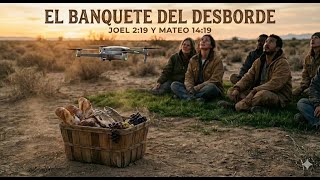
The Eschatological Harvest: a Canonical and Exegetical Analysis of the Interplay Between Joel 2:19 and Matthew 14:19
Joel 2:19 • Matthew 14:19
Summary: My analysis delves into the profound hermeneutical interplay between Joel 2:19 and Matthew 14:19, arguing that the miraculous feeding of the five thousand is far more than a simple wonder. I contend that Matthew presents this event as the direct inauguration of Yahweh's covenantal fidelity, fulfilling the specific promise of agricultural restoration detailed in Joel. This study demonstrates how Jesus, in this act, definitively addresses the crisis of provision, satisfies His covenant people, and removes the national reproach.
To truly grasp this fulfillment, we must first understand the devastating crisis in Joel. An apocalyptic locust plague brought about not just agricultural collapse, but a theological catastrophe: the loss of "grain, new wine, and oil" signaled divine abandonment and the cessation of cultic offerings, leading to national "reproach" (cherpah). In response to heartfelt repentance, Joel 2:19 declared Yahweh's promise: "I will send you grain, new wine, and oil; you will be satisfied, and I will no longer make you a reproach among the nations." This promise was a divine initiative to restore life, joy, and the covenant bond itself.
Centuries later, Jesus steps into this prophetic vacuum in Matthew 14. In the "deserted place" (eremos), He encounters a hungry multitude, echoing Israel's wilderness scarcity. My argument is that Jesus, as the compassionate Shepherd, assumes the role of the divine provider from Joel 2:19. His actions—commanding the people to sit on green grass, looking to heaven, blessing the loaves, breaking them, and giving them through His disciples—are a liturgical enactment of this ancient promise. The outcome is absolute satisfaction, signified by the Greek chortazo, mirroring Joel's saba, and an abundant overflow of twelve baskets, demonstrating a provision that fully resolves the reproach of scarcity.
This miracle thus transcends a simple meal; it is a profound fulfillment of the Messianic Banquet typology, where Jesus is the Host. While Matthew 14 focuses on the "grain" (loaves), the broader restoration triad of grain, wine, and oil finds its complete canonical distribution across Christ's ministry, from the Last Supper (wine) to the outpouring of the Spirit (oil) in Acts, which Joel 2 also prophesies. Ultimately, Jesus' act of feeding demonstrates that the "grain" has been sent, the reproach removed, and the people of God are invited into a perpetual satisfaction that points to the dawning of the Day of the Lord, marked by His abundant provision.
I. Prolegomena: The Hermeneutics of Covenantal Provision
The relationship between the prophetic corpus of the Old Testament and the narrative theology of the New Testament is governed by a complex hermeneutical interplay of promise, type, and fulfillment. Within this canonical framework, the resonance between Joel 2:19—a promise of agricultural restoration following devastation—and Matthew 14:19—the miraculous feeding of the five thousand—constitutes a profound theological trajectory. It is not merely a literary allusion; rather, it represents the enacting of Yahweh’s covenantal fidelity through the person of Jesus of Nazareth. This report provides an exhaustive analysis of this interplay, arguing that Matthew presents the feeding miracle as the inauguration of the specific restoration promised in Joel: the provision of grain in the wilderness, the satisfaction of the covenant people, and the definitive removal of national reproach.
To understand the weight of these two texts, one must move beyond a superficial reading of "miraculous food" and engage with the deep structures of Israelite covenant theology. The triadic blessing of "grain, new wine, and oil" functions as a metonym for the covenantal health of the land and the people's standing before God. The disruption of this supply in Joel serves as a theological crisis of "reproach" (cherpah), signalling divine abandonment. Consequently, the restoration of this supply is not merely an act of humanitarian aid but a theodicy—a vindication of God's character and a re-establishment of the covenant bond.
When Jesus stands in the eremos (wilderness) in Matthew 14, looking up to heaven and blessing the loaves, He is not simply performing a nature miracle. He is stepping into the role of the Yahweh of Joel 2, reversing the curse of the locusts, and initiating the Messianic Banquet that signals the end of exile and the beginning of the "Day of the Lord" in its saving dimension. This analysis will traverse the linguistic, historical, and theological landscapes of both texts to demonstrate this continuity.
The Canonical Function of "Provision"
In the biblical worldview, provision is never secular. The giving of bread is inextricably linked to the lordship of Yahweh. From the manna in the wilderness to the widow’s jar of oil, the material sustenance of the people is the primary indicator of the spiritual relationship between Israel and their God. Therefore, the exegetical task requires a dual focus:
-
The Material Realism: Acknowledging the literal hunger, the agricultural cycles, and the physical survival of the nation.
-
The Typological Signification: Recognizing how physical elements (grain, bread) point toward eschatological realities (the Word, the Kingdom, the Eucharist).
This report will proceed by first establishing the crisis of Joel (the loss of provision) and the specific nature of the promise in Joel 2:19. It will then transition to the Matthean fulfillment, examining the Feeding of the Five Thousand as the "anti-type" that resolves the Joel crisis. Finally, it will synthesize these findings through the lenses of "satisfaction" and "reproach," offering a comprehensive theology of Messianic provision.
II. The Joel Crisis: Ecological Collapse and Theological Despair
To fully grasp the magnitude of the promise in Joel 2:19, one must first descend into the depth of the catastrophe described in the preceding chapters. The book of Joel opens with a devastation so absolute that it creates a historical rupture: "Has this been in your days, or even in the days of your fathers?" (Joel 1:2).
The Nature of the Devastation
The crisis is precipitated by a locust plague of apocalyptic proportions. The text utilizes four different Hebrew terms for the locusts (gazam, arbeh, yeleq, chasil), which likely describe either different species or different stages of development. Regardless of the entomological specifics, the result is total consumption.
-
Agricultural Collapse: "The field is wasted, the land mourns; for the grain (dagan) is ruined, the new wine (tirosh) is dried up, the oil (yitshar) fails" (Joel 1:10).
-
Cultic Cessation: The most terrifying consequence for the prophet is not starvation, but liturgical silence. "The grain offering and the drink offering have been cut off from the house of the Lord" (Joel 1:9). Without grain and wine, the daily Tamid sacrifice cannot be offered. The covenantal bridge—the mechanism for atonement and communion—is severed.
-
Ecological Grief: Even the beasts of the field cry out (anarah) because the "pastures of the wilderness" are devoured by fire/drought (Joel 1:19-20).
The Theological Implication: The Day of the Lord
Joel interprets this ecological collapse not as a random natural disaster but as the harbinger of the "Day of the Lord" (Yom Yahweh). The locusts are described in military terms in chapter 2, characterized as a "northern army" (Joel 2:20) executing God's word. The scarcity of food is a manifestation of the curses outlined in Deuteronomy 28:38-51, which explicitly state that disobedience will lead to locusts consuming the seed and an enemy nation consuming the grain, wine, and oil.
Thus, the people standing in Joel 2 are not merely hungry; they are under divine judgment. They are bearing the "reproach" of a broken covenant. The nations are watching and asking, "Where is their God?" (Joel 2:17). This question transforms the famine into a crisis of God's reputation. If Yahweh cannot feed His people, is He truly God?
The Liturgical Pivot: "Spare Your People"
The turning point of the book occurs in Joel 2:12-17. Yahweh invites a return: "Turn to Me with all your heart, with fasting, with weeping, and with mourning". The prescribed response is a solemn assembly. The priests, the ministers of the Lord, are instructed to stand between the porch and the altar—the precise location of the ceased sacrifices—and weep. Their prayer is specific: "Spare Your people, O Lord, And do not give Your heritage to reproach (cherpah), That the nations should rule over them. Why should they say among the peoples, 'Where is their God?'".
It is into this vacuum of silence, hunger, and shame that the voice of Yahweh breaks in verse 18: "Then the Lord will be zealous for His land, and pity His people." Verse 19 is the direct speech articulating that pity.
III. Exegetical Analysis of Joel 2:19: The Covenantal Response
Joel 2:19 is the fulcrum upon which the book of Joel balances. It transitions the narrative from judgment to salvation, from scarcity to satiety, and from shame to honor.
The Divine Initiative: "Behold, I Will Send"
The Hebrew text begins with a response: "And the Lord answered and said to His people". This confirms that the penitential cry of the solemn assembly (v. 17) was heard. The verb used for the promise is shalach ("I will send" or "I am sending").
-
Agency: The sender is Yahweh. In the agricultural worldview, rain and harvest are not natural inevitabilities but divine gifts. By saying "I will send," Yahweh reasserts His sovereignty over nature, which the locusts had seemingly usurped.
-
Immediacy: The participle form often implies an immediate future—"I am about to send." The reversal of the curse is imminent upon repentance.
The Triad of Blessing: Grain, New Wine, and Oil
The objects of the promise are specific: ha-dagan (the grain), ha-tirosh (the new wine), and ha-yitshar (the oil). The use of the definite article (ha) in Hebrew suggests these are the specific crops that were lost in 1:10.
1. Grain (Dagan)
Grain represents the fundamental staff of life. In the Ancient Near East, bread was the primary source of caloric intake. To lack grain was to face death. Theoretically, dagan encompasses wheat and barley.
-
Covenantal Resonance: "Man shall not live by bread alone, but by every word that proceeds from the mouth of the Lord" (Deut 8:3). The restoration of grain signifies the restoration of life and the ability to offer the minchah (grain offering) again.
2. New Wine (Tirosh)
Tirosh refers to the fresh juice of the grape, often unfermented or in the early stages of fermentation, representing the potential and the firstfruits of the vintage.
-
Theological Significance: Wine "gladdens the heart of man" (Psalm 104:15). Its restoration signals the return of joy (simchah) and gladness (gil), which Joel 1:16 explicitly stated had been "cut off from the house of our God." It is the liquid of celebration and eschatological banquet.
3. Oil (Yitshar)
Fresh olive oil (yitshar) differs from the processed oil (shemen), emphasizing the agricultural bounty.
-
Symbolism: Oil is associated with "shining" (health/vitality) and anointing (consecration). It is the fuel for the Menorah (light) and the medium of kingly and priestly ordination. In Joel's trajectory, the physical oil paves the way for the "pouring out" of the Spirit in 2:28.
Table 1: The Triad of Restoration in Joel
| Hebrew Term | Translation | Physical Function | Spiritual/Liturgical Function |
| Dagan | Grain / Corn | Sustenance, survival | The Meal Offering (Minchah); Word of God |
| Tirosh | New Wine | Refreshment, antiseptic | The Drink Offering; Covenant Joy; Blood of the Grape |
| Yitshar | Fresh Oil | Cooking, light, healing | Anointing; Light of the Temple; Holy Spirit |
The Theology of Satisfaction (Saba)
The promise continues: "And you will be satisfied (saba) with them". The Hebrew root saba implies being sated to the full.
-
Reversal of Hunger: This directly counters the state of the "groaning" beasts in 1:18.
-
Sanctified Satisfaction: In Deuteronomy, satisfaction carried a danger: "Lest when you have eaten and are full... you forget the Lord" (Deut 8:12). However, in Joel's restoration, this satisfaction leads to praise: "You shall eat in plenty and be satisfied, and praise the name of the Lord" (Joel 2:26). This is a redeemed satisfaction, one that acknowledges the Giver.
The Removal of Reproach (Cherpah)
The climax of the verse is the sociological restoration: "I will no longer make you a reproach (cherpah) among the nations".
-
The Shame of Famine: In the ancient mindset, famine was interpreted by surrounding nations not as bad weather, but as the impotence of the local deity. For Israel, the "heritage of Yahweh," to starve was a desecration of Yahweh's name (Ezekiel 36:30).
-
The Vindication: By restoring the abundance, Yahweh silences the mocking nations. He proves He is "in the midst of Israel" (Joel 2:27). The removal of reproach is an act of theodicy—justifying God's ways to the world.
IV. The Matthean Context: The New Exodus and the Compassionate Shepherd
Centuries later, the Gospel of Matthew narrates an event that echoes the crisis and resolution of Joel with startling precision. Matthew 14:13-21, the Feeding of the Five Thousand, is not an isolated miracle but a densely layered theological enactment of the restoration promised by the prophets.
The Context of Withdrawal: The "Northern Army" of Herod
Matthew 14 opens with the execution of John the Baptist by Herod Antipas. This political violence creates a crisis of leadership and safety. John, the Elijah-figure, is dead. Jesus, hearing this, "withdrew from there by boat to a deserted place (eremon topon) by Himself" (Matt 14:13).
-
The Typology of Threat: Just as Joel's crisis involved a "northern army" (Joel 2:20) threatening Zion, Jesus faces the threat of the Herodian power structure. His withdrawal is not cowardice but a strategic movement into the wilderness—the locus of divine revelation and provision.
The Wilderness (Eremos) as the Setting for Restoration
The crowds follow Jesus on foot from the cities into the eremos. This movement recapitulates the Exodus: the people leaving the structures of empire (Egypt/Herodian cities) to follow the Redeemer into the wild.
-
The Crisis of Scarcity: As evening falls, the disciples articulate the Joel-like crisis: "This is a deserted place, and the hour is already late. Send the multitudes away, that they may go into the villages and buy themselves food" (Matt 14:15).
-
The Disciples' Economy: The disciples operate on the logic of scarcity and market exchange ("buy themselves food"). They fear the "reproach" of a humanitarian disaster on their watch.
-
The Reproach of the Shepherdless: Jesus, however, sees the crowd through the lens of splagchnizomai (compassion) (Matt 14:14). Mark 6:34 adds that He saw them "as sheep not having a shepherd." To send them away hungry would confirm their shepherdless state, subjecting them to the shame of starvation and exposing the inability of the Messiah to sustain His followers. It would provoke the question: "Where is their God?"
Jesus as the Agent of Joel 2:19
Jesus' response, "They do not need to go away. You give them something to eat" (Matt 14:16), is the New Testament equivalent of Joel 2:19's "Behold, I will send you grain."
-
Divine Prerogative: Jesus assumes the responsibility for the crowd's sustenance. He refuses to delegate their survival to the village markets. He positions the Kingdom of God as the source of "grain, wine, and oil."
-
The Interaction: The disciples produce "five loaves and two fish" (Matt 14:17). While Joel mentions a triad, the "grain" (loaves) takes precedence here as the staff of life.
V. The Miracle as Fulfillment: Matthew 14:19 in Detail
The specific actions recorded in Matthew 14:19 serve as a liturgical and theological ritual that enacts the promise of Joel 2. Every gesture is laden with meaning.
The Command to Sit: Ordering the Chaos
"He commanded the multitudes to sit down on the grass" (Matt 14:19).
-
The Green Grass: Mark 6:39 specifies "green grass." This is a critical intertextual detail. In Joel 1:19, the "pastures of the wilderness" are devoured. In Joel 2:22, the reversal is promised: "Do not be afraid, you beasts of the field; for the pastures of the wilderness do spring (green up)."
-
The Fulfillment: The presence of grass in the "deserted place" signals that the Messianic age has dawned. The curse of Joel 1 is being reversed. Jesus is the Shepherd who makes His people "lie down in green pastures" (Psalm 23:2), fulfilling the pastoral restoration of Joel.
The Liturgy of Provision: Looking Up, Blessing, Breaking
The sequence of verbs in Matthew 14:19 forms a distinct liturgical pattern: Taking, Looking Up, Blessing, Breaking, Giving.
-
Looking Up to Heaven (Anablepsas):
-
Jewish Context: This posture is typical of Jewish prayer, acknowledging God as the source (Psalm 121:1).
-
Joel Connection: In Joel 2:19, Yahweh says, "I will send." By looking to heaven, Jesus aligns His action with the Father's will. He acts as the Mediator. The grain comes from the "storehouse" of heaven, channeled through the hands of the Son. This visualizes the vertical dimension of the promise ("I will send you").
-
-
The Blessing (Eulogesen):
-
The Birkat Hamazon: Jesus likely recited the standard Jewish blessing (berakhah) before meals: "Blessed are You, Lord our God, King of the universe, who brings forth bread from the earth" (Hamotzi Lechem Min HaAretz).
-
Theological Import: By blessing the meager loaves, Jesus consecrates them. He declares that the scarcity of the present moment (five loaves) is subject to the abundance of the Kingdom. The blessing triggers the multiplication. It is the performative word that actualizes Joel's "I will send."
-
-
Breaking and Giving:
-
Jesus breaks the bread but gives it to the disciples, who then give it to the multitudes. This establishes a hierarchy of mediation. The "grain" of Joel 2:19 is distributed through the "priestly" agency of the apostles, just as the priests in Joel were the intercessors who called for the blessing.
-
The Outcome: Satisfaction and Overflow
"So they all ate and were filled" (Matt 14:20).
-
Terminological Link: The Greek word is chortazo. Originally used for fattening animals, it implies being filled to the point of absolute satiety—"gorged". This mirrors the Hebrew saba in Joel 2:19 ("you shall be satisfied").
-
The Overflow: They took up "twelve baskets full" of fragments. The provision exceeds the need.
-
Typology: The number 12 corresponds to the twelve tribes of Israel. Jesus is demonstrating that He has enough "grain" to satisfy the entire covenant people. The "remnant" of Israel (Joel 2:32) is fully provided for.
-
Reversal of Reproach: No one goes hungry. The "reproach of famine" (Ezekiel 36:30) is definitively removed. The leftovers stand as a tangible witness against the scarcity mindset of the world and the "mocking nations."
-
Table 2: Comparative Analysis of Joel 2:19 and Matthew 14:19
| Feature | Joel 2:19 Prophecy | Matthew 14:19 Fulfillment | Theological Significance |
| Crisis | Locusts, Drought, Famine | Wilderness, Evening, Hunger | Scarcity as a threat to Covenant Life. |
| Agent | Yahweh ("I will send") | Jesus ("He gave") | Christ assumes the role of Divine Provider. |
| Commodity | Grain (Dagan) | Loaves (Artos) | The Staff of Life restored. |
| Result | Satisfaction (Saba) | Filled (Chortazo) | Complete satiety; end of groaning. |
| Setting | Restored Land (Green Pastures) | Green Grass in Wilderness | Reversal of ecological curse. |
| Social Effect | "No more reproach" | Compassion; Multitude Fed | Vindication of God's people; Honor restored. |
VI. The Typology of the Messianic Banquet
The interplay between these texts is best understood within the broader theological motif of the Messianic Banquet. In Second Temple Judaism and the prophetic tradition, the Age to Come was frequently pictured as a great feast.
Isaiah 25 and the Mountain of God
Isaiah 25:6 prophesies: "On this mountain the Lord of hosts will make for all peoples a feast of rich food, a feast of well-aged wine." This passage parallels Joel 2.
-
The Connection: Isaiah links the feast with the removal of "the reproach of His people" from all the earth (Isaiah 25:8). This is the exact phrasing of Joel 2:19 ("I will no longer make you a reproach").
-
Matthew's Enactment: By feeding the 5000 on a "mountain" (or lonely place near the mountain, as Matthew 14:23 implies He goes up the mountain immediately after), Jesus is enacting the Isaiah/Joel expectation. The feeding is not just lunch; it is a sacramental sign of the Kingdom's arrival. It validates Jesus as the Host of the Eschatological Feast.
The Eucharist as the Perpetual Fulfillment
The vocabulary of Matthew 14:19 (taking, blessing, breaking, giving) is deliberately Eucharistic. Matthew uses the exact same four verbs in the Last Supper account (Matt 26:26).
-
The Bridge: The Feeding of the 5000 bridges the agricultural promise of Joel (literal grain) with the sacramental promise of the New Covenant (Eucharistic bread).
-
Grain into Body: In Joel, the grain is for the minchah (offering). In Matthew 26, the bread becomes the Body. The Feeding of the 5000 stands midway: it is literal bread, but provided supernaturally, pointing toward the "True Bread from Heaven" (John 6:32).
-
Satiety: The "satisfaction" promised in Joel 2:19 finds its ultimate realization not in a full belly, but in the spiritual satisfaction of communion with Christ. "Blessed are those who hunger... for they shall be filled (chortazo)" (Matt 5:6).
VII. Pneumatological Dimensions: Where is the Oil?
A critical reader might ask: Joel 2:19 promises grain, wine, and oil. Matthew 14 provides the grain (loaves). Where are the wine and oil in the Matthean fulfillment?
The Canonical Distribution of the Triad
Matthew does not collapse the entire eschatology of Joel into a single event. He distributes the fulfillment across the narrative arc of Jesus' ministry and the early church.
-
The Grain: Fulfilled in the Feeding Miracles (Matt 14 & 15). Jesus reveals Himself as the Lord of Sustenance.
-
The Wine: Fulfilled at the Last Supper (Matt 26:29) and the Wedding at Cana (John 2). Jesus reveals Himself as the Lord of Joy and Covenant Blood.
-
The Oil: Fulfilled in the Anointing of the Spirit.
-
Joel's Sequence: Joel 2:19 (Grain/Wine/Oil) is followed by Joel 2:28: "And it shall come to pass afterward that I will pour out My Spirit on all flesh."
-
New Testament Sequence: The provision of the Bread of Life (ministry of Jesus) precedes the outpouring of the Oil/Spirit (Pentecost/Acts 2). Peter explicitly quotes Joel 2 in Acts 2 to explain the Spirit's arrival.
-
Matthean Hint: The "oil" is implicitly present in the authority and power (anointing) by which Jesus performs the miracle. Furthermore, the disciples' healing ministry involved "anointing with oil" (Mark 6:13), which occurs in the same narrative block as the feeding.
-
Thus, the "satisfaction" of Joel 2:19 is a progressive reality for the believer: fed by the Word (Grain), cleansed by the Blood (Wine), and empowered by the Spirit (Oil).
VIII. Sociological Analysis: The Removal of Reproach
The concept of cherpah (reproach) deserves deeper sociological analysis to fully appreciate the interplay.
The Honor/Shame Dynamic
In the Ancient Near East, status was everything. "Reproach" was a form of social death. For Israel, national famine was a theological argument against Yahweh's supremacy.
-
Joel: The nations mock Israel's God because the granaries are empty.
-
Matthew: The potential reproach lies in the "foolishness" of the crowds following a carpenter into a desert with no supplies. It risks exposing the Jesus movement as a chaotic, dangerous failure.
The Vindication of the Remnant
By feeding the crowd, Jesus vindicates the "remnant" who followed Him.
-
The Reproach Removed: The leftovers (12 baskets) serve as the evidence of vindication. Instead of fainting in shame, the people leave satisfied, bearing testimony to the abundance of their Leader.
-
The New Identity: Joel promises, "My people shall never be put to shame" (Joel 2:26). Matthew 14 confirms this. Those who follow Jesus into the wilderness—leaving behind the security of the city—will find that the wilderness itself becomes a table of plenty. Their trust is vindicated. This is the removal of the "reproach of famine" mentioned in Ezekiel 36:30.
IX. Conclusion: The Bread of Restoration
The interplay between Joel 2:19 and Matthew 14:19 is a testament to the intricate unity of Scripture. Matthew does not simply narrate a wonder; he documents the historical in-breaking of the prophetic hope.
-
Typological Consistency: Jesus acts as the Yahweh of Joel. He looks to heaven, blesses, and sends the grain. He reverses the ecological curse, turning the "deserted place" into a pasture of green grass.
-
Theological Fulfillment: The "satisfaction" (saba/chortazo) promised to the penitent in Joel is granted to the followers of Jesus. This satisfaction is the mark of the Kingdom, signaling the end of the spiritual famine (Amos 8:11) and the beginning of the Messianic Banquet.
-
Sociological Vindication: The miracle removes the "reproach" of the people. It answers the taunt of the nations ("Where is their God?") by demonstrating that God is "in the midst of Israel" (Joel 2:27) in the person of Immanuel.
In the final analysis, Matthew 14:19 is the enactment of Joel 2:19. The "grain" has been sent. The "reproach" has been rolled away. And in the breaking of the bread, the people of God are invited to recognize that the Day of the Lord has dawned, not in darkness and gloom, but in the abundant provision of the Shepherd who feeds His flock.
X. Appendix: Comparative Lexical Data
Table 3: Key Lexical Parallels
| Concept | Joel 2 (LXX/Hebrew) | Matthew 14 (Greek) | Meaning |
| Sending/Giving | Shalach (I will send) | Didomi (He gave) | Divine Provision |
| Grain/Bread | Dagan / Sitos | Artos (Loaves) | Staff of Life |
| Satisfaction | Saba / Empiplemi | Chortazo (Filled) | Total Satiety |
| Setting | Pastures of Wilderness (Neot Midbar) | Deserted Place (Eremos) | Restoration of Land |
| Social State | Cherpah (Reproach) | Splagchnizomai (Compassion) | Removal of Shame |
| Structure | Future Promise | Narrative Fulfillment | Realization of Hope |
What do you think?
What do you think about "The Eschatological Harvest: A Canonical and Exegetical Analysis of the Interplay Between Joel 2:19 and Matthew 14:19"?
Related Content
The Feast of Overflow
From Scarcity to Superabundance
Joel 2:19 • Matthew 14:19
We stand on the precipice of a strange new era, one that technologists and futurists like Elon Musk describe as a time of "sustainable abundance." We ...
The Abundant Table: Jesus, Our Compassionate Provider
Joel 2:19 • Matthew 14:19
The profound narratives of Scripture reveal a consistent theme: God’s unwavering faithfulness to His covenant people, especially in times of dire need...
Read in Context
Click to see verses in their full context.
Song (Other Languages)