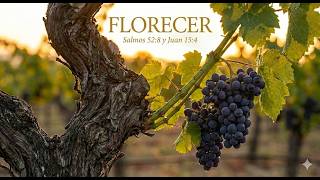
Rooted in Grace: Flourishing in God's Unchanging Love
But I am like an olive tree flourishing in the house of God; I trust in the loving devotion of God forever and ever. — Psalms 52:8
Remain in Me, and I will remain in you. Just as no branch can bear fruit by itself unless it remains in the vine, neither can you bear fruit unless you remain in Me. — John 15:4
Summary: Our journey of faith calls us to a life deeply rooted in the Divine, acknowledging our radical dependence on God for true human flourishing. Like the resilient olive tree thriving in God's sacred dwelling, we find enduring life and persistent freshness not in autonomous strength, but in being continually supplied and secured by God's presence and character, drawing our strength from Him even amidst devastation.
This concept of flourishing deepens as our Savior invites us into an even more profound union as the True Vine. Just as a branch is utterly reliant on the vine for life and fruitfulness, we are called to abide in Christ, our sole source of divine life. This abiding ensures our eternal security, empowers us for genuine fruitfulness that benefits others, and unites us in the communal household of faith, all anchored in God's profound, steadfast love.
The journey of faith, as illuminated by ancient scripture and profoundly deepened by the teachings of our Savior, calls us to a life deeply rooted in the Divine. This journey begins with an understanding of our radical dependence on God, evolving from a place of sanctuary-based resilience to an intimate, Christ-centered union. It is a testament to the unchanging truth that true human flourishing is never found in autonomous strength but in devoted connection to our Creator.
Our understanding of spiritual resilience finds a powerful image in the Old Testament, born from a period of intense crisis. Envision a man like David, facing betrayal and destruction, yet declaring himself like a vibrant, ever-green olive tree thriving within God's sacred dwelling. This image contrasts sharply with the fleeting existence of those who boast in their own power and material possessions, destined to be uprooted and wither away. The olive tree, known for its extraordinary longevity, deep penetrating roots that draw sustenance even from hidden sources in arid lands, and its remarkable ability to regenerate new shoots even when its main trunk is cut down, becomes a vivid symbol for the believer's enduring life.
This resilience is not merely about survival; it's about a flourishing vitality. The Hebrew word for "green" used here signifies not just color, but a state of persistent freshness and vigorous life. Such a life is stable, continually supplied, and secure, drawing its strength from being planted in the most ideal place imaginable: the presence and character of God. The oil produced by the olive, so essential for light and anointing in ancient worship, further symbolizes the believer's role as a source of warmth and light in a dark world, inwardly empowered by the Spirit. David's experience, affirming growth amidst literal devastation, points to an internalized sanctuary—a spiritual resilience independent of external comforts, anchored instead in the very name and steadfast love of God. The "house of God" represents not just a physical location, but the environment of divine presence and covenantal relationship, fostering communal growth within the company of the faithful.
As God's revelation unfolds, this concept of flourishing deepens and transforms. Our Savior introduces Himself as the "True Vine," inviting us into an even more profound, organic, and life-giving relationship. This declaration, the last of His powerful "I Am" statements, signifies His unique role as the sole source of divine life, contrasting with humanity's historical tendency to stray like a wild or barren vine. He is the new, perfect center of God's spiritual garden, the one through whom all connection to the divine root is now established.
The imagery of the vine and branches reveals a radical dependence. Unlike the somewhat independent resilience of an olive tree, a grapevine branch is utterly reliant on the main vine for its very structure, its nourishment, and its ability to produce fruit. Without this vital connection, a branch is useless, fit only for burning. This profound truth underscores that spiritual vitality and fruitfulness are impossible apart from continuous union with Christ.
This union is encapsulated by the command to "abide" in Him. Abiding has two crucial dimensions for believers. First, it refers to the saving faith that positions us permanently in Christ at conversion—an inviolable, eternal relationship. Second, and equally important, it speaks to the conscious, loving obedience we must actively cultivate to maintain an intimate relationship with Him. This involves diligently engaging with His words, living in open confession without unaddressed sin, and walking in daily awareness of His indwelling presence. It is a deliberate effort to remain deeply entwined with Him.
The Father, as the divine Vinedresser, actively tends to us. For branches that fail to bear fruit, He may "take away" in judgment, reflecting the ancient warnings against barrenness. However, a more nurturing interpretation also suggests He "lifts up" struggling branches from the dust, cleansing them so they can receive light and bear fruit. For all who are connected, He "prunes"—an uncomfortable but necessary process of removing even healthy growth that might divert energy from productive areas. This discipline, often experienced through trials and the cleansing power of His Word, is always aimed at greater fruitfulness.
The fruit itself is both an inward spiritual reality—the gentle characteristics of love, joy, and peace cultivated by the Spirit—and an outward testimony expressed through good works, gracious speech, and the sharing of our faith. A thriving believer becomes a source of healing, light, and consecration for their community, a living testament to God's transformative love.
Early Christian thought, particularly among the Syriac Fathers, often merged these powerful metaphors. They saw Christ as both the enduring Olive and the life-giving Vine, and believers as branches grafted into this divine reality. This concept of grafting, described by the Apostle Paul, beautifully illustrates how we, once separated, are now joined to God's covenant root, drawing life from its richness.
At the heart of both the Old and New Testament imagery lies God's profound love. The "steadfast love" (hesed) that David so deeply trusted in, a covenant loyalty that is persistent, unconditional, and enduring through all circumstances, finds its ultimate fulfillment in the "abiding love" (agape) of Christ. When Jesus commands us to abide in His love, He invites us to rest in His unwavering affection, trusting Him to provide everything necessary, just as the branch trusts the vine. This spiritual trust in God's devoted love empowers our continuous, obedient abiding in Christ's sacrificial love.
When we integrate these truths, we discover a blueprint for a life "in Christ" marked by three glorious dimensions:
- Permanence: We are eternally secure, held fast by God's unchanging presence, calming our anxieties and fostering deep spiritual growth. Our lives are hidden in Him, guaranteeing our future.
- Productivity: Our deep connection leads to genuine fruitfulness—not for our own glory, but for the benefit of others and the praise of our Heavenly Father. This productivity is a testament to the goodness of the One we are rooted in, filling us with overflowing joy.
- Participation: The "house of God" and the "vineyard" are inherently communal. To be united with Christ is to be united with His family, the household of faith. This calls us to mutual responsibility, bearing one another's burdens and building authentic connections within the body of Christ.
Therefore, beloved believers, let us embrace this profound truth. Our spiritual vitality is never the result of self-effort or earthly security, but a gift of divine "location." By deliberately remaining planted in the character and love of God—trusting in His long-term covenant loyalty and abiding in the sacrificial union of His Son, the True Vine—we become vibrant testaments to the life of our Creator. We are enabled to endure through every season, to bear abundant fruit for His glory, and to shine forth His light forever and ever. Let us live as branches intimately intertwined with the True Vine, experiencing the fullness of God's grace and radiating His love to a waiting world.
What do you think?
What do you think about "Rooted in Grace: Flourishing in God's Unchanging Love"?
Related Content
Flourish
More Than Surviving: Flourishing in Christ!
Psalms 52:8 • John 15:4
My beloved friends, consider with me for a moment the very heartbeat of our faith: a life not merely endured, but truly lived , vibrant and fruitful, ...
The Living Sanctuary: a Theological and Botanical Analysis of Divine Union in Psalm 52:8 and John 15:4
Psalms 52:8 • John 15:4
The scriptural witnesses of Psalm 52:8 and John 15:4 constitute a profound theological nexus, bridging the Hebrew concept of covenantal trust with the...
Read in Context
Click to see verses in their full context.
Song (Other Languages)