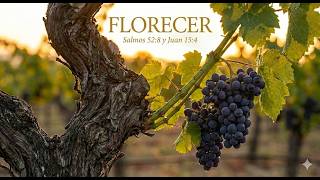
The Living Sanctuary: a Theological and Botanical Analysis of Divine Union in Psalm 52:8 and John 15:4
Psalms 52:8 • John 15:4
Summary: The scriptural witnesses of Psalm 52:8 and John 15:4 unveil a profound theological nexus, revealing a consistent biblical anthropology that defines human flourishing not through autonomous strength, but through a radical, locational dependence upon the Divine Presence. This "rooted life" motif evolves from the Hebrew concept of covenantal trust, as depicted by the Psalmist positioning himself as a "green olive tree in the house of God," to the Johannine theology of mystical, Christocentric union, where Jesus Christ commandingly identifies Himself as the "True Vine." This progression highlights how spiritual vitality stems from a deep, unwavering connection to God.
In Psalm 52, the imagery of the green olive tree emerges from David’s harrowing experience with Doeg the Edomite, starkly contrasting David’s enduring trust with the transience of the wicked. David finds resilience and flourishing not in comfortable circumstances, but by sinking his roots into the "house of God," which signifies God's steadfast love (*hesed*) and His very Name, Character, and Identity. The olive tree, with its deep roots, exceptional longevity, and ability to regenerate, serves as a powerful paradigm for a life that remains stable, supplied, and secure, drawing sustenance from an eternal source and providing light and warmth even amidst arid persecution.
The New Testament metamorphoses this imagery in John 15, where Jesus proclaims, "I am the True Vine." This declaration explicitly contrasts with Israel's historical failure as a "degenerate vine," establishing Jesus as the new, unique center of God’s garden and the sole mediator of divine life. The core of this metaphor is the absolute dependence of the branches—the disciples—on the main vine for vitality and fruitfulness. The command to "abide" (meno) in Him signifies an essential, ontological union, maintained through loving obedience, engagement with His Word, open confession, and conscious communion. Apart from this abiding, a branch is utterly unable to bear fruit.
Ultimately, the "house of God" expands from a physical sanctuary to a dwelling place for God by the Spirit, found supremely in the Person of Christ. The Old Testament's covenantal *hesed* (steadfast love) finds its fulfillment in the New Testament's *agape* (sacrificial love), forming the linguistic and theological bridge between these two foundational metaphors. This integrated "In Christo" life, characterized by permanence, radical productivity, and communal participation, invites believers to rest in God's love, becoming vibrant testaments to the Creator’s life, enduring through trials, and bearing abundant fruit for His glory, forever and ever.
The scriptural witnesses of Psalm 52:8 and John 15:4 constitute a profound theological nexus, bridging the Hebrew concept of covenantal trust with the Johannine theology of mystical union. This interplay represents a sophisticated development of the "rooted life" motif that permeates biblical revelation, evolving from a local sanctuary-based resilience to an ontological, Christocentric participation. In Psalm 52:8, the Psalmist positions himself as a "green olive tree in the house of God," contrasting his endurance with the transience of the wicked.In John 15:4, Jesus Christ commandingly identifies Himself as the "True Vine," necessitating an "abiding" relationship for the branch to maintain its vitality and fruitfulness.The analytical convergence of these texts reveals a consistent biblical anthropology that defines human flourishing not through autonomous strength, but through a radical, locational dependence upon the Divine Presence.
I. The Historical and Literary Crucible of Psalm 52
The analysis of Psalm 52:8 must begin with the stark historical crisis that birthed its imagery. The psalm is traditionally and literarily linked to one of the most harrowing episodes in the life of David: the treachery of Doeg the Edomite.According to the narrative in 1 Samuel 21-22, David, while fleeing from the jealous wrath of King Saul, arrived at the priestly city of Nob. There, the priest Ahimelech provided David with the holy bread of the Presence and the sword of Goliath, unaware of the political breach between David and Saul.This act of hospitality was witnessed by Doeg, Saul’s chief herdsman, who later informed the king. When Saul’s soldiers refused to strike the priests, Doeg himself carried out the execution of eighty-five priests and the total destruction of the city of Nob.
This background informs the "mighty man" addressed in the opening verses of Psalm 52. Doeg represents the archetype of the wicked who boast of evil and trust in their own wealth rather than the mercy of God.The psalmist’s description of the wicked man as a "sharp razor" and a "deceitful tongue" highlights a life predicated on destruction.Consequently, the judgment pronounced in verse 5—that God will "uproot" the wicked from the land of the living—is not merely poetic but a direct mockery of the lack of spiritual rooting in those who seek power through violence.The contrast established in verse 8 is therefore a survivalist’s victory; while Doeg is uprooted and cast away, David remains "like a green olive tree," flourishing in the very sanctuary that Doeg sought to extinguish.
The Archetypal Contrast of the Wicked and the Righteous
The psalmic structure relies on a binary opposition between the transient and the eternal. The wicked man is depicted as a "weed" or a plant with no depth, easily pulled from its home.This is contrasted with the "green olive tree," an organism characterized by its dense foliage, twisted and knotted bark, and exceptional longevity.The Hebrew term for green,ra’anan, does not merely refer to color but to a state of freshness and vigorous vitality.In the arid climate of the Levant, an evergreen tree serves as a powerful symbol of a life that does not wither during the scorching summers of persecution.
The psychological resilience displayed here is forged during a crisis of total loss. David affirms his growth and endurance precisely when the literal "house of God" at Nob has been decimated.This suggests a move toward an internalized understanding of the sanctuary—that spiritual resilience is not dependent on comfortable circumstances but on the "Name, Character, and Identity of God".
II. The Olive Tree as a Paradigm of Spiritual Resilience
The selection of the olive tree (Olea europaea) as the central metaphor for the righteous life in Psalm 52:8 is deeply rooted in the botanical and cultural realities of ancient Israel. The olive was one of the most valuable resources in the Hebrew economy, essential for food, fuel, and medicinal ointments.However, its symbolic weight in the Psalms transcends its economic utility. The olive tree is renowned for its incredible lifespan; radiocarbon dating has identified specimens in Galilee and the Mediterranean basin that are nearly 3,000 years old.These trees survived the rise and fall of empires, the Roman sieges of Jerusalem, and numerous droughts, continuing to produce fruit despite their antiquity.
Botanical Mechanics of Flourishing
The flourishing of the olive tree is attributed to its massive root system. Unlike other trees that may be easily toppled by winds, the olive's roots penetrate deep into the rocky soil of the Judean hills, absorbing nourishment from hidden aquifers.This provides a botanical parallel to the spiritual discipline of "sinking roots" into the character of God.David’s "greenness" is a result of his connection to an eternal source, contrasting with the "tumbleweed" existence of the rootless wicked.
The olive tree also possesses a unique ability to regenerate. Even when the main trunk is cut down, new shoots—often called "olive plants" in other psalms—spring up from the roots, ensuring the tree's survival for generations.This reflects the "permanent, privileged, and productive" position of the believer who trusts in God's mercy.The "green olive tree" signifies a life that is "stable, supplied, and secure," deriving its strength from being "planted in the most ideal place possible".
The Symbolism of Oil and Light
In the religious life of Israel, the product of the olive tree—its oil—was inextricably linked to the sanctuary. Olive oil was used to light the Menorah in the Tabernacle, symbolizing a "continual light" that represented God's presence.It was used to anoint kings and priests, marking them as set apart for divine service.For David, to be like an olive tree "in the house of God" is to be a source of "warmth, and light" in a dark world.The oil is often interpreted as a symbol of the Holy Spirit, suggesting that the "greenness" of the believer is a result of an inward spiritual empowerment.
The archaeological record supports the prominence of this imagery. Excavations in the Old City of Jerusalem have uncovered amethyst seals from the Second Temple period depicting birds—likely doves—perched on fruit-bearing branches, which researchers believe represent common local flora like the olive or the balsam.These artifacts embody the themes of "good fortune and success" and reflect a culture that viewed its relationship with God through these vital plants.
III. The Sanctuary as Soil: The Theology of the House of God
The phrase "in the house of God" (be-bet Elohim) provides the essential qualifier for the flourishing described in Psalm 52:8. There is a long-standing scholarly debate regarding whether literal trees were planted in the temple courts. While some commentators argue that trees would not be cultivated in the immediate area of the sanctuary, others point to the current Haram area in Jerusalem, where ancient olive trees still grow in the precincts surrounding the Al-Aqsa Mosque and the Dome of the Rock.Whether literal or metaphorical, the "house of God" represents the environment necessary for spiritual growth.
The Dwelling Place of the Name
In the Old Testament, the Temple or Tabernacle was considered the locus where God’s "Name" resided.The "nutrient-rich soil" for David’s life-roots was not the physical earth of Jerusalem but the "Name, Character, and Identity of YHWH".To flourish "in the house" is to be a "guest" of the Lord, enjoying His direct protection and nourishment.This proximity to the Divine Presence is what allows the olive tree to remain "ever green," drawing upon the "steadfast love of God" which David pledges to trust in "forever and ever".
The "house of God" also implies a communal dimension. The sanctuary was the place of "stated assemblies," where the people of God gathered for corporate worship and the celebration of the sacraments.Thus, the olive tree does not flourish in isolation but within the "presence of the godly" or "the presence of your faithful people".This communal shade and "mutual pollination" are essential for the productivity and health of the individual believer.
The Evolution of the Household
As biblical theology progresses, the "house of God" expands from a physical structure to a "household of faith".In the New Testament, the church is described as the "house of the living God, a pillar and buttress of the truth".This new "house" is patterned after the "natural household" but is elevated to a spiritual reality where Christ is the cornerstone.The "ought" or "conduct" expected in this house is a reflection of the character of the God who dwells within it.
This development is crucial for understanding the transition to John 15. The "place" of flourishing moves from a building in Jerusalem to a "dwelling place for God by the Spirit".The believer is no longer merely "near" the sanctuary but is being "built together" into a dwelling place where Christ himself is the foundation.This shift from ageographicalfocus to aninterpersonal and organicone sets the stage for the Johannine "abiding" command.
IV. The Johannine Metamorphosis: From Orchard to Vine
The transition from the olive tree of Psalm 52 to the grapevine of John 15 marks a significant development in the biblical "botany of grace." While both metaphors utilize the concept of "rootedness" and "fruitfulness," the vine imagery in John 15 introduces a level of radical dependence and ontological union that surpasses the resilience-based model of the Psalter.
I Am the True Vine
In John 15:1, Jesus identifies Himself as the "True Vine" (he ampelos he alethine).This is the seventh and final "I Am" statement in the Gospel of John, intended to establish His deity and His role as the unique provider of life.By calling Himself the "True" vine, Jesus is explicitly contrasting Himself with the "failed vine" of Israel.
In the Old Testament, Israel was frequently compared to a grapevine planted by God (Isaiah 5; Psalm 80; Jeremiah 2).However, these passages almost always describe a "degenerate vine" that produced "wild grapes" or "bitter fruit" despite receiving every advantage from the Divine Husbandman.Isaiah 5:7 states that "the vineyard of the Lord of hosts is the house of Israel," but because of their unfaithfulness, they were "burned with fire" and "uprooted".
Jesus’ claim to be the "True Vine" represents a "dangerous re-mix" of this established national symbol.He asserts that He is the new center of God’s garden, the one who embodies everything the nation of Israel was supposed to be.There is no other connection to the divine root than through Him; the "house of God" is now found in the person of Jesus.
The Vine and the Branches: A Relationship of Vitality
The core of the Johannine metaphor is the relationship between the vine and its branches (klema). Unlike the sturdy, self-supporting trunk of an olive tree, a grapevine branch is entirely dependent on the main vine for its structural integrity and its life-sap.The vine provides the "nourishment, the energy, the food" necessary for the branch to produce clusters of grapes.
This relationship is characterized by the word "abide" (meno), which appears repeatedly in John 15:4-7. To abide is to "remain" or "take up residence" in Christ.It signifies a "vital union" that originated with Christ but is maintained by the believer’s "loving obedience".Without this abiding, the branch becomes a "worthless" piece of wood, fit only for the fire—a stark echo of the "uprooting" of the wicked in Psalm 52:5.
V. The True Vine: Ontological Union and the Abiding Command
The analysis of John 15:4 reveals a sophisticated theology of "abiding" that serves as the New Testament fulfillment of the "trusting" seen in Psalm 52:8. While trust (bitachon) in the Old Testament emphasizes a relational reliance on a faithful God, the Johanninemenoemphasizes an ontological participation in the life of Christ.
The Two Senses of Abiding
Exegetes distinguish between two primary ways the New Testament uses the concept of abiding. First, there isabiding as saving faith. This is the "positional" placement of the believer in Christ at the moment of conversion.It is a permanent and "inviolate" relationship—what God has joined, no one can separate.Jesus promised that He would never withdraw His life from those who possess it.
Second, there isabiding as loving obedience. This refers to the "intimate relationship" that believers must "deliberately effort" to maintain.While all true believers abide in the first sense, not all maintain the level of intimacy required for maximum fruitfulness.This second sense of abiding involves:
-
Engagement with the Word:Letting Christ’s words "dwell in you richly".
-
Open Confession:Maintaining a life that is an "open book" before God, without unconfessed sin.
-
Conscious Communion:Walking in a daily awareness of God’s presence.
The Impossibility of Autonomy
The most striking claim of John 15:4 is the total impossibility of independent spiritual life: "As the branch cannot bear fruit of itself... neither can you, unless you abide in me".In the botanical world, a grapevine has no strength once detached from its source.Its wood is not useful for construction or furniture; it is too soft and flexible to hold weight.Ezekiel 15:1-8 argues that vine-wood is "good for nothing" but fuel if it does not produce fruit.
This "apart from me you can do nothing" principle flies in the face of modern individualism.It suggests that "activities of the Church" may be "publicly meaningful" yet "not truly connected to Christ" if they are done in the strength of the flesh.True fruitfulness is not the result of "striving" or "dead works" but is the natural overflow of the sap (the Spirit) flowing through the branch.
VI. The Vital Economy of Fruitfulness: Pruning and Preservation
The interplay between the Father as the "vinedresser" and the believer as the "branch" introduces a dynamic of active management. This "horticultural discipline" is intended to ensure that the "house of God" remains a place of maximal life and productivity.
The Airo Debate: Judgment vs. Nurture
A critical linguistic debate surrounds John 15:2: "Every branch in me that does not bear fruit he takes away (airo)." The Greek verbairocan mean "to take away" or "to lift up".
-
The "Take Away" Interpretation:Suggests that the vinedresser removes dead or apostate branches in judgment, casting them into the fire.This aligns with the "uprooting" of the wicked in Psalm 52:5 and the "burning" of the fruitless vineyard in Isaiah 5.
-
The "Lift Up" Interpretation:Points to the practice of ancient viticulture where branches that fell into the dust were "lifted up" and placed on a trellis or lattice.In this view, God does not immediately cut off the struggling believer but tenderly cleanses them from the "soil" of the world so they can receive sunlight and begin to bear fruit.
Regardless of the interpretation, the goal is the same: the Father desires fruitfulness.Pruning (kathairo) is the process of removing even healthy growth to ensure the branch’s energy is not wasted on "sucking energy" from the productive clusters.This "uncomfortable process" is often achieved through trials and the "cleansing" power of the Word.
Inward and Outward Fruit
The "fruit" produced by the branch is described both as aninward realityand anoutward testimony.
-
Inward Fruit:The "fruit of the Spirit"—love, joy, peace, patience, kindness, and self-control.These are described as "sweet and mellow," growing under the "Sun of righteousness".
-
Outward Fruit:"Good works," "gracious speeches," and the "sharing of faith" with others.
A "flourishing" believer becomes a source of "healing, light, and consecration" for the community.This productivity is the "validation" of a believer’s union with Christ; a branch that is truly connected to the True Vine cannot help but produce grapes of the same character as the Vine itself.
VII. The Synthesis of the Syriac Fathers and Early Church Tradition
The early church, particularly the Syriac Fathers, demonstrated a sophisticated understanding of the interplay between the olive and the vine, often interchanging the metaphors to express the totality of the Christian life.
The Hybrid Symbolism of Christ
Syriac theologians like Ephrem utilized both the grapevine and the olive tree to symbolize Christ and His people.Ephrem noted that the olive tree’s leaves "stand fast" through the winter, representing the faithful who "persevere in Christ the Olive".Simultaneously, he applied the "true vine" imagery from John 15 to describe the organic connection to the root.
Interestingly, the Syriac language itself facilitated this synthesis. Robert Murray noted that the Syriac word typically used for a single grape was sometimes also applied to the olive, allowing for a symbolic interchange that bothered the ancient scholars "not a bit".This reflects a "biblical theology of the olive tree" that fits into a much larger mosaic of redemptive history, starting with the olive leaf brought back by Noah’s dove as a sign of "new creation".
Grafting and the Grafted Life
The synthesis of these images is most clearly seen in the doctrine of "grafting," primarily articulated by Paul in Romans 11 but deeply connected to the themes of Psalm 52 and John 15. Paul compares Israel to a "cultivated olive tree" and the Gentiles to a "wild olive tree" that has been grafted into the root of the original plant.
-
The Root:The "holy root" (the patriarchs and the promises) provides the sap for the new branches.
-
The Grafting:This is "contrary to nature," as usually, a cultivated branch is grafted onto a wild root to improve the plant.God, the "Master Gardener," does the opposite, grafting wild branches into the "noble" root of His covenant.
The Syriac Fathers applied this olive-grafting imagery to the "True Vine" of John 15, seeing the two metaphors as complementary ways of describing the "membership among this great cloud of witnesses".The believer is "planted wholly in him," enjoying the stability of the olive and the productivity of the vine.
VIII. Linguistic Bridges: Hesed, Agape, and the Grammar of Love
The functional core of the "interplay" between Psalm 52:8 and John 15:4 is the linguistic evolution of God's love. The "steadfast love" (hesed) that David trusts in is the direct ancestor of the "abiding love" (agape) that Jesus commands His disciples to rest in.
The Anatomy of Hesed
Hesedis one of the most significant terms in the Hebrew Bible, occurring 248 times, with 50% of its usage found in the Psalms.It is a "cluster of ideas"—love, mercy, grace, and kindness—all wrapped into the concept of "covenant loyalty".Hesedis the "persistent and unconditional tenderness" of a God who seeks after man even when man is hiding in shame.
The KJV uses at least fifteen different terms to translatehesed, including "mercy," "lovingkindness," and "goodness".However, its core meaning is "affection that has committed itself".It is the "loyal love" that remains "decade after decade," even after persistent betrayals.In Psalm 52:8, David’s trust is anchored in this "rock-solid faithfulness" that endures to eternity.
Agape as the Fulfillment of Hesed
The New Testament concept ofagape(love) is the Greek equivalent ofhesed.When John describes Jesus as being "full of grace and truth," he is utilizing the Greek equivalents of the Hebrew "biggies"hesedandemet(faithfulness/truth).
-
The Mechanism of Grace:Just ashesedis "freely given, often unexpectedly,"agapeis the quality that moves Christ to act for the benefit of His "branches" without considering His own interest.
-
The Command to Abide in Love:In John 15:9, Jesus says, "Abide in my love." This is an invitation to "rest in my love for you"—to live with the same dependence a branch has for the vine, trusting that the vinedresser will provide everything necessary.
This linguistic bridge suggests that "abiding" in John 15 is the active, continuous exercise of the "trust" seen in Psalm 52:8. The believer "trusts in thehesedof God" by "abiding in theagapeof Christ".
IX. The Integrated Theology of the "In Christ" Life
When Psalm 52:8 and John 15:4 are fully integrated, they provide a comprehensive blueprint for the "In Christo" life. This state of being is characterized by three primary dimensions: permanence, productivity, and communal participation.
Permanence: The Eternal Vocabulary
Both texts utilize "eternal" language to describe the believer’s security. David trusts "forever and ever," and Jesus promises that those who abide will see fruit that "remains".This perspective shift—from the "wild storm of hatred" to the "unchanging presence" of God—calms anxiety and fosters "post-traumatic growth".Modern behavioral studies have suggested that this "transcendent trust" reduces cortisol levels and strengthens emotional regulation.
The "permanent" position of the believer is further emphasized by the frequency of the "in Christ" formula. The expressions "in Christ," "in the Lord," and "in him" occur 164 times in Paul's letters alone.This reflects the "organically united" nature of the relationship, where the believer’s life is hidden in the life of the Savior.
Productivity: The Joy of the Vinedresser
The purpose of this permanence is fruitfulness. The "greenness" of the olive tree and the "much fruit" of the vine are not for the tree’s own consumption; they are for the benefit of others and the glory of God.
-
The Source of Joy:Jesus says that His joy is "in you" so that "your joy may be full".This joy is the byproduct of the vital connection to the vine.
-
The Glory of the Father:"By this my Father is glorified, that you bear much fruit" (John 15:8).
This productivity is a "living testament" to God’s love, a "beacon" that shines in a troubled world.Like the olive tree ceaselessly providing "shelter, nourishment, warmth, and light," the abiding branch reflects the "goodness" of the Name it is rooted in.
Participation: The Household of Faith
The "house of God" (Ps 52:8) and the "vineyard" (John 15:4) are inherently corporate. To be in the house is to belong to the "eternal family".This "interconnectedness" is essential to the church’s witness; a branch cannot be connected to the vine without being connected to every other branch.
-
Brotherly Unity:In this new community, the "barriers of race, nationality, class and sex" are abolished.
-
Mutual Responsibility:Believers are called to "carry each other’s burdens" and "recommit to building authentic connection".
X. Conclusion: The Living Sanctuary
The analysis of the interplay between Psalm 52:8 and John 15:4 demonstrates a remarkable continuity in the biblical understanding of human flourishing. David, in the midst of the carnage at Nob, finds his resilience as a "green olive tree" by sinking his roots into the sanctuary of God'shesed. Jesus, on the eve of His own sacrifice, invites His disciples into an even deeper "abiding" as branches in the "True Vine," where His own life-sap becomes their strength.
The "House of God" has been revealed to be not a building of stone but a Person of grace. To flourish as an olive tree in the house of God is to abide as a branch in Christ. This "botanical hermeneutic" teaches that spiritual vitality is never the result of self-effort or material security but is a gift of "location." By remaining "planted" in the character and love of God—characterized by the "long-term love" ofhesedand the "sacrificial union" of the vine—the believer becomes a "vibrant testament" to the life of the Creator, enduring through every winter and bearing fruit in every season, forever and ever.
What do you think?
What do you think about "The Living Sanctuary: A Theological and Botanical Analysis of Divine Union in Psalm 52:8 and John 15:4"?
Related Content
Flourish
More Than Surviving: Flourishing in Christ!
Psalms 52:8 • John 15:4
My beloved friends, consider with me for a moment the very heartbeat of our faith: a life not merely endured, but truly lived , vibrant and fruitful, ...
Rooted in Grace: Flourishing in God's Unchanging Love
Psalms 52:8 • John 15:4
The journey of faith, as illuminated by ancient scripture and profoundly deepened by the teachings of our Savior, calls us to a life deeply rooted in ...
Read in Context
Click to see verses in their full context.
Song (Other Languages)