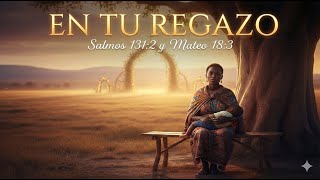
The Architecture of Spiritual Dependency: a Comprehensive Lexical and Theological Analysis of the Interplay Between Psalm 131:2 and Matthew 18:3
Psalms 131:2 • Matthew 18:3
Summary: The theological concept of childlikeness serves as a fundamental pillar in understanding the relationship between humanity and the Divine. This paradigm is profoundly articulated through the maternal imagery of the weaned child in Psalm 131:2 and later radically reinterpreted by Jesus in Matthew 18:3 as the essential prerequisite for entering the Kingdom of Heaven. These biblical texts, despite emerging from distinct historical epochs, share a core structural and spiritual architecture: the transition from autonomous ambition to a state of stilled dependency.
In Psalm 131, the central metaphor of the Hebrew term *gamul*, a "weaned child," signifies a crucial psychological and spiritual shift. Unlike an agitated infant demanding sustenance, the *gamul* has endured the "battle" of weaning and now sits with the mother not for provision, but for the simple joy of relationship. This represents a movement from biological necessity to relational choice, from self-centered "childish" demands to a "childlike" contentment and rest found through an active, grace-empowered labor to calm and quiet one's soul, conquering restless desires.
Jesus, in Matthew 18:3, radically redefines greatness by commanding us to "turn" or "convert" and become like *paidia* – young children who held the lowest social status in the first century, characterized by helplessness and vulnerability. This command is a subversion of adult hierarchical values, requiring an intentional choice to adopt a posture of weakness and abandon self-sufficiency to enter the Kingdom. It is not about moral purity, but about embracing lowliness and dependency.
The interplay between these two texts reveals a consistent biblical architecture of dependency. The internal "how-to" of the weaned child's stilled dependency in Psalm 131 provides the psychological blueprint for the radical "turning" Jesus demands. Spiritual maturity is thus not about increased autonomous strength, but about a deepening responsiveness to God's control, moving beyond "childish" agitated demands to "childlike" contentment and rest. This active passive rest requires deliberate disciplines such as silence, Sabbath, and intellectual humility, learning to relinquish the need to know or control everything.
This theology of childlikeness has profound implications for individual formation and community life, serving as a reversal of idolatry. It challenges the modern idol of autonomous ambition and productivity, inviting us into a secure attachment with the Divine where the joy of presence surpasses the pursuit of provision. Jesus Christ Himself embodies this weaned spirit, demonstrating authority exercised in humility and total dependency on the Father. This sanctified weanedness, accessible in any circumstance, remains the essential prerequisite for entering and living in the Kingdom of Heaven, offering a settled peace and hope that fosters confidence and restful happiness.
The theological concept of childlikeness serves as a fundamental pillar in the biblical understanding of the relationship between humanity and the Divine. This paradigm is articulated with profound intimacy in the Old Testament through the maternal imagery of the weaned child in Psalm 131:2 and is later radically reinterpreted by Jesus in the New Testament as the essential prerequisite for entering the Kingdom of Heaven in Matthew 18:3. While these passages emerge from distinct historical epochs—the Davidic monarchy and the first-century Roman-occupied Judea—they share a profound structural and spiritual architecture centered on the transition from autonomous ambition to stilled dependency. This analysis explores the linguistic foundations, cultural contexts, psychological implications, and the reception history of these two seminal texts to articulate a comprehensive theology of spiritual maturity through the lens of childlikeness.
The Contextual Framework of the Song of Ascents and the Davidic Soul
Psalm 131 is categorized within the "Songs of Ascents" (Psalms 120–134), a collection traditionally sung by pilgrims traveling to Jerusalem for the major festivals. Within this liturgical sequence, Psalm 131 occupies a strategic position, following Psalm 130’s "Song from the Depths," which focuses on the soul’s need for forgiveness. If Psalm 130 addresses the crisis of guilt, Psalm 131 addresses the crisis of pride. The movement from the depths of penitence to the height of Zion requires a corresponding internal movement: the leveling of the heart. The psalm is historically and literarily attributed to David, a figure whose life was defined by the very "great matters" he claims to eschew in the opening verse.
The superscription "Of David" invites a reading that considers the king’s tumultuous biography. David, a man after God's own heart, was also a man of immense political and military power. For such a figure to declare that his heart is not "haughty" nor his eyes "lofty" represents a radical subversion of the typical monarchical ego. David’s rejection of "great matters" or things "too wonderful" for him is not an abdication of responsibility but a recognition of the limits of human sovereignty in the face of Divine providence. This "intellectual humility" provides the necessary negative space in which the positive imagery of the weaned child in verse 2 can be developed.
Lexical Exegesis of the Hebrew Gamul
The central metaphor of Psalm 131:2 rests upon the Hebrew term gamul (גמל), which denotes a "weaned child". To contemporary readers, weaning might imply a transition occurring within the first year of life, but in the Ancient Near Eastern context, this process was significantly different. Historical and Semitic research indicates that children in this culture were typically weaned between the ages of three and six. By this age, a child was no longer a passive infant but a toddler capable of walking, basic communication, and self-navigation.
The significance of the gamul lies in the psychological shift from biological necessity to relational choice. A nursing infant is driven by "agitated demand," seeking the mother’s breast for immediate sustenance and comfort; this state is one of "fretful and peevish" anxiety. In contrast, the weaned child has survived the "battle" of weaning—the child’s first experience of profound loss and the denial of what was once considered essential for survival. When the gamul sits with the mother, they are not there for the "milk" of provision but for the "simple joy of being in relationship".
| Developmental Stage | Primary Drive | Emotional Disposition | Spiritual Metaphor |
| Unweaned Infant | Biological Satisfaction (Milk) | Agitated, Demanding, Fretful | Provision-centered faith; "Childish" |
| Weaning Process | Negotiation of Loss/Denial | Conflict, Tears, Struggle | The "Battle" of Sanctification |
| Weaned Child (Gamul) | Presence and Relationship | Calmed, Quieted, Content | Presence-centered faith; "Childlike" |
The psalmist emphasizes that this state of peace was not a natural disposition but a result of intentional action. The verbs shavah (to level or smooth) and damam (to be silent) indicate a grace-empowered labor to "level" the soul's stormy impulses. This internal leveling is compared to a mother soothing a fretful child, yet the psalmist is both the one being soothed and the one doing the soothing: "I have calmed and quieted my soul".
The Theological Mechanism of Spiritual Weaning
Spiritual weaning, as interpreted by theologians like Charles Spurgeon, is the process by which God removes the "breasts of worldly consolations" from the believer to foster a higher form of sustenance. This process is often perceived by the believer as "deprivation, disappointment, confusion, and grief". However, the goal is to bring the soul to a place where it "thinks nothing of itself" and is no longer "fretting and worrying" over the lack of immediate gratification.
The transition from the unweaned to the weaned state serves as a model for sanctification. While regeneration makes one a "child" of God, it is sanctification that makes one a "weaned child". A mature faith, according to Psalm 131, is one that has "conquered its desires" and learned to "feed upon the bread of heaven" rather than the "milk" of self-interest or worldly success. This requires a shifting of the soul's "center of gravity" from the self to the Divine.
The Matthean Redefinition: Conversion to Childlikeness
In the New Testament, the concept of childlikeness is centered on Jesus' response to the disciples' query regarding hierarchy: "Who, then, is the greatest in the kingdom of heaven?". Jesus’ response in Matthew 18:3—"unless you change and become like little children, you will never enter the kingdom"—functions as both a direct command and a radical subversion of the disciples' "honor-shame expectations".
Lexical Foundations: Paidia and Strephō
The Greek terminology employed in Matthew 18:3 is essential for understanding the specific type of childlikeness Jesus commends. The word for child is paidia (παιδία), the plural of paidion, which is a diminutive of pais. In the Greco-Roman and Jewish world of the first century, paidia referred to young children who occupied the lowest rung of the social ladder. They were characterized by "objective smallness," a total lack of social status, and a state of "extreme helplessness and vulnerability".
The prerequisite for entering the Kingdom is to genēsthe (become) like these children, a process initiated by the verb straphēte (from strephō), meaning to "turn" or "convert". This "turning" implies a fundamental "reversal" of adult values. For an adult disciple, who has spent a lifetime accumulating status, merit, and self-sufficiency, becoming like a paidion means intentionally choosing a posture of "weakness" and "giving up self-sufficiency".
| Terminology | Greek Root | Literal Meaning | Spiritual Implication |
| Change/Turn | Strephō | To turn around; to reverse | Radical reorientation of the will |
| Little Child | Paidia | Young child; infant; toddler | Posture of low status and dependency |
| Humble | Tapeinōsei | To make low; to level | Active rejection of pride and ambition |
The Social Status of Children in the First Century
To understand the weight of Jesus' metaphor, one must look at the first-century cultural context. Unlike the modern Western world, which often sentimentalizes childhood as a period of innocence and purity, the ancient world viewed children primarily in terms of their "powerlessness" and "lack of rank". Children were considered "nobodies" who had to limit themselves to "listening and obeying".
When Jesus places a child in the midst of the disciples, he is not pointing to the child's moral purity but to the child's "low social status". The disciples were "vying for positions of honor" within the Kingdom, assuming it would mirror the hierarchies of earthly empires. Jesus’ use of the child subverts this entirely: greatness is found in those who "humble themselves" to the level of the "unimpressive one" standing in the background.
The Theological Interplay: Synthesis of the OT and NT Paradigms
The connection between Psalm 131:2 and Matthew 18:3 is structural rather than merely coincidental. Scholars frequently identify Psalm 131 as the "OT backdrop" for Jesus' teaching. The "weaned child" of David’s psalm provides the psychological and internal "how-to" for the "turning" Jesus demands of his followers.
The Distinction Between Childishness and Childlikeness
A recurring theme in the reception history of both texts is the distinction between "childish ways" and "childlike faith".
-
Childishness involves the persistence of the unweaned infant’s traits in the adult soul: the "agitated demand," the "restless ambition," and the "noisy" insistence on having one's own way.
-
Childlikeness is the "mature" state of the weaned child who has learned "contentment and rest" through the "discipline of a loving parent's training".
Spiritual maturity is thus redefined as a "reversion" to a state of stilled dependency. As noted by N.T. Wright, Jesus' call to humility was a radical departure from contemporary values, suggesting that to rule with him requires "acting in ways consistent with his own manner of life," characterized by "authority exercised in humility". The "weaned" posture of Psalm 131 allows the believer to enter the "peace which passeth all understanding" by recovering the "spirit of a little child".
The Paradox of Active Passive Rest
Both texts highlight a paradox: the attainment of "rest" requires an "active struggle." David says, "I have calmed and quieted my soul," indicating that this peace was the "fruit of humility and grace, not natural temperament". Similarly, Jesus commands his disciples to "turn," an active imperative that requires them to "change their lives around".
This "active passive rest" is modeled in the imagery of the gamul sitting with the mother. The child is "lying passive in her hand" yet has "conquered his desires" to reach that state. This reflects the "contemplatio" mentioned in spiritual formation literature, where the weaned child is "content to rest in its loving mother’s arms and receive whatever she desires to give," abandoning the "restless striving" for control.
Psychological Perspectives: Attachment Theory and the Soul
The ancient insights of David and Jesus find modern confirmation in the field of "attachment theory." Secure attachment—marked by trust and low anxiety—is essential for "higher life satisfaction and resilience". Psalm 131:2 articulates a "divinely anchored attachment" where the believer’s security rests not in "autonomous wisdom" but in the "constancy of Yahweh".
Security and Spiritual Dryness
The weaning metaphor also provides a framework for understanding "spiritual dryness" or the "dark night of the soul". Mystics and modern theologians alike observe that "mother-led weaning" (weaning initiated by the mother rather than the infant) creates "great discomfort" but is necessary to "take the relationship to the next level". In this view, God may withhold the "milk" of immediate emotional or spiritual consolations to wean the soul from "self-righteousness" and "provision-seeking" toward a deeper "presence-seeking" love.
The psychological well-being described in Psalm 131:2—a "calm internal stillness"—is essential for recovery from modern conditions of "stress, burnout, and loneliness" caused by "heightened self-reliance". By presenting "restful dependency as maturity," these scriptures dismantle the "modern idol of autonomous ambition".
Maternal Imagery and the Nature of Divine Love
Psalm 131:2 is one of the few places in Scripture where God is represented through "powerful maternal imagery". This choice of metaphor emphasizes the "nurturing, comforting" nature of Divine presence as a mother's embrace. It suggests that the Kingdom is not merely a legal or hierarchical structure but a relational space where the soul can "bury its head in that very bosom" after which it once pined.
This maternal backdrop enriches the Matthean command to "become like children." To enter the Kingdom is to enter a relationship of "total trust" in a Father (or Mother-like presence) who provides "good gifts to those who ask him". The "kingdom of heaven" is thus characterized by "unbridled joy" and "happy authenticity," qualities that are often "stripped out of people" as they encounter the brokenness of the world.
Sociological and Ecclesiastical Implications
The interplay between these texts has profound implications for how the "community of the weaned" interacts with the broader world and with its own vulnerable members.
The Community of "Little Ones"
In Matthew 18, the child serves as a "model citizen of the kingdom". This teaching establishes a new social ethic where "welcoming a little child" is equivalent to "welcoming Jesus himself". The "little ones" (mikrōn) are not just literal children but any "least of these" who lack "value or prestige" in the eyes of society.
The "weaned" posture of Psalm 131 allows for the abandonment of "social competition". Because the weaned soul is "satisfied and serene," it no longer needs to "rank or compare" itself with others. This provides the foundation for the "forgiveness cycle" described in the latter half of Matthew 18, where "counting grievances" gives way to "mercy".
Critiquing "Productivity Idolatry" in the Church
Modern ecclesiastical life is often plagued by "ego, drivenness, and a sense of hurry". The "weaned-child spirit" challenges the "secular narratives that equate worth with position or portfolio". Church leaders, in particular, are called to find "soul rest" by "deliberately entering the quiet of God's presence" rather than through "entrepreneurial aggression". This "soul rest" serves as a "spiritual and emotional shock absorber" through life's challenges.
| Social Dynamic | Worldly Model | Kingdom Model (Matt 18/Ps 131) |
| Greatness | Based on Rank and Achievement | Based on Humility and Dependency |
| Ambition | Rooted in Ego and Self-Validation | Ambition Surrendered to God's Purpose |
| Community | Competition for First Place | Welcoming the Least and Forgotten |
| Response to Conflict | Retribution and Grudges | Forgiveness "from the heart" |
Practical Formation: The Disciplines of the Weaned Soul
The "conversion" to childlikeness is not a one-time event but a "fluid, non-linear journey" of spiritual formation. Several practical disciplines are highlighted across the literature as essential for cultivating a "weaned-child spirit."
The Discipline of Silence and Solitude
To "level and smooth" the soul, one must "deliberately enter the quiet of God's presence". Silence is described as a "therapeutic tool" that creates space for "transforming insights and emotions". This involves "unplugging from technology" and "spending time in quiet reflection," which yields physical benefits such as lower blood pressure and reduced stress.
In monastic traditions, the recitation of Psalm 131 at "Compline" (the final prayer service of the day) was used to "quiet anxious thoughts" before sleep. This liturgical practice trains "reflexive trust" and helps the believer "settle into God's gentle embrace".
The Discipline of Sabbath and Thanksgiving
"Sabbath observance" is a critical counter-cultural practice that "disrupts productivity idolatry". By stopping work, the believer acknowledges that "God is in control" and that their worth is not tied to their "portfolio". Similarly, "daily thanksgiving prayer" disciplines the heart toward "contentment," shifting the focus from "what is lacking" to "what has been given".
Intellectual Humility and the Relinquishment of "Why?"
A key aspect of the "weaned" posture is learning to "not feel that you have to know or understand it all". This involves being "not ashamed to say, ‘I do not know’" when faced with "great matters" or "things too wonderful". Like Job, who was humbled by God’s presence and confessed he had spoken of "things I did not understand," the believer is called to "leave the unanswerable questions with God" to find soul-rest.
Synthesis: The Christological Fulfillment
The interplay between Psalm 131 and Matthew 18 finds its ultimate resolution in the person of Jesus Christ. Jesus is the supreme example of the "weaned child" who lived in "total dependency on the Father".
Jesus as the Model of Childlikeness
Throughout the Gospels, Jesus is portrayed as one who "restores and protects the weak and vulnerable" and as one who "makes himself weak and vulnerable like the child". He practiced "objective humility" by "refusing to use the power he has to protect himself" or to "alleviate his own suffering". In his life and death, he modeled the "gesture of surrender" that allowed "true strength to emerge".
N.T. Wright notes that Jesus' teaching on the "last being first" was not merely a set of instructions but a description of his own mission. He was "childlike" because he was "full of the wonder of life, the hope for humanity, and the beauty of creation". His "awe of life" was contagious, drawing people into a "new creation" where "authority is exercised in humility and gentleness".
The Eschatological Hope of the Quiet Soul
The "weaned-child spirit" leads to a "deeply settled confidence in God" that functions as an eschatological hope. Psalm 131 concludes with a call for Israel to "hope in the LORD from this time on and forevermore". This hope is not "wishful thinking" but a "settled peace" that "God provideth for the morrow".
Entering the Kingdom as a child means both "present participation" in God's life and a "future inheritance". The "restful happiness" of the weaned soul serves as a "gateway to life," a temporary "resting place" on the way to the "bodily resurrection". This hope "warrants confidence in the past, demands it in the present, and will justify it in the future".
Conclusion: The Architecture of Dependency
The analysis of the interplay between Psalm 131:2 and Matthew 18:3 reveals a consistent biblical "architecture of dependency." True spiritual maturity is defined not as an increase in autonomous strength but as a "deepening responsiveness to God's control". The Davidic metaphor of the gamul provides the psychological blueprint for this state—a soul that has moved past "agitated demand" to "stilled silence"—while the Matthean command provides the ethical and social mandate for "converting" to this posture.
By synthesizing these passages, one arrives at a theology where childlikeness is the "reversal of idolatry". It is a rejection of the self-worship inherent in pride and the "productivity idolatry" of the modern age. Instead, it invites the believer into a "secure attachment" with the Divine, where the "milk" of provision is surpassed by the "joy" of presence. This "sanctified weanedness" is possible under any circumstances—from the "palace" of a king to the "obscure village" of a servant—and remains the "essential prerequisite" for all who seek to enter and live within the Kingdom of Heaven. The "pearl" of the Psalms thus polishes the "gate" of the Kingdom, offering a vision of peace that is only accessible to those who are "humbled, content, and at rest" in the Father's embrace.
What do you think?
What do you think about "The Architecture of Spiritual Dependency: A Comprehensive Lexical and Theological Analysis of the Interplay Between Psalm 131:2 and Matthew 18:3"?
Related Content
In Your Embrace
An Attitude of Total Humility and Total Surrender to the Will of the Father
The Lord wants to instill in us that attitude of complete humility, complete subjection, total surrender to the Lordship and the Will of God. In this ...
The Architecture of Trust: Embracing Childlikeness for Kingdom Living
Psalms 131:2 • Matthew 18:3
The journey of faith culminates not in self-sufficiency, but in a profound, mature dependency on God—a state best understood as "childlikeness." This ...
Read in Context
Click to see verses in their full context.
Song (Other Languages)