The Divine Keep and the Human Stand: a Comparative Theological Analysis of Psalm 121 and James 1
Psalms 121:1 • James 1:3
Summary: Our theological inquiry reveals a profound canonical dialogue between Psalm 121 and James 1 concerning the nature of stability and endurance in a tumultuous world. While separated by centuries and literary genres, these passages engage in a deep conversation that balances God's absolute work of divine preservation, or *shamar*, with the believer's synergistic call to human perseverance, or *hupomonē*. We find that Psalm 121 presents the theological indicative that God is the ever-vigilant Keeper who neither slumbers nor sleeps, while James 1 offers the ethical imperative for believers to actively endure trials with joy.
Psalm 121 establishes God as our transcendent Helper (*ezer*), the Creator of heaven and earth, who stands in stark contrast to the deceptive security of the "hills" or pagan deities. This Psalm assures us of His unwavering watchfulness, promising that He "will not suffer thy foot to be moved" and will act as our "shade" to protect us from the sun's striking by day and the moon by night. This intricate imagery underscores God’s comprehensive and tireless guardianship over His people, securing us from ultimate physical and spiritual harm throughout our life’s journey.
Turning to James 1, we encounter the direct command to "count it all joy when ye fall into divers temptations." This is not a call for superficial happiness, but a profound theological reorientation: trials are divinely purposed tests (*dokimion*) designed to refine our faith. The result is *hupomonē*, an active, steadfast endurance that enables us to remain firm under pressure, much like a soldier holding their ground. James contrasts this stability with the "tossed wave" of the double-minded individual, whose divided loyalties prevent them from receiving wisdom and remaining stable.
The synergy between these texts becomes clear in their resolution of perceived tensions. While James acknowledges the "scorching heat" of trials that can wither earthly things, Psalm 121 assures us that God's "shade" filters this heat, ensuring that trials refine our faith without destroying our soul. God's providential "keeping" is the metaphysical reality that empowers our "endurance." Ultimately, this divine guardianship culminates in the promise of the "Crown of Life" for those who endure, confirming that God's preservation of our "soul" (*nephesh* in Hebrew, *psuche* in Greek) is both eternal and the ultimate proof that the Keeper of Israel has not slumbered.
Therefore, we conclude that God's divine *shamar* empowers human *hupomonē*. We are kept so that we may stand. The pilgrim’s "unmoved foot" is not an inherent quality but a dynamic outcome rooted in the Keeper’s unwavering vigilance and accessed through the believer's single-minded trust and active perseverance. In this seamless integration of divine protection and human response, our souls are preserved from this time forth and forevermore.
1. Introduction: The Canonical Dialogue of Pilgrimage and Dispersion
The biblical canon presents a multifaceted dialogue regarding the human experience of adversity and the divine promise of presence. Within this dialogue, two texts stand as monumental pillars of pastoral theology: Psalm 121, a liturgical "Song of Ascents" from the Hebrew Psalter, and James 1, the opening chapter of the first Catholic Epistle of the New Testament. While separated by centuries, language (Hebrew versus Greek), and genre (hymnic poetry versus wisdom paraenesis), these two passages engage in a profound intertextual conversation concerning the nature of stability in a chaotic world.
The inquiry into the interplay between Psalm 121:1—"I lift up my eyes to the hills"—and James 1:3—"knowing that the testing of your faith produces endurance"—reveals a complex theological symbiosis. It is a relationship that balances the absolute monergism of divine preservation (shamar) with the synergistic imperative of human perseverance (hupomonē). Psalm 121 offers the theological indicative: God is the Keeper who does not slumber. James 1 offers the ethical imperative: The believer must count trials as joy and endure.
To understand this interplay is to understand the tension between the promise of safety and the reality of suffering. Psalm 121 is often categorized as a psalm of trust, providing assurance to the traveler facing the physical perils of the Judean wilderness. James 1 addresses the "twelve tribes scattered among the nations" (James 1:1), a community facing the sociopolitical perils of the Diaspora, economic exploitation, and religious persecution. Both communities—the pilgrims of the Ascent and the exiles of the Dispersion—are fundamentally "sojourners". They share the common status of vulnerability.
This report provides an exhaustive analysis of these two texts, moving beyond surface-level thematic similarities to explore the deep grammatical, historical, and theological connections that bind them. By examining the linguistic roots of "help" (ezer) and "endurance" (hupomonē), the metaphors of the "unmoved foot" versus the "tossed wave," and the elemental imagery of the sun’s "striking" versus its "withering," we will construct a comprehensive theology of Christian endurance that is underpinned by divine guardianship.
2. Exegetical Analysis of Psalm 121: The Liturgy of the Keeper
Psalm 121 occupies a unique place in the collection known as the Shir Hamaaloth or "Songs of Ascents" (Psalms 120–134). These fifteen psalms were likely utilized by pilgrims journeying up to Jerusalem for the three major annual festivals: Passover, Pentecost, and Tabernacles. The geographical reality of this journey—an ascent from the lowlands or the Jordan Valley up to the heights of Zion—provides the controlling metaphors for the text.
2.1 The Direction of the Gaze (Psalm 121:1)
The Psalm opens with a gesture of visual orientation: "I will lift up mine eyes unto the hills" (KJV). This seemingly simple statement has generated centuries of exegetical debate, the resolution of which is critical for understanding the psalm’s theological trajectory.
2.1.1 The Hermeneutics of the "Hills"
The interpretation of verse 1 hinges on whether the hills (harim) are viewed as the source of help or the source of threat.
-
The Zion Interpretation: Traditional Jewish and Christian exegesis has often viewed the "hills" as a reference to Mount Zion and the Temple Mount. In this reading, the psalmist lifts his eyes to the sanctuary of Yahweh, and the subsequent clause, "from whence cometh my help," is a relative clause affirming that help comes from that holy place. This interpretation aligns with other Ascent psalms (e.g., Psalm 125:1) that extol Zion.
-
The Threat/Idolatry Interpretation: However, modern scholarship and a close reading of the Hebrew syntax suggest a different perspective. The phrase me-ayin yavo ezri ("From where does my help come?") is best understood as an interrogative—a question, not a statement. If verse 1b is a question, then the look to the hills in verse 1a is likely a look of anxiety or temptation, not assurance.
-
Physical Danger: The hills of Judea were rugged, desolate terrain, notorious for harboring brigands, thieves, and wild animals. For the solitary traveler, the hills represented the location of ambush.
-
Spiritual Danger: More significantly, the "high places" (bamot) on the hills were the traditional sites of Canaanite idolatry, specifically the worship of Baal and Asherah. The temptation for the Israelite pilgrim was to look to these local fertility deities for protection during the journey.
-
In this context, the opening of Psalm 121 is a dramatic renunciation. The pilgrim looks at the hills—imposing, dangerous, and dotted with pagan shrines—and asks, "Is this where my help comes from?". The answer in verse 2 is an emphatic negative implied by the assertion of a different source.
2.2 The Ontology of the Helper (Psalm 121:2)
The response to the visual stimuli of the hills is a theological confession: "My help (ezri) comes from the LORD (Yahweh), who made heaven and earth".
2.2.1 The Significance of Ezer
The Hebrew noun ezer is derived from a root meaning to succor, save, or strengthen. It is not merely "assistance" in the modern sense of a supplemental aid; it implies essential intervention in a time of desperation. It is the word used to describe Eve in Genesis 2:18 (a power corresponding to Adam) and is frequently used in military contexts where Israel is outnumbered and requires divine intervention (Deuteronomy 33:29). By appropriating this title, the psalmist confesses that his survival on the journey is contingent upon Yahweh's intervention.
2.2.2 Creator vs. Creation
The appositive phrase "Maker of heaven and earth" is a polemical stroke. If the "hills" represent the created order (or the local deities thought to inhabit them), Yahweh is identified as the Transcendent Creator of those hills. This establishes a hierarchy of power: Why fear the hills, or worship the gods of the hills, when one has access to the Maker of the hills? This theological move—anchoring trust in the Creator—is the necessary prerequisite for the endurance described in James. One cannot endure the trials of the created world without being anchored in the Creator of that world.
2.3 The Vigilance of the Keeper (Psalm 121:3-4)
The central motif of Psalm 121 is the "keeping" work of God. The Hebrew root shamar (to keep, guard, watch, preserve) appears six times in these eight verses, creating a rhythmic assurance of protection.
2.3.1 The Unmoved Foot
Verse 3 promises, "He will not suffer thy foot to be moved". The imagery is kinetic. On the rocky, uneven paths of the Palestinian ascent, a slip of the foot (mot) could result in a fatal fall or a broken limb, leaving the traveler vulnerable to the elements and predators. The "moving" of the foot is a metaphor for destabilization, calamity, and the loss of secure standing. This promise of stability is not a guarantee of a smooth road, but of a secure gait. It suggests that God provides the capacity to traverse difficult terrain without ultimate collapse. This connects directly to the "steadfastness" of James 1, where the goal is to remain standing under pressure.
2.3.2 The Sleepless Watchman
The psalmist asserts, "He that keepeth Israel shall neither slumber nor sleep". This statement operates on two levels:
-
Theological Polemic: In the Ancient Near Eastern worldview, gods were often depicted as needing sleep or being dormant during certain seasons (e.g., the fertility cycles of Baal). In 1 Kings 18:27, Elijah mocks the prophets of Baal, suggesting their god might be sleeping. Psalm 121 asserts that Yahweh is distinct from these deities; He possesses infinite vigilance and inexhaustible energy.
-
Personal Assurance: For the traveler camping in the open, the fear of the night is mitigated by the presence of a sentry who does not need rest. God takes the night watch.
This attribute of sleeplessness is vital for the interplay with James. If God never sleeps, then He is fully aware of every trial and test the believer encounters. There is no moment of suffering that occurs while God is "looking away." This omnipresent awareness is the foundation for the command to "count it all joy"—the believer knows they are under the gaze of the Sleepless One.
2.4 The Divine Shade: Protection from Extremes (Psalm 121:5-6)
The metaphor shifts from the "Keeper" to the "Shade" (tsel) in verse 5: "The Lord is thy shade upon thy right hand".
2.4.1 The Metaphor of Shade
In the arid climate of the Near East, the sun is a formidable adversary. Shade is not a luxury; it is a lifeline. To say God is the "shade" is to say He interposes Himself between the believer and the harsh elements of the environment. The "right hand" signifies the position of defense; in ancient warfare, the shield was typically held in the left hand, leaving the right side exposed. For God to be at the right hand is for Him to cover the warrior's most vulnerable point.
2.4.2 The Solar and Lunar Threat
Verse 6 employs a merism—a literary device using opposites to encompass a whole: "The sun shall not smite thee by day, nor the moon by night".
-
Sunstroke: The danger of the sun is physical and immediate—intense heat causing exhaustion or death.
-
Moonstroke: The danger of the moon reflects ancient beliefs connecting moonlight with madness (lunacy), epilepsy, or the general terrors of the night (demons, cold, dampness). This comprehensive protection covers both objective, visible dangers (Sun) and subjective, psychological, or hidden dangers (Moon). As we will see, this contrasts sharply with James 1:11, where the sun does rise with scorching heat to wither the grass.
2.5 The Scope of Preservation (Psalm 121:7-8)
The psalm concludes by expanding the scope of protection from the specific journey to the totality of existence.
2.5.1 Keeping the Soul
"The Lord shall preserve thee from all evil: he shall preserve thy soul (nephesh)". The use of nephesh is critical. It refers to the whole person, the life force, the essential self. The promise is not necessarily that no physical harm will ever befall the body (martyrs and saints suffer), but that "all evil" (moral or ultimate calamity) will not be allowed to destroy the soul or sever the covenant relationship.
2.5.2 Going Out and Coming In
The final verse invokes another merism: "preserves thy going out and thy coming in". This idiom encompasses all of life's undertakings, daily routines, and the ultimate journey from birth to death. The temporal marker "from this time forth, and even forevermore" pushes the horizon of the psalm into eternity. The keeping of God is an eternal decree.
3. Exegetical Analysis of James 1: The Discipline of the Endurer
Turning to the New Testament, we encounter the Epistle of James. Written by James the Just, the brother of Jesus, this letter is addressed to the "twelve tribes which are scattered abroad" (James 1:1). This audience is experiencing the "Diaspora"—a state of displacement, marginalization, and vulnerability that parallels the pilgrim of Psalm 121, but with an added layer of socio-political hostility.
3.1 The Paradox of Joyful Trials (James 1:2)
James opens with a startling imperative: "My brethren, count it all joy when ye fall into divers temptations" (KJV) or "various trials" (NKJV).
3.1.1 The Inevitability of Falling
The verb peripipto ("fall into") suggests an accidental or unavoidable encounter, much like the traveler in the parable of the Good Samaritan "fell among" robbers (Luke 10:30). It implies that trials are not sought out by the masochist but are an inevitable feature of the fallen world. The phrase "various" (poikilos) means "multi-colored" or "many-faceted," indicating that trials come in diverse forms—poverty, persecution, sickness, and social rejection.
3.1.2 The Cognitive Reorientation
The command "count" (hegeomai) refers to an intellectual evaluation or a decisive mindset. It is not a command to feel an emotion of happiness, but to make a theological calculation. The believer is to evaluate the trial as an asset rather than a liability because of what the trial produces.
3.2 The Mechanism: Testing Produces Endurance (James 1:3)
"Knowing that the testing of your faith produces patience". This verse provides the causal logic for the command to rejoice.
3.2.1 Dokimion: The Metallurgy of Faith
The Greek word dokimion (testing) is drawn from the world of metallurgy. It refers to the process of putting gold or silver into a crucible and applying heat to burn off the dross, leaving only the pure metal. This imagery redefines the nature of the "heat" experienced by the believer. It is not a destructive fire meant to consume, but a refining fire meant to purify.
3.2.2 Hupomonē: Active Endurance
The product of this testing is hupomonē, widely mistranslated as "patience." In modern English, patience implies a passive waiting or tolerance. However, hupomonē is a compound of hupo (under) and meno (to remain). It literally means "to remain under". It describes the capacity to bear a heavy load without collapsing, or to hold a military position despite an onslaught.
-
The Athletic/Military Context: The term was used of athletes pushing through pain or soldiers holding the line. It is an active, heroic virtue.
-
Connection to Ps 121: Here lies the first major interplay. Psalm 121 promises that God "will not suffer thy foot to be moved." James 1 explains how that stability manifests in the believer's experience: it manifests as hupomonē—the God-given strength to "remain under" the pressure without fleeing or collapsing.
3.3 The Epistemology of Stability: Wisdom vs. The Wave (James 1:5-8)
James anticipates that the experience of trials often leads to confusion. "If any of you lack wisdom, let him ask of God..." (v. 5).
3.3.1 The Wave Metaphor
James contrasts the wisdom-seeker with the doubter: "He that wavereth is like a wave of the sea driven with the wind and tossed" (v. 6).
-
Fluid Instability: The wave has no internal structure; it is entirely shaped by external forces (the wind). This is the antithesis of the "unmoved foot" of Psalm 121.
-
Double-Mindedness: James diagnoses the cause of this instability as dipsychos—literally "double-souled" or "two-minded" (v. 8). This unique term describes a person with divided loyalties—one eye on God, one eye on the world. This recalls the pilgrim of Psalm 121:1 who might be tempted to look at the "hills" (idols) while also calling on Yahweh. James asserts that such divided loyalty results in total instability: "Let not that man think that he shall receive any thing of the Lord" (v. 7).
3.4 The Solar Metaphor: Withering the Grass (James 1:11)
James employs a vivid nature metaphor to describe the transience of wealth and the leveling effect of trials: "For the sun is no sooner risen with a burning heat, but it withereth the grass".
-
The Scorching Heat (Kauson): The Greek term kauson likely refers to the Sirocco, the hot, dry desert wind that blasts vegetation.
-
The Lesson: The sun reveals the fragility of "the grass" (flesh/wealth). Trials strip away the superficial supports of life, revealing what is eternal. This stands in tension with Psalm 121:6 ("The sun shall not strike thee"), a tension we will resolve in the synthesis section.
3.5 The Crown of Life (James 1:12)
The section concludes with a beatitude: "Blessed is the man that endureth temptation: for when he is tried, he shall receive the crown of life".
-
The Crown (Stephanos): This is not the diadem of royalty, but the laurel wreath of the victor in the games. It marks the successful completion of the contest.
-
The Reward: The crown is Life (zoe). It represents the eschatological fullness of eternal life, the ultimate preservation of the soul promised in Psalm 121:7.
4. Thematic Interplay and Synthesis: The Theology of the Keep
Having established the exegetical foundations of both texts, we now turn to their interplay. The relationship between Psalm 121 and James 1 is not merely one of shared vocabulary, but of deep theological causality. The "Keeping" of God (Psalm 121) is the metaphysical reality that makes the "Endurance" of the believer (James 1) possible.
4.1 The Dialectic of Help and Hazard
Both texts begin with a recognition of hazard. The pilgrim of Psalm 121 looks at the "hills" and sees the threat of the journey. The recipient of James’ epistle looks at their life and sees "various trials."
| Feature | Psalm 121 Perspective | James 1 Perspective | Synthesis |
| The Danger | The Hills / The Sun / Evil | Trials / Scorching Heat / Temptation | The believer lives in a hostile environment (The Road/The Dispersion). |
| The Posture | Lifting Eyes (Vertical) | Asking Wisdom (Vertical) | Survival requires a vertical orientation away from the horizontal threat. |
| The Resource | Ezer (Help from Creator) | Wisdom / Good Gifts from Father | God supplies the necessary resource to survive the environment. |
| The Result | Preservation (Shamar) | Endurance (Hupomonē) | God's external keeping empowers man's internal standing. |
Insight: The question of Psalm 121:1 ("From where does my help come?") finds its operational answer in James 1:5 ("Let him ask of God"). The "help" often arrives in the form of "wisdom"—the divine perspective that allows the believer to understand the purpose of the trial and therefore endure it.
4.2 The Theology of Stability: The Foot vs. The Wave
The most striking visual contrast between the two texts is the Unmoved Foot (Psalm 121:3) and the Tossed Wave (James 1:6).
-
Psalm 121:3: "He will not suffer thy foot to be moved." This promise of stability is rooted in the vigilance of the Keeper. It implies that God is actively preventing the fatal slip.
-
James 1:6: "He that wavereth is like a wave... driven with the wind." This warning illustrates what happens when the connection to the Keeper is severed by doubt.
-
The Synthesis: The stability promised in Psalm 121 is accessed through the single-minded faith commanded in James 1. The "unmoved foot" is not automatic for the "double-minded" man. If a pilgrim looks to the hills (idols) for help and to Yahweh, he becomes the wave—unstable in all his ways. But if he answers the question of Psalm 121:1 with the monotheistic confession of verse 2 ("My help comes only from the Lord"), he secures the unmoved foot.
-
Second-Order Insight: Stability is covenantal. The "Keeping" of Psalm 121 is reciprocal to the "Trusting" of James 1. God keeps the foot of the one who keeps their eyes on Him.
-
4.3 The Theology of the Elements: Sunstroke vs. Refining Fire
Both texts utilize solar imagery to describe the interaction between the believer and the hostile environment.
-
The Conflict: Psalm 121:6 says, "The sun shall not strike thee." James 1:11 says, "The sun is no sooner risen with a burning heat, but it withereth the grass."
-
The Resolution: This is not a contradiction but a nuanced theology of suffering.
-
James 1 describes the Objective Reality: The sun is hot. Trials do come. The "grass" (our physical bodies, our wealth, our temporal circumstances) will wither under the heat of life. We are not immune to the kauson (scorching heat).
-
Psalm 121 describes the Ultimate Protection: The sun will not smite (nakah—fatally strike) the believer. While the heat may wither the "grass" of our circumstances, God acts as the "Shade" (Ps 121:5) to ensure the heat does not destroy the soul.
-
Synthesis: The "Shade" of God does not block the sun entirely (which would prevent the "testing" and "refining" process of James 1:3). Instead, the Shade filters the sun, ensuring it is hot enough to refine the gold (dokimion) but not hot enough to destroy the pilgrim (sunstroke). God modulates the trial so that it produces endurance rather than death.
-
4.4 The Soteriology of the Soul: Nephesh and Psuche
The ultimate convergence of these texts is found in their soteriological horizon—the salvation of the soul.
-
Psalm 121:7: "The Lord shall preserve thy soul (nephesh)." This is the culmination of the Keeper's work. The nephesh is the seat of life and identity.
-
James 1:21: "Receive with meekness the implanted word, which is able to save your souls (psuchas)."
-
James 1:12: "He shall receive the crown of life."
-
The Synthesis: The "keeping" of Psalm 121 is the process; the "Crown of Life" in James 1 is the result.
-
God "preserves the going out and coming in" (Ps 121:8). This corresponds to the believer's life journey of "enduring temptation" (James 1:12).
-
When the believer successfully navigates the journey—kept by God's power and enduring through faith—the result is the preservation of the soul.
-
Third-Order Insight: The "Crown of Life" is not a payment earned by endurance, but the visible manifestation that the soul has been "kept" by God. The fact that the believer arrives at the destination to receive the crown is proof that the "Keeper of Israel" did not slumber.
-
5. Comparative Lexical Analysis
To deepen the analysis, we present a structured comparison of the key Greek and Hebrew terms that drive the theology of these passages.
Table 1: Comparative Lexicon of Divine and Human Action
| Concept | Psalm 121 Term (Hebrew) | Meaning & Nuance | James 1 Term (Greek) | Meaning & Nuance | Interplay |
| Protection |
Shamar | To hedge about, guard, attend to. A sentry's vigilance. | Tereo (James 1:27) | To keep, observe, maintain status. | God shamars the believer so the believer can tereo themselves unspotted. |
| Stability |
Mot (Foot not moved) | To slip, shake, totter, fall. God prevents this. |
Salos (Wave) | To be tossed, agitated. The state of the doubter. | Divine shamar prevents mot; Human doubt creates salos. |
| Endurance |
Ezer (Help) | Essential aid, reinforcement. Military succor. |
Hupomonē | To remain under, active fortitude. Not passive. | God's Ezer provides the strength for man's Hupomonē. |
| Heat/Test |
Shemesh (Sun) | The physical sun; source of potential harm. |
Dokimion | The act of proving ore in fire. | The Shemesh provides the heat for the Dokimion of faith. |
| The Self |
Nephesh | Soul, throat, appetite, life force. |
Psuche | Soul, mind, life. | God keeps the nephesh from evil; The Word saves the psuche. |
6. Historical and Sociological Contextualization
Understanding the Sitz im Leben (setting in life) of both texts illuminates their relevance.
6.1 The Pilgrim's Anxiety (Psalm 121)
The pilgrimage to Jerusalem was not a leisurely vacation. It involved leaving the safety of one's village and clan to traverse the "hills"—ungoverned spaces often controlled by bandits. Furthermore, the journey required passing by the local shrines of pagan deities, which offered rival systems of protection.
-
Sociological Insight: Psalm 121 is a liturgy of counter-formation. It trained the Israelite imagination to reject the visible symbols of security (hills/shrines) in favor of the invisible Creator. It was a protest against the "territorial" view of gods (where gods only had power in certain hills) by asserting Yahweh's universal jurisdiction ("Heaven and Earth").
6.2 The Exile's Vulnerability (James 1)
The audience of James ("the twelve tribes scattered") faced the vulnerability of the minority. They were economically exploited by the rich (James 2:6, 5:4) and dragged into courts. They faced a "scorching heat" that was social and economic.
-
Sociological Insight: James 1 provides a "Theology of the Margins." For a community with no political power, "endurance" (hupomonē) was the only available weapon. By reframing their suffering as "testing" that produces "maturity," James empowered a disenfranchised community to see their struggle as spiritually productive rather than meaningless victimhood.
7. Practical Implications: A Pastoral Theology of the Road
The synthesis of Psalm 121 and James 1 offers a robust framework for navigating the "Road" of the Christian life.
7.1 The Upward Look Precedes the Forward Walk
Before one can obey the command of James 1 to "count it all joy," one must perform the action of Psalm 121:1: "Lift up eyes." Attempting to endure trials without first establishing the "Keeper" relationship with God leads to stoicism or burnout. The assurance of Psalm 121 is the fuel for the endurance of James 1.
7.2 The Management of Trials
Because the Keeper "slumbers not" (Ps 121:4), the believer can be assured that no trial is accidental. The "various trials" of James 1 are supervised events. God acts as the "Shade" (Ps 121:5), regulating the intensity of the trial so that it remains a test (dokimion) and does not become a destruction (sunstroke). This knowledge allows the believer to trust the process.
7.3 The Danger of Double-Mindedness
Both texts warn against divided loyalty. The pilgrim cannot trust the "hills" and Yahweh. The Christian cannot be "double-minded" (James 1:8). Stability ("the unmoved foot") is the exclusive property of the single-minded. To look for help in the world while half-heartedly praying to God is to invite the instability of the "tossed wave."
7.4 The Horizon of Hope
Both texts lengthen the believer's gaze. Psalm 121 promises keeping "forevermore." James 1 promises the "Crown of Life." This eschatological horizon relativizes the present suffering. The "scorching heat" of the sun is temporary; the preservation of the soul is eternal.
8. Conclusion: The Keeper and the Victor
The interplay between Psalm 121:1 and James 1:3 reveals the seamless garment of biblical theology. Psalm 121 provides the Objective Fact: God is the Creator-Keeper who vigilantly guards His people from ultimate evil. James 1 provides the Subjective Response: The believer, secure in this knowledge, actively endures the refining fires of life with joy.
The "Unmoved Foot" of the Psalmist is not a static reality; it is the dynamic result of "Endurance." The believer stands firm on the precipice of the trial, not because they are inherently immovable, but because the "Keeper of Israel" is holding them fast. The cry of the Psalmist—"From where does my help come?"—is answered by the resolved endurance of the Apostle, who knows that the testing of faith is merely the prelude to the Crown of Life.
In the final analysis, the theology of Psalm 121 and James 1 teaches that we are kept so that we may stand. The divine shamar enables the human hupomonē. And in this synergy of keeping and enduring, the soul is preserved "from this time forth and forevermore."
What do you think?
What do you think about "The Divine Keep and the Human Stand: A Comparative Theological Analysis of Psalm 121 and James 1"?
Related Content
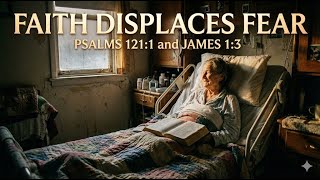
Faith Displaces Fear
Have You Lost Faith?
Do you remember a time when you said or thought: I have lost faith? How did you feel when you spoke those words? Maybe I can remind you: Most likely, ...
Unwavering Faith: Standing Secure in the Keeper's Embrace
Psalms 121:1 • James 1:3
The human journey through life is marked by both serene moments and daunting adversities. Across centuries and differing literary forms, ancient wisdo...
Read in Context
Click to see verses in their full context.
Song (Other Languages)