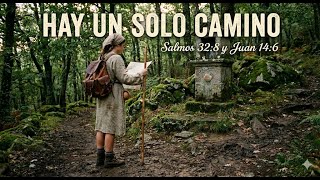
The Way of Wisdom and the Person of Christ: an Exhaustive Intertextual and Theological Analysis of Psalm 32:8 and John 14:6
Psalms 32:8 • John 14:6
Summary: The grand metanarrative of the biblical journey, spanning from Eden to the New Jerusalem, centers on the profound question of "the way" we are to navigate this fallen world and return to our Creator. This existential inquiry finds two distinct yet deeply intertwined answers in the instructional promise of Psalm 32:8 and the radical Christological declaration of John 14:6.
In Psalm 32, a wisdom psalm of David, a voice—whether of the psalmist or Yahweh—promises: "I will instruct thee and teach thee in the way which thou shalt go: I will guide thee with mine eye." Here, guidance is presented as an external, instructional, relational, and protective pedagogy. It presupposes a path of obedience (*halakhah*) that must be learned through submission to divine wisdom, following genuine penitence. This divine oversight, a "guiding eye," fosters intimate care, standing in contrast to the brute force of "bit and bridle" needed for the stubborn, "mule-like" heart lacking understanding.
Centuries later, Jesus of Nazareth profoundly transforms this concept in John 14:6, declaring: "I am the way, the truth, and the life: no one comes to the Father, but by me." No longer is "the way" merely an external path of wisdom or a body of instruction; it becomes an incarnate Person to be known. Jesus' "I AM" assertion signifies His divine identity, embodying not just the route, but the very reality and vitality of eternal life itself. This declaration establishes His exclusive role as the sole mediator to the Father.
John 14:6 functions as the fulfillment of Psalm 32:8. The external "guiding eye" of Yahweh, which watches over and instructs, finds its ultimate expression and internalization in the person of Christ and the indwelling of the Holy Spirit. The Spirit, promised immediately after Jesus' "I am the Way" statement, provides the internal understanding and animation necessary for willing obedience, moving us beyond the forced coercion of the "mule" to the adoptive freedom of sons.
Thus, the progression in divine guidance moves from pedagogical instruction to personal incarnation. The instruction promised in the Psalms is not merely a map to be memorized, but an intimate relationship with Christ. To be guided by God's "eye" ultimately means to look into the face of Jesus, who embodies all truth and life. Our anxiety about finding the right direction is resolved not by an abstract plan, but by trusting in the Person of Christ, who *is* the Way to the Father.
1. Introduction: The Locus of Divine Guidance in Biblical Theology
The biblical narrative is fundamentally structured around the concept of movement—a trajectory that spans from the expulsion from Eden to the gathering of the nations in the New Jerusalem. Within this grand metanarrative, the question of "the way" (derechin Hebrew,hodosin Greek) is paramount. It is the central question of the human condition: How does the finite creature navigate the moral and spiritual topography of a fallen world? How does the estranged soul find its way back to the Creator? These questions find two distinct yet deeply interrelated answers in the instructional promise of Psalm 32:8 and the Christological declaration of John 14:6.
Psalm 32, identified as aMaskilor instructional wisdom psalm of David, presents the answer in the form of divine pedagogy. In verse 8, a voice—debated by scholars to be either the psalmist speaking prophetically or Yahweh speaking directly—promises: "I will instruct thee and teach thee in the way which thou shalt go: I will guide thee with mine eye".Here, guidance is instructional, relational, and protective, predicated on the penitence of the sinner and the covenantal faithfulness of God.It presupposes a path that exists outside the believer, ahalakhah(way of walking) that must be learned through submission to divine wisdom.
Centuries later, in the Upper Room narratives of the Fourth Gospel, Jesus of Nazareth radicalizes this concept. Responding to Thomas’s anxious query regarding the destination and the route of Jesus' imminent departure, Christ asserts: "I am the way, the truth, and the life: no one comes to the Father, but by me" (John 14:6). In this statement, the "way" is no longer merely a path of obedience or a body of wisdom to be mastered; it is a Person to be known.The external instruction of the Psalmist is assumed into the hypostatic union of the Son.
This report provides an exhaustive analysis of the interplay between these two texts. It explores the philological evolution fromderechtohodos, the theological shift from external instruction to incarnational mediation, and the hermeneutical connections between the Wisdom literature of the Old Testament and the High Christology of the New Testament. By synthesizing exegetical data, historical commentary—notably the intense focus of Augustine and Luther on these passages—and systematic theology, this analysis demonstrates that John 14:6 functions as the fulfillment of the promise made in Psalm 32:8. It argues that the Incarnation transforms the "guiding eye" of Yahweh into the indwelling presence of the Spirit and the saving work of the Son, moving the believer from the coercive "bit and bridle" of the law to the freedom of adoptive sonship.
2. Exegetical Analysis of Psalm 32:8
To understand the depth of the promise of guidance in Psalm 32:8, one must first situate it deeply within the literary, historical, and canonical context of the psalm itself.
2.1. Genre and Context: TheMaskilof Penitence
Psalm 32 is identified in its superscription as aMaskilof David.The termMaskilis derived from the Hebrew rootsakal, which means to be prudent, wise, or to understand. This designation is crucial for interpreting the psalm's intent; it suggests that the composition is not merely a hymn of praise or a lament, but a didactic tool intended to impart wisdom to the community.It serves as a piece of wisdom literature embedded within the Psalter, designed to teach the faithful about the mechanics of sin, confession, and restoration.
The psalm is one of the seven traditional "Penitential Psalms" (along with Psalms 6, 38, 51, 102, 130, and 143), which have played a central role in the liturgy of confession and the rite of penance throughout the history of the church.While Psalm 51 represents the immediate, raw outpouring of contrition following the prophet Nathan’s rebuke of David for his adultery with Bathsheba and the murder of Uriah, Psalm 32 is viewed by scholars as the "seasoned, didactic aftermath".It is the reflective composition of a man who has traversed the agony of "silence" (unconfessed sin) and emerged into the joy of forgiveness.
The internal structure of the psalm supports this reading. It moves from the beatitude of forgiveness (vv. 1–2) to the physiological and psychological torment of suppression (vv. 3–4), to the catharsis of confession and relief (v. 5), and finally to instruction for the community (vv. 8–11).Verse 8 acts as the pivotal fulcrum where the subjective experience of the individual is transformed into objective instruction for the collective. It functions as a divine oracle or a prophetic assurance inserted into the thanksgiving, bridging the gap between personal testimony and communal theology.
The Psychological Landscape of Silence
The backdrop to the promise of instruction in verse 8 is the "silence" described in verse 3: "When I kept silence, my bones waxed old through my roaring all the day long".This silence is not a tranquil quietude but a stubborn refusal to acknowledge guilt. The Hebrew term implies a "covering up" of sin, which stands in direct contrast to the "covering" (atonement) provided by God in verse 1.The physical symptoms described—bones wasting away, moisture turning to summer drought—depict the psychosomatic toll of a guilty conscience. It is only when the silence is broken by confession ("I acknowledged my sin unto thee," v. 5) that the believer is ready to receive the instruction of verse 8. One cannot be guided by the "eye" of God while hiding from the "face" of God.
2.2. The Identity of the Speaker in Verse 8
A critical exegetical decision regarding Psalm 32:8 concerns the identity of the speaker. The text shifts from the second-person address to God ("Thou art my hiding place," v. 7) to a first-person declaration ("I will instruct thee," v. 8). There are two primary scholarly positions regarding this shift:
David as Wisdom Teacher:Some scholars argue that David, having learned through the crucible of failure and restoration, assumes the role of the sage. In this view, the "I" is David, applying his experience to "instruct" the congregation or a specific disciple.This aligns with theMaskilgenre, where the wise king impartssakal(insight) to his subjects. David becomes the mediator of the lesson, warning them not to repeat his own stubbornness (the "mule" of verse 9).
Yahweh as Divine Guide:The majority view, supported by the shift in tone and the authority of the promises ("I will guide thee withmineeye"), posits that this is a divine oracle. Yahweh interrupts the psalmist's thanksgiving to confirm the covenant pledge of guidance.The promise to "counsel" and "watch over" implies a capacity for providential oversight that belongs properly to Deity.
The latter view is supported by the parallelism with other prophetic texts where God speaks directly to promise guidance (e.g., Isaiah 48:17: "I am the Lord thy God which teacheth thee to profit, which leadeth thee by the way that thou shouldest go"). However, theMaskilnature of the psalm allows for a functional fluidity where David’s instruction becomes the vehicle for God’s own word.As the anointed king teaching his people, David functions as a type of the Messiah—a point that will become crucial when connecting this text to Jesus in John 14.
2.3. Lexical Analysis of Divine Instruction
Verse 8 contains a triad of Hebrew verbs that delineate the nature of this promised guidance. These terms are not synonyms but represent different facets of the educational and directive process.
Hebrew Verb
Root
Meaning
Theological Nuance
Askilkha(אַשְׂכִּֽילְךָ)
Sakal(שָׂכַל)
To make prudent, give insight, instruct
Directly connects to the titleMaskil. It implies intellectual comprehension and the impartation of wisdom. It is the antidote to being "without understanding" (v. 9).
We-orekha(וְאוֹרְךָ)
Yarah(יָרָה)
To teach, point out, shoot (an arrow)
This is the etymological root ofTorah(Law/Instruction). It suggests authoritative direction, setting a trajectory like an archer aiming an arrow.
I-a'atsah(אִיעֲצָה)
Ya'ats(יָעַץ)
To counsel, advise
Implies a personal, deliberative relationship rather than mere command. It suggests a shared deliberation where the superior wisdom of God is offered to the believer.
This triadic structure suggests a comprehensive pedagogy.Sakaladdresses the understanding (making one wise);Yarahaddresses the will and conduct (showing the path);Ya'atsaddresses the decision-making process (counseling). The object of this instruction is "the way" (b’derech). In the Old Testament,derechserves as a master metaphor for human conduct, lifestyle, and obedience to the Covenant.It is not merely a geographical route but a moral sphere. To be taught in "the way" is to be aligned with the divine will, contrasting sharply with the "way of sinners" (Psalm 1:1) or the wandering of the lost sheep.
2.4. The Metaphor of the "Guiding Eye"
The phrase "I will counsel you with my eye upon you" (i-a'atsah alekha eini) has generated significant discussion regarding its precise meaning and emotional resonance.
Surveillance vs. Care:While "keeping an eye on someone" can imply surveillance or threat in some modern contexts, the biblical usage here is overwhelmingly protective. It suggests intimate, vigilant care.It stands in contrast to the "heavy hand" (yad) of God experienced during the period of unconfessed sin (v. 4).The shift from the heavy hand of discipline to the guiding eye of counsel marks the transition from estrangement to intimacy.
The Look of Intimacy:Commentators note that guidance by the eye implies a close relationship. A servant who knows the master's mind, or a child who is attuned to the parent, can be guided by a mere glance or a nod. This stands in stark contrast to the stranger or the rebellious animal that requires forceful manipulation.This interpretation prepares the way for the subsequent warning in verse 9 against being like the horse or mule.
Providential Oversight:Others interpret the "eye" as a reference to God's providence—the omniscience that allows God to see the path ahead (the "helicopter view") and advise the believer accordingly.God sees the hidden dangers ("the floods of great waters," v. 6) and guides the believer around them.
2.5. The Anthropological Counterpoint: The Mule
Verse 9 provides the negative foil to the positive promise of verse 8: "Be not like a horse or a mule, without understanding...".The animal requires "bit and bridle" (meteg va-resen)—external compulsion—to stay near or to be controlled. The contrast establishes two modes of relating to the Divine:
Rational/Willing Obedience:Guided by the "eye" (instruction, relationship, wisdom). This is the goal of theMaskil.
Irrational/Coerced Obedience:Controlled by the "bit" (force, circumstance, suffering). This is the state of the sinner who refuses to confess (v. 3).
TheMaskilthus argues that the "Way" is best traversed through the internalization of wisdom (Torah/Instruction) rather than the external application of force.This internalization foreshadows the New Covenant promise of the law written on the heart (Jeremiah 31:33) and ultimately the indwelling of the Spirit of Truth in John 14.
2.6. Septuagint (LXX) Nuances
The Septuagint translation of Psalm 32:8 (numbered 31:8 in the LXX) offers further insight through its Greek terminology.
Instruction:The Hebrewaskilkhais translated assunetiō(to make you understand/instruct).
The Way:The Hebrewb’derechis translated asen hodō tautē(in this way).
The Eye:The phrase is renderedstēriō epi se tous ophthalmous mou("I will fix my eyes upon you").
The use ofhodosin the LXX establishes a direct lexical link to the New Testament usage. The "way" that God promises to teach in the Psalm is the same lexical container that Jesus fills with his own personhood in the Gospel. The "way" of the Psalm is a mode of living (halakhah) and a path of safety from the "flood of great waters" (Ps 32:6).
3. Exegetical Analysis of John 14:6
The transition from the Psalms to the Gospel of John moves the concept of "the way" from a path of obedience to a Person of divine identity. While Psalm 32 offers thepromiseof instruction, John 14 offers thepresenceof the Instructor.
3.1. Context: The Crisis of Departure and the Farewell Discourse
John 14 sits within theFarewell Discourse(John 13–17), Jesus’ final extended teaching before the Passion.The atmosphere is thick with anxiety and impending separation. Jesus has announced his departure, predicting betrayal by Judas and denial by Peter. The disciples are disoriented. They view "the way" through a geographical and political lens—they expect a Messiah who will establish a kingdom in Jerusalem, not one who departs to the Father via death.
Thomas, the pragmatist among the Twelve, voices the collective confusion: "Lord, we do not know where you are going. How can we know the way?" (John 14:5).Thomas assumes the destination is a physical location (perhaps a safe house or a fortress) and the "way" is a route they can traverse on their own if given the proper map or instructions. He is asking for aMaskil—instruction on the route. Jesus' response dismantles this assumption entirely.
3.2. The "I AM" (Ego Eimi) Formula
Jesus begins his response with the emphatic "I am" (Ego eimi). In the Fourth Gospel, this formula is heavily laden with theological significance, echoing the Divine Name revealed to Moses in Exodus 3:14 ("I AM WHO I AM").
Absolute vs. Predicate:While this specific instance is a predicate "I am" (I am x), it participates in the broader Johannine pattern of seven "I AM" sayings (Bread, Light, Door, Shepherd, Resurrection, Way, Vine) that collectively assert Jesus' deity.
Theophany:Just as Jesus walking on the water (Mark 6:48-50) is a theophanic revelation of the "I AM" passing by (echoing Job 9:8 and the Exodus), John 14:6 is a revelation of the "I AM" as the exclusive access to the divine realm.Jesus does not claim to possess the map; He claims to be the territory and the bridge.
3.3. The Triad: Way, Truth, Life
Jesus does not say, "I have the way" or "I teach the way" (as David might in Psalm 32), but "Iamthe way".This tripartite declaration is comprehensive:
The Way (Hodos):The use of the definite article (he hodos) indicates exclusivity.In the context of the disciples' confusion, Jesus redefines the destination. The destination is not a place, but a Person ("the Father"). Therefore, the way is also a Person ("Me"). Thehodoshere is soteriological; it is the bridge over the chasm of sin and death.It answers the "way" of Isaiah 40:3 ("Prepare the way of the Lord") by presenting Jesus as the Yahweh who comes and the path by which the exiles return.
The Truth (Aletheia):In Hebrew thought, truth (emet) implies reliability and faithfulness. In Greek thought, it implies reality vs. shadow. Jesus claims to be the embodiment of divine reality and the fulfillment of the Torah.If Psalm 32:8 promises instruction in the truth, John 14:6 presents the Teacher whoisthe Truth. He is the substance of which the Law was a shadow.
The Life (Zoe):This refers tozoe(eternal, divine life) rather thanbios(biological life). Jesus is the source of the life that Psalm 32 celebrates as the "blessedness" of the forgiven man.He is the one who has life in Himself (John 5:26) and grants it to those who "come" to Him.
3.4. Exclusivity and Mediation
The clause "No one comes to the Father except through me" establishes the exclusive mediatory role of Christ. This counters the modern pluralistic notion of "many paths" to God.In the Johannine context, this exclusivity is rooted in the unique Sonship of Jesus. Only the one who has "come down from heaven" (John 3:13) can lead others back up. He is theScala Iacobi(Jacob's Ladder), the sole interface between heaven and earth.
This claim of exclusivity is often a point of tension in modern theological discourse.However, within the text, it functions as a word of comfort, not exclusion. To a group of men terrified that they have lost the map, Jesus assures them that they cannot get lost as long as they are with Him. The exclusivity provides certainty.
4. The Intertextual Bridge:DerechandHodos
The connection between Psalm 32:8 and John 14:6 is not merely thematic but linguistic and hermeneutical. The "Way" of the Old Testament prepares the conceptual space for the "Way" of the New.
4.1. The "New Exodus" Motif
Scholarship on the Gospel of John identifies a strong "New Exodus" motif that links "the way" of Jesus to the prophetic hope of Israel. The language of "the way" in the New Testament is heavily influenced by Isaiah 40:3 ("Prepare the way of the Lord").
Isaiah's Highway:Isaiah prophesies a highway (derech/hodos) for God to return to his people and for the exiles to return to God (Isaiah 35:8, "The Highway of Holiness").
Psalm 32's Wilderness Context:The imagery of Psalm 32—the "hiding place," the protection from "mighty waters" (v. 6), and the guidance in the way—evokes the Exodus narrative. The "mighty waters" recall the Red Sea; the "hiding place" recalls the cloud/pillar; the instruction recalls the giving of the Law at Sinai.
Jesus as the New Way:By declaring himself "The Way," Jesus assumes the role of the Divine Warrior and Shepherd who leads the New Exodus.He does not just point to the path through the wilderness; Heisthe path. He is the cloud by day and fire by night (guidance) and the path through the sea (salvation).
4.2. FromHalakhahto Soteriology
In Rabbinic thought,Halakhah(fromhalakh, to walk—the root used in Ps 32:8, "way you should go/walk") is the collective body of Jewish religious laws. It is the "Way" of life.
Psalm 32:The instruction is primarily ethical and relational—how to live as a forgiven sinner, avoiding the stubbornness of the mule. It isHalakhicguidance.
John 14:The "Way" becomes soteriological. It is not just abouthow to walk(ethics) buthow to arrive(salvation). However, the two are not divorced. To "come to the Father" through Jesus involves "keeping his commandments" (John 14:15), merging the soteriological access with the halakhic lifestyle of love.The "Way" of Jesus includes the ethical imitation of his life, but it begins with the ontological union with his Person.
4.3. The Septuagintal Bridge
The LXX translation of Psalm 32:8 useshodō(way). This is the standard Greek translation forderech. The continuity of vocabulary assures the reader that the "Way" Jesus speaks of is the fulfillment of the "Way" the Psalmist sought. However, a shift occurs: in the Psalm, the way is a pathin whichone walks; in the Gospel, the Way is a Personin whomone abides.
5. Wisdom Christology: The Teacher Becomes the Teaching
A profound theological synthesis of these two texts is found in the concept of Wisdom Christology. The Old Testament often personifies Wisdom (Proverbs 8), and the New Testament identifies Jesus as the incarnation of that Wisdom.
5.1. Psalm 32 as Wisdom Literature
As noted, Psalm 32 is aMaskiland shares significant vocabulary with the Book of Proverbs.
The contrast between the wise man (who confesses) and the animal/fool (the mule) is a staple of Wisdom literature.
The promise "I will instruct you" casts God in the role of the Sage/Teacher.
The psalm argues that the "good life" (Blessedness/Happiness -Ashrei) is found in alignment with Divine Wisdom through confession and obedience.
5.2. Jesus as Personified Wisdom
In the New Testament, Jesus is frequently presented as the incarnation of Divine Wisdom (Sophia).
Proverbs 8 Connection:Wisdom speaks in Proverbs 8:32-35, saying, "Blessed are those who keep my ways... whoever finds me finds life".This parallels Jesus' claim to be "The Life."
Matthew 11:Jesus speaks as Wisdom: "Come to me... take my yoke upon you and learn from me" (Matt 11:28-30).The "yoke" is a common metaphor for Torah/Instruction.
John 14:When Jesus says "I am the Truth," he aligns himself with the Torah and Wisdom. The "Instruction" promised in Psalm 32:8 has taken on flesh.
In Psalm 32, the believer is a student sitting at the feet of the Divine Teacher. In John 14, the Student has been invited into union with the Teacher. The instruction is no longer external law but internal life. Jesus fulfills theMaskilby being the Wisdom of God (1 Cor 1:24).
6. The Mechanics of Guidance: The External Eye vs. The Indwelling Spirit
The most distinct contrast between the two texts lies in themechanismof guidance. This reflects the dispensational shift from the Old Covenant (characterized by Law and external types) to the New Covenant (characterized by Spirit and internal reality).
6.1. The External Eye (Psalm 32)
Psalm 32:8 promises guidance "with my eye upon you."
Objective/External:This implies a distinction between the Guide and the guided. The Guide watches, signals, and corrects. It suggests a providential oversight—God arranging circumstances or giving counsel through the written Word and prophets (like Nathan).
Non-Mystical Interpretation:Some theological traditions emphasize that this guidance is not a "whisper" or "impression" but the objective instruction of Scripture (Torah), preventing the believer from relying on subjective mysticism.It is the guidance of the map-maker watching the traveler.
6.2. The Internal Spirit (John 14)
John 14 moves immediately from "I am the way" (v. 6) to the promise of theParaclete(Holy Spirit).
John 14:16-17:"He abides with you and will be in you."
John 16:13:"When the Spirit of truth comes, he will guide you into all the truth."
Here, the "eye upon you" of Psalm 32 is transformed into the "Spirit in you." The guidance becomes internal and subjective (in the sense of the indwelling subject). The Spirit does not just "point out" the way; He animates the believer to walk in it.
Theological Synthesis:The "Eye" of the Father watches over the Son and those in the Son, while the "Spirit" of the Son directs the believer from within. This fulfills the desire of Psalm 32:9 for understanding rather than bit-and-bridle coercion. The Spirit gives the "understanding" (suneis) that the mule lacks, enabling voluntary obedience.
6.3. The "Mule" and the Spirit
The "mule" in Psalm 32 represents the unregenerate or stubborn will—lacking understanding, requiring force. The Law (instruction alone) cannot fully cure the mule; it can only bridle it. John 14:6, by offering Christ as theLife, provides the regeneration necessary to cure the mule. The Spirit (John 14:17) changes the nature of the beast into a son. The guidance of Psalm 32:8 ("I will instruct you") is fulfilled when the instruction is internalized via the New Covenant promise of the law written on the heart (Jeremiah 31:33).
7. Historical and Theological Reception: Augustine and Luther
The interplay of these texts has been a rich source of reflection for theologians, particularly regarding the doctrines of justification and the Christian life. The way the church has read Psalm 32 through the lens of John 14 reveals the depth of their connection.
7.1. Augustine of Hippo: The Mirror of the Soul
St. Augustine had a profound attachment to Psalm 32 (specifically Psalm 31 in his numbering). It is reported by his biographer Possidius that Augustine had the penitential psalms written on the wall by his deathbed, weeping as he read them.
Grace and Justification:Augustine used Psalm 32:1-2 ("Blessed is he whose transgression is forgiven")—cited by Paul in Romans 4—to argue against Pelagianism. He saw that the "way" of righteousness was not achieved by human merit but by the non-imputation of sin.The "way" to happiness (Ashrei) is grace, not work.
Totus Christus:Augustine practiced a "Totus Christus" (Whole Christ) exegesis, hearing the voice of Christ in the Psalms. For Augustine, the "I" of Psalm 32:8 could be Christ speaking to His Body (the Church), promising the guidance that He fulfills in the Gospels.
The End is Christ:Augustine argues that Christ is the "End" (Goal) of the law. Therefore, the "way" taught in Psalm 32 leads inevitably to the "Way" who is Christ. He wrote that we must not hate the enemy (the mule-like sinner) but hope for their correction, just as God instructs the mule.
7.2. Martin Luther: The Book of All Saints
Martin Luther, like Augustine, cherished Psalm 32 as a "Pauline Psalm" that teaches righteousness by faith without works.
The Maskil as Doctrine:Luther emphasized theMaskiltitle, arguing that the true "instruction" of the psalm is to teach us what sin is (it is deep and inherent, not just an action) and what grace is (forgiveness/covering).
The Mule as Legalist:Luther frequently used the imagery of the "mule" to describe the papists or those who tried to justify themselves by works (forced obedience) rather than the joyous, willing obedience that comes from faith.For Luther, the "bit and bridle" are the terrors of the Law, necessary only for the stubborn.
Law and Gospel:For Luther, the "heavy hand" of Ps 32:4 is the crushing weight of the Law/Conscience, while the "hiding place" and "guiding eye" are the Gospel. John 14:6 is the ultimate expression of this Gospel—Christ as the only relief from the terror of the Law.
8. The Isaiah Connection: The Servant who Acts Wisely
A critical, often overlooked link between Psalm 32 and John 14 is found in the "Servant Songs" of Isaiah, particularly Isaiah 52:13.
The Prospering Servant:Isaiah 52:13 begins, "Behold, my servant shall deal prudently" (KJV) or "act wisely." The Hebrew verb isyaskil, from the same root (sakal) asMaskilin Psalm 32:1 and "instruct" (askilkha) in Psalm 32:8.
The Link:This verbal link suggests that the Messiah (the Suffering Servant) is the ultimateMaskil—the One who acts with perfect wisdom.
The Johannine Fulfillment:John 12:38-41 explicitly links Isaiah 53 to Jesus. Jesus is the Servant who "acts wisely" by laying down his life. He is theMaskilpersonified.
The Way of the Servant:The "way" of the Servant in Isaiah leads to exaltation through suffering ("lifted up," Isa 52:13). In John 14, Jesus is going "the way" of the Cross to the Father. He instructs his disciples to follow this same way. Thus, Psalm 32:8 ("I will instruct you in the way") finds its ultimate content in the Cross of Christ.
9. Systematic Synthesis: The Interplay of Text and Truth
Bringing the threads together, we can construct a systematic theology of guidance based on the interplay of Psalm 32:8 and John 14:6.
9.1. The Trajectory of Revelation
Attribute
Psalm 32:8
John 14:6
Synthesis
Nature of the Way
Derech(Path/Lifestyle)
Hodos(Person/Mediation)
The lifestyle of wisdom leads to and flows from the Person of Christ.
Nature of Guidance
Instructional/Providential ("Eye")
Incarnational/Pneumatological ("Spirit")
God guides through objective Word (Ps 32) and subjective Indwelling (John 14).
Goal of Guidance
Protection/Blessedness
The Father
The goal of the blessed life is the Beatific Vision of the Father.
Prerequisite
Confession/Humility
Faith/Belief
Repentance (Ps 32) is the gateway to Faith (John 14).
9.2. The Assurance of "The Eye" and "The Way"
Both texts offer profound assurance to the believer.
Psalm 32:Assures the sinner that God does not abandon the penitent but watches over them with a loving eye to keep them from "many sorrows" (v. 10). The "hiding place" surrounds the believer with songs of deliverance.
John 14:Assures the confused disciple that they do not need to map out the route to heaven intellectually; they only need to remain relationally attached to Jesus. "Where I am, there you may be also" (John 14:3). The presence of Jesusisthe assurance of the destination.
10. Practical Implications for the Community of Faith
The synthesis of these texts offers distinct applications for the modern believer and the church community.
10.1. The Practice of Confession as Navigation
Psalm 32 establishes that clear guidance ("I will instruct you") is downstream from honest confession ("I acknowledged my sin"). The "noise" of unconfessed sin (the groaning of v. 3) drowns out the "voice" of divine counsel. Therefore, to find the "Way" (John 14), one must first uncover the sin (Ps 32). Confession clears the channel for the "guiding eye" to be perceived.
10.2. Avoiding the "Mule" Spirituality
The warning of Psalm 32:9 is a warning against a spirituality that requires crisis to motivate obedience. The mule moves only when bit or bridled (pain/force). TheMaskilbeliever moves at the glance of the Master's eye (word/spirit). John 14 enhances this by providing the Spirit, who creates internal sensitivity to the Lord's will, allowing for a guidance that is relational rather than mechanical.
10.3. Christ-Centered Wisdom
The believer does not seek abstract "guidance" or "signs" for the future. They seek Christ. Since Christisthe Way, knowing Himisknowing the direction. The anxiety of Thomas ("We don't know where you are going") is resolved not by a map of the future, but by trust in the Person present. To "seek the Lord's face" (Ps 27:8) and to be guided by His "eye" (Ps 32:8) is ultimately to look into the face of Jesus, who said, "He who has seen Me has seen the Father" (John 14:9).
11. Conclusion
The interplay between Psalm 32:8 and John 14:6 reveals the beautiful continuity of redemptive history. Psalm 32 presents the necessity of divine instruction for the forgiven sinner, promising a guidance that is intimate, watchful, and wisdom-based. It yearns for a listener who is not like the mule—one who understands and obeys willingly.
John 14:6 presents the fulfillment of this yearning. Jesus Christ steps into history not merely as another Instructor pointing to a map, but as the Map itself. He answers theMaskilof David by becoming the Wisdom of God. He answers the promise of the "guiding eye" by sending the "indwelling Spirit."
In Psalm 32, God says, "I will teach you the way." In John 14, God says, "Iamthe way." The progression is from revelation to incarnation, from the pedagogical to the personal. For the believer, this means that the "instruction" promised in the Psalms is found in the "imitation" of Christ and the "indwelling" of his Spirit. The path is no longer a set of coordinates to be memorized, but a hand to be held. The "Way" is not awhat, but aWho.
💬
What do you think?
What do you think about "The Way of Wisdom and the Person of Christ: An Exhaustive Intertextual and Theological Analysis of Psalm 32:8 and John 14:6"?