Predicas.orgPredicas.org
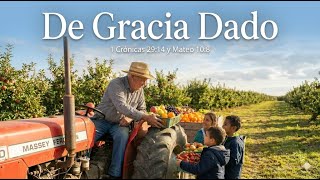
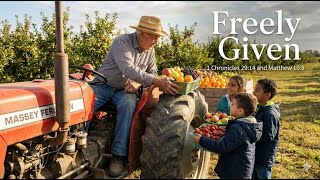
But who am I, and what is my people, that we should be able to offer so willingly after this sort? for all things come of thee, and of thine own have we given thee. — 1 Chronicles 29:14
Heal the sick, cleanse the lepers, raise the dead, cast out devils: freely ye have received, freely give. — Matthew 10:8
Summary: True stewardship is a profound way of life rooted in God's absolute ownership; we are simply temporary custodians of all we possess. This understanding, like King David's, compels us to humbly acknowledge that everything we have comes from Him. This acknowledgment then empowers us, as the apostles were commanded, to freely give what we have freely received. To separate these two mandates—humbly receiving and generously giving—leads to spiritual imbalance and danger, even the commodification of grace. Instead, our Christian life is about faithfully participating in God's divine economy, circulating His grace with open hands, knowing that to truly possess a gift is to joyfully give it away.
True stewardship, far from being a mere financial exercise, is a profound theological posture and a radical way of life, rooted in the understanding that everything originates from God and is given to us to be freely shared. It is an intricate dance between humble acknowledgment and boundless generosity, forming what can be called the Divine Economy of Grace.
At the heart of this economy lies the Davidic principle of divine ownership. When King David amassed vast wealth for the building of the Temple, he made a staggering declaration. Faced with an inventory of gold, silver, and precious stones so immense it would be worth billions today, David did not boast of his achievements or his nation's prosperity. Instead, he bowed in humility, affirming that "all things come from You, and of your own have we given You." This powerful insight transcends mere accounting; it is an ontological statement. It teaches us that whether we possess great material wealth, specific talents, or even the very breath in our lungs, none of it is fundamentally ours. We are but temporary custodians, sojourners and pilgrims on this earth, holding God's assets for a fleeting moment. Our giving is not a transactional attempt to earn favor, but a joyful act of returning to God what was always His, acknowledging His sovereignty and provision. This centripetal movement of resources, gathered and directed toward God's dwelling, establishes a core foundation of worship and recognizes God's absolute holiness.
This deep acknowledgment then empowers the second, equally crucial, apostolic mandate: "Freely you have received; freely give." This New Testament command, given to the disciples as they were commissioned to heal, raise the dead, cleanse the sick, and cast out demons, shifts the focus from gathering to dispersing. The capital here is not gold or silver, which they were explicitly forbidden to carry, but spiritual power – the authority to reverse the curse of the Fall and bring restoration. This authority was a gift, a pure act of unmerited grace. Therefore, it could not be commodified or sold. The apostles were to be conduits, "bearers of the empty place," receiving freely so they could give freely. Their mission was centrifugal, flowing outward to a suffering world, demonstrating God's compassion without price.
To separate these two divine directives leads to spiritual imbalance and danger. To embrace David's acknowledgment without Matthew's mandate can lead to a hoarding religion, where resources are concentrated for self-serving purposes, building magnificent monuments or empires while ignoring the pain and needs of the world. Conversely, to embrace the call to "freely give" without the prior understanding that "all things come from You" can lead to spiritual burnout, as individuals attempt to give what they haven't truly received, or worse, to the sin of Simony. Simon Magus, in the early church, epitomized this corruption by attempting to buy spiritual power, treating God's sacred gifts as market commodities. This modern commodification of the Gospel, seen in practices that subtly or overtly sell spiritual blessings, distorts grace into a transaction and exploits the vulnerable, turning the church into a marketplace rather than a sanctuary of free grace.
The wisdom of this Divine Economy is that a gift must remain in motion. If it is hoarded, it loses its essential nature. David's act of pouring out national wealth for the Temple kept it moving, returning it to its source. The Apostles, by giving healing without charge, fostered a web of gratitude, allowing God's power to circulate and build the early community.
For believers today, this unified theory of stewardship offers an edifying message:
The Christian life is the faithful stewardship of our earthly sojourn. We are temporary residents, called to circulate God's grace with open hands—humbly receiving from Him and generously giving to others—until the shadow of this life gives way to the glorious substance of eternity. In this Divine Economy, the only way to truly possess the gift is to joyfully give it away.
What do you think about "The Divine Economy of Grace: Living as Stewards of All God Provides"?
In a world often consumed by the pursuit of personal success and material wealth, it's easy to overlook the profound joy and fulfillment found in givi...
1 Chronicles 29:14 • Matthew 10:8
Abstract The concept of stewardship within the Judeo-Christian tradition is frequently reduced to the pragmatic management of financial resources. Ho...
Click to see verses in their full context.