When the Dew Descends, the Manna Descends with It
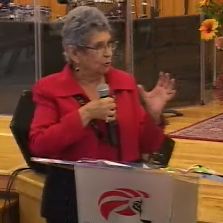
Author
Olga Martinez
Summary: Hosea reveals both Israel’s unfaithfulness and judgment and the forgiving love of God, who draws his people with cords of love and promises to be like dew to them. This dew represents his powerful love, nourishment, provision, blessing, revelation, and power; with it descends the manna of the Word that we need each day. Under its influence, we must grow visibly like the lily, reflecting the beauty and fragrance of Christ through our words, attitudes, and relationships. This requires breaking dysfunctional family patterns and clearing away the cobwebs of hidden motives, disordered emotions, and unhealed imaginations. We also need firm roots in Christ like the cedars of Lebanon, so that we may bend without breaking during storms, and remain like flourishing olive trees: planted in the house of God, yet with branches extending outward to serve and bear fruit. We must not gradually loosen our fellowship with God through neglect, seemingly small sins, or misplaced affections. The dew is requested and awaited in peace; it descends where we abandon quarrels, divisions, gossip, and unforgiveness in order to live in unity, love, and harmony.
Allow me this morning to give you, in a very general and broad way, a little of the history of the book of Hosea. We are going to focus on a period of about 200 years from the time Hosea prophesied. Before Hosea, 10 of the 12 tribes of Israel had separated from the Davidic kingdom. And these 10 tribes that had separated had formed their own kingdom, and the god they had was a golden calf. God sends Elijah, He sends Elisha, He sends Amos so that the people will return to the ways of God.
But instead of doing that, they sank further and further into idolatry. When God sends Hosea, Hosea has to live during the reign of King Jeroboam II, and he has to live at a time in Israel when sin prevailed. The people of Israel were in total decline in every area and every sphere of their lives. They were in political decline, religious decline, and social decline.
Hosea means salvation. And at God’s direction, Hosea marries a woman named Gomer, and things do not go very well for him with her. He has to endure a series of infidelities on her part. And so, in his own life, Hosea sees what infidelity is, just as God was seeing it among the people of Israel. But Hosea also experiences God’s judgment, God’s mercy, and God’s forgiving love.
The book of Hosea is divided into four parts. The first part, which runs from Chapters 1 to 3, speaks of all Israel’s unfaithfulness. Chapters 4 to 7 tell us about Israel’s sins. And Chapters 7 to 10 tell us about the judgments. But from Chapter 11 onward, this book speaks to us about God’s love and mercy, about how God is telling them that He is the only thing they need, and about the promises He is making to them. Throughout the book of Hosea, we are going to see a great deal of judgment, but we are also going to see God’s forgiving love.
Throughout the entire book, Hosea continually emphasizes God’s forgiving love. That is why he was called the prophet of love in the Old Testament. In addition to being a prophet, Hosea was a teacher. And so he uses many symbols to give examples of things. And in Chapter 4, we see how he uses extensive symbolism to show what the situation of the people of Israel was.
And so he speaks to us about the morning cloud. And in speaking to us about the morning cloud, what he is telling us is that we are here today and gone tomorrow. That is what he wanted to tell the people of Israel: that life lasted only a moment. And in the New Testament, we see in the book of James that it tells us the same thing: that we are like the grass of the field, here today and gone tomorrow. And that is why, when we make plans, we have to say to the Lord, “If You will, I will go to such-and-such a place.”
Hosea also uses a half-baked cake as a symbol. Because he is trying to tell the people of Israel that they do not go deeply into their religion, they do not go deeply into anything, and they are superficial. And what does the Lord also tell us in the New Testament? He tells us not to be lukewarm, but to be either cold or hot, and that if we are lukewarm, He will vomit us out of His mouth.
What He is telling us is that He does not want Sunday-only Christians. He wants real Christians. And the book of Hosea also uses the dove as a symbol, because through it he was explaining that the people of Israel were fickle. They were not steadfast; they formed political alliances whenever it suited them. God is also telling us that we are in the world, but we are not of the world. And that we must be light so that they will be converted to us, and not we to them. And that we have to be very careful about the alliances we make—marital alliances and work alliances.
Hosea also uses a tree as a symbol. And through it he symbolizes that any dependence other than dependence on God is unstable. God wants you and me to depend solely and exclusively on the true God. And He is going to bring us into situations in our lives in which we will have no choice but to depend completely on Him.
Absolute dependence on God is demonstrated by depending absolutely on Him. And for that to happen, He often has to remove other dependencies, other things we are holding on to. All the books of the Minor Prophets contain three kinds of teaching. They contain historical teaching, because what the book was presenting was teaching that addressed an immediate need, a need of the people at that time. Another kind of teaching is prophetic teaching. These books always prophesy what will happen in the future, whether it is God’s judgment or His mercy. And they also contain practical teaching—practical teaching for them, but practical for us today as well.
I would like the next slide, please. I want you to come with me to the book of Hosea, Chapter 14, and please find verse 5. It reads as follows:
“…I will be like dew to Israel; he will blossom like the lily and spread out his roots like Lebanon. His branches will spread, and his glory will be like that of the olive tree, and he will be fragrant like Lebanon. They will return and sit beneath his shade; they will be revived like grain and blossom like the vine. His fragrance will be like the wine of Lebanon…”
These are the promises God makes to Israel, telling them that the only thing they need is Him. And this is for us today as well. Because the only one you and I truly and exclusively need is our God. And just as we have just seen the history of Israel, you and I have a story, and some stories are more beautiful than others; some are longer, and others are shorter. And we women always believe that our own story is the best. Our story is the most beautiful, and if it is tragic, it is the most tragic.
But when we hear other stories, we realize that this is not so. In Chapter 4 of Hosea, you will find that it tells us that He wanted to draw the people of Israel with cords of love, with bonds of love. And you and I were drawn to Him with cords of love. For some of us, He had to throw the rope a great many times, and each time He threw us the rope, it had to be thicker; it already looked like one of those huge ropes. And for some of us, He had to tighten the cord of love so very, very, very much that the cord hurt, but in the end He won, and that is why we are here. But now that we are here, brought by cords of love—because no matter how thick it may have been, no matter how painful the cord by which we came to the Lord may have been, it was a cord of love.
And now what we have to be careful about is not slipping free from that cord of love. The people of Israel slipped free from the cord and went their own way. And you know, slipping free from God’s cord is very easy. Breaking free with one hard pull may be difficult, but the easiest way to slip free from the cords with which God has bound us is little by little. When someone ties you up—I do not know whether anyone has ever tied you up while playing or something—have you noticed that you begin to move like this, and the rope gradually loosens? And when one day we do not seek God, and we do not the next day either because we are very tired, there is a great deal of work, and there are many things to do; today we do not read His Word because… tomorrow—today my mind just cannot handle it. And tomorrow we do not read the Word either. Tomorrow our minds will be even less able to handle it, because let me tell you that if we do not use the brain, it grows numb. It is not the years that age the brain; it ages when we do not use it.
And today we have a little sin, but… just a little lie and a little gossip, and because it is so small, I do not confess it to the Lord because, after all… And tomorrow another one, and the day after tomorrow another one, and before we know it, we have slipped free from the Lord’s cords. Before we know it, we begin to go our own way; we are no longer bound to Him.
Here Hosea speaks to us symbolically about dew. And what is dew? Dew is made up of drops from the sea that have remained clinging like drops of water to the leaves after a cool night. And it really catches my attention—look at the picture and see how the drops remain there, clinging to it. They are little transparent drops, and through the dew, God was telling Israel that He would be like dew to them, that God’s grace would be like dew to them, that it would refresh them and revive them.
And God is also telling us today that He is like dew to us, dew that refreshes, dew that revives when you and I are thirsty, when you and I are in the desert, when you and I no longer believe in anything and cannot do anything. Then God’s dew comes, settles upon us, and gives us that freshness.
Here, God’s dew symbolizes God’s powerful love. And if you have your Bible, please look up Deuteronomy Chapter 32, verse 2. It is the song of Moses, which reads as follows:
“…My teaching will drip like the rain; it will distill like the dew, like the grass and like drops upon the grass…”
And also go to Psalm 72:6. It reads as follows:
“…He will descend like the cut grass, like the dew that distills upon the earth…”
It is speaking to us about His powerful love. But God’s dew also symbolizes the manna that you and I need. Please go to Numbers 11:9. It reads as follows:
“…And when the dew descended upon the camp, the manna descended with it…”
The manna was what fed the people, and the dew came with it. Here, the dew signifies the food God gives us. And you know that the Word of God is the food He gives us. And we are the ones who must eat that manna, eat that food which comes together with the dew God gives us. Together with the refreshing God gives us comes the Word, which signifies food.
And the dew also signifies God’s blessing. If you please go to Genesis, Chapter 27, verse 28, you will find that when Jacob blesses Isaac, look at what Jacob says as he blesses Isaac:
“…May God therefore give you of the dew of heaven and of the richness of the earth, and an abundance of grain and new wine…”
He is blessing him with every kind of abundance. And you know that God blesses us with every kind of abundance. And look, if you also go here, please, it says this: when Moses is about to die, he gives a blessing to the 12 tribes. And look at the blessing Moses gives the 12 tribes before he dies:
“…They will be a land of grain and wine, and their heavens will also distill dew…”
If you notice, every time God speaks to us about abundance, every time God speaks to us about giving us something, He speaks about giving us the dew. And if you go to Numbers 11:9, you will also see what it says here:
“…And when the dew descended upon the camp, the manna descended with it…”
And look at how the dew also symbolizes God’s provision. Go to Exodus Chapter 16, verse 13. Look, I know that I am going very quickly through… Perhaps I think I need to slow down a little. Do you want me to repeat all the Scriptures? I am going to finish this section, and then I am going to repeat all the Scriptures—not so that you can look them up now, but so that you can take them home with you and look them up at home, all right? If I stop and let you look them up, you will not look them up at home. Exodus, Chapter 16, verse 13:
“…And when evening came, they received quail that covered the camp, and in the morning dew descended all around the camp…”
Once again, we have the dew associated with abundance and with God’s provision. God’s dew also signifies God’s revelation. In the book of Judges, Chapter 6, verse 36, Gideon asks God for a sign because he wants to be certain whether the people are going to be destroyed by his hands: that He give him, as a sign, that the dew fall upon the fleece. God comes and grants it to him. Here, the dew is revealing God’s will. You will find that in Judges, Chapter 6, verse 36, which reads as follows:
“…He asks God that if the dew is upon the fleece, he will know and understand that I will save Israel by his hand, as He has said…”
And the dew also signifies the power of God. When God gives dominion to King David, among all the words He says to him, He says these:
“…You have the dew of your youth…”
So, my sister, the dew also rejuvenates us. I think that is enough reason for us to ask God for plenty of it every day. If you forget everything else the dew gives us, remember that, and let it motivate us to ask Him for it daily—when we put on our little cream, may He give us the dew that rejuvenates.
I am going to read the Scriptures to you so that you can write them down if you want, all right? Deuteronomy 32:2; Psalm 72:6; Genesis Chapter 27, verse 28; Genesis Chapter 33, verse 28; Judges Chapter 6, verse 36; Numbers Chapter 11, verse 9; Exodus Chapter 16, verse 13.
And to summarize it for you, the dew refreshes us with God’s powerful love. The dew gives us abundance. The dew gives us provision. The dew also symbolizes God’s blessing; the dew symbolizes God’s power.
If you look there, there is a lily. It is because the dew beautifies us. I took this picture one day before coming here, and I took it at a friend’s house. Lilies are flowers that come in white and red, and lilies open like bells because they have 6 petals. And the Word of God often uses lilies; it speaks to us about the lilies of the field, which are the white lilies, but there are also red lilies. And when God tells Israel that they are going to grow like lilies, He is speaking to them about outward growth; He is speaking to them about growth that can be seen; He is speaking to them about growth that beautifies.
And my beloved sister, you and I have to be like those lilies that grow and become more beautiful each day. The Word of God commands us to grow each day so that we may attain the stature of the perfect man and have His fullness. And when you and I are truly growing in the hands of the Lord, that growth has to be visible.
And do you know how it has to be visible? In our attitudes; it has to be visible in what we say, in what we do, not only in what we say but also in the attitudes and behavior that accompany it.
And something very special happens in this growth of the lilies. They are very, very long little stems, and each lily bulb can produce up to 55 more bulbs. They reproduce tremendously. They multiply tremendously. And do you know what kind of multiplication God wants you and me to have? The multiplication God wants you and me to have is multiplication through example.
And multiplication through example must begin in our home. And that reproduction, so that we may have the beauty of the lily, must come when we begin to break our relational patterns. All of us have relational patterns in our homes. What do I mean by this? Ways of relating to one another. And because they have continued for so long and we have carried them with us for so much time, we do not even realize whether they are becoming dysfunctional relational patterns.
Suddenly an observer comes along. Two weeks ago, we had elections in my country. Observers came from all over the world. What did these observers come for? They came because they noticed small details. And do you know that you and I have an observer who is constantly watching even the smallest details? And that observer wants you and me to break those relational patterns—our ways of speaking to each other, our ways of answering each other—because if we do not notice them, they can become dysfunctional and reproduce themselves.
Suddenly we see our children treating a sibling a certain way, and we ask, “Why do you treat them like that?” And if we were to look at ourselves in a mirror, we would realize that this is how we treat one another. Many times, if we want to know what we are like, we should look at how our children are behaving. After all, they have learned more from us than from anyone else.
And it is very easy to see those dysfunctional patterns in them, but not in ourselves. But when you and I want to grow like the lily so that we may reproduce, we will begin to break those patterns. And the way we will break those patterns is first by realizing that we have them.
And when I break that pattern, I begin to break my behavior; I begin to break my patterns of stimulus or response. I begin to behave differently. I begin to answer in a different way. And that is how the pattern begins to break. But the other person will want that pattern to go on, to continue: “But we have lived this way for so long. This is just the way we are,” we say. “This is how we treat one another.” And someone says, “Really?” “Yes, yes, we have grown accustomed to it.” God does not want habits. God wants growth. Old things have passed away; behold, all things have become new.
When I was a child, I acted like a child; now that I am an adult, I act differently. And when I decide to begin responding to a different stimulus, to begin giving a different response, even if at first the other person tries to force us to remain the same, if I stand firm, the other person—or the others—will eventually reach a point when, what will happen? They too will begin to answer differently and to provide different stimuli.
The pattern has been broken. I grew as a person, and I reproduced because I am helping them grow. My beloved brothers and sisters, our growth is very important, but there must also be growth in our family. When I took this picture of this lily, the lilies were joined to one another in such a way—because they reproduce so much—that they formed a beautiful cluster. And when we took the picture, God spoke to my heart and told me that the fragrance of the lily is something we should exhale. But we should not be the only ones exhaling the fragrance of the lily; the fragrance of the lily should be exhaled by the entire family.
You know what? Physically speaking, every person has a different scent. But when we have the aroma of Christ, when we carry the scent of the Lord, and we enter a room, that scent has to be evident. The aroma of Christ has to fill the room when you enter. When you come to work, perhaps there is tension there, the kind of tension you could cut with a knife. But when the aroma of Christ enters, because you reflect the living God, that tension has to disappear, because the aroma of Christ has to fill the entire room.
And when someone wearing a lot of perfume leaves, they leave a trail behind. And when we leave a place—not only as individuals, but as a family—that lingering trail of the aroma of Christ has to remain imprinted there. “Oh, good, she finally left. Here she comes again.” If those are the kinds of things people say when we arrive somewhere, it is because we are not reflecting the aroma of the Lord. But when we leave a place, even the church, what must remain reflected after we leave is the fragrance of Christ, the aroma of Christ that we reflect.
And when we remember someone, we can almost smell them. Oh, when we talk about someone, it is as though even their scent comes back to us. And that is the aroma our memory should leave with people: the aroma of Christ. We find the beauty of the lily in Matthew, chapter 6, verses 28 and 29. There we are told that the lily grows among thorns, and we are told that not even Solomon’s beauty is as lovely or as great as the beauty of the lily. And what really catches my attention is that the lily grows among thorns. What catches my attention even more is that it does not say that these thorns tear the lily. And many times, instead of being that lily that grows among thorns—because if anything is difficult, it is sometimes living among thorns—we say, “Oh, sister, if you knew the family I have, you would not talk about the aroma of Christ.” But it says here that the lily grows among thorns.
And many times, the thorns do not come from other people; the thorns come from us. Sometimes we resemble the porcupine. Do you know what a porcupine is? It is covered with quills. Quills when we speak, quills when we come near, quills when we touch. But God wants you and me to reflect the beauty of the lily and the fragrance of the lily.
The lily is mentioned in the Song of Songs, chapter 5, verse 13, which says:
“…His lips are like myrrh, dripping fragrant myrrh…”
My beloved sister, when you and I speak, our words must carry the scent of fragrant myrrh. And the Song of Songs, chapter 2, verse 2, clearly says:
“…Like a lily among thorns, so is my beloved among the two of them…”
God wants you and me to be a lily among thorns. And look, now comes the part I like. Down there is a spiderweb. Dew has the ability to reveal spiderwebs. It is so beautiful how it settles on top of the spiderwebs; look, it settles there on the droplets on the spiderwebs.
And when we see it in the morning, we see all the spiderwebs that were woven during the night, in the darkness. And how good it is that God’s dew reveals your spiderwebs and reveals mine, because let me tell you that you and I have a great many spiderwebs.
And the beautiful thing is that God knows perfectly well the spiderwebs we weave. Job, chapter 34, verse 21, says:
“…For His eyes are upon the ways of man, and He sees all his steps…”
I want to speak to you about three kinds of spiderwebs. I know there are more, but I am going to speak to you about three kinds of spiderwebs because they are the best known. A spiderweb begins to be woven little by little, doesn’t it? And by the time we notice it, it is a huge spiderweb whose beginning we cannot identify.
And there is the spiderweb of hidden things, hidden thoughts. Have you had hidden thoughts? All the time. Have you had hidden motives? Hidden intentions? Hidden desires? And do you know what? Hidden motives lead us to hidden thoughts, hidden desires, hidden intentions, and finally to hidden actions before other people and before God.
And hidden things—thoughts, desires, intentions—are always intertwined with lies like a spiderweb, because since they are hidden, they are lies. “Were you thinking such-and-such?” “No.” “Do you feel like doing such-and-such?” “No.” The lie enters, and an entire spiderweb begins.
Do you know that when we shut ourselves inside the spiderweb of hidden things, we begin to have two or more personalities? And suddenly the dear little sister at church is delightful, and if someone describes our character, oh, how lovely we are. But let us go and ask those at home to describe our character, and it seems as though they are talking about two different people who have the same name. Why? Because we have not noticed how hidden things can cause us to have two or more personalities.
We very easily become like that little animal that changes colors according to the occasion: the chameleon. God wants to break the hidden spiderwebs. God wants us to behave the same down here as we do up there, the same at church as at home; He wants us to dress down here the same way we dress up there, and to dress for church with the same degree of decorum with which we dress when we go to work.
God does not want us to have multiple personalities. God does not want hidden spiderwebs. And in David and Bathsheba you can see an example of how far hidden spiderwebs can take us. Yes, an entire spiderweb was woven there. And where did the spiderweb begin? With a hidden desire, a hidden intention. He sent for her, and after he sent for her, do you know the rest of the story? He has relations with her, she becomes pregnant, and he wants to pass the child off as Bathsheba’s husband’s child. He begins plotting something else; it does not work, he does not succeed. And since his whole spiderweb does not succeed, what point does he reach? He has the husband killed.
And where did it begin? It began with a hidden desire. Look, hidden desires, hidden motives, hidden thoughts, my beloved sisters, are delicate matters; they must be surrendered to God from the beginning. They cannot be cherished; they cannot be allowed to develop, because otherwise we may end up like David. David was a man of God, and yet he allowed the spiderweb of hidden things to develop.
And another spiderweb we women have is the spiderweb of emotions. That one truly is intricately woven—more than intricately woven. You must be very careful with the first emotion of the day, my beloved sister, because when you recognize the first emotion of the day and surrender it to God, you begin to walk rightly. But when we do not handle the first emotion of the day properly, emotions—whether we like it or not—form a chain, and one will bring another, and another will bring another, sometimes without our even realizing it. And when the night ends, we have become a spiderweb of emotions. We end up, as we say in my country, taking it out on those who live with us. And generally, it is the children, because they are the ones who put up with us; they have no other choice.
And what has it been? It has been the spiderweb of emotions. And when we do not handle our emotions properly because we do not identify them one by one and keep surrendering them to God, two things will happen to us: either we live a life so completely filled with emotions that we resemble a volcano, or we live a life in which our emotions are stored away and blocked. Both are problematic.
Blocked emotions, stored-up emotions, will lead us to live what I would call an emotionally mediocre life. We will become those people who store everything away, hold everything in, and no longer want to express anything. For what reason? Because the moment those emotions are expressed, since they have been stored away for so long, they will burst out. But repressing our emotions and failing to surrender them to God will cause problems in our interpersonal relationships and problems in our relationship with God.
The chapter of Nehemiah says that when Nehemiah and Ezra stood before the people to read the Scriptures, do you know what happened? The people rejoiced, the people were content, the people had joy when they could understand a Scripture, and the people had an emotional response. But sometimes, my beloved sisters, the joy of reading the Word of God has disappeared.
And that joy of reading the Word of God sometimes begins to disappear because of all the things we have stored away. My beloved sisters, opening the Word of God and reading it has to be a joy. There lies the sweetness of all God’s promises, my beloved sister. If it is God speaking to me, how could it not produce joy? How could it not stir emotion in my heart, gladness in my heart, when I understand a Scripture I did not understand before, when God gives me a revelation for my life through that Scripture? How could there not be an emotional response?
In Guatemala, let me clarify, sometimes people have no joy in the Word of God. “Brother, amen,” you hear here and there, an amen somewhere. And perhaps when someone reads the Scripture, one says, “Amen.” Let us examine ourselves; let us examine whether we truly have joy in reading the Word of God, whether it truly awakens something in me, or whether I read it and say, “Well, I’ve read it; okay, done.” No. It says that every time Nehemiah and Ezra opened the Book of the Law, the people’s sadness left them, every time they read a Scripture.
In the book of Ezra, it talks about when they were building the temple, and it says that when they saw that the foundations of the temple were being laid, when they saw that the bricks were being laid, the people rejoiced and said, “How good God is.” And you know that we must rejoice over the things that are being done for God. But sometimes we see the great things God is doing, we see the great things that are being done for God, and, oh, I hope they finish it soon.
Look at how many things we say and do, when what it should give us is joy—joy over the growth of God’s work, joy over the things being done for God, even if it is not my group, even if it is not my church, even if it is not my cell group. It is for my God, and your God and my God are the same, my beloved sister, and we must have that joy and that rejoicing over the things of God and the growth of God’s work.
If that joy and rejoicing are not there, it is a good time—I have had to do this in my own life, because there are seasons like that, seasons like that which we go through—when I have had to get down on my knees and say to Him, “Restore to me the joy of Your salvation,” because we lose the joy of salvation because of all the things that happen to us, or the things we get ourselves into.
But when you and I get down on our knees and say to Him, “Restore to me the joy of Your salvation,” we once again understand what salvation in Christ means; we once again understand the sacrifice of the cross, that sacrifice we forget, which is for us and also for others. God wants to restore to us the joy of salvation so that everything we all do in Christ may be a joy, whether I do it or someone else does it.
Do you know what other joy we have lost? The joy of seeing people receive the Lord Jesus Christ. It says that there is a celebration in heaven, that the angels rejoice, and what do we do? Oh, four people went forward. Right now, I am going to boast to you. At my church, we have something called the Via Dolorosa, and they present it three times a year, and at each event about 180 people are converted, but I believe we still lack the joy of seeing those 180 converts so that next year there will be 300 at each performance.
But, my beloved sister, for that we need to recover the joy of salvation again, so that there truly may be rejoicing in your soul when you see someone come forward here to rejoice with Christ. Sometimes we even turn around to chat with the person next to us while someone is making the confession of faith. It has nothing to do with me; I already have Christ. Good for him that he has just found Him. I did a long time ago.
Beloved sister, the joy of God—do you not think that God has joy? When someone is reconciled, that joy is for me and for you if we want to be like Christ.
There are many cobwebs, but I am going to focus on only three, so do not worry. Look, the cobweb of the imagination. You know that no one pays attention to the imagination, but the imagination works—and how! I knew it! I never would have imagined it! It works. And the imagination becomes a cobweb.
What is imagination? Imagination is the capacity you and I have to make something concrete: to make thoughts concrete, reducing them in such a way that we give them the form of an image. So when those thoughts are reduced and brought together, we have an image. That image is generally associated with past experiences that I have incorporated into my life. But imagination based on past experiences that I have incorporated into my life will also have future projections.
The imagination works quickly, and it works on the basis of the past, with future projections. Have you imagined things? God gave us the imagination. And why did God give us that capacity? He gave it to us so that the images you and I have would be images of Him, images of the true God; the characteristics of God are what should be in our images.
But you know that with the sin of Adam and Eve, the imagination, like many other things, became corrupt. And today we have an imagination that needs to be healed. If there is something wrong in our imagination: “I imagined it!” You can see the mischievous look on our faces because of what we imagined. And the imagination continues like a cobweb. Look, oh, I do not know why I am going to say this, but I am going to say it, all right? If you see someone over there and imagine something, and then imagine more, and then imagine more, and the imagination grows, the imagination needs to be healed, because we begin to assume things: “I assumed it,” “I imagined that you wanted to,” “that you did not want to,” “that you did want to,” “that you thought...” And it is so vivid, because it is no longer merely a thought; it is an image, so we believe it and function accordingly. We assume things, we pass judgments; it is a selfish imagination that is always thinking that others have bad intentions or that bad things are going to happen to us. It is the imagination that has not been healed by the Word of God. What must be in our minds are images of the Lord Jesus Christ, the image of the Word of God; but if we do not read the Word of God, if we do not study the Word of God, there cannot be images of the Word of God and of God in our minds.
And when we feed ourselves—I have nothing against television. I like it; there are programs I like—but when our food is television, the internet, and all these things, the images that will be produced will be... The imagination needs to be healed of twelve evils. I am not going to go into them, but it needs to be healed of twelve evils. And every day we must ask God to heal our imagination so that the cobwebs do not begin forming during the day, because who knows how many cobwebs of the imagination we will go to bed with. And what happens at night? “Last night I dreamed about I don’t know what.” The cobwebs of the day. At night, you give them even more life.
And we must be careful, my beloved brothers and sisters, because, look, there is a verse—I think it is this one—that concerns me. It is Hebrews chapter 4, verse 13. It says:
“...And there is no created thing that is not manifest in His presence, but all things are naked and open to the eyes of Him to whom we must give account...”
We must give an account to God for our imagination. And in the Bible there are several examples of how the imagination worked. You have the case of Michal. When Michal sees David dancing because he had brought the ark, she thinks badly of him, imagines things that are not true, and despises him. When David goes with Saul, as they are returning from the war, all the women begin—and those women really did shout at the top of their lungs—“David...” Let’s see, David killed? Saul killed...? And David...? David killed ten thousand and Saul one thousand. That is what the women said, and then David comes along, and what happens? He says, “Ah, a difference of nine thousand,” because that is how the imagination works. “A difference of nine thousand, and on top of that he even wants to be king.” The other man had nothing to do with what the women were shouting. He had already been appointed king; he was not thinking about that. But Saul comes along, imagines that the other man even wants to be king, and from then on, the Word of God says, he never looked favorably upon him again. And who knows, my beloved sister, how many people we have never looked favorably upon again because of the things we imagined. Imagination, my beloved sisters, is a cobweb that must be healed every day.
Lilies, as we saw earlier, grow upward, and it is growth that must be visible. We cannot say that we have grown in the Lord if that growth cannot be seen. It must be seen. But at the same time, since lilies are fragile, God is telling Israel that He is also going to give them strength, that He is also going to give them power, and then He tells them that they are going to be like the cedars of Lebanon.
The cedars of Lebanon are very large trees—truly enormous. The largest is about twelve meters tall and about thirty-five meters wide. The cedars of Lebanon are enormous, and their wood is very strong; their wood is very fine, and David’s house was made with that wood, as was Solomon’s temple.
And the special characteristic of these cedars of Lebanon is that they signify power, they signify stability, they signify that they cannot easily be moved from one place to another. And what keeps the cedars of Lebanon from moving from one place to another is their roots. Look at what the roots of the cedars of Lebanon are like.
The roots of the cedars of Lebanon spread out completely. And they grip the earth. And when a tree’s roots are truly rooted in the earth, the tree does not need anything external to hold it firm; it does not need any pressure to make it secure. Why? Because its roots hold it firm.
And you and I must have our roots in Christ, deeply rooted and firmly grounded, and we cannot take root if we are Sunday-only Christians. That does not make the roots take hold. And for the roots to take hold, our affections must be in Christ. And do you know how easily our affections cease to be in Christ and are placed in something else—money, work, children, people?
And when our affections begin to turn away from Christ, the roots begin to dry up. And when a tree’s roots dry up, the trunk is no longer any good. And something very beautiful about these trees is that they are strong and vigorous. Nevertheless, when the storm comes, when the rain comes, when the lightning comes, sometimes they are so strong that the tree even bends down a little; it does not break, it only bends. And storms will come into our lives sooner or later; they are part of life. May they find us with our roots planted in Christ so that we bend down, so that we do not break.
Two weeks ago, the son of a couple who are friends of mine was killed. When I came here, I believe it was two years ago, I showed you the church building, [inaudible], and I mentioned that it had been built by an architect friend of mine. Well, this architect’s son was killed. He was shot twice in the head and was found lying in the car. He was a young man who had been raised in the ways of the Lord. I could see the pain of that mother, who reached a point when the only thing that came out of her mouth was a sound, because she could no longer cry.
Nevertheless, when they brought out the body of her beloved son—for he was a young man who had been raised with much love, in an exemplary family—when they brought him out, this woman, who is very gentle and very sweet, looked like an oak tree. She stood in front of the coffin, and I could almost see the roots that were holding her up. And when this woman stood and spoke to all her son’s friends, helping them see that they were a family of promise and that, therefore, her son was a seed being sown so that all the other young people would come to the ways of the Lord and would not be lost, and when she spoke to the young people who were there—many of whom had gone astray and were children of pastors—and spoke to them with such strength and fortitude, able to say that her son was a seed being sown, it truly was because her roots had grown like those of Lebanon.
They gave the call to come to the Lord, and eight days later they held another meeting to which they invited many more young people, and they invited the parents of these young people—parents of young people who let them go here and there, all over the place—to help them see the need, as parents and as families, to return to God and teach their children the ways of God.
And they read a letter that the young man had left. Two days after he died, a friend came and gave them a letter the young man had been carrying. And in that letter, which was for his mother, father, and sister, he told his mother how he had reconciled with God, how God had given him the opportunity—the mercy—to be reconciled with Him; and those parents had the assurance that, no matter what had happened, God’s promise, “you and your children,” had become a reality.
And she said, “I had a promise that he would return to the Father’s house,” but it was not the house of his earthly father; it was the house of his heavenly Father. That couple stood like oak trees, speaking to everyone. Why? Because their roots had been firmly grounded in the Word of God for years.
And it has nothing to do with how many years we have been Christians, my beloved. I may have been a Christian for many years and not have strong roots. I may have been one for only a few years and have stronger roots. The roots must be watered daily through my relationship with God, with the Word of God, through my experiences with God, through my experiences with God’s people. That is what waters the roots; that is what makes roots firm, because otherwise, when the storm comes, we break; we are going to bend.
Yes, that day there was overwhelming pain. They were bent but not broken. And when we do not break, we can continue doing the work of God, no matter what happens. We must have firm roots.
Look, Job chapter 18, verse 16, says:
“...Below, his roots will dry up, and above, his branches will be cut off...”
When the roots dry up, anything—anything—will cut the trunk; anything will cut the branches.
When God gives these promises to Israel, they are very beautiful promises. He gives them the lily, which is the upward growth that can be seen; He tells them that He will also give them the growth of the roots, the growth that keeps them firm. But He will also give them the fruit of the olive tree. The cedar of Lebanon, which we have just seen, is strong, is firm, and gives off a lovely fragrance, but it bears no fruit.
But that is why He also makes the comparison with the olive tree. The olive tree is a small plant, but it is always green. The olive tree is always green. Please look at what Psalm 52, verse 8, says.
“...But I am like a green olive tree in the house of God...”
Ah, it is not talking about just any little plant; it is talking about the plant that is the king of the trees, because Judges says that when the trees gathered together to seek a king, whom did they choose? They chose the olive tree. The olive tree is very small, but they chose it because the olive tree is always green; it never dries up.
But it says that the olive tree is planted in the house of God. It is not a little plant that grew up on the roof because it rained a lot, nor did it grow outside the house of God. If we want to be planted, we have to be in the house of God.
Oh no, sister, I am not looking for a church; I have my relationship with God, because churches, you know... What I know is what the Word of God says: that I have to be planted in the house of God, and this is where we must remain. My beloved sister, God planted you here; stay here. This is your place. You have to be planted in the house of God.
I have seen young people in Guatemala whose parents leave them at the door and drive away, and they turn around and leave too. We will never be green if we are not planted in the house of God.
Those are the branches of the olive tree, and that is the fruit. And if you notice, the olive tree’s branches are slender, grayish green, slender, and long. But they spread out greatly, and the olive tree is planted in the house of God, while its branches are extended outward.
My sister, you and I have to be planted in the house of God, but with our branches extended outward. In what direction are your branches extending? Because the first part is being planted in the house of God; the second is extending the branches outward. If you want to be a green olive tree, a fruitful olive tree—which is what the Word of God commands us to be—it says that Joseph was a fruitful branch, and Joseph means prosperity, means abundance, means love; and if we want to be fruitful branches, we have to extend ourselves outward. Toward whom are we extending ourselves?
There are so very many people to whom we can reach out so that we may be fruitful. The olive tree produces olives. We all know them. And when they are processed, oil is extracted. And oil is useful for so many things. If each of us named one use for oil, we would never finish here. If I am fruitful like the olive tree, I am useful in a great many things.
The thing is, the Lord only told me... We can be useful in so many things. I can be useful by looking after a child, by taking him out of here so that he does not make noise, and in so many other things. So that we may be fruitful like the olive tree, planted in the house of God with our branches extended outward.
But there are conditions for the dew to fall. We have already seen everything the dew of God does. For the dew of God to fall, we must first desire it. We need to ask for it. In the examples we saw, you saw that the dew was requested. But besides our asking for it and wanting it, God will send the dew when we need it. He sent the manna together with the dew when the people needed it. And He sent it in the quantity they needed, at mealtime, and in exactly the right amount. But we want [inaudible]
God will send the dew in the quantity we need. But there is one condition: the dew does not fall where there are quarrels. The dew does not fall where there are divisions. The dew does not fall where there is strife. The dew does not fall where there is gossip. The dew does not fall where we are not persevering in the ways of God. The dew falls where there is peace. The dew falls where there is unity. The dew falls where there is love. The dew falls where it will be well received. The dew falls where it is awaited.
I want to quote a Scripture to you, if I can find it, and if not, I will simply recite it to you. It says:
“...how good it is for brothers and sisters to dwell together in harmony, because there God bestows blessing and eternal life, and it is like the dew of Hermon that falls...”
It is where there is unity, where there is love, where people are loving one another, that the dew of God will fall. Do you want the dew of God to fall upon your church? Well, now you know the conditions. Do you want it to fall upon your family? You know the conditions. That is how the dew of God will fall.
The Word says that when Elijah was standing in front of a cave—because God told him to come out of there—and stood before the Lord, the Lord was not in the thunder, He was not in the earthquake, He was not in the wind, He was not in the fire. Where was He? He was in a peaceful sky. The dew comes when we are at peace before God, awaiting His revelation, awaiting His refreshment, awaiting His powerful love, awaiting His power upon us, awaiting His provision.
God’s provision does not come agitated; it does not come running; it does not come twisting its fingers. No. The dew does not come there. The dew comes when we await it, and when the dew comes because we are awaiting it, you and I will be revived, you and I will be revived families, and you and I will be churches revived by the dew of God.
Close your eyes, and this morning we are going to minister what God has spoken to us. Father, we thank You this morning because You have spoken to us. Most of the women who are here need Your dew. We need that dew which refreshes our lives; we need that dew which represents Your powerful love.
I know there are women here this morning who need the dew of God to refresh them. To you, woman, who have been in that drought, in that drought of love because the people near you have not surrounded you to give you what you need, who have been begging for an embrace and a word that will fill you with love—to you, woman, the Lord says: I tell you that I brought you here this morning because I want the fresh dew of My love to come upon you today and flood you. Receive the fresh dew of God’s love; receive the dew of God’s love that floods you, because I am the One who fills you, says the Lord. I am the One who extends My arms and loves you and gives you that love which you have needed since you were in the womb, because I am the dew you need.
Have you been hurting because of that person who has departed? Have you felt that a part of you was left empty, that what that person took away from your life was part of you and part of your love? But today I tell you that today I come and fill that void, because today the dew that refreshes with My powerful love comes upon you. Receive, receive the powerful love of God. Receive the dew of God refreshing your soul.
Receive that dew of God which refreshes your soul today, because today I take away your sadness; today I take away your sadness. I place My love within you; today I give you My dew, says the Lord, My dew that refreshes. Receive My powerful love, because in My powerful love comes the strength you need to keep moving forward.
Have you been tired, downcast? But today I give you strength. Receive the dew of God that refreshes. May the drops of God’s dew soak into your soul today, refreshing it, giving you the strength you need, giving you the vigor you need, giving you the love you need to keep moving forward. Receive today the dew of God, which today I deposit upon you and upon your life, upon your heart, upon your soul. Receive. Receive, receive the dew of God.
Receive, receive, receive, receive, receive the dew of God refreshing your soul. Receive it, receive it, receive the dew of God. Receive the dew of God that you need, because I am your everything, says the Lord. I am your everything. I am the One who accompanies you, says the Lord. I, I, I, I, says the Lord, am to you like the dew that refreshes your dry and thirsty soul.
Receive the dew of God. Receive the dew of God. Receive, receive, receive the dew of God that refreshes you, that refreshes every part of your soul. Receive the dew of God, because the love I have for you, says the Lord, is such a great love; it is a love that supplies what a father supplies and supplies what a mother supplies, because I am your God and because you are not alone, because you are not alone, because I am with you.
I am the One who accompanies you every day and accompanies you at night. I am the One who whispers into your ear the words of love you need. Incline your ear to Me to receive that loving whisper of My words which I have for you.
Oh, receive the dew of God that refreshes your soul. Oh, receive that dew of God. Receive the dew of God. Receive, receive the dew of God. Receive the dew of God.
Oh, beloved Father, today we receive that dew which reveals. Have fellowship with God and ask Him what God needs to reveal to you from within yourself. Perhaps you have cobwebs inside that need to be healed. Begin asking God for the cobwebs within you to be healed today. Receive the dew of God that refreshes; receive it upon your life in the name of Jesus. Receive it upon your soul.
Let God reveal to you the cobwebs of what is hidden. Perhaps you have things stored away and hidden things—thoughts, intentions, motives—that today must be placed before God, that today must be placed before God so that they may be revealed to you.
Surrender to Him everything hidden that may exist in your life: thoughts, intentions, desires of which even you are unaware, so that the cobweb of what is hidden will not remain. Ask God to break the cobweb of what may be hidden in your life. Do not simply say, “I have nothing hidden.” Let God reveal it to you. Let the dew of God flood your heart, your soul, and your spirit today.
Let the dew of God reveal to you the condition of your heart. Oh, receive the dew of God that revives you. Let the dew of God reveal to you the condition of your emotions. Ask God today to break any cobweb of emotions that has formed in your life. May He break that emotional cobweb in your life which you do not understand but know is harming you. Let the dew of God break that cobweb.
Ask God to reveal to you the state of your joy in the Word of God, the state of your joy in the things of God, the state of your joy over what God does in other people’s lives, because when God breaks that cobweb, He is breaking cobwebs of selfishness so that we may love others.
Receive the dew of God upon your life. Receive it so that you may be healed of everything from which you need healing. Oh, the dew of God, the dew of God.
Let the dew of God break the cobweb of your imagination today. Perhaps it is an area of your life to which you had not paid attention, and you do not know where it might lead you. Let God enter the cobweb of your imagination today. May He break all those images that have arisen in your life which are not from God, images of any kind.
You know that sometimes images of serving God can take God’s place. Let the dew of God cleanse you today. Receive the dew of God. Receive, receive the dew of God.
Let the dew of God remove everything that does not beautify you; let God take away everything that does not make you beautiful like the lily. You know what does not beautify you. I know what does not beautify me. Let God take away everything that does not beautify you this morning.
Oh, the dew of God, the dew of God upon your life. The dew of God. You know that we all have areas that do not beautify us, and if you want multiplication in your home—the multiplication of the lily’s growth, the multiplication of the lily’s beauty and fragrance—begin asking God and surrendering to Him everything that has taken away your fragrance. Ask God to reveal to you whether you truly have the aroma of Christ, whether, when you enter a home, you truly bring the aroma of Christ; and if that is not so, ask Him to remove everything that keeps you from carrying the aroma of Christ.
Father, many of us have dysfunctional relational patterns. Close your eyes and let God reveal to you whether you are walking in dysfunctional patterns in your home, patterns to which you have already grown accustomed. You say something to me, I say something to you; you answer me, I answer you. If you want to break those dysfunctional patterns, ask God to enable you to begin growing upward like the lily, with that growth which can be seen; ask Him to help you break those responses you have been giving, that way of acting you have been following which is actually reacting. Those impulses behind your words, those stimuli you send out so that the other person takes the bait and answers—in the powerful name of Jesus, every stimulus we send out with our mouths and our gestures so that the other person takes the bait and we enter a dysfunctional relationship to which we have already grown accustomed is broken today, broken, broken, broken, broken, broken, broken in the name of Jesus; broken, broken, broken, broken in the powerful name of Jesus. Broken, broken, broken, broken, broken, broken in the name of Jesus. Broken, broken in the name of Jesus. Broken. Let the Spirit of God break it. Let the Spirit of God break it. Let the Spirit of God break it, so that you may begin to respond differently, to send out different stimuli, in the name of Jesus.
Broken, broken, broken, broken, so that there may be growth which can be seen. So that the change in you may bring about change in the family, so that you may be a bouquet of lilies that beautifies any place, so that you may be a bouquet of lilies that fills any place with fragrance.
Close your eyes, my beloved; close your eyes so that you may have fellowship with God. As a family, you know what it is that keeps the fragrance of Christ from being present in your family. You know perfectly well what is happening that prevents your family from being that family which carries the aroma of Christ wherever it goes.
Lay that at Christ’s feet today. Whatever the reason may be, do not condemn it anymore, do not criticize it anymore; today lay it at the feet of the Lord Jesus Christ and let the dew of God come and heal it. Refresh your family relationships. Let the dew of God come today to refresh your family relationships.
It is hard; of course it is hard. They are difficult. Of course they are, but when we let the dew of God begin to refresh us, there will be growth. Growth brings reproduction among those who are near. Cry out to God for dew upon your family, for the dew that beautifies us and causes us to have the fragrance of lilies.
Beloved Father, we come before you. Only you know the condition of our roots; only you, Father—we cannot deceive you. Only you know where the roots of our affections are, but today we come before you asking that, if some affection has entered any root and the tree is therefore drying up, you would break that affection today. If you have affections that are drying up the roots of your tree, which must have all its affections fixed on Christ, surrender them to God. Surrender those affections that are drying up your whole tree; lay them at the feet of the Lord Jesus Christ and ask him to break them so that all your affections may be in him, because you want all your roots in him; you want a tree with a strong trunk, with a firm trunk.
What is taking away your firmness in God? Is it that you are seeing things you do not like? Surrender them to the Lord. It is not man whom we must look to in order to have firm roots; it is the Lord Jesus Christ. If man’s attitudes are drying up your roots because perhaps you have become disillusioned and disappointed, surrender that to God so that you may look only to him, so that your roots may be firmly established in him, and in nothing, nothing, nothing, nothing, nothing other than him.
If you want to be like the olive tree, planted in the house of God, it is hard for you to remain planted in the house of God; there are many distractions, but you want to be like the olive tree, planted in the house of God. You want to be like the olive tree; do not get distracted, they are already taking care of that over there.
If you want to be like the olive tree, planted in the house of God but with its branches outstretched, in the powerful name of Jesus, everything, everything, everything that is preventing you from being planted in the house of God is broken, broken in the name of Jesus. Everything that is preventing you from being planted in the house of God is broken, in the name of Jesus.
Oh, everything that prevents you from being bound to Christ, everything that has caused the cords, the bonds of Christ’s love, to loosen in your life, is broken today in the name of Jesus; it is broken today because he has drawn you to himself with cords of love, and with cords of love he holds you fast.
Bind yourself to Christ this morning. Bind yourself to Christ this morning. Bind yourself to Christ. Bind yourself to Christ. Ask him to take away everything that loosens you, everything that has loosened the cords; tell him to take it away and to keep you bound to him as never before. Bind yourself to Christ. Bind yourself to Christ.
Beloved Father, we want your dew to descend upon our lives at all times. And for that, we must cry out for that dew, tell you that we need that dew, and leave behind every quarrel, every division, every breaking of relationship. Begin to lay before God everything that could prevent the dew of God from being poured out upon your life.
Remember that the dew of God comes where there is peace, where there is unity, where there is harmony, where there is understanding, where people wait in peace, where they wait confidently for God to pour out the dew. What takes away your peace? What dissension do you have that keeps the dew from descending? What lack of unity keeps the dew from descending?
Remember that the dew is provision. The dew is manna. The dew is revelation from God. How long has it been since you received God’s revelation with the dew of God? The dew is the power of God, it is the blessing of God, it is the abundance of God.
Oh, leave behind every quarrel, every division; forgive whomever you need to forgive; make things right with God. But do not let any dissension, any thoughts you may have about something or someone, or any wounds you may have remain; leave them today at the Lord’s feet so that the dew of God may descend and so that you may cry out to God in peace for the dew to descend upon your life. Dew that refreshes, dew that reveals, dew that blesses, dew that provides, dew that gives abundance, dew that gives power.
Stand up. Father, we thank you this morning. I ask you to continue what you began this morning, because we need your daily dew, we need your daily dew. We ask you, Father, to let that life-giving dew of your powerful love come into our lives every day.
Close your eyes. Father, this morning we ask you for a large portion of your dew. Just as you filled that place with fish, but also filled it with your dew, we ask you to come and fill this place with your refreshing dew.
Oh God, cover our lives with your dew, with that dew that refreshes. Receive God’s freshness, the dew of God. Extend your hands and symbolically receive the abundance of God with the dew; receive the abundance of God with the dew; receive the blessing of God with the dew, because God tells you that he will bless your coming in and your going out, he will bless your kneading trough, he will bless your family. Begin to cry out for the dew of God to come upon your family so that you may have a family of blessing. Receive the dew of God for your family. Receive it in the name of Jesus. Receive the dew of God for your family. Receive the dew of God for your family.
Receive. Receive the dew of God for your family. Receive it, receive it, receive it. Receive the dew of God for your family. Receive the dew of God. Receive it, receive it; receive, receive the dew of God. Receive the dew of God for your family. Receive it in the name of Jesus. Receive the dew of God.
Receive, receive, receive the dew of God. Receive the dew of God. Receive the dew of God. Receive it. Receive the dew of God. Receive the dew of God. Receive the dew of God for your family. Receive it in the name of Jesus. Receive the dew of God for your family. Receive it, because you have waited for it a long time, says the Lord; you have waited for it for years, but that dew is coming, says the Lord.
Oh, receive the dew of God for your family. Receive, receive, receive, receive the dew of God. Receive it. Receive it, receive it. Oh, receive the dew of God in abundance. Receive it, receive it. Receive the dew of God. Receive it. Receive it, receive it. Receive, receive the dew of God for your family. Thank you, God.
Thank you, God. Thank you, God. Thank you, God. Father, this morning we cry out, wait, and receive the dew of God for each of those women. We cry out, wait, and receive the dew of God upon our lives. The dew of God upon our families, the dew of God upon everything we touch. The dew of God upon our lives, the dew of God upon our families, Father.
I declare, God, that the dew of God will come upon this church, bringing blessing, bringing abundance, and bringing revelation—revelation from you, Father, the revelation of the dew of God for your life. We declare, Father, that the dew of God, which gives life, which makes us grow like wheat, which, when it dies, produces a seed and that seed reproduces, will be the reproduction that you will give us for this church and for our descendants.
I declare that the dew of God covers you and your family in the powerful name of Jesus. Thank you, Father; thank you, Son; and thank you.