Worshiping God Is Not Singing
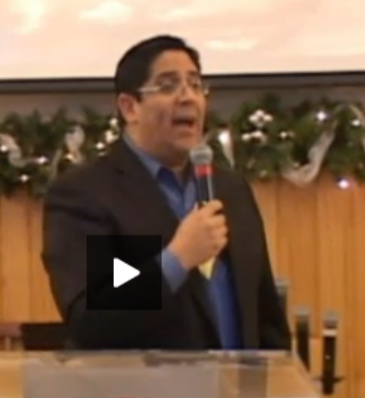
Author
Andrés Cisterna
Summary: Worshiping God is not limited to singing, crying, raising our hands, or participating in religious gatherings; these expressions should be the result of an entire life of faith, obedience, and trust. A worshiper honors the Lord through what they do, say, and think, both inside and outside the church. Gideon shows that those who live under oppression must rise with determination, reject the influences that dominate their minds and homes, and trust that God can defeat what seems beyond counting. Joshua teaches us to believe and obey even when the instructions seem strange and the obstacles are enormous: walls fall through faith and obedience, not through our own strength. David reveals the courage of one who faces giants without relying primarily on weapons or abilities, but on the Lord. Therefore, if we are oppressed, limited, or repressed, we must rise, believe, and be courageous. Our worship must continue each day as we confront systems, fears, addictions, scarcity, and pessimism with a life wholly devoted to God.
I know one is not supposed to be nervous, but I am nervous, and it is probably different… the feeling is different; very strong emotions are passing through my heart, through my life right now, especially feelings of gratitude, feelings that God, in one way or another, has worked in our lives so that we could learn to believe.
You know that it is not easy to believe God; it is not easy to believe in something that cannot be seen. It is not easy to heed the voice of God and start doing things like a madman. But yes, we have to be crazy to the world and sane before God in order to believe Him.
I believe God has a tremendous opportunity for your life today. You were not called to sit there in that chair; you did not come here merely to be a number in a church. You came to make a difference in the world.
Do you know the difference between someone who sings worship songs and a worshiper of the Lord? Can you imagine what it is… what makes the difference between the two?
Psalm 37 says: “…delight yourself also in the Lord, and He shall grant you the desires of your heart…”
How many of you can delight yourselves in the Lord? How many are learning to delight themselves in the Lord? Tell the person beside you, “I am learning to delight myself in the Lord.” Then give each other a smile, just in case, so they will believe it.
I compare…I make a comparison between someone who worships and a worshiper in the following way: just because you see an airplane with wings does not necessarily mean you know that it will fly. You go to a museum and see complete airplanes with wings, but there is nothing to make them fly. Sometimes you go to airports and there is an area where they put the broken airplanes, and those airplanes even have all the machinery inside, but they do not have what is essential for flying. Just because you see an airplane there does not necessarily mean that it is an airplane that flies. We need to see an airplane flying for it to do the work it is supposed to do.
Someone who worships the Lord, sings, cries, and does a whole series of things related to worship songs is not necessarily a worshiper. And you know that the Lord’s church is filling up with singers, while very few worshipers remain. Worshipers make the difference.
I want to invite you to open your Bible. I want to invite you to look with me at three examples involving men who made a mark on their own lives and on the life of a nation through their life of worship.
Judges, chapter 7, verse 15—Judges chapter 7, verse 15. This is one of the passages… there are a series of passages in the Bible where each of us can identify our life of worship; each of us can identify our way of seeing the Lord. But I like Judges; I like the book of Gideon; I like Gideon’s story because it represents everything from the simplest, most human reality all the way to the story of David, a worshiper par excellence, a worshiper who was after God’s own heart.
Judges 7:15 says, “…when Gideon heard the telling of the dream and its interpretation…” it says, “…he worshiped, and returned to the camp of Israel and said, ‘Arise, for Jehovah has delivered the camp of Midian into your hands.’”
Let us pray to the Lord. Thank You, Lord Jesus, for this time. Thank You, God, for the opportunity to hear Your Word. Lord, I ask You to open our hearts, open our minds, and open our understanding so that we can discern and interpret Your message, Your counsel for each of us, in the name of Jesus. Amen and amen.
Whenever we talk about worshiping the Lord, we think of a song. Whenever we talk about worshiping the Lord, we think of an instrument, a string, a piano key, a set of drums, or any kind of instrument. Whenever we talk about worshiping the Lord, we talk about the nine o’clock service, the twelve o’clock service, the Wednesday service, or any other service. Whenever we talk about worshiping the Lord, we talk about taking part in, perhaps, a Christian DVD with lots of Christian music. Whenever we talk about worship, it has become—and we have confined worshiping the Lord—to just one area of our lives, which has to do with our voice, with our emotions, with what we feel.
We do not come to church the same way every Sunday. Some days we arrive wanting to raise our arms and, hopefully, reach all the way up to the ceiling of the building, while on other days we arrive with our arms held very low.
There is an emotional reaction; each of us reacts differently to what happens to us during the week. We see the church’s worship as the goal, but worshiping in church is not the goal; worship in church is the consequence of a worshiper’s life. You do not begin your life by singing to the Lord. You are here and worship the Lord as a consequence of the way you live.
Gideon is a reflection; historically, Gideon represents this generation that grew up knowing something about God, knowing that God, the God of their father, did many things. Gideon represents the lives of men and women who do know about God but have never made a decision for the Lord, and who live their lives understanding that they need God, but there is nothing motivating them to seek Him more.
In some way, God also uses each of these people to display His glory, and Gideon represents these people very well. Gideon belonged to a generation that was not being spiritually nourished, whose only possession was tradition, whose only possession was history, whose only possession was a notion of what God had done long ago. Many of our lives are connected with that. Gideon belonged to the tribe of Manasseh among the people of Israel and was the youngest in a family. So all the more reason why an experience with God was so far removed from him.
In those years, because of Israel’s rebellion, God sent a people—the Midianites—to oppress, listen carefully to this word, to oppress Israel. They took away their crops, abused them, killed them, and took away their possessions. The biblical account in chapter 6 says that this was one of the periods when the people of Israel endured the greatest misery in their history. They became so poor that they no longer knew what to do.
They began to cry out to the Lord, but God told them that, because of their rebellion, He had raised up that people of Midian in order to intervene in their lives.
The book of Haggai mentions that many times we gather into a bag full of holes, and Israel was gathering into a bag full of holes.
But Gideon represents a man who knew there was something more. Gideon represents this kind of people who know there is a God and who, in some way, need to be confronted. God confronted and challenged Gideon. In one way or another, when God calls him, Gideon says to Him, “Oh, but You are the God who has kept us enslaved…” and he says, “Oh, but You are the God who has made us suffer so much,” “Oh, but You are the God who has made us poor.” But God shows Gideon that this was not His plan for him or for his people.
You know, when God begins to deal with Gideon, Gideon begins to feel that the God of his fathers was just as real now as He had been before. The Midianites today—the Midianites represent an oppressive people for Israel, a people who forced them to believe what they believed, a people who forced them to do what they did, a people who forced them to have a God of traditions and to exchange their life for a life of idolatry, for a miserable life, for the life of losers. Today, the spiritual Midian that is doing many of those things is oppressing people’s lives and leading us to live according to the system. We do not want to rise up against the system; we do not want to hurt the system. Under the economic system, those who have nothing have nothing because they do not go into debt, right? Those who have nothing have nothing because they do not go into debt… “Wow, what you have in your house is so beautiful… how much do you owe?”
Midian is leading us, pushing us to bring those systems into our homes and have them there. The system says that you cannot discipline your children, and look at what you have in your home… look at what you have in your home because the system… because Midian has told us that we cannot discipline our children.
I remember a story about a man who was taken to court for not conforming to the system. The judge fines him five thousand dollars for having given his son one of those good beatings that some people deserve. You know, he caught his son after the boy had missed two weeks of classes, and he went to stand guard outside. When he realized what was happening, he went and gave him a beating, and the very well-educated son took him to court—very well taught indeed. When the judge imposes the fine on the father, the father says to the judge, he tells him, “You know what? Give me another five-thousand-dollar fine, because when I leave here, I’m going to give him another beating.”
Many times, we are not brave enough for that. The system says that your child has to yell at you and that you have to yell at your child. This spiritual Midianite empire is making its way into our homes—these spiritual Midians.
The school system is harming our children’s education, and what about us? Fine, thank you… that’s just the way it is…
The political system is harming the rights of many people, and what about us? Fine, thank you… that’s just the way it is…
The economic system is harming the lives of many people, and what about us? Fine, thank you… that’s just the way it is…
So the only time we rest is during the Sunday service. Why? Because that is when our traditions appear—the finest religious traditions, from the necktie on down, including a nice offering check, a fine singing voice, and the arm raised the highest to reach as far up as possible. On that day we rest; the people did that. They came… they knew who God was and rested on those days, but they lived oppressed by this Midian.
You know what? God no longer wants you to live under that oppression. God is calling you to make the decision Gideon made, even though he did not believe the Lord very much. Do you remember Gideon’s story?
That means Gideon was still not very sure about what he was doing. God had already shown him part of what He was going to do with him, but the moment had to come when Gideon had to take up that weapon, had to make the decision, had to summon the determination. Gideon arose and made up his mind… he changed his mental framework and said, “Midian will never rule over me again!!!”
How many of us have risen… have we risen against this Midianite system? These spiritual Midianites who subject us to their will have boxed the church inside four walls. They want to box in your spiritual life within your home; they want to limit you in your spiritual life. But Gideon did not accept that, although the people did. They remained silent; only a few were carrying out some guerrilla activities. If you read chapters 6 and 7, you will realize that Gideon was a true guerrilla fighter in those days, a true human-rights activist.
You know, today Gideon represents the lives of those whom God is confronting and calling to make a spiritual decision in their lives.
Midian—the Midianite army was countless; the Midianite army had no fixed number. All they could see were people, weapons, horses, and many other things. And you know what? Gideon rose up with 32,000 and had to fight with 300; he was brought down to 300. Do you know why? Because God wanted to glorify Himself in his life.
A man, a worshiper of God, does not merely wait to worship on Sunday; he lives a continual life of worship. A worshiper of God begins to say in the morning and at night, “Lord, I praise You, I worship You, I bless You. What I do, what I say, and what I think are meant to honor and bless You.”
Then you begin to destroy the altars that Midian has established in your home, those altars that the spiritual Midianites have established in your heart, those altars that the spiritual Midianites have established in your mind: thinking badly of someone else, harboring bad feelings, resentment, and hatred. God is able to cut that out; you just need to have determination, you just need to make a decision, rise up, and say, “Well, I have now heard the dream and its interpretation.” And Gideon worshiped and then said to the people, “Well, let us rise up, go, and fight against Midian.”
Do you know what happened afterward? What happened to the Midianites? Can anyone tell me what happened to the Midianites? They were defeated; they devoured one another; they themselves became confused.
I love it when Gideon blows the trumpet and breaks the jar; that is the part I like most about this. Do you know why? He did not lift a finger, he did not raise a sword, he did not launch a missile, he did none of that; he only glorified the name of Jehovah of hosts. And although he had a secularized life, he understood that God was preparing him. He was a worshiper. He did not worship only during his time of religious tradition; he tried to live his life as a worshiper.
How many live oppressed? How many live oppressed by the system? How many are being oppressed by this spiritual Midian that is putting this filthy, often sinful life into your home, your mind, and your heart? And you know it is wrong.
I want to invite you to be determined, to rise up and decide to confront this spiritual Midian with God. Joshua, the walls of Jericho—tremendous walls. Do you know that those walls were so wide that people lived on top of them? It was not some wall made of 8- or 10-foot blocks that you could knock down with a truck; it was an enormous structure, an impenetrable fortress; no one... that was the safest city there was.
Joshua is an example of a man who believes the Lord; he is an example of a man who understands that God has greater things for his life. When they crossed the Jordan, they encountered a tremendous surprise: a wall that was enormously high, enormously wide, and a city that was enormously large—but it was not impenetrable.
Joshua was also a worshiper; Joshua also understood that his life depended on what the Lord said to him. How many of us are constantly trying to make our dreams come true, but there is a wall that places limitations on us? We arrive and see that wall, and we say to Him, “Lord, thank You, but this is as far as I go. Lord, thank You for everything You have given me; I would rather preserve it. I do not want to go any farther. I cannot climb that wall, I cannot break through that wall, I cannot go beyond it.” And the Lord tells you, “But I have told you to cross over, to go and gather that up. That is what belongs to you; that is what I am going to give you.”
Joshua teaches us how important it is in our lives to understand that listening to God’s voice and doing what pleases God has its rewards. How many of us would have thought of walking around that wall seven times? No, we probably would have hired the best demolition experts to place bombs at certain strategic points and see whether we could do some damage. And if we could remove one of those bricks, we could squeeze through a little hole there, right? Those things did not exist at the time. Or perhaps, in those days, we might have hired a catapult company so everyone could be launched to the other side. But there were no means or funds for that either.
Your life and mine probably hold many dreams; we have many longings, but for many of them the barrier is very high, very wide, and very long.
And we remain the same conformists we have always been. As long as I have enough to pay the rent and put a little coffee in my mouth, that is fine. As long as I have bus fare, that is fine. The Lord wants you to conquer the dreams He has promised to give you, and there is no wall that can stand against that.
But that is where our faith comes in: rise up and believe; rise up and believe that the Lord will tear down those limitations. A worshiper does not merely sing; a worshiper also believes what he sings. A worshiper does not merely sing; he also believes and lives out the promises implicit in praise and worship. That is why sung worship and sung praise are not the goal; they are the consequence of our life of worship.
Joshua believed the Lord, though he could have said, “Lord, why don’t we take a slightly longer road and make friends with the Jerichonians?” They cannot translate that word into English, huh? But God had told Joshua no, that what was inside was for them; they had to take it. That was part of their season for taking the land.
How hard is it for you to fulfill your dreams? How hard is it for you to imagine that you will achieve what you want to achieve? We have problems with English—“No, I can’t because I don’t have time, I don’t have money, I don’t have anything.” And there are probably many natural limitations that are very real in our lives. Those walls... You want to earn a degree; young people graduate from high school, Hispanic young people graduate from high school, and many times they do not want to or cannot enter universities. But you have a more powerful God who can tear down those walls. Perhaps you are an adult who also wants to move forward with your education or build a good business, and there may be many limitations. It may be your education, it may be your English, it may be your transportation, but your God is greater than all of that. There is no limit for your God; your God is unlimited, your God is infinite, your God has no height, no width, and no depth—and Joshua believed the Lord.
Each day they walked around it once, and on the final day they walked around it seven times. Then he ordered the priests to rise, sound the horns, blow the trumpets, and praise and glorify the name of the Lord—the same thing Gideon did: “At my signal, blow the trumpets and break the jars...”
There is a common denominator: rise up and believe. Those who have this Gideon-like tendency to believe the Lord a little and doubt Him a little—rise up and be determined, because today God is confronting you and calling you to believe Him, to remove those influences of Midian from your life, to remove from your life those influences that are harming your mind and your way of seeing life. Confront that influence telling you today, “You know what? Take your own life.” Confront that system telling you, “There is no longer any hope for your health.” But God tells you something else: God can defeat it, God can raise you up, and God can teach you to believe. And God wants you to believe, and God wants you to be resolute.
King David began there as a shepherd—a shepherd of sheep, not the pastor of a church—and he had to do many things in his life as a shepherd. This is a process of growth. Gideon represents the lives of people who are observing God, and today God is telling you, “Do not merely observe Him anymore; embrace Him, take hold of Him.”
Joshua represents the lives of those who have served the Lord but who need, in one way or another, to learn to believe in these rather strange strategies the Lord gives us. Believing the Lord means walking around a wall. It is not because of the laps; it is because of faith, because of obedience, because of his attitude as a worshiper of the Lord.
You were created to worship Him, to bless Him. Delight yourself also in the Lord, and He will grant you the desires of your heart. David, in Second Samuel, in his story in chapter 17, is an example of someone who lived this life of worship to the fullest. This is the exact, or nearly perfect, image of what God seeks in each of His children. This is the image God is seeking so that He can perform the great wonders and great works He has to do among us today.
The story takes place at a time when the people of Israel and the Philistines were going to war, and each side was preparing. The only thing was that the Philistines seemed to be much better; they were enormously tall. It was like, I don’t know, seeing a basketball team from the United States play one from Chile.
True giants. I am not saying that all Chileans are short, huh? I did not want to use another country so as not to offend anyone. Forgive me, Chileans. There was an enormous disparity—so great that just one of those giants was capable of keeping that whole people cornered. Imagine the rest of the team. There was no way out for that army of Israel, even though it knew that its God was the God who created all things. That army of Israel knew that its God was the One who had delivered it from many battles and given it many victories. Those people of Israel preserved and maintained their traditions; every time they went to war, they acknowledged the name of the Lord above all things.
Those people of Israel often represent us, because here in church we act pretty big. Here in church, we call the Devil every name in the book—but let us step outside the door. Here in church—wow, look... From here I can see hundreds of halos, but I saw some people take theirs out of their pockets when they came in, and I am sure that more than one will want to put it back in their pocket.
That is how the army of Israel represents us: many times we are very happy in church; we are the church’s foremost activists. If only they would fill our schedules with activities from Monday through Sunday to keep us busy with this religious activism. Those people had been busy with religious activism, but they had never busied themselves with learning to be brave and understanding that God seeks brave people.
The first giant arose against them, and this giant had nothing less in mind than to lash out at them and verbally oppress them for forty days. How many days has the giant been saying things to you? How many years has the giant been saying things to you? How long has the giant been threatening you? How long has the giant been suppressing your spiritual life?
This enormous Goliath—this Goliath who in those days would barely appear in the morning, because he also got up early; I would say he rose before the people of Israel and waited for them. And he had the luxury of coming and going as many times as he wanted during the day. He had terrified the people of Israel, and then someone appeared who was Chilean, because he was so little.
No, I could say any other country there, right? He had no experience in warfare; the most he had ever done was... nothing, just kill a lion and a bear. That was nothing, right? How many of us would kill a lion and a bear? How many of us would spend hours and days alone caring for sheep without Internet, without television, without radio—now he really suffered—without your cell phone? How many people suffer because of their cell phone? Somehow, this giant succeeded in intimidating the people. And today there are giants intimidating you, suppressing you, and threatening you.
What are they? Your character, your addictions, your pessimistic way of looking at life. Do you think you are going to have a good time today? You are not—and already we submit to fear of the giant. If you are struggling with addictions or problems of any kind, do you think you are going to have a very good day today? “No, don’t worry; I will make sure you have a bad day.”
All right, whatever you say, Goliath; then I will hide. Then I will go into a corner, and I would rather not fight. I would rather not even look him in the eye and just let the day pass however it may. “Lord, I will struggle however I can, Lord, but do not let the giant cross my path, because I am afraid of him.” And then this character David appears—David, who was a man after God’s own heart.
How many of you would like to be regarded that way? How many would like to be regarded as having such a close relationship that you are almost friends of God? Many times we become nothing more than faithful churchgoers; we do not go any farther. But God wants you to be His friend; God wants you to be in His heart, to be after His own heart.
David was a man after God’s own heart. Do you know what that led him to do? To serve as cannon fodder, as spiritual bait. He went right in there, thinking, “Who did this giant think he was, coming to insult the people of God, coming to insult the name of the Lord?” “I will go and fight him,” he said, and he stepped forward. You know the story, don’t you?
I imagine David loaded down with all that gear, with that armor and that sword, walking out of the tent. Can you picture him? He could not do that. He did not even trust that armor; he did not trust that sword. That is why it weighed so heavily on him, because it was not what he trusted. His trust was in Jehovah of hosts; his trust was in the Lord; his trust was in the One who delivered him from the attacks of those beasts out in the field.
You know, he took only five stones; that was all he took. And he had a skill—he was very good at slinging stones—but his courage was not founded on his aim; it was founded on his trust in the Lord.
God merely used that skill he had to defeat him. What is the giant that torments you every day? What is the giant choking your life with threats? Fear? Scarcity?
The life of a worshiper begins with singing in church and advances as God gives you victories in your struggles. Let the one who lives oppressed rise with determination; let the one who lives with limitations rise and believe; let the one who lives suppressed rise and be courageous, because the courageous take hold of the kingdom of heaven.
How many of us are exposed to these spiritual Midianites every day? How many of us look at that wall every day, wondering when it will fall? How many of us look at the giant from inside the tent, barely peeking out—opening the tent just a tiny bit to see whether he has come out that day so that we can go buy bread and come back? How many of us...? Many times, our life is only a fleeting spiritual life. God wants your life to be a complete life in the Lord. God wants your life to be the complete life of a worshiper.
When you get up in the morning, even though you know it is not going to be a good day, even though you know that on that day you have to pay the rent and all the bills—that is one of the worst days there is—God wants to tell you, “I want a worshiper, a worshiper who worships Me in spirit and truth, not merely someone who sings. I want you to sing to Me, I want you to weep, I want you to bow down, but I want you to live out that worship. I want you to live out that way you see Me in church.”
I want you to keep all the courage you have inside the church when you open the door and step into the parking lot, and to keep fighting Monday, Tuesday, Wednesday, Thursday, Friday, Saturday, Sunday—every month, every year.
If you are oppressed, rise up, because today God has determined to use you. If you are limited, rise up, because today God has determined that your faith will grow and that your believing will mean tearing down the walls of Jericho. If you are suppressed, rise up, because the Lord seeks brave people.