We Are Our Children’s Mentors
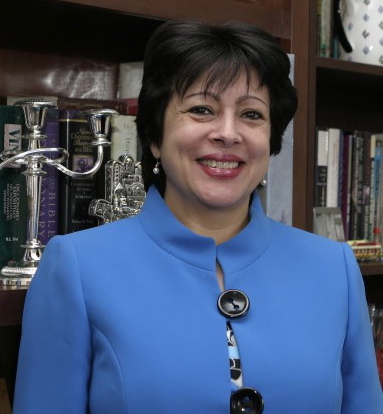
Author
Mercedes López-Miranda
Summary: Children are a treasure entrusted to us by God, and those of us who care for them must invest intentionally in their holistic development. As parents, we are their primary mentors, stewards of their gifts, and first evangelists: our daily lives must consistently reflect the biblical principles we teach. We cannot improvise when it comes to raising children or underestimate their ability to understand profound truths; we need to ask for wisdom, define a vision, and make the most of the brief time they spend under our roof.
Mentoring requires knowing each child as a unique individual, providing a spiritual and emotional environment that fosters learning, joyfully accompanying them as they explore, and celebrating their mastery of new skills. Even when fatigue and responsibilities make caregiving tedious, children are not an interruption but the priority ministry of the moment. Reading to them from an early age, attending to their interests, correcting them respectfully, and limiting inappropriate mobile content strengthen their development. This investment creates lasting memories, strengthens the bond of love, makes us trusted resources, and gives them a solid foundation for facing future challenges, fulfilling God’s purpose, and living for His glory.
I have been working with young children from birth to age three for almost 40 years. My specialty is primarily motor development, and I have worked both with children who have developmental disabilities and with children who are developing normally. And even though I have been in that field for so many years, I am passionate about children. I believe that children are the greatest resources we have among us and that we should invest in them. So I thank God for resources like this one, which are giving parents the ability and the tools to do an excellent job raising their children, specifically between birth and age three. So please, take advantage of these resources, all right? Do not miss that opportunity.
Throughout my career, I have seen that the main factor in a child reaching his or her fullest potential is the parents responsible for that child. There are no secrets: if a child is progressing and learning well, it is because someone is investing resources in caring for that child and giving the child what is needed to reach a new level and, in the future, be able to embrace other opportunities and challenges. So I encourage all of us to have that attitude—to invest in children, no matter in what way. Many of us do not have children, but we have nieces and nephews; others encounter children at work. Let us do everything we can to invest in the lives of those children.
Professionally, then, when I had our first daughter 32 years ago, I knew quite a bit about development. But when you have a child, you realize—even as a professional, I realized—that you know very little and that the real learning actually begins when you have your first child. Well, I became aware that I knew very little, and I realized that this child had the ability to turn our lives upside down. It is a dramatic change, and everyone who has become a parent, everyone just starting out on that journey, knows what I mean: your priorities change. You begin doing things you never imagined you would do, and feelings you never had before blossom in your heart. It is a wonderful experience.
It is a tiny creature, such a small being who changes your life, but at the same time you have the responsibility to make a difference in that person’s life, to help that child grow and develop. Yet in that process, the people who are changed—and changed over and over again—the most are we, the parents. And I thank God for that, for the blessing of motherhood.
As parents, we are entrusted with a little being who is made in the image and likeness of God. This is a being who carries the biological DNA of his or her parents, but never forget that this little creature also has the DNA of his or her heavenly Father. And our greatest charge in life as parents is to nurture that child so that the destiny and purpose of God may be fully realized in that life, so that nothing is wasted—not a single gift that a child may have—because we are helping that child move forward.
Like every father and mother, I know that you, like us as father and mother, want your children to succeed in everything. It breaks your heart when your little one cannot accomplish something; that is how we parents are. And one of the most important requests we can bring before the Lord is that He give us all the wisdom we need to guide our children in every area—not only academically, but spiritually, emotionally, and in every other area. We are the stewards of the resources that child possesses, and we must make the most of them so that the child may blossom in all the splendor in which God intends that child to grow.
In the home, as parents, we are that little child’s first evangelists. The home is where our children see the Scriptures and biblical principles become a reality, and it is in the home that we must be so careful to ensure that there is no disconnect between what we apparently believe spiritually from the Word of God and how we live our lives. There must be no disconnect; there must be absolute consistency. That child should grow up in a home where biblical principles that guide him or her continually come from the parents’ mouths, and where things are the same on Sunday at church as they are on Monday or Tuesday and throughout the rest of the week. That is our charge: that every child in our homes grow up loving the Lord from an early age.
I believe it is our responsibility to be stewards of all the resources that child brings into the world in every area, but especially spiritually; let us never forget that. When raising children, we cannot improvise strategies according to how we feel or according to the circumstances. We cannot raise them one way if we feel a certain way or depending on one circumstance or another. It should not be that way; in our parenting, we cannot keep improvising.
Time will fly, and I tell you this from experience. I now have the perspective of being a grandmother, so our nest, as people commonly say, is empty. It has not emptied; rather, by God’s grace, it has become fuller—but they are not living with us at home. And our responsibility is to make the most of every moment because time is so short and flies so quickly. Often in our North American culture, children leave for college at age 18 and are no longer at home, so we must make the most of every minute that boy or girl is under our roof, instilling love for the Lord and teaching that child in every area of life.
When we begin a great project or undertaking such as parenthood, we must define from the outset what we want to accomplish. Every father and every person who works with children should ask, “What is my goal? What is my vision for that boy’s or girl’s future?” That is a question we should continually revisit in our minds and answer with concrete actions—not merely with good intentions and dreams, but by doing everything within our power to make the dream we have for that child’s life, which should be the same dream God has, become a reality. That should be our charge for every child.
And I am afraid that, as parents, we tend to underestimate young children’s ability to understand biblical concepts. This is such a fruitful time; the soil is fertile. We must teach our children biblical concepts, guide them, and show those concepts to them. The Gospel must first become real in our homes, within the setting of the home, and then in other areas as well.
An example of how a young child can understand profound biblical concepts came courtesy of my son-in-law. Ever since our grandson Caleb was one year old, Miguel—that is his father’s name—began training him in the concepts of wisdom, prudence, and self-control. And you may say, “What? A little child learning about wisdom, prudence, and self-control?” Well, that is exactly how it was. I myself was surprised by the teaching he was giving him.
What happened was that whenever Caleb’s behavior was less than desirable, Miguel would ask him to accompany him to another room and would close the door. Why? To give him privacy, so that he could correct him one-on-one without embarrassing him. And whenever Caleb broke a rule or did something wrong, every conversation began with this question: “Caleb, what are you?” That was the question, and Caleb invariably replied, “I am a wise, prudent child with self-control.” Then his father could easily guide him through a conversation appropriate to his age and knowledge, of course, helping him understand what was expected of his behavior, which rule he had broken, and leading him to examine himself to see what responsibility he bore for the rule he had broken.
It is a very interesting process that is still working. And of course, let me clarify: like every child, his behavior is not perfect; he is a child, after all. Nevertheless, what I have seen remain from that process, which began so early, is that Caleb is open with his parents. He goes to them, and when they ask him something, he says, “Yes, I did that,” and takes responsibility. And he is doing everything he can to learn and discern what is good and what is bad, what honors God and what dishonors God. It is a wonderful process, and I thank God that Miguel came up with such a strategy, which has drawn out the best that was in Caleb’s mind and spirit so that he could put it into practice. It is something that continues to bear fruit.
Although we as parents often do not admit this because it is difficult to admit, we frequently act as though children were an interruption. But children are not an interruption that we must deal with so that we can then do the things that are truly important in life. Children are never an interruption. We may be busy or doing other things, but children are never an interruption, and they are the most important ministry at that moment.
I ask you to pray that God will give you the wisdom and understanding to see the wisdom in that. When the tedium of life, busyness, exhaustion, and the repetition of the same task make you say, “But I’m tired already,” as you care for your children—especially if you have more than one, which makes things even more complicated—recognize the beauty of that moment and enjoy it, because very soon it will be gone. Very soon you will say, “Oh, I wish they were little again.” But children grow up, so actively ask God to give you eyes to recognize the beauty of those moments and make the most of them.
We all know that raising children is not easy, right? It requires patience, determination, and continual intentionality amid a sea of thousands of responsibilities, because we all have many things to do. And in the midst of it all, we must renew our patience and focus so that we can continue performing the task God has given us.
I remember how difficult it was for me to make time to read to our daughters. Sometimes they had a favorite book, and instead of reading it just once, they wanted to read it two or three times—that is, one time after another. I confess that this made me angry, and at times I was tempted to show my anger and think, “How unfair! How can you ask that after a woman has worked all day and done this and that, and now you want me to read that book to you again!” And even though I was tempted to let out the little monster we all carry inside, I knew how important it was, and so I was able to indulge them. And do you know what happened? For one thing, they became book lovers; for another, these are memories we have been able to treasure to this very day. So it is worth it, because those moments help us lay foundations for many things in the future, including a bond of love that grows stronger.
It is never too early to begin reading to our children. If you do not yet have a baby, are expecting one, or are thinking about having one, you can even begin buying books, puzzles, and little things they can use later, so that you will already have them there and ready. It is never too early. In fact, there are now programs, especially in intensive care units, where mothers are encouraged to read to their children while they are still in the womb or, in other cases, when they have been born prematurely. So it is never too early to look for appropriate materials and read to our children.
And here is just a brief aside that I was able to expand on this morning, but there is no time now: let us be careful with the little mobile devices that are everywhere, with the games and everything else on those devices. Not all of it is appropriate for young children, and in the long run it can harm them. I say that simply as a caution. There are already many studies on the subject, and it has been proven to be harmful to them. So if you can be a spokesperson for that message, I would be infinitely grateful.
As parents, God has entrusted us with the task of being the stewards and advocates of all the potential in our children. And as their primary mentors, we must undertake several things, the first of which is getting to know them personally. Our children are not an extension of us; they are individuals. When they are born, they already have unique characteristics and unique interests; they are individuals. So it is very important that we take it upon ourselves to discover what they like, what they dislike, and what interests they have, and to help them build upon the interests they already possess. If we have more than one child, we will see that each one is completely different from the others. Each has his or her own qualities and temperament, and it is important for us to take the time to know them personally in this way.
Another task that falls to us as our children’s mentors is to be intentional about providing an environment that draws them to explore and learn more. That is our responsibility. And remember that each one of you is the most important factor in that environment. You will model different things for them: how to communicate, how to solve problems, how to run—everything. We will be the ones who model all of that for them and create an environment in which they want to imitate what we are teaching them.
We also have to share with our children the joy of exploration and discovery. Whenever any of us is learning something new or exploring something new, isn’t it true that doing it alone is not the same as doing it with someone? When we are accompanied, it has a different flavor; there is a different kind of joy. And as parents, we have to be there—in English, the word is cheerleader—encouragers, the ones who are there applauding and motivating the child, encouraging them to keep exploring more.
Once, just to give a quick example, my daughter saw a tiny little bird in the yard that was dying after it had fallen from its nest, and she came looking for me so I could help her heal the little bird. She learned so much through that process. In fact, I do not think it was necessarily because of that, but years later she chose nursing, so it was something that was already inside her, and she enlisted me to set up an emergency room for the little bird. The little bird died a few hours later, but that helped both her and me: it let her know that I supported her interests, and we had some wonderful conversations about philosophy and spiritual things because I took the time to accompany her in that discovery and exploration. Those opportunities arise every day; the important thing is not to think that we are so busy that we cannot take advantage of them.
And lastly, another resource we should make use of as we are there mentoring our children is sharing the joy of mastering a skill—in English, it is called mastery—sharing the joy of mastering a skill. When young children get something into their heads—for example, “I want to master walking”—they practice, practice, practice. How wonderful it is for us to be there, accompanying them through that process and applauding them as well, because, once again, that will motivate them even more to want to master things that are even more complex.
So these are the four areas that we, as parents or as anyone who has children in their care, especially young children, should focus on: first, knowing them as unique beings, as the individuals they are; providing them with a spiritual and emotional environment that makes it easier for them to imitate the communication and example we are offering them; actively accompanying them in their joy of exploring and discovering; and accompanying them in their joy of mastering—those four. If we do those four things with the children around us, we will produce great fruit.
First, those experiences will be written in our children’s book of memories; they will remain there forever. Second, they will position you as an important resource in that child’s life, and later on they will seek you out again so that you can accompany them through that process. The third fruit is that they will strengthen the bond of love, that unbreakable love; they will make it even more real. And fourth, when we do all the things I have mentioned, we will provide them with a solid foundation that will lead them to try new things and make it easier for them to succeed when they encounter opportunities and challenges in the future. How wonderful that, simply by taking the time and doing the things I have mentioned, we can reap such great fruit from our investment in our children’s lives.
Jonathan Edwards—if the musicians could come up now, thank you; they are already here—Jonathan Edwards was a famous preacher from the 1800s, and he prayed the following. Listen to this prayer; it is a very simple phrase. It says, “Lord, stamp eternity on my eyes.” In other words, may you, as a parent, as a person who has influence over children—young children, children of any age—see eternity and the purpose God has placed in every child around you, and may we all be found faithful in having invested everything we have, in having poured everything we can into that child’s life, so that God’s potential in that child may be fulfilled for the glory of God. That should be our prayer. So, if you would like, please join me in a final prayer to bring our service to a close.
Thank You, Father. I thank You for the lives of the children, for the treasure they are. I thank You for motherhood. I thank You for the opportunity to influence children in the different environments in which we move. Father, as Jonathan Edwards said, teach us to see eternity in every child. Give us the wisdom, understanding, and strength to minister to their lives, Lord, with all our energy and all our passion, knowing, Lord, that it will not be in vain, that there will be great fruit, that the eternity and purpose—the destiny You have placed in every child under our care—will flourish, that Your purpose for their life will be fulfilled, and that everything will serve to fulfill Your purposes and be entirely for Your glory, Lord.
Help us, Lord; teach us, teach us to minister to children in every area. Lord, bless their intellect, bless their knowledge, their emotions, and their spirit. Lord, may we never underestimate a child but, on the contrary, Lord, may we invest, may we pause, stop, and invest in that child’s life. Lord, help us to minister to their lives with power and wisdom. Lord, thank You, Father. In the name of Jesus we have prayed, Father. Amen. Thank You, Father.