Visionary Motherhood - Raising a Generation of Samuels
Author
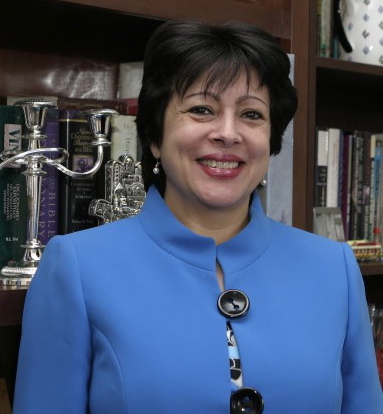
Mercedes López-Miranda
Summary: A visionary motherhood or fatherhood is a crucial and complex task that cannot be carried out alone. It requires collaboration with God, and our mission is to give our children a living example in behavior and word of what it means to love and obey God. To have a visionary maternity or paternity, one must first acknowledge that motherhood comes from God and dedicate their children to Him. Prayer is also fundamental to a visionary motherhood, as it builds the foundation of our children's lives and allows us to supernaturally influence them. By pouring out our souls before the Lord, we can receive peace and hear God's voice for our children's character and relationship with Him.
The story of Hannah in the Bible teaches us about visionary motherhood. As mothers or fathers, we must recognize that our children are a precious possession from God and cover them with intentional prayer. We must also seek the healing of our own character and recognize that we are powerful tools in God's hands. It is important to confront our own "Penina," or rival, and use our time intentionally to disciple our children in the ways of the Lord. By doing so, we plant eternity in our children and leave a legacy of character that is priceless.
In this sermon, the speaker emphasizes the importance of intentional parenting and nurturing our children's spiritual growth. She uses the example of Ana and Samuel from the Bible to illustrate how a mother's love and dedication can have a lasting impact on a child's life. The speaker encourages parents to take advantage of everyday moments to teach their children about God and to be watchful over their well-being. She also highlights the significance of creating a loving and harmonious home environment as a testimony of the power of the Gospel. The ultimate goal of parenting is to guide our children towards fulfilling God's plan for their lives, and this requires prayer, discernment, and intentional use of our resources.
The prayer asks God to help parents submit to Him in everything, so that He can do a total redemptive work in them and make them instruments to guide their children towards Him. It also asks God to bring back children who have turned away from Him, and to raise up a generation of men and women who love His house, say no to sin, and dedicate their resources to His kingdom. The prayer ends by asking God to form Himself within children and help parents be watchmen and lions that protect their children's inheritance.
When our youngest daughter was 8 years old, she wrote a poem for Mother's Day to dedicate to me and the poem says:
“Dear mommy, you are like a rose, beautiful in every way. I love your soft petals and your sweet perfume. Like all roses you also have thorns but I love you despite the thorns.
Now she has 3 children and her children are taking care of making her recognize what her thorns are and at the same time enjoy her sweet perfume in her maternity. There is no function in the world so full of joys and beautiful memories and at the same time challenges and difficulties as being a mother or father.
And I know that we are on Mother's Day. I'm going to talk maybe more about mom but dad, don't feel left out. You are also involved in that and all the principles that I am going to share apply equally to you. So you just make corrections, you modify and it's also for you, dad.
It is such an important and complex task that we cannot carry it out in our own strength. We have to do it with the collaboration of God. We in our motherhood are God's collaborators. and this mission obviously goes far beyond raising healthy children, children who are good citizens. We as children of God cannot settle for that. We want to achieve much more.
And our mission is to give our children a living example in behavior and word of what it means to love and obey God. and what do we want to do through it? We want our children, our grandchildren, all those whom we influence with our motherhood, all of them cling to those principles, see them modeled and in turn want to model them in their own lives, so that they in turn carry them, pass them on to the new generation.
God's love, God's treatment is generational. We see it in the word from beginning to end. God cares about generations, he cares about the individual but he cares about generations. And that's where we come in, to pass on that work of God to the next generation so that they in turn can do it.
In the 1990s there was a lot of talk about vision. Vision in the company, vision in the profession, vision in leadership, wherever one went there was a workshop, a lesson, books about what vision is. And what would be a visionary person, we could describe as a person who plans the future with wisdom and with a clear idea of where he wants to go. It is the person who gets up every day thinking, okay, or rather, at the end of the day, today, what I have done today, what I have said today, is something that advances, advances me towards my goal or delay me towards my goal? That is what a visionary person does, continually examines his life to see if he is getting where he wants to go.
And there is no other human adventure, so we could say, where we need to have a visionary perspective more than in motherhood or fatherhood. The well-known Proverbs 29:18 reminds us that where there is no vision, the people perish. And we see signs all around us of that, of families where there is no vision of God or where a vision contrary to God has been adopted, where things have not worked out.
So as children of God, our calling as fathers and mothers is to preserve and continue to seek God's vision in order to transmit it to the next generation, to those under our care. Because God's desire is for us to capture his vision for our children and inject it into our children. That is our main mission.
And today what I want to do is share some actions that characterize a visionary maternity or paternity. And we're going to do that through the model of Hannah, the mother of Samuel, in the Old Testament in the First Book of Samuel, in chapter 1. There in that book it tells us about the prophet Samuel, the great prophet Samuel, today Pastor Isaías already made reference and Vanessa also made reference through a prayer. She read the prayer in the 2nd chapter of First Samuel.
These first two chapters contain, and beyond, a great deal of detail about Samuel's early life. Perhaps biblically he is the character where he talks the most about his childhood. It's the perfect background to think about visionary motherhood and fatherhood.
The story happened 900 years before Christ, we are talking about two thousand years ago is this story. And it begins by recounting a family situation where a man named Elcana who had two wives, named Ana and Penina, went up to Silo, went to the religious center of his time that was closest to his home to offer an annual sacrifice.
And I want to read to you in First Samuel chapter 1 from 4 to 11 as a background to what I want to talk about later.
“And when the day came when Elkanah offered sacrifice, he would give Penina his wife, all his sons and all his daughters, each his share. But to Ana he gave a chosen part because he loved Ana even though Jehovah had not granted him to have children. And her rival irritated her by making her angry and saddened because Jehovah had not allowed her to have children. And so Ana cried and did not eat and Elcana, her husband, said to her, “Ana, why are you crying? Why don't you eat? And why is your heart grieved? Am I not better to you than 10 children? “A man with a healthy self-esteem, right? –
And Hannah got up after she had eaten and drunk in Shiloh, and while Eli the priest was sitting on a chair by the pillar of the temple of Jehovah, with a bitter soul she prayed to Jehovah and wept profusely and vowed, saying, "Jehovah of armies, if you deign to look at the affliction of your maidservant, and remember me and do not forget your maidservant, but give your maidservant a male child, I will dedicate him to the Lord all the days of his life."
The priest Eli, who lacked spiritual discernment, rebukes Ana, believing that she is drunk and she tells him, “No, my Lord, I am a woman troubled in spirit. I have drunk neither wine nor strong drink, but have poured out my soul before the Lord.” And Eli answered him, "Go in peace and the God of Israel grant you the request that you have made."
And the narration continues by saying that she left on the way back, after worshiping the Lord again, already with a joyful countenance. When she returned, she and her husband were on their honeymoon and from there a child was born. God heard his request and Samuel came to be born in his family, in his time.
So that's the background of the story. What actions characterize Ana's visionary motherhood? It first begins with an acknowledgment that motherhood comes from God. Even in her deep pain, Ana makes a pact with God and tells him, "If you give your servant a male child, I will dedicate him to Jehovah all the days of his life."
So the child she asks for is not hers, but the Lord's. So every baby that is born into the world is an act of mercy from God, it is God telling humanity, still my redemptive plans remain the same. I am here to give mercy. And she recognized that. She recognized that the child she was going to have in faith was from the Lord. And notice that she didn't even know she was pregnant and she was already dedicating it to the Lord.
So it's never too early for you young people here or people who haven't had children yet and are thinking about motherhood in the future, it's never too early to dedicate your children to God and to learn all that you have to learn to be the best and the best mother possible.
And what is dedicating something or someone? Today, this morning, a few minutes ago, many precious families came forward here to dedicate their son to the Lord. It is precisely what Ana did, it is the same. It is to dedicate What does dedicate mean? To dedicate something or someone to the Lord means to set it aside for a sacred purpose. That is what we do as parents when we dedicate our children. We are setting them apart, we are offering to God because he is the giver of children, and we are setting him apart for a sacred purpose, so that the eternity of God becomes real in them in this world.
At the same time that Ana dedicated her son, she is also dedicating herself. We parents dedicate ourselves to the Lord as well. We are setting ourselves apart for a sacred function which is to raise the children that God has given us. That is the function of motherhood. It is making a pact with God so that he is the one by our side and we collaborate with him in everything.
That is the first thing, the first characteristics of a visionary motherhood. It is knowing, as Psalm 127 says in verse 23, that children are the Lord's treasure. It is God's precious possession. That is first. To have a visionary maternity we have to present them to the Lord, recognizing that they are not ours. We are the supporters of those children, humanly speaking, but the children are of the Lord.
Secondly, to have a visionary paternity, a maternity we have to base it on prayer. And I don't mean that prayer like a quickie, Lord, bless these foods and… No, it's not that. That's not what we mean, although those sentences are good too. I am referring to the prayer that springs from our spirit with which we cover our children and which are rooted in an intimate relationship with the Lord. That is the sentence that I am referring to.
And do you know why we have to pray for our children like this? Because no one, no one, can pray for your son, for your daughter like you can. Nobody. No one has the strategic position that you have to supernaturally influence your children. You are the only one, it is a position of authority and privilege that God has given us. So prayer is fundamental to that.
Psalm 127 says this way, when eating, 1 and 2: “If the Lord does not build the house, the masons labor in vain. If the Lord does not guard the city, the watchmen keep watch in vain. In vain you get up early and go to bed very late to eat a bread of fatigue, because God grants sleep to his loved ones."
It is in prayer that we build our house. That is our function, to build the life of our son and watch over her and him. And as the psalm says, no matter how many human efforts you make, if you are not making the Lord the foundation of that, if you are not covering your children with that living prayer, your efforts... you may have achievements, I am not saying that you do not you will have, but it is not the same. You are not going to be able to take your children to a new, higher level of depth in their relationship with the Lord and success in life in everything they do.
A prayer from Hannah in verse 15 is a definition of what a prayer of petition is. What does Ana say? When Eli is accusing her of being drunk, he tells her that she is not drunk but that she has poured out her soul before the Lord. In our motherhood, in our fatherhood, that is what we are called to do for our children, to pour out our souls before Jehovah. And what happened at that specific moment in the passage? When she poured out her soul before the Lord she received peace from the Lord and left, and her countenance changed and she went to receive the promise that she felt in her spirit that she was going to receive.
And what happened? That when the time came, it was precisely like that. She had a son and the name Samuel means God has heard. God hears your prayers when you pray with that sincerity believing that there is, with faith, God will hear your prayers regarding your children.
Many of us are entering the Gospel for the first time, or perhaps we have not taken the practice of prayer so seriously and we think that we cannot pray as Ana says that she prayed. But don't get discouraged, keep learning, keep talking to God every day and he will teach you. God wants to hear you. God wants to hear your thoughts, your pains, your wounds, your sorrows, your hopes, your dreams. So keep practicing prayer.
It's like when we can't run a marathon unless we practice running, exercising. Well, the same is with prayer, we have to dedicate ourselves to it in order to continue learning the mysteries of God. Because when we pray like this, there is an aspect of revelation that opens up, which doesn't open up when there are only fleeting prayers, without much thought. There is a big difference.
It is possible that by praying for your son God reveals something about your son's character, about your own character, about the relationship, about anything, worries, he can even warn you of things that could happen. This is the God we serve, a God who wants to speak to us and I cannot think of a relationship where we should seek this type of interaction with God more intensely than motherhood.
In another moment Ana, which was the prayer that Vanessa read earlier in the service, she prays again and in that prayer again God reveals to her, it is a prayer with prophetic elements, that is what God can do with your prayer too, speak to you prophetically about you, about your children. And that is a beautiful prayer because it not only reveals to Ana things that she has lived and experienced, but also how God works in the world and was working in the people of Israel.
It is important that we cover our homes with prayer. And a significant detail is that this prayer in chapter 2, also called the Canticle of Ana, occurs precisely at the moment when she and Elcana take their son Samuel to the temple to dedicate him definitively to the Lord. Despite the fact that it was a moment of pain, of separation, due to the separation with her son, she was able to raise a song of adoration to the Lord.
That is very significant because how many of us have not cried with much smaller separations, when we take the boy or girl to kindergarten and we cry because we are already separating from him. Or how it happened to me when I took our youngest daughter to a faraway state for her freshman year of college who cried like a cupcake in the taxi back to the airport. And the taxi driver very kindly handed me a handkerchief to wipe away my tears and said, "Don't worry, ma'am, your daughter will be fine, don't worry."
Moments like this, what pain it gives us to be separated from our children. However, Ana, her conviction was so great that within that moment of painful separation from her little son, she was able to raise this song to the Lord.
Reviewing, we first have to have visionary motherhood or fatherhood, we have to recognize that children come from God, that they are his precious treasure. Second, we have to cover them with intentional prayer from the spirit. And third, visionary motherhood has to recognize itself as a powerful tool in God's hands.
That is why it is necessary that each one of us make the daily resolution to submit to the Lord in all our areas so that he heals our rough edges or thorns, as Abby called him in her poem, so that the sinful tendencies that we have may also be healed by God. . And why is this important? Because otherwise, we are going to transmit that as a legacy to our children. It is so important that God heal us.
Our children are like sponges and when I say that it is because they learn much more by what they see that we do than by what they hear that we say. Isn't that so? Is a reality. And for this reason, a character that has already been molded or that is subject to the Lord so that he can mold it day by day, because this is a long work of time. No one is healed of all their imperfections, insecurities, sinful tendencies in one moment. We know that is not so.
But our children have to see that our character is being molded by the character of God so that they want to imitate that very thing and that they will not imitate things that are not appropriate.
We read in verse 2 of the First Chapter of First Samuel, that Elkanah had two wives, Ana and Penina. It is very possible that Ana was Elcana's first wife and that seeing that time passed and there were no offspring, as it was very important to have offspring at that time, as it is today but at that time even more so, it is possible that he find another wife with whom to have children. So that's why Elkanah had these two wives.
What's going on? That's a very bad idea, having two wives. If one is difficult, imagine having two. Too much. I don't know how Elcana could. But the point is that Penina became Ana's rival and despised her, feeling superior to her because she did have children and Ana did not have children.
The story that we already read at the beginning says that Penina irritated her, made her angry and saddened. And how did he do it? He says that every year she took advantage of this family occasion to go to the temple to present the annual sacrifice and then attack her with greater force.
And what happened? That is an impertinent drop, hitting the stone time after time, until it affected, wounded Ana's heart. And it's nice to see, from the passage one can deduce that Ana did not use her own revenge to return Penina evil for evil. And I think that this is very important because what would have happened if Ana had given herself up to bitterness, to persecute herself too, to return evil for evil to Penina. Possibly Samuel's miracle would not have occurred if she had assumed that attitude. Because Samuel needed a mom like Ana.
Why am I bringing all this up? Because for us to exercise our maternity and paternity more effectively and truly be an instrument that God can powerfully use in the lives of our children, each one of us has to deal with his Penina.
Ana's story was very complex but perhaps your story could be more complex, even more difficult than Ana's. But what are we going to do with Penina? In order to be the tools that God can use again, we have to confront our Penina. The Penina sometimes comes from within, the Peninas sometimes come from outside. And your Penina can have different names. Your Penina may be called divorce, may be called extreme financial hardship, may be called addiction, name it. We have all dealt with Peninas.
But the important thing is that we can recognize what is that Penina that we have and be able to take it to the Lord and grow in the character of Christ so that we can also transmit that to our children, that this be the inheritance.
When you think of inheritance, many of you do not think of money, of material things, when you think of your parents' inheritance. You think about what my father taught me about what my mother taught me. That is what is truly valuable. Material possessions come and go but what a father, a mother leaves us in terms of a legacy of character, that is priceless.
And it's true that you and I want to do the same. We want to be transmitters of that to the next generation. Reviewing again, to have the characteristics of a visionary fatherhood or motherhood, first, recognize that children come from God, they are his possession. Second, we have to base our fatherhood on prayer, in intimacy with God. Third, we have to seek the healing of our character, of our being, of our soul, of our spirit, so that God can use it as a powerful instrument in the lives of our children.
And fourth, the visionary mother or father every day obviously gives themselves the task of collaborating with God so that God's vision is fulfilled in each of their children. And we have to use the resources, we have resources in our hands. But how do we have to use them? We have to use them in an intentional and Holy Spirit directed way for them to be effective.
What is the most important and scarcest resource? Time. How many of you have said recently, is that I don't have time, I don't have time. I think that almost everyone, even the children, is saying that, that we don't have time. If for every time we say, I don't have time for this, I don't have time for that, we complain about it, if they gave us a dollar for every time we said that, we would all be rich. I would be a millionaire.
That is a resource that we have, time. And there is no one in the world, I believe that right here there is no one who can say that they do not lack time for something. And what is happening to our modern ways? It's that we pack so much into our agenda that we don't have time to make family connection.
How many of you has that happened to you? it has happened to us. So many activities, and we live in a world of such eagerness that the children participate in three sports, that they play at least two instruments, that they belong to that club and that other, that I also in this, in the other, in the afterlife . And when we come to see, time has gone and that precious time that we had to instruct our children at home in the things of the Lord, is gone. Because time is needed for that, to disciple our children at home. And that cannot be postponed until tomorrow. That's not something you can say, well, in 10 years I will. No. It is here and now. So take advantage of the opportunity that you have now to influence your children, your grandchildren, your nephews. Take advantage of it now because this is the Lord's time to influence him using time.
One of the things that has happened is that even family dinner time, again, if we were to do a survey here, possibly many of you have missed that family dinner time many times because there are other more important things. But studies say that the family that eats together, a number of times, does not have to be every time, at least 5 or 6 times I think it is, per week the success rates of the children are higher. Like, for example, going to university, not using drugs. So even secular studies indicate the importance of sharing time like that at the table.
Because what happens at a table? It's not just eat, eat, eat. Manners are modeled, dinner is prayed for, things are shared, worries, joys, challenges. It is a time that is too precious to pass up. I have very clear memories of my own upbringing because that was the law, in my house it was the law. There was no possible compromise that would prevent one from not being at the table.
We know that due to the complexities of our times - it's not that I'm so old, but now it's more difficult - sometimes it's not possible to do it as often, but you do make an effort to keep those family times sacred, so that the you can use to precisely transmit the word of the Lord, examples of the Lord, so that the Lord directs you in that.
The word of Jehovah to the families of Israel that we find in Deuteronomy 6, from 5 to 9, are a model of the importance that we impart our faith through sharing with our children. I know that it is a passage that many of you know very well. That passage goes like this:
“Love the Lord your God with all your heart and with all your soul and with all your strength. Engrave these words that I command you today in your heart, instill them continually in your children, talk to them about her when you are at home and when you go down the road, when you lie down and when you get up. Tie them to your hands as a sign, wear them on your forehead as a mark.”
Those are urgent words. When you read them, they are action words. It's not when you can. No, it is today, at all times. That's what it says. In other words, what God is telling us is, take advantage of the opportunities that you have to transmit with words and with your example to your children how the Lord is obeyed and adored. Because it is in daily life, in those simple everyday experiences of life where we can make a mark for the Lord.
And you know what happens? That when you have those interactions with your son on a day-to-day basis, in normal life, you are opening channels of communication with your son so that in the future when there are problems your son will come to you, because Those channels are open, because there are already conversation and connection times. These things do not happen overnight, we have to cultivate them in our family life.
Once again, the best way to transmit the truths of the Lord to our children is through taking advantage of those little moments where we are connecting. It can be washing the dishes, in the car, so many ways that God gives us in our interactions with our children to do that.
And God bless that. Although sometimes it is not obvious to us that our children are absorbing what we are teaching them, right? How many have been there? One says, well, like it entered here and came out here. But don't think like that, your role is to obey God and teach him what you have to teach him. That's all, you have to be faithful.
When you bring your children to I Wanna, Friday after Friday, you run out of work, hardly eat and run and in traffic and you are here for them to have their class at I Wanna, when you bring them to church faithfully on Sundays, when you take them with you to do something good for someone in need, when they see you that in a family conflict you are a peacemaker and you want there to be a healthy and loving resolution, on each of those occasions you are planting in your children something that is enduring, that will last forever. You are planting eternity in your son. And you are showing him that everything you are doing, you do it because it is important to you, because it is a priority for you.
Your children are going to imitate, they are going to want to do what you are modeling for them that is important. So we also have to model the importance of serving the Lord in active ways, which is not just like punching the card, I go on Sunday because Sunday has to be fulfilled. It's not that, but everything, everything you do there is a connection, it is a totality, where you are giving your whole life to the Lord, not just your Sunday. And that is something very important.
I remember when our daughters were little, girls, who went to church with us, and we took them all the time and sometimes they would get so tired if the service was a little longer, it was time to sleep, little dozes on a very hard bench. Because we are talking about when they had our church in Cambridge and the pews were made of wood. And there they are asleep on their hard bench. That didn't hurt them. Quite the opposite. And we took them whenever we went, they went with us and participated with us. They grew up believing that the church is a pleasant and good place for them because they saw the sincerity with which we served the Lord, they saw that we loved our brothers and sisters and they grew up like that, they passed from one person to another, to another, to another, and they were so happy to be in the house of the Lord.
We do this because it is important. In those seemingly small things we are conveying the importance of the Gospel. Again, it is a Gospel that covers all areas of our lives.
Ana and Elcana I imagine they must have taken advantage of every second with Samuel, because Samuel began to be dedicated to the Lord from a very young age. They didn't have the privilege that we have of having them much more. Samuel was 3 to 4 years old when he was dedicated or officially delivered in the temple. So I guess every day counted, and it must count for us as well. Each day should count in terms of what we convey to you about the Lord.
I imagine Ana praying fervently for Samuel, for his future ministry even though she didn't know him, just as we don't know our children's. And I imagine her telling him that God intervened for him to be born, that he belonged to God, and that God listened. That his name Samuel was a testimony that God had heard his prayer.
Likewise, we have to have that sense of urgency, to transmit the same thing to our children, what God has done in our lives, just as we said, with the passage of Deuteronomy 6, in all circumstances, in all activities of life. .
We have already said that a father or a mother collaborates intentionally using their time to transmit the values of the kingdom. We spoke a moment ago in Psalm 127 that we are guardians over our children. And he is not a neurotic guardian who is aware of everything that the children do and who does not allow them to have their own difficulties so that they can solve them themselves. No, it is something different, it is watching over our children, thinking of them as the treasure that they are for God and for our lives.
When we use the discernment that God has given us as parents, we are watchmen over our children, because again, there is no one like you to see and know where your child's heart is and perceive what danger there may be in the lives of our children. I believe that many things that happen in our families could be avoided if we were more attentive to our role as visionary fathers and mothers, to take action in the name of the Lord, wise strategies that prevent our children from reaching certain things.
So it's a very important job. The time, the discernment that God has given us is another resource for us to train them. Discover their gifts, help them to know what God wants for your life, son or daughter. What gifts do you have and whatever gift you have, be it a vocational or professional gift, God can use you. We do not have to yearn for famous or important sons or daughters, we have to yearn for our sons or daughters to make Jesus Christ famous wherever they are, which is something totally different.
I am concerned that we often underestimate our children's ability to understand spiritual truths, like we see them playing and doing this, and distracted and we don't think about the great spiritual capacity that a child has. But you know what? Your son has a spirit just like yours, a spirit that needs God just like yours. And your child has a Holy Spirit that is just as powerful as the Holy Spirit that ministers to you.
And your child does not have a preschool or youth size Holy Spirit, it is the same Holy Spirit and God can do great works in their lives. Sometimes we don't see more because we don't believe more. That is the reality in our maternity. And a visionary parent looks for what I call charged moments of eternity and takes advantage of them. All the time he is thinking about where is the sensitivity of my son, daughter, to be able to minister a truth of the Gospel in her or in him.
I had the privilege of propitiating two of those moments charged with eternity in the lives of our daughters, when they accepted the Lord. With Sonia, a Deuteronomy 6 moment occurred again, in the daily life. I was feeding her food – our eldest daughter Sonia was 6 years old at the time, the baby was 6 months old. I was giving her food, she was helping me and Sonia loved her little sister, she was crazy with her little sister. She couldn't handle herself with the excitement of having a little sister. And so she also fed her and she was talking to me about how beautiful the little girl was and how wonderful that something like that could come out of my tummy.
That was the conversation. And then I discerned that Sonia was prepared to accept the Lord and I led the conversation to that and asked her if she wanted to accept Jesus as her Lord and savior, she immediately said yes, closed her little eyes and repeated the prayer that I modeled for she. And the second Deuteronomy 6 moment with our youngest daughter Abby, it happened like that too. We were on our way taking them to school.
At that time they went to a school far from our house so it was a great time for Roberto and I to have wonderful conversations with them about different topics and on that day I was the one driving them, and Abby starts talking about something that a teacher taught him about Jesus, the crucifixion and the resurrection. And Sonia, she and I talked for a while about what she was commenting on and I also said, this is the time and I ask her, Abby, do you want to receive Jesus as your Lord and savior? She said yes and obviously I didn't drive, because that wasn't giving her enough honor, I parked on Washington street [inaudible] under a very big beautiful tree there, and there I led her in the confession prayer of faith.
So today, so many years have passed, they both recognize, they remember when and how their conversion with the Lord took place, how they officially became daughters of God. so we have to take advantage of those moments at all times, not let one pass.
And another thing I want to mention is the importance of the home resource. Feminism has tried to undermine domestic work, the work of motherhood, and it has done so quite effectively. But there is nothing that ministers the power of the Gospel more than a home that is clean, orderly and where there is harmony among those who live there. That is a strong testimony of the power of God. I know that housework becomes repetitive and burdensome, I know. I've been there, done that. I know what it is. But instead of complaining about him, I think we would do well to give that to the Lord as a welcome offering, because in the context of a home like this, God can do wonders and he can perform miracles.
I encourage them to continue doing what they have done so far. I want to talk about a little detail that can be missed very easily. It is in chapter 2, verse 18 to 19, a domestic detail. It says there:
“And the young Samuel ministered in the presence of the Lord clothed in a linen ephod and his mother made him a little tunic and brought it to him every year when she went up with her husband to offer the customary sacrifice.”
Can you imagine the emotion that Ana must have felt that she was going to see her Samuelito? I imagine that she would be so distracted thinking that she was going to see her son, that she was going to see him, that she was going to hug him, that she was going to talk to him that perhaps she couldn't even do her chores at home. I imagine her looking for the best fabric to make a beautiful tunic for her son. I can imagine her wondering how much Samuelito has grown since last year? because I have to make the tunic long enough for it to last at least a year, until I come back next year with another tunic.
See how important those little details of us as moms and dads are because I know that there are many dads who do many things at home too. She took great care in attending to Samuel's very practical household needs. Like Ana, we don't know the future of our children, but what happened to Samuel? Samuel by the faith of a woman who chose to believe God and make a desperate prayer to the Lord, that is why a Samuel was born, who was born at a crucial time in the life of Israel. Israel was a disaster, the temple was being desecrated, the priesthood, there were dangers of war, there was gross immorality.
We think about today's times, but read the Old Testament so that you also see everything there is. It seems that there is nothing new under the sun. Although what happens is that what is happening now is affecting us who are here now.
We do not know the future of our children but we do have to recognize our ministry, our responsibility within our motherhood. And who knows if God gives us a Samuel, right? That is wonderful. She did not know that her son was going to be a prophet, that he was going to be a priest, that he was going to be the last judge in Israel, that he was going to be a maker of kings. She didn't know any of it, but she did know that God whom she served…she knew God's character and knew that God was going to honor her love offering to him by giving him her son.
That is what is up to us. Being faithful in what God has given us to do and leaving the rest to God.
The fourth verse of Psalm 127 says, "As arrows are in the hand of a mighty man, so are the children of the young." Like arrows in the hands of the brave – you are the brave, the brave – so are the children of the youth.
The end that we expect from our motherhood, from our fatherhood is that our children hit the perfect target of God's will. That is our end. Your role as a visionary father or mother is to take each of those beloved arrows and draw the bow. And how are you going to do that? How are you going to stretch the bow so that your arrow is shot at the target? You are going to do it by first acknowledging that these children are not yours, that they are the Lord's, covering them in intentional prayer every day, allowing God to mold you as a powerful instrument in his hands, and using your resources, whatever the time. , discernment, your attention to the details of the home, all of this using it intentionally and with a supernatural vision. That's the way you enthese the bow.
May God help all of us as individuals and as a community to raise up a generation of Samuels. Amen.
Let's pray. Father, I thank you for the gift of motherhood. Thank you, Lord, because we are not doing it alone, we are not doing it with our own strength, but we have all the resources from heaven to carry out this important task. Lord, you know our heart, you know where we falter, we present ourselves before you, Lord, first we dedicate ourselves before you so that you can do a work of renewal within us. Everything that does not please you, Lord, we give it to you.
We ask you to open our understanding to how we can submit to you in everything, so that you do a total redemptive work in us, so that we can be the instruments that you want in the lives of our children to form them, to that they want to serve you and be led by you, so that they want to imitate your character, Christ.
Help us in that. Lord, help us to be faithful in prayer, faithful and intentional in how we use all our resources, Lord, for your honor and your glory, so that you can make them more effective in the lives of our children and the individual purpose that we have is fulfilled. you have for each of them, Lord.
Father, we present to you those children, those arrows that have turned away from you, that perhaps their homes had done all they could to guide them to you, but they have turned away. Lord, I ask you at this hour, oh God, that you bring them to you, that they be the prodigal children, that they return to your house, that they return to you, Lord.
Lord, for you there is nothing impossible. You can bring that rebellious son, Lord, you can bring that daughter who has chosen other things instead of you, Lord. You can and want to bring them back home. Lord, even there we ask you to use our motherhood and our fatherhood in a wise way to be used by you in that process. And Lord, we ask that in this time of history you raise up again a generation of men, women, daughters and sons, like Samuel, who love your house, Lord, who love your things, who say no to sin, who are powerful influence where you have placed them, who love your kingdom, who love your church, who want to dedicate all their resources to you where you put them, oh God. That is why we are praying on this day, Lord.
Lord, lift up, lift up those children, Lord. Lift up those daughters, Lord. I present before you even the little babies that are here, even the little girls, Lord, go forming yourself within them, go helping their parents to be watchmen that do not rest, Lord, to be lions that protect the inheritance that you want to give to those children against any onslaught that comes, Lord. Open our eyes, O God, to see your work in the lives of our children, Lord. Lord, give us the privilege of seeing your hand working in each one of them, Lord Jesus. Thanks, Dad. Thank you. Amen.