The King Has Sent His Chariot to Look for You
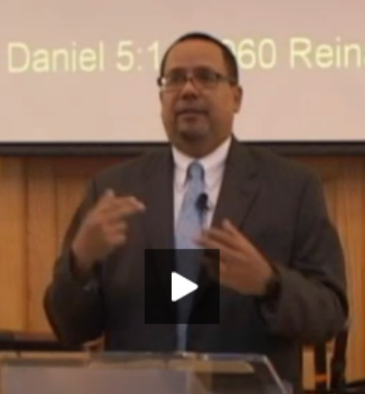
Author
Isaías Rivera
Summary: The story is about King David and Mefi-bosheth, the grandson of the first King of Israel, who became disabled after falling during an attempt to protect himself during the time that his family was being killed. Mefi-bosheth lost everything, including his name, and went into hiding in a city called Lodebar. After fifteen years of being forgotten and rejected, King David sends his chariots to look for him. When Mefi-bosheth is brought before the King, David calls him by his name, which gives him value and recognition. David also tells him not to be afraid and takes care of him, showing that people want to be recognized and have human value beyond monetary help. The story teaches us that external circumstances should not define us, and that God is always seeking to protect and care for us.
The speaker talks about Mefi-boset, a man who was forgotten and abandoned for 15 years, but was later invited to sit at King David's table and eat with him. The speaker compares this to sitting at the Lord's table, where all disabilities and past problems are not seen, and everyone is treated equally. The speaker encourages those with spiritual disabilities or who have suffered domestic violence to trust in the Lord and know that they are invited to His table. He also tells parents of children with disabilities that their children will have a seat at the Lord's table and that they will receive the same blessings as everyone else.
(Audio is in Spanish)
I want to share a story that has to do with King David. After King David has control and the union of the 12 tribes, everything is at peace in the Kingdom, he remembered some promises he had made to his best friend Jonathan when he was in trouble with Jonathan's father who was Saul.
And chapter 9 begins with David asking: "Is there any of the house of Saul left to whom I show mercy for Jonathan's sake?" And the previous idea is that when Jonathan and Saul die, that they are killed on the battlefield, it was very historical that the royal family that was left alive was going to kill them. The idea is that by killing the entire royal family no one could then gain a step to the throne, so David's way of securing his throne was by eliminating the entire family of Saul and Jonathan.
They eliminated everyone but one person. And this boy, Mefi-bosheth, when the news arrives that his grandfather, who is King Saul, and his father, Jonathan, have been killed. running to protect him, but in this run and run, it seems that she was not a very good athlete, she fell, and when she falls, her feet break.
Imagine that moment in your life that comes to all of us, when you have prepared yourself to do something. You have prayed, you have planned it, you are waiting for it, you can savor it, and for the moment a circumstance or event that has nothing to do with you interrupts and changes the course of your plans. In this case, the course of Mefi-bosheth's life changed.
He was born in the palace, he is the grandson of the first King of Israel, he is in direct line to occupy the throne, it is as some say: "he was born with a golden spoon". He had it all and in the blink of an eye his future, his plans, his hope, his dream fell apart. Now he goes from being known, loved, revered, honored, prestigious, famous, to hiding for his life in the city of Lodebar outside of Jerusalem.
A city that means, Lodebar means "without pasture" and as I said in the morning, that city is important because David before he was king was a shepherd and he understood what it was to take sheep where there was no pasture, there was no food, so the symbolism of the city is that there is no future there. Escaping from a reality, they went to a city where there is no future, a city where he is going to be a fugitive, a city where he has lost his prestige, a city where they have no family or friends and now, on top of that, all this, Mefi-boset is in this city crippled, disabled, he can't walk, he can't fend for himself and we are talking about a time when there were no laws that protected the disabled.
Laws, for example, that if they are going to build a door here, it must have certain measures so that a wheelchair can enter, at that time there were not even wheelchairs. When David asks if there is anyone left from Saul's house to whom I show mercy, David is not asking: Is there someone qualified, is there someone prepared, is there someone famous, is there someone who can do something for me? he asked plain and simple: is anyone left alive, in other words, from the house of Saul?
They tell him that there is a servant, in verse 2, who can answer this, and in verse 3 the King asks Ziba again, is there no one left from Saul's house to whom I show mercy to God? A question that entails an answer: yes or no. Yes or no.
But for some reason we like to elaborate. Those who are school teachers and give an exam that has to do with questions like an essay, right? and the question is specific, you have students who elaborate on everything except what the topic or the question is about, and the question is: yes or no, is there anyone left?
The servant Siba answers, and answers: "There is still a son left" does not use his name and then gives him a last name, crippled on the feet. So, Mefi-boset not only loses material properties or fame, he loses his name, which implies in the world of that time that he had no value, he was nothing, he was useless, he was crippled, he automatically has no abilities, automatically society puts it aside, it automatically does not exist.
How many of us when asked in our jobs or in our community life about someone and we don't know the name, answer: yes, yes, yes, the Hispanic, the chubby, the black? we are acting like Siba, we are taking people's humanity, we are not using his name.
David can say many things but what did David ask next in the next verse? where is? He did not ask: what happened?
Have you not had an experience because you want to be prayed for and the person even asks your social security number before praying? "but how did it happen, but what happened, but how is it possible?" the person has called because he has a need, because he feels that he is in that city, in Lodebar, without grass, and you exemplify David, you exemplify David.
When my son was in the hospital the second day in the trauma area for brain injuries, I don't remember the first or second day, Pastor Roberto called me, a very appreciated call because Roberto was great, Roberto told me: I was in that unit, I will pray for you. When you think I can go let me know, and pray for me. Roberto did not ask me: what time was the accident, how was the accident, how many were in the accident, who took him, who brought him? because that's not important.
And I imagine David wanted to say to the servant: boy what I need to know is if he is where he is and we are going to look for him. How good it is to know that in those moments of our lives when the light has been turned off and an event has changed what we were doing, what we were, how good it is to know that the God and Lord, and King of kings greater than David is seeking to send His chariots to search for you, to bring you to Him. Thank the Lord that nothing can happen. Sometimes we believe that only people who have a cognitive or physical problem are the ones with disabilities.
I want to tell you about something that happened to me this morning and I don't have disabilities, well, not that I know of (laughs) I'm going to ask the Bible. I am a fan, I love to iron my shirts, I love to iron my collar, put the starch on it, etc. because I like to see ironing. So this morning I got up early, I prepare my ironing board, I take out the iron, I look for the spray, I have everything ready, I put on my music, I spray the shirt, I wait a few minutes so that the iron doesn't stick, I go to the room to look for something and I tell her: I came here but I don't know what I'm looking for, when I return to the grill, I remind myself: oh yes it was a handkerchief, so I go back to the room, I look for the handkerchief, I put it around my neck , I start to iron and I say: oh wow this spray is different because the neck is not as toasted, hard, it is soft and I say in my mind: "as I bought it, it is a different spray".
Brothers: me with my pride, right? I'm going to put on my tie before leaving in my car, God always brings something that takes away your blessing (laughs). So Vivian goes to where the iron is, you know, to remind me: before you go, take out the iron, take the ironing board and take it to the room, you know, and she tells me, she takes the spray and says: with this you did you iron?
And when I look at him I said: Lord, do a miracle with that dog. Do you know what I put on my shirt? the spray that is used to pour into the pots so that things do not stick (laughs) (laughs). And I don't have any disability (laughs). Yeah I have to be outside, far from the fire so that I don't catch fire now.
After so many years of Mefi-boset being hidden, of being anonymous, of living without having anything, I cannot imagine the life of a disabled person at that time because there were no opportunities, especially when in the Hebrew mind and the mind Greco-Roman said that a disability was a curse, you were cursed or cursed. So I had to live with that stigma that they are rejecting me because of my physical condition but they are also rejecting me, they are condemning me. I am cursed, no one approaches me, I have nothing to offer, I have nothing good to give.
I imagine that pivotal moment in the life of Mefi-bosheth when the King's chariots arrive at Lodebar. And I thought: well let me apply that passage, this part to this time. What I'm going to say doesn't happen in Massachusetts, okay? It happens elsewhere but it doesn't happen in Massachusetts. Imagine that these cars that say "White House" turn up in your neighborhood, they are the cars of David the King. People who are not so meddlesome open the blinds: "ooh, US government, what happened in that house?"
The first thing we think is: they are selling drugs. They have done something and if the visit is at five in the morning they have done something because it is federal, and it is our perception based on our own human condition that we reflect on others what we have inside and what we are.
For Mefi-boset it was a crucial moment because for the first time he had to see King David and he knew that what awaited him was to be killed because that was what the law had. When they pick him up and he arrives at the palace in verse 7, first David does not say to him: "Son of Jonathan crippled", David says to him: "Mephi-bosheth". Fifteen years of hearing that I am crippled, fifteen years that I have no courage, fifteen years that my name is not pronounced by someone with authority. Fifteen years of being anonymous, fifteen years of an event that changed my life that was not an event that I did, something outside of me changed my life and my plan, and my program. Fifteen years of being cursed, fifteen years of being anathema. Fifteen years of wondering where is God?
Fifteen years of watching other children play, grow, share but since I am crippled children were not allowed to play with me because my curse could spread through the children to the family, they kept me hidden. Fifteen years that I don't know if there really is a God.
And when he arrives in the presence of the King, the first thing he says to him is: "Mefi-bosheth". It is a moment that now changes what happened fifteen years ago, oh my God, I have a name and the King knows my name because he has called me by my name, he has not called me: son of Jonathan, Mefi- told me. Boset, you are telling me that I have value, that I am someone, that I represent something!"
And many times, whether due to a physical event, the disability that is spiritual remains, the one that cannot be seen, the one that puts us as prisoners, takes away our freedom. We forget that we have a name, we forget that we are sons and daughters of a living and Almighty God because we have let the event, the external circumstances govern us. We have let other people's perceptions determine who we are; no brother, no, no, no, do not let the perception of another human being determine or define what you are. The King has sent His chariot to look for you.
He says that he fell on his face and bowed waiting for judgment, waiting for punishment because it was what the law mandated and David tells him: "Do not be afraid." Oh! for the first time in fifteen years I can feel in that "don't be afraid" that the King is going to protect me. I can feel in fifteen years that protection and security that come with those words, the Lord has to protect me.
And what David says after that is, immediately, David didn't send any money to Lodeban. When we have someone in need, what we do is send money and I don't want to say that they don't help financially, it's just that that's not all. People want to be called by name, people want to be recognized, people want to have that human value.
On one occasion I had the opportunity to work for a university and at this university I went several times to Mexico and Guatemala, and on one of these trips they took me to a site to see a garbage dump. When I was with the guide in this garbage dump, there was a lot of garbage and there were many people looking through the garbage, and there were animals, the guide told me: Pastor, approach the people who are looking for food among the garbage so that you can listen.
I'm getting closer, right? and this particular person was looking through the food, through the garbage and every time he found something he said: "thank you Lord for you have provided our daily bread" and he put it in a bag.
A few days passed, we were in a neighborhood taking food to different families and one of these women is the one I saw collecting garbage, I was happy and told the group: "Look, that's the lady I saw collecting garbage but she I was giving thanks to God" I became a preacher of this, and some of the people upon hearing this, the boys, began to cry, they were sorry, right?
And she asks me: why are you crying? oh no, they are wonderful humans, they are touched because you were there, I have seen you in the garbage dump collecting garbage and giving thanks to God, and she tells me: no, no, no, no, I was looking for food to my family. If I didn't have God that would be a dump but since I have God that is not a dump.
Mefi-boset when he arrives at the table and let me tell you something, to sit at King David's table according to the historical context was only family and some close friendship. I dream of so many people who were in the royal court with David would never sit at the table. And David tells Mefi-bosheth: "This is what I am going to do with you. I am going to give you back all the lands that belonged to Saul and Jonathan your father, and you will always eat at my table."
He did not just leave it in a handshake. The man who was forgotten for fifteen years, abandoned, nameless, without human value, low self-esteem, on his forehead with the famous phrase "damn", that which was useless, that according to society he had no future, that his plans had disappeared, now the King tells him: you will not only eat with me, you will always eat at my table. At that table there is a chair with a first and last name that is good for you. When he sat at that table, that's the beauty of that table, he had a problem with his feet, when he sat at the table his feet couldn't be seen. Aah, it was the same, it had the same value.
When we come to the table of the Lord and I sit in the chair that He has arranged for me my disability is not seen, my past problem is not seen, what I have done is not seen, even if I have been in Lodebar it does not matter, now I am at the Lord's table eating the King's food. How rich it is to know that the Lord sees us with good eyes.
Look, on one occasion a boy with a disability is in this recovery process and in this recovery process they have to go through occupational therapy, physiotherapy, a lot of therapies that they give these people. And one of his therapies was, he had to leave his place where he received the therapies and go to Burger King by himself, cross the streets and buy his food. And this young man going to Burger King is presented with a homeless man who tells him that he is hungry and wants food, the young man ignores him and continues walking but remembers mercy, not pity or pity, grace and returns back, and says to this homeless: if you're willing to listen to my story I'll buy you something at Burger King.
The homeless said: wow yes! she goes with the boy, right? buys her food, listens to the story; That was my son Isaías Junior. How many of us who do not have disabilities and are sitting at the King's table can share with those who are not at the King's table how to get to the King's table?
One of the biggest concerns, and I speak from my own experience and that of other relatives, for whom we have sons or daughters or parents, or relatives with disabilities is: what will happen to them when we are no longer present, who is going to take care of of them when I am no longer present? Will they be able to be prepared enough to be independent and be able to make decisions for themselves? who will watch over them? It's something we're always thinking about, right? not only leave them a pension or leave them some funds, but how are they going to live?
On this day I want to tell you father, mother, friend or friend that you have relatives so the Lord tells you: Do not be afraid, because He has a chair at His table. A chair that cannot be occupied by another person, that is his chair because it has his name, so do not be afraid and trust in the Lord who provides forever.
Mefi-boset's plan when he was in the palace before the accident apparently had no future, but this afternoon I want to remind you: forget about your plan, we don't need a human plan, we have to have faith and hope, and the conviction that the sovereign God has a greater plan and a permanent plan, and an eternal plan for my life.
When we are at the King's table I am no longer without prestige, it is a place of honor, I have not earned it but the Grace of the Lord has given it to me. I am no longer in Lodebar, I no longer have to make an appointment with the King, I am eating with the King day by day, night by night. I don't have to do anything, I don't deserve it, I don't have to pay for it. I no longer have to run away, people now know that I stopped being crippled, now I am Mefi-bosheth. I am no longer crippled, now I am a son, the King has adopted me, I am no longer a stranger, I have a new family that protects me, that takes care of me. It doesn't matter, it doesn't matter brother, sister, friend and friend, how is the chapter of your life going, if they turned off the light, but the King is calling because the light is going to turn on and when the light turns on no one will be able to turn it off . Don't let one event in your life define and determine who you are, ever.
This week I was at a conference and I was always looking for how many people survive the same accident that my son had and they almost didn't find it, only 10% but this Thursday, this mother was speaking at the conference because she was one of the speakers and she was saying that her son suffered almost the same kind of injury but she said a detail, and I said: aha! Her family is Christian, and although God does not always decide to heal or save or raise, or perform miracles, in this case I found someone who also has the same connection: God, God, God and I enjoyed sitting in my chair and I said: Glory to God.
And she in this secular conference: "because my family decided not to believe the doctors, to reject that word of the doctors and to pray, and pray, and pray, prayer, prayer, prayer" and I looked at the people who are not all Christians No? silent, pending, incredulous.
I want to finish, two applications. If your disability is spiritual and you are in Lodebar, in the city that has no pasture there is no reason to stay in Lodebar, God has sent his cars to look for you, to bring you to eat at the table. No matter what has happened in your life, He wants nothing to do with it. Where are you in the city? and He will send His chariots to find you and make you a son or make you a daughter.
If that city represents domestic violence, that you have been physically and emotionally abused and have taken away your self-esteem and your value, I tell you this afternoon: God the King knows your name, knows your last name and is sending the cars this afternoon to bring you and sit down again at the table not as a servant, not as a visitor but as a son and daughter of God.
If you are the father or mother of a child with disabilities, let me tell you: the Lord will have them at His table, the Lord will have them at His table, and you will receive the same food because once at the table, not seeing their disabilities are all the same, everyone eats the same food, everyone enjoys the same blessing, the special blessing for us is reserved at that special table, and what God has given to me. The events of my life do not matter, that is my chair with my name and nobody is going to occupy my chair, nobody is going to prevent me from getting to the table, sitting down, enjoying myself and eating.