A Faith That Is Evident
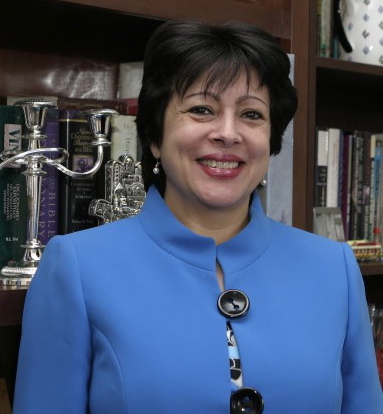
Author
Mercedes López-Miranda
Summary: The speaker talks about a faith that becomes evident in our lives, one that permeates all our decisions and circumstances. He describes faith as a spiritual posture that shapes our lives and decisions. He suggests three phases of faith - discern, determine, and define - and gives an example of a young girl being asked out by a popular boy to illustrate these phases. He then turns to the story of Raab in the Book of Joshua, where Raab discerns God at work, determines to save the spies, and defines her faith in God. The speaker encourages us to examine ourselves, discriminate between good and bad, and take action based on our faith in God.
The story of Rahab in the book of Joshua teaches us about living faith. Rahab discerned God's move and determined a course of action to make a pact with the spies, which helped her save her family. She also redefined herself as a loyal follower of God. Her faith found favor with the Lord, and she is mentioned in the Book of Hebrews and James, as well as in the genealogy of Jesus. Rahab's story shows how God can work in anyone's life, regardless of their past. When we come to the Lord, we come with baggage, but our faith in Him covers it all.
When we come to the Lord, we bring our baggage and past sins, but God's love and faithfulness can cover them all. The story of Rahab and the scarlet cord is a symbol of salvation and faith. The scarlet cord also represents Jesus' blood shed on the cross for our sins. As children of God, obedience and pleasing God should be our passion. We should aim to bring delight to God's heart and glorify Him in all we do. Let us pray for discernment and determination to live as defined people who please God.
This morning I want to talk to you about a faith that becomes evident. If I were to ask you, what is faith? I know that the first thing that comes to mind is Hebrews 11:1 which says: "Faith is the substance of things hoped for, the evidence of things not seen." That is faith.
But my experience tells me that what many of us do is push the faith button one moment and turn the faith button off at another moment. Many of us are not continually living on the platform of faith. At one moment we have it, at another we don't. And God doesn't want us to do that, He wants us to continually live in faith. In fact, I see faith as a spiritual posture that has to permeate our entire being, has to permeate all our decisions and has to be present in the midst of all circumstances or situations in life. It is not at one time yes and at another no, but always.
Because faith in Jesus Christ is not something that we only apply in certain areas of life, if not in all. Faith is what allows you to worship God in times of adversity. When everything tells you: get depressed, throw in the towel, faith tells you: no, go on, adore Me, set your eyes on Me. And in this community I have seen many examples of that, many people. I precisely remember a woman who lost her husband after thirty-something years, she lost him that week and on Sunday she was here adoring the Lord, seeking comfort from her Lord. That is a miracle because at a time like this you do not think that this is the response of the human being.
Faith is what allows that like this morning, there was a sister named Flor, she returned to Honduras, she lost her daughter a few days ago and despite that terrible situation she was here today saying goodbye, yes with great sadness, Of course there is sadness, but declaring her trust in God and declaring that in faith she returns to her country to continue doing the work of the Lord.
That is the faith that we have. The faith that we have is a vital faith. It is faith that allows you when temptation comes, the call of sin allows you to say no, I am not going to enter through that door, I am going to resist it, I am going to run away from it. And faith is what also allows you to be a resource in the most difficult times, a resource for others when you yourself are the one who needs someone to raise your arms.
So that is the faith that we have, it is a vital faith, it covers all the circumstances of life. And something that I have learned is that faith has to shape circumstances. Circumstances are not the ones that affect faith, but quite the opposite, because if we are not like weathercocks, we do not progress in the Lord's walk.
So that is the faith that we must cultivate. And the Word tells us that faith is a gift from God. It is not something that we can do by our own strength, it is a gift from God. And we know that every gift received has to be cultivated by the one who receives it. That is in all the gifts that the Word indicates that God gives us, we have to cultivate it. We have to in a certain way, work is not the word but we have to nurture it and grow in what God gives us.
And faith, part of faith is a process. Faith is not something magical, the magic wand tin! You already have faith, everything is resolved, it won't hurt. No, faith is not like that, it consists of processes. And I want to propose to you this afternoon three phases of faith that I believe Scripture supports me in this analysis.
The first phase is to discern, the second is to come to a determination, and the third is to define ourselves. So there are three, easy: discern, determine and define. Those are the three phases that I see in what it is to cultivate faith and exercise our faith.
So what is discerning? What I'm going to do is briefly define them to give you one, two examples and then go into Scripture to apply these principles. Discerning is something that is not done enough. Many times situations come into our life and we act like this, by reflex based on wrong patterns that we have learned in our lives. It is an immediate reaction. The Word invites us to reflect, to examine. And the process of discerning is precisely based on that, it is to examine something or someone carefully. It is examining ourselves. Also distinguish between passing judgment on our own thoughts and feelings. The Word encourages us to do that too, to examine ourselves.
Many of us do not examine ourselves enough. Sometimes there are people who think they are stronger and when temptation comes they fall because they do not recognize their areas of weakness. And so the Word encourages us to examine ourselves, to examine. The Word encourages us to discriminate between good and bad. Between what is true and what is false, between what suits us and what does not suit us. Part of our faith walk is to discern.
The next stage after discerning is, we come to a determination. It is when we establish for ourselves a purpose, a course of action that is consistent with what we have learned through discernment.
And third, the definition phase is when we clearly demarcate our limits. Where are we, who are we in Christ in regards to this situation that we are facing? So again it is: discern, determine and define.
And I want to give you an example from daily life to illustrate these three steps, I'm going to give an example from youth: a young girl is asked by a young man to go out, a young man who is very attractive, very popular at school. In the discernment process, go wait, she has a sticker, a decal of a naked woman on her car. Hey out there that he is a young man who has broken the hearts of many. Hey, on the other hand, you have seen him mocking God.
Well, in the discernment stage, that young woman begins to think: is it good for me or is it not good for me? And he begins to compare between the good and the bad: well, he's an attractive young man, I'd like to, my friends are encouraging me that how stupid you are! How can you not go out with him? things. And this can happen in other ways at other ages, right? But we're talking about a young girl right now.
So in the stage of discerning you are looking, it is the phase of acquiring intelligence, knowledge and determining what is appropriate and what is not appropriate. The next phase to determine would be: this does not suit. Since it is not convenient, I am not going to accept this invitation. I'm going to tell him very kindly: thanks for the invitation but I can't, whatever and I'm going to start praying for that young man so that the Lord touches his heart.
And in the definition stage, she defines herself: my priority is to serve God, I have to overcome temptation at all times and I have to set an example, a testimony that I am a daughter of God. So that's a simple example from daily life where we see all three of these phases occur.
We now turn to the Book of Joshua chapter 2 to see faith in action, a faith that is evidenced in the life of Raab, a woman from Jericho. So due to lack of time I am going to give you a brief application of the context application of this book and this passage. In Raab's time, Israel was at a crucial time in its history. After wandering in the desert for forty years, he is finally ready to cross the Jordan, which was the river that divided him from the Promised Land. They are ready preparing in every way, militarily, spiritually to cross the Jordan.
And there is Joshua as the leader of the people of Israel, Moses already dead and this is a new generation taking, which they call in the process of conquering the Promised Land, the land that God had promised Abraham and all his ancestors from then on. So that's the general context of Raab's story. But before crossing the river, Joshua sends two men, two spies to the city of Jericho. These two men stay at the house of Raab the harlot, she was the harlot of the city. God providentially takes them to the only house and the only person in that city who was going to protect them, and He prepared the heart of Raab, of this woman previously so that it would happen.
The presence of the spies was detected and the King sent soldiers to the house of Raab to search for them. But what did Raab do? He hid the two spies on his roof and told these men who were looking for the spies: they already left, they were here but they are no longer. Go quickly, go down the path and look for them because you will be able to reach them. That was what Raab did.
And so we're going to read in Joshua 2 verses 8 through 11 to pick up the story where we left off in terms of the narrative that I shared with you. Verse 8 says: "Before the spies fell asleep, she went up on the roof and said to them, 'I know that the Lord has given you this land, because the fear of you has fallen on us, and all the inhabitants of the land have already fainted because of it. For we have heard that the LORD dried up the waters of the Red Sea before you when you came out of Egypt, and what you have done to the two kings of the Amorites who were on the other side of the Jordan, to Seon and to Og, whom you have destroyed. Hearing this, our heart fainted, nor was any breath left in any man because of you."
And look at what Raab says, a harlot, idolatrous woman, says: "For the LORD your God is God in heaven above and on earth below." That is his statement, Raab's statement of faith. So, and we see, notice that she makes that statement and talks about an event that had happened forty years ago, forty years ago the Lord had parted the Red Sea for the people of Israel to pass through.
So she's been examining, discerning what's been going on here for possibly a long time before. And we wonder why this disreputable woman, a harlot from an idolatrous town and known for its immorality, why she risked her own life to save the spies of an enemy town? Because remember if she had been found out, certain death for her and the spies, why did she do this? I believe the reason is that she discerned God at work.
First she discerned that these two men were different. Remember that this is a harlot woman, she had a brothel, that's what she did. She has dealt with many men, she knows male psychology very well. And he sees these men and he knows immediately that they are different. These men have the grace of God, it is not the man who comes to use her if they are not men who have a call to serve the living God, the God of Israel.
So he received them, he discerned that they were different. What else did she discern? She discerned that the God of Israel was the true God and that the gods she had long worshiped were false gods. Because she says so herself, what is her statement again: "For the LORD your God is God in heaven above and on earth below." She made a doctrinal statement without knowing anything about the Word, knowing nothing because the Word was not really written, she makes that statement of faith. And he discerned his own heart.
Notice that she speaks in the passage of the fear that spread in her town. He says that they were practically immobilized, he could no longer do anything, he no longer had breath in them. And she, as part of the town, obviously she also has that same emotion, an emotion of fear. But look at her, do you remember that I told you that one has to examine oneself? She discerned her own heart, the fear that was in her heart. And she decided that this fear would be dealt with by God and not follow what her people were going to do at that moment, but instead she took her own line of action, separated from what the people were thinking and decided that her fear could be used as something positive.
She considered the consequences of fear and did not allow herself to be dominated by it. Which is an example for everyone, right? When difficult circumstances come, not to allow fear to overwhelm us, to take our breath away, but to help us start from a position of faith in that circumstance. So she discerned many things as we just said.
Once she discerned all these different positions, these different situations, she arrived at a line of action. She was determined to do something, which is what we have to do. Sometimes the something is to be calm, silent at the feet of the Lord, sometimes the something is to do something precisely. And God gave her the strategies.
Once she determined to continue based on what she had discerned, to follow a line of action, then God gave her the strategies and we are going to see that a little later, then God showed her how to work. We are going to continue the story in that same chapter, Joshua 2, we are going to read verses from 12 to 21. It says like this: "I beg you now" that is Raab speaking to the spies, "by Jehovah, as I have shown mercy to you , so you will do with my father's house of which you will give me a sure sign." This woman immediately, the strategy came, when she was determined to do something the strategy came and she was determined to establish a pact with the spies.
She knows that the pact that she is making, the deal that she is making with the spies is by Jehovah. There she is already once again declaring that her faith is no longer in the false gods that she had worshiped before but in the true God. And the 13th says: "And that you will save the lives of my father and my mother, my brothers and sisters and all that is theirs, and that you will free our lives from death." And look at what the spies say: "Our lives will answer for yours if you do not denounce this matter of ours and when Jehovah has given us the land we will deal with you mercy and truth."
They establish a two-way pact, right? She, the Word, when she says mercy, is a manifestation of practical love. She says: I have shown you practical love by saving your life and putting my life at risk too, please do the same to me. We are going to make a pact that God is our witness, we are going to make a pact. And the spies see this woman's faith in action and enter into the deal she has proposed to them.
Verse 15 says, "And then she let them down by a rope through the window, because her house was on the wall of the city and she lived on the wall." So God took care of even that little detail. The house was not in the center of the city but was on the wall which made it easier for them to escape with Raab's help. And he said to them: Go to the mountain so that those who went after you do not find you and hide there three days, until those who follow you have returned and then you will go your way."
An even more specific strategy is coming: you have to do this: go here specifically, hide there for three days, very specific, and then be on your way. And the 17th says: "And they told him: we will be released from this oath with which you have sworn to us. Behold, when we enter the land you will tie this scarlet cord to the window through which you lowered us, and you will gather in your house to your father and your mother, and to your brothers and to all the family of your father.Whoever goes outside the gates of your house his blood will be on his head, and we are blameless, but whoever stays at home with you His blood will be on our heads if I touch you in any way. And if you denounce this matter of ours, we are free from this oath with which you have sworn to us."
That is the fine print, they wrote very clearly on both sides what they had to do because this was a life or death situation. She replied: "Be it as you have said. Then she dismissed them and they left, and she tied the scarlet cord to the window." And what I see there is that I see that, think that previously they told you that: when we enter the land, you will tie this scarlet cord. And yet she says that they left and she ran to tie the scarlet cord. If we were like that, when God asks us for something we would do it immediately.
I imagine her tying the knot of knots, tying it tightly so that that scarlet cord would not come off because her salvation depended on that. So she was diligent; she was determined to do something, the strategies came, immediately she did what the spies had told her to do. And Raab understood, she knew that the Hebrew people would destroy the city and that the only salvation she had was to make a pact with the spies. And we saw that God gave him the strategies to achieve that.
By agreeing with the spies in the name of Jehovah, Raab redefined himself, a new definition entered his life. Who was she before? She was the idolatrous harlot, a woman with a bad reputation. By entering into this pact with God, it is no longer that, but rather that she becomes a woman loyal to the God of Israel, because since she has made a pact with the spies who are representatives of God, in this case she has already become a woman. loyal to God And she is a woman used by God for salvation that God was going to use for the salvation of her family.
So we see there those three phases and how they occurred in the life of Raab. And chapters 3 through 5 later, we were in chapter 2, chapters 3 through 5 and part of 6 of the Book of Joshua relate how Israel miraculously crossed the Jordan. Something similar to what the Lord had done in the Red Sea. And it also describes the strategy that God gave to the people of Israel, who were a people that walked in God and in faith, how the strategy that God gave them, you know, the seven days, the first six days a tour around Jericho and finally on the seventh day seven turns until the wall fell and they were able to enter the town and conquer, destroy the city.
So that's the story between the story we saw of Raab already in chapter 2 and in chapter 6 which is where we connect again with Raab. And if we go to Joshua, chapter 6 verses 22 and 23, look at what it says here: "But Joshua said to the two men who had spied out the land" this after the walls had fallen, "enter the house of the harlot, and bring the woman out of there, and all that is hers, as you swore." A God who keeps his promises. "And the spies brought out Raab, his father, his mother, his brothers, and all that was his, and also his relatives, and put them outside the camp of Israel."
So Raab believed the promise of the spies and defined the place where she obeyed, the spies told her: you have to bring your people in this specific area in your house, and she did the same. And because she obeyed the Lord she was able to keep herself and her family safe as well. So we see that Raab's faith led her first to discern God's move, then to determine a course of action that led her to make a pact with the spies that helped her save her family, and to define herself no longer as a harlot. if not as a woman that God could use; a woman already separated from her previous town with a new identity in a new town. So that was what Raab's evidenced living faith did in his life.
Many hundreds of years before the following verse was written in Hebrews 11:10 which says: "But without faith it is impossible to please God, it is necessary that he who draws near to God believes that he exists and that he rewards those who they are looking for him." So she, hundreds, I don't know how many hundreds of years, many years before that was written, she was already living that reality in her nascent faith because it had just begun. And we see in verse 25 in the same chapter that it says: "But Joshua saved the life of Raab the harlot, and her father's house and all that she had, and she dwelt among the Israelites to this day, because she hid the messengers that Joshua had sent to spy out Jericho."
So imagine all that had happened because she grew in her faith and determined to move on the insight she had had about who the God of Israel was. Evidently Raab's faith found favor with the Lord. That is what happens to us, we find grace in the Lord when we accept Him as Lord and Savior, when we put Him first in our lives. That faith that we have always brings God's Grace as a consequence in many areas of our life or in all areas of our life.
We see that Raab didn't just save herself, but she saved her family. He found, in that verse, he found a new family in Israel. She went from being a pagan woman to a daughter of God. He went from living in shame and sin, because we already know what he was doing, to having a new identity within his new town. In other words, from A to Z, isn't it the same in our lives that we were one thing and now we are another? And as we continue hand in hand with the Lord even more wonderful things continue to happen.
And the extent of the reward that God Raab received from God does not end there. We know that your name is registered in the Book of Hebrews 11, which is the great chapter of faith. If you want, you can go with me to Hebrews 11. We are only going to read verses 30 and 31, but I want to point out something. In that chapter, they call it the chapter of faith, the chapter of the heroes of faith, look at the company in which Raab is: there is Abel, Enoch, Noah, Abraham, Sarah, Jacob, Joseph, Moses, David, and You think, but what is a Canaanite whore woman doing among that illustrious group?, because that's how God is. God is pleased to do that, to use our weakness and our past to lead us into the future He has for us.
And we are going to read verse 30 and 31 of that same chapter 11: "By faith the walls of Jericho fell down after surrounding them for seven days. By faith Raab the harlot did not perish along with the disobedient, having received the spies in peace ." And that last sentence is very interesting to me, I know that in the Word of God there are no words neither less nor more, there are those that have to be exactly. And notice that there it says: having received the spies in peace.
Why, if she is in a situation of war, with the imminent possibility of death, why can she receive them in peace? Because she was a woman of faith, she put her faith to work, that's why she could be at peace. Because when we move in God's time, in obedience to God, that is what comes, there is peace. It does not matter that there is a storm around us, we feel and can perceive peace.
And also Raab is mentioned in James in a context of faith, we are not going to read right now but it is James 2:25, and finally in the chapter of the Gospel of Saint Matthew where the genealogy of the Lord is detailed, look what the verses 5 and 6, there we discover several things: that Raab married a man named Salmon who did not see in her a harlot but a woman redeemed by the power and grace of the Lord, that she had children, that she was the great-great-grandmother of the King David, we could say other little details that I am going to omit now, and that he is included among the ancestors of the Messiah, of the Savior of the world.
Imagine that for a sinful woman from a town thousands of years ago and look, we are still talking about her and drawing teachings, and all because she decided to move in faith. And again; Notice that she did not have a developed faith, she had just entered her faith, however God honored Raab's faith. Throughout time there have been people who have wanted to deny that Raab was really a harlot because they think, how is it possible that among the ancestors of the Savior, of Jesus Christ, there could be a harlot? It cannot be. It is that she was not a harlot, she had an inn, she managed an inn. But we know that the Word tells things as they are.
If you read the Bible there are examples such as Abraham. Abraham lied on several occasions, even denied his own wife on one occasion and it is written there in the Word. King David committed adultery and had the husband of the woman with whom he committed adultery killed. Paul was a murderer, he murdered Christians and yet those people, the things they did before are still there. And one wonders: what reason could there be for describing Raab as well as Raab the harlot? Yes, she was redeemed, she was no longer a harlot, but she is there to show us how God worked in her life, of those characters that I have mentioned like this, He can also work in your life and in mine.
When we come to the Lord we come carrying a sack of things, right? Some of us have significant baggage where maybe things as serious as the ones we've talked about, right? Maybe sexual promiscuity, abortions, murders who knows, addictions, so many things. And sometimes they are not things like that but still the faith of the Lord covers them, things as simple as having a tendency to use the tongue inappropriately against people, to gossip, to lie, whatever. Each one knows, each one could write his own book where the Lord got him from.
But the important thing is that, like the example of Raab, we are not that anymore. When the Lord comes into our life, that past has no effect. Yes, there are obviously consequences of what we have done in the past, we cannot cover the sky with one hand, but we are no longer that. We have already discerned what the Lord wants to do in our life, we have already determined ourselves to a new line of action, of purpose in our life and we have already defined ourselves as what God says we are. In other words, we are no longer that person, although we are still resolving the issues of the past, we are no longer that person.
That's wonderful. Think how God can take a life that was condemned in this case to death, and before that to live a life of ties and see how God could get her out of there and put her in a place of honor in all those passages that we have read in his initial story. When we talk about Raab we cannot stop mentioning the scarlet cord, no message from Raab can leave the scarlet cord without mentioning it.
That was a symbol of salvation. We already see that she in obedience tied him to her window as a sign that the people of Israel were going to spare her life, she and her family were going to be saved. It was a symbol of faith at the same time because there was already a deal of faith from her with the spies of Israel. And every time the people marched around that city, from the city of Jericho they passed through that scarlet cord hung in the window and said: there lives Raab the harlot, there lives the woman who saved the spies, there lives the woman who in faith is waiting for salvation and his family through it. It is a symbol of Raab's faith.
But we also know that that scarlet cord reminds me of a verse that is one of my favorite verses, they are in Isaiah 1:18, that verse says: "Come soon, says the Lord, and let's count." That is like such a gentle invitation from God, like: come later, come to Me now and we will be accountable, what is in you?, what do you have, what do I have that I am going to offer you to you so that you are no longer as you were?
"If your sins were like scarlet, they would be as white as snow. If they were red like crimson, they would be like wool." That is a promise to all of us. No child of God should sink into self-condemnation and remain stagnant when we have a God so generous, so loving that he establishes those pacts with us, makes those pacts and does not see what we deserve but rather gives us salvation and a new life, and an eternal life too. That is the God we serve.
That scarlet cord is a symbol of Jesus Christ as well, of the blood of Jesus that He shed on the cross for your sins and mine. Isn't it true that you are grateful? We have to be infinitely grateful, we were one thing and now we are no longer that, we have acquired a new identity. We were in the dark and now we are in the light, we were in sin and now we have purity and a new life. That's a wonderful thing.
I encourage them every day, sit on your lap, hear obedience from Him. The more I walk in the Lord, the more I realize the importance of obedience, and the more I want to please God in my thoughts. Not only on the outside but even inside, in my innermost being I live an inner life of faith as well. Not only what I show, what my exterior shows, but also what I am. Because remember that God does not care so much about your doing as about your being. That is important to God, who you are in Him, not what you do for Him.
And what you do for Him has to be based on the platform of faith, of what pleases Him. That must be the desire, the delight, the passion of the son of God, to please his Father. There was a preacher who said that he lived to bring a delighted smile on his Heavenly Father every day. That is our assignment. We have come to this world to bring glory and honor to our God, that is our reason for being, to give glory and honor to our God. And what else to do with our life. With the way we behave, with the way we bring others to the knowledge of Him.
So I invite you, let's stand up and close this Word with a prayer of faith, from where we are standing in the Lord. Father: thank you for Your Word, thank you for the lives of people like Raab that You put in Your Word as a model for us. Father, on this day everyone has different life circumstances, different situations, but in all of them, Father, we declare, we agree that we want to bring delight to Your heart.
Father help us to be people who discern Your move in everything. Within the world, within history, within our family, within our own behavior as Your children. Father, may we be people determined to take steps of faith that bring pleasure to You Lord, that bring glory to You. And Father we declare that we are a defined people, a defined people who are not moving from one place to another, but a people who want to please Your heart. A town that bears witness in everything to who we are. Not by our own strength but by what You have said in Your Word that we are. Thank you Father, we are a people grateful to You Lord. Thank you Lord, amen.