The Church - Sheepfold or Chicken Coop?
Author
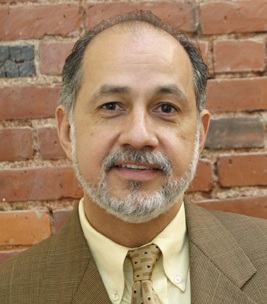
Dr. Roberto Miranda
Summary: The pastor discusses the importance of communication in relationships and clarifying expectations. He then talks about the need to define the church and pastoral leadership in a clear and concise manner. He uses the metaphor of a shepherd and his flock to illustrate the traditional model of pastoral care but also acknowledges that this image may need to be adjusted for the modern era. He emphasizes the importance of a new, more dynamic model that is adjusted to the changing pastoral reality.
The author argues that the traditional model of the church, with the pastor as a shepherd and the congregation as sheep, does not fit the current reality of the church. People today have more options and feel free to change churches if their needs are not being met. The author suggests using a chicken coop as a metaphor for the church, as it is a more realistic model that allows for imperfections, conflicts, and constant change. Chickens are not as obedient as sheep, and the pastor cannot control them as easily. However, they also produce many good things, such as eggs and meat. The author emphasizes the need for pastors to have a more modest idea of their ability to control the congregation and to be patient and long-term in their approach to teaching and guiding them.
The pastor-shepherd model is like tending to sheep, while the farmer model is like managing a chicken farm. The sheep are meek and obedient, while the chickens are dynamic and hard to control. In the pastor-shepherd model, individual care is emphasized, while in the farmer model, systems and protocols are important. The pastor's personal interventions are important in the former, while strategic control is more important in the latter. The pastor-shepherd model is authoritarian, while the farmer model is more indirect. It is difficult for a pastor to individually shepherd each member in a large church, so a system of management is necessary. The role of the senior pastor is to oversee the total atmosphere of the congregation and enable various ministries to flourish. The pastor is like a steward, facilitator, and midwife of God's life in the economy of the church. The pastor should never manipulate or become attached to any member or church. The pastor should delegate, train, disciple, and give feedback to the people.
The pastor is not the central figure in a church, but rather a part of a collective and global care model. It's important for pastors to recognize their limitations and proceed from there, taking a modest and realistic view of the pastorate and church. The role of the pastor is not only to call for holiness but also to regulate sin within tolerable limits, providing fences and controls to prevent it from spilling over and destroying the church. The reality of the church is that people will sin, but pastors must work to keep sin within limits through discipline, love, and adequate correction. The pastor must deal with their own humanity and that of their people, recognizing the reality of the church and working towards the glorious vision that God has for us.
(Audio is in Spanish)
Unfortunately my theme is far from being romantic, but it is love, let's say. He is animated by a spirit of love and pastoral care. I want to talk to you, imagine the title "The church fold or chicken coop", after music like this, forgive me. God have mercy on you with a pastor like this.
The good thing is that I have already cushioned the word with this beautiful music. But I want to speak to you, I know this word is from the Lord and it will allow us to love each other more and that you will better understand your main pastor, your church, your pastors in general. It is part of this series that we have been preaching about what our congregation is and what our church leadership is, and what we believe and what I, as a pastor, believe about elements that affect us in a very powerful way as a congregation.
And by the way, let me tell you something about love, for example, the love of marriage, the love of a wife, husband, boyfriend, girlfriend, family, one of the things that is needed in the home to maintain harmony is good communication, right yes? Talk about the things that need to be talked about, not when they are already on top of us causing problems, but preventively, proactively, keeping the pipes clean, always good communication, a good definition of what we think we know about each other.
And in this way, well, we know the territory in which we are walking. Many couples don't talk to each other, many married couples don't communicate, they limit themselves to everyday things but they don't talk about those deep things that often affect the couple's life. And you have to be proactive, you always have to be talking about things, clarifying things and giving information to your partner so that there is a good relationship that goes as it should.
And the same has to happen between the pastor and his congregation as well, between the leaders and their different ministries. There has to be a clarity about who we are, what we think, how we feel, what our fears are, what our resentments are, what are the wounds that we carry there, that sometimes we do not dare to express and thus we get to know ourselves better and we treat each other more appropriately, and that keeps love clean and makes a big difference.
So in this sermon series, I've been talking about definition. You will remember, those who were here on New Year's Eve, that we spoke that I felt from the Lord that this year is a defining year for the Lion of Judah, it is a defining year and it should be for your life and mine , where God calls us to be clear, to define ourselves, to decide once and for all, not wanting to be this or that, and trying to be something for everyone, but to be clear about what we believe and are and about all about the Lord.
So, in this series of sermons I have wanted to better define what we are as a church. Because I was saying that sometimes it is difficult to place, because we have so much diversity among us, and we have such great theological and biblical and pastoral diversity and we take elements from so many different sources that sometimes it is difficult for people to know if we are Pentecostals, Baptists , evangelicals, atheists, people sometimes do not know what we are.
And so it's important to define these things so that you understand the complexity. It is not confusion, as I say, but complexity. And that is why we are taking these times to talk about topics that I hope will be a blessing to you, by the way.
For years I have resisted talking about these things, I tell you sincerely, for fear of confusing my brothers, for fear of shocking them, for fear that they will not understand what I am saying. And now I'm coming out in the most positive way of the word. Here in the South End that has different resonances, but I'm confessing to you so that you know me, we know each other.
It is what I wanted to better define my own vision of the Bible, of the church, of the ministry, etc. So it is in that spirit that I want to preach this sermon and finally I apologize if for many of you this sounds like a lecture, or a talk more than a sermon. But it is the word of God, amen. It is based on very biblical principles.
That's why this topic, in a sense, is a bit humorous. Don't take it totally seriously, this chicken coop thing. A very kind and pretty sister came after the first service and very troubled, 'Pastor, I'm not a chicken,' she told me. ‘You have to clarify that because you are calling us chickens and then what are you? A rooster.' I don't know, the poor woman was confused about that. So I tried to cheer her up as much as I could, I wasn't calling him a chicken.
Sister, this is just a metaphor, don't take it too seriously. I just wanted to clarify a few things and use this illustration. It's an illustration, that's all, so relax.
One other thing I want to say before I continue. I promise you before the Lord that I am not pulling hints at anyone. I'm going to heal because what I'm going to say may make you think that I'm addressing it to you. Before God I can promise you that I have no one in mind. This sermon I could have preached here to empty seats honestly. So please relax, I'm not screwing anyone. Remember that. promise me? Amen.
Another thing, I'm not frustrated, I'm not upset with anyone either. I love my congregation. I am happy to be the pastor of this church. Amen. I think it is a kind, loving, tolerant church, it is an idyll what you and I have, and the other pastors of the congregation. So I'm not expressing, I'm not venting frustrations, I'm not taking revenge on someone or some, anything like that. So, I beg you, because I am also going to feel more comfortable expressing these things and I assure you that they are expressions that I could preach this in any church in any place of Christian conference and it would be the same material.
But I think that this can help us to clarify some things that… let me tell you why this topic? Because I believe that many times between the pastors and the congregations there are mismatches and the congregations expect one thing from their pastors and they do not receive it, and then they sometimes feel resentful, they feel neglected, they feel mistreated and sometimes the pastors expect certain things from their congregations and they don't receive them either. And so they feel like they're not being treated properly.
I was going to read a passage but I am not going to read it from Second Corinthians, chapter 11, in verses 1 to 11. If you read the letter of the Corinthians, you will realize the frustration that Paul felt as an Apostle, planter of churches, pastor of those congregations, he did not feel understood, he felt sometimes misunderstood, underestimated, he felt that the Corinthian congregations were not sufficiently appreciative of him or that they could understand the complexity of his ministry.
And so he writes in several chapters of Second Corinthians venting his frustration and saying, for example, if someone comes and steals your money and mistreats you, you welcome him very well and bless him, but when I come, they say, his word is weak and he has no message, he has no sermon, he has no anointing. And so on.
What I wanted to use in that passage is to show you that misunderstandings between pastors and churches have existed for as long as the church has been in the world and that I am no different in that and that it is important that one clear things up. Thats nothing new. Churches and pastors have always… and that's why it's important that they understand each other.
For example, through this sermon I want you to understand a bit about my pastoral style, why I do certain things, why I don't do others, why I behave in a certain way in my pastoral dealings with you, why not there are sometimes all the things that you would like me to do, as well as the other pastors in the congregation. And I want to clarify a little about that.
That is why I have called this sermon, “The Church, Fold or Chicken Coop?” and they are two models of the church. The ancient, biblical model from which the word pastor comes is the model we see in Jesus Christ, in John chapter 10, verse 11, for example the Lord says:
“…I am the good shepherd, the good shepherd gives his life for the sheep…”
And in that chapter the Lord Jesus Christ presents himself as a shepherd, as the excellent shepherd. I also think of Psalm 23, how many don't know?
“…Jehovah is my shepherd, I shall not want. Instead of that delicate pasture he will shepherd me, he will comfort my soul, he will guide me through paths of justice, for name's sake..."
All interventions by the pastor. What a beautiful way to illustrate what is the relationship between a spiritual leader and his parishioners. And that ministry metaphor will be with us until Christ comes.
But looking at it from another side, when the Lord used that metaphor of the leader, the servant of God as a shepherd, He did not mean that this was the only image that should be used for the church. I believe that this image lends itself to modifications and adjustments, and my theory is, my thesis, so to speak, is that in the 21st century, in the 20th century inclusive, earlier, that image of shepherd, fold, sheep, as it has It has to be changed a bit, and we have to complement it with other understandings of the ministry, of what a church is, what a flock is, what a membership is, and that when considering other metaphors, other images, other models of the ministry, This will help us to understand our reality and the reality of the pastor much better.
And that's what I want to do. Here you have a classic image of the shepherd: his sheep. Look how pretty they look, how chubby, how tame they look there, and the shepherd watching on the horizon to see if a wolf is coming to hit them with that stick that he is holding in his hand. He is in control, see that he is in front. The sheep are behind him, eating in their pastures while he watches and guards them. That shepherd knows the name of each one of his sheep, I am sure, and there is an intimate, direct personal, individual relationship. That shepherd has surely even given a name to each one of those sheep.
We have the image of the hymn There were a hundred sheep... where the shepherd leaves the 99 to go look for Juanita who stayed over there in the undergrowth and the wolf is going to eat her. He recognized her. When he put 99 in the fold, he said, I'm missing Juanita. And he ran to look for her, because he knows her individually.
That is the classic image of the pastorate. But it is a limited image in use, like all metaphors, like all similes, like all comparisons, it has a use but it also needs other things to fully complement it.
And why do I think that this image of the shepherd, fold, sheep has to be enriched a little more and qualified with other images? Because I believe that the modern conditions of the pastorate have changed. Being a pastor today is not the same as having been a pastor 50 years ago.
There are people who spent 50 years in the same church, when we started in Cambridge, there were some old ladies, Rose Phillips was a 90-year-old old lady and Rose Phillips had spent her entire life in that church that we inherited, her entire life, from young girl, girl, until she died, that's where they celebrated her funeral and that church buried Rose Phillips. That was the image, the continuity, the shepherd as the center of the life of a congregation, everything was referred to in terms of him, of his care of the sheep. And the pastors, I think they had a level of authority that many times today you don't have.
A church like ours has professional people, very self-confident people who have to be accountable, have to make reports, they want to know how the money is spent. I have deacons who are people that we have chosen because they are thinking people, individual in their way of thinking and because if they have to question something, they question it and keep me in line, and I have to give them an account, and that is good. also.
But that idea of the pastor as if he governs, is the final authority, that has changed a lot, in our neighborhoods, in the community. Pastors no longer enjoy the same prestige and authority as before. While that image of the shepherd, the sheep, the fold, presupposes a relationship between leader and congregation that has already changed over time. There are limits that the pastor has in a democratic world and with limited concepts of authority. Today you have to pay more attention.
And for this and many other reasons, I believe that a new model is required, more adjusted to the current pastoral reality. We live in a dynamic, changing world. That is why we have to have a different model of the church, of the congregations and the pastoral treatment, a long-term model of the pastoral and ecclesiastical reality.
For this reason, brothers, I want to replace for a moment, not forever, the image of the shepherd with the image of the farmer. Look here at the difference between that placid and calm shepherd, with 8 or 10 sheep, and this poor farmer who looks frustrated and ready to go home, surrounded by thousands of chickens and he has to provide for all those chickens. How is he going to do that? He has to find a way, not individualized, he can't have the same relationship with those chickens that a shepherd has with a group of sheep.
If you look on YouTube, for example, what a chicken farm is like, you will see that it depends much more on a system than on the individual care of each one of the chickens. And that is why I say that it helps a lot if we think for a little while, bear with me, and go with me and let's see what benefit we can get from comparing a church to a chicken coop. Excuse me for wanting to find something more elegant, but I think we'll see.
Because one of the things that I say is that we have to be realistic. We cannot live with an idealized and romantic image of the church that does not respond to the realities of pastoral care. For this reason, I make this clarification, I do not intend to discredit the original model, we are going to continue talking about the shepherd, Jehovah is my shepherd, I will lack nothing. We are going to continue talking about the flock, we are going to continue talking about parishioners. There are some poetic and spiritual resonances of that image that should not be abandoned.
It is not a question of exchanging one thing for the other, but of using these two images, the pen and the chicken farm, to put it this way, together, it is one thing and the other. Now, why is it important to look at the church, for a moment as a chicken farm? I say that there is a structural mismatch between these two forms.
Today we want to continue using these terms of shepherd, sheep, fold, when the image that the sheep have of themselves, you, has changed. What's going on? That the image of the pastor has not changed. Sheep today are seen as having more options. The sheep today feel free to question the shepherd. The sheep feel free, well, if the church doesn't have a good children's ministry, even though I've been there for 10 or 15 years, I'm married, I have children now, if the church doesn't have a good children's program, well, I I go to another church, where I can have a children's program. My children are teenagers, the church does not have a good youth program, so I am going to another church.
The pastor asks for a lot of money, so I go to a church where they don't ask for that much money. Oh, the church is too insistent on holiness, so they go to a church that's a little more liberal. The sheep today feel free to change the fold and change the shepherd, while, on the other hand, the shepherd is required and asked for the same behavior that the shepherds had before.
What is the image we have of the shepherd? The man who goes out of his way for the sheep. That pastor that you can call at 3 in the morning because your stomach hurts, so that you pray and anoint him, come to the house to anoint you, so that you can sleep peacefully, because you have to work tomorrow. The image of the pastor giving his last sermon in the pulpit and then having a heart attack in the pulpit, and glory to God, he died with his boots on, let's bury him now, because he is a man of God.
The man who goes out of his way while, on the other hand, the sheep do not feel the same call to stay until death and give their lives for the shepherd. So I see a mismatch there. That's why I say, I'm not throwing stones at anyone, it's a reality. Yes or no? And so I believe that what happens is that it creates a situation of injustice and inequality.
It creates false expectations of the ministry and the pastorate and in my opinion, it gives rise to neurotic and conflicting pastors, it even gives rise to neurotic families, it gives rise to children, you know that the children of pastors are proverbially known for being rebellious , for behaving badly, for leaving the church, for accusing churches of taking away their parents, etc. Thank the Lord, I tell you brothers, you have been a blessing. I thank the Lord that we have never felt that you… I believe that our daughters have never felt that you have robbed them. Meche, am I right or not? Amen. She says she endorses me on that. And I think if our daughters were there, they would say the same thing. They love this church, they love the church, they love the Lord because we have kept a balance, but that is not always the case.
And so, many times this conflict exists, pastors who feel mistreated, not taken into account, they have to be constantly there to keep the people happy and in the church, they have to do this, they have to do that, because otherwise the people leave and then there is a mismatch between those images we have of the shepherd and the sheep and reality.
For this reason, brothers, I want to give you a more realistic metaphor. Instead of sheep, let's talk about chickens. Tell your brother, you are a chicken. But for a moment, consider yourself a chicken and let's consider ourselves a chicken coop here, for a moment only, then you return to your sheep identity.
Let's see what advantage we can get. If for a moment we, for a moment, considered the church as a chicken farm and the pastor as a farmer, what advantage could we get from this?
Look, one of the things I like about the image of a farm is that it's realistic, it operates from people's experiential reality, it allows for the element of impurity, the element of sin, the element of conflict, the element of struggle. , the element of process, the element of a fallen humanity, which are things that are real in the church.
This Wednesday, when the pastors met, we met on Wednesday mornings, from the congregation, Gregory was sitting there waiting for me to arrive, and the other pastors had not yet arrived and at once he dealt with a series of problems. and situations in the congregation, brothers who had this, questions, etc., and we spent about an hour and a half talking about different pastoral situations in the church. And at the end Gregory tells me, Roberto, I apologize because gosh, I brought you so much trouble, I already polluted your morning. I told him, look, Gregory, don't worry, when I get home I take two aspirin, I go to bed calmly. That is the reality of the church.
What a doctor, when the day is over and his hands are dirty with blood, sometimes, and his operating gown, he says, wow, this hospital is crazy. I don't go back to this hospital because they always have sick people. It's a hospital. It's reality.
If you look at a hospital, how is a hospital built? It is taking into account sick people, people who are dying, people who are fragile. That is. Why do they have linoleum and not have, say, a 2-inch-thick rug? Because linoleum is very durable and that is what is needed in a hospital.
And so it is good to have a realistic understanding of what the church is, and that is why the chicken coop, although it is not so romantic, helps me to see certain aspects of the Christian life and the treatment of the pastor, as a farmer who takes care of a whole economy.
Look, let's talk a little bit about chickens. The nature of chickens. This is a very deep philosophical treatise: the nature of chickens. How are the chickens? Chickens produce very good things, don't they? Meat, eggs, many interesting things, just as you produce beautiful things. Chickens are also very funny animals, very funny and interesting birds. You provide me with an endless flow of illustrations, anecdotes. Meche and I are never bored when we go to eat together, because we have so many things to talk about, brothers.
You are an incredible flow of humanity. We never get bored. I tell you sincerely. And the chickens, you have seen how they walk and move and they are very interesting. Now, they also produce a lot of dirt, excuse me for saying so. You know what chickens produce. Have you been to a chicken coop? The smell produced by chickens. You know that we, as well as the body, in our humanity we also produce bad odors, we produce conflict, gossip, excuse me for saying so, we produce sin. There are also many things that are not honoring the Lord or worthy of praise, which occur in a congregation like ours, with so many levels of maturity and position in the Christian journey.
Yes, they produce dirt, another thing, there are a lot of them and you can't give them too much individual attention. Just look at this body that is here. This morning there was a group similar to yours at 9 in the morning, and sometimes I have difficulty knowing who came at 9 and who came at 12, if they came, if they went to their country on vacation, if they are away for six months and come back again. It is impossible to give individual attention to each person.
Just like that farmer you saw there, he can't give attention to each chicken individually. Another thing, the chickens are in continuous movement, they do not stop, they are energetic beings, and the churches are like that, they are always in process, in change. Children are turning into adolescents, adolescents into youth. There are deaths, marriages, baptisms, problems, difficulties, people move, people come. The 21st century is an incredibly dynamic and ever-moving century, and it is in that world that we minister as pastors.
That poses a number of challenges for the pastor and for the spiritual leaders of a congregation. What other thing? Chickens generate a lot of conflict with each other due to crowding and competition for limited resources. I was at a chicken farm this summer, and I think that's where I got this sermon from, thank God for those vacation days we took. And I was fascinated to watch these 200, 300 chickens fighting over the grains of corn.
Caleb, our grandson, threw some kernels at her and they all jump and pounce and peck each other to eat the kernels. In a church, there is a lot of conflict as well, and part of what the farmer, the pastor, has to do is work with the conflict. But it looks a lot like a farm.
Another thing, excuse me, chickens are not very loyal. say ouch! Quite frankly we live in a time when that idea of Rose Philips, 50, 60, 80 years in a congregation has passed. Today, people take the liberty to move much more freely and give themselves the privilege of choosing or not choosing. You know what I mean.
And that is the reality of a church and that is how we live. We move in that world. Another thing, chickens learn with difficulty. They don't have a very big brain. I don't know if you have noticed. They have a very small head. So, it takes time to instruct them, to teach them, and you have to be patient with them, you have to take a long-term view, you have to be restrained, you have to repeat the same things over and over again. And one has to have that patience with the chickens, with the congregations and gradually teach them.
And I think it's much better to assume that from the beginning than to get frustrated because so-and-so has been preaching the same thing for 20 years and it still hasn't entered his head. Chickens are difficult to learn and also difficult to control. And the herdsman has to have a more modest idea of his ability to control the chickens.
So, look at some comparisons that can help us to better understand this. A comparison between sheepfold and chicken coop. In a fold, what's up? Sheep, right? In a chicken coop there are chickens, there are at least 5 or 6 that are paying attention. I told them that chickens have difficulty learning. There they come.
How are the sheep? Meek and obedient. You pick up a little sheep and I have been told that one of the terrible things is to see a little sheep that is going to be taken to the slaughterhouse, and she meekly puts her little neck up so that they give her the death blow even better. They are tame and obedient animals. How are the chickens? Not so tame and obedient. That's the truth. The chickens are electric, they go where they want. Try to keep a flock of chickens in the meadow and you will see what happens to it. They go everywhere. Sheep, forget it, with a couple of puppies and you command a huge herd of sheep. Because they are tame and obedient.
How is the fold? In the fold, the shepherd is the preponderant figure, he is the center. You saw that image of the pastor in the center, in the front of the photograph. While on a farm the herdsman is less central, the herdsman is more concerned with establishing a system that can feed and protect and guard all the chickens at once. So the figure of the shepherd is less important and the most important thing is the system that he introduces to take care of the whole crowd. Keep that in mind, because one of the things that I see as a pastor, I have to do and the pastoral leaders, and even the leaders of other ministries, is to establish a system that works and then maintain that system and improve it every day so that that system feeds the life of those who enter it.
So what else? In the fold, the shepherd depends on individual care, as I said, he knows each one of his sheep, takes care of them, removes fleas, whatever, looks after them, sells them, looks for them, keeps them within the fold. While on the farm the main thing is the process.
If you look on YouTube for example, put the word chicken coop or chicken farm, and you will see that chicken farms are very scientific places where there are devices to maintain the temperature, to regulate that the eggs do not break when the chickens lay them. , that the size of the chickens is precise and if it exceeds, they are put in another place, the water is administered by some tiny bottles that they squeeze with their beak and a drop of water comes out. All tremendously regulated.
The process is more important than the person. And that's how I think it is in a church, when it reaches a certain point, I can't attend to each individual personally, or the other pastors, and that's why we have to depend more on systems, protocols that help everyone to function together. Later I will explain a little more about that.
Another thing, sheep are passive. But chickens are dynamic and you have to deal with that. Another thing, in the pastoral model, it is a more static, more predictable, more unified model, while the farm model is dynamic. The chickens run wherever they want, there is continuous movement.
The pastor's personal interventions as opposed to strategic control. The pastor has to know and measure how he is going to invest his time, if he is going to invest it in a community meeting that can generate resources for the church or if he is going to invest it in going with Mrs. Chencha to have a coffee at 10 o'clock morning and spend three hours talking to her and comforting her and telling her that God loves her.
With whom will you spend time, with a leader who blesses 100 people in the church or with a person who does not have so much to do with the blessing of the congregation. Maybe so, you don't have to be interested all the time, but the pastor has limited time and has to determine, well, what am I going to invest my time in? Because the system needs that strategic intervention.
The actions of the shepherd are important in the fold, while on the farm, the systems, the protocols, are the ones that prevail. The pastoral system is authoritarian. The shepherd governs, controls, determines, dictates, says, teaches, prophesies, declares and the sheep are molded.
Whereas in the farm system, the herdsman has to be much more thoughtful and strategic in how he runs the economy of all those chickens. His intervention is more indirect.
In the fold, intensive care. In the chicken coop, collective care of the whole. The active shepherd, the farmer, strategic. In the sheepfold model, the emphasis is on loyalties, the shepherd loves his sheep to death. Sheep stick to their shepherd to death too. Whereas in the chicken coop, there is an emphasis on rather the control of the environment, of the entire system.
You see then that it helps me when I examine the Christian life, and the life of the church from the perspective of the chicken farm, of the farmer, because it illuminates many things about the reality of a church.
I would say something else and that is that the pastor's model does not lend itself to a large church, a dynamic church, a growing church. A pastor cannot individually shepherd each person. In this congregation, I think you would benefit greatly from understanding that it is like supermarkets, versus a bodega. You go to the store and there is the store owner with a little notebook and you tell him, Don Pancho, the check has not arrived today, but I need a pound of meat and 4 plantains and half a pound of rice, and a bag of beans, and he says, don't worry, guys, it's $14.50, he writes it down in the little book and on Friday you come, cash the check and pay him. What's going on? That little winery also has limitations. If you want a Wolfgang Puck soup you won't find it there. If you want 27 brands of cereal, you're not going to have it, you're going to find 3 at the most.
But go to a supermarket like Market Basket and you're going to see an entire aisle of just cereal or dog food, or napkins. Because? Perhaps because the supermarket does not have the personal treatment of the winery, but why is it that most people go to the supermarket? Because they can make a purchase and buy everything in one go. They don't have the advantage but there are other things that make up for it.
And so, many times a church like this, perhaps does not have that intensive, individual care of each person, perhaps you do not like that your pastor goes to your daughter's quinceañera, or that he goes to try the new sancocho that your wife learned how to do this week, but there are other things you may enjoy. Perhaps you can enjoy a richer worship ministry, a broader discipleship ministry, with more possibilities, a children's ministry with more departments and better-trained teachers. Perhaps you can enjoy a church that will minister to your family in a more effective way, there will be discipleship and cell classes or cell ministry, there will be good administration, there will be a larger space.
Yes, you are changing some individual things, but there is a system that feeds you and gives you much more possibilities, instead of those sometimes fragmented churches, and glory to God for them, amen. But one has to choose one thing or the other. And I believe that when a church reaches a certain size, systems management is more important and I think that my role as senior pastor of the church is to provide you with a virtual space, an ecology, an economy where you can find something for his life.
If you want to learn to serve the Lord, well, my duty is like I did years ago, to start the cell ministry, and how many brothers have benefited from the cell ministry. If we need Bible training classes and Bible teaching, there we have the discipleship that began so many years ago in Cambridge, and that feeds so many people and prepares them for service in the Lord's kingdom. If you are passionate about social service and work in the community, well, there are ministries for homeless people, there is Alfa, there is Herck, if you want to learn English there are possibilities. And my job is to enable these things, to find the best qualified people to lead those ministries and to make sure that those ministries run well, to pray for them, to talk to the leaders, to supervise them, to give them feedback, to delegate.
And so as I do that, you find those spaces to connect with the call of God in your life. Amen. That is my function. I have to trade the privilege of sitting with you, knowing you intimately and you knowing me, for the privilege of reaching more people, of impacting a city, of reaching systems, of creating a powerful church that will impact the city and make change. radicals in society.
You have to trade one thing for the other. But the model of the pastor treating 10, 20 people a week, or 30 people and there are 800 or 900 or 1,200 who are ignored, and are neglected because he has to attend to those 20 or 30 or 40, does not work. And when people enter this model of church, they have to understand that there is a price to pay. The farmer model does lend itself because, as I tell you, the farmer treats at the highest level.
Like the farmer, the role of the senior pastor should be to oversee the total atmosphere of the congregation. I call that holding space for parishioner interactions, as opposed to micromanaging each member or situation. More than the guardian of each sheep, the shepherd must watch over the environment where they live and move. The pastoralist farmer makes sure to develop and maintain that environment.
So that environment provides all the nutrients for the growth and support of the sheep. That's why I have to meet, for example, let's say the ministry of praise. What a blessing we received today from that ministry! Now, that's been a hand-to-hand struggle for years, to form that ministry. I have the wounds to show you, if I had time and it didn't shock you I would show you the sores. It has been a long-term struggle, I meet with them continuously, I give them my pastoral vision of what worship is.
My part is to make sure that I choose good leaders, to make sure that any conflicts are dealt with in a timely manner, to instill in them the Biblical values of this congregation, to teach them what is my concept of good praise and good worship. And then I have to release them so they can do their job. And when something is wrong they see me there waving and moving, and after the service we talk, or at the next meeting we talk. Because if that happens, it is given properly, even if you do not see me, I am worshiping with the worship group. My presence is there because I already left it there with them, when I met with them. And so it is with any other ministry.
That is what I call developing and maintaining that environment to keep the sheep in a healthy shape. In this model the pastor is more like a steward, a facilitator, a midwife of God's life in the economy of the church. Brothers, I see every day my role as a pastor in a more humble and modest way. I don't kid myself about what I can do in their lives. The only thing I can do is a thin wire through which the grace of God runs into their lives. That's all.
And when I have fulfilled my function, I have to step aside so that you continue dealing directly with God. I have to know that I cannot create saints, that is what the Holy Spirit does. Perhaps I can channel the word of God and that word does the work in you. I have to deal with my own humanity, my own limitations. And I always tell you, don't depend on me, don't get attached to me. Furthermore, do not become attached to any man or woman, brothers, always set your eyes only on the Lord.
Set your sights on the Kingdom and rejoice in this wonderful system that is the church of Jesus Christ. But I think many churches suffer and know that many pastors hurt people by hitting them and using manipulations to make them fall in love with us and kind of get attached. That is a sin. I see so many prima donnas today in the Gospel and God hates that. The only one who should be enthroned and glorified is Christ Jesus. I am a finger pointing towards the Lord and that is all.
I see myself more as one who manages and facilitates and administers the gifts of the Holy Spirit in you. This church is not mine, its money is not mine, its property is not mine, the souls are not mine, the parishioners are not mine. I cannot take advantage of anything from this congregation because everything belongs to the Lord. I am simply a servant who at the end of the day I have to thank the Lord for deigning to use me for his glory and honor. That's all.
I beg you, brothers, never let yourself be manipulated by anyone. Never become attached to any man, indeed, nor to any church either, because the Lion of Judah is nothing without the Holy Spirit within us. The day we stop living the word of God and preaching it properly, this church collapses, because it is not our life, it is the life of the Kingdom of God through us.
That is why I like the idea of a man who is more simply being a channeler of energy, instead of one who is sitting on the throne doing the work that the Holy Spirit should do. I am a facilitator, a midwife, that's all.
Therefore, brothers, in that farm model, where the pastor is working through the system and is not the central figure, it is important in that system to delegate, train the people, disciple the people, give feedback to the people. What did I do right? What did I do wrong? After this first service, I asked two or three people, listen to me, what did you think of the sermon? Because? Because he wanted to know if he could preach it the second time at 12 o'clock or if he had to abandon it and look for another sermon. Because I wasn't totally sure that people had understood what I was saying, or that I was saying the right thing.
I myself need feedback. And my leaders need to know. What I am doing right now, preaching this series of sermons, is part of that. Because in a church like this, a lot of communication is needed, a lot of information, a lot of understanding of the values and principles that govern the congregation.
A collective and global care model is required, as opposed to specific or individual. Brothers, the pastor must recognize his limitations and his reality and proceed from there. That's why I say it's important to look at it this way, because again on the farm it's the system that matters most and not so much the central figure of the leading individual.
I have developed in these days, thinking and preparing for this sermon, I have developed this idea of pastoral realism. Sounds like a good concept to me. And it's the idea that I, you, we, the senior leaders, the pastors of this congregation, need to take a modest, limited, realistic, long-term view of the pastorate and the church.
It has helped me tremendously to see you and myself as… we are travelers on a long-term journey. God is dealing with us, he is dealing with our humanity. Sometimes our humanity gets out of hand, we offend each other, we gossip about each other, we make mistakes, we sin with each other and against God.
I see couples in conflict, I see people saying one thing and doing another. That is the reality of this church and of any church in the world. I see people who at one moment are kneeling here, adoring the Lord, dancing, shedding tears, and at another moment abusing their husband or wife, being selfish, living double lives, disobeying in the most basic things, and that is the reality. of the church, brothers.
That is the matter with which we deal. I don't want to call things by another name. From that reality we have to start towards the beautiful reality that God has for our lives and we have to recognize where we are and that is why I understand the church better every day. And you know what? That frees me not to hold resentments, that frees me not to get cynical when I see contradiction in people's lives. That frees me when I make my own mistakes. That frees me when I feel mistreated, misunderstood, mistreated, because that is the reality of the church since the world began and since Christ founded it and it will be until Christ comes that way.
And I think it is good that we start from a pastoral realism. And from there let's work to go to the glorious vision that God has for us. The Lord wants us to understand this, that my role and the role of pastors is not only to call us to holiness, with this concept, look, isolate this concept for a moment. I see two things that one has to do as a pastor, one is to call the people of God and call oneself to a life of holiness, follow the target, as the Apostle Paul says, work until the image of Christ is forged in us , surrender to the Lord all impurity, all defect, all distortion, all imperfection of our character and live wanting the glory of God to manifest in our lives, and work hard for that.
But you know what? I have also learned that in the church until Christ comes, the role of the church will also have to be to provide fences so that sin does not overflow. Sin must be regulated, sin administered. As long as you are in this church you are going to have things that are not of God, and my role as pastor, many times is going to be simply to keep sin within tolerable limits that does not destroy the church. Because you are going to continue sinning, I am going to continue sinning. I don't know if you are scandalized by what I have said, but I have not yet found anyone who effectively contradicts me on the matter. And I have yet to see evidence to the contrary.
Many of the brothers who love God the most, who adore the Lord the most, who speak in tongues the most, are sometimes the ones who most need God's mercy and treatment. I tell you from my own observation and from personal experience. And as long as this church remains part of our role is going to be to understand that and make sure that this sin does not spill over, that when it manifests it finds safe controls, confrontation, discipline, love, adequate correction and that is part of the job of the pastor. At the end of the day I will have to deal with my own humanity, with the humanity of my people, and tell him, Lord, thank you for the grace that you have given us. Thank you for the blood of Jesus. Help me to bring these sheep finally to the fold of your mansion, of your grace, of your eternal mercy.
And meanwhile we are going to move on, brothers, we are going to continue tolerating each other, we are going to continue loving each other, forgiving one another and we are going to continue recognizing the reality of the church. We are sheep, but we are chickens too, brothers. We are a sheepfold, but we are also a chicken coop. And our Lord Jesus Christ is the shepherd's shepherd, but he also doesn't mind rolling up his sleeves and being a farmer once in a while too and sending his Holy Spirit to guide us into all truth and delegating to the Holy Spirit and his church the work of redemption The humanity.
Excellent! How good is God! I thank the Lord. I fall more in love with the church of Jesus Christ every day. I fall more in love with you, I love you more, at the same time that I know you more and I know myself. May the Lord bless you and help us to be that exemplary church that Christ loves.
Let's stand up, brothers. Father, thank you for your unfailing love. Thank you because you love us even though you know us. Allow this congregation to dwell under your approving gaze, while Christ comes, Lord, while we are on earth lead us to be more and more acceptable before you. I bless this word, bury it in our hearts, Lord, and take out everything that is not from you. We bless your people, Lord, in the name of Jesus. And the people of God say, amen. God bless you, my brothers.