A Diverse Spirituality
Author
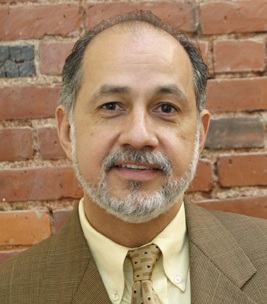
Dr. Roberto Miranda
Summary: The sermon discusses the concept of spirituality and the different types of spiritualities that exist within the Christian faith. These include liturgical and orthodox spirituality, Pentecostal spirituality, evangelical spirituality, activist spirituality, prophetic spirituality, and fundamentalist spirituality. The sermon emphasizes the importance of recognizing and understanding these different spiritualities to avoid becoming disoriented in one's faith. The sermon also highlights the importance of expressing gifts within the framework of love and consideration for others.
The different spiritualities within the Christian faith, such as Pentecostal, holiness, and separatist, all emphasize different aspects of the truth found in Scripture. It is important to recognize and appreciate these different traditions and the people who have influenced them, as they enrich and qualify our religious thinking. In León de Judá, the church values and includes elements of each tradition, such as social justice, holiness, and emphasis on Scripture. The church also emphasizes the importance of maintaining balance and a reverence for the presence of God.
The speaker believes that diversity and inclusivity are important in the Christian life and that we can learn from different spiritualities and traditions. He draws an illustration from mixed martial arts, where different martial arts are mixed to create an invincible synthesis. He believes that understanding the history of the church can free us from errors and presumption, and help us to be more tolerant and less willing to rashly condemn or impulsively adopt. He also believes that we can learn from apparently different groups in the Christian church, and that Christian doctrine is complex, so we should look at the beauty in different intuitions.
To understand God's complexity and avoid heresy, Christians should have experiences with God, study the word, and take discipleship classes. We need to know who God is and analyze different movements in the light of divine understanding. The goal is to be a balanced and complex church that recognizes the beauty of God's revelation in his whole body. We ask for wisdom and sobriety to discern what is of God and what is not. We celebrate the multifaceted beauty of God's word and ask to be like Christ, balanced and comprehensive.
(Audio is in Spanish)
Last Sunday we talked about a practical spirituality, a practical faith. How many remember anything from that sermon? Balance between the spiritual and the practical. Let me see if maybe I can quickly figure something out here. I wrote a summary of Sunday's sermon for you to remember, where Paul in Chapter 14 talks about keeping a balance when we express the gifts of the spirit in light of a number of different considerations: love, building others up, caring. to visitors and non-believers, a number of things.
Let me quickly read some of last week's sermon so you can get an idea of where I'm going. Because I want to speak this morning about a diverse spirituality, a varied, diversified spirituality. But before that I title this summary 'Gifts should only be expressed within the framework of love.'
I say this here, brothers, we frequently observe a false polemic in the church. This is not here in this afternoon's presentation. We observe in the church a false controversy between believers who emphasize order in worship and those who insist on freedom and spontaneity in the spirit when the church gathers to worship.
How many know what I'm referring to? So many churches, I say, are so insistent on an orderly, well-choreographed service that they end up constricting the spirit and stagnating the free flow of blessings that God wants to send to his children, while they praise him with freedom and enthusiasm, that's a to the.
Others want so much to give free rein to the spirit that they go to the other extreme, they disdain the structures, that is, they despise or disregard them, they forget the limits of time, they admit any emotional expression or any impulse of the brothers and end up creating an unhealthy mix of unbridled emotionalism and genuine expressions of God's move in service. Two extremes.
Paul wrote First Corinthians 14, which we read last Sunday, to strike a healthy balance between the two extremes. Establishes as a point of judgment elements such as love and consideration for others, attention to new believers and non-believers in worship, a spirit of service to others, and the priority of seeking the edification of others before personal satisfaction. These are the values that exalt the principles of the Gospel, the noble attitudes that truly reflect the spirit of our Lord Jesus Christ, who emptied and bothered himself to serve and save others.
The gifts should always be expressed in the spirit of Jesus, which is a spirit of what the other is thinking, how is my behavior affecting others, is it building, blessing, am I stripping myself so that another may be blessed, or am I just throwing my own party and each taking care of their own needs?
We must not do anything just to edify ourselves, but above all to bless and edify those who worship the Lord with us. That is why Paul says, and encourages us to imitate him, I prefer to speak 5 words with my understanding to also teach others, than 10 thousand words in an unknown language.
The overriding value here is not expressing or edifying myself, it is not even giving public expression to a genuinely spiritual energy, it is rather expressing the love of Christ, exempting myself from doing something that might cause you confusion or cause you to stumble. to the weak and ignorant person, it is, in short, to glorify the kind and considerate spirit of our Lord Jesus Christ, to imitate him in his gentle and generous behavior.
This is the greatest of all praises and the highest expression of the compassionate and loving spirit of our heavenly Father. Amen.
I'm going to leave it there. There's a lot more I wrote in that summary, but I want to get right into the presentation. But I want you to see a flow of the teaching. We are looking for a balanced church, a complex church, a spirituality that brings together the different nuances of the word of God and through this series of sermons I have wanted to explain myself, make myself understood and that you also know the church to which you attend, and the pastors and the spiritual leadership that you have, that we define ourselves in this year in which the Lord has called us to define ourselves.
Now, I want to speak to you today, as I was saying, about a diverse spirituality. I am using the word spirituality, the first thing I think we have to do is what is a spirituality? When we talk about spirituality, because I want to put something together. That's why I tell you, relax, if you left the beans on, run, turn them off and come back again.
These sermons are risky, they are complex, but many times one avoids giving them out of fear and sometimes I think we disrespect people. You are capable of handling complexity, I am sure of that. Amen.
The first question that I want us to examine is, what is, when I speak of spirituality, what is a spirituality? I say here, it is a specific way of approaching things of the spirit. It is a certain spiritual disposition of an individual or a religious group. In our case, there are Christian spiritualities. There are different spiritualities, that's the point, and I want us to analyze some of them so that you understand the diversity that exists in the body of Jesus Christ. There are different spiritualities, like different approaches, different ways of handling the substance of the spirit.
It is an attitude of the spirit. I also speak here that a spirituality is a kind of constellation of elements, it is a group, a set of spiritual elements and attitudes, which together constitute a way of relating to God and to others both in the body of Jesus Christ and in the world. abroad.
A spirituality is recognizable by the things that it emphasizes and isolates, such as spiritualities see something in Scripture, that attracts their attention, and they emphasize and isolate it. I am not going to give some examples of it, from the Scriptures. A spirituality is distinguished by what it focuses on, what it gives primary importance to, even while recognizing that there are other things of value in the Kingdom of God and in the word.
There are different spiritualities, throughout history different approaches to Scripture have been manifested. There are groups that each one is distinguished by an emphasis on aspects of the Lord's word, an interest, a priority in a sense. They are distinctive things of the different tribes and sectors of God's people. There are different spiritualities.
For example, I am going to talk about some of them. I hope this is edifying so that you understand when you look at the varied panorama of the church of Jesus Christ, you may recognize some of them. This is my own grouping of the different spiritualities or traditions, we could also say that we see in the people of God.
There is what I call, liturgical and orthodox spirituality. Today, the word liturgy has become a pejorative word for evangelicals, but it is a noble word. There is a liturgical and Orthodox spirituality. Within that spirituality I include groups such as Catholics, Greek Orthodox, Russian Orthodox, the different Orthodox churches that exist in the world, Episcopal and Anglican churches, which emphasize, number 1, the rite within the cult, symbolism, the richness of the sanctuary, a well-organized annual progression of prayers, the keeping of the different festivals of the Christian tradition.
There is something else as well, there is an awareness, that type of spirituality has an awareness of the accumulation of teaching that has occurred throughout history in the 2,000 years of the church's life. There is a celebration of the great men and women who have contributed their insights and experiences to the church's wisdom and theological knowledge, Saint Thomas Aquinas, Saint Augustine, Luther, Calvin, Saint Teresa of Jesus, Saint Francis of Assisi, in In our times too, Bonheoffer and Bart, there is an accumulation of truths and teachings. Liturgical spirituality is characterized by that appreciation and celebration of that long Christian history.
There is what I also call, Pentecostal spirituality, all the Pentecostal churches in the world that emphasize the Holy Spirit, the gifts of the spirit, the power in the Christian life, the supernatural life, spiritual warfare, healing, prophecy, revelation. Pentecostal spirituality sees God manifesting himself every day and the power of the Holy Spirit.
I would say your key verse is, "Not with sword, not with army, but with my spirit, says the Lord." It's a wonderful spirituality and there are thousands and thousands of churches that subscribe to it and emphasize that dimension even though they are more than that, as you see. Spirituality does not exclude other things but it kind of distinguishes and emphasizes an area.
There is what I would also call evangelical spirituality. We are evangelicals, but the difference between what I call evangelical spirituality and Pentecostal spirituality is that in simply evangelical spirituality there is not such a strong emphasis on the gifts of the Holy Spirit and on spiritual warfare, and on that dimension of war and aggressiveness in the spirit, which emphasizes so much the Pentecostal world.
This spirituality includes churches and denominations such as Methodists, Baptists, Biblical temple, Presbyterians, Lutherans, Congregational churches, which are evangelical and biblical churches, but they do not subscribe so much to the Pentecostal dimension, they do emphasize the word, the priority of the word, teaching, theological reflection, character, order, keeping the faith of the church until Christ comes in order and in sobriety and harmony. That is something very beautiful too.
There is a difference, that is why I say, Pentecostals are Evangelicals but Evangelicals are not necessarily Pentecostals. There is a difference.
There is what I would also call activist spirituality, there is a whole constellation of groups of philosophies and theologies that subscribe to that, which is a spirituality that emphasizes acting on history, changing the structures of society, bringing change even if it is forced, but change injustice and change the unequal structures of history.
For example, everything called liberation theology that was very strong in the 70s and even a little bit in the 80s in Latin America, with overtones of Marxism and transformation, sometimes even armed forces, as in Nicaragua, in other countries, where elements of the Catholic Church participated in the revolutions, in El Salvador and in Colombia and in other countries as well.
And there is also what is called Dominium Theology, which talks about turning the United States, for example, into a Christian society and if you have to take power through elections to make the United States a Christian society, amen. But it is a theology that is not satisfied with simply reflecting theologically, but also wants to act and take an active part in the affairs of humanity.
Feminist theology, which wants, for example, to correct aspects of man's domination and many times complain that Christian theology is a theology seen through the eyes of men and what about women, they say. And then he talks about women's liberation through Bible study as well. that is what I call activist spirituality.
There is another spirituality that I call prophetic spirituality that speaks of social justice, caring for minorities, those who do not have political power, mercy, paying attention to cities with their specific problems. And there is a difference between the prophetic and the activist in the sense that the activist is prophetic, but not all prophetic theology is necessarily activist. Not all people who recognize inequalities and the importance of mercy necessarily want to get into political activism or revolution or other things like that. But use, I call it prophetic, because they use those texts in the Old Testament and in other passages of Scripture where the prophets denounced injustice and denounced the abuse of the poor and disregard for those without power, widows, orphans, those in prison, etc. it is a prophetic spirituality that speaks volumes about love and mercy towards the poor and homeless.
There is also what I call a fundamentalist spirituality, which emphasizes the foundations, hence the word, of the word of God. And it is a spirituality conceived in conflict with those liberal theologies that were here in the United States, especially in the 1940s and 1950s, when the entire liberal movement really began to affect this nation greatly. And many evangelicals seeing what was happening to this nation, which was going more and more towards heresy, as it has continued, rose up in protest and began to emphasize the hallmarks of the Christian faith to counteract and counterbalance that movement towards heresy. of Christianity here in the United States.
That is to say, it is a spirituality that rises up against, it is controversial, that is why I say, it is often militant. And I also see that spirituality a lot, for example, in how the Baathists from the south, for example, are very emphatic in the doctrine and sometimes they are resistant, for example, to the Pentecostal movement, they resist tongues, for example, and the Baptists Southerners have gone so far as to ask their missionaries and the people who are going to work with them that they have to reject tongues and if they do not reject them in their doctrinal confession, they cannot work for them.
I respect Southern Baptists very much but I want to point out that controversy there is against the gifts of the Holy Spirit as well and against the Pentecostal movement. Fundamentalists go to the fundamentals, and say, that's where we stop and that's what we are. And it's a bit of a controversial mentality always.
But this is important because we have to recognize. If you don't recognize the terrain in which you are driving, you will get lost, you will become disoriented and that happens to many Christians. Give me a little while to develop all this? I think it's good.
There is what I also call a spirituality of holiness, everything that has to do with the emphasis on holiness to the Lord. We serve a holy God, we have to be morally upright, we have to consecrate ourselves to the Lord and be a set apart people. I remember the teachings of the Wesley brothers in the 18th century, the Holiness movement in the 19th century and even in the 20th century, the African American churches, and in the Latino churches, Pentecostals as well. there are churches that emphasize holiness in dress, in behavior, all these things.
There are Pentecostal sectors that are also sectors of holiness and mix the two things. The Pentecostal movement in the Azuza revival, many of the people who got into the Pentecostal movement came from the Holiness movement. And that's why there's a mixture of the two things, but there's a separation there because not all holiness is necessarily Pentecostal.
And there is what I also call a separatist spirituality, especially in the 18th century it was seen a lot with the Anabaptists, in Germany, the Mennonites in our time, who come from all that tradition, the Brethren, the brothers and other groups like that, too. the Count of Zinzerdorf in Germany and Austria. The separatists, as the word says, want to separate from the world in a radical way. They don't swear to the flags, they don't go to war, they don't declare the Pledge of Allegiance, the pledge to the American flag. They want to be a community as separate from the world, but they are not activists, they reject the world, they reject sin and they get out of society in a sense and they want to be like a pure church that rejects worldliness and rejects even the corruptions of other churches. as they see it.
These are different spiritualities, different groups and sensibilities of the spirit that are manifested in the body of Jesus Christ. They are there, when I go to an Anglican or Catholic church, I see a type of spirituality. When I go to a store front church in Roxbury, Puerto Rican or Caribbean or Guatemalan Pentecostal, I see Pentecostal spirituality. When I visit a Mennonite or Quaker church I see that aspect of separation from the world I also see in Quaker churches the whole aspect of social justice and other things like that.
I mean, there are different types of… when I go to a Southern Baptist church or Bible temple I see those very correct brothers, emphasizing the Bible and emphasizing the order of the church and the holiness of the church. There is a mix of spiritualities that you see in all groups of the Church of Jesus Christ.
And that is why I say, brothers, that it is important to recognize these different spiritualities and the people who have given birth to those sensitivities, with their teachings, people like Saint Augustine, Father Las Casas in the fifteenth century, when the Spanish came to America. and spoke about justice for the indigenous people who were being exploited by the Spanish and the conquistadors. Luther, who stood up against the corruptions of the Catholic Church and gave rise to the reformation of which we are the descendants. Calvin, about predestination and the lordship and sovereignty of God in the church.
George Whitefield, who talked about preaching, a man who brought revival. Jonathan Edwards here in New England, father of a great Pentecostal revival and an incredible thinker, a first-rate philosopher. Yale has a whole department dedicated to the study of the mind and the intellectual development that this man allowed, a man of God, on fire for God but with a mind that glows for theology and ethics and aesthetics, a lot of tremendous things. A rich man.
What I want, brothers, is to suggest to you, among other things, that you read beyond what you are used to reading. I sometimes fear that many of my pious brothers limit themselves to these tasty and juicy evangelical novels of testimony, healing and conversion and this and that, and do not dedicate time to those more substantial things. Read Calvino's thought. Read about the reformation in the 16th century in Europe and how it got here in America. Read about the thought of a Karl Barth or Dietrich Bonhoeffer or Martin Luther King jr. Because these things are important, these are people that God has blessed with special understanding and have brought about many wonderful things within the church.
Get oriented, read about this, because we are part of that heritage. These people of God enrich and qualify our religious thinking. We must get to know them and learn more from them every day.
What I am saying, brothers, is that each of these spiritualities focuses on and emphasizes a part of the truth of Scripture. Because in the Bible there is holiness, there is the fire of the Holy Spirit, there is mercy for the poor, there is a call to retain the faith once given to the saints without changing it, there is a call to separate ourselves from the world, all of that is inside, but that many times we get fascinated with one aspect of Scripture and then we kind of forget about the rest. People who fall so in love with the gifts of the Holy Spirit forget about the fruit of the Holy Spirit, for example. The Corinthians did that. Paul says, oh, among you there are many gifts, many signs, but pulling each other's bows every day, fighting, taking each other to court, division, heresy, spiritual superficiality, as we see today in many Pentecostals. And so we have to look at those complex dimensions of Scripture.
Each of these spiritualities focuses on and emphasizes a part of the truth of Scripture, but what we see is that the Bible, in turn, encapsulates and includes all of them. The Bible is the mine from which we extract those different nuggets of gold, and then we take them to our homes, oh, my precious, as the character in the trilogy says, this wonderful film. It's like we idolize a little piece of the truth while around us there is gold, there are diamonds, there is silver, there is bronze, there is everything and we do not celebrate the totality of the word of God.
This is very important. We in this church, your senior pastor, I think the pastors of the church, the leadership of this Congregation in León de Judá find value and usefulness in each of these different traditions and spiritualities. We celebrate each of them, we include elements of each in our practice as a Congregation.
That is what makes us, sometimes, difficult to define. And that a lot of people have a hard time understanding why the pastor does this, why doesn't he do that, why oh, the service was so tasty and God was moving and it looks like the roof top was going to blow off, and the Pastor comes and starts, ah, now we're going to collect tithes and offerings. He cut off the blessing, this man does not know how to discern the spirit.
It is because we do not understand that at that moment I am looking at the other dimensions of the Christian life, the church moves on, the church needs… If you leave me without giving me your tithes and offerings, imagine, who is going to pay me in the end? of the month. I'm not playing. But we need to pay for the lights, we need to pay for the heat, we need to pay for the missions and the things we want to do. There is a time for everything.
I see the church as a complex thing, it is part spirit and part flesh and bones, it is on earth, it is an institution and everything must be given place. You have to praise the Lord, you have to collect tithes and offerings, you have to preach the word and build up the people of the Lord, you have to celebrate the sacrament, you have to educate children, you have to disciple people, you have to evangelize the visitors, you have to do everything and there is a diversity of things and we try to include them all. And our church tries to maintain that balance.
For example, I thank the Lord, because this week I have seen the love of our brothers manifested for families that have lost loved ones during the week. I have seen brothers and sisters pray with people who have been in pain, go to hospitals and be there, for a while, go to visit… We are sorry to admit, Sister Mayra [inaudible], I don't know how many knew her, she passed away this week. He was with us for a couple of years, he met the Lord here in the church, he went with the Lord this week.
I was able to see how brothers of this Congregation, I thank Sister Anita Valverde, Mayra and others, how they were there with her through months visiting her at home, ministering to her, she was so grateful. I went last week to visit a hospital for people who are dying and I found myself there with 10 warriors, each one with her sword in her hand, praying for that sister and ministering to her. What a bless.
And for example, I think, however, when we go to visit brothers who are sick in the hospital, we not only worry, well, I want to do the good deed of visiting him, but we have to think, okay, I don't want to stay too long neither time. I want to pay attention to the fact that this person is not feeling well, leave after a few minutes of praying for them and blessing them, and then continue.
That is to say, that even in doing good one has to be thinking about different things. It is what I call balanced spirituality. If you are going to visit a person who has just given birth, look, praise God, but that sister does not have her make-up on either, she will feel... wait until she is a little better and then go and visit her, but many people say, no, I have to go…
Brothers, do you understand what I mean? We have to have balance in life and our spirituality has to be balanced that way.
What I am saying is that in León de Judá we give value to these different traditions. For example, if you look at our church in the area of social transformation and social justice we have Alpha, we have the academic resource center, we have youth ministry in the area of sexuality. It's worth waiting for. We have counseling ministries, English as a second language. There are different ministries because we believe in social justice, we believe that the church is a transformative force in culture and we dedicate time, money, space, energy to that dimension of the Christian life and with that we identify with those spiritualities that emphasize justice. social, the needs of the poor, the transformation in the city, all these important things.
On the other hand, also, we have a part that is very similar to holiness spirituality because we talk about holiness, morality, and by the way I say, not only for example, we were very active in the issue of the controversy with marriage, we believe in the sanctity of marriage, but we also believe that in marriage the husband should not oppress the wife, and that is sanctity, that the wife should respect her husband as well. Amen.
And that we have to be careful of others too, that we have to preserve marriages, that they be a blessing to our children. All of this is holiness and I am going to dedicate a sermon on what I see as an all-encompassing and complex holiness, which is not only moral, it is not only adultery, promiscuity, homosexuality, but it is also the fruit of the Holy Spirit, consecration to the Lord. , surrender of our whole being to the Lord, that is a true holiness. But we emphasize holiness.
We are like evangelicals in emphasizing Scripture so much, that's why we have discipleship classes, that's why we put so much emphasis on education in our children, that's why we have I wanna, which is systematic teaching, and we want to give our children a solid foundation of Scripture. word. We believe that the manifestations of the gifts have to be framed in the word of God and that although something seems spectacular, tasty, sensational, if it is not endorsed and fits within the framework of Scripture, it does not go anywhere among us.
In that sense we are very much like evangelicals in their emphasis on Scripture. We are Pentecostals, we are very similar to Pentecostal churches, in the sense that you have seen the ease with which we praise the Lord, the time we give to worship, we believe in spiritual warfare, healing, deliverance, all the things that happen. …when the people praise God, things happen…we know that the power of God moves in the midst of praise, and in that we are very similar to the Pentecostal tradition.
And I think, even, I appreciate aspects of Catholicism and Christian orthodoxy. I have benefited from studying the great thinkers of the church through the centuries. I love that respect for apostolic authority that I see in the Catholic and Greek Orthodox churches. Sometimes I love to enter a church and feel that atmosphere of recollection that is made possible by the beautiful stained glass windows of a cathedral or the smell of incense or dark wood, or the dim light of a cathedral or an Anglican, Episcopal, or Catholic church.
I don't agree with a lot of his teachings, but I love that sense that when you enter that holy place, you breathe that silence, that stillness. Many times in evangelical churches there is not a proper reverence for the presence of God and so we are very familiar with the Lord, and God is holy, terribly holy.
I believe that we must preserve a little bit of that respect and that reverence and that respect for authority that I see in our Catholic brothers and the hierarchy, which I believe also has its place in the Christian life in a healthy way.
In other words, I see value and I see blessing in many of these traditions and I believe that what I say, a healthy Christian spirituality takes a little of these different things. For me, the biblical text that I forgot to read at the beginning is First Thessalonians, Chapter 5:21, which says, "Examine everything and hold fast the good..."
We have to do that always. Examine, our radar is looking at all the different spiritualities and traditions and we learn from this, from that, we take from here, we take from there, we throw things away and we keep the good and we always get away with it, because we are in all the worlds. As long as it is from the word of the Lord.
I draw an illustration of mixed martial arts. You know that for many, many years, martial arts have been held in separate public attention from each other. We have tae kwon do, we have yujitsu, we have judo, we have the martial arts that come from Thailand and Western Asia, Japan, China, some mystical, others purely physical, like Tae kwon do, but all of these are different... kick boxing that was the beginning of that mix of boxing with tae kwon I give, and look at what has happened over time, people realized, especially when the Brazilians came to the martial arts scene, the Brazilians mixed yujitsu, wrestling, judo, boxing, a number of things, and when they saw some great world competitions, they kept all the titles. And people realized, wow, it's nice to mix the different martial traditions and make a synthesis of it. Nobody could deal with them because they had made a mixture of different arts and made an invincible synthesis.
And today, that partly explains the great craze for mixed martial arts. They have knocked down wrestling, the different styles of martial arts although they still exist, but they have realized it. By the way, I don't celebrate mixed martial arts on television, nor do I openly condemn it, but I don't think we should celebrate that violence, that brutality that manifests itself. But I do celebrate the principle of mixing skills and taking the good of one thing and the other and synthesizing it and using the best of each tradition.
I see the advantage that diversity and inclusivity bring in the Christian life and in other dimensions of the human experience as well. My brothers, people are used to seeing only one or two of these spiritual elements that I have pointed out, these spiritualities, living together in a church or in a ministry. And when they see several of them they think, no, these people are confused, these people are indecisive, these people have not defined themselves well, and when they see this mix they don't know what to do with that mix.
A lot of people don't understand, well, what is Lion of Judah? Is it a pentecostal, evangelical, holiness, social justice, liberal, conservative, fundamentalist church? What are we? Because they are used to seeing as one thing or two at the most. We say, no, there is blessing in all these energies. We take from here, from there and we make a mixture that I believe is the biblical mixture, it is rather the mixture of the Holy Spirit.
A lot of people see contradiction or see indecision in that mix of things. But I believe that what is actually there is rather a complexity. It is a mixture of different things, brothers, that we believe are part of the biblical synthesis. It is important, brothers, to create a historical awareness of the development of the thought of the church, to see how the thought and theology of the Christian church has been developing and nuanced through the centuries, to see that progression.
For example, I see in Scripture in the book of Acts, how the Apostles grappled at one point with the issue of Gentiles coming into the church and they weren't prepared for it, and so they had to deal, what are we going to do? to do with these Gentiles? Do we make them Jews or do we leave them with their traditions and respect their traditions and just stick to the most basic things of the Gospel? And that was what they did.
The church has always had to develop its thinking. When the time came for the conflict with the Jews and the Greeks, they developed all this that had to do with what we call the deacons of the church. So the church has always been developing this, the thought of the church has had to deal with these things.
I believe, brothers, being aware of this diversity throughout history, of the different traditions of the church, frees us from many errors, errors that have already been experienced in the past and that we can avoid when we understand this trajectory of the church.
For example, the excess that I see today among groups that emphasize prophecy, sometimes disorder, carelessness in what you say to people supposedly under the anointing. I believe in that and brothers, here is freedom for prophecy. The Bible says let's not put prophecy down, but sometimes people can get so enamored with prophecy that they aren't careful in their use of prophecy and they put prophecy down.
But if we had the history of the church, we would see that the Montanist movement in the fourth century was distinguished by this, an excess of attention to prophecy that led to disaster and led to terrible excesses that discredited prophecy for many.
If we understand that, we are more careful. Docetism, a doctrine that denies the importance of the flesh and that said, no, Jesus did not come into the world in the flesh, he did not incarnate, that was a mirage, it was an illusion. He was not crucified either, because the body does not redeem, the body is evil. They deny the body, they deny matter, they see matter as something bad. And no, I believe that God created the world and said, everything is good. I love a good meal, I love art, I love a good sunset and I believe in the blessing of nature, I believe that the church is not a disembodied institution, as I said last Sunday, merely spiritual. It is a legal institution, it is a transforming institution, it is in history, it is in time and you have to pay attention to those things. We must pay attention to the material needs of the people.
The Lord said to the disciples, give him something to eat. The disciples said, no, Lord, we already gave them the word, send them home. And the Lord told him, no, give them something to eat. He emphasized food too, he emphasized the needs of the body. And Docetism in the fourth century and Gnosticism said that the body was bad. I believe in the beauty of sexuality, I believe in a healthy sexuality, within the parameters of the Lord, that is beautiful, it is worthy.
All these things are important, what we are looking for is the order and balance of all these things. But if we study the different traditions and heresies of the church, we realize that many of the things we do today, if we understood the past, we would take care of them.
I also believe that it frees us, not only from errors, but also from presumption, from believing that we are the only thing, that we have discovered something transcendental and unusual, that has never happened before. I think of the Jehovah's Witnesses that if you look at them they say, we are the only ones. If you are not a Jehovah's Witness and you are not baptized with Jehovah's Witnesses, you are lost, you are not saved. I say, wow, and what happened to the 20 centuries of church history? Did God ignore the church until the 20th century? He said, oh, wait, I have a group of people here that I sent my son to die for them and I forgot...
What a presumption to believe like we are the only ones. And there are groups that believe, if you are not baptized with them, if you are not with them, you are not saved. And I believe that we must understand the richness of the church, how God has revealed himself through the centuries. We are not the only ones, there are many who have thought many rich things and that helps us to be humble, to celebrate the achievements and teachings of others.
I believe that this should also make us more sober, more inclusive, when we see a new preacher out there, preaching a strange and new doctrine, and we let ourselves be dazzled. That new movement, that church that's growing by leaps and bounds, and everybody, oh, we're going to that church because the Holy Spirit is moving there.
The person who knows the movement of the church through the two thousand years and who has studied those different movements, says, okay, let's wait, let's see what happens. Because so there have been many movements in the church that have advanced dramatically and then exploded. As Gamaliel said, if this is from God it will remain, if it is not from God it will dissolve with time.
There are movements that are like sparklers, they illuminate the firmament and the night for a moment but they also disappear in an instant as well. When you understand this you say, okay, let me examine this in light of the word of the Lord. It sounds very nice, but let's see what the Bible says. And if it's from God, you accept it, you don't reject it because it's new, but if it's not from God, you say, well, another day.
I also think that should help us to be more tolerant of people who are apparently different from us but who have something there that we can also learn from and celebrate. It helps us to be less willing to rashly condemn or impulsively adopt. As the word says, we end up examining everything and retaining the good.
Brothers, I'll finish with this, what I'm saying is that our church, my own spiritual emphasis, I believe is distinguished by that recognition that there is much in the family of God from which to learn and celebrate, and that we still have to Sometimes when we violently disagree with what certain groups in the Christian church think, we have to say, okay, why are they putting so much emphasis on that? Is there something in the Bible that I can learn? And when we are going to see, oh, yes, for example, everything that has to do with this social justice thing. There are many liberal groups, I do not subscribe to liberalism, I believe in the doctrine and the word once given to the saints, but I also believe that many times, conservative Christians have forgotten the rights of the poor, and we have gone with We have not called the powers and the rich to chapter with their carelessness and their exploitation of the poor.
I believe that the church, to its shame, has not been the prophetic voice that it should be, that it should have been, for example, here in the United States during the time of slavery, or during the time of the exclusion of African-Americans. To their shame the church in Germany during Hitler's time went after Hitler and only a few German Christians denounced Hitler. Where was the revelation of God?
So, I have learned that those brothers who are sometimes so liberal that I want to hang them, but have an intuition from the Bible to love the poor, the helpless, the widow, the orphan, to visit the prisoner, to love to those who have no power, of mercy and I have learned from them. I have withheld what is good and I have rejected what I believe is not of God. We have to do that too.
I end with an illustration that many of you may have heard, it is the story of the 6 blind men and the elephant. In that story is a very famous story from world literature, where it is said that 6 blind men approached an elephant, never having seen an elephant, they did not know what an elephant was, blind from birth, they approached an elephant and each began to play a part of the elephant. And the blind man who touched the elephant's trunk says, an elephant is like a tube and that is its essence, a tube.
Another touched the legs of the elephant and felt its strength and hardness and said, no, the elephant is like a column. Another touched the huge ears of the elephant and said, no, the elephant is like a hand fan. Another touched the elephant's tail, said, no, that's not so, an elephant is like a rope. Another touched the belly of the elephant and felt its strength, its hardness and said, no, an elephant is like a wall, like a wall. And each one was fighting with the other because they said, no, the elephant is like that, no, the elephant is like that, and they took the six blind men before the king and he told them, the problem is that you are only seeing part of the world. elephant. The elephant is all those things, because it is made up of all those things.
And I also believe that, brothers, I would say that God is much more complex than an elephant. Christian doctrine is tremendously complex and many times we fight with each other in the body of Jesus Christ because one has seen one thing about the kingdom, another has seen another, and we say, no, that is not so, instead of looking at the beauty what is in these different intuitions.
I believe that what we have to do in the Kingdom of God, brothers, is to see the good that there is in each of these traditions and learn from them. I am not advocating what I would call blanket relativism. I'm not saying, oh, everyone believes what they want and we're going to celebrate all the heresies and nobody say anything about the things that are false. No, I think what I'm saying is that every Christian tradition has aspects of truth and also has aspects of limitations and falsehood. We have to discriminate wisely, examine everything, retain the good.
I would say the first thing is that we have to know God well, have experiences with God, study the word, soak up the word. That is why I encourage you, take discipleship classes, read your Bible, study the great themes of Scripture, the great characters, the great Chapters, the great principles of the word of God, understand each other well, because we live in times of great heresy where it is very difficult at times to distinguish the lie from the truth and we need each one of us to fill ourselves first with the word of God, to know well who God is and then analyze these different movements and learn from them, and retain what is of God in them.
And in that way I believe that we are going to be healthy Christians, solid Christians. We must soak in the wisdom of God that comes through scrutiny of his word and then approach it all, examine it all in the light of that divine understanding. That is what I am looking for, brothers, a church that is solid, a church that is balanced, a church that is complex, a church that recognizes the beauty of God's revelation in his whole body.
May the Lord help us, brethren, to do this and to be that kind of church. Amen. may God continue to bless you and Father, we ask for your wisdom, we ask for sobriety to discern what is yours and what is not yours and to be a sober people, an intelligent, wise people, a people that can benefit from all the beautiful blessings that you have given to your children throughout the history of your church.
We celebrate your complexity, Lord, we celebrate the multifaceted beauty of your word. Help us to be like Christ, balanced, complex, comprehensive, Lord. We ask this in the name of Jesus. Amen.