With Anticipatory Sight for a Supply
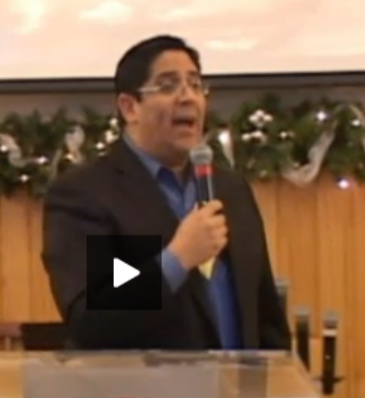
Author
Andrés Cisterna
Summary: The speaker discusses the importance of being farsighted and cautious in our approach to life, particularly in our financial decisions. He references the story of David in First Chronicles and how David felt incorporated into the process of building a temple for worship. The speaker emphasizes the need to be part of the process and to contribute, whether it be through volunteering, financial means, or connections. He stresses the importance of making sacrifices that truly cost us and not presenting sacrifices to God that come easily. Overall, the message encourages the listener to be farsighted and to contribute to the vision of the church.
The speaker encourages the congregation to feel part of the process of building the house of the Lord, and to understand that their involvement will transform lives. They should offer everything to the Lord, including their lives, and feel in love with God. The speaker cites King David's example of giving generously to the house of God, and urges the congregation to be foreseeable for the provision of the Lord. He closes with a prayer of praise and encourages the congregation to be farsighted in their lives and commitments to God.
I want to invite you to open your Bibles to the book of First Chronicles, Chapter 28, verse 20. I took this verse because there were many verses to take, but I took this one because it was almost time for me to get here, I couldn't find which one of all read, but I believe that this somehow reflects what the Lord is bringing us today. I put this sermon based on this story that is here in the Book of Chronicles, starting from Chapter 21 the need for a church that is farsighted for a provision.
I don't know if the title will sound good, but I couldn't think of other words in Spanish, I'm forgetting Spanish sometimes. This is how we are going to read it in the name of the Lord Jesus Christ:
“…David also said to Solomon, his son, cheer up and strive and get to work, do not fear or dismay because Jehovah God, my God, will be with you. He will not leave you or forsake you until you finish all the work for the service of the house of Jehovah…”
We should have exploded in Hallelujah! Shouts of joy, applause, glory to God, drivers, all those things must be playing. Look there. Glory to God. Hallelujah!
I want to tell you that we had not agreed with Brother Roberto on any of this. Everything is by the work of the Lord. I want to clarify a little. I was reading these Chapters and found them very interesting. I believe that the Lord's church in these times must learn to be farsighted. The most common word may be cautious, cautious. The other word can be very attentive to the circumstances.
And in relation to this very special month that the church, through Pastor Roberto and through the pastoral leaders of each of its pastors and leaders, are proposing to motivate us so that we can continue in this project that the Lord has put in our heart of each one here in the church, specifically in the heart of our pastor, to erect that building.
You know, an idea came to my mind a few weeks ago. Many times the child of God in these times has forgotten to be farsighted. For many things, not only because of the economic moment that perhaps the church today needs from each one of us, but as a model of life, we have become accustomed to not being farsighted. It is very easy today to avoid waiting a while to get something we need for our house, we better get into debt, we better ask for a credit card.
It is much easier to buy it now than to be saving. There is a pattern in our life that is repeating itself, when we are in the world and we bring it to the church. We don't let the Lord begin to heal some habits in our way of life.
This model of not being farsighted is a model that is used throughout the world and the church has understood that many times it is better, perhaps to get into debt, and I am talking about the church, us personally, not as a denominational or organizational structure. I'm talking about how many times we make a mistake in how to make God glorify himself in our lives by blessing us.
We help the Lord with ten installments without interest. We help him get something as a gift, but we anticipate the best by signing a paper and we end up in debt. The lack of foresight of us as children of God has reached certain levels that some children of the Lord must already be close to bankruptcy if they are no longer there. We have not learned to be farsighted in a country like this, so consumerist, where you earn to spend. And if you don't have to spend, I'll lend you. If you don't like to save, it doesn't matter, with the minimum payments you already have what you want.
There is a behavior in the mental model of man, of not being foreseeable about his future. And these Chapters caused me great anxiety. The concept of preventing, a concept in the Spanish dictionary says, prepare, prepare in advance, set aside, anticipate. And that teaches us that the church must be framed in a farsighted model. What does provision mean in a very short concept? It is the providence or disposition conducive to the achievement of something.
There is a connection between being foreseeable and providing. In order to achieve something in the near, medium or long-term future, we need to learn to be farsighted. We need to start saving sooner, we need to start protecting ourselves sooner, not only in terms of money, but also in our way of life.
And I want to take you to First Chronicles, Chapter 21, this is in the Old Testament. Today in a world where it seems that nothing belongs to us even though we have it in our power, it seems that nothing belongs to us. The house belongs to the bank, the car belongs to the dealer, your life, my life can be sold to how many financiers out there, called credit cards, Visa, Mastercard. Some want to have one that says Gold, Platinum, to make a difference. Visa and Mastercard are already for other types of people, from another level, they are from the thousand and below. No, I want to have 5 thousand and above. In a world where it seems that something belongs to us, but ultimately it is not ours, you know, we still bring that model of life to the church.
When we come to church many times because of the political system, because of the social and economic system many times not even living here, we feel like we belong here. because anytime I leave, they offer me a job opportunity there in Alaska and I go to work with the polar bears. Or I go there to Antarctica and I have a penguin as a partner or secretary or secretary. We are in that movement, the world moves so fast. You bought a laptop today for a thousand dollars, a personal computer for a thousand dollars, and tomorrow it costs you 200. You can no longer return it, they penalize you with 15 percent. The world changes, the world moves, the world is fickle even though technology has said otherwise, but that is a life model that has led us, it has taught us to be fickle. We don't feel much responsibility, we don't feel much commitment. We do not feel part of…
It is a model where you have a neighbor but you do not know his name. And you don't care if you learn his name at the end. You know, we need to create a foresighted model in the path of the Lord. Do you know what for? In favor of the Lord's provision, in favor of what the Lord is showing us what we have to do. Not only in building a building but in our lives.
If I want to live long days, in addition to obeying the Lord and respecting my parents, as the commandment says, I must try to lose weight a little because otherwise I won't have many long days left. Yes or no? I can't lose weight when I'm 60, it will be a little late. I cannot heal my finances if I am getting more into debt every day looking for credit cards everywhere. I look for those without interest, I end up paying all the interest at the end because I did not pay anything.
They are models of life that are harming the church, they are damaging. You know what? In First Chronicles, Chapter 21 verse 18 to 30 there is an interesting historical account about a word that the Lord gave David through a prophet. And David makes that word his own and structures such an energetic, passionate way of being able, once and for all, to establish a place to worship the Lord permanently, in a fixed place.
You know, David, I think he was tired of transporting the ark, the place where the presence of the Lord was, even a friend died there. The friend died. He was sad, he was tired of having to protect the ark, that the Philistines took it away and they picked it up, and the Philistines came and took it away, and they… he was tired, I think, David, he was stressed.
And there is an interesting biblical reference in this Chapter. Do you know why? Because David understands the message of the Lord, he understands that the Lord wants an established place where the place where they would worship the Lord as a people would definitely be made. Know what? Many times we still do not define the place in our hearts where we are going to worship and bless the name of the Lord.
The church, the children of the Lord are simply walking from one place to another, hoping that the blessing will not escape them, hoping that the blessing will not be stolen, but we have not established a place, we have not declared, we have not bought, we have not we have stepped on that place in our hearts and say, in this place in my life the altar will be raised to worship and bless the name of the Lord.
David was anxious for something to rise up that would declare the greatness of the Lord. I want to invite you to read verse 24, First Chronicles, Chapter 1, verse 24:
"...Then King David said to Ornan, no, but indeed I will buy it for its just price because I will not take for Jehovah what is yours, nor will I sacrifice a holocaust that costs me nothing..."
You know, that's a very sublime expression of David. Even so David recognized that although the Lord could have given it to him, he was the king, the man could give it to him because the king could not be denied. Many times we expect free things, everything for free, hopefully it's free. The first question when someone offers us. How much does it cost? or is it free? And we bring that into our spiritual life.
You know, the Lord wants us to learn to pay a fair price to enjoy his presence, I insist it is not just money, it is a model of life, it is a way of seeing the Lord. This story is so passionate, if you can read it quietly at home.
But here I see certain characteristics that are necessary for us to be able to visualize. We must consider that our life, we must feel part of a process. When David received those words from the Lord through the prophet, do you know what David felt? Do you know what I see here? that he felt that he was part of the process that God was leading him to, he was no stranger. Many of us feel alienated from the process that God called or put into the vision of the leader, the pastor, or even our life.
If the Lord tells you not to smoke anymore, Lord, will that be true? David felt part of it, he felt included in this process, therefore, when he felt included in the process, he says, no, don't give me that. You can do it but I'm going to pay you just, because I'm going to give my best to my God. It's not free. It is not because it suits me but because I feel part of that process in which God is going to lead us.
David already knew that his destiny was not to build the temple. But if the Lord gave you the opportunity to see it, do you know why? Because he felt incorporated, he was incorporated into this process.
How good it is to feel incorporated, to be part of a process that costs, that tires, that sometimes it is tears, that sometimes it is hours of volunteering, that sometimes it is time, sometimes that things do not work out, but when we are part of the process we know that the provision that I am doing today is in favor of the provision that the Lord is giving for the future.
We cannot present sacrifices to God that do not cost us. If sacrifice doesn't cost you, that's called being religious and religious people don't get very far. What's more, when they get tired they leave. Knows? It is necessary to create an environment in the Lord's church, an environment in which we are part of the process.
Perhaps you are thinking about whether to join this great project of our church. The Lord wants you to. The Lord wants you not to look from afar, to get up, to say I'm going to be there. If I have to come one day to lift a stone, a piece of wood, I will do it. If I can contribute money, I will. If I can contribute with my experience, with my connections, I will do it. The foresight that the Lord has given you is for the vision that the Lord has given to this church.
We need to understand that. In First Chronicles, Chapter 22, verse 14, I want to invite you to read this Chapter, First Chronicles, Chapter 22, verse 14 says:
“…Behold, with great efforts I have prepared for the house of Jehovah 100 thousand talents of gold and a million talents of silver and bronze, and iron without measure because it is a lot. Likewise, I have prepared wood and stones to which you will add…”
It is another interesting characteristic that David teaches us and reveals to us in this. You can find many more. Not only the need to be part of a process, but joining the process will give it even more strength. It is interesting because we can assume this verse in many ways. Don't just settle for traditional Spanish, very simple, don't just settle for tithing and offering what is fair, what the law says, because that is already being used for the Lord's work. Do not say, I already give my contribution and with that they will manage, they will raise a beautiful building and they will give me a seat in the front row, because what you are giving is already being used, even now in the growth of the work of the Lord, in the extension of the kingdom.
Feeling part of the process leads us to incorporate ourselves, to understand that we are part, that this part will transform a community, transform a family, transform the life of a child, a woman, a man, a drug addict, the alcohol, pornography, a politician, a social worker, a doctor, a professional, what the Lord is calling us is to get involved in the process because he will show his glory through what we can project for the work of the Lord.
We must understand that we are a body, and you are not anywhere else. There are many of our brothers today who would like to be with us, in other states, a great persecution has risen against the Hispanic immigrant population, although they are anti-immigrant laws as for everyone, those laws have names and surnames, they are from Mexico to South America .
You know, many of them probably felt part of their faith communities and have had to run out of the cities. You know, I want to invite you to feel that it is not just one more instrument, one more number, it is not a little sheep whose wool is being pulled out as some have by habit. Does anyone know the term wool?
There are some who fatten the sheep just to get the wool out of them. You know, the Lord wants a church committed to his work. The Lord wants a committed church. The truth is that there should be nothing in our lives that prevents us from offering to the Lord what he asks of us. The example of Abraham and Isaac. You know, in Chapter 29, in verse 3 and here comes that extra mile, here comes this sense of saying, Lord, everything I have doesn't even belong to me, it's yours. Everything that you allow me to manage, everything that you allow me to have, is not because I really deserve it, but because you have blessed me. And this is the verse that captured my life, and this is the verse that has taught me to understand that being foresighted will help in the provision of the Lord's work.
Look, in addition to David's tithes, in addition to the offerings that were given on Wednesdays, in addition to the offering that he gave in the cell, or in some ministry where he was, look at what 29:3 says,
"... In addition to this for how much I have, look at the word you use, my affection..."
I am in love with my God. whatever God asks of me, I give it to him, including my life, if not ask the Iranian pastor who is about to be hanged, but that will be a testimony for that country to turn to the Lord.
I have my affection in what? In my car? At my place? In the number of rooms I have in my castle? On horses so precious? You know that horses were more important than women at that time. Really. that was so.
“….How much do I have my affection in the number of rings I'm wearing? In the titles I got in college? Or in the number of heads that I have hanging on my walls from so much war, from so much blood that I have shed? That is such a profound word, it is such an encouraging expression, it is such an expression of, you are the sovereign and I am your servant. Yours is everything.
"...Because I have my affection in the house of God..." Whose? Not mine. Not mine. Not mine. No, it's not yours, it's mine. It's still mine. The women are fighting, I say.
“…in the house of my God I keep in my treasure… ─ where? ─ …private….”
Do you know what you are saying there? In addition to the fact that I know that I tithe and that they give me the letter of tithes every year to declare it, in addition to the fact that I offer and give to the poor, and I give to the missions, even so the Lord has allowed me and has given me blessed, and it has prospered me, that even of those particular, personal treasures that I had to go to the Bahamas for a few weeks, or to the Caribbean, or to some trip around the world, or to one of the United States where everything is taken to my room and I don't have to… I hope they blow me wind with some palm trees out there. All that, all that the treasure can represent, my education, my influences, my material goods, that is my particular treasure of my particular treasure.
“…Gold and silver, that in addition to all the things that I have prepared for the house of the sanctuary, I have given for whose house? From my God…”
Lord, we adore you. That doesn't mean we lack faith, it means we have to do our part, because God has already promised to do his. And this demands one more effort from us in our lives and in favor of the community where we are. Perhaps you will say, David was king, how could he not keep some private treasures.
Look, the great principle of giving, one of the great teachings of giving is in Second Corinthians, Chapter 8. For those of you who don't feel like you don't even have a trimming wire, that maybe we put a staple in Just the ear, it's not enough for more, look what it says:
"... Likewise, brothers, we let you know the grace of God that has been given to the Macedonian church, that in great trial of tribulation, the abundance of its joy and its deep poverty abounded in riches of its what?..."
So in the kingdom of the Lord there is no poor person who cannot be generous. The rich are obliged, but the poor can be generous with the Lord.
“… well, I testify that with pleasure, ─ with what? ─ With pleasure they have given according to their strength, ─ and what else? ─ and even beyond…”
“…Beyond their strength, asking us with much prayer that we grant them the ─ what? About what? In what? ─ in this service for the saints…”
It is not only a model for giving, it is learning to live because the Lord does not fall short with you or with anyone. The Lord has been so good to us. Thank my Lord.
“…And not as we expected but they were given first to the Lord and then to us by the will of God….”
Amen. I want to invite you to learn to be foreseeable for the provision of the Lord. It is a challenge, it is not easy in these times, but still King David, when you begin to read these Chapters of the book of Chronicles, you are going to realize that there is a prayer at the end of Chapter 29, verse 11 and I want to invite you to close your eyes, don't read it, close your eyes, I'm going to read it to you, it says:
“…Yours is, O Jehovah, the magnificence and the power, the glory, the victory and the honor, for all things that are in heaven and on earth are yours. Yours, O Lord, is the kingdom and you are exalted over all. Riches and glory come from you and you rule over everything. In your hand is strength and power and in your hand to make great and give power to all. Now then, our God, we praise you and praise your glorious name. Hallelujah!..."
Thank you, Lord, because you want to heal your church, God, and perhaps in these very special times in our Congregation, we need to be exhorted, to be encouraged, first to understand that all things are yours and come from you, and that you have given us given the intelligence and wisdom to learn to be farsighted.
Lord, I sow in the heart of each one of my brothers the habit of being foreseeable for the future of your work that today many of them who may have, open a savings account, or have stored there in an envelope, Lord, an amount of money for your work, or that they be farsighted, Lord, because you, Lord, are calling each one of them to preach your Gospel, that they be farsighted, Lord, in teaching, in learning from your word. May they be farsighted, Lord, in guarding themselves as your children, who fear you, Lord.
Lord, perhaps in this special time of our Congregation, Lord, we need a push that has to do with surrendering everything before you, but life goes on, God, and even so we need to learn to keep the spaces that you want us to keep so that your you glorify yourself in our life.
Lord, thank you, because you have been good. Thank my Lord. It is not for us or for us, it is for you and for you. We are going to stand up, we are going to sing this song that my brother is playing. Thank you Jesus.