How to Pray to the Lord
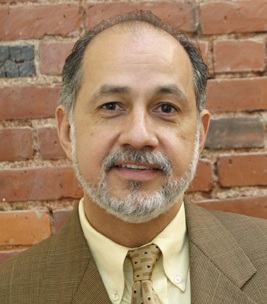
Author
Dr. Roberto Miranda
Summary: The book "Pies de Barro" is about the life of King Jehoshaphat and his prayer to the Lord when a great army came to destroy Judah. Jehoshaphat left behind principles for prayer, including being specific about defining and acknowledging one's situation. He recognized the great danger he faced and accurately saw what was coming against him. Specificity is key in the Christian life and being specific in approaching life situations is one of the most powerful principles for success. We must look inside ourselves, recognize our flaws, and acknowledge our problems. We must also be well-informed about the weapons of the enemy and our own weapons. The author shares his experience in planning the construction of the new temple and how he has had to be extremely lucid, specific, and detailed in his planning process while operating from a position of faith.
In order to operate from a position of faith, one must be specific and pay close attention to detail, avoiding carelessness or superficiality. Moses' specific and detailed instructions to the two spies in the Bible are instructive in this regard. One must inform themselves in their lives, read, study, inquire inside, ask the Lord for wisdom, and bring specific requests. One must have a lucid look and a detailed awareness that allows them to go before God with specific requests that allow them to receive strategy and resources for the battle that lies ahead.
Jehoshaphat's decision to humble himself and seek wisdom from God is inspiring and exemplary. He acknowledged his situation, humbled himself, recognized his insufficiency, and called companions to help him in his need and in his cry. In a theocratic culture like Judah, the kingdom functioned not only as a political leader but also as a spiritual head. Jehoshaphat involved the entire nation in appealing to Jehovah for a miraculous intervention.
The writer emphasizes the power of prayer in community, highlighting the Lord's declaration that where two or three are gathered in his name, there he is in the midst of them. The power of unity, in the spiritual agreement between believers, is important. While individual prayer is valuable, collective prayer can encourage us to keep going, especially when facing difficult battles. It is important to find people of faith to face the battles of life together and not try to fight them alone.
The sermon encourages people to have a strong prayer life and to seek help from their community when facing challenges. The life of Josaphat is used as an example of a faithful warrior who relied on prayer and sought guidance from God. The importance of persistent prayer and its ability to prevent and protect against the attacks of the devil is emphasized. The sermon concludes with a call for people to put on the armor of a warrior and to cry out to God for strength and transformation.
(Audio is in Spanish)
Second Book of Chronicles, what we want to do this afternoon is to underpin this time of clamor that we have begun this week. I am going to be reading some Chapters of the book Pies de Barro, which deals precisely with prayer and some principles that should govern our prayer life. How we pray to the Lord.
This book is about the life of King Jehoshaphat, and one of the great moments in King Jehoshaphat's life was when this great army that we talked about last Sunday came to destroy Judah and drive God's people out of their land. And King Jehoshaphat cried out to the Lord, he was a man who loved God and instead of running away, getting depressed, handing over his weapons, Jehoshaphat decided to cry out to the Lord and look up to God.
And in doing this he left us a series of principles that I explore in this book among other things. I also talk about war worship. What we are doing this afternoon is war worship. It is when we proclaim the will of the Lord, when we break spiritual walls with our worship and make use of weapons. As that chorus said, "blow of the sword is praise, blows of war that come from God." And there are many other things that the people of Judah used in that story to bring down the enemy and win a great victory out of what seemed like a hopeless situation. And we are going to see some of these principles.
This entire book is based on the life of Josaphat but it is simply a starting point for our own lives. As you will see these are principles that we must put into practice and we must study these principles and use them in our own personal lives.
So instead of giving up, Jehoshaphat prays and says that when Jehoshaphat hears that this great army is coming against Judah and that they are already getting closer, he says that:
"... He was afraid and Jehoshaphat humbled his face to inquire of the Lord and proclaimed a fast to all Judah..."
Proclaiming a fast as a Congregation, as a people, is nothing new. It is the essence of the history of the church through the centuries.
"... And those of Judah gathered together to ask the Lord for help, and also from all the cities of Judah came to ask the Lord for help..."
How good it is when the people of God convene a great meeting, we make an appointment, we cry out to the Lord. Oh, if this nation did this, brethren, what would happen? If President Obama, may God bless and enlighten him, declare a fast and a holy convocation in the United States. Listen to me, the earth would shake. But many times men are too sophisticated and we establish human principles instead of the principles of the spirit.
"... And then Jehoshaphat stood up... ─ after summoning this great assembly ─ ... of the assembly of Judah and Jerusalem, in the house of Jehovah, before the new court and said, Jehovah, God of our fathers, is he not art your God in heaven and have dominion over all the kingdoms of nations? Is not such strength and power in your hand that there is no one to resist you?..."
What is Jehoshaphat doing there? He is worshiping the Lord. He is saying, you have power, Father, there is no one who can resist you. You have dominion over all the kingdoms of the nations.
“…Our God, did you not drive out the speakers from this land before your people Israel? And did you give it to the descendants of Abraham, your friend, forever? And they have lived in it and have built you in it, a sanctuary to your name, saying, "If evil comes upon us, your sword of punishment or pestilence or famine, we will appear before this house and before you, because your name is in this house. And because of our tribulations we will cry out to you and you will hear us and save..."
Jehoshaphat is reminding God of the history of Israel, his relationship with his people. We have to remember God, there have been revivals before throughout history, there have been times of drought like this in which we are living, and the people of God have cried out, they have humbled themselves, they have asked for forgiveness and God has sent a blessing.
The word says, “…if my people humble themselves and cry out and wash away their sins, it says, I will listen from my throne and heal their land and come to them….” So we have to remind the Lord, Lord, you have said this, you have said that. Remember what I was saying about standing on a word that God has given? And that's what he does here.
“…Now, behold, the children of Ammon and Moab and those of Mount Seir, into whose land you did not want Israel to cross when they came from the land of Egypt, but to turn away from them and not destroy them. Behold, they give us the payment coming to throw us out of inheritance that you gave us in possession..."
I cannot repress, brothers, one little thing here and that is that today there is much talk about Israel dividing up the land with the Palestinians so that there may be peace. And what I throughout the Bible is that that land was given by God to the Hebrews. Brothers, not because they are the best people in the world, because the Hebrews are rebellious and proud, they have sinned against the Lord, but God gave them that land. It says, “…for all eternity…”
He made an irrevocable covenant with Abraham. Not even the Jewish government has the right to give that land to anyone. Because that land is an inheritance that God gave him and I cannot be more just than God, I cannot be more just than the word. I am shocked when I hear Christians saying that Israel should share their land. Because what is in all of Scripture is that, you gave this land to us, no one has the right to take it from us. I do not care about the historical, sociological complexities that have intervened in the years in which the people of God were out of the land, the promise of God was with Israel. And that land belongs to the people of God. And we have to be praying so that those people do not have to part even an inch from that land, brothers.
Study the Bible, study the prophecies, study the word and then you will understand why that land cannot be negotiated. And so that's an unpaid advertisement, that's there extra.
“… Behold, they give us the payment coming to throw us out of the inheritance that you gave us in possession. Oh our God, won't you judge them? ─ and here is a key word, he says, ─ …because in us there is no strength against such a great multitude that comes against us. We don't know what to do and we turn our eyes to you..."
That is Jehoshaphat's prayer. The prayer that was answered with a tremendous prophecy that instructed the people on how they were going to defeat that enemy nation. I say here, upon hearing of the approaching invading army, the first thing that Jehoshaphat did was to accurately recognize the situation he was facing.
The first thing he did was to be precise, to recognize the situation he was facing. He recognized the great danger in which he found himself. He clearly saw what was coming against him, he was specific. Here is the key. When one prays one has to be specific. That is the central point I am concentrating on. He was specific in defining and acknowledging his situation. It is important that we know what we are experiencing, that we do not live thinking about little birds in the air like an ostrich, with their heads stuck in the sand, thinking that if they ignore the problem they will not have to confront it.
Personally I prefer to recognize my giants. I find it more helpful in the long run to become painfully aware of my limitations, my personal struggles, the conflicting circumstances of my life. I have to name my giants, give them first and last names. God wants a realistic people, not to be obsessed with problems, but to know specifically how to tackle them.
You have to define your situation. You have to give the Lord in great detail what you are dealing with, where the addiction is coming from, why your child is behaving and how he is behaving that way. What is the financial situation you are going through, what is the marital problem that is afflicting you. Where is the problem with your finances or with that blind alley in which you find yourself, the quagmire of your life. You have to elaborate, you have to be honest with yourself and be specific before God.
Many people are living an artificial life without much relation to the reality that they truly inhabit. They disguise their shortcomings, blame others, ignore financial problems until they hit them on the head with a bat. There is the poor woman telling her husband, look, pay the electricity bill, we are already two months behind. And he answers, totally carefree, don't worry, we still have a lot of time. And there comes a day when he tries to turn on the light and nothing happens.
No, look lucidly at your situation. Be specific in defining your problems. Specificity is key in the Christian life. Being specific in approaching life situations is one of the most powerful principles for success. You have to make lists. You have to write things.
If God puts a pregnant thought in you, write it down before it leaves you. Write, he says, the vision, in Habakkuk Chapter 2, write down the things that God has placed in your heart, present to God specifically what you need from him and where your problem is. Look inside yourself, recognize your flaws. Look lucidly at your situation. Be specific in defining your problems. Specificity is key in the Christian life.
In verse 2 Jehoshaphat sees that a great crowd is coming against him, they come from the other side of the sea and from Syria, currently they are in a region close to Judah and they come decidedly against him. He is clear on what is happening. He does not hide what is happening. He knows that it is an army much more powerful than them, that there is not much time left, that it comes with the intention of violently possessing the land, and evicting the Hebrew people from their possession.
He is well informed about what is happening and experiences fear in his heart and acknowledges that he is afraid. When the enemy comes against us, brothers, it is important that we know what his weapons consist of and what ours consist of.
When David prepares to confront Goliath he tells him, you come against me with sword and spear and javelin but I come to you in the name of Jehovah of hosts, the God of Israel's squadrons.
David knows what the giant has and what he has. David was clearly aware of every weapon his opponent possessed, at the same time, he knew specifically what he was counting on and what was the true nature of his own armor.
As I write these lines, I wrote this several months ago, I am deeply involved in the planning process for the construction of the new temple. This is one of the great tasks that currently lie ahead of me as a pastor. Perhaps the greatest challenge that I have undertaken in my entire ministerial career. This is the most ambitious and risky project that our Congregation has undertaken in its entire history.
I am well aware that we are building at one of the most difficult economic times in many decades. As a lead pastor and administrator I have to gauge exactly what this task entails. I cannot allow myself too many inaccuracies because I know that the financial terrain in which I move is terribly treacherous and dangerous and that it will not forgive even small mistakes.
In the course of planning I have had the services of Christian financial consultants who have given me sober and accurate advice. We have elaborated a detailed strategy to negotiate with the banks and to be able to present our finances clearly and advantageously. Glory to God who listened to us and gave us the loan we needed.
I have had to identify the different aspects of this process. On the one hand, there is the multimillion-dollar financing that we need to receive from a bank. There is the financial campaign that needs to raise a million-dollar sum from the Congregation, which we have been planning for months and we are already involved in it and we are trusting that you will be faithful. Amen. We have to deal with hiring a construction company that is right for our needs, that is capable of operating within the methodology that we want to employ. We have that company, it has been working with us for months now.
And given the dire financial situation facing the nation and even the entire world, I am well aware of the emotional state of my Congregation and know that I must address its very legitimate concerns in a way that directs its gaze to the almighty God who knows nothing of economic shortages or recessions and that inspires them enough confidence to give in a bold and generous way. say amen
In short, I have to be extremely lucid, here is my point, specific and detailed. While operating from a position of faith, I have to pay close attention to detail, I cannot afford to be careless or superficial in my planning process.
That is, brothers, in the believer's spiritual journey, the element of faith does not prevent us from remaining aware of obstacles and details or from employing sound planning and strategy skills. In other words, it does not prevent us, like Moses, from expiating the land before possessing it, even knowing that God has promised to give it to us.
By the way, the detailed attitude that Moses reflects in his instructions to the two spies is tremendously instructive. Before sending him on his mission he instructs them in this way, he says:
“…Go up from here to the Negev and go up to the mountain and observe the land as it is and the people that inhabit it, if they are strong or weak, if few in number, how is the inhabited land, if it is good or bad, and how are the inhabited cities, if they are camps or fortified squares, and what the terrain is like, if it is fertile, sterile, if there are trees in it or not…”
You see, the specific look. He has a battle. He believes in God. He has done incredible things to get to that point but he still sends for information. We also have to inform ourselves in our lives. You have to read, you have to study, you have to inquire inside, you have to ask the Lord for wisdom, you have to bring your requests. One has to be lucid, brothers, not everything is simply prayer, prayer, anointing, anointing. No, you have to put firewood on the altar for God to light it. And that's the part we do.
Note the specific and detailed instructions, the meticulous look of the competent statesman and military leader looking for precise intelligence on the elements that have to determine the strategy to follow. Faith does not deny lucidity. The two things have to go together. We have to ask the Lord for wisdom and intelligence. The Bible talks about science too.
Ask the Lord to give you intelligence, knowledge, strategy. In times of lack and financial sterility, people with special intelligence are required to find resources where others do not see them. That is why we have to ask the Lord, give me knowledge, Father, give me strategy to dig and find where others find nothing. A lucid look is needed, a detailed awareness that allows us to go before the God provider, with a specific request that allows us to receive strategy and resources for the battle that lies ahead. Define your situation, count the cost, name your giants.
In an illustrative passage, Bartimaeus, the blind man, cries out to Jesus, “…Lord, son of David, have mercy on me. Finally the Lord says, bring it to me. The fact is that when Bartimaeus comes before the Lord, the Lord Jesus Christ tells him, well, what do you want me to do to you. I have always said, this man reaches there groping like a blind man, and the Lord knows that he is blind, he knows what Bartimaeus wants, but he says to him, what do you want me to do for you?
In other words, the Lord wants to hear from you your request. And many times I say the Lord does not answer our requests immediately because many times they are not well defined, we have not counted the cost of the answer that we expect, we are not sufficiently aware of what this entails, there is not enough drag in the cry that we are asking the Lord. We are just there doing it in a cheap and superficial way, and God wants us to dig, to go deep, to gain consciousness, to mature, to work the request. And that's why he pretends not to listen, but he is listening.
Jesus heard Bartimaeus, the first moment he cried out, but Bartimaeus needed to gain more awareness. So when the Lord says to him, what do you want him to do to you? Sir, get the visa back. Well, let it be done according to your faith. Get the view. You have to be specific, you see. That is why sometimes we have to work on the sentences. That is not just a superficial cry. You have to work on the sentences and you have to detail things. You have to talk to God like you talk to a psychiatrist. Take time, go into great detail, define the problem, walk over the problem and around it, look at the contours of the problem, look at its different facets, elaborate on the Lord. You yourself will become aware of your own situation, you will become rich as a result of it.
And when you launch that cannonball at the heart of God it's going to hit right at the very center and God is going to respond to your needs. But you have to be specific. We must ask the Lord specifically, in great detail, for what we want. That is very important.
So secondly, speaking of specificity, secondly something very important that Jehoshaphat did. And remember that we are talking about this in the context of this week that we are praying to the Lord, we are seeking direction from the Lord. Jehoshaphat humbled himself and sought the face of the Lord. The keyword is humbled.
Many people suffer because they prefer to do things on their own. They look to God as a last resort. They do not take advice and do not seek wisdom from him. They persist in doing things their own way using their own inadequate resources. As we have seen, Jehoshaphat himself sometimes made the mistake of relying too much on his own reasoning with dire consequences.
In this case the very desperate nature of the situation compelled him to go directly to the throne of God for help and wisdom. Verse 3 informs us the following, it says:
"... Then he was afraid and Jehoshaphat humbled his face to inquire of Jehovah..."
Don't be afraid to admit that you are afraid. In our country we have a saying, you better say here he ran than here he died. The wise Solomon says it in an even more graphic way, he says, because a living dog is better than a dead lion. Many times it is much better to admit that you are afraid than you do not know what to do. It is better to seek help from God or others than to insist on drawing water from your own dry well with resources that you do not really possess.
We must ask the Lord for wisdom and direction. The Apostle James says in James, Chapter 1, "If anyone lacks wisdom, what should he do, ask God who gives abundantly and without reproach, and it will be given to him..."
The first thing I look for when I have a need or a task in my life, is to ask for help. Lord, give me wisdom, give me strategy. I believe in God who speaks, a God who illuminates, who tells us where we have to walk. God promises in Psalms 8:32, I will make you understand, says the Lord, and I will teach you the way you should walk. It is a promise.
You can go before God and say, Father, I have a promise here that says you will teach me the way I should walk. I need wisdom, give me wisdom. And God will have to be faithful, he is faithful. The Holy Spirit is the instructor par excellence.
The Bible says that he will lead us to all the truth. Believe, ask the Lord for wisdom and humble yourself, ask him with faith believing that promise that he will give you abundantly what you ask for. Tell him, Lord, the truth is that I don't have what I need. My hands are empty. I have to give birth and I have run out of strength.
God will not allow you to be ashamed. He himself calls us to trust him. Commit your way to Jehovah and trust him, say the word, and he will do. That, 'he will do,' brethren, covers everything. He will do. What will he do? What you need. He will work as he knows how to work. It will exhibit your justice, says the word, like light and your right like noon. In weakness there is great power. In recognizing our weakness, in deliberately cultivating a sense of inadequacy, there is power. Because? For the man without God, the woman without God, cultivating weakness leads to depression and failure, leads to inaction.
Now, for the son of God, the woman of God, when she cultivates weakness in the spirit, what she does is recognize, I don't have the victory but God does. I don't have the answer, but God is more than able to give me all the wisdom I need. I don't have the power, but God is almighty. I don't have the weapons, but God has promised me all his armor.
And when we take our eyes off ourselves, recognize our limitations and place our hope exclusively in God, our weakness becomes the perfect platform for all the power of heaven to unfold in our favor.
The Apostle Paul declares that when I am weak, what happens?, then I am strong, therefore, he says, I will gladly glorify myself rather in my weaknesses so that the power of God rests on me. A man, a woman, has to first shed their self-sufficiency and their false sense of independence and say, Guess what, Lord? I empty myself of all that. Fill me now with your spirit and show me the path where I must walk.
Josaphat humbles himself, recognizes his deep limitation, thinks, this is too big for me, we can't, we don't have the weapons, we have no chance of victory, except by God's mercy. There begins, dear brothers, the power of a man, or a woman of God, to recognize, I cannot do it, I need the grace of God.
Brethren, that is what we are doing. I am telling you, Lord, there is something that has to be done in this nation, there is something, this church has to go to another level, but I cannot do it. This is not a matter of a pastor creating an attitude, an atmosphere, it has to be God.
If we are going to do what I feel has to be done, it cannot be man, our part has to cry out to the Lord, Lord, we are here, we know that there is a great task to conquer, but we need your visitation, because we do not we can do it by ourselves.
You have to be aware of your weakness. That limitless anointing from heaven that will come in response to our admission of insufficiency, put into the empty vessel that we have provided for divine power, through our humble acknowledgment, will be more than enough to pull us out of the hole and establish us on safe ground.
Jehoshaphat's decision to humble himself and seek wisdom from God is inspiring and exemplary. But his search for divine help does not end there, we are told that Jehoshaphat additionally proclaimed fasting to all of Judah. First, he was specific in acknowledging his situation. Secondly, he cried out to God, he humbled himself, he recognized his insufficiency. And thirdly, he called companions to help him in his need and in his cry. He summoned all Judah.
In a theocratic culture like Judah, the kingdom functioned not only as a political leader, but also as a spiritual head. He possessed the authority to summon all the people and cry out and fast and he did not hesitate to use it, he involved the entire nation in appealing to Jehovah for a miraculous intervention.
The writer provides more detail by adding:
"... And those of Judah gathered together to ask the Lord for help and also from all the cities of Judah came to ask the Lord for help..."
What principle do we see here? Prayer, yes, but perhaps more importantly, we see a very significant third principle, prayer in community. That is what we are going to do this week. In prayer the more committed people we have in the trenches with us, the more powerful and effective we can be. The Lord Jesus Christ declared, where two or three are gathered in my name, there I am in the midst of them. And he also said, if two of you agree on earth about anything they ask, it will be done for them by my Father who is in heaven.
Through these images of plurality, the Lord wanted to underline the power that exists in unity, in the spiritual agreement between believers. I believe in individual prayer, and I have always made it clear that collective prayer is not a substitute for private prayer.
But, beloved brothers, there are situations in which you have to look for a friend, a companion in the trenches and tell him, look, help me pray because what lies ahead is so difficult and so great that praying alone the only thing I am going to achieve is decay in my spirit
When we tie ourselves to two or three prayer partners, it encourages us to keep going. So, pray with other brothers, find people of faith to face the battles of life together. Live life in community with believers of equal conviction. Don't try to fight the battle alone. Don't be like Elijah who, when the devilish attack came, went alone into the desert, fell into a deep depression and ended up wishing for death.
Because when we isolate ourselves and abandon the community of faith around us, the devil can deal the coup de grace much more easily. You know, when you're getting depressed, when you're lowering your spirit temperature, do you know what you have to do? Instead of staying at home, flee for your life and come to God's house and take refuge and seek help from your brothers, pray together with someone. Tie yourself to someone and tell them, brother, I need help. Pray for me. I have a temptation, I have a fight, hold on with me and we will go before God to seek grace from God.
It is important… God has made us one body, we must support each other. We have to look for that fire of our brothers so that our fathom goes out. Now, when we say, I can't do it alone, I need the grace of God, that's where the power of a man, a woman of God begins. Acknowledge this.
Based on that deep recognition you go and seek wisdom. You recognize the danger. You admit your total inability and take refuge as a child in the power of your God. That limitless anointing from heaven, placed in the empty vessel that you have provided to divine power, through your humble recognition will be more than enough to get you out of the hole and establish yourself on safe ground.
I'm almost done. It says here, by the way, the battles of life must be fought through insistent prayer as Josaphat did. Faith is useless if it is not manifested through concrete and persistent requests. The great reformer Martin Luther, prayed, dear Lord, though I am sure of my position I cannot hold it without you, help me or I am lost.
Effective prayer requires that kind of passion and conviction. C. Spurgeon, the great 19th century English preacher wrote: “Prayer pulls the rope down in the world and the great bell rings up in God's ear. Some hardly move the bell, says Spurgeon, so languid are their prayers, others only give the rope an occasional tug, but it is the man who communicates with heaven who seizes the rope boldly and pulls. continually with all his might. The Apostle Paul advises, be anxious for nothing but make your requests known in all prayer and supplication.
In other words, instead of crying, pray. Instead of wobbly knees, bend them. If they are bent they will not be able to shake. This reminds me of the joke about the young minister who was invited to preach at the seminary from which he had graduated. When it was time to stand up to preach, he stood up and said, What I have to say must be pretty good because already my knees are clapping. We have already pointed out, brothers, that prayer, like faith, is not only to get us out of trouble and crises, prayer must bathe and saturate everything we do. It is the flag that goes ahead leading all our efforts. It must be the before and after of all our visions and projects. It is the element that should base and punctuate all the events and activities of our day.
Martin Luther declared, I have so much to do that I must spend the first three hours of each day in prayer. I believe a lot in preventive prayer. Don't wait until the devil is at the door to destroy you, then start praying. Pray continually to keep him neutralized, to preemptively line your life against his attacks.
The best time to pray is when everything is fine, when there are no clouds in the sky and your heart is calm and at peace. In those times of calm and even prosperity, like Joseph in Egypt, treasure up prayers in heaven for when the bad day of drought and lack comes. Fill yourself with such vitality and power, cover all the windows and doors of your life in such a way that the enemy, when he launches the attack and intends to launch his fiery darts into your home, finds your house armored and protected by the walls. from heaven, erected brick by brick by your persistent prayer. Amen.
We are going to leave it there, brothers, but there are many important principles that we point out in this book about the life of prayer, the life of praise. These are just some specific principles. Josaphat's life is a tremendously eloquent life at the level of the spirit. And you can learn a lot.
I plead with you, again, because this is the program that God is giving us as a church. And for some reason God made me write about this man that his life is very eloquent and speaks to us and instructs us so I encourage you, brothers, in the name of the Lord, I am not interested in making a single penny from that book, I don't even have to clarify that, but I want my people to walk evenly.
Look for the book, make it a support for your life of prayer and meditation and we are going to do it as a manual of spiritual instruction for all of us and I know that God is going to do that work.
This afternoon, at the end of the service, if you did not buy your book, take it with you, it will be available there at the end. I hope it is available on both sides of the exit and if it is not so, the hujieres please help me in this so that you can take it with you and study and especially this week, brothers, we are going to raise a cry before God. We are going to unite like Josaphat, we are going to say, Lord, we have to give birth but we need strength from you.
Stand up now. Let's thank God for everything he has done and let's finish as we started, brothers. Bruno, hit that piano until it breaks to pieces. We are not going to end with a groan if we start with an explosion of faith, we are going to give glory and honor to the Lord.
These warriors do not give up on me now. Come here. Come up here and we will finish with a firm spirit, brothers. We have to learn what the spirit of war is, brothers. God wants to bless us but we have to get the baby fat off. Come here and put on the warrior's armor that doesn't come off easily.
Iris, come this way my sister, leave that alone and come this way. Come. We have to learn what it is to behave like a warrior until the last moment, brothers.
Thank you Lord, thank you. Change our hearts, give us more, Lord, of your strength. Give us more of your fire, Father. Give us more of your feisty attitude, Father. Lord, transform our people, transform our hearts. Raise, Lord, the tents of your people, Father. Teach us, Lord, how to walk. Teach me first. Change my heart, Lord. Change our hearts, change our minds, change these people, Father. Change their hearts, Lord, create a true army that brings honor and glory to your name, Lord.
Send your spirit. Brothers, cry with me before you go, cry with me. Ask the Lord, get out of here armored. Get out of here with God's anointing on your life. Do not allow the devil to rip from you what you have experienced this afternoon.