Leaders Retreat Presentation June 19, 2010: Specific Mindset, a New Way of Thinking (Part 1)
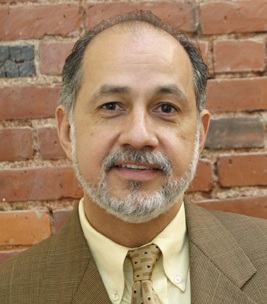
Author
Dr. Roberto Miranda
Summary: The speaker discusses the importance of having a specific mentality or mindset when approaching challenges and tasks in life. This mentality involves strategic thinking, planning, and a scientific approach to problem-solving. The speaker notes that many Christians may not have had the opportunity to develop this mentality without rigorous academic preparation, but it can be acquired over time. The speaker also references the story of the unfaithful steward in Luke 16:1-9, where the master praises the steward's shrewdness in dealing with his situation. The speaker emphasizes the need to think in a way that aligns with the challenges and complexities of the 21st century in order to achieve excellence and effectiveness.
The parable of the unjust steward in Luke 16:1-13 highlights the importance of strategic, specific, and systematic thinking and planning. The Lord praises the steward for his way of thinking, not his lack of honesty. This mentality is characteristic of secular, non-spiritual rational people, who control all other worlds of culture through money. However, this way of thinking seems to be in conflict with the supernatural or spiritual mentality that believers subscribe to. The Church must learn and cultivate this way of thinking while not neglecting the spiritual dimension. The Church moves on the margins of power and influence because it resists this strategic, entrepreneurial mentality. The secular world manipulates the evangelical vote because of their strategic thinking, while the Church lives in a parallel world. It is complex to change the culture, but the Church must operate in that way.
The speaker discusses the importance of adopting a strategic business mentality in order to effectively change culture and conquer the world for Christ. They reference James Davison Hunter's book "To Change the Culture" and argue that although changing culture is complex, it is necessary for Christians to learn how to operate with a strategic mindset in order to make an impact in the world. They use the parable of the talents and the story of Nehemiah as examples of this strategic thinking and discuss the importance of having a clear goal and specific actions to achieve it. They emphasize the need for efficiency, organization, and discipline in ministry and suggest that spiritual people may not appear spiritual but are effective in their actions.
The Book of Nehemiah in the Bible is a great example of a strategic, specific, and scientific way of thinking that Christians need to cultivate for excellence, productivity, and effectiveness in the complex and challenging world we live in. Nehemiah's detailed planning, reconnaissance, diagnosis of reality, development of strategy, infectious leadership, and delegation of tasks led to the successful rebuilding of the walls of Jerusalem despite opposition and difficulties. Christians should not see this mindset as contradicting the supernatural, but rather complementing and enriching it. It should become a personal philosophy of life that determines every action and decision.
(Audio is in Spanish)
We are here this morning precisely because we want to improve our performance as leaders, we want to improve our performance as a congregation, as a church, as ministries to which we belong, we want to exalt or raise the level of our leadership, and we also want to live a life of excellence. Because after all these principles apply to the way we live our lives. And from there, then, the other implications of that mentality of which I want to speak emerge.
My purpose this morning is to alert all of us to the importance of a type of thinking, what I would call a mindset, some would say a mental model, others would say perspective, others would call it a life stance; a way of approaching life situations, life challenges, problems, ministry challenges. It can refer from how to solve the problems of my emotional life, the hurts of the past, how to approach the structural problems that exist in my marriage, how to be a better professional, how to be a better housewife.
This mentality to which I want to refer is like an operational way, it is a way of addressing any situation, I would call it an interpretive lens and I know that these are somewhat complex words, but there is no simpler way. Because that's what a mindset is, it's a mental model, it's an instrument that you use for everything you do. It's like the engine of a car that engine is in there, and that engine has to be involved in everything that car does, whether it's going to church, whether it's taking a 500-mile trip, whether it's going to the supermarket. , that motor and the operating system of that car, is used for all the movements of that car.
So I want to refer precisely to a way of thinking and approaching things, alerting us to the importance of that way of thinking and living. A way of thinking that fits, that fits our aspirations as a church, as individuals. We need a way of operating that is appropriate for the world we live in, the 21st century, with all its technological complexities, multiculturalism, frenetic competition, accelerated processes in all areas, short time to do everything. In this 21st century in which the church operates and our lives move, we need a way of doing things, a way of interpreting the world and dealing with the problems of the rest of life, that is at the level of the complex world in which we live, and of the things that we as a church of Christ at a universal level and also as a Lion of Judah congregation inserted in the city of Boston, want to achieve.
In other words, a paradigm is required, it is a word, again, very beautiful and very complex. A paradigm is required, a mentality, a way of approaching the challenges and problems of life that leads us to success, excellence, and effectiveness in the things we undertake.
One additional thought: most Christians I know don't have, don't display, that mindset I want to talk about. Especially in the charismatic Pentecostal world to which we affiliate. Generally, if you have not undergone a rigorous regimen of study and academic preparation at some elite university throughout your life, you probably have not had the opportunity to incorporate that way of approaching life situations to which I refer. . But don't worry, you can acquire and develop that mentality if you know what its characterizing qualities are and how it can be acquired. And by the way, that's the work of a lifetime, that's just when you say, ok, I understand what it is, I have an idea, I'm going to start thinking in those terms, I'm going to take baby steps, I'm going to focus on that all my life, I will understand what it is about, and I will rigorously throughout my life, develop that mentality.
For example, the use of this little gadget, everywhere I go lately I talk about it, the iphone. That is why I am using it here, because I have seen its usefulness, it incorporates so many things and I have said, I have to learn to use it, because that goes with this idea that one has. One of the things of this time is the use of technology, the concentration of resources. Here is everything, this is a small computer, but it has everything. And it also represents this technological world in which we move that we as Christians have to learn to move in it.
So, this, I want to cultivate all the different aspects that refer to that mentality and this is one of them. So, well, I'm determined to learn how to use this. And I have made a pact with the Lord to master this little device, one hundred percent, if possible because it represents this lifestyle that I see more and more every day, that I need to be an effective leader in this time.
So, it's something that has to be your whole life. You understand what it is, you align all your actions, decisions to that way of thinking, equally in your marriage; I have a marriage problem, ok, how do I break it down into its constituent parts. How I establish a day-to-day strategy to solve it. What things do I have to leave behind, what things do I have to acquire, what dialogue do I have to have with my wife, what trips to the past do I have to make to analyze where these problems come from, etc. And then you pursue a strategy to destroy that monster. Because that mentality teaches you and so you focus everything in life in that direction.
That mentality could give different names to what I am referring to. No name that I gave it, no label does full justice to what I am referring to. Each one only names one aspect of that mentality. Now, together, the different names that we can give it delimit an area, a universe of attitudes and practices that together lead to excellence and the development of the individual.
We can refer to it in different ways, they are like pixels, points... have you seen a newspaper that if you analyze it more closely, you see, this is the specific mentality... have you seen the photos of a newspaper? If you fully analyze what they are, they are little gray or black dots of different things and those little dots together create an image from the outside.
Well, that's how I want this thing more like dots and outline what is the profile of this mentality. Each of these names names an aspect. Together they define an area, a universe of attitudes and practices that lead to excellence and personal development.
Some names that I could give to this: specific mentality, systemic mentality, scientific method, strategic thinking, I would also call the ant mentality. Look up Proverbs 30, 24-28, where the Holy Spirit-illumined Proverbs writer praises the ant, the rabbit, the locust, and yet another insect. Small things, small organisms, but if you look at what they all have in common, they are a systemic way of thinking, a strategic way of thinking. They plan, structure, see the long term, their needs let them determine their actions, they think in a concrete, strategic way, and that is why the writer praises the rabbit and the ant because it walks in gangs, for example.
That is, the idea is that... and the spider, that is the fourth that lives in the prince's palace. Have you seen the structure of a spider web? It is the most complex and most powerful, strongest thing there is. It's tremendous.
That is to say, these beings plan and that is why the Bible praises them. He does not praise the steed full of strength and vigour, no, no, tiny animals that, due to their ability to plan and think strategically, systemically acquire a capacity far beyond their apparent strength.
Strategic thinking, ant mentality, efficiency mentality, it could be. All these names, scientific thought, if we were to disassemble them in their implications we could see that they refer to a universe of attitudes and ways of acting in life.
Without that attitude, without that mentality to which I am referring, towards the challenges and tasks of life, one does not go very far. It doesn't matter how many good intentions, how much effort and passion, not even how much anointing you have as a servant of God... ah, I have the anointing of God, I can do...
Look, the anointing works for certain things, but not for everything. It takes the anointing to add other important things to it. In the passage from Luke, chapter 16, 1 to 9, the Lord Jesus Christ alerts us to the need to think in this efficient, specific, strategic, planning way, to which I am referring.
It is the well-known passage of the unfaithful steward. You know the story: This butler, an employee of a corporation, let's say, is found to be cheating on his boss, is illegitimately stealing money from company funds. He knows that they have discovered him, he knows that he is waiting for him to be fired or put in jail and what does he do then? In light of his current situation, he begins to think, what am I going to do? So he says, what will I do because my master takes away my stewardship, I can't dig, I'm ashamed to beg. Ah, I know what I will do, so that when the stewardship is removed from me, the rich and powerful people receive me in their homes. And calling each of his master's debtors, he said to the first, how much do you owe my master? He said, one hundred barrels of oil. And he told him, take your account, sit down soon and write 50. Then he told the other, and how much do you owe? And he said, one hundred measures of wheat. He said, take your bill and write 80. Look at the reaction here, so, is Jesus Christ implicitly through the master praising this man and what did he praise. The master praised the bad butler for having done shrewdly.
In fact, the word sagaciously is fronisms, from where the word frantic, phrenology, frenzy comes from. It is a very interesting word, it refers to the nervous system, to the brain. When he says shrewdly, and it is interesting that the Bible speaks of that word sophronisms, for example, or sofronen, referring to a scientific way of seeing things. Where it says, for example, no one should think more highly of himself than what he should think, but think of himself sanely. The word sanity is that word, sofronen, which is referred to as the brain. That is, the electronic structure, the nervous structure, the neurological structure of the human being itself. It does not refer so much to wisdom, understanding, intuition. It is referred to as a specific, scientific, systemic way of thinking.
“…The master praised the bad steward for having done shrewdly because the children of this century…”
Say everyone, this century. What is it referring to? The people of culture, of time and space, the people immersed in the world, the people who only think about the now and the here, the people who live only for this world and do not worry about the eternal.
"... the children of this century are more sagacious... -again the word sagacious, the same word is sofrenen or fronismos-... they are more sagacious in their treatment than their peers than the children of light..."
What are the children of light? You know, us.
“…. And I tell you, win friends through unjust riches so that when these are lacking they will receive you in eternal dwellings….”
It's interesting that unfair wealth. I would say the unfair wealth for me is precisely all the things that this world provides: technology, its way of thinking. We have to learn to use the tools of this world, sanctify them and use them for the advancement of the Kingdom of God. That is very important, unjust riches.
God always takes men like Moses, puts him in Egypt, an impure, pagan, worldly system, trains him and then takes him out, puts him to cool off in the desert for 40 years and then later makes him do what he has to do.
He trains Paul in the Pharisee world with all its theological, structural, organized, highly developed university ways of thinking, and then he takes him out, knocks him off his horse, blinds him for a while, baptizes him with the Holy Spirit, He puts him to cool down for a few years out of everything and then he calls Paul and Barnabas aside for the work for which I have determined them, and then he sends him on one of the most powerful missions in all the earth: to develop his church and to develop the theological system of the church, two thirds of the New Testament. But first it puts it in the opposite world, imbues it, puts it in, injects it with certain characteristics that are not found in the world of the spirit and then the spirit enters it and takes it out.
So, that's the idea of unfair riches. What do we see here, brothers? The Lord alerts us to the need to think in a way. The Lord does not praise the unfaithful servant for his malice, understand me, he does not praise him for his lack of honesty. No, he praises him for his way of thinking. This man, what did he do? He saw soberly, he analyzed his reality soberly, concisely, realistically. He didn't say, oh well, my master may forgive me. No, he said: Hey, I'm in trouble, they're going to kick me out.
He did not idealize, he saw reality as it was. He saw his situation. He evaluated his alternatives: Digging, I can't, I don't have molleros, if I go there to work in construction, they destroy me. Begging, I don't even know how to do it, I'm a man who gives so much importance to myself that I couldn't do it. He evaluated alternatives. So, ah, he said, he determined where his strength lay. My strength lies in my cunning, my ability to plan, my mind. So what did he do? Determined a specific plan of action. Ah, I know what I'm going to do. I'm going to do this.
He wrote possibly four different things on his computer. He analyzed, looked at his corporation's records, and then called, picked up his rollotext, looked at his contact list on his iphone, and determined a specific plan of action. He executed his plan cleverly. Execution is one of the hallmarks of this way of thinking. I see a lot of people tell me, Pastor, how good it would be to do this. And they have some great plans. I tell them, well, then, execute it. I know people who are geniuses at strategizing, thinking, conceiving things but make them execute, tell them I'll wait for you here tomorrow at five in the afternoon... oh, no, I don't have time, I'm too tired... They put a story in and they don't show up . Or they go once or twice, and then it's all over. Or they conceive some great ideas, some great strategies, they go three, four times but when things get difficult there it all stopped. They don't run. Execution is one of the greatest hallmarks of leadership.
Don't come to me with tremendous speeches, or with poems, or with great displays of personal energy. I want to see when the dust is over, if you are still there. I adore people who have been in the church for 20 years, serving, working, rain, shine, wind, whether they recognize them or not, kiss their hand or not. They are there, firm, firm. Execution. He executed his plan, carried it out.
He thought ahead, he thought long term, he was specific in his determinations. Above all he thought lucidly, specifically, soberly, coldly. Planned and carried out a strategy.
That mentality, that way of conduct, that way of proceeding was what the Lord said, this man must be praised, let us not praise him for his lack of honesty, but let us praise him for his way of acting, of proceeding in life, of proceeding before a challenge, a crisis, a task, a situation.
It's that kind of mentality, brethren, that kind of systematic mentality, of small actions, located exactly where they have to be located. Sticks of dynamite placed in the place where the rock is going to split, that we have to adopt as a church, as Christians, as servants, as leaders of different ministries. It would take too long to describe in all its aspects this mentality to which I refer. I'm just kind of delimiting it, putting little dots around it, as I say.
Interestingly Jesus says something here that is very revealing. He says that this mentality of efficiency, detail, planning, specificity and strategy, is characteristic of who? Of the children of this century. Secular man, non-spiritual rational people, those who are immersed in time and space, in the world, not in eternity, here, their life depends on this world, temporal affairs, not spiritual ones. The children of God, the believers, the anointed, the children of light.
The Lord says, those who are shrewd in dealing with their peers, those who know how to do things, those who carry out the great tasks of life, are not evangelicals, they are not Pentecostals filled with the Holy Spirit and the gifts of God's anointing. No, it's the unconverted, the pagans, the ones out there in the world. And that is like an indictment, as it says in English, it is an accusation against us of the Son of God. I believe that the Lord said with a sense of irony and deep sadness.
Revealingly, the Lord draws this parable from the world of business. It is a parable that elaborates a financial situation. It is that world of business, the world of the corporation that best represents that mentality of planning, specificity, and strategy; To a certain extent, I criticize that world a lot and I think it's not as efficient as he thinks it is. But in a sense it is, which is why the Lord always uses business situations to exemplify these kinds of things.
That is the world that controls all the other worlds of culture. It is the world of corporations, it has always been like this, including the military world, the governmental, cultural, scientific, academic world. Think of a person like Bill Gates, with his multi-billion dollar philanthropy, The Gates Foundation, I think it's called. Think of Warren Buffet, who gave billions of dollars to that Bill Gates foundation as well and plans to give all his money when he dies to that philanthropy. Think Richard Branson. If you think of these great philanthropic efforts today, the Rockefeller Foundation, The Ford Foundation, where do they come from? From the world of business people.
Think of the 16th century, the Renaissance, the Medici, who brought it about? People like Michelangelo and Raphael and others. Who is ultimately responsible for the great development of culture in Italy in the 16th century, in the Renaissance? The big merchants who had the idea too, ok, I'm going to use my money to develop the culture. It has always been like this.
But it is money that controls everything else: philanthropy, universities, the cultural world, everything comes from there, from money.
So the operational mentality of the trading world, the mentality that they use to carry out their operations, gives that world of money access to all other things. That mindset that the corporate world uses gives it access, in turn, and power and control over all other worlds of culture.
So the conclusion is this: we conclude, it is not money that gives power, brothers. Some say, oh, he who has money has power. No. What gives power is the way of thinking and operating, it is the modus operandi, the methodology, which gives access to money.
If you have the methodology and the modus operandi, that paradigm which I refer to, you can potentially access all the other things. What truly produces power, control, and influence is a way of operating, a way of approaching life situations.
Where that way of thinking resides, where you find it, there will be the power, the influence, the excellence, the effectiveness, the impact, the control. Where that way of thinking is, in any group, any institution, any long-term social, cultural, political movement, where that way of thinking resides, there you will see progress, effectiveness and achievements.
Now, this truth that I am delimiting here is eminently applicable to the Kingdom of Heaven. God wants his Church, with a capital i, and his church with a small i, here in León de Judá, to learn and cultivate this way of thinking, and to apply it to it, -this is important,- without neglecting the dimension of the spirit . Because if we neglect it then we are lost.
No, I don't mean one thing or the other, but one thing and the other. This way of acting and working is not comfortable or natural for us, -what I was referring to a moment ago- because it is in apparent conflict. Say please, apparent.
That mentality that I am outlining, strategic, intellectual, scientific, whatever you want to call it, is not comfortable for us because we believe it or it is in apparent conflict with another mentality to which the word also calls us. I would call that other mentality, supernatural mentality or spiritual mentality. That is another type of mentality. And we think it's like instinctively we feel like there's a contradiction and so that's why…. It is uncomfortable for us to think in this way because the supernatural or spiritual mentality to which we subscribe as believers and especially as Pentecostal charismatics, we feel as if it is in conflict with the other one that I have just described.
That supernatural mentality that I am describing depends, not on reason, nor on the effort that I am alluding to, which is important, nor on intelligence, nor on strategy, but on what? Of spiritual resources, of the gifts of the Holy Spirit, of anointing, prayer, fasting, holiness, divine intervention, praise. Go? So, on the one hand, I am saying, no, you have to make an effort, study, plan, exercise discipline, execute. And then the supernatural mentality tells him; no, you have to…. I raise my hands when I have a thousand problems…. And then the anointing comes and you go ahead and sail on the wings of blessing, etc., and the solution comes. You see?
That supernatural mentality sort of competes with that other mentality of systematic effort, of repeating small things, of persistence, of accumulating pressure on a reality, until it explodes. On the one hand he says, no, no, commend your cause to the Lord, and he will prosper you. So, others tell you, no, work hard, make an effort, get involved.
A classic text of this is Zechariah, chapter 4, verse 6, I would say that it is the classic text of this type of mentality where:
"...then he answered and spoke to me, saying, 'This is the word of the Lord concerning Zerubbabel, which he says not with army or with might, but with my spirit, says the Lord of Hosts..."
Do you see the supernatural mentality? It is not with strategy, it is not with technological systems, it is not with computers or iphones, it is with my spirit. So fill yourself with my spirit and you will succeed in life and you will do the things that you need to do. Pray a lot and you will succeed. That is the supernatural mentality. It is the mentality that is in the Marcos Barrientos chorus, 'it is not with strength or power'.
He says, “….it is not with strength or power, but with his holy spirit, the weapons of war are not of this world, they are strong in God….”
Notice, “…..they are not of this world, they are strong in God. The power of his love is the greatest force, worshiping Christ in unity, victory in his name gives us his truth….”
It is not what you do, but aligning yourself with the strength of God, the truth of God, that is what gives you…. So you see the apparent contradiction. On the one hand Christ essentially tells us, proceed and think like the children of this world and on the other hand he tells us, your souls are not of this world. So do you see the contradiction?
We subconsciously identify that apparent structural contradiction and resist it, because we naturally become more affiliated with the spirit world. And then when they tell us, no, learn English, learn to use a computer, learn to use email, travel to Europe, if you want to be a great musician, a great artist and get into the culture of centuries ago and learn. Sing yourself a hymn there that doesn't seem to say much, but it has anointing, better than a choir with 5 drums and 7 saxophones. So, there's a structural struggle there.
That is why we no longer see the cultivation of that strategic, entrepreneurial mentality that the Lord and all of Scripture recommends that we adopt. Secretly, unconsciously, the children of God saturated with the supernatural paradigm, we resist it because we are more interested in the supernatural and miraculous mentality.
Ironically, brothers, this is very important, that is why today, in the modern world, the Church of Jesus Christ moves on the margins of power and influence, in a world that is parallel but separate from the world where cod is distributed, where They make the big decisions.
Obama makes his decisions and does not care what the evangelicals think, he manipulates and prepares them as he does, forgive me if you… I would say the same about other people, I am not… but the truth is that…. The people of this world, Kerry or whoever, Obama, prepare decades before, when they are at Harvard, in those places, and they say, I can become president, ah, but I need to appear evangelical because without the evangelical or Afro vote American I will not arrive. So they convert there one day, they see the light, forgive me if I... am here among trusted people. They prepare their resume, they go to a church for a while and when the time comes to run for the presidency they already have the evangelical card, but when they come to power they forget everything they promised us. They manipulate us because they think strategically.
We are, oh, our savior, we look for any reason to give him the vote: ah, well, he is an evangelical, well, he says that he is an evangelical, where is his attitude, his position, his driving force? That world manipulates us, but it doesn't… They do what they want. Universities don't realize what evangelicals think or want.
We produce, we have a whole film industry, a book industry, we have more best sellers than the secular world, we have better artists than the secular world, but we don't have an impact. We live in a parallel world.
That is what intrigued me about that book that, by the way, to all who might read it, I highly suggest it, but not so that you believe it, but so that you can effectively criticize it, “To change the culture”. I alluded to it recently, by James Davison Hunter. It is a very interesting book, he says that, precisely. Now, his conclusion is that this is why we should not try to change the culture. I find that conclusion diabolical, personally. And the sophisticated, intellectual evangelical world is heading in that direction more and more. But I think we have to know how complex it is to change the culture, and then operate in that way.
The fact is that evangelicals move in a parallel world. We don't affect the world of business, politics, culture, intellect, social sciences, hard science, because we haven't learned to use that strategy that the Lord, and all of Scripture for that matter, recommends that we adapt. Secretly, unconsciously, the children of God saturated with the supernatural paradigm, we resist it for that reason. And that is why we see ourselves in that parallel world, but separate, isolated from the world of power, influence, excellence in the area of science, letters, business, government, finance, law.
What we do is throw stones at them over the fence they have. We throw stones at them, we criticize them, we lash out at it, we develop evangelical universities, we develop an evangelical publishing industry, we develop evangelical best sellers, we develop evangelical movies, and we have some evangelical leaders in positions of influence, foundations, evangelical think tanks but we don't affect the A world where decisions are made, which determines wars, the distribution of goods, culture, we do not affect that, because we have not learned to use that mentality.
We produce many things, many cultural objects, but we do not penetrate the elite world, where the big decisions are made. That world is reserved for the secular man, who has the monopoly, practically in that strategic way of thinking.
Actually, I dare to say, brothers, that until the church of Jesus Christ, the servants of God, do not cultivate, and do not learn to use this type of way of thinking and operating, we will not be able to conquer the world for Christ, develop churches of excellence, producing outstanding leaders, or influential thinkers. We will not succeed in influencing culture and discipling nations as Christ has commissioned us to do. For that we need to learn to exercise this type of way of thinking in our personal, individual life, as well as in our involvement in any area of the ministry.
Now, at this point in my development, the logical thing to do would be to describe in more detail, point by point, what this strategic business mentality consists of, and what are the specific elements that make it up. But it would actually require a second lecture. What I want here is simply to draw its outlines and describe it roughly, as a bird's eye view, and the next thing would be to go into detail about that, perhaps at another time.
I'm going to take another text of Scripture, very close to the first one to prove, number one, the biblical, from my point of view, I want to underpin that so that you can embrace it; the biblical that is what I am saying. Number two, how urgent it is that we learn to think like this, and number three, how necessary this mentality is to conquer the world that God wants us to do at this strategic time in history.
Turn to Luke 19, where we have here the parable of another useless servant and also of faithful and useful servants that illustrates the importance of an entrepreneurial, strategic mindset in conquering the world. Here we have another text where it says:
"...hearing these things, Jesus continued and told a parable because he was from Jerusalem and they thought that the Kingdom of God would manifest immediately..."
The disciples believed that the Kingdom of God was going to come, God is going to install it, a great platform is going to come down, a flying saucer, with everything that is needed, and the Kingdom of God is going to be installed on earth, so overnight. And the Lord said, no, it is not like that, my brothers, you have to fight, you have to sweat, you have to put your hand in, you have to establish systems, develop governments, strategies, train leaders, establish institutes, schools, seminars, write big books and put on and leaven all the dough. It is not like that, simply, Christ comes and everything is ready. No, there is a task. They thought it was going to be like that, and no, it's not like that. So for that he gave them a parable, and said:
“… A man went to a house, a noble man, Christ, he went to a distant country to receive a kingdom and return, and he called ten of his servants, -put there employees, ministers, religious leaders-, he gave them ten mines..., -put there gifts, talents, abilities- and he told them, negotiate... -that word is very key. This passage depends on two things, keywords and an atmosphere that develops-...negotiate while I come... -that is the way of operating, negotiating-...but his fellow citizens hated him, etc...
“….Then he says, it happened that he returned after receiving the kingdom, -say there, second coming-…. He ordered those servants to whom he had given the money be called before him... -put there, the trial that is not for salvation but to see what you did with your money, what you did with the gifts I gave you, how you used your your time, how you used the resources that I instilled in you-... to know what each one had negotiated... -negotiated, the same word again-
“… The first one came saying, Lord, your mina has earned ten minas….. you know the story, each one told him I have rendered what you gave me, I have multiplied it five, ten, one. There was one who said, Lord, I was afraid, I thought too much about the consequences, I didn't use my talents. I was afraid of you. And I let myself be carried away by emotions and fear, I did not think strategically and the owner of the firm tells him, stupid, because even if it is, you did not put the money in a bank so that it would give me one percent, I do not know how much it is today day, one percent is very little, but even if it is so that it would not be tucked under the mattress. Why didn't you think even as a businessman a little bit?
Note that the parable refers to the action of the church in the world as Christ comes the second time. It is an eschatological context that is here. Also note the atmosphere and tonality of the business world, the military world, the organizational world in this parable. I give them this, I put them online, I tell them this is what they have to do, I delegate authority and responsibility to them, I'll be back in a while, I want them to give me a report, how much they earned. There is a clear, established business mindset.
Note that there are specific orders, performance is expected without excuses, profit is expected, efficiency in the way of trading is expected. We see here principles such as decentralization, delegation, vision, organization, thinking in the long term, etc. not much sentimentality, pray, seek God's anointing, declare the blessing of the Holy Ghost, and then come and do what you have to do. No, get down to work. There is not much sentimentality, spirituality, mercy, in this parable. What there is rather is sobriety, efficiency, planning, business, strategy. It is the mentality of the business world.
In the context of this culture that Christ has told us, conquer it for me, I give you gifts, use them for a purpose. The Lord does not want excuses, what the Lord wants performance. In your ministry, don't come to me with sad stories. I kept this, I forgot this, that people are tough. No, no, run, do it, that's your problem. Why is he not working ask him. Don't blame others. Look within and find a solution. That's the atmosphere here.
The clue in this parable is in the word 'deal'. It is the word pragmateusase, a word that I love, pragmateusase, where the word pragmatic, practice, pragmatism, praxis comes from. It refers to the business world, to repeated, systematic, persistent, disciplined, meticulous and specific action to obtain clear, measurable, previously determined results, as is done in the world of secular institutions, finance, business. That word pragmateusase is the word that says negotiate.
In other words, work in a systematic way on what I return. Work with a corporate mindset, work thinking specifically, pragmatically, be pragmatic. Why are we here today? Precisely, we are not here for… we had a moment of prayer because it is important, but it is for you to roll up your sleeves and work hard, boringly.
In fact, one of the great marks is the ability to discipline emotions and work on small, boring, but important things. This characterizes the movement of man in its strategic modality.
The work of the universal church, as well as of each congregation, as well as of each servant or servant, in their personal ministerial life, must be conducted with that same mentality and according to that same pragmatic methodology.
And in closing, I'm going to take just one more example from Scripture to break down some of the constituent elements. I can't do them all, but I want us to now make a tiny, tiny case story of some of the constituent elements of this type of mentality, because I want to leave it planted there in his spirit and in his mind. That strategic business mindset, how it works in reality, how it performs in reality. Let's go to Nehemiah chapter 2, verses 4 through 16.
Nehemiah, in Scripture, for me, is the classic case of the strategic thinker, the scientific leader, the leader who sets a goal and executes it. The entire book of Nehemiah is a book that you must read and drink up. Don't study it so much here, but let Nehemiah get inside you and own you.
Now, look, what do we see here. Nehemías, one day he is reading the newspaper on the internet and discovers on NPR, or on the New York Times, the website, that there is tremendous destruction in Jerusalem, the walls are destroyed, the people are ashamed, there are no defenses, the prestige , all that was involved in the destruction of the walls, the economy is in shambles, the people are demoralized. And he understands, if I build the walls, the walls are for protection, we can develop the city, because when the people are with the walls then they are going to move to Jerusalem, he understands that prestige is involved in this. I believe all of these things were on Nehemiah's mind.
Why did you focus on the walls? Because the walls were the essential, it was the pivoting point, it was the point of leverage. That particular intervention would allow for many other interventions, because Nehemiah is a strategic thinker and that's why he thinks. So what does he do? We know the story, pray, because I always... I mean, there is no competition between the supernatural, fast, seek God's anointing, seek clarity, cry out to the Lord, disarm before God, and then dry your eyes, take a good bath and He already knows what he has to do, and then he goes before the king, and says: Lord, open a door for me. And one day he is there, he is a little emaciated, who knows if he himself put on a little gray powder to look emaciated, to see if the king asks me what I have to do. So verse 4 says:
“…. The king told me... -after he says, hey, what's wrong with you, are you sad? Are you sick? -... the king told me, what are you asking for?
Do you see how the world thinks? He says, well, okay, you look bad, but what do you need? What can I do? How are we going to solve that problem?
“….. What are you asking for? … -so the secular man thinks-… then for a moment he prayed…”
I think Nehemiah in half a second said, Lord, wow, here's the moment. What I do? He didn't put on, king, I'll come tomorrow, and I'm going to tell him…. No, he had already thought, he had already strategized. What he said is, Lord, I entrust myself to you. And point. When you pray, when you live an anointing life, you don't need to be so spiritual. The anointing is within you, it is developed through your pores.
I believe that the more spiritual you are, the less spiritual you seem. The more supernatural you are, the less you have to depend on 'thus says the Lord', and on the angels that speak to you, because the anointing, the revelation is within you and you live the anointing, you are prophetic. Your mind is sanctified, your mind is permeated with the paradigms, thought patterns of Scripture. You read continuously, the life of Scripture has entered and shelled within you. You don't seem to be very spiritual, but you are a spiritual ninja. You have some little stars over there that you throw at the giant and it destroys it. The others go around with giant bazookas and that's why they identify them and shoot them, and immediately neutralize them.
Spiritual people don't seem to be spiritual, because their spirituality develops where it counts. So, Nehemiah is there, he entrusts himself and then he says to the king:
"... If it pleases the king, your servant has found favor with you, send me to Judah, to the city of the tombs of my fathers, and I will rebuild it..."
That is Nehemiah's mission vision statement. I want to go to Jerusalem and I want to rebuild it, period. A very, very clear vision.
“…Then the king said to me, -and this is interesting about Nehemiah's mentality-…and the queen was sitting next to him….”
Why do you say that? Because Nehemiah is a thinking man. The book of Nehemiah is very detailed. That detail that the queen was sitting next to him, exactly how the scene puts me, because he loves details. Very specific in its form. That is what convinces me that this is a true and real book. It is that it is very detailed. And then he says:
“…. And then the king told me, how long will your trip last and when will you return?..."
The king wants to know, sign me up there, he says he leaves on June 20 and returns on September 10. I want you here that day. How long will your trip last? No, well, that's fine… go there and then work what you can and then come back when you can. No, how long will your trip be and when will you return?
“…. And it pleased the king to send me after I appointed him the time..."
Then look at this, “… I also told the king, if it pleases the king, number one, that I be given letters to the governors on the other side of the river, so that they clear my way; and a letter to Asaph, guardian of the King's forest, so that they give me wood to frame the gates and for the wall of the city and the house where I will be…”
This man had thought of everything, details, the governmental, legal part, the permits I need, my house where I am going to be, the wood he needs. I think he also put nails and tools in there, give me all that. Resources. He thought about all these things. And so he went to work, and the last thing is interesting, that scene, in verse 11 onwards.
He arrives in Jerusalem and after being there for 3 days… for what? to rest, relax, recover from the destructive trip that those trips were, from where he left for Jerusalem, he recovers because he needs rest time. The strategic mindset thinks and invoices all those things: family life, devotional life, married life if you have it or whatever. He develops all this, thinks about it and then:
“…I got up at night… -one quiet night he gets up, takes a group of relatives, strategic people, his closest leaders. …. and a few men with me, and I told no man what God had put in my heart to do in Jerusalem. ..”
The strategic mentality first conceives things, plans them, matures them inside and then releases them at appropriate moments.
“…. nor was there any horse with me, except the only one that I rode, and then Nehemías makes a strategic reconnaissance, he walks. He does not depend on your imagination or prayer. No, he wants to kick the tires. He wants to give the tires a kick to see if they work before buying the car. So he goes, analyzes, visits this site and takes note. Ah, look, here are these walls. Wall A, B, C, D, 1, D2, 5, 3, I don't know what? Develop a strategic vision. He sees reality, points to it, puts labels on it.
“…and I went out at night through the valley gate towards the Dragon Spring and the Muladar gate, I saw the walls of Jerusalem that were torn down, its gates consumed. I then went to the gate of the Fountain, to the King's pond, but there was no place for the horse I was riding to pass. And I went up the torrent at night, looked at the wall and turned around and entered through it….”
Why are we interested in this? He is a strategic, specific thinker. Give details. He took note of all these things. He has to go to those places and see what is happening. So, finally he, in verse 17, after making his recognition, taking his notes, seeing the reality, developing a strategy, then he goes to the town, he goes to those who have the money, the resources, the bodies to work, he gives them a report, it gives them vision, it tells them what's going on. He diagnoses their reality, he says, we are in disgrace. Look how he talks to them:
“… I told them: you see the evil we are in, that Jerusalem is deserted, its gates consumed by fire. Come and let us build the wall of Jerusalem and let us not be reproached anymore. Then I declared to them how the hand of God had…”
It gives them hope. He tells them, I am not just anyone, I have the king's authority, I have permission, I have his entrustment.
“…And they said, let us rise up and build…”
He has the solution because he used a strategic, systematic way of thinking, he brought people together, his leadership infected others.
We have to develop the ability to infect others with our vision and tell them clear, specific things and stick to it. And that then gave him the success he needed.
Read Chapter 3 later, I don't have time, and you'll see how the tasks were divided up. This group took this piece of the wall; this other group took the other piece; this other group took the other piece. There was opposition, there were difficulties because every big project has difficulties, opposition, unexpected things, bitter pills. There were people who persecuted him, they wanted to destroy his anointing, but he always did what he had to do at all times.
I conclude, stand up and now the time ... give me 10 seconds. Stand up for a second. Conclusion: in the complex and challenging world in which we live dominated by technology, knowledge, multiculturalism, and fierce competition, Christians require the skills and knowledge that allow us to develop lives and ministries of excellence, efficiency, and productivity like never before. .
This is key: we are required to cultivate a type of mindset that does not come naturally to us but is absolutely essential if we are to set up a world-conquering machine for Christ. That strategic, specific and scientific mentality does not contradict the supernatural mentality. Rather it complements and enriches it. We must study what this way of thinking and operating consists of. We must determine what its constituent components are and launch ourselves to cultivate it day by day.
Finally, we must make it a philosophy of life, a personal vision, which determines each of our actions and decisions every day of our lives. May the Lord bless you.