Presentation Women's Retreat June 5, 2010: Success in interpersonal relationships - Part 2
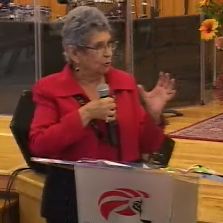
Author
Olga Martinez
Summary: Self-knowledge is crucial for a leader. The way we see ourselves will determine how we see and treat others. A leader must know their level of restoration, how the past influences them, how they manage pain and unresolved conflicts, and their level of emotional maturity. They must also recognize their basic emotion and emotional triggers to manage them properly. A leader must choose between emotional or spiritual leadership, and recognize that the manifestations of the fruit of the Spirit are relationships. Asking for help and admitting mistakes are also important for a leader's growth.
In order to be a good leader, one must be aware of their emotional triggers and defense mechanisms. These triggers can cause reactions towards others that are not their fault. It is important to recognize and manage these emotions, and learn to cast them onto the Lord. Defense mechanisms, such as negation, repression, and projection, can be unconscious and need to be identified and handed over to God. It is also important to understand the personalities of those in your team, and use their strengths appropriately. By scrutinizing our hearts and allowing God to penetrate our unconscious and subconscious, we can mature emotionally and become better leaders.
The speaker discusses different personality types within groups and how to manage difficult individuals. She emphasizes the importance of recognizing negative traits within oneself and accepting others as they are. She also suggests praying for difficult individuals and not engaging in arguments with them. The speaker provides specific strategies for managing different personality types, such as following established rules for antagonistic individuals and stopping gossip by refusing to participate and creating a positive work environment. She also advises not to fight for control with dominant individuals but instead to give them alternatives and maintain one's position as a leader without entering into conflict. Overall, the speaker encourages understanding and acceptance of difficult personalities and finding ways to work together effectively.
The speaker discusses how to handle difficult personalities in a group setting, such as a team or church. They suggest that the key is to understand that these individuals have their own issues and insecurities, and to approach them with empathy and acceptance. The speaker recommends using reverse psychology to encourage non-speaking individuals to share their thoughts, and emphasizes the importance of listening to what they have to say. The speaker encourages leaders to have humility and accept imperfection in their team, and to work together to grow and improve. The talk ends with a prayer asking for guidance and transformation.
Let's continue with our teaching. Once upon a time there was a man sitting on the side of the road, a traveler passed by and said, "Listen, tell me, what are the people who live in this place like?" the man who was sitting there said, “How are people? Excellent”. He told her "the people where I come from are horrible, critical, gossipy." “Well, he told her, you won't find anything different here. People are very similar."
The man continued sitting there and after a while another traveler came and asked him the same question “Listen, what are the people in this place like? What people am I going to meet? "Tell me, what are the people like where you come from?" "Oh! I come from a place where people are kind, beautiful, precious, kind, charming, generous, trustworthy." "Well, you'll find the same thing here." For what reason?
Because the way we see ourselves, we will see others. And as we see others that's how we're going to treat them. That is why a leader has to know himself. You have to know who you are, what you think, what you feel and at what level of the path you are going. There is a deception that consists in that 'I believe that what I am living is'. What happens then? I think I'm up to here.
Suddenly a crisis comes, a difficult situation comes and alas! Surprise, how I reacted. What a surprise! I saw that it wasn't up to here, it was up to here. For what reason? The only thing that crises do, the only thing that difficult situations do is show the level where we are. They do not change our level, they only show the level we are at. And the reactions that we have will show the level at which I am.
So it is that the car knows me, see myself in a mirror and know exactly where I am and not believe that because I know a lot I am up. Every woman has to have a self knowledge. That's basic. That is where leadership relationships begin. As I see myself, I will see others. I am critical, I go to see the critics; I am kind I will see them kind. That's where leadership relationships begin, based on how I see myself. Very good.
I have to have knowledge in what things? I have to know what level of restoration I am at. Because we all go on restore levels. God begins to restore in us great areas, those that if he does not restore them we cannot continue. But little by little the restoration is finer. It lets us through less things. So what level of restoration am I at? I have not reached a full level.
We are going to spend a lifetime being restored. We go from glory to glory, from victory to victory, but we haven't achieved everything. We are on our way to, and every day we have to be improved. Our inner man has to grow even if the outer man wears out. I have to know how the influence of the past is in my life. We all have a past. Ecclesiastes tells us that "the past things have already been and those that are going to be already are".
But I have to know how my influence from the past is still driving my life as a leader. For what reason? Because suddenly someone is going to come and say a little thing and I felt it enormous. For what reason? I make an elephant out of a flea, for what reason? Because it connected to an area of the past that had not yet been healed. And if I identify it and recognize that a connection from the present touched the past and the past was the one that arose, I will be able to give it to God and I will be healed. It's good that we can prove it!
But we have to know how I am doing with the past. If you are a leader, you are going to have pain. And if it's a mother, she's going to have pain, and if she's a wife, she's going to have pain. So we have to know how we are managing pain. Pain if we don't know how to handle it can be devastating. There are pains that are deep, that are intense, and we have to learn to handle pain in leadership and personal pain in order to continue walking in the Lord.
Pain can't stop us. We have to learn to handle it. We have to ask for the help that is needed but not let the pain stop us, which is going to come into our lives sooner or later. Sometimes with more sometimes with less intensity. This also leads us to unresolved conflicts. Unresolved conflicts are all those situations that we have not done anything to resolve. Yes we are in a lawsuit but it does not matter and we continue walking with the unresolved conflict.
But what happens when we have many unresolved conflicts? After a while we have a load on us with all the conflicts that we have not resolved. God does not want us to carry burdens. We have to close the gestalts. What is the closure of a gestalt? Closing a gestalt is closing emotional situations. Sometimes we have an emotional situation with a person that we have not closed, open the situation. We have another emotional situation with another person. We have open emotional situations in leadership, at home, at work.
What happens then if we don't close them? If we don't give it an ending, a proper closure. The energy that we spend on it is a lot, so we are locked. It's exactly like when we have things that we haven't finished. I have an unfinished seam, an unfinished letter, an unread book. The house I begin to sweep the kitchen and leave it unfinished and I spend and sweep the living room and leave it unfinished, the whole house was left unfinished. The closet in the middle, all of that is confusing and it's the same emotionally. So when we have unclosed gestalt we can't have healthy relationships.
Then we have to learn to walk in the circles of rejection. It is necessary to know if one is already healed one hundred percent of the rejection. It may be that we are surprised that it is not. It still bothers me that they don't greet me, we haven't closed the cycle of rejection yet. It still bothers me that they don't invite me. We have not yet closed the cycle of rejection. We are still taking certain situations as personal rejections. And when we walk in circles of rejection: they reject me, I start to reject and then we have leadership in a team in which all of us handle ourselves with a certain amount of rejection and we don't get anywhere.
Then, here we have to be very clear about the level of acceptance management. We have already seen pain management, unresolved conflicts, gestalt closure, rejection circles and I have to have my level of acceptance as it is. Suddenly I am like the one in the figure and I look at myself in the mirror as if I have a slightly elevated concept of the matter. And if I believe myself more, in my country they say 'the mother of the chicks' I am going to see the others down.
My existential position is going to be 'I'm fine, but you...'. And if, on the other hand, I have complexes of the famous inferiority complex, I think I'm less, I think I'm stupid, I don't think I'm capable. Which is actually the same as superiority, only with a different manifestation. God wants us to see each other no more no less. God wants us to see ourselves exactly as He sees us. And He is the best reflection. Asking Him is seeing me with my abilities, my good things, my strengths and my weaknesses, for what? To deliver them to Him and not affect leadership.
When I don't have a good image of myself, what will happen? I'm not going to ask for help because if I feel very little I don't deserve the help, if I feel a lot I don't need it. There is a time when a leader has to ask for help. There are times when the leader has to learn, he has to admit that he makes mistakes. Because we all make mistakes. We all fail. The problem is not failing, the problem is not correcting the failure and not learning.
And we can learn from those who are above us, from those who are at the same level and from those who are in our charge. We can learn from everyone, as long as we have an open spirit to learn. Very good. And here comes something extremely important: how is my emotional maturity. I can be as old as I am, I won't repeat it to you, and be emotionally mature many years ago. Knowing my level of emotional maturity is important. Now how do I know her? I have to know that I have emotions.
Sometimes we believe that because we are very spiritual we have many revelations, God speaks to us a lot, how nice! How gorgeous! But that doesn't mean that we still have emotions and we have to accept it. So that? For God to help us manage them. If we don't recognize it, we can't deliver them daily and ask for help managing emotions. Emotions will influence our relationships. As a leader we have to decide what kind of leadership I want to have. I want to have an emotional leadership in which I let my emotions flow or I want to have a spiritual leadership where the manifestations of the fruit of the Spirit will be seen.
Because the manifestations of the fruit of the Spirit are relationships: goodness, joy, love, peace, meekness, patience are relationships. As simple as that. I have to know what kind of leadership I have and what kind of leadership I want to have. However. There is a basic emotion. We all have at least one basic emotion. Sometimes we have two or more. What is a basic emotion? A basic emotion is that emotion that we have been handling strongly since childhood. We have all experienced traumatic events in some way.
Everyone, in one way or another. If we haven't had them real, we've had them in our heads. But we have had them. When there is a traumatic situation, when there is pain, when there is something that we cannot handle, that we do not know how to respond to, there are emotions. And that emotion, if we don't learn to handle it, lasts during adulthood. So it's the emotion or emotions that I now find it hard to handle. Generally, women, the emotion that is difficult for us to handle is anger.
We were not taught to handle it and we generally repressed it in childhood and now we have been handling anger badly. What about a leader who doesn't recognize that it's his basic emotion and doesn't manage it? He's going to yell at everyone, in front of everyone, and no one wants to be around a yelling leader. No one wants to be around a loud mom, no one wants to be around a loud wife, angry wife, or angry leader. Because? Because we have not recognized our basic emotion.
So it may be that we are repressing it and repressing it and suddenly a little thing connects us with it and “whom!” we burst, like the pot. Haven't you seen those pots, Presto I think they're called? I don't know about cooking so I don't know if they are Rinaweb or this. So the pots fum! They explode. That's how we sometimes break out and if we don't keep repressing and repressing our emotions, we end up in depression. Sometimes the emotion we can't handle is anxiety. That's why I bought the CD.
But we have to recognize what is that emotion that we have been handling badly. And don't tell me you don't have any because do you know how many emotions there are? 180 emotions and sometimes there is a day of peace but sometimes the 180 emotions are remembered in the day and it is one of those stormy days that you went through all the emotional states and at night you just lie in bed because you can't anymore further. 180 emotions, do you see? And sometimes we say “no, I don't have to drive any”. Lie. If we are human, I even think there are more than 180, take a look. I'm still taking some off.
Another thing to recognize is emotional triggers. What is an emotional trigger? We never identified those. Do you know what they are? It's those little words, those gestures, that tone of voice that when someone tells us we quickly jump or defend ourselves. I know what my two emotional triggers are. Look, I'm asking the Lord to continue working on it because suddenly they say two little words to me and I kind of 'put the brakes on'. Oh Lord! They are the triggers, right?
But if we don't know what the triggers are, we are going to react and we are going to blame the other and it is not the fault of the other. They are my reactions, it is what I have not handled that is triggered by the words of the other. Sometimes it is a gesture, sometimes it is enough for someone to make us "like this" and we jump, right? "This gave me bad." You have to know and a leader has to know what his emotional triggers are, we all have them. And we have to recognize them to deliver them to God.
We also have to know what our moods are. What are mood states? It's those tendencies to be emotional in a certain way and sometimes we don't even know why. 'Oh! It's just that today I feel, I don't know how... melancholic, sad, very lively. They are emotional states learned many times from childhood. Emotional patterns that we have been learning. I have had to struggle a lot with anxiety because I learned that emotional pattern.
Anxiety was always managed in my house, but…. Synonym of responsibility. So when I came to the Lord and they told me to cast all my anxiety on the Lord, I said "well, this is not responsible, well." That's not the case. What happens is that we have to learn to manage those emotions but we have to identify those learned emotional states. Notice that sometimes I started to feel anxious and there was no reason. I had to say 'Olga, calm down. Calm calm. Eat slowly, you're not going anywhere. They are not taking away your food’ and so on.
And I just calm down, why? Because I had a learned pattern of being with anxiety and with mood states that are not the right ones. What are emotions? Emotions, because they are internal agitations produced by external situations, sometimes produced by ideas, sometimes produced by memories that will give us a physical shock that will be more or less evident. Most of us show emotions. We think not, but we demonstrate them: with gestures, with our faces, with our gestures, we somehow demonstrate the 180 emotions.
I have to be aware of the conflicts of the self. Or the ego. The ego is what identifies me as a person. Sister, do I have an ego? Not anymore, if I am already crucified. I don't believe it. There is still a lot of it. What happens is that I don't see it because they are what are called blind spots. Do you know what a blind spot is when you are driving? You are driving and look behind you and see the cars that are coming but there is a point that no matter how much you do that and turn around, you no longer look and wham! They give him in the car. That's the blind spot. The point that one no longer sees.
Who knows our blind spots? Those who live with us, our leadership team, and we know our team's blind spots. Because to know the blind spots of the other, my blind spots and that they don't even tell me because I get angry. Criticism that they are. Selfishness. It goes along with pride. How do I see if I have pride? I do, I return, I direct, I this, I the other and I, I, I. And when someone is "me" oh! How easy to see it but when I am I don't see it. I see it as very normal, but in reality I am going to ask the Lord if there really is still this of this that is combined.
Look, the vainglory. Believe me irreplaceable. I'm not. Please that the Lord does me by using me. But if I believe that the leader is irreplaceable... Haughtiness is also placing myself in a position above others and sometimes in leadership -we are talking here more or less about middle management leadership- even middle management sometimes we let's go back a bit... And we do not notice. Because? We do not see arrogance but when someone tells us, we must take it before the Lord to see if it is true.
And the arrogance, too. ‘Only I do things well. If I give it to another, it will do them badly. I better do them. I have to teach those who are with me, my team to do them well. Didn't they get it right the first time? I have to teach you the second one because there is one thing you need as a leader: patience. Look, the fastest race is that of one alone. It arrives faster. Since we cannot go alone, we must be patient.
Then I have to know, and this is very important, my mental states or defense mechanisms. Repeating them as I am going to repeat them to you right now is beautiful, showing them in my life is difficult because I have already made them my own, they are already mine, they have already become part of me and I have to let God take them away from me. If God does not take away our defense mechanisms, if we do not hand them over to Him on a daily basis, we are going to continue walking in them and we are not going to grow. We are not going to mature emotionally, we are not going to learn, we are not going to be teachable.
And which are they? The negation. We deny what we feel. ‘Did you get angry with what I told you?’ ‘No, if I am a Christian, how can I get angry?’ ‘He is such a colleague with me, how is he going to do that? No way'. The repression: I introduce emotions and keep them in there like a little drawer and suddenly you have noticed that you put little things in the drawers and suddenly a piece of paper and the drawer no longer closes. And you push and the drawer no longer closes. That's the same. Accumulate things inside and you will live tired, confused and suddenly we explode.
Because? Because everything is kept. We are making a mistake keeping everything to ourselves with goodness and meekness. Those are real manifestations of the fruit of the Spirit. This is keeping what you feel: 'I'm very angry and I keep it to myself'. It is something else. Displacement: you are at home very upset with your children and you come here and finish off with those of your team. ‘And what happened to this one?’ Or the other way around: we get angry with someone we can’t say anything to and we go home to see who pays us. And tell me if we don't sometimes work like this?
'But mom, what's wrong with you? And we went in scolding everyone and everything. What you did not scold yesterday because they left the slippers lying around, today you get furious and scold. But it is not the socks that have us angry. It's other things we couldn't handle. And we live doing these things many times. The regression: the team leader or person who suddenly God 'told me to leave'. But there are times that God does not tell us is that I no longer want to continue in the matter and that I assume childish behavior and everyone knows that it is the body that is fighting because it did not like something and the only one deceived is one.
Because? Because these defense mechanisms are unconscious. They are not conscious and unless we allow the Holy Spirit to penetrate deeply into the unconscious, into the subconscious and break all these things that we bring from childhood, from the past, we are going to continue walking deceived. 'Why did you leave the church?' 'Ah! It's just that I don't like this' but the sister left, that's the reality. Reactive formation: something negative we turn into the opposite. So sometimes we appear as "pretty, precious little sister" and you know that deep down she is neither pretty nor precious little sister.
He looks at her with the tone of voice. Because we become... 'Yes my beautiful' but it is a "Yes my beautiful" that is not even beautiful apart from someone who says it sincerely but I have discernment to know when they are telling us for real or not. And people don't know they're doing that because they're unconsciously using those mechanisms to not say and confront what it feels like and deal with it.
Isolation: note that sometimes we isolate the emotional part from the mental part and then we talk about things like we are a stick, without emotion. Because? Because the heart has hardened. And many people who come to know the Lord come like this with isolated emotions because they are so painful, so many things have happened to them in their lives that they have had to isolate them. And when you try to minister to her, it seems that the ministry doesn't come in. And you try and try and it seems like there's a stick inside, a hardness of heart.
And that has to be broken little by little, with love, with understanding, with sweetness, with noble words, with understanding, with patience and everything is work that falls to us with people. Then we have rationalization or justification. We all use that: 'because he came late'; 'look', 'look'. We came late because we left late. And there is half truth and half lie: because it is partly true and partly not. But for God either it is true or it is a lie. 'Sister, haven't you been praying for me, interceding?' 'Of course, my sister' and inwardly 'what a pity, I never prayed!'. It's good that God already answered him.
Projection: I project onto another what I feel. In that group where I am, no one is loving. I go to another ministry, but they are not loving either and I go to another and it turns out that neither. So the whole church is not loving? Who will be the one who is not loving? I. Projective identification: I identify so much with certain attitudes of another person that if it is negative, then I contaminate myself and if it is positive, I start to act the same as the person, to dress the same as the person and many times I don't even realize it.
Suddenly, I see myself as the leader, as the one who leads the group. Because? Because I am using this mechanism. God has made us individual, different, unique. So this is very important. Look. May we go before God every day and ask him in every difficult situation 'Lord, which of these mechanisms am I using?' Not which ones does the other use, which ones do I use? I know which ones I use and I am letting the Lord work. I still have parts that we are walking. We are not perfect by any means. I know which ones I use.
And we have to be careful about that and allow God to enter the deep layers of our personality. Let it enter the unconscious and the subconscious. That is a matter of asking him every day. Look, the heart is deceitful, more than all things and for a reason it is a writer, it said “Scrutinize, Oh, God! My heart. Taste me. Show me what's wrong with it and show me the right path” And to scrutinize is to get to the bottom, it is to enter the conscious, subconscious and unconscious.
Then turn against yourself. This is the person who, because of guilt, begins to harm himself. And note that this mechanism sometimes we say "Well, as Christians we no longer harm ourselves." Note that yes, we do not take care of ourselves physically many times, neither emotionally nor spiritually. Sometimes it is a way of self-injuring ourselves. 'Sister, look, what you have to do is this, this and this' and they go and don't do it.
Who is self-harming? One. Or else: 'Sister, take this pill when the doctor gave you a pill' and we didn't take it when they told us. How do we want to heal? Or it tells us what to do and we don't do it. So we have to ask God which of these mechanisms we are using. In a work team I am going to have a personality and my team is going to have other personalities. And here comes the troublesome situation. 'I want everyone to think like me', 'I want everyone to act like I think they should act'.
And it turns out that I am going to have a range of personalities and for example here we can see the one who is always happy. In certain classifications they call it the sanguine, others call it the festive, different ways. But she is the person who likes to show off, who is always happy and always wants to show off. And what happens to us? Sometimes we say “the show is what he likes”, “showing off is what he likes”. It is his personality and we can use it in something he likes if it does it well.
She has good contact with people, so being at the door is good for her because she greets everyone and enjoys everyone. And he greets them and hugs them and makes them feel welcome. Well, that's good! Sometimes we have another personality. We can have the one that is very serious. The one who is very serious will say 'Oops! So much clamp, not that!' Why? Because is not like that. Simply and simply what he likes is to be thinking, analyzing, seeing details. I don't want to know how many hugs they gave, I want to know how much money came in. They are the accountants. They are the ones who manage the finances because these people are meticulous and then what they need are details.
So let's know that there are people with such personalities in our group and that we have to use them correctly. We can have someone who is called the choleric or who can also be called aggressive or who is called an entrepreneur. He is the one who wants action. So let's give him challenges. It's that he wants to do everything, ah! Demolish enough things already. He likes to be doing things because what he likes is the challenge. What he wants is: let's do. On the other hand, we can have the one –which in some places is called- phlegmatic, in other classifications peaceful.
This person asks 'And what's the rush?' 'But what are we running for?' He is calm. And the leader sometimes wants the phlegmatic to go to the noise. Imagine a leader choleric and everyone you have is phlegmatic. The other poor cannot keep up with him. And in each team we have to recognize what the personality of the entire team is in order to manage it, how the personalities are integrated and what is prevailing. Because imagine where we have a leadership where we are all sanguine. Everyone lives happily, everyone starts everything, nobody finishes anything, then there are meetings but we never reach the goal.
Imagine that our team is all choleric. Well, we are going at a very strong pace and if we are all serious, imagine a team only details, like we think about it so much that we do nothing because too many details, too much planning and we never manage to do anything. You have to have a team where there is everything to combine us, to balance us out and as a leader I have to know my personality and have people close to me who complement me and I have to understand that I cannot make them the same as me.
They have to complement me. Not wanting to change them and that we all become the same. Very good. Now we are going to go into the management of difficult people a little bit. I'm going a little fast for reasons of time. But we are going to see the management of difficult people. Let's remember when handling a difficult person that what we have to handle is the relationship. What needs to be changed is the relationship, what needs to be found is the way to walk with the difficult person. If I want to change it, I'm going to spend my whole life changing it. The person will change at the rate that she leaves, with the Lord.
First we are going to have the word of God here. Look here the word of God says that "we live in peace." Let's have the negative. It's like in a group, to everything you say, they say "you can't". Here are three items that you are going to have to use on all the difficult people you have to manage in your home or in leadership or wherever. And the first of them is: Recognize the negative within. We all have something negative: 'Oh, no! I don't'. We all have something negative. In another we see it easy, but we all have something negative.
Second: Accept the person as they are. God accepts us as we are and based on this acceptance he begins to transform us. Third, these three things, look, they go for everything: Pray for the person. Sometimes we go on criticizing her and not praying for her. Especially when you go out with him, pray that you can relate well to the negative person. What to do with a negative person in the group? Please don't argue with the negative. The negative says no and you say yes. Do you know what to do? Accept negativism but tell him there are alternatives.
You can say something like “Okay, I understand that you don't want us to do that project because there are a lot of difficult things. It's true. But there are also alternatives that I would like to try. If along the way we see that the things you say cannot be solved, we will look for other ways”. So you go ahead with your group, you didn't get into disagreement with the negative but you didn't let the negative take away your impulse to move forward either. For what reason? Because the negative thing that happens to him is that he feels that he is not in control of things.
He is afraid of failing, he is afraid of the fear. So what's your way of making sure you're not going to fail? The do nothing. What is your way of making sure that you are not going to take risks? Well, it does nothing. Because? Because you are afraid of it. So if we recognize the internal negative and understand what happens to the negative, we will be able to relate to it even if it continues to be negative, but it will not stop us. Then we have one that we don't like at all: the critic. Look at that all the time he complains, all the time he advises without you asking him.
Now we all have an inner critic. tell me if not Have you ever criticized? Have you ever given advice without being asked? Every so often: 'I would do what you would'. But you are not the other person. They are not asking you for advice and they are not listening to you either. And the same, pray and accept the critic. However. When criticism comes we have to differentiate several aspects. One is to see where the criticism comes from. There are criticisms that come from people who are worth hearing and there are criticisms from people who you say all the time 'you are in the same criticizing'.
There are criticisms that are not worth hearing and that must be stopped. So we have to differentiate: what criticism to hear, what criticism not to hear. When someone comes with criticism, let's listen and take it before the Lord and see what God's perspective is. It may be that God says 'Yes, listen to the criticism and correct that mistake'. It may be that God says 'No, you don't have that problem'. But hey, let's see God's perspective for criticism.
The other thing to look at is the number of critics. Note that the critics sometimes speak so loudly and are so often what they criticize that it seems that there were many and maybe there are two. And one says 'It's that everyone criticizes me'. Let's take things slowly. Who are everyone? oh! Fulanita and who else? Zutanita and who else? Menganite. But it's easy to say 'the whole group criticizes me'. No! You have to see how many there are. Notice that the things that criticized Jesus were strong but they were not many. For what reason? Because in reality sometimes there are not many who criticize us, sometimes there are few and then we have to be that careful.
We have to avoid triangulation. Triangulation is when criticism starts to run and run and it doesn't get fixed at all and we already have a situation of criticism within the group. And also in criticism you have to see the weak points. Note that just as the triggers are words or gestures that lead us to reactions, in criticism there are times when you see criticism coming, you see a word coming and you know that it comes to the point that it hurts. You see her coming and you know that they are going to hit you right in the heart, right? And then before we get defensive.
When criticism comes we no longer hear it and we begin to attack. We have to know the weak points. And we think about it and say 'I know where it comes from'. The defense begins. May God help us to receive the criticism that we should receive and put aside those that we should not take and that criticism does not stop us. Because I'm going to tell you something: if you are a leader, expect criticism. Wait for it at once, because it will come. And if it does not come, it is because you are not doing anything. So it's good that you come!
The antagonist is the one who fights even with his shadow. Have you seen that there are people who even fight with their shadow? And suddenly one like this appears in his group. What do you do? What do you do with an antagonist? With the antagonist you have to work preventively. How do you work the antagonistic preventively? First, recognize the antagonist within. We all have a little. Accept the antagonist and pray for him. This goes with all personalities. How can I handle antagonism so that it doesn't cause me trouble in my group?
I have to follow everything established. When I am a leader, there are rules, there are regulations. If I follow them, I take away the opportunity from the antagonist. The antagonist has a field when I do not follow the regulations. The other thing I have to do is give you all the information in writing. Give him everything with details and give it to him in writing and give him things in advance. With that I am handling an antagonist in the group. I'm not giving him the space to work his antagonism and I have to find some distance as well.
Remember that in the morning we talked about limits and when to leave intimacy and when not. The antagonist cannot be kept very close. There has to be a certain distance in driving. The antagonistic if you advise him or send him to counseling will not work. The antagonist also stops a bit accepting it as it is when there is a united front among the leaders. The different leaderships have to be united. That helps us a lot. And now we have another that you know very well: the gossip.
We all have some gossip. We don't like it but it entertains us. Spread rumors and divulge secrets. When you hear someone gossiping, cut it off. Because we decide the course of gossip. 'Tell me more', 'But what else' and there goes the gossip. If you let gossip get into your work team, we are not going to have healthy relationships. So we have to stop the gossip. We can't get into controversy but we can simply stop him by saying “I don't want to hear any more of what you're saying”.
And we can say something good about that person. With that the gossip stops. Gossip is like dancing it takes two. And if you stop him there is no gossip. Another way to avoid gossip in our group is: let's take care of our comments. Sometimes we lose our tongue a bit, right? And like you have to ask God to hold her every day. And look, when there is a gossip that someone raised against us, a rumor that is not true. Let us ask God for comfort. There are times when we can confront the person and we can say 'Look, you're saying this, this and this about me' but there are times when we can't.
And may God give us discernment because there are people who believe their own lies and then they believe that what they are saying is true and then how do you make them see that it is not true? So may God give us discernment to know when to do it and when not to. And we have to create a good work environment that is free of gossip and this can only be achieved by nipping it in the bud. But the leader likes gossip that spreads throughout the team.
What is the basic reason? The gossiper wants to be accepted. The gossiper feels superior because he has information that others do not have: 'Did you already know?' and everyone 'Oh! What is it that you know and we don't?' It was placed on top. So God help us, well, because sometimes we are the gossips. And we have here another one that we don't like that is the controller, dominant. And if one appears in your group you have difficulties. The dominant controller is invasive. It invades your field all the time.
Let's recognize that we all have something of controllers. If not for the children to say, they know. Let's accept it and pray for it. Don't fight for control. The fire does not go out with fire and let's see, who has control in the group? No! What we have to do with the controller is stop it. How are we going to stop it? Look, the controller starts to expose you and the controller doesn't let you, it goes ahead of you and wants to expose for you. But if you are the leader of the group, you have to stop him and say 'wait a minute, I'm speaking' and repeat what he was saying again.
And the controller takes the baton away from you again and you just tell him 'continue to speak' and keep saying what you have to say. Don't let the place be taken away without getting into contention. Because if it enters into contention it becomes a problem. But yes, do not allow. Give him alternatives, tell him: 'Right now I am speaking. Then you're going to talk. When I finish you are going to talk. This is called the “broken record” technique. If there is a need to repeat what we started, we repeat it again, but we do not let the controller take away what we are exposing.
Because when we come to feel it is he who is in charge of the group, he is the leader who is called the virtual leader: he takes hold of things and if the Lord put us, he gave us the place and we must keep it without entering into contention. And what does the controller offer you? Look, you must be vulnerable and that's why you want to be in control. If we understand that all these difficult personalities have acceptance problems, valorization problems, problems managing their emotional lives, we will understand them more. We are going to get along better with them and we are not going to reject them.
And we also have the treacherous. This is two faces, right? You already know who you are. Everyone, too, inside we have a little traitor out there. Now the treacherous crawler, look, know who he is. And put some forms in your group that your can, as is commonly said, heal in health. And if you see that there is someone betraying you, confront him and let him know what you are doing. And if you see that he is betraying someone, stop him. You can't let it go without conflict, but you can stop it. Here, too, the network of trust and unity that we have among the leaders helps us a lot.
Because when someone like that comes, well, we are united. We have a network of trust among themselves. And what happens to the controller? He has a feeling of powerlessness and wants to control everything to feel that he can. The driver will always believe that he knows more than you. So that's why he doesn't let her speak, nor does he want you to expose. He does know and you don't. He is stopped by giving him alternatives so that he can speak later. Next giving you the choice but you take your place. We also have the competitor: he believes that everything is to surpass each other. Let's not get into the game. We have our goals that God has given us.
We don't have to enter the competition to see who does it better. No! You have your goals, take them as God has given them, do not enter the game. And the competitor can easily be a person with a little bit of envy. Let's pray to the Lord, that the Lord gives us precaution for this and we continue with our own goals. The competitor is also insecure. These difficult personalities, which we hope are not ours, right? Because if we are the leader and we have this, then we also have to work. And finally, to finish, how do I handle what others think of me?
Let's not waste energy on this. The only one we should be interested in who thinks of us is God. Let's not pretend we are perfect. If people see that we have mistakes, we have mistakes. If people see that we made a mistake, let's fix it but we don't have to pretend that everything is wonderful, that everything is perfect. It is not so and we cannot please everyone. There is always going to be someone who is not pleased. And something that can help us a lot, look, is advice. The multitude of advice is always good. The advice is good.
And let's also see if we suddenly have a non-speaking person within the team. Here it is best to use what is called reverse psychology or if you have a child who does not speak use reverse psychology. You can say, “I know you have something to say. I respect your silence. When you have time you tell me, when you want you tell me”. We take the pressure off him a little and when we take the pressure off he will start to talk. But we do have to be careful that when we get him to speak we listen to him.
Because suddenly out of shyness, out of fear, for whatever reason, he doesn't speak and when he does speak we don't listen to him or quickly we say 'No, it's not like that'. He doesn't talk anymore. Because sometimes people in groups take that attitude: 'I won't say anything again'. And we were left with that attitude of 'I won't say anything again'. So let's learn to use the psychology of investing in those moments to change the pressure, or ask questions like 'Tell me what you thought of such a thing' but trying not to just say yes or no; but have to give a description of things. This also helps.
And finally, what are the attitudes to take when dealing with difficult people? Look if we don't have humility, if we're not determined to get along with them despite the way they are because we're never going to have a perfect team. If you expect to be a leader with a team that's all tight, cute, precious personalities, perhaps the first thing to go would be yourself as the leader. TRUE?
So let's accept them. God accepts us. Let's help them, let's grow together with them, let's find a way to relate and have hope that God will help us. For what reason? Because the strong in faith must help the weakest. And the leader, one of the reasons he's on, is because he's stronger than anyone. So I want to ask you to stand up. Let's pray.
Father, we thank you this afternoon because you have helped us to reflect on many things that are inside of us. Beloved Father, sometimes when we see so much that we have to change, how many things we have to improve, Father, sometimes we think that we will never achieve it. That it is so much and that there is a lot of demand that there is on us in the position that You have placed us as leaders, or that there is a lot of demand that You have placed on us as leaders in our Father's house.
But we know that when You give us a position as fathers, mothers, spiritual mothers in the church, as leaders in the church, You do not leave us alone. That Your word says that You will always be with us and that You will help us and that You will comfort us and that You are the one who takes us from glory to glory. We know that the transformation of all these things is not going to happen overnight. We know that all this is a process, but what we do ask, we come to ask You this afternoon, Lord Jesus, is that we can see the areas that we still have to submit to You.
The areas of all of this that we are seeing Father that still need to be improved. Thank you for teaching us, Father. Because only knowing them we can deliver them to You I want to ask you, if you have an area in which God has to be worked on in each of these things I am going to ask you to come here in front with all simplicity, with All Simplicity for God Begin working on each of these areas.