Presentation Women's Retreat June 5, 2010: Success in interpersonal relationships - Part 1
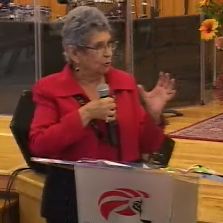
Author
Olga Martinez
Summary: Dr. Olga Martinez speaks about the importance of interpersonal relationships in leadership. She defines leadership as influence and relationships as the mutual sharing of a life. She emphasizes the need for reciprocity in relationships and for both parties to contribute in order for the relationship to develop. She also notes that a significant relationship goes beyond behavior and actions and involves touching the spirit of the other person. A leader can keep their spirit open by having a good relationship with God and being honest and sincere. Forgiveness is also important in keeping the spirit open. Martinez explains that in a relationship, a third entity is created, and the focus should be on changing the relationship rather than trying to change the person. She gives an example of how even a simple interaction with a stranger can involve touching their spirit.
In leadership, there are different types of relationships, including cooperative, consummatory, and a combination of both. It is important to define the limits of intimacy and the areas of a person's life that need to be covered. Love, respect, trust, generosity, and understanding are crucial elements in any interpersonal relationship. Love in leadership means focusing on others and being concerned, kind, sympathetic, and forgiving. Relational principles such as perspective and exchange are also important in leadership. Nabal was an example of what leadership should not be, while Abigail was an example of a leader who was kind and had a broader perspective.
The passage discusses the principles of leadership, including the importance of caring for people and supporting their growth, recognizing their intrinsic value, and showing respect, recognition, acceptance, and trust. The author emphasizes the need for leaders to focus on others rather than themselves, and to earn respect through their actions, including performing well, being punctual, and maintaining consistency in their beliefs and actions. The passage also urges leaders to promote respect and trust in their teams and to balance their responsibilities across all areas of life.
Trust and generosity are important qualities for leaders to possess in order to build strong teams. Trust is developed through reliability, responsibility, loyalty, fidelity, credibility, seriousness, and predictable responses. Leaders can build trust by being approachable, creating the best in people, investing time and information, giving affection and support, and cultivating relationships. The principles of generosity include the garden principle of cultivating relationships, the one hundred and one percent principle of finding common ground, celebrating the triumphs of others, and adding value to relationships. Healthy relationships add value to individuals and make them effective.
The key to healthy relationships is adding value to the other person, having a clear vision and understanding of responsibilities, and following relational principles such as listening and association. Conflict arises when these elements are not worked on, and it can be resolved by identifying the problem area, seeking God's revelation, and prioritizing reconciliation. The initiative can be taken by anyone, and asking for forgiveness and extending grace can bring about genuine reconciliation.
The speaker discusses the process of confrontation and forgiveness in a biblical context. They emphasize the importance of prayer and separating the person from the action during a confrontation. They also suggest being specific, avoiding sarcasm, and focusing on the positive when criticizing a person. The speaker suggests calling mediators if a conflict cannot be resolved through confrontation and discusses the qualities of a good mediator. They provide steps for mediation, including identifying points of conflict, clarifying, and closing areas of agreement. The presentation includes a bibliography for further reading.
I once read that all of us should aspire and seek to have someone who is further behind our own path, whom we mentor. That we should have someone by our side who is on the same path as us, more like on a level of friendship and sharing, and that we should also aspire to have someone who is further along our path to receive mentoring from that person. So I have the privilege this morning to introduce someone who is in that place for me, someone I consider a spiritual mother, a mentor, even though we are so many miles away because she lives in Guatemala, and I am here, but in the same way with Carolina, the same thing too, Olguita is very close to her and is also her mentor.
So it's a privilege to have people who have taken more steps than one, not only because of age but also because of experience, depth, which is worth clarifying, right? That it is not only because of that, but because of spiritual authority, to go deeper, for example, so that is the person that Dr. Olga Martínez is for me and I know that through... we also receive mentoring through what we read from what we hear. Sometimes one thinks that the mentor has to be there next to one, but it is not like that. One can have a mentor even from a distance and in this case, today, she is also going to mentor all of us in what God has taught her to share. Olguita travels internationally teaching both in the secular sphere, between quotes, and the ecclesiastical. She is an active member of her congregation.
We met her through Carolina León Barrutia, she started an Aglow chapter almost 22 years ago because I know that I was expecting at that time, expecting my baby. My baby is now 21 years old so... so a little later Olguita came at the invitation of Carolina, so from that moment we have had that relationship. So she has traveled here several times. I had the privilege of seeing it in its environment, in its natural environment, in December, in Guatemala when we visited Guatemala. So it's a privilege to have her with us this morning. I know that we are going to be taught and blessed and the Holy Spirit that is in her will also impart to our lives in a special way. So let's pray that this stays there, deep inside, and seals us and transforms us this morning, so welcome Olguita.
Do you know how old this lady is? He just turned 70 years old. No one would, and you know, speaking of the mentoring thing, she works out almost every day: she goes to the gym to work out, nothing, so sometimes a younger one says, oh, get up early to go work out, no, not with me And she does it, so she not only maintains her mind, her spirit with continuous exercises every day, but also her body so that's a good model for all of us to follow as well.
I have had the opportunity to hug some of you and say hello, but not others. So there, instead, receive a hug from me, receive a greeting from me, receive my love and love from my country, Guatemala. And now that you know my age, right? It is the secret of all women. It is evident, but we really thank God that he allows us to reach these years in good health, that he allows us to serve him and that he leaves all of us here with many more to be able to serve. That is the purpose of our life and the purpose that he allows us to reach a certain age serving him.
Father, we thank you this morning for what you have already done in our lives, in our hearts. We ask you to keep doing what you have to do. Father, I ask you that this teaching come out of my spirit united with your spirit, with the spirit of each one of the people and make the changes that have to be made. Father, we ask that it not be just another teaching, but that it really be training that changes our lives, that we can put it into practice. We ask you, Father, to remove all the defenses that each one of us sometimes creates thinking that this is not for us, that we already know, but, beloved Father, today we ask that you really confront us about the things that Maybe we already know, but we have to change. We ask this in the name of your son, Jesus Christ.
We live in a changing world. Today it is becoming much easier to process information, there are increasingly faster and easier communications. There are also very strong climatic changes, there are social changes, there are cultural changes. However, there is something that remains and it is the word of God. And interpersonal relationships are at the heart of God.
If you take the Bible, you will realize that from the first to the last page what God is talking about. He is talking about interpersonal relationships. If we could define the Gospels in two words, in one word we would say, interpersonal relationships. Interpersonal relationships are difficult. They are not easy. They are complex and that is what sometimes gets us into trouble.
Countries have relationship problems. Families, what are the problems they have? Of relationships. And among the churches, what are the problems we have? Of relationships. And sometimes we don't give it enough importance, but it is basic, it is central to our life and it is basic and it is also central to leadership.
So let's see here what leadership is. Leadership according to John Maxwell is influence. And we have relationships according to Don Marshall is the mutual sharing of a life. If we put these two concepts together, we will see that a leader must be prepared to develop synergistic relationships.
What are the synergy relationships? Synergy relationships is the combined or cooperative action that increases the effectiveness of the person. They are those relationships that make everyone benefit in a team. When in a relationship people enter that relationship with the capacity, with the idea of giving, there will be a mutual benefit in the relationship. It's going to be a synergistic relationship. For what reason? Because both benefit. Because? both go with the idea of giving the most they can in that relationship and not of obtaining. When we have synergistic relationships, mutually beneficial relationships, the team grows and we have a healthy leadership team.
The definition we just saw a moment ago leads us to have implications. We saw that a relationship is the mutual sharing of a life. This is going to lead us to have implications. One of them is reciprocity. What do we mean by reciprocity? With reciprocity what we mean is that in a relationship both parties must put something. If both parties do not put something in, the relationship does not develop. Of course, there are times when someone contributes more, not the two or the 4 or 5 that are going to be related must contribute in equal amounts. For example, in leadership, the leader is the one who has the most to contribute in the relationship. But team members also have to contribute.
If there is not this contribution from everyone, there is no growth, the relationship does not develop. Naturally, when the relationship breaks down, everyone also has a part in it. Have you noticed that when a relationship breaks up, the other is always to blame? I, like I don't even exist, I'm a shadow. The fault, everything is the fault of others, me, poor little angel. I did absolutely nothing.
Perhaps there is more of the other person's fault, possibly, but in any relationship breakup there is always a part of us. And likewise, for the relationship to be restored, both need to want it, both need to do their part. Otherwise the relationship cannot be restored, there are no one-sided relationships.
And when we try to see a shared life, what does it mean? Could it be that interpersonal relationships are just actions? No. Notice that in interpersonal relationships there is something much more than actions than behavior. Because what are we? We are spirit, soul and body. And a true relationship, a significant relationship, the relationship that makes us vibrate, the relationship that gives us life, the relationship that builds, the relationship that contributes, is the relationship that goes from our spirit to the spirit of the other person.
And this is sometimes not easy. There are people who have a facility for touching the spirit of other people from their spirit and there are those who find it very difficult. And there are those of us who want to touch the spirit of that person, and we cannot because their spirit is closed. But a leader has to have the ability to touch the spirit of the people.
How do you touch the spirit of people? Well, the first thing is our relationship with God. To the extent that we touch the spirit of God. When you and I touch the spirit of God, it is a relationship, well, we are in ecstasy with the Lord. It is a relationship that enlivens us, fills us with energy, fills us with encouragement. When you finish being in a relationship with God, just like Moses, there is our face, it changes. To the extent that we have that relationship with God, we will have the ability to touch the spirit of other people. It goes together, they are not separate.
What I relate to God is going to manifest in my relationship with people. Ah, no sister, look, I with God, a nice relationship, with the brothers, not much. No, the thing is not like that. If you have a nice relationship with God, you will have a nice relationship with your brothers. And if you have a relationship with your brothers, you will also have a beautiful relationship with God.
How else can the leader keep his spirit open? Opening your spirit to God all the time. When we open our spirit to God all the time we will have an open spirit for other people. A leadership team has to be open-spirited. When the spirit has closed, what happens? We cannot reach people. The person does not allow himself to be touched, the person whose spirit is closed is not teachable. The person who has a closed spirit is like putting up a barrier, saying, you don't enter here.
So we have to work on leadership to keep our spirits open in a good relationship with God by presenting your spirit before God, being totally frank before God. We give ourselves in a relationship when we are totally honest, when we give ourselves totally, when we are frank, when we are sincere. When we do this with God we can easily do it with people. When the spirit is closed, one of the ways that the spirit opens is by forgiving and asking for forgiveness. That is why forgiveness is so important, because otherwise our spirit closes. And the problem is that it is closed to a person but soon it is closing to people and we are walking with walls that do not allow us to relate to each other.
And what is a third entity? What do we understand by a third entity in a relationship? This is very important. For what reason? One person is one entity, the other person in the relationship is another entity, but the relationship itself makes a third entity. And note that many times what we want to change in a relationship is the person, it is that since he does not change, he will not change, unless he allows God to change him. What we have to change is the relationship with that person. That's what needs to change. That is what you have to work on.
To give you an example: sometimes you see very simple couples, without much knowledge of anything and the couple get along so well. For what reason? Because the two are putting everything they are. Perhaps the little, but they are putting everything. So they get a third entity that gets along. But instead, we suddenly see a couple; he with knowledge of everything, magnificent person; she, with knowledge of everything, magnificent person, put them together and you say, but if the two are excellent, yes, separated, but for what reason? Because in the relationship they are not putting anything on their part and in relationships you have to give yourself honestly, you have to give yourself frankly.
And to touch the spirit of a person we don't necessarily have to be intimate with that person. I don't know if you have gone to a store where a clerk appears and you say, here, I'm not coming back. In a store, the cashier growled at me in English and since I don't understand English, I didn't understand the grunts. I couldn't make the purchase. But after 10 minutes I came back and there was another cashier, and with that cashier, look, my spirit touched hers and hers touched mine. And in two minutes we were talking to each other, she told me about her life, I told her what she was coming for, she gave me another discount, she gave me a card and look what the difference was in that relationship. If I didn't know either of them, the transaction was the same, but what happened? She gave herself completely, she touched my spirit, because I was able to touch hers and we both gave ourselves at that moment. And I even invited her to come but she had to work. But that is touching the spirit of the other person.
Relationships also have fundamental categories. What are those fundamental categories? There is a type of relationship that is cooperative, with the purpose of achieving something. Sorry, it's cooperative and instrumental. What do I want to tell you with cooperative and instrumental? That people come together with the purpose of achieving something. They have a goal. Leadership, for example, has a lot of this type of relationship, because there is a team that is there to achieve something.
But there is another type of relationship than consummatory, which is the relationship itself that matters, for example, marriage. Now, it is very difficult for relationships to be either only cooperative or only consummatory. They are usually combined. And in leadership, despite the fact that there is more than the instrumental or cooperative relationship, there are also consummatory relationships, because the relationship itself is also important.
And if we enter the fundamental dimensions, we enter a difficult terrain. For what reason? Because it tells us about the closeness or intimacy between people. Of course, in a marriage there has to be a closeness, there has to be an intimacy. And the question is always, does there have to be intimacy between leaders, does there have to be closeness? Well, how far is that intimacy, how far is that closeness, of course there has to be, how far is it? The leader decides it with his team. For what reason? Because if you want to get intimate with one of the team members and the team member doesn't want to, you shut up. Do you know what the word shute means? That you are involved. Tucked in, he is invading the space of the other. And perhaps it is the leader who does not want so much privacy and those in the group are wanting, so he feels harassed. These limits have to be defined within the team, to what extent intimacy between team members is necessary and not necessary. If a good intimacy can be achieved between all of them, well, excellent, but sometimes it depends a lot on the personalities. There are personalities that you cannot invade, the space is new, like you have to go slowly, little by little.
And here we also see what is called the action and the extension that is also important to keep in mind. This means how many areas of the person's life I have to cover. Yes, in this leadership, depending on what the team is about, I have to cover all areas of the person's life or only cover some. Possibly I don't have to cover your work, or I don't have to cover your studies. It is necessary to define what areas have to be covered in a work team and how far it has to be covered.
And here is also the time factor. Define how much team time I am going to take for leadership. Because from there it turns out that I want too much time, and the problems begin. I want to call his house at any time and the problems begin. So, we have to know how much length of time and how much of the person's life we are going to cover.
In every interpersonal relationship we are going to have several elements. They are there. There is no interpersonal relationship that does not have these elements. Of course, depending on the type of relationship, the elements will occur to a greater or lesser degree, and they are more or less important. But if we examine them we are going to have love. Love you will say in a leadership relationship, does there have to be love? Of course. The Lord gives us a mandate that says: love one another. There is nowhere. Of course, it does not have to be in the same intensity as in a marriage, in the same logical way. But love in a work team has to exist. Love has to be the most lasting thing in a work team.
Respect. Respect in a work team between leaders is essential. There has to be respect. And he knows that respect is one of the most forgotten things out there today. Trust, I would tell you, is the most important element in a work team, between the leader and those in charge, trust. A work team that does not trust each other, imagine. They better go home definitely. Trust in a work team is basic.
Generosity, the one we like the least. TRUE? Because some in all areas, do you know what this is? Yeah? Elbows, because we can be elbows, not only economically. Elbows, even with a smile. There are those who seem to pay to smile. Understanding is what costs the most. Is it easy for you to understand people? Oh, there are people who really cost. And you know one thing, you know what is the most difficult to understand? Oneself. Sometimes you don't even understand yourself, but you do want everyone in the house to understand you. The whole church understands it, but you don't understand yourself. And the day you woke up in bad shape, that day, even your face is ugly and you want the whole church to understand that you are in bad shape, that they don't come near you, that you are in bad shape. Understanding each other is one of the most difficult things there is, but it is essential in leadership.
Let's see then how love should manifest itself in leadership. Love in leadership is basically going to be focusing on others. A leader has to stop focusing on himself and focus on others. The leader who cannot focus on others, more than himself, will not have effective leadership. And the word of God is clear, look at what Matthew 7:12 tells us:
"... So then do with others, as you want others to do with you because that is what the law and the prophets are summed up..."
The famous golden rule. A leader has to have what is called a tall walk. What is the tall walk? Walking low is when the leader treats others, oh, less than how they treat him if he is the leader. A middle walk is when the leader treats the team as the team treats him. But a tall walk is when the leader treats his team better than how he is treated. And that is the walk that God wants for us. That is the walk that he wants in all interpersonal relationships. When in the family we treat better than how they treat us. It is the example that Meche gave in the morning a little while ago. This woman was being mistreated, but when she began to treat her better, things changed, the emotional climate changed. And the leader is the one who will mark the emotional climate of his team. Everyone has an influence, we have already seen it, everything has an influence, but the one who will set the emotional climate is the leader. And he will do it with a tall walk.
What is the content of love? What is the content of focusing on each other? The first thing we have is concern. A leader who doesn't care about his team won't work. You have to set an example because the leader is a walking manual. As simple as that. If he in his team cares about others, the others will care for each other and they will care for him. One of the biggest complaints I've seen in leadership teams is: the leader never cares about me. The leader never calls me on the phone. The leader never visits me if I'm sick.
I don't want to say that the leader has to be there all the time like you are a child, taking care of you. No. But interpersonal relationships happen when we care about each other. And I do believe that we should care about each other, take care of each other. Concern is the mutual care we have for each other. When I take care of her, she takes care of me. If this is achieved in leadership, we will all walk well.
Sometimes we have the excuse, oh, no, if it's serving the Lord, serving the Lord you don't have to be patting him on the back. I believe that taking care of ourselves, worrying, is part of the relationship. Why do I think so? Because God cares about us. Jesus cares about us. God was so concerned that he gave his Son Jesus Christ so that we may have eternal life. And if we want to have leadership in the style of Jesus we have to care about each other.
The goodness. Notice that kindness is relating to each other in a kind way. You know sometimes it's hard to be nice. There are times when we don't feel like being nice. We're not in a position to be nice, yet it's part of the brotherhood. A kind talk... that sometimes we are rude with our words, rude to treat each other in the team, rude to treat each other in the family, and a kind talk, a kind talk will give us a feeling of brotherhood, it will give unity. Notice that God speaks to us in a kind way, even when he gives us the little tugs, he speaks to us in a kind way.
Sympathy. Oh, that leader is really unfriendly. Will have to work. I can't have an unsympathetic leader. Do you have an unsympathetic leader? Yes, they want an unsympathetic leader. That is easy. It is more difficult to be nice, to have sympathy. The sympathy will be given by the actions. When you look at the actions of a person, that is sympathy, it is not so much the physical, or that he is a clown, but rather it is the actions that are going to give the sympathy. And that is basic. If you are a leader prepare yourself. You will have to forgive, forgive and forgive. And if you are in a work team, you will have to forgive, forgive and forgive. You know how many times we cannot handle leadership, or be in a work team if we are not in forgiveness.
Now we are going to see what are the relational principles of love. How can we know, apart from the elements that we have to put into practice, what are the relational principles in leadership so that love is manifested?
The perspective. What is perspective? Perspective is seeing the whole picture. The leader cannot see only part of the situation in his leadership. You can't see just part of the person, the leader has to see the whole picture. Many times Christian leaders only see our little piece. What touches me and my little group, but you know what? we and our little group are part of another group. And that group is part of another group. And we need to see the whole picture. We are not an isolated team, we depend on each other. And when we don't see the full picture, what can happen to us? What happened to Nebuchadnezzar can happen to us. Notice he was so proud that he only saw his little piece. He grabbed the most important people, the most intelligent, with those he stayed and did not see the complete picture of the nation. What happened? God had to work on him and after he was king, he led him to live in the worst way, until he recognized that God was the Sovereign. We have to see the whole picture.
What other principle do we have? We have the principle of exchange. That principle is very simple, difficult to do, put yourself in the other's shoes. If something is difficult it is to put yourself in the shoes of the other. But when we manage to put ourselves in the other's shoes, we will understand the other. Possibly we are going to realize that if I were in his place, I would do the same and even worse. Yes. It is when we censure the rulers, that is, if we were the rulers, what would we be like? Or when we censor the leader, namely, if I were the leader what would I be like? Maybe it would be worse than the one I'm censoring. Putting ourselves in each other's shoes helps a lot.
There are two characters that one is an example of what leadership should not be and the other is an example. There is the case of Abigail and her husband Nabal. Nabal was... I hope he doesn't have any similarity with any husband here, because he was ugly. I mean his attitude, I mean his way of being. When he has to give food to David's men who had been good to his men, what does he do? He does not care. He doesn't want to help them. You have to see what happens to them. He only saw his little piece, nothing more.
But what did Abigail do? Abigaíl is an example of what relationships should be in leadership, and in all kinds of relationships. What she did? She went to give, she went to offer, she took what she had, she went with David, she was kind, she was loving. Because? Because she was a kind woman, she was a pretty woman and what happened? She touched David's spirit and she touched him in such a way and David touched her spirit, she touched her in such a way that she saved all the families of the place. A woman who touches the spirit of people can save her family, she can save the families on the block, she can save all the families around her when she knows how to touch someone's spirit. And look, and she touched him so much that David later married her. Now that part, leave it aside, we no longer enter there.
And here then we have another principle: the principle of charism. Sometimes we say, oh, so charismatic, why? His physique. No, really charisma is caring for people. And a leader has to be interested in people, he has to be interested in people more than himself.
Jonathan supported David to be king. And a leader has to support his people so that they grow, so that they rise up, so that one day he will be his successor. Oh, but sometimes what do we leaders do? That there are none, only those from Guatemala. Do you know what we do there? When someone grows up and is going to remove us from the position, we put them down in some way. And sometimes we are experts in looking for ways to appease the one who is growing in the group, when we already see that this can happen to us, then we look for a way to see how we appease it. For what reason? Because we don't want it to grow.
For a reflection: are you applying these principles in your leadership? Are they manifesting in your leadership? Are they manifesting in your family? Are these elements of love manifesting in mine? That only God can give us the answer. Only God can know and confront us that if we have really been applying this principle of love in our leadership, if we have really stopped focusing on ourselves and focusing on others. If God shows us that we need to make a change in that area, we need to ask him to help us make that change.
How much I am really focused on myself, or how much I really care more about others. Who goes first? me or the others
And now let's get into another of the elements we have here: respect. What is respect? Respect is the recognition of the dignity of a person. And what does Colossians tell us? Look, “…..behave wisely with those who do not believe in Christ, making the most of every opportune moment so that your conversation is always pleasant and in good taste so you can know how to respond to each one….”
My beloved sisters, how is our conversation? Very cute, very interesting. Excellent! They know that conversations are sometimes detrimental, the loudest conversations are those that talk about ideas, they tone down a little when they talk about things, and they go down when they talk about people. What will we talk about the most? Of things, ideas or people? If we are honest, of people. We kind of have to elevate our conversation.
In your leadership team what do you talk about? Of ideas, things or people? If we are talking about people, let's raise our level.
What is the content? In respect, the basic thing is to value the team members and that the team members value the other with their intrinsic value. The intrinsic value that God has given us. In the family we have to value ourselves with the intrinsic value that God has given us. That value that is not removed with anything even if we do the worst. She knows that even if her husband does his worst, the children do his worst, the leader does his worst, her intrinsic value remains as a person. Because it is the value that God gives you.
And in leadership we also have to learn to recognize the value of character. What is character? Sometimes we think that character is, oh, I am very sweet…. Bad character. No, character is something else. Character is doing the right thing when I have to do the right thing. And a leader can make mistakes of things he doesn't know, those are corrected by learning, but the mistakes of a leader due to lack of character, those can be terrible. A leader has to do what he has to do at all costs. Oh, it's going to go wrong for me... Well, it's going to go badly for him, but he has to do what he has to do, whatever the cost, whoever sees it sees it. Know that God is always watching.
Recognition. Among the leadership team is important, it is another problem area always. It's that they don't recognize what I do. They never thank me. Have you heard that? It's that they never tell me how well I did. It is that they are not grateful. Of course, they are not going to thank us all the time, but we do have to thank each other, we do have to recognize what some do for others. God commands us to be grateful, to give thanks to him all the time for what we have, but we must also give thanks to the people who are around us.
When we begin to give thanks for the team we have and the people who surround us, we will realize how beautiful our life is with the people who put us around, how enriching our life is with the people who put us around. Do you know what the problem is? In that sometimes we are good at seeing the defects and not at seeing the potential. And a leader has to see the potential of people beyond the defect. To see the defect you don't need to be a leader, for that we all see the defects. We are bug hunters but seeing people's potential is something else. Knowing how to see what is underneath the person and how far they can be taken and how much they can give, if they are respected, if they are given recognition, if they are given approval. Approval feeds back and in a leadership the good things have to be fed back, there has to be approval. In the house we have to have approval with each other. The mothers to correct, very good, doctorate... to approve the good things of the children... they go through one side and they go through the other. We have to approve.
And acceptance, what is acceptance? In a leadership team, each member must feel accepted, feel that they have a place, feel that they are comfortable there, feel that they are appreciated there, that they respect them, otherwise, imagine working in a team where you do not feel accepted, How eager are you going to work? How will you do your job? Bad. We have to work in the leadership team to accept each other, which is not easy, because we are different. And how nice it is to accept those who are the same as me, but those who are different, there it already costs.
Well, reasons why female leaders don't earn respect. I could focus on two: one of them is that a leader believes that because they gave him the position they are going to respect him. Or because he is older, or because he has gray hair, or because he has spent more time in the Lord. No, respect is earned. And how do you earn respect? We're going to see it. What is the leader's behavior to earn respect?
The other reason why a leader sometimes doesn't earn respect is because he needs acceptance more than respect. And the leader who has then, due to his need for acceptance, to look good with everyone, allows them to disrespect him. And it begins to not separate the limits, to go over the limit.
How do you start to go over the limit in leadership? The jokes. And the jokes are becoming more and more in tone, they are increasing in color and when we feel we are disrespecting each other. Today I have seen that leaders are not respected, they are answered badly. I want to tell you, you cannot answer badly to the leader. Simply and simply because he is the leader. The day you are is something else, but you have to respect the leader. Oh, yes, but notice that he is younger than me. It doesn't matter. He knows less than me that I will respect him. It doesn't matter, it's the delegated authority. He has just entered the Lord and I look how old I am. It doesn't matter, it's the delegated authority.
Notice that in the church there is the pastor and there is the associate pastor who is the son of the pastor. It is for me a young man of 35 years. My son works exactly on par with him, the two of them together, they have laws that they have established, statutes that they have established, rules that they have established, and I have to obey them, I have to abide by what they tell me and if I they say, this can be done, this is done; This can't be done, this I don't do. I have to respect them even if it is my son and even if it is the two that I can see as youngsters, but they are the leaders that God placed over me.
Of course, the leader has to give himself respect. How is the leader going to build respect? Notice that the leader has to do things to build respect. The leader has to start by respecting himself. If he doesn't respect himself, forget it, they won't respect him. How is a leader respected? The first thing you need to do is perform well. You will respect a leader who performs well. We will respect a leader who does not change his convictions. He is not a leader who says one thing today and says another tomorrow. Today it's up, tomorrow it's down. Pure yoyo. In everything he does, in everything he says, that is not a leader we are going to respect.
How else is one going to give respect to a leader? A leader is going to respect himself knows how, when he is punctual, because when the leader is not punctual, he is stealing the lives of the people who are with him. And those of the team have to be punctual. Lateness, my beloved brothers, is taking other people's lives. For what reason? Time is life. And if I make you wait an hour, I take an hour of your life. As simple as that. That is crucial in a work team.
The leader also has to go beyond the perspectives of the team. Because? because the leader is the one who sets the direction. The leader has to go to the future, that is, the leader has to go in his thinking as before, he has to see things as before, he has to visualize what is going to happen before. For what reason? Because by visualizing before the things that are going to happen, you can prevent them.
But imagine that a leader, until the matter is serious, takes action on it. No, the leader has to see things coming and often has to see how he stops them. And a leader has to be successful to the best of his ability, in all areas of leadership: home, work, leadership. Ah, it is that here in the church, I am successful, but at home…. That is deadly. That can not be. There has to be a balance in everything. Here look, ha, but at work... there they almost already took me out. There has to be balance. Life is balance and there must be balance in all things in our lives.
Note that I am very interested in what First Thessalonians 5:12 and 13 says:
“…that they recognize those who work among you and preside over them in the Lord and admonish you, and that they hold them in high esteem because of their work….”
What are you telling me here? He's telling me that we have to hold the leader in esteem, even if he admonishes us. You have to hold it in esteem. And how are we going to show respect? One of the ways to show respect is obedience. There goes the leader, I don't pay any attention to him, I just leave him talking. It is disrespectful and the leader also has to have respect for his team. Complying with what we have to do is a way to achieve respect in a team. Talking to each other politely, if we don't need to yell at each other or say things like that to each other, you know, ….. like that, why do you say it to Juan? hear it Peter. And he says it here so you can hear it like this. Those are disrespectful that should not occur in leadership.
I ask for a reflection: How is respect in your work team? We have to increase it, let's increase it. How is respect in the house? Do we have to increase it? Bring me the towel. Hurry up, it's 6 o'clock!! I told you that running, you come like a turtle. I don't know where I made it up. And when we get to the church, brother, welcome. And at the door again, I told you to hurry up because I'm hungry. Balance. Balance in all areas that we can be people who promote respect. Look, if something has been lost today, it's respect. We speak as we want, we say what we want, we hurt as we want.
We are going to enter another that is not seen there, trust. This is the most important in leadership, very difficult, because look at what trust is. It is the condition through which we become dependent on other people for a result or consequence. And Corinthians 4:2 tells us:
“…now it is required of administrators that each one be found faithful…”
Trust is a choice. You make the decision to trust someone. In fact, you make trust decisions every day from the moment you wake up. You decide to trust whoever is driving the vehicle in which you are leaving. There is the first decision of trust. When you buy something you trust what they are selling you. When you hear someone, you trust what they are saying. It's a choice.
But it is also a relational process. You are not going to gain the trust of your leaders once they got things right. Trust is a process that develops. And the most difficult thing about trust is that it is a risk. When you trust someone, you trusted and if it went wrong, whose decision was it? Hers. It's that I trusted, yes, but who decided to trust? One. Whose fault is it? If we are guilty of one. Because? Because he trusted the wrong person. I would not have seen in that person the elements or the contents of trust, let's see what they are.
The confiability. You know if a person is trustworthy to the extent that you have commissioned several things and it has worked. So you know it's trustworthy. Otherwise you don't know if it's trustworthy.
The responsability. If you know that people are irresponsible and you trust them, what will be the result? Because look, trust cannot be fragmented or the person is trustworthy in all areas, or they are trustworthy in nothing. But it can't be that you have a leadership team that can trust this, like puzzles. No. Trust must be in a group of total leadership, all among all and in all areas.
The loyalty. This yes…. I don't know if you have seen in the other churches how they talk about the leader and then oh, how are you? How I rejoice that you are my leader! Or vice versa, right? Have you heard that?
The other told some people, ah, but how bad do they get along with that person, but he is the first one they invite to a meeting. If they don't like it, if they don't want to see it, it's the first one they invite. Because? Because there is no loyalty. Loyalty is something we have to work on. We cannot be disloyal to the people we work with. We cannot be disloyal. We can't, I've always said that you can't bite the hand that is feeding you. If you are working somewhere, don't talk about the boss. The boss is feeding him. Thanks to the boss, he bought his cart, his little house and we are talking bad about him on top of that. But we would not like it to happen to us, that the person who works with us speaks badly after we are paying and feeding them. We do not like it. The loyalty.
The Fidelity. All this is combined: loyalty, fidelity, are combined. Note that God is a faithful, faithful, faithful God and if you want leadership in the style of Jesus you have to be faithful in the team, you have to be a faithful leader. If you are a middle leader, you have to be faithful to those who are at your head and you have to be faithful to those you have on your team. You have to have fidelity on both levels. It has to be with fidelity on both levels.
Credibility. Do you know what credibility is? If I say yes it is yes. And if I say no it's no. Don't worry, I do it, I do it. And you do nothing. I bring, I bring. And it brings nothing. I took responsibility, I did not bring it but I take responsibility. What responsibility if you didn't bring it? If you made a commitment, you made a commitment, even if you have to do it upside down, sick, whatever, you made a commitment, you made a commitment. You said that you arrived and you arrive by donkey, but you arrived. Yes, that simple. Yes, but come. That is credibility. With the greatest calm he says, oh, I couldn't, look. And leave the leader there, leave the whole team because he couldn't. And look for any excuse that maybe it's even a lie. Because if you are not going to be able to do it, call before, and fix it how you can cover it. As simple as that. Sometimes there are traffic jams, call ahead and arrange how it can be covered. But do it.
And then we are going to be serious. My beloved sister, if you decided to serve the Lord, to be part of a team, you have to be serious. Oh, today I do serve it, but not tomorrow because I'm tired. No. The things in my house…. no, serving the Lord is not a toy. Being in leadership, in a work team is not a toy.
I see that sometimes for work we are serious, for things of the Lord, no. Oh, as it is for the Lord, yes, precisely as it is for the Lord there must be excellence. To work we do arrive on time because there's no way, but to the things of the Lord, no, because it's for the Lord. That can not be.
And predictable responses. If you want to be a reliable, credible person, you have to have predictable responses. I just don't know how he's going to save me. No, the answers have to be predictable. I don't know what he's going to tell me. No, the answers have to be predictable. You have to work on that in your work team, so that everyone who says yes, whatever they say is no. They are reliable, the responses are predictable.
What people trust the leader? Because people also place their trust in the leader. And the leader has that responsibility. Being a leader is not easy. It is very difficult. It can only be achieved united with the Lord. What do people trust in the leader? Well, at the trial.
You know your leader is sane. At least he thinks so. He thinks he knows where it's taking him, what the goals are. Because if you don't think your leader is sane, well, we're going wrong, right? You know that your leader is a person of integrity in all areas of his life, that he is frank, that he does not tell you white lies. Do you know what the white lies are? social lies. He knows that he is a truthful leader, that if he told him one thing it is because he is. What are you going to trust in the leader? In perseverance. You don't want a leader who at the first change, when things get ugly, runs off and leaves everyone on the team and now what do we do, who do we put.
You have to develop those characteristics if you are a leader, you have to develop your character. We already talked about this. You have to be honest. And an honest leader, well, is a leader who does not have a false image, that since I am a leader I am perfect, look, I no longer have mistakes, I no longer have emotions, I no longer feel anything. We leaders have a lot of mistakes, we make mistakes, we are people and we can have a false image. We even walk differently because we are the leader. No, that can't be, it can't be.
Those are the characteristics that a leader has to develop. Because? Because your team expects that.
Let's see how we can build trust in a group. Confidence definitely starts with yourself. That's where the key begins. We already saw how we can be a reliable leader. A leader also builds trust when he is approachable. Before I could speak to the brother, to the sister, now not because he is a leader, I have to make an appointment. If I greet him, he never gives me the appointment. I can't talk about it there in the team because now he is the leader. No. The leader has to be accessible.
Note that there in the Bible we have an example of accessibility that I really like, and that is the case of Rebeca. I give you examples of women because we are women. When they ask her for water to drink, what does she do? She is accessible and she gives the water to Abraham's servant, she gives him the water, and she not only gives water to him but she gives water to the camels. But we don't want to walk a little more to be accessible, but exactly what they ask of us.
No, a leader has to walk the second mile. Oh, they asked him for the shirt, he has to give the sack. A leader always has to give more. It has to be accessible. Of course, you are not going to be calling the leader at home and at work, every half hour, because either. But balance for things, but we do have to know when we are accessible to serve people.
Another very important thing to build trust is to create the best in people. If you believe, the leader who believes the best in his team will bring out the best in his team. Because? Because that will be their internal dialogues. What are the internal dialogues? It is these thoughts that are here in the head all the time. And now, I know that you have some. Those internal dialogues of what you believe about people are going to be the result. Create the best in people. It is that I can be wrong, it can be wrong, it is a risk, but believing in someone gives good results.
For a reflection: How is the confidence in your team? Has he built it? Do you have to build it? What changes do you have to make? Remember, a team in which there is no trust is not a team. As simple as that. Because? Because we're all mistrustful of each other, we don't trust people to get things done. We don't trust. It can't be, trust has to be built.
And let's see now, the generosity. It is the investment we make in others. How are we going to invest in others? Caring for each other in order to stimulate us to love and good works. How can we be generous? Look, in time the leader has to have time for the work of the Lord, the team has to have time. It's just that I'm running because I don't have time, and we do everything running. In the Lord there can be no running. The Lord is not running away from us. Do you give us time or do you have to chase it? I do not see. The Lord is there. So, the most we can do for him is to give him time, well, if he doesn't ask us for much.
You have to give information. There are leaders that how they know and do not teach anything. Because? Because if the other knows a lot, he will know more than me. If you want to be transcendent in leadership, teach, leave followers. That is the transcendence. You die and the others follow. Because I tell you that we are all going down that path. So it is that very leaders but that is the little path.
Keen. Look, a leader has to give affection. When a leader gives time, information, and affection, what is he giving? He is giving support, and when he gives support, the group grows and there are good relationships.
And now let's see the principles of generosity. The first principle we have is the principle of the garden. There we have Moses and Joshua. Moses and Joshua were together for 4 decades. They gave each other time, supported each other for 40 years, through thick and thin. Relationships have to be cultivated. They do not give themselves, you have to water them and water them every day.
We have the one hundred and one percent principle. What is this principle you will tell me? I have nothing in common with my team, we are all so different. Find the one percent you have in common and give that one percent all your strength. I have nothing in common with my husband. Find the one percent you agree with and give it your all.
Look, Peter was defending the inclusion of the Gentiles that God made. Peter was admonished because he was preaching to the Gentiles, and he was preaching to Cornelius. And what did he do when they confronted him? He did not start fighting, he looked for the point on which he agreed in common with the religious, which was that every person who truly had a believing belief in Jesus had the Holy Spirit. That was the common ground, and that was what it took for him to come into unity.
The celebration. Do you know where a true relationship is tested? When you're glad something good happened to you. But when he's really happy. Oh, how good what happened to you and deep down, Lord, why wasn't it me that this happened to? Do not believe, that is not easy sometimes. It is when you truly rejoice in the triumph of the other, when you truly rejoice that God gave the other what you wanted for you. That is where a true relationship is measured.
Sometimes two people are praying for the same thing. God gives it to one and not to one. It is not easy to be happy. But there the true relationship is proven. Do you remember the case of Saul and David? David had defeated Goliath, he had defeated the Philistines, they were going back home and when the Israelite women begin to say, David killed ten thousand, Saul only killed a thousand, what did Saul do? He got angry, he got angry, he started chasing him. Because? Because he couldn't celebrate the other person's triumph.
And finally we have understanding. Every relationship must add value to the person. Don't take away value. A relationship is meaningful when you relate to the person, you value the person, you add to the person, you grow the person, you bring out the best in the person, you make the person effective. Those are the healthy relationships God wants for us. That's why he says that two are better than one, because if one falls, the other holds it up.
And let's see the content of understanding. Adequate communication. A leader who does not have adequate communication with his work team does not work. What do I understand by adequate communication? A communication that is clear, concrete, direct, that can give orders clearly, with certainty, concrete. Not that I tell you, because I believe for... a confusion. That even when you give an address they send you here, and then there and then...
The other day a person gave him an address to get to my house and told him, look, you come through a bank that is now such a bank, and before it was such a other, and before it was another and then you will arrive at another bank, that now is such a bank and that before it was…. Imagine that person, he never came to my house of course. He's still looking for the banks.
Communication has to be clear. The vision has to be clear. You have to have the vision of what you are doing to convey it clearly. If you do not have it clearly, you cannot transmit it to the group. Everyone has to have the vision.
Everyone must know their responsibility. It's just that I didn't know it was my turn. Have you heard that? It's just that I thought it was up to I don't know who. It is that I did not know that I had to do it. We have to know our responsibilities and we have to know what we are doing. If you are in a work team that does not know how to do what you have to do, learn it. As simple as that.
Look where you learn it. Find a book. Get on the Internet. I asked for. See what it does and learn. But do it right. Do it with excellence because it is for the Lord, not for anyone else.
And now we are going to see the principles. Please listen, listen, listen, listen. Do not speak before the other has finished. Do you know someone like that? one is in the middle and they already answered. You go in the middle and they put the rest of the sentence on you. That is not listening. Do not listen, listen, listen is to go beyond words, it is to enter the person's heart, it is to enter the person's spirit, it is to enter the person's intentions, it is to put myself in the other's shoes. All that is listening.
Do you want good relationships at home? Listen. It's that I get bored. Listen. It's just how my husband talks. listen to it. Do you want good relations with leaders? listen to them. Because if we like to be listened to, that's nice.
The Asociation. Look, in a leadership team we have to be together because if we work together we are going to have good results. There I am not alone, we are all associated. And we should rejoice in the leadership team just by being together. Not because we have to work. Just by being together there should be joy. For what reason? Jesus has joy to be with his church. And the best relationship we have is the relationship with Jesus, it is a relationship of joy and that is how the relationship with each other should be.
Now I am going to ask you to stand up a little. We are a little behind but we will try to overtake. I'm going to ask you to stretch a little. We are going to do a little Christian gymnastics, you say, sometimes I am with Christ above, above. Touch the ceiling. Touch the ceiling. Touch the ceiling.
Sometimes I am without Christ, down, down. Come on, get down, to the ground, to the ground. Arriving, arriving But since I don't like up and down, up and down, I better stay up, up, up, up. Now sit down.
And I'm going to give you two, three minutes so that you and the person next to you can tell you about everything you saw here, what do you think your leadership is doing very well, or what do you think your leadership needs to work on? . And if you are not a leader, well, comment on what you think your house is doing well or what things need to be built. Do the exercise because this is going to give us a little self-revelation of how we are. Try to do the exercise.
Switch with the other person so that it is reciprocated. Alright, let's continue. We still have a little bit ahead so as not to leave this part unfinished.
And then we will see what harms a relationship. Logically, a relationship will be harmed when these elements that we saw are not worked on and when the relational principles that we saw are not carried out.
So, the relationship is going to be damaged, it may be that it is damaged in the area of love, in the area of trust, in the area of respect, in the area of generosity or understanding. Identifying the problem area is good because it is in that area that you have to work, and you cannot substitute one area for another.
You will tell me, my team is bad in the area of love, but we are good in the area of trust. No, you cannot substitute one area for another. All areas have to be built. What happens when there are problems in some area? Well, the conflict comes. The conflict simply and simply I would say that it is a disagreement. In a word, a disagreement between interdependent people, because of course, for there to be conflict we have to be interdependent.
When there is conflict we can do many things. It's one thing to ignore it. Nothing happens here. Here everything is fine. Deny the conflict, sister, I see that your team... No, nothing happens here. Then in his family, no, no, no, all good. All upside down but we're fine. Sometimes we run from conflict. I have a conflict in the church, what do I do? I'm going for another. Go to another to have a conflict with another and so walk and jump. Or what can you do? Fix the conflict of any kind. Deal with it God's way.
We have different levels of conflict. Number 1 is the easy one to resolve and that is where conflicts should be resolved. Because? Because there we are still really talking to each other, we want to resolve the conflict, we are frank, things are fixed by talking. If we let number 2 pass, then we are going to enter into disagreements.
Now the disagreements, the communication is no longer so much, we no longer speak so frankly. We are already half hypocrites, right? We greet each other like everything is fine, but not everything is fine.
If it continues its course, there is a breakdown in communication and the solution is more of a problem. And if we continue we become antagonistic people. And the last level of the conflict is when then I better go. And I run away and leave the work of the Lord thrown away. The work of God cannot be thrown away. Not because we are irreplaceable, you don't, someone else picks you up. So. Perhaps with less knowledge than you but with more heart to serve the Lord.
So now let's see the stages of the conflict because look, the conflict does not arise like that out of nowhere. The conflict has stages that can be seen in the Battle of Hai. Look, in the battle of Hai, what happened? They thought they were going to face a few and it turned out that they faced a lot and that is what happens to us in the conflict. First is the stage of the symptom. We realize that something is wrong, I kind of see that so-and-so isn't the same with me, like she doesn't greet me the same anymore, like she doesn't come to all the meetings anymore, like it's a long time yet. It is the stage of the symptom. We see that the everyday, what we carried has an interruption, there is a void, we begin to notice the void. I think my husband doesn't get close to me anymore. We start to see a disruption. My children don't look for me so much anymore. There is an interruption.
Then comes the stage of confusion. What will be happening? Have you asked yourself that question? Why is it that so-and-so doesn't come to the meetings anymore? Why is it that he no longer greets me? And so many things, it is the stage of confusion. And in this stage of confusion notice that it is good to do what Joshua did. What did Joshua do? Joshua grabbed the elders, knelt on the ground and asked God what was happening and to give him wisdom to know what he had to do.
But do you know what we do? It is good that you find someone you trust to pray with, but do you know what we do? We look for another to tell it and another to tell it and when we come to feel we already have little teams and little groups. The conflict is there.
And then comes the third stage, the revelation stage. Notice that God did not reveal everything to Joshua, but He did reveal to him what was happening, revealed to him that he had sinned, revealed to him that there was robbery, revealed to him that there was disobedience. And when we ask God for a revelation of what is happening, notice that God reveals. And you know, God knows what he reveals to us sometimes? That the other person has personal conflicts, that the other person is going through financial difficulties, that the other person has family problems, and that perhaps the one who doesn't greet me or the one who doesn't come has nothing to do with me. But I personalize everything, since I am so important, I look like a two-year-old child, everything revolves around me. And maybe the person… and that is revealed by God.
So, reveal yourself to be. If the person has conflicts, problems, what am I going to do? I'm looking for her to help her. As simple as that. What did Joshua do? He went with Achan and confronted him and when Achan tells him, yes, I have stolen, I have hidden everything I stole there, well, then Joshua does what God had told him, right? Which was to burn it because that was the law.
But what do we do when God reveals things? Because God can also reveal to us that the problem is ours, that the ones who are in conflict are us, that the problematic ones are us, and the ones that are not doing well are us. So there the conflict can be fixed easily. Perhaps by looking for the person, by talking to him, by changing his attitude. He doesn't greet me, he greets me. She doesn't greet me the first time, I greet her twice. She doesn't greet me twice, I greet her three, on the fourth she will greet me. And the thing was fixed. Sometimes the conflicts are simple, sometimes the conflicts are misunderstandings. It's that simple, right?
The other day a person told me, there to the place where I am going to swim, are you angry with me? No, I tell you, why? It's that since you're not in your locker where you came next to mine. Yes, I tell you, because mine was ruined. They changed my place because the plate was ruined from so many things that I put in the locker. But she already thought... but if she doesn't tell me, what happens? Oh, she's angry with me, what will it be? What have I done? And there one begins to doubt, one begins to speculate, to assume things. And if you make assumptions, you act on the assumptions. And when you feel that there is a distance that could have been fixed by asking, what's wrong with you? As simple as that.
Let's see then how to solve some conflicts. Matthew 18:15 is very clear:
“…if your brother sins against you, go and rebuke him alone. If he listens to you, you have won your brother…"
That is, go and talk to the person to reconcile. I think that the first thing that has to be is reconciliation, because people are reconciled, not problems. First there has to be a reconciliation. It is a priority because if we let it go for a long time, what will happen? The heart hardens, the problem grows, there are more triangulations, that is, more teams, of some yes and others no, comes the root of bitterness. God does not want us to have a root of bitterness.
So who takes the initiative? Look, it doesn't matter who takes it. If you have to take it, take it. If it's the other person taking it, take it, but have someone else take it. No, I hope you come. Do it in private. Look, sometimes asking for forgiveness, forgiving us sometimes fixes things, taking the conflict to the cross, forgiving us, reconciling us. God does not want us to be without reconciliation. When we ask for forgiveness, the grace of God comes down on our lives.
It's that I don't feel like it. Look, we know that it is not a matter of desire. I once went to ask for forgiveness almost without wanting to, without wanting to do it, in obedience to God and at that moment, look, God touched my heart in such a way that I was already genuine because what God wants is obedience.
Now, sometimes if we already have, apart from the fact that we reconcile, sometimes it has to stay there. But there are times when the problem is greater, there are times when you have to fix work situations, you have to fix life situations, and sometimes you are going to have to confront someone. Now, sometimes the confrontation can be done the same day we reconcile. Sometimes you can't. Sometimes a one-sided process is needed. What do I want to say with this? God sometimes needs to work in our hearts and in our lives unilaterally, he needs to show us where we fail, he needs to show us our emotions, he needs to show us the mistakes, he needs to show us the defense mechanisms we are using.
Sometimes it's not things that we forgive ourselves and live happily. There has to be a process for rebuilding the relationship and God is also going to work on the other person. If we are guided by the spirit of God at the time we do the confrontation, it will give results. Because? Because we are guided by the spirit of God. God has also worked on the other, not just on me. In the confrontation, what we must try is to fix things because if you and I go to the confrontation, I am going to show you that I am right. I'm going to show her that I'm more mature, that's why I went first. Better that we go to the confrontation because it is not for that. You have to go with the desire to find each other and that if God put us together we will find the way to go together, me with my defects, the other with his defects, but we will sometimes find where we can give each other arms and walk together to do what we have to do, what God has commanded us to do.
And then in the confrontation let's see the attitude is basic. I have to go with the attitude of meeting the other. And the other has to go with the attitude of meeting me, of looking for the path together. That's basic. If we don't have that attitude, things won't work out.
And let's look at some guidelines for confrontation. The first thing to do is pray, pray and pray until God says go. Separate the person from the action. How difficult is that! When we have a conflict with someone we see the whole person as black, the whole person we see as horrible, the whole person we see as bad, the whole person we see as bad. ……………………………… (inaudible) you have to separate the person from the action.
Talk, don't attack. It is that I am going to tell him…. no go Go talk, not attack personally because then we already attacked the person as a person because we already mixed everything up. That is not easy. What else do we have to do? Deal with a single issue. Those of us who went off on a tangent, right? We are talking about what happened an hour ago and we started talking about what happened 10 years ago, what happened three months ago, what happened 5 months ago and that becomes a….. please, you have to be specific. We are talking about this, about this. What do you mean with this? What are you trying to say? Be specific, not generalities, that we don't even know what we're talking about.
Have you had conversations like this? he doesn't even know what he's talking about. Avoid generalities. Look, don't say, you always do the same. You never listen to me. Never such a thing. All life... that's not true. We are exaggerating. And when we say that, there is defense. Tell a person, you never listen to me and if you never listen to them, you are going to listen to them even less now. You bind yourself.
Avoid sarcasm. Look, something happened. Avoid sarcasm. Since they are not telling us what we want to hear, sometimes we start to laugh like that, sarcastically, with disdain, ah, because gestures speak volumes, a certain smile, we begin to subdue our little foot.
Clarify, if you need clarification on things, ask for clarification. Explore if you need to know more. Extend, ask to be extended, if that is the confrontation. And please listen. If you are not right, admit it and if you are, shut up, don't go saying, I told you. You know that, right? I already knew.
And if you want to criticize the situation, present it as a suggestion, not as a criticism, as a suggestion. And when you have to criticize a person, first focus on the positive, then criticize by seeing the error as something that can be fixed and end by valuing the person.
Here we have the biblical case of Nathan and David. Nathan had to confront David, but how did he confront him. First I had heard the voice of God, I knew the problem well, I knew the root, because sometimes we want to confront people and we don't even know the problem. Somebody told us by hearsay. No, he knew the problem, he knew the root of the problem and he knew the consequences of the problem, he knew well and had heard the voice of God before the confrontation.
When is the time to call mediators? If the conflict was not settled with the confrontation, let's call mediators. The word of God says so in Scripture.
Qualities of a mediator. Note that not everyone can be a mediator. You have to have empathy with both sides. It has to be impartial because otherwise it will go to one side. It has to be professional, I would call it maturity in the Lord. Do not call someone who met the Lord last Sunday as a mediator. And have confidentiality. Ah, look, this is key. Tell me what happened in there in the confrontation, but you tell me in detail. You cannot tell anything either with details or without details. I mean, I'm going to tell you a little but don't say anything. No no no. He knows what he is going to say, well, he also tells the other not to say anything. Everyone knows them except the one confronted.
There are two types of mediators: a passive mediator and an active mediator. What is the passive mediator? The passive mediator, as its name indicates, acts little in the mediation, more than all the passive mediator what he has to do is for the other two to meet, but the communication between the two parties is direct, because one communicates with the other. The mediator, more than anything, guides how the communication between one and the other goes and facilitates it, and holds meetings together.
Now, the active mediator already takes more part in the mediation. The active mediator and sometimes what he does is what one said to speak it so that the other listens. It is already taking as a more direct part, it already serves as a communication channel. In addition, the active mediator already has to know well, well, when to ask, when to press, when to extend, when to conclude. The active mediator already has to have more qualities.
And the active mediator usually first meets with one party and then meets with another. And it doesn't matter how many times you need to meet with A and how many times you need to meet with B, until you think the time is right to get them together. And it doesn't matter how many times you have to put them together.
Then we have here the steps for mediation. If you are going to be a mediator, please gather all the information, don't go with what you were told and what one of the parties told you. You have to identify what the points of conflict are. As, sometimes, what happens is that it has gotten so big that we no longer know where the conflict started. Since we are neither frank nor honest, not even with ourselves, we don't even know where it started. So, identifying the points of conflict is not easy. You have to ask questions, you have to know when to ask, how to ask to go deeper. You have to make sentences with your words. The statements have to be faithful, they cannot be interpretations. You have to repeat key phrases. In a confrontation there will always be key phrases, key points that the active mediator has to know. You have to clarify. You have to look for alternatives. Remember that we are going to work things out.
In the passive mediator, the alternatives, the solution, are sought by the two people confronted. Here the active mediator also looks for solutions. He proposes to both parties the solutions. And you have to close areas of agreement. There is already an agreement in this area, let's close it. There is already an agreement on this aspect, let's close it. Agreement on this other aspect, let's close it. Agreement here, let's close it. They are close areas of agreement.
And here to end this part for today morning, here is the bibliography that I used for this presentation. You can consult all these books, verify the veracity of the information, expand it, increase it and use it in the way you consider convenient.