Classic Sermon #6057: Spiritual Judo
Author
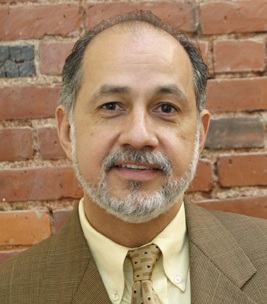
Dr. Roberto Miranda
Summary: The passage from Matthew 5:38-48 speaks of using spiritual judo to overcome evil with good. Judo uses the momentum and aggressiveness of the opponent to defeat them, and the same principle applies to using the aggressiveness and evil of others to neutralize and defeat them. The resistance to this principle comes from our natural intuition and individualistic view of life, rather than seeing ourselves as part of a network of relationships. Understanding this network of relationships allows us to practice the principles of love, forgiveness, and harmony in the face of conflict and aggression. The principles of spiritual judo can be applied to situations such as suing for a tunic or being compelled to carry a load, by using the opportunity to go above and beyond and show love and generosity.
In order to understand and practice the principles that Christ teaches, such as turning the other cheek and going the extra mile, we must see ourselves as part of a larger system, such as a family or community. The actions and reactions of each individual within this system affect everyone else, and thus it is important to approach conflicts with a sense of unity and meekness, rather than seeking revenge or trying to solve problems unilaterally. By doing so, we can avoid damaging relationships and the name of God, and instead bring about blessings and harmony.
Dr. Roberto Miranda shares a story about a misunderstanding with a musician, Juan Carlos Alvarado, and how he and his team used the principle of "spiritual judo" to resolve the situation and bring glory to God. He explains that the world operates on the principle of retaliation and exploitation, but Christ established a different principle of overcoming evil with good, hate with love, war with peace, and hurtful words with silence pregnant with spiritual force. He encourages listeners to live by these principles and trust in God's provision and protection.
(Audio is in Spanish)
The word of the Lord says there: "... you have heard that it was said, an eye for an eye and a tooth for a tooth, but I tell you, do not resist the one who is evil, but rather, to anyone who strikes you on the right cheek, turn the other one also, and Whoever wants to sue you and take your tunic, give him your cloak as well. And whoever compels you to carry a load one mile, go with him two. To the one who asks you, give. And whoever wants to borrow from you, do not refuse it. You have heard that it was said that you will love your neighbor and hate your enemy, but I tell you, love your enemies, bless those who curse you, do good to those who hate you, and pray for those who mistreat you and follow you so that be children of your Father who is in heaven, who makes his sun rise on the bad and good, who makes it rain on the just. Because if you love those who love you, what reward will you have? Do not the publicans also do the same? And if you greet your brothers only, what do you do more? Have not the Gentiles likewise? Be ye therefore perfect as your Father which is in heaven is perfect….”
The Lord has been speaking to me about the need for us to meditate on those truths that sometimes we tend to leave in the background in our desire to seek the power of God and to seek the glory of God in our lives, we seek sometimes the most striking and spectacular things, and we forget those simple things that have to do with the attitudes of our hearts, which have more to do with the being of the Christian life than with the doing of the Christian life.
Because brothers, if our relational life is not right and is not pleasing to God, it does not matter how many great things we want to do and how many prayers we raise before God, how many times we fast. What enters us through one side must also escape through the other. Many of the defeats suffered by the people of God, at any level, be it the family level, the marriage level, the church level, the ministry level, I believe, come from that flaw that exists in our character and those areas of our life that are not dealt with by the Lord, and those attitudes and that way of relating to each other, which are not pleasing to God and therefore allow the satanic principle to operate in our lives.
And we have to learn both offensive and defensive techniques, and that is why I like to take out a portion of my sermons every year and dedicate it to reflect a little on that slightly more subtle dimension of the Christian life.
I want to talk to you about spiritual judo. Have you ever heard that expression? spiritual judo? Judo is one of the martial arts. I'm going to talk to you a little bit about that. I believe that the Lord Jesus Christ in this passage about love towards enemies and overcoming evil with good was speaking about spiritual judo.
I remember last Sunday we were talking about bearing each other's burdens. And I was saying that in order for the church to be a truly healing community, and for the family to be a healing organism, and for us to be healing individuals that God can use to channel His grace to others who are in need, we have to endure. the burdens of one another as I spoke of Paul who said, my children, for whom I travail until Christ is formed in you, I told them that in this way we each have to travail one another the others until the purpose of Christ and the personality of Christ is formed in each one of us. Unfortunately we spoke, many times churches are not that restorative place, as Paul said, where there is space for God to work and so that sometimes we make mistakes and fall, and then some of us lift up others and there is that restorative intention. As the Apostle Paul said, if any of you falls into the trap and is caught in some fault, you who are spiritual, he says, restore with a spirit of meekness, looking at yourself, lest you also be tempted by the same as the another fell. There are some principles that we elaborate, that for God to heal and restore and fulfill his purpose in the life of the church, of the family, there must be people who assume a little of the burden and weight that the other person carries. . And that has to translate into patience, meekness, forgiveness, enduring the inconsistencies and inaccuracies and the sins of others in what Christ is developing his purpose.
I used to say that the church is a hospital, that in a hospital there will be a manifestation of illness. We are all sick to one degree or another, so for the church to heal there has to be an atmosphere of tolerance and love and patience. I believe, in the same way, that in order for there to be channels in the life of the church, of the family, at work, in the community, so that the grace of God flows and is manifested through them, there must be a spirit of meekness and there must be that spirit of which Jesus Christ speaks of spiritual judo.
I am going to explain to you what I mean by that. Whether you look at judo itself in its pure form as a sport or as a martial art, judo establishes as its overriding principle the use of the opponent's strength against you to the advantage of the other opponent. That is to say, that is the way in which, according to judo, a much weaker person can defeat a much stronger person. Use the strength of the enemy and use his strength superiority against and that allows there to be a victory, use the momentum and aggressiveness of the other to defeat him. In a case sense, not resisting it but letting the momentum carried by the individual make him stumble and defeat him. It is a mystery, in a sense, it is a paradox. Judo uses paradox to gain victory.
And Christ speaks in this passage precisely of that type of dynamic in which we use the aggressiveness and the violence and the evil that is in the other, and instead of opposing ourselves head-on and standing up and trying to oppose force against, we use the force of the other. enemy to in a sense defeat and win. Of course, my words put the words of Jesus Christ in a context such as military or war, although Christ here does not treat them in this way, but I believe that when the Lord speaks of running the second mile, or of not resisting those who ask you for your cloak or who asks for your tunic is using situations that are potentially in conflict so that we can then use the principles of the Gospel, the principle of love and peace and forgiveness to neutralize that aggressiveness, to defeat it.
Look what Romans says, chapter 12, verses from 19 to 21, it says:
“… Do not avenge yourselves, my beloved, but leave room for the wrath of God because it is written that revenge is mine, I will pay, says the Lord. So if your enemy is hungry, feed him, if he is thirsty, give him drink, for by doing this you will heap fiery coals on his head. Do not be defeated by evil but overcome evil with good..."
I think that there, in this passage from Romans, this idea of what we are pursuing in a sense is clearer. I don't think that the Lord Jesus Christ was talking about letting us walk all over us, or letting us abuse or simply being victims that people do whatever they want with us. The Lord was teaching us how to obtain victory in situations of conflict and war rather using principles of light instead of principles of darkness. The Bible says that our weapons are not carnal weapons, our principles are not principles of carnal warfare but of spiritual warfare. We fight with weapons that God has revealed to our lives, with attitudes and behaviors that achieve victory but without attacking, harming, offending, or destroying our opponent.
And I think that this neutralizes the idea among many who have read this passage and who have rejected it, because we assume that what Christ was saying is that we just become victims, that people trample over and over again. I do not believe that there is a Biblical principle that more assures a victorious life and a life of dignity and profit and progress than this principle that Christ has established here.
The resistance to this principle, I would say, often resides in the fact that it goes so much against our natural intuition, the ideas that we have about how human life and human relationships work, this principle of Christ's love towards others. enemies is so counterintuitive, so contrary to what we understand as the way we should treat others that is why we sometimes resist the idea of practicing it.
It comes, I think, in part from seeing life as a disintegrated and atomized form. Each element, each individual for its part, each person for its part instead of seeing human life and human relationships as a system, as a network of relationships in which we are all located. Right now I look at this congregation and I see invisible threads that go from one person to another and there is a network of relationships between us as a church. If we could see this place with the eyes of God we would see invisible threads and if we looked at it from above, from the top of the roof we would see downwards a luminous network that goes from person to person and establishes points of contact between all of us who are here. and it constitutes us in a system of spiritual, emotional, physical, communication relationships, etc. all this, we are not, it says out there, no individual, no one is an island, no man is an island there is a saying in English. No human being is an island, we are all part of a continent, we are all part of a network, of a system of relationships.
And precisely I believe that the fights and the struggles and that aggressive way in which many of us treat each other comes from not understanding that sense of communication and system that unites us all in a single unit, in a single family. And I believe, brothers, once again, that in order for the love and harmony of God to reign in a church, we have to understand each other in that way. Otherwise, the purpose of God in the life of the church will not be given. What he sometimes finds least in the church is that spirit of bearing each other's burdens and restoring the fallen.
And I tell you, brothers, that what reigns the least often in the life of the church is the spirit of loving the one we perceive as our opponent and that is why many churches divide and break up and break up, and I believe that the problem The greatest of the churches is not so much the attacks of Satan but what is in the human heart that Satan uses to divide and disintegrate that unity that Christ has established among his people.
But I believe that when we begin to see ourselves as part of a system, as all united in indissoluble ties with one another, that what I do here affects everything that happens in the life of the congregation and that my words apparently spoken and in isolation they are going to reverberate throughout the congregation and that the way in which I resolve a conflict with my brother, there in the pastor's office, or over the phone, sooner or later is going to spread its negative or positive influences, throughout the life of the congregation. And when I understand that I am part of a fabric much larger than myself, then things begin to change. It is the way we perceive ourselves.
When I see my brother out there on the street as part of a larger system or when I see myself at work where there are maybe 20, 30, 40 people as part of a system and I am involved within that system and nothing What I do or say will stop affecting the entire system, so things change in the way I act, in the way I react to what I perceive is an attack, or an error, or any act Negative from my brother against. The way I perceive him and the place he occupies in my life, and in that relationship system, that way will determine how I will react.
Let me give you an example, because this sounds a bit theoretical, but I want to apply it to what Christ says here, whoever wants to sue you and take your tunic, let him also leave the cloak; whoever compels you to carry a load one mile, go with him two. We cannot accept that and we cannot practice it and we cannot understand it unless we see that sense of family and unity and system within which we move.
Let me give you the example of marriage, for example, in marriage the sustained conflict, that sometimes cold war that is continuously in marriages or the conflict that arises again and again in marriages that are always in struggle and in conflict and in quarrel, that comes from each one seeing themselves as separate and thinking of themselves as a separate element and not seeing themselves as part of a unit that makes up the husband and wife. That's why when we get married and we come before the pastor and he reads the portion that says, and you will be one flesh and says, I pronounce you husband and wife and now you become like Christ and the church, one thing. That happens to us here, it sounds very nice, but we don't understand the implications of that. So in marriage there is struggle and there is struggle. I say that when the marriage has a continuous struggle, not the isolated struggles that will inevitably arise, but when the struggle and the struggle become the guiding principle of married life it is because at the root when you search and you take everything the foliage, the branches and all the leaves and you go to the root, you find selfishness. That is, each one, the husband and wife thinking in individual terms and not seeing themselves as a unit, as a system that is marriage. So we are not capable of thinking of the couple as a unit, as an organism, but each one is thinking as something separate from each other.
And then when a conflict arises or there is an offense, or something is done that offends the other, the other gets stuck and feels offended and wants to counterattack and wants, in a sense between quotes, to take revenge, either through insults, through silence, through a harmful action to the other. Because? Because the person thinks that what they are doing is not affecting the system, but is affecting the person that he or she perceives as the source of their discomfort, or their pain, or their offense, but they are not seeing the partner as a system in which what I do in that direction also bounces off me and will affect me. When there is this type of operation, one of the two spouses was not thinking that I am doing harm, not to my spouse, but to the couple of which I am a part. What I am doing with my wife is affecting the other system that is the family, which then includes my children. And what we are doing is bouncing off him or her and passing on to the children and from the children to each other and from the children then back to the father or mother who started it all, or the one who reacted, to the one who started it. all.
That is to say, it is something very complex but there is a network of relationships in which each one is affecting the other and if we perceived ourselves as part of that indissoluble network, then things would change. For what begins as an offense by one individual is actually affecting the other individual and the reaction of the other individual is affecting himself, the one who is reacting, and the originator of the offense, and thus is affecting others. And this becomes a self-reinforcing chain, like a record being played over and over again, that pattern gets stronger and stronger and the grooves deeper and deeper, the harder it becomes to escape from that pattern. vicious circle. Because we are not understanding that what I am doing and the way I am reacting is affecting the entire system, but I think that it is only a fight between two people and that my action only affects the person to whom it is directed.
This is not geometry but it is a very small family. Here you have your husband and wife upstairs, come, and here you only have three children. I didn't want to make them too big, here you have a family in this part, a little more extended, father-in-law 1, mother-in-law 2, father-in-law 3 and mother-in-law 4, and then here you have the relationships between these 9 people, each arrow, for example A little arrow goes from the husband to each of the children and to the wife. From the wife to each of the children and to the husband, and from the children to the father and mother and between them as well. Do you understand the diagram? And each one of those arrows means influences that go from one side to the other; the husband affects the wife, the wife affects the husband, the children affect the husband and the wife, and vice versa, they affect each other, and that is the nuclear family system, that is, the house, only father, mom and three kids.
But then there are also relationships between the in-laws, they relate to each other, but they also relate to the family, to the son or daughter of only one. Imagine if I put here 4 or 5 more children with their own family, how complicated that diagram would be, right? But all these people are affecting each other in different ways and what happens in the son above, the first 'h' is going to influence what happens here, because one thing is linked to the other. It is like an electrical connection that the system of the house is all linked to each other.
So many times there is a little son over there who is doing some things, and we believe that what we have to do is take care of that. But where does that problem come from, somewhere it started. And that little son is going to affect the entire family system and so we have to understand, brothers, that when we do something, say something, we are affecting many people around us. When there is conflict, when we let negative reactions rule one small aspect of the family, we are poisoning the whole system. And that system is poisoning me too, because I am only a little piece. So when I react and when I try to solve a problem, a dispute, a fight, I have to understand that I am doing it not only for myself and my spouse but for a much broader level of relationships. Already my actions and my reactions have a much, much greater weight than I could ever think if I see myself only as a little piece isolated from the whole system.
That is why psychologists talk about the identified patient, because many times in the family individual X may be manifesting certain neuroses and certain problems and certain reactions, and then the reactions, we are going to take him to the psychiatrist because a problem is happening for the psychiatrist to cure us But the family has to see how that individual is being affected by the whole family system. The whole family needs healing in one sense.
When my wife offends me or the husband offends his wife, it is not only that she or he is doing that unilaterally, he is reacting to something and the way I react will rebound from her, in the way I act and it will to affect me too. So it is very convenient for me to solve the problem in a way that does not harm her, or me, harm the children, harm the church, the Kingdom of God, or the community.
A stone that I throw into a lake has reverberations that reach the end of the universe, because the universe and human relationships are a whole network of relationships that are very good (...) and that is why we have to be careful how we treat each other. We have to be careful how we solve problems with each other, because we are responsible. Many peoples ultimately, the actions that I carry out will affect me, the way in which I treat my enemy, if I stab him, or if I defeat him as a positive principle of goodness and love, it will to determine the quality of my inner life and emotional health, the way I enjoy life, the way I speak, the quality of person I am, the quality of Christian I am. So it suits me, to defend myself and to have an advantage for myself, I have to work according to the principle of Jesus Christ because the way I react towards my opponent will determine the way I live too.
So when I defend my opponent and look for a non-destructive way to defeat him, I am defending myself because we are both part of a system. Let me give you an illustration of this principle of body and unity that cannot be separated. When we accidentally burn ourselves, someone picks up a hot pot by the handle, it burns and burns. It makes one angry, right? But you don't pick up a hammer and hit your hand because you picked up the hot handle because of how careless your hand was, do you? Because? Because you know that your hand is linked to your arm and that the one who made the mistake was perhaps the brain because you say, what a fool I was. You don't say, this hand is so stupid, I'm going to cut it off so I don't do it again. Because? Because you know that if you hit the hand with a hammer, the pain is going to be felt by the whole body and the whole body is to blame, including the brain that was inside. You say, I was to blame. what a fool i am And that is if he says it right. Others say other things. But the idea is that my whole body and my whole being made the mistake and ultimately grabbed the handle. The hand was simply the point of contact. Because? Because I am a totality, I am a unit.
The same happens in marriage and in the relationship with children and the church. When we see ourselves as that totality that we are all the product of each other, and that we affect each other and that we harm each other in any action, then when we acquire that sense of body and organism and unity The way we resolve conflicts and deal with mistakes we make with each other is very different. I am always part of the problem because I am part of the system and therefore I am part of the solution. And I have to be very careful how I solve the problem because not only am I part of this system here, but I am part of the Kingdom of God and the people of God. And what I do affects the name of God.
When Abraham and Lot had problems Abraham came up and said, the implication was, look, around us are all these tribes, all these groups, you and I are brothers, let's not bring shame in a sense to our family relationship by coming into conflict. We will solve the problem.
When David sinned by raping Uriah's wife, the prophet Nathan told David, you made the sons of God blaspheme. Because? Because there is a relationship between one thing and the other. What David did there in secret affected Uriah, affected God's enemies, affected God, affected David's future generations, everything was damaged.
When Adam and Eve sinned in Eden, all humanity for the rest of history was affected and we still feel the reverberations of that small and private act that was committed there in Eden. Because we are all part of an inseparable community, and the way we treat each other and the way we see each other is going to do terrible damage to the name of God and the quality of life in our family, church. That is why it is convenient for us to treat things according to this spirit of meekness and goodness and healing, that is why brothers, it depends on how we conceive ourselves, in that way, we are going to treat each other .
I am going to use an example, an illustration: the concert by Juan Carlos Alvarado. An operation of this magnitude, you see that people arrive and two or three hours everything disappears. Hours and hours and days and days of preparation in two or three hours everything is finished, and people arrive well dressed and sit down and they don't know that behind all this there is an immense system operating for days and days that has been able to produce those minutes of adoration and praise and joy. And behind all that, brothers, there have been, I would say, dozens of opportunities for the spirit of that concert to be damaged and that in the end what was left was bad feelings among all those who participated. Many very big troubles could have happened in that time.
Now, what was it that allowed those moments of heat and potential conflict to be neutralized and that in the end there could be such a beautiful spirit of harmony and peace and blessing? I am going to give you three moments in which there could have been a very serious conflict. The first was when a few days ago we were notified at the last minute and almost by coincidence that Marcos Vidal, the second singer to come, was not going to arrive. The tendency of one is to say, they have deceived us, they have not told us things as they had to tell us and one reacts violently and insults people or enters into a serious conflict, and damages the whole thing. Because this is how conflicts in the world are resolved. You see? That is one of the principles that when you allow space and place to God instead of you wanting to make the decisions yourself and solve the issues yourself, and seek your own justice you by faith allow God space to be honored, to be blessed . That's spiritual judo and you win the victory at the end and God then fills that space with great blessing. First problem.
Second problem was that when Juan Carlos Alvarado arrived at the place then it was our opportunity to apologize to him. In the long run he himself told me, okay, no problem, let's play with this and the glory of God was felt there. God filled the space. I cannot worry about my own dignity, only little offended, I have to think in terms of the benefit of the Kingdom of God in the long run, how what I do and what I say can affect souls that are going to be saved in the future . Go? That's called thinking systemically, thinking in terms of everyone else. Most of us only think in isolation, which is my turn.
The last thing that happened was that we had called them well in advance to ask if we could make a video of the concert and they had told us that yes, that there was no problem, and when the representative of the firm of discs that record Alvarado's recordings, when they realized that this video was being taken, they called us aside, the firm's representative was there and then they told me, the firm says that this cannot be used. Well, they presented me with a law, what could I do in that case, start fighting, etc.? They were very blunt in their situation. I said, well brothers, look, there were about a few minutes left for the concert. We are not going to fight here. We sent to speak with you and we were told that we could do it and if that's what it is, don't worry. Look, you know, at that moment when I said that, his face changed. I saw it and something fell at that moment and then one of them called the other and they withdrew a little bit from me. And then they whispered something to each other and they came and said, look, we're going to allow 100 videos to be made and you guys do whatever you want with those 100 videos. I said, well, thanks. After a while, about 3 seconds later, the firm's executive says, do 150. As the concert progressed toward the end of the night, the same executive came up and said, look, do as many as you want. Brothers, I didn't have to fire a single shot. The wall fell without even blowing, I wish I had blown even on the wall.
Brothers, what made the difference? The spiritual judo. The one bear the burden of the other at that moment. One assumes the sin that there is in the group or wherever and one understands that at that moment we could not harm the environment, we could not give glory to Satan, we could not enter into a struggle of insulting each other and fighting with each other. That leads to nothing. A little money is taken from anywhere and God is glorified and in the long run God supplies it and God fills it with blessings and God multiplies them.
And I simply use this experience that is there like that, I could give you so many experiences in my marriage, in the relationship with the children, in the life of the church. Brethren, God has put us under a very different system from the one the outside world operates. The world out there only knows the law of retaliation to the fullest, the diabolical principle is the principle of exploiting each other, killing each other, seeking advantages over each other. That's the Darwinian principle of evolution: the biggest animal eats the smallest. That is the diabolical principle of the flesh and biology that governs the universe and behind all that is Satan who is the father of that carnal principle.
Now, Christ has established a totally different principle and it is the principle of overcoming evil with good, the principle of overcoming hate with love, the principle of overcoming war with peace, the principle of overcoming hurtful words with silence pregnant with spiritual force that neutralizes and extinguishes the evil that is in those hurtful words.
Now where is your faith? If you don't believe in a God who intervenes in the smallest things in your life, that doesn't make sense to you. You only believe that life and your victories and your defeats depend only on you, that God is not attentive to the things of this universe, then you will not understand what I was saying. Now, if you believe that God is there by your side, taking care of all things and watching over those who honor him, believing that revenge is mine, says the Lord, not you giving yourself the pleasure of perpetrating your own revenge, then that way you will understand that God has committed to you.
The happiest people I know are the people who learn to live by that principle. I am still, but very, very far from being able to live up to what I myself am preaching to you. Now, I notice that when I have the courage and faith necessary to apply those principles, God always honors and God always blesses.
So brothers, how are we going to see ourselves? Are we going to see each other as an isolated individual, or are we going to see each other as part of a family, part of a wonderful network that God has established? We have to watch out for each other because we have to forgive each other.
I challenge you and myself in the name of the Lord, we are going to live according to the principles of the kingdom, we are going to, as they say, put our money where our mouth is, we tell you every Sunday, we are going to live, We are going to give place to God and we are going to put God to the test. I guarantee you in the name of the Lord that if you learn to use that principle of spiritual judo you will be a much happier and more victorious person on a daily basis. May the Lord bless us.
| Classic sermon by Dr. Roberto Miranda #6057 | Listen | | | Download |