Thrive in Exile
Author
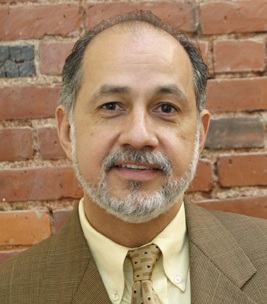
Dr. Roberto Miranda
Summary: The last chapter of the book is a summary that talks about the León de Judá Congregation, the Latino community in New England, and Hispanic-American immigration in the United States. The author discusses how Hispanics who come to this nation have more in common with the pilgrims of the 17th century than their descendants who have turned away from the Christian faith. The author uses Jeremiah Chapter 29 to encourage Hispanics to embrace their new home and become an active and positive influence in the physical and spiritual life of the nation. The author also discusses the responsibility of spiritual authorities to guide the community and develop prosperous, well-managed churches that can effectively serve the Latino community. The chapter ends with God's promise to bless His people with thoughts of peace and goodwill.
The author, Samuel Rodriguez, speaks about the potential for Hispanic people in the United States to bless the nation with their spirituality, racial diversity, family values, and experience of suffering. He believes that the Hispanic evangelical community is a people of the Spirit, who can bring about a powerful revival in the country. Rodriguez encourages readers to spread his message to others, and hopes that the Hispanic community can be a leaven of blessing for the entire nation. He also asks readers to use the envelopes provided in the books to handle any book-related transactions, rather than using tithe or pro-temple envelopes.
The pastor of León de Judá Congregation has published a book to help raise funds for the construction of a new sanctuary. The congregation is encouraging members to sell the book to family, friends, and co-workers for a suggested donation of $20. The money should be placed in an envelope provided with the book and brought to the church, rather than in tithe or pro-temple envelopes. The pastor prays for the success of this fundraising effort and hopes it will also be an opportunity for members to testify about their faith. A link to listen and watch more recorded presentations is provided.
(Audio is in Spanish)
I want to read now the last chapter of the book. It's like a summary to a certain extent. And through it you will be able to see a little of what I trace throughout the entire book.
Again, here I talk a lot in passing about the León de Judá Congregation, I talk a lot about our Church, characters, families of our congregation. The story of the Lion of Judah is here in one chapter, as God started us there in Cambridge, He brought us here to Boston. Many things about the Latino community here in New England, I talk about Hispanic-American immigration in the United States, how the undocumented are being a blessing to this nation. How God is using Latino immigration -among other immigrations- to strengthen the foundations laid by the pilgrims, the Puritans here in the 17th century when they founded this nation.
The title of the book refers to the fact that the Hispanics who come here to this nation, which was founded by the pilgrims, have more in common with those pilgrims of the 17th century than their descendants now that they have abandoned the Christian faith and they have gone after secularism and humanism and have turned away from the faith that these people came here to establish when they came from Europe.
We in a sense are the continuators of that spiritual vision that they founded. We are in this land of pilgrims, but we are also pilgrims, because this is a country of immigrants. We are trying to find our identity as a new nation here in this country that blesses this nation.
So I'm going to read a little bit from the last chapter where I talk about the treasure that we represent for this nation.
I say here: "In Jeremiah Chapter 29, one of the important texts of the Bible, the prophet Jeremiah addresses a letter of encouragement and hope to the people of Israel exiled in Babylon for the sin of idolatry and disobedience.
For centuries God had tolerated the hardness of heart of the Hebrews, had disciplined them through the harassment and invasion of neighboring nations. At times He had suppressed their cover and protection so that they realized that their national security and prosperity depended exclusively on Him and not on their weak forces as a nation. He had sent them judges and prophets to take them out of their crises when they repented and cried out to Jehovah. Like a husband betrayed but willing to forgive again and again, Jehovah gives constant expression throughout the Scriptures to his anger and his sense of offended dignity. On one occasion God orders one of his Prophets to marry an adulterous woman so that he symbolically incarnates his own Divine drama regarding his relationship with that idolatrous and unfaithful people that was Israel.
And I quote here from Hosea: 'The Lord said to me: 'Go, love a woman who is loved by your partner even though she is an adulteress, as the love of the Lord towards the children of Israel who look to other gods.' Finally God fulfilled his centuries-old threat to banish the Hebrew people and take them captive to another nation.
Now we find ourselves in Babylon, exiled and depressed, far from the land they loved so much. They are sure that God has abandoned them forever. Their inequities, they think, have irrevocably separated them from Jehovah's love and mercy. Disheartened, they are inclined to stop fighting, to resign themselves to their sad fate and to assume the self-image of the slave and the oppressed, to assume the role of a passive and invisible community.
In the midst of their plight, God sends them a letter of love and encouragement through the Prophet Jeremiah who has remained in Jerusalem with a weak remnant. He encourages them not to lose hope, not to give up, but quite the opposite: to undertake a normal and dynamic life, to negotiate and prosper and to assume an active role in the community in which He has transported them".
And I quote here in Jeremiah 29: "Thus says the Lord of hosts, the God of Israel: 'To all the captives that I have transported from Jerusalem to Babylon. Build a house' -and that is God's message to us- 'Build houses and inhabit them, plant gardens and eat their fruit, marry and beget sons and daughters, give wives to your sons and give husbands to your daughters so that they may have sons and daughters and multiply there and do not diminish yourselves and seek peace in the city to which I had you transported and pray for it to the Lord for in his peace you will have peace.' That is Jeremiah 29 from 4 to 7.
Now the fact that God identified Himself as the God of Israel, He tells them the God of Israel, Jehovah, goes like this: "This must have given those exiled Hebrews hope. Perhaps Jehovah had not completely disengaged from them after all. Perhaps they could still count on his help and support in that inhospitable land to which they had been exiled". Not only that, but God was inviting them to assume a fulfilling and optimistic lifestyle, to invest in the new land in which they found themselves, to put down roots and trade, to work and multiply. Perhaps most surprising of all, God was asking them to be an active blessing to that enemy nation that had violently taken them captive and driven from their beloved land. God calls them to procure the peace of the city to which he has had them transported and to pray to Jehovah for it. Strong and intense words that suggest an active and committed position in favor of the nation to which God has led them. God expects them to engage enthusiastically in the affairs of that new nation and to pray that God will bless and prosper it, send their "Shalom," their full and encompassing well-being to that new land of residence.
In Verses 8 and 9 God implicitly warns them against temptation, to resist the plans He has for them. They must accept the banishment, the spiritual discipline He has assigned them for the next seventy years and not give in to the temptation to seek a premature exit through political and military machinations with other nations. They must obediently enter into the specific plan God has for them and drink fully from the cup He has assigned them until He lifts His judgment at the end of the appointed time.
While in exile, they are supposed to be an evangelistic agent in the midst of that deeply pagan society, blessing it with their knowledge of the true God and actively asking Jehovah to bless it and prosper it in all dimensions of its national life.
In analyzing this text I am struck by how applicable it is to the central thesis of this book. Like the exiled Hebrews in Babylon, God has brought the Hispanic people, he has had them transported to the United States with a profoundly spiritual purpose. Our presence in this country is not simply the product of blind geopolitical or economic forces. We are not here ultimately because of the actions of oppressive dictators, greedy landlords, or oppressive oligarchs. After all, it is not civil wars, consumer poverty or terrorist violence that have exiled us to this alien nation. We are here actually because God wants to bless us and because he wants to bless this nation whose historic spiritual roots are so deeply embedded in the soil of his Word. The pacts and prayers of those pious Puritans who laid the spiritual and intellectual foundations of this nation still hold their force and God now sends reinforcements: us, to revive them at this time.
Babylon was simply the physical instrument that God used to execute his fatherly discipline on Israel. Behind the imperialist actions of that powerful nation was the kind hand of God executing his will to ultimately bless his people. That is why Nebuchadnezzar, King of Babylon, is strangely referred to as “My servant” in Jeremiah 25:9. As this passage clarifies, God was using Babylon as his disciplinary instrument, although later he would also execute his discipline on Babylon for its cruelty and lack of mercy towards the people of God.
As we said, God has a doubly benevolent purpose in bringing us to this country. He wants to bless us by allowing us to partake of the opportunities and resources that this prosperous nation offers, but he also wants to bless her by fertilizing and renewing her with the spiritual wealth that we embody.
The book of Daniel offers a fascinating example of how this mysterious process of mutual fertilization unfolds. Daniel is educated in Babylon and rises to a high level of political and social influence in his adopted nation. But in the same way he blesses that nation by testifying to his faith in the true God, showing exemplary integrity in the daily performance of his spirituality. King Nebuchadnezzar himself benefits from his contact with the spiritual depth offered by the exiled Hebrew. After his humiliating confrontation with the living God that Daniel worships, the proud King confesses: "Now I, Nebuchadnezzar, praise, magnify and glorify the King of Heaven, for all his works are true and his ways just and He can humble the who walk arrogantly."
Surely Daniel's life was not the only one that God used to introduce his message into the national life of Babylon. That prophetic word of Jeremiah 29 will have been fulfilled in thousands of minuscule and notorious ways during the entire stay of the Jewish people in Babylon.
In passing in the book I talk a lot about families of this church as they are blessing New England. I speak for example of the López family, the López who have blessed our Church in many ways through their alpha leadership and other things.
I am also talking about another family that changed its name but it is also from our Church and how God took it from being a very poor family when they arrived in Cambridge and how God has now blessed those children of that family, who are all professionals and are doing amazing job here in america now. I speak of the contributions that families and individuals have made to the Lion of Judah Congregation.
Then I continue saying: "God wants the Latino people to assume a visible and positive role in the physical and spiritual life of this nation. As in the case of the Hebrews in Babylon, God calls us to multiply and not to diminish." That is not a problem for us, it is multiplying us left and right. "To joyfully embrace the call, to work, to negotiate and to celebrate. The exiled Jews were to concentrate on putting down roots in their new land for the duration of their exile and not allow their nostalgia for their abandoned homeland to rob them of the energy they needed to live successfully. in his new place of residence.
We too, brothers, must look resolutely forward, we must resist the temptation to live a divided life with one eye here and the other on the homeland we left behind. Banished in an emotional limbo that prevents us from fully embracing the challenge ahead. We move in the active will of God the creator, our times are in His hands and He knows precisely how long the historical process in which we are living will have to last and how it will develop. Our part is to discern His will, obediently accept it, and enter fully into that spiritual adventure that opens before us.
Jeremiah addresses his letter to the elders who were left of those who had been transported and to the priests and prophets and to all the people that Nebuchadnezzar took captive from Jerusalem to Babylon and certainly now this is for the leaders. There is an important part of God's letter to the Latino people in the United States that has to do with the spiritual authorities that direct it, Pastors, leaders, Ministers. As we have seen previously, that part has to do with the responsibility of educating the Hispanic people about their spiritual call, to be a channel of God's blessing to this nation. We must raise awareness that you and I are a prophetic presence in this nation. We are here to bless, to enrich this nation and we have a responsibility to live the best life possible to be a seed of life for this nation. But it also has to do with the challenge of conceiving a clear and defined vision to effectively guide our community during their pilgrimage in this country.
I talk a lot in the book that the Hispanic church, the Pastors, the leaders have to learn to function in a much higher way. We must develop prosperous churches, well-managed churches, churches with community involvement, well-trained Pastors theologically with the Anointing of God but also with the ability to preach, to administer, to educate, and to use our young adults as that now second generation of leaders, to take the Hispanic church to another level that enables it to effectively serve the Latino community here in the United States.
Finally, it is related to the duty of helping the Pastors and Ministerial leaders and the Hispanic Congregations of this country to enter a higher level of performance of the evangelistic and pastoral task.
In order for our Hispanic people to become agents of God's Shalom in this nation, a church will be required that is capable of preserving its spiritual hallmarks and enabling it to become the exemplary and influential community that God wants us to be.
In Jeremiah 29:11-13 God underscores his purpose to bless his people with an unequivocal affirmation of his goodwill toward them. He says: "For I know the thoughts that I have toward you", says the Lord. "Thoughts of peace and not of evil to give you the end you expect. Then you will call on me..." says the Lord "... and you will come and you will pray to me and I will hear you and you will seek me and find me because you will seek me with all your heart and I will be found by you..." says Jehovah. That is God's promise to us, brothers.
These words must have been like a spiritual balm for a people who felt guilty and justly abandoned by the God they had so openly disobeyed and offended. God was promising them that his intentions towards them were not one of destruction and abandonment as they deserved, but quite the opposite. He had the firm intention of blessing them, of listening to their prayers and of having Communion with them. He would deal with them and take them to a new spiritual level so that they would call upon him and seek him with all their hearts. In the same way, the idea that as a community in this country we move in the good purpose of God, that we have the wind of the Spirit behind us in everything we undertake, should instill encouragement to live optimistic lives and to conceive big dreams. God's will is that we prosper and that our prosperity overflow to bless others. A people rooted in the Word of God in the values of the Kingdom has no limits in what it can achieve. The spiritual and cultural wealth of the Hispanic people is a beautiful gift that can contribute to the renewal and enrichment of this nation. All that is required is an anointed church, capable of preserving, strengthening and releasing that deep endowment that lies within us.
Specifically, what is this wealth that God has instilled in our people to bless this nation? We have already pointed out some of those attributes throughout this book, but it is convenient now to mention and summarize them in a more systematic and specific way. As we have seen the deep spirituality of our Hispanic people, our deeply Christian sensibility is immediately offered as an enriching element. Even in the case of the nominally Christian Hispanic, a healthy fear of God can be distinguished, an acknowledgment of his existence and government over the Universe that beats in the heart and guides the main decisions of life.
In the vast majority of cases, even those Hispanics who do not attend any church and live within the general framework of a Christian worldview, but who react with respect and reverence to the mention of the symbols and themes of Christianity. In the case of the large and growing number of Hispanics in this country who have a passionate and personal faith, the importance of Christian principles to the Christian life is even greater. In the case of Hispanic Catholics and Evangelicals who consider themselves committed believers, as we have previously pointed out, their spirituality and conception of the world is very similar to that which characterized the pilgrims who founded this nation. That Christian, classical and orthodox sensitivity of so many Christians in this country represents a spiritual element with great regenerative potential.
I'm going to skip a bit because time moves on.
So the diversity of our racial makeup is something else. Our spirituality, our racial and ethnic diversity is offered as another element of great potential value to this deeply racially divided nation. The blood and cultures of many nations run through the veins of the Hispanic people.
Through the centuries various races have violently collided and merged on the Latin American continent. Certainly racism still exists and is manifested in our culture, we are still very far from a racial utopia in Latin America. But the mixture of races that has occurred in our countries, reflected among other things in our music, our spirituality, our food, is something truly exceptional. Africa, Asia, Europe and the Middle East express themselves freely in our culture and language, although far from being ideal, the degree of communication and harmony that exists between the different racial groups that make up our people is much greater than what is manifested in this country. .
Our Latino people with their long historical experience of crossbreeding and their deeply multi-ethnic identity can serve as a bridge and facilitator for racial reconciliation in this country. The beauty of the faces and the delicate racial nuances that can be observed in many of our Latino people is an eloquent testimony to how superior the loving embrace of the races is to the social sterility that results from racism, historical resentments and discrimination. Let us hope that the crossbreeding of races and cultures that our Latino people embody proves contagious to this nation of separate communities and that our example sparks a new culture of reaching out to each other across ethnic and cultural boundaries in this country.
I also talk about the importance of the family, but I want to skip a bit because I don't want to go too far. But I talk about the importance of family and extended family to our culture and the importance of the Church maintaining in this time that there is so much experimentation with sexuality and with the family it is very important to keep our culture focused on the importance of the family. So I add here: paradoxically our poverty and our historical suffering represent a gift that Hispanics can offer this nation. A long-suffering community like ours has a lot to teach this nation. Without romanticizing them too much, our sufferings as a people throughout history have undoubtedly contributed to our spiritual wealth as a community.
Whenever I travel to Latin America I am moved by the spiritual beauty of the poor. In many poor people in our countries, very little is observed of the deforming and dehumanizing effect that life has in the ghettos of this country. Undoubtedly, the misery in our countries is sinister and it is necessary to eliminate it at any cost, but it also produces human specimens with very beautiful spiritual attributes. The sweetness and human warmth that abounds so much in the neighborhoods of our Latin American countryside and cities is truly impressive. The capacity for sacrifice and the generosity of our suffering people is a holocaust that in some way must please the heart of God.
Many of these people migrate to the hostile cities of the United States and bring with them that tragic but noble vision of the world. In some mysterious way, their humble and undemanding way of approaching life, their deep appreciation and gratitude for the small pleasures that life in this country affords them, must bless the streets and neighborhoods of the cities where these poor people live and work. the earth.
So I'm going to read a brief illustration that I do, because in the book I do a lot of illustrations of people and individuals who illustrate these principles. I think that so that you have an idea of many things that you can find in this direction in the book, I want to encourage you to see that this is not only something purely evangelical, but that many people can benefit from it on a purely literary and cultural level. this book. I say here: "Last Sunday morning I was traveling with my wife to a Church where I had been invited to preach. We were passing through a Boston neighborhood which has recently experienced a considerable increase in the Hispanic population."
In fact, I was going to preach at the Tiempo de Dios church. "I had to stop at a traffic light and for a moment I could see a humble-looking man, possibly Central American..." he could have been Dominican or whatever, it doesn't matter, "...who had just come out of a liquor store in one hand he carried a plastic grocery bag. His face reflected the mixed race of both Latin Americans, soft lines of pain and brokenness, perhaps too familiarity with alcohol over the years. He didn't seem particularly intelligent or educated. His face subtly displayed the ravages of poverty and suffering.
I was impressed, however, by the slight expression of contentment on his face, as if anticipating the pleasure of shutting himself up in his apartment protected from that cold and rainy morning. I imagined him spending that Sunday watching television or chatting with some friends while having a few drinks. Keeping at bay Monday, which would come too quickly. Obviously it would have been better if he had been going to some church, however, I was moved by the image of that poor worker, quite possibly undocumented, harmlessly enjoying on his day off the simple comforts that life in this country provided him. In his homeland, he probably wouldn't have had access to a day like that." I can't help but think that this nation is blessed to house people like that humble worker.
In some way that we cannot understand the favor that he receives, he returns it to this society with his mere presence, with his extreme humility, with all the history and human drama of an oppressed race that he drags with him. I am sure that immigrants contribute much more to the human and spiritual ecology of this society. Some difficult to justify in merely rational or economic terms; the elements that nurture a community and preserve it from decay and self-destruction are not always accessible to superficial and materialistic scrutiny. We could mention obvious ways in which Hispanics have enriched this nation. Many of our foods and spices have already entered the culinary repertoire. Boston, for example, enjoys an impressive assortment of Caribbean, Brazilian, Colombian, Argentinean, Peruvian, and Central American restaurants. Somerville, the city where I live, has been populated by Brazilian buffets. How many have ever eaten a Brazilian buffet? With its delicious grilled meats, attended by mixed couples and gloomy Anglo-Saxon workers during their lunch hour.
The rhythms and chords of our music, our craft, enrich more and more the artistic panorama of this nation. The bodegas that have opened in so many neighborhood corners where Latinos have arrived introduce the Anglo-Saxon to the virtues of plantain, cilantro and Goya malt. Humble but skilled masons and carpenters trained in our countries do excellent work in our neighborhoods for a reasonable price, etc., etc.
There are many things, I'm going to have to jump right now. I'm going to skip to the last two paragraphs now.
I want to say here: the Hispanic evangelical people are truly a people of the spirit, I'm talking about evangelicals, specifically, Hispanics, people like you, like me. The Hispanic Evangelical people are truly a people of spirit. The vast majority recognize that it is not with the army or with force but with the spirit. Said Jehovah of hosts: "Our evangelical people enjoys giving them freedom to move the spirit in their meetings." He recognizes that his future in this country, the benefit he derives from his stay here and the contribution he will make to the well-being of this nation that has welcomed him depends on the Grace of God and the Anointing of the Spirit that he can accumulate through praise, holiness, service, spiritual warfare, and prayer.
And this is the conclusion of the whole book. The challenge facing the Anglo-Saxon Christian people to bring this nation back to the ways of the Lord seems insurmountable at this point. American society has plunged too far into the depths of reason, technology, and the search for alternate spiritualities. If God still has dealings with America, if the spiritual wells dug by the pilgrims, now blinded by the pride and spiritual rebellions of this generation, are to be reopened, it will only be done through a mighty gust of the Spirit.
Neither the mega-churches with their impressive prosperity and resources, nor the brand new concepts currently being applied in the areas of leadership, management and growth. Not even the efforts of so many urban churches to present a more sympathetic, tolerant, and sophisticated face of evangelicals in this country will be able to turn the hearts of this ultra-sophisticated people toward the humility and simplicity that are required to enter the Kingdom of Heaven.
The powerful North American evangelical church will require spiritual reinforcements that can be provided by humble people who know the naked power of God. Itself, that powerful American church, will have to humble itself and abandon its appetite for control, order and elegance and embrace simpler and less attractive but far more powerful weapons for the destruction of spiritual strongholds. In the darkest time in this nation's spiritual history, God is preparing the conditions for the most powerful revival ever seen. It is quite possible that God, in his customary irony, has resurrected the pilgrims of old, this time with darker skin -us- and with the blood of the original occupants of this land running through their veins to come to this country and help reconquer the land and return it to the spiritual vision that originally engendered it.
This is the Word of the Lord. God has given me, brothers, that is the vision that God has given me for us, for our people. I hope that this Word, which I believe is a prophetic Word of God for the Latino community in the United States, reaches many people. My desire is not for my book to be sold or for my name to go around, but for the Word that God has to fertilize our people, to give a different vision of work, of effort, of expectation of the vision of God, of a church that evangelizes our people on a large scale spreads. I ask you to pray because I believe that there is something there that can be a blessing for our Latino community; but we need that book to reach the hands of many people and that it be the first of many other things that God has put on my heart to share.
So I encourage you in the name of the Lord, before you go, stop by here, take a bag, two bags of that book. If you can't sell them, return them; all I ask of you is that it be a sacred commitment. Amen. What if you are going to catch it, that you do it and if you cannot sell something, return it because it can spread in another way. But above all I want God to allow this Word that I have declared to be fulfilled. Lion of Judah, I want it to be a model for the Glory of God, of a community being blessed, being a Blessing in this area of New England, in this land of pilgrims. Here. My wish is that Americans say: "Wow! What do these people have? How God is blessing them! We want what they have" and that we can be a leaven of blessing for this entire community.
We are going to stand up and we are going to ask the Lord; Fanny, I think you had something...quickly come over here very soon...and there is a challenge that we want to give you and so we conclude with that. So stay a little longer.
Fanny: Brothers, I just wanted to clarify that inside each book there is an envelope like this one where you can later put the money from the books you sell or the books you buy. So I ask you the favor of not placing that money in the Tithe envelopes or in the Pro-Temple envelopes, but rather use these envelopes that are the ones for the books, because that is the donation that the Pastor makes to the Church for the Sanctuary.
So if you are going to go to an Institution and you are going to try to talk to people about the project of the new Sanctuary, you can take one of these, if you are planning, then you can ask us and we can give you a brochure of these with information about the Church for you to present to people who want to make a donation; receive the book and give an amount for the construction of the Sanctuary. That's all, don't forget and you can put the money in these envelopes. Each book has an envelope of these and in the next few weeks we will have envelopes available.
Thank you, Fanny. The idea is that you are going to think of people you know, family, friends, co-workers; people you think can see this project positively. That you tell him: "Look, my Pastor has just published this book, it can be a great blessing for your life and it will also help our Church build its new Sanctuary. We are asking for donations of $20 or anything additional that you can give to bless our Church". If you want to give more, but I think it should be at least $20 because that's what the book itself is worth; there are three hundred pages and its content is worth much more than that.
So you tell people, "Help our Church and I want to bless you with this" and then you take that money, which is the person's, and put it in an envelope and bring it here every Sunday. And if in the end you can't sell the books please return them and there is no problem. Again we are doing it this way because we believe in honesty and we believe in spiritual commitment.
For me this is a sacred process of disseminating this, brothers, and my vision is that our Church receives in this way a great advance in its construction project of this Temple.
I want to pray and bless this, brothers, and please: "Father in the name of Jesus we now receive this commitment, we accept it as something that You are giving us Lord.
I ask, Father, that our brothers receive a special Anointing to get this message across and that this be distributed throughout the Community, Father and above all, we ask Lord for great profit in our financial project.
Thank you for what You have already done, Lord. Now we ask Father that we can collect, put a generous heart in the people out there and put a special Anointing in our town to present this project in a nice and convincing way, Father. Take away all fear, all timidity and we believe, Lord, that the benefit will be great and that it will be an opportunity for testimony and that through these gestures that they are going to do, opportunities will also be opened for them to testify of God's call to prosper all those who receive Christ as their banner. So Father bless this vision and allow it to be a prophetic Word, fertilizing and fecundating the heart of this community, Father.
That what we have declared here, that You have great intentions to bless our children, to bless our jobs, to bless our families, Lord. You have brought us to this nation as you brought the Hebrews to Babylon. While they were there to bless and proclaim the Shalom of God, so we believe that You have called this people; all the colors Lord that you have and the beauty that you represent to be a seed of life in this nation and so that they themselves may be prosperous and blessed. I declare Your prosperity, Lord, over this town now and I thank You. Help this Church be a source of blessing and that the Latino people be evangelized in New England by this Church and other Churches, Lord. May they accept Your call. Thanks, Dad. In the name of Jesus, Amen and amen."
| Sermon by Dr. Roberto Miranda recorded May 3, 2009 at León de Judá Congregation | Listen | | | View (100K) | | | View (400K) |
Hear and see more recorded presentations May 3, 2009