Presentation May 1, 2009 : in the Land of Pilgrims
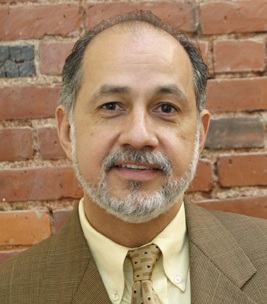
Author
Dr. Roberto Miranda
Summary: This is a transcript of a book launch event for Dr. Roberto Miranda's book "In the Land of Pilgrims - The Hispanic Evangelical Church and its Redeeming Call." The event began with a prayer led by Fanny Rodríguez, followed by an introduction of Dr. Miranda by Pastor Omar Soto. Dr. Miranda then presented and read from his book. Panelists Rev. Eliseo Noguera, Dr. Benjamín Valentín, and Pastor Sergio Perez provided comments, and there was an open space for questions and answers. The event concluded with farewell and thanks by David Diaz. Dr. Miranda spoke about the title and cover of his book, explaining that "pilgrims" has a double meaning referring to both the original settlers of the United States and to Hispanic Evangelical Christians who are also pilgrims in a spiritual sense. He also discussed how the book came about and the vision that animates it.
The Hispanic community in the United States has the potential to positively influence the nation's culture and society through its strong relationship with faith and spirituality. With a growing population and increasing purchasing power, the Latino Church is positioned to exercise decisive leadership over the Hispanic community. The Hispanic Church has the potential to play a determining role in the standard of living that the community reaches in the future. It also has the potential to integrate healthily into the general society in this country and exert an important influence on that majority culture. God has a doubly benevolent purpose in bringing the Latino people to this country: to bless them by allowing them to participate in the opportunities and resources that this prosperous nation offers, but also to bless the nation by fertilizing and renewing it with the spiritual wealth that they embody.
The speaker praises the book "In the land of the Pilgrims" by Reverend Roberto Miranda and emphasizes that it helps to correct anti-intellectualism and the tendency to focus solely on spiritual matters within some evangelical churches. The book argues that God has called the Hispanic people to play a renewing spiritual role in the United States, and the speaker highlights factors such as the Christian sensibility, moral values, respect for authority, miscegenation, family importance, and spirituality of the Hispanic community that give them the ability to do so. The speaker also praises the book's well-written and convincing arguments and erudite nature, and encourages the audience to read it.
The speaker praises the book "In the Land of Pilgrims" for its content, particularly the paragraph discussing the spirituality and hospitality of Latin people. They also raise two questions about the book's idealistic presentation of the first European pilgrims and the origins of secularism in reaction to failures in faith communities. Despite these questions, they applaud the author's vision and contribution through the book. Another speaker highlights the importance of training leaders and the author's ability to navigate complexity and connect history. They view the book as a manual for locating opportunities and challenges for the Latino community in the United States. The speaker also thanks the congregation for being a laboratory for God's work and inspiring new projects and movements. The book is praised for inspiring a new level of spiritual life and passion for the Kingdom of God.
The book is not only inspiring spiritually, but it also has the potential to inspire movements and projects. The time of only being within the four walls of a church is coming to an end. The book aims to change the perception of the Hispanic community as a burden to the nation and instead to recognize their contributions to the economy and society. The original idea for the book was to take the León de Judá Congregation as a microcosm of the Latino community in the United States. The title "Lion of Judah in the New World" represents the central thesis of the book. The book is also seen as a love letter to the Hispanic community, looking at their drama and seeing the beauty of what God is doing in their lives.
In a Q&A session, Pastor Miranda discusses his book and the importance of the Latino community and the church in the United States. He talks about the need for Hispanic pastors to better educate themselves and become involved in their communities, as well as the importance of capitalizing on the gifts and potential of the younger generation. He also discusses the need for national unity among Hispanic organizations and leaders, and the role of philanthropic groups in supporting the development of the Hispanic church. Finally, a parishioner shares a personal testimony about the power of faith and the impact of Roberto Miranda's vision in their community.
The book discusses the clash of cultures in North America and the violent history of indigenous communities. René is impacted by the book's vision for the future of their community. Pastor Miranda thanks God for his wife Meche, who has been a blessing to his life and ministry, and for his daughters who have been with him on his journey. He gives God the glory and honor for providing everything in its time.
(Audio is in Spanish)
Celebrating the publication of the book "In the Land of Pilgrims - The Hispanic Evangelical Church and its Redeeming Call" (Dr. Roberto Miranda)
Welcome……. Pastor Omar Soto
Prayer……. fanny rodriguez
Presentation of Pastor Roberto Miranda by Omar Soto
Presentation and Reading of the Book...Dr. Roberto S. Miranda
Panelist Comments
Rev. Eliseo Noguera, Dr. Benjamín Valentín, Pastor Sergio Perez
Open Space for Questions and Answers
Farewell and Thanks……. David Diaz
TRANSCRIPTION
Omar Soto: We would like to begin this event tonight with a Word of Prayer, to dedicate everything that we have already been doing and what we will continue to do tonight to the Lord and for that we have our sister Fanny Rodríguez, one of the deacons here. of the church and founder of the church as well, will lead us in prayer. Fanny...
Fanny Rodríguez: Good evening, brothers, may God bless you. I want to briefly share something that happened to me one morning when I was meditating at this time that I remembered a story that I don't know if you have heard from a street child who, as a street child, wandered the streets every day, he looked for his food in the garbage and at night he slept in the street covering himself with newspapers. And a family picked him up, took him home, bathed him, pampered him, gave him a good dinner and left him to sleep in a room with new blankets and everything well arranged. The next morning when his mother got up to look for him and bring him breakfast, it turns out that she did not find him in bed and thought that he had gone back to the street and called his husband. The two of them came and when they went down to the first floor the boy was sleeping under the stairs covered with a newspaper.
And I felt from the Lord, perhaps, it was a somewhat simplistic example Pastor, excuse me, but I felt that in the book the way the Pastor is presenting the Hispanic community is that many times we do not recognize the place that God has given us .
We have a very special place in the Kingdom of God and we don't want to take all the resources and the wonderful things that God has given us and I want to pray, thanking God for this book, thank God for our Pastor, for the vision that God has given him and also for the nation where he has brought us.
Let us pray, brothers. Before praying... sorry, excuse me, I want to read a part of the book to put the prayer I'm going to do in context.
The Pastor says here in the work: "The greatest blessing that we bring to this country, the one that contains the greatest moral and spiritual potential, is the pure and humble Gospel that brings with it so many Christian immigrants. Our poor believers know how to give their money sacrificially to the Lord. Those oppressed of the earth know how to celebrate and abandon themselves to the joy of adoration and dance. The fatigue of the hard work they do during the week does not prevent them from serving generously in their churches during their free time, their little education does not prevent them from eagerly and discerningly study the Scriptures and share the profound insights of the Gospel as they disciple our believers and lead home groups.Like the faithful believers in Macedonia so praised by Paul, God's Grace has abounded in them so much that in great trial of tribulation , the abundance of their joy and their deep poverty abounded in riches of their generosity, for with pleasure they have given according to their strength and even beyond his strength", Second Corinthians 9:1.3.
Let us pray: "Loving Father, in this hour we come before You with gratitude, Lord, acknowledging that You are the giver of all gifts and of all gifts, Lord. We thank You for our Shepherd, Heavenly Father, for the gifts that You have deposited in his life, Lord, and that he, Lord, has placed these gifts at the service of your Kingdom, Father.
Thank you, Lord, for the blessing that is for our church, Lord, and thank you for the Apostolic call that You have given it, Holy Father, because You have given it a call to declare the truth, Lord.
Lord, we ask that at no time is he going to abdicate, Lord, in telling the truth in whatever context he finds himself, Father. Thank you for the call that he has given us and the challenge, Lord, as a Hispanic community, Lord, to bring a complete Gospel, Lord. Bring your Shalom, Heavenly Father, and that we can see that social action, Lord, is part of the Gospel, Father. Help us, Lord, to impart, Lord, Your Word, Lord, and impact, Lord, not only the community but the political institutions, Lord, the social institutions, Lord. Thank you for the awakening that you are doing in the midst, Lord, of this nation, Father. We pray that this work, Lord, arrives, Lord, to lives, Father, that they be activated, Lord, that they be renewed, Holy Father, and that they may understand that in Your Word, Lord, there is freedom, Lord, and only to Through You, Lord, we can be, Lord, the salt and light of this earth, Father.
Father, we ask that you help us change our way of thinking, Lord. Lord, that we think biblically and not culturally, Lord. Lord, that we think theologically and not humanistically, Father. Father, keep us, Lord, and unleash, Lord, unleash Your blessing, Lord, on the Hispanic community, Lord, on this entire nation, Heavenly Father. Allow, Lord, many to be impacted, Lord. Lord, and may the Pastor, Holy Father, impart to Pastors, to leaders the vision and the call that You have placed, Lord, for the entire Hispanic community, Father. Thanks for this time.
Bless us, Lord. Stay with us because we ask you in the name of Jesus. Amen, amen."
Pastor Omar: Thank you very much, Fanny. Alright brothers and sisters I just want to let you know how we're going to progress tonight. Of course, it will begin with a presentation and reading of the book by Doctor Roberto Miranda, after his presentation we will have the presentation of the panelists and we will begin with Pastor Doctor Eliseo Nogueras who is here with us, from Rhode Island. After him, Dr. Benjamín Valentín will follow and finally we will have Pastor Sergio Pérez who will also be making a response to Pastor Miranda's presentation.
In fact, we apologize to Doctor Eldin Villafañe who could not be with us tonight due to a health situation that he could not be with us. Thank God he is fine, but he is a bit delicate so he preferred to be calm at home today.
But again, before introducing Pastor Miranda, I would like to share a few words with you.
And I could very well say that each of us has a person, be it a particular man or woman who has made a great impact in their lives. Tonight we recognize the work of a man, a servant chosen by God, for a time like this in which we live, which has also marked our lives in some way or another.
This man, originally from the Dominican Republic, has achieved a Master's and Doctorate level at Harvard University in Romance Languages and Literatures specializing in Latin American Literature. For the last twenty-five years he has Pastored and will continue to pastor the León de Judá Congregation, where we are today, worth that emphasis. Twenty five more years...
... This man moved by an impulse of the Holy Spirit founded and presides over what is known today as COPANI or the Confraternity of Hispanic Pastors of New England, to promote the unity and integral development of Pastors in our region. This man, in the words of Doctor Villafañe himself: "He is characterized by a personality in constant search of that balance between what is a dimension of Faith and Spirituality and how it is transferred into concrete actions that can transform the human being.
His life reflects that constant tension of what it is like to live at a crossroads where Faith is not necessarily something black or white, but there are also those gray areas where God constantly challenges us to live.
He is distinguished by a continuous desire to learn about the mysteries of God and how to make them known to his Church. He is a man with a humble spirit, a teachable heart and whose warm smile demonstrates a true sense of brotherhood in those around him.”
Ladies and gentlemen, it is my pleasure to introduce to you a great servant of God, a tremendous husband and father, an inspiring Pastor, a tremendous colleague and fellow soldier: the Reverend Doctor Roberto Miranda.
Rev. Doctor Miranda: Thank you, brothers, thank you. It goes without saying that to the Lord we give all the Glory and all the honor and although I do not think that what I am going to comment will necessarily lead me to open this Bible, but I brought it and put it up here as an acknowledgment that ultimately, brothers, every Word that one can say that is worthwhile comes from here and to the Lord we always give Glory and honor.
The only thing we can do is build on what God has already said and draw from here life, energy and wisdom for the events of life. So that's it, the rest is pure elaboration and going around what God has already declared.
And thanks to you for coming tonight, for each one of you who are people close to our lives, to our Ministry and who have been such a blessing through the years and you enrich our lives, our family, this Church, this community with your gifts, with your efforts, with your sacrificial work and for me it is a privilege to be united, to be in community and in communion with each one of you.
I thank the Lord for this very special moment that is the culmination of many years of waiting for God's time to do things. I appreciate the presence here of my brother Ministers, Pastors, Seminary Professors, people who are working as Pastors Michele of Woodford Center.
Rudy thank you for bearing with us through the Spanish part of this whole thing, I'm grateful that you are here today and Adam Juárez el Profeta Rigoberto Rojas que viene de viaje; who have apparently just come from a very long trip. So I appreciate those gestures of fellowship and solidarity.
That blesses me greatly, so brothers, it is a privilege to be with you tonight and there are many things that are in my heart and the only thing I can say is this: that for years, and I shared this with the Church, once when The Lord called me to the Pastorate towards the end of 1984 of this Congregation and I was preparing my academic career and with a great desire to fully enter into teaching and idea work. My dream since I was a child was to write, publish books and live a very "intellectualoid" life like that, let's say in the academic world and the Lord called me to shepherd a nascent community such as the Central Baptist Church that today is León de Judá and I, well, had to make a very strong measure of really where my priorities were. Whether it was giving my life to the Lord and doing what He told me or fulfilling my dreams and what I felt was what I wanted to do since I was a child.
And I had to decide and I made the decision. It was not too difficult, I assure you, to give myself to the Lord and to the Ministry and I had to put aside those dreams that I had of writing and constantly swimming in the world of the intellect. However, in my heart I said: "Father, if it is in your purpose and you like what I have done, well, one day you will give me the opportunity to teach or to write and to carry out this part of my life and of my call" and left it there.
I always ask the Lord that He direct my life as if it were a text from the Bible, with all the wrinkles, sufferings, triumphs, glories, surprise appearances, everything that He knows how to do in his writing that is so dense and so complex and so pretty. Well, I have seen many cases where the Lord blesses those who give him something they love and gives them more than what they expect later on.
I have lived my whole life with that vision, with that paradigm in mind, and now 25 years later the Lord gives me the privilege of writing what I hope will be my first book and that I can then write many things that are in my heart but that I was wishing and waiting for God's time when He wanted that moment to occur and now it is and I feel grateful to God, to be able to do it in this way.
When I started this book the goal was different, but it took on a life of its own and he himself took it upon himself to lead me where God wanted me to go and I ended up writing something a little different.
But there is a vision that animates him. Some people have asked the title and the cover, what do they mean? Well, I'm going to start there because there are so many things I could say and I want to be very accurate with what I say.
The title "In the land of the pilgrims", that word "pilgrims" evidently has a double meaning. The Pilgrims were those people who came from Europe here in the 1620s in the 17th century to the Plymouth, Massachusetts area with a vision from God to settle here and establish a land that could exemplify, a nation that could exemplify the values of Scripture. , to be able to serve the Lord as they felt in their hearts.
To establish a nation without parallel and a nation that has long blessed even spiritually the world. That nation has gone in another direction and every day is further and further away from the original vision of those pilgrims, those Puritans in the good sense of the word who established this country. He is continually moving away and is spiritually declining.
We, people like Latinos who have come here to the United States, I insist in this book that we have come with a divinely determined purpose: we come to bless this nation, to enrich it AND to relate to the vision that God gave those pilgrims. We are pilgrims too, this is a nation of pilgrims, this is a land of pilgrims, and Hispanics come here with dreams, just as those people came, and we also come with a vision. Many of us, particularly believers, come with a vision of God and we certainly come to renew those bonds, renew and unclog those spiritual wells that the first pilgrims established here.
And we come to be a source of blessing for this nation, that's where the title of "In the land of the Pilgrims" comes from. The cover, the cover that is an urban image, a bit abstract; refers to the fact that we Hispanics are in the big cities of the United States. We are a mostly urban community, Miami, Chicago, New York, Dallas, Boston; We live in big cities and a church is required that has an urban vision and the ability to administer to these Hispanics who are in the cities of our nation and that has the ability to navigate those stormy and complex waters that represent the cities where we meet.
So that is the vision and what I am going to do is that I am going to read; I took a few paragraphs and different segments of the book this afternoon and put them together here and I hope they make sense because what I wanted is to expose some of the central ideas of the book and read it so that you know a little bit of what I say through the book. same.
And I hope that if you haven't bought it tonight you don't leave without your copy of the book too, I'm losing the shame of pushing things; so I have learned about it, but I hope it will be a blessing to you and I am very grateful for the great interest you have shown in it.
“God has a special call for the Latino church in the United States, the growing presence and influence of Hispanics in this country, which will only increase in the coming years, constitutes one of the most important social phenomena in life. of this nation.
Currently, Hispanics constitute the largest minority group in the United States: 45.5 million people according to the annual report of the United States Census for the year 2006.” And that's probably bigger, by the way. “According to figures from this same agency between 2005 and 2006, one out of every two people born in the United States is of Hispanic descent.” Say wow!
“By July 2050, the United States Census Bureau projects that the Hispanic population in this country will reach 102.5 million people, 24% of the total population. This is found in a study titled "Hispanics by the Numbers" Census Bureau 2007.
The purchasing power of Hispanics is increasing every day and the large corporations in this country have made adjustments in their production and marketing strategies in recognition of this fact. The Hispanic church is positioned to exercise decisive leadership over that Latino community that right now is emerging as a sleeping giant in this nation.
No other institution in this country has the institutional infrastructure, leadership, ideology, and geographic reach to influence the broader Latino community like the Hispanic church does. No other institution or group of Hispanic leaders in this country has the moral authority or influence that the Latino church has. According to a recent study commissioned by the PIU Forum on religion and public life, a survey published in April 2007 entitled "Latinos and the transformation of North American religion", according to that study, 20% of Hispanics in the United States identify as born again evangelicals and 68% as Catholics, an additional 3% practice some other form of Christianity bringing the total number of Hispanics in this country who identify with some expression of Christianity to an impressive total of 91 %.”
If we take into account that more than 50% of Hispanic Catholics identify themselves as "charismatic Catholics," that is, very dedicated people, with values very similar to the evangelicals, with a spirituality very similar to that of the evangelical Pentecostals, that implies that A majority of Hispanic Christians in this country profess a vital faith, which significantly influences their values and behavior.
According to the PIU Forum study and I quote: 'The role that Latinos play in politics and public affairs in the United States is profoundly influenced by the distinctive characteristics of their religious beliefs. Most Latinos view religion as a moral compass to guide their own political thinking and expect the same from their political leaders. Furthermore, in all of their major religious traditions, the majority of Latinos see the pulpit as an appropriate place to discuss political and social issues.
“By far the Latino church is or has the potential to be the most important resource to inform and guide the Hispanic community in this country regarding their ethical, political, moral and spiritual decisions. Whether that potential is fully manifested will depend largely on the ability of Hispanic Christian leaders to bring the Latin American church to the level of spiritual and institutional development that it requires in the coming years.”
Given the complex role that this community has to play, or rather, the complex role that this church has to play within our community.
What I am highlighting here, brothers, is simply the fact that the Hispanic Church, due to its great influence on our culture, the value that people place on faith, the Latino, has tremendous potential to influence a community that for their own number and cultural influence is already exerting great leadership in this nation and that will follow further.
It is important that we capture the potential that the Latino church has to positively influence our community. “The Hispanic church in the United States has the possibility of playing a determining role in the standard of living that our community reaches in the future. We can powerfully influence the destiny and performance of our youth, the health of the Hispanic family, our economic progress, the moral and spiritual health of our people, the values that inform their political and social decisions; as well as a whole range of other important elements that will determine the total destiny of our community.
Right now the Latino community does not have any other moral or political resource that can speak with authority across all of its component cultures, nationalities and ethnicities. It is possible to state that currently apart from the Hispanic church, the Latino community lacks adequate leadership," -and I emphasize- at the national level, "with the capacity to represent and guide it at this crucial moment in its development in which it is acquiring more and more political and social power and at the same time faces serious challenges regarding their collective health. “
In other words, the Hispanic church, if you look at it as an Institution, is the only one; We have Hispanic leaders, but the only institution that can speak to all races, cultures, nations, and geographic regions where we find ourselves is the Latino Church. That seems to me to be something that goes beyond the fact that I am a Pastor, and it is simply a sociological fact.
“More interesting still, it is possible to affirm that the so-called Redeemer of the Hispanic Church in this country extends not only to the Latino community itself but also to the entire North American society. As we will see in detail later, the growing cultural, political and spiritual influence of the Hispanic community can be an element of considerable importance in this fundamental internal debate in this North American society that is indecisively positioned between a sacralized and Christian vision of the world on the one hand and a secular and humanist vision.”
Right now the scale is there. Where will this society go? Will it go one way or the other? And we can play an arbitrator role for our influence and our values.
“That possible influence of the Latino community on North American culture in general could be extremely benevolent, helping to stop the growing spiritual and moral deterioration of this nation and contributing to reorient it towards its spiritual origins. Those spiritual origins from centuries ago.
This essentially Christian sensibility that Hispanics bring to North American society has the potential to significantly strengthen its Judeo-Christian foundations and tip the balance decisively towards the side of the orthodox Christian faith. The moral values of the Hispanic community still generally lean towards the traditional side. His conception of the family and sexuality, for example, still respond to the basic patterns of the Christian Faith.
In both the Catholic and Evangelical sectors, Hispanics still look to their ecclesiastical authorities for their moral, political, and spiritual guidelines. This attitude could change in the future according to the cultural influences of this secularized and suspicious society towards religion; they left feeling in our community.
For the moment, however, the balance still tilts towards a deep respect for ecclesiastical truths and authorities. It is possible to affirm that the potential of the Latino community to integrate healthily into the general society in this country is very high. Our Hispanic people do not carry the emotional wounds and historical dramas that the Afro-American community drags, for example, which makes its relationship with the majority society very conflictive and problematic. Racially, our Hispanic people carry in their blood and physically reflect a mixture of races: Africa, Asia through the Meso-American past, Europe and even the Middle East if we take into account the profound influence of Arab culture on our Spanish past.
This imparts to the Hispanic people a universal sensibility, a certain facility to communicate comfortably with a wide range of cultures and races such as those found in this country. All of this makes it easier for the future establishment of harmonious relations and the potential integration of the Hispanic people into the majority culture in this country. On the other hand, this also facilitates the possibility that the Hispanic culture with its moral and spiritual values can exert an important influence on that majority culture.
After all, it is not a question of the Latino culture disappearing or blending indistinctly with the predominant culture, but rather a mutual learning and fertilization process between the two.”
So, with this I'm going to finish this last one... towards the end of the book I talk about Jeremiah 29, where God sends the Hebrew people who are in exile in Babylon a letter, I call it a love letter through the Prophet Jeremiah, where he tells the people who are in exile: 'Do not lie down to die.' Do not assume the mentality of a captive, rejected, alienated community. Enter fully into the life of the nation where I have sent you. Negotiate. Give your children in marriage, buy a house, do business because, he says, 'Because I know the thoughts I have for you. Thoughts of good and not of evil.' And he also says, 'and pray, seek the Peace of Shalom, the blessing of the city from where I have sent you.' an aggressive community in the best sense of the word, ambitious, with healthy values of self-improvement, doing great things, undertaking great things because He has great purposes for us.
And he tells us: You know what? I want you to bless the nation where I have sent you.
Now, looking at that text, I am struck by how applicable it is to the central thesis of this book. Like the Hebrews exiled in Babylon, God has brought the Hispanic people, he has had them transported -as it says in Jeremiah- to the United States with a profoundly spiritual purpose.
“Our presence in this country is not simply the product of blind economic or geopolitical forces. We are not here ultimately because of the actions of oppressive dictators, greedy landlords, or oppressive oligarchies. In the end, it is not civil wars, consumer poverty or terrorist violence that have exiled us to this alien nation. We are actually here because God wants to bless us AND because he wants to bless this nation whose historic spiritual roots are so deeply embedded in the subsoil of his word.
The pacts and prayers of those pious pilgrims, Puritans, who laid the spiritual and intellectual foundations of this nation are still valid today, and God sends reinforcements: us, people like us, to revive them at this time. Babylon was simply the physical instrument that God used to execute his fatherly discipline on Israel.
But behind the imperialist actions of that powerful nation was the benevolent hand of God executing his will to ultimately bless his people. As this passage clarifies, God was using Babylon as his disciplinary instrument, although later he would also execute his discipline on her for her cruelty and lack of mercy towards her people.
As we said, God has a doubly benevolent purpose in bringing us to this country: he wants to bless us by allowing us to participate in the opportunities and resources that this prosperous nation offers, but he also wants to bless her, fertilizing and renewing her with the spiritual wealth that we embody.
My brothers, God wants the Latino people to assume a visible and positive role in the physical and spiritual life of this nation. Like the case of the Hebrews in Babylon, it calls us to multiply and not to diminish.” I don't think we're going to have a problem on that part. “To joyfully embrace the call to work, negotiate and celebrate. The exiled Jews were to concentrate on putting down roots in their new land for the duration of their exile and not allow their nostalgia for their abandoned homeland to rob them of the energy they needed to live successfully in their new place of residence.
We too must look resolutely forward, we must resist the temptation to live a divided life with one eye here and the other on the homeland we left behind; Banished in an emotional limbo that prevents us from fully embracing the challenge ahead. We move in the active will of God the creator, our times are in His hands and He knows precisely how long the historical process that we are living will have to last and how it will develop. Our part is to discern His will, obediently accept it and enter fully into that spiritual adventure that opens before us.”
I will end here. I skip a couple more paragraphs.
“In Jeremiah 29:11-13, God outlines his purpose to bless his people with an unequivocal statement of his good will toward them and says to them: 'For I know the thoughts that I have toward you,' says Jehovah, ' thoughts of peace and not of evil, to give you the end you expect. Then you will call on me,' says the Lord, 'and you will come and pray to me and I will hear you and you will seek me and find me because you will seek me with all your heart and I will be found by you,' says the Lord. These words must have been a spiritual balm for a people who felt guilty and justly abandoned by the God they had so openly disobeyed and offended. God was promising them that his intentions towards them were not destruction or abandonment but quite the opposite, he had the firm purpose of blessing them, listening to their prayers and having fellowship with them. He would deal with them and take them to a new spiritual level so that they would call upon him and seek him with all their hearts.
In the same way, the idea that as a community in this country we move in the good purpose of God, that we have the wind of the Spirit behind us in everything we undertake, should inspire us to live optimistic lives and to conceive great dreams. God's will is that we prosper and that our prosperity overflow to bless others.
A people rooted in the Word of God and in the values of the Kingdom, has no limits in what it can achieve. The spiritual and cultural wealth of the Hispanic people is a beautiful gift that can contribute to the renewal and enrichment of this nation. It only takes an Anointed Church capable of preserving, strengthening and unleashing that deep endowment that lies within us.”
Thank you, brothers, may the Lord bless you. Read the book for the rest.
Pastor Omar: Now we are going to have the moment in which we give each of the panelists who are here with us the opportunity to give an answer based on their reading and what they have heard Pastor Miranda speak now.
Each one of them will have an average of six to eight minutes to present their presentation and as I mentioned a few minutes ago, we are going to start with Reverend Eliseo Nogueras, who is a Pastor there in the Rhode Island area. He will be followed by Dr. Benjamín Valentín, Professor of Theology at Andover Newton and then Pastor Sergio Pérez, Pastor of Harvest Ministry in Weymouth.
But, first we start with the Reverend Eliseo Nogueras.
Rev. Nogueras: It is dangerous to give a Pentecostal Pastor a microphone and tell him that he only has six minutes. Let's see how we do this.
God bless you all. Good evening, it is truly an honor to be part of this magnificent occasion. I want to thank Doctor Miranda for taking me into account for this presentation. Greetings to all the comrades who are present tonight.
We need many more nights like these in the Hispanic area and we urge everyone who is preparing to continue because this is truly our time and we thank God for Doctor Miranda who traces new steps forward, continues the work of art to write, because our stories are also going to be worth a lot and it is necessary that we tell them at this time.
When I also saw that Doctor Villafañe was going to be a part, I was very happy, because he is one of those men in our history who has truly marked our lives in a considerable way and who has provided us with advice in time, so that we too are at this time, preparing ourselves to continue in our studies and carry out a plan that we truly consider to be Divine. Given by God for this people, and that this people has to take seriously, it is very serious. I'm not going to take more time because they gave me a little time, right?
I have been asked to talk a little about this book and how good, right? the theme that he put: "In the land of the Pilgrims". The Hispanic Church made a call Redeemer, this presented project is being brought in at a precise moment. This book is like what we used to say in Puerto Rico: "Like freshly baked bread, hot and delicious." The topics covered here are current affairs.
Like the Lion of Judah, Gethsemane, the church I pastor by the Grace of the Lord in Rhode Island, and many other Congregations around the United States, are facing the same challenges and difficulties. How to manage a town that is in a state of flux change? How to provide enjoyable Ministry? That it be directed to not only spiritual but integral needs, that it be ministered to for the whole person's healing.
I think the exhibition aligning the new ones or those of migration with the historical ideal of the Puritan dream of creating a city on a hill and showing the Pallottine but constant departure from the original plan and presenting a divine design to reinforce those principles with immigrants arriving to these places more tied to those principles than the descendants of those same Puritans.
Although not accepted, it will only be scrutinized, as has been done in this elaboration, and it will give a lot to talk about.
Truly that he has put a dot on the "i" and has said ha! One of our arguments in our work on immigration in recent years is to make the Republican Party of this nation see that through the years it has truly turned its back on Hispanics. It's that Hispanics have much more in common with them and that they should pay attention to those truths and that fears, perhaps guided by racial tensions, shouldn't be the ones to take, right? the important point at this moment, but look at the principles that we Hispanics are bringing to this nation.
And in this, I want to say, truly that this point opens up a dialogue, a way of speaking and presenting, and I truly recognize it as: "God is in control." In this book, in my opinion, he presents a modus operanda for many other congregations that are at this very moment Ministries in the United States and perhaps in the world. Seeing the development of this Church through the pages, readers will receive not only practical information, but also the inspiration that it is possible and that it can.
The legacy that needs to be established is that the Hispanic church has the call to keep the fire of God alive for this time. It's an argument that will inspire many to take up the challenge and run with it too.
I also want to congratulate you on the appropriate manner in which you present several of the arguments presented here. First, the courage to touch on one of the most controversial issues that has yet developed within religious circles, the issue of homosexuality. I think that our brother Miranda's presentations let us see that we can define this topic without offending. Present conservative Biblical truths, without denigrating the person who is trapped in this lifestyle. Recognizing that participants in these lifestyles tend to denigrate all who disagree with them; but, here we see an attempt to do it in a pious manner and with the true title Pastoral.
With the lens of the man of God who looks at all the children of God as people who need to be ministered to, helped, shake hands and be lifted up. Truly, this is an art that all Pastors must develop in our daily lives.
Let us pray that in future works you can continue developing a teaching that can be evaluated by both sides and received as it is being presented.
Second, the exposure to the Hispanic church, its development, its achievements and its needs for advancement. Great care was taken to give concrete advice that can be followed at times, very difficult to present, constructive criticism without offending those being criticized, but I believe that the advice given here is given in a mutually helpful nature and born of a lived experience. This gives a lot of validity to the writer. It is seen how he has moved from experience to theory and from theory to experience. Well done, it will be well received.
Finally, and I left it for last, because I think it is one of those topics that have defined the integral church in recent years and it is the topic of immigration and how to correct this system that since its insertion has continued the level of racism that has existed in this country.
Since his bad and tragic decision to enter the business of selling human beings, giving a human face to those who suffer from the injustices of this system. It will go a long way to get people to evaluate the decisions that are being made, while people see themselves only as numbers and this is a strategy that has been used time and time in this nation.
If you take away a person's name or face, you are basically giving permission to dehumanize them, to treat them as something and not as someone. And truly seeing the human face through the pages of this book makes us see that these are not numbers; It is not something that we can correct simply by making a law, but by looking at human suffering, the day-to-day life of each person who is trying in this country to become a citizen who can produce in this nation and can be respected.
It is interesting to see the achievements of real stories, as well as the Santos family. This will lead readers to see that these are families just like them and all they need to do is give them a chance to become productive members of this American society and they will continue to make this nation a powerful nation.
I end by saying: I believe that it is divinely instructed for this time, that we Hispanics take the place that corresponds to us, given by God.
Roberto, you have given us a tool that we can use, that we can take to our churches and we can instruct our teachers so that they recognize the place where God has placed them and shout from everywhere: God has placed this nation for us. in our hands so that it continues to be doing that experiment that one day God forged.
And one last quick tip, also produce it in English. God bless you.
Pastor Omar: Thank you very much, Pastor Nogueras. Followed by him continues Dr. Benjamin Valentin, he is Professor of Theology at the Andover Newton Theological Seminary. He is a good classmate of mine and a teacher too, so Benjamin we give your presentation a chance.
Doctor B. Valentín: God bless you all, good night and Blessings to my Church, the Lion of Judah. My Church.
I tell Omar not to start that clock yet, you know. Let me at least greet my people and then you start it for me. But seriously, this seems very good to me, my people, very good, as an academic and as someone who moves in the world of ideas and the world of literature, I am very pleased that the arrival of a book is being celebrated, of a good work like this and in the context of the church.
Okay, it would be great, if these kinds of events could be seen more often in our churches to forge more enthusiasm, I think, towards reading books, towards critical reflection and developing new ways of thinking.
I congratulate Reverend Roberto Miranda very much for the achievement of his masterpiece and this important book entitled, a very catchy title, that's a big part in writing books: "In the land of the Pilgrims" and I also congratulate the leaders of the church León de Judá for organizing this event. I think they also deserve a big round of applause right now.
Now you can start. I am going to take a few short minutes to comment on the book by my Pastor, Reverend Doctor Roberto Miranda, and the first thing that I want to emphasize in a more general way before going into the book, is that the arrival of Reverend Miranda's book helps us, I believe, to correct two slightly negative trends that sometimes appear within some of our churches.
The first thing is that it helps us, I think, to overcome a type of anti-intellectualism that sometimes appears within our evangelical churches. I always tell my students at Andover Newton that we must learn that we can please God and praise God with nice thoughts. With the song, with many other things, but also with reason and the beautiful thoughts such as there are in this book.
The second thing is that the book helps us to overcome the tendency to focus on supposedly spiritual matters and to ignore the social, cultural and material dimensions of the Gospel; and I think the two have to be very well connected and this book does it very well and therefore gives us a model for us to do the same.
As for the work of our Pastor, in itself I think that it is a very well written book, very well argued and very convincing, it is an erudite book.
I'm going to say quickly that I get about six, seven, eight books monthly through my office which I sometimes have to read, if I choose to read them and to write reviews for journals, magazines and things like that. That is to say that I am always reading books, and this book, honestly, is one of the ones that I have liked the most to read in a good time.
The thesis of the book is clearly exposed on page number fourteen and if you allow me I also want to read the same word in the book.
The thesis of the book is clearly stated on page fourteen and above where it says: "The main thesis of this book is that God has called the Hispanic people to play a renewing spiritual role in this nation," and throughout the rest of the book the Reverend Miranda makes it clear that there are several factors that give the Latino-Hispanic people the ability to play this renewing role in our culture. For example, on page fourteen, there, you will see that Reverend Miranda mentions three factors.
These are, number one, the essentially Christian sensibility that Hispanics bring to North American society.
Number two, the moral values of the Hispanic community, such as, he mentions his traditional conception of family and sexuality; and, number three, his respect for ecclesiastical and governmental authority.
On page forty-nine, our Pastor mentions another factor, let me read it to you quickly: "It is possible," he says, "to affirm that the potential of the Hispanic community to integrate healthily into society in general in this country is very high" and the reason is what we could say miscegenation or mulatto, that is, the mixture of ethnicities that are seen within the Hispanic community. Then from pages 288 to 295 he alludes to several other important factors such as, for example, the importance of the family for the Hispanic people. Number six, the average age of the Hispanic people. He notes that it is a young community and therefore with good energy. Oh! Hopefully we use that energy well!, right?
Seven, the rhythms he mentions and of course as a musician I loved that he added that there. The rhythms and chords of our music and our crafts. The instinctive hospitality of the Latin people and then he also mentions the spirituality of the people.
I think it mentions several other factors and they are very well argued and one of the paragraphs that struck me the most and I think it is one of those paragraphs I will call it ingenious and very nicely written, and it is on the last page of the book at 296.
I think that for me it is the paragraph that struck me the most in terms of its content and also the beauty of the articulation.
There I read quickly: "In the darkest time of the spiritual history of this nation, God prepares the conditions for the most powerful revival that has ever been seen. It is quite possible that God in his customary irony has resurrected the pilgrims of old, this time with darker skin and with the blood of the original occupants of this land running through her veins, to come to this country and help reconquer the land and return it to the spiritual mission that originally spawned it." Isn't that a beautiful paragraph?
I think I have two or three more minutes left, right? OK.
Of course, even an erudite work like this one leaves doors open for certain unknowns, and perhaps on another occasion, in another context, when I don't have someone looking at my minutes, I will have the opportunity to dialogue with our Pastor as soon as to my unknowns
But here to conclude I only want to allude to two possible questions and I only present them simply because you have said that you are thinking of writing others and I want to and am already waiting for it. And two questions I have regarding the work is the following:
One has to do with the idealistic and perhaps romantic presentation of the first European pilgrims and the beginnings of our nation. History reveals to us that not everything related to these pilgrims was positive. These so-called pious pilgrims contributed to the enslavement of Africans, the mistreatment of Native Americans, and countless wars among themselves. This is a side, perhaps the darkest of these pilgrims that you have not mentioned in the book.
The second unknown has to do with the presentation of secularism. The irony is the following, my brother, that secularization in Europe and in the United States begins precisely because of the feeling -what was seen in some people- of the failure of the communities of Faith. Here, especially in the United States , secularism itself begins in reaction to some rather ugly things within religious communities, such as religious intolerance, wars within themselves over denominationalism or some other types of religious differences and therefore the leaders of this nation they think that perhaps the government of this nation cannot be left in the hands of these characters.
Why am I bringing this? Well, simply because, at the beginning at least, the secular movement was born precisely in reaction to some failures in the faith community and I think that these are some failures that even today we have to keep in mind and correct sometimes even what is see within us also how we correct what is outside of us.
However, there is no doubt that despite these two unknowns of mine, this is an extremely important and meritorious work.
I applaud Reverend Miranda for his vision, I also share the Reverend's vision and I add myself to it, to activate it and put it into action and I applaud his contribution through this book.
To all of you who are here tonight I say, and I implore you to look for it, to buy it, to scrutinize it, to read it and most importantly to let yourself be inspired by it and may God be with us. . Amen.
Pastor Omar: Thank you very much, Benjamín, for your contribution, and I still believe that these questions are very necessary to help us further develop those lines of thought that are so critical for this time in which we live. We thank God for those thinking minds, as well as Benjamin's, that help us see those perspectives that we face as a Christian people.
Following Doctor Valentín, Pastor Sergio Pérez, Senior Pastor of Harvest Ministries here at Waymouth Church, is now following him, a good colleague as well, not only mine but also a guest there "photo finish," as we would say, and we thank him for always being willing and we know that your contribution is important too, Sergio. Thank you.
Pastor Sergio Pérez: Thank you. I speak on behalf of all here that it is a true honor to be here at the launch of this tremendous project, this book "In the Land of Pilgrims."
The classic movie Fiddler on the Roof came to my mind, in which you will remember that Ratavia goes to visit the first daughter who married and everyone rushes to see the birth, saying, "he's here, he's here" and everyone is running.
All of us who are watching the film think that the baby has arrived and when they come in it is because the tailor's sewing machine has arrived, right? , the son-in-law who had acquired that.
And so we are all "he arrived, he arrived!" and what is? The book has arrived… the book has arrived!
At last it was born because this baby had been brewing for many years and it is one of those messages that we sometimes preach. Sometimes we preach forty-five minute messages but it took thirty years for those messages to form within us, in our minds, in our spirit.
And, precisely, I want to talk about that, and it is that the formation of a man of God when we sometimes think of a work like the one we have before us, we can miss the fact that the formation of a person requires great investment, not only the formation of the person as an individual, but what comes after.
I am sure that in a very implicit way in this book is the education of the "little mother" of our brother Roberto, because one has been the sequence, the accumulation of those experiences, of that formation that comes from many years ago.
I have always taken advantage of the moments that I am with Doctor Miranda, he knows this, that when we travel, on the occasions that we have done it together, whether driving in a vehicle or on a plane, I like to ask him about his training: where did you study? How were your years there in France?
I don't know if you have heard your Pastor speak French but just as he speaks English, Spanish, he also speaks French very well. I always ask you, how did you learn to speak French? and his training... And that is something very important because then all that experience of past generations comes to flow and is reflected in a literature like this. Training a leader is very important.
One of the virtues of Doctor Miranda and those of us who have known him will be able to affirm this truth, is the virtue of being able to navigate through complexity. He has that ability. I have heard him messages, anecdotes themselves with which he refers many times.
How is it that he has the capacity to be able... there is a message and he preaches about the electricity cables that are behind the walls to explain the complexity of the invisible, of what is not seen. At one point he also takes an example of how the engine works, as well as ships in space and all that.
It looks like Solomon, right? who still lectured about field mosses, insects, and ants. But it is a very beautiful ability that we can still appreciate in this writing.
Another of the very beautiful blessings and part of that complexity is the connection of history. And if you will notice in the book, it is not only the connection to the history of the pilgrims, but it is also connected to Israel, to the people that God wanted to raise up from the loins of Abraham to whom God gave words of blessing, beautiful promises that if they were a people subject to the Commandments of God, they would be a prosperous people like no other people on earth.
To be a model people and then they express it, that people could not continue responding to God to the point that the nation most similar to the Israel of the Bible is this nation.
It is not in vain that people risk their lives and cross borders and deserts to reach this nation. Not only in Latin America, but in many parts of the world, because it has become the promised land for many. It has been for many of those families and connecting that Israel with the opportunity of this nation, then losing the vision and God having to bring and mobilize Latino communities from far away to bring that hope of restoration and as he expresses it very clearly, Today we have more in common with the pilgrims who came to this nation in terms of values, in terms of the validity of Scripture, in terms of the Judeo-Christian principles of this nation.
Today we have more in common than the natural children of those pilgrims. And for this reason the subtitle "The Hispanic evangelical alliance and its so-called Redeemer".
I believe that the voice that we hear when reading these pages is not the voice of a worker, of a leader or of a Pastor of a Congregation only, but rather it is the prophetic voice.
God has always needed anointed arms to turn people to God. God needed an Elijah to confront the coldness, indifference, and even apostasy of the people of Israel. It was not an easy task. The Prophets were never called because things were good. On the contrary, whenever a prophetic voice was needed it was because things were very bad.
The work of a Prophet is not easy but it is important in the midst of a nation that needs to hear the voice of God and that is why I agree that this book, I believe, will be a great blessing when translated into English. Because you will be able to explain to the Anglo-Saxon communities why our Passion and our insistence on defending the veracity of the Bible.
Another of the beautiful things that I find in the book is that it is a manual to locate individuals, families and, dare I say, Ministries of what is the great opportunity that we have as Latino communities.
It is as if the ball reached our court and now the play is up to us. What are we going to do with this opportunity to be the most growing minority? What are we going to do with that potential? And this book places us in the opportunities we have and also in the challenges.
In other words, as a community it is our turn. What are we going to do with that opportunity? What are we going to do with the opportunity to be in this nation and the potential that we have? My first reaction upon reading the book was "I need to buy quite a few".
That was my first reaction "I need to buy a lot and I need to send them to all my Pastor friends in the United States", who are in many States, leaders, Pastors, servants of God because it will bring a lot of light and guidance, location of why we are here.
Finally, I want with all my heart to thank this Congregation and I do not want these words to be interpreted to me, I know they are mature but I want you to grasp this idea: you have been the laboratory, the experiment of what God wants to do and that image to me is very clear.
Sometimes when we don't understand what scientists are trying to invent, the one who is experimenting to obtain the appropriate vaccine to be able to stop an entire epidemic, a disease and urgency comes to mind. Meanwhile there are people dying but there is the person experimenting in his laboratory, doing tests. I imagine the joy of finally leaving with medicine in hand.
I imagine the satisfaction, if over time there were people who had to sacrifice themselves, it did not arrive in time for some, but the satisfaction of someone who says: "I already have it".
And Lion of Judah, maybe you don't realize what God is doing with you. Sometimes we only see the races, arriving early, preparing for a class, sometimes giving other people a run for their money and we lose sight of God's eye on us and what He is doing.
I really believe that this would not be possible if it were not for a Congregation like you. You have been that laboratory of God, in which God inspired a man to a much more complex vision of the traditional vision of doing Ministry, of doing Church where all we have learned to do is celebrate cults and preach the Word and there no more.
But, God has brought and formed Doctor Miranda to think about the church in more complex terms and take the church to other levels and you have accepted that challenge and I congratulate you because the inspiration for many beautiful projects that have come from here They have blessed and will continue to bless our community. Congratulations Doctor Miranda.
Thank you, sister Mercedes, also for all your support, your effort and the backing of the leaders and of this Congregation. God bless you! Thank you.
Pastor Omar: Without a doubt, I dare to affirm that many years ago the Hispanic people were evangelized by Missionaries who left this nation, who arrived in our countries; yes, they communicated the message of the Gospel and with it they also brought a system, a morality through which to live.
Many times that is also known as colonialism and it is accentuated in that way. But at the same time I can say that today, God is moving those people who were evangelized years and centuries ago and is bringing them here again. To that land that originally evangelized them to re-evangelize here and bring once again to this nation, to this generation, once more repentance and recognition of the need for God in the midst of their lives.
I personally can say that this book is not only going to inspire a new level of spiritual life, of passion for the Kingdom of God, for his Word, but it is also going to inspire many other movements, many other projects, as Pastor said well. Sergio, to action. It will move us to action. Now the time to be literally within the four walls of the temples, of the Churches, that time is already coming, more and more to an end.
I believe that the church is now going to convert, the communities, the society, the cities in which we live. This is going to be the place to recharge batteries to be able to go and make an impact there in the streets, where we have to truly reflect that light that God calls us to be like a city that is founded on the top of a mountain.
So, Pastor Miranda, once again, thank you for your work, thank you for the inspiration that you place in us, your people, your Church and also your ministerial colleagues, thank you very much. We also give thanks to God for you.
As you see in your programs, we now want to open a space in which you can ask your questions, which are based on the book. The microphones are open for you. When you go to ask your question, we ask you to please stand up where you are and our suggestions, there Miguel and Juan will bring the microphones to you.
Of course, your question would go first to Pastor Miranda and after Pastor Miranda's response we also want to provide our panelists if they want to further address that question that you have asked. We are going to give them a chance.
I am going to give this microphone to the table and then the microphones that are here on the floor will be open for you. So please don't be shy, or shy, there is no question that is not worth it. So please, we invite you in all confidence to be able to present your questions.
Not all at the same time, please...
Pastor Omar: Okay, we start here first and then here.
Parishioner: Blessings. My name is Iris and I am a member of the Lion of Judah Congregation. The question to my Pastor... my heart is beating, sorry... is Doctor, what is the impact that you are looking for this book to make to the Anglo-Saxon community? And, do you think that they will receive the book and the message that you are speaking with open hands?
Pastor Miranda: Thank you, Iris, and that's an excellent question. Essentially I get the step challenge from Reverend Nogueras, and I don't know if it was Benjamin who also brought up the idea of translating the book into English. I want to do that at some point, God willing.
First I wanted to make sure it was worth it, that the reviews were positive, and jump into it.
My wish, the impact that I would like to have especially on the North American community is that they stop seeing the Hispanic as a burden to this nation, or as a danger or a threat or a drain of energy, or vitality or wealth. Hispanics, if you look at the studies that have been done, we contribute.
If you look at it from a purely financial point of view, we make contributions, even the undocumented immigrant community. Tremendous economic contributions and in a sense we support entire sectors of this US economy that without our contribution would have a very difficult time carrying out their jobs. For example, everything that has to do with the meat industry here in the United States, vegetables, farms and many other things that without our work would collapse or cost much more to produce.
And the big corporations know that and that is why many of them are the ones who ironically want Hispanics and undocumented immigrants not to be too attacked.
So we cover a lot of the dysfunctions in this economy. That is not said many times. Yes, Latinos are seen for what they do, but obviously the most important thing is the spiritual, moral, cultural contribution, the enrichment that we also offer, tremendous.
We come to this nation to bless this nation and to contribute to something that this nation absolutely needs and that by the way God is doing -in the book I deal with it a lot, in a Section, Section III about what is happening to world level where in a very interesting way they are coming to those parts of the developed world like the Netherlands, England, France, Australia and certainly the United States, a mass of immigrants not only Hispanics, but also Muslims, Africans, South Koreans who come with a vision what is called "a sacralized vision of the world".
Who see the world as something spiritual and not only as something material, human, intellectual or biological. God is using that infusion of sacramental vision to strengthen something that the human race needs and that is to see the world as sacred, divinely energized. Without it the world collapses, falls down, humanity decays in its strength. That is why we Hispanics are being part of a divine engineering to strengthen the foundations of humanity until God does what he wants to do on this world. So my wish is that American society sees the beauty that we represent and the gift that we are to this nation.
Parishioner: Good evening. My name is Rafael Tejeda. I have been coming here to the León de Judá Congregation for about five years and I already believe I am part of this Congregation. Rather than asking a question, I want to take this opportunity, if I can, to say that I have had the privilege of possibly reading that book before many people.
And it touches me in many ways: spiritual, cultural, in many ways, and it surprises me that a Manuel Uriarte who came to this Congregation destroyed and very poor just like he came, I also came like this and here I took on a personality again and since I had lost my own identity I decided at that moment to imitate Pastor Miranda.
Because I didn't know Christ well and I said "but I would like to be like this man" and I kept getting involved in this and this and this. I've read the book and it's like a journey through the history of New England, a wonderful, historical journey, a cultural, biblical journey, where you grow up.
I couldn't stop saying something because the book has truly impressed me, not because I owe so much to the Pastor who I believe has been the instrument that God has sent into my life, but because it is truly worth having as a book, not just for .... but rather a reference book... where you can find answers with dates, time... 1973 psychiatry and psychology no longer accept that the homosexual is sick but that it is a form, a lifestyle and I have been living that since I was born.
I also studied psychology and I remember that time when they were just sick. Now they are not only accepted, they have become powerful, they have been made... and it goes on narrating all that a literature does... with a tonic accessible to anyone. He narrates to you and you enjoy that you can't stop reading. Sometimes you have to stop and look for a topic out there.
I invite each one of you to buy it and leave it to the younger ones. Also that idea here in León de Judá that occurs every day, how can we live with Colombians, with Chileans, with Guatemalans, with Dominicans, with Puerto Ricans? They are unified in Christ Jesus and one says that "it is wonderful to live this type of life. It is worth living and especially with the young".
It is a book that must be kept at home, because it is a book that informs you from 1620 to the present day in 296 pages. It's not much and it's worth the book. It is a great book, I have had a bad habit of reading for many years and this is a great book. I already read it completely, I finished today and I have taken many notes.
It has been a great blessing as has Pastor Miranda, the Congregation in general and his family. Thank you
Feligresa: Before presenting two questions that I have for the Pastor, I believe that we are underestimating the fact that the Spanish language is being spoken by other ethnic groups that are not exactly Latino. I see many Americans reading this book because they speak Spanish.
There are many other groups that do not speak Spanish and their Spanish language is not the native language and they already speak it. So I believe that we are, are we?... You are crossing, Pastor, barriers through this book. Glory to God. Of course we want it to be in English to be more one hundred percent sure.
Two questions, one, I was uneasy when you said you had another idea, when you started writing this book, I'm curious to know, what would have been the other line or direction that you would have originally given this book? I am curious. And I also wanted to know, how did you come to the conclusion to give this book such a beautiful title?
Pastor Miranda: Thank you for your interest. Number one, and that is a story that I want to share in a more personal way and from the genesis of this book.
I have been so impacted by this Church, the León de Judá Congregation, I have spent my entire Ministerial life here and the richness of so many different cultures. What an incredible privilege it is to shepherd Hondurans, Dominicans, Mexicans, Chileans, Colombians, Guatemalans, Salvadorans, what an incredible privilege to see a microcosm of Latin America!
And my original intention was to take this Congregation as a microcosm of the Latino community that through its experiences, the human types that I have met here, the spiritualities that I have met here... I hope one day to do that and simply develop the wealth that moves in this tiny point of Boston. When I look around you, races, colors, socio-economic backgrounds, countries, regions of Latin America. Also including Africans, Americans, Poles that God has allowed to coexist here in this community.
My desire was originally to take that human wealth and through spiritual and social experiences, present a microcosm of the Latino community in the United States with their experiences. But other things came from there and then it became more of another type of book that went beyond León de Judá and was about the Latino community in general and how we just exemplified a small element of something bigger than that.
In other words, one day I hope to do that. Write something more literary, a novel almost about the lives that move here, which are so rich. Some of them, I only got the López Family, the Saints, Manuel Uriarte there are guys... the German and the Guatemalan who are sitting there and others like that; that they are such special, extraordinary people that God has allowed them to move in our lives. It has been an incredible privilege for me to shepherd them. So, one day I hope to elaborate more on those dramas and see what God is doing.
And the second thing, well, the title, as I say, I always prayed to the Lord: "Father, help me that what I write, that title expresses the central thesis of the book" and this idea that we are originally here... .and me again, thinking about that idea... Lion of Judah in Boston, in New England where this nation was born spiritually and politically. And how New England exemplifies what is happening in this nation. Where here in New England secularism and rationalism are debated on the one hand and materialism and on the other hand also a deep spirituality and we Hispanics, here in the cradle of this nation, we are developing our identity unlike other Hispanic communities like Chicago or Dallas or New York, which have been around for many years longer than us. But in this land of pilgrims, here in Boston, there is something that exemplifies what is happening at the national level with the Latino community.
Pastor Omar: I'm just going to ask you if you have a question and if you can at least stand up so I can identify you and if you can go out into the hallway to send them the microphone, I'll thank you. We have a question here in the front and then there in the back and then here in the middle
Feligrés: Well, speaking as a confused gringo who finds himself among Latinos, I would just like to say that I agree one hundred percent with what you are saying in this book and something that has struck me over the years working with you is that you read reality as if it were a novel written by the Lord. You do constant exegesis of the humanity you encounter.
Looking at the divine drama in their lives and I see in this book a lot like in part a love letter to your people, right? Looking at the love, the respect, the understanding that you have for your people. Far beyond their cultural identity, but also their drama, which they live. And as you have eyes to see the beauty of what God is doing in it. I just want to give you a chance to talk a little more about it, right?
Pastor Miranda: Thank you, Gregory. What you told me last night immediately came to mind and stuck in my mind.
This morning I officiated at the funeral of a woman who came here to this church when we were in Cambridge.
A life terribly tortured by mental illness, when she arrived at the Central Baptist Church at that time her two children had just been taken from her, the Department of Social Services because she could not take care of them, due to her neurosis, her very serious chemical condition, schizophrenia and bipolarism .
In fact, a woman from Brazil, not from... but who exemplifies that other part of Latin America that is so important as well.
This life, God gave it to us and we try to shepherd it the best that God allowed us. She was institutionalized for many years, she always maintained a tenuous contact and she always thought that this Church was her Congregation and that I was her Pastor. With a terrible love for the Lord within his madness, let's call it that, or his neurosis and his mental distortions, but loving the Lord terribly. Loving their children.
Today her 18-year-old daughter, who was taken from her 13 or 14 years ago, after reaching her majority, wanted to find her mother and unfortunately the first time she saw her was in the coffin this morning. But God, gave her the... God in his incredible understanding, brethren, notice, allowed this young lady to be able to reconnect with her mother.
But now in a way that God kind of wanted her to see it but keep it in his otherwise ideal heart.
Not seeing her as he would have seen her so down, but she allowed him to join her again.
A week and a half ago God put it in my heart out of nowhere to write a note, a letter to her, to this woman and tell her how much I loved her and how honored I was that she considered me her Pastor and that this church was her Church.
I don't know where that came from, I think it was God who led me to do it and I told her that we loved her very much and that she was worth a lot to us and that I wanted her to call me at the office so we could make an appointment and meet here and reconnect.
She called the Church here saying she wanted to make that appointment. Unfortunately, the appointment was kept with the Lord when he left last Sunday of a heart attack.
What I mean, brothers, is that there are incredible complexities in that life. These dramas occur in our society, in our community continuously. I say that for me it is an incredible privilege. Brothers, what does one need fame and other things if he has open letters like that! Lives... I wanted one day to write a literature book and all that. Those books are being written by people that God has given me to shepherd and who are living novels and that is a privilege... and I consider that to be one of the gifts. And that's what the church has to be doing. Blessing lives, seeing the drama that is hidden within them. I thank Rafael Tejada who had the courtesy to speak about it. How good it is to know that the Gospel is making an impact! Who is saving lives. That Redemptive influence, we are called to be redeemers of life, redeemers of our community and our community has a redemptive call and we have to work to make it real.
Parishioner: Pastor, thank you for this gift of culture. Considering the importance of many more people benefiting and being enriched by this knowledge, are there plans to make the public presentation of this book, in other places, in Massachusetts or in other cities of the country or even in other countries?
Pastor Miranda: Yes, thank you. Definitely, I... you know I wrote this book... and this book came out as fully formed and it was written in a year. I started in January of last year and finished it in January or December of last year. And God provided me with someone who was tremendously generous to help me in the process and it was launched, it was written and I said: "Look, I'm going to write it and I'm going to be worrying a lot about many other things" and now the process begins, I want to see how I am going to disseminate it more, how I am going to find other ways to disseminate it and to disseminate other books that God is already giving me.
To use that to reach communities. God put a word to me in the prayer that I have made and I believe it is from God and when God gives a word like that, it is for us to use as a flag.
I have said to the Lord: "Lord, give wings to this book", is an expression that came to me like that, I think it was He asking me to pray in that way.
Let's see how God is going to fulfill that. I believe that God is going to do it, I want to dedicate myself a little. What happens is that another book has intervened in the process that is almost finished and that I am writing now. Well, I want to see that end, and come out of it, and then begin to see how I take all of this and begin to shape it and definitely try to use it to bless other Pastors, Congregations and all that. Thank you, Lord, and may it be so and what He has given as a blessing, spread.
Parishioner: God bless you, brothers. My name is Noah and I have the privilege of attending this church since September of last year and Brother Pastor I congratulate you on accomplishing this great job and I think it is very important to tell the nations and also us as the Latino people that we we have great potential. We have a divine plan from God to reconquer this land. Now the question for you is after convincing ourselves of this potential that we have, of this divine plan from God that we have on this earth, what is the plan to execute or to make that potentiality come true? Now the Latino church has been here for a long time in the United States, but the question is, do you see something different to realize that great potential?
Pastor Miranda: Thank you, Noah. Definitely. A part of the book, the fourth part especially and the fifth part, I dedicate to a more practical exploration of what the changes are specifically.
If we conclude that the Latino community has great gifts and potential, if we conclude that the Latino community has great obstacles and challenges, and if we conclude that the Latino church is called to be that pastor and mentor of that gifted community, and fourth that that church has to radically change your way of doing church, then the fifth question is how? which is your question.
So I dedicate time to precisely what are the practical elements of that new vision. One, for example, raising the performance of Hispanic pastors and Hispanic pastors in terms of our education, our theological education, knowing our culture, getting involved in the community process, better mastering the administrative aspect of our churches, developing leaders, getting involved in technology, working with the social problems of our youth.
I work on all these elements one by one to precisely enter more fully into the area of what the practical aspects are.
I'm talking about COPANI, the Hispanic Pastors Fellowship of New England, a project that God has given us to work together as a pastoral community here in New England from the Institute for Pastoral Excellence. The work we did through COPANI to prepare lay counselors in Hispanic churches.
What we have now through "Vale esperar", this federal grant that has been given to COPANI and León de Judá so that working together we can educate our young people in the area of sexuality that is so important and how to strengthen the foundations of what which is called in English "Christian World View" a Christian worldview in our community and in our youth.
By the way, lastly, Noah, you represent something else that is very important to me and that is the leadership of that new generation, that second generation.
Noah, by the way, introduces himself as Noah, but he's Dr. Noah Rodríguez, a brilliant gynecologist, oncologist, who is here doing his additional specialization here in the city of Boston. Son of Mexican Shepherds in the Los Angeles area.
For me it represents, I could point to many Adel and Leticia of whom I speak, my daughter Sonia and Abigail and others who are here and many young people who represent a new generation already professionalized and others who are there, many of them sitting along that line and like that. They are a professional generation but with a passionately Christian vision. What a great blessing!
Some incredible values that are right there in that small group sitting down and that the Hispanic church had better learn quickly how to capitalize on and properly use those values. Developing them and putting them in a leadership position... one of the blessings is that some of those who worked to put this event together and I want to take this opportunity to express my gratitude, are part of that generation.
In addition, others worked who are not here but people like Damaris and Patty who are sitting there, Rupert and others who are that young, professional generation, who have grown up in our churches and now we urgently need to indoctrinate them, train them, fill them with vision and show them the great capital that they hold for the Latino community and the church and put them to work in favor of the Kingdom of God through their gifts, professions, abilities and skills.
For me that is one of the most important and practical things. It blesses me that people like you, Noah, love the Lord, they have not become rationalized or humanized or dehumanized, depending on how one wants to see it, but they are loving the Lord, staying in their Churches and we have to learn to use their gifts. And to me that's one of the most important and practical keys that we need to do in the future.
Fanny: Pastor, I wanted to talk about the current situation in the nation, because it really is one of the areas that Pastor deals with and this nation is bankrupt, not only financially -in parentheses- we know that it is due to the poor distribution of the resources, because there are enough resources here, but also in a spiritual and moral bankruptcy.
You have mentioned COPANI and you have mentioned the Community and the parishioners. But, I don't know if the Pastor's or COPANI's mind is to also create a union of Hispanic Pastors and promote that more broadly at the national level because even when the elections took place, many Pastors, for example, did not they dared from the pulpit to speak about it and really evangelism has to be touching the political institutions. I don't know how Pastor Noguera feels about that, that one should not be afraid to talk about the current situation and the importance of the Hispanic community being taught about its role in the midst of this nation and its participation in all Institutions.
Pastor Miranda: Indeed, what you say, Fanny, there on page 202 among other things that I spoke about, I say here: "In the future it will be increasingly necessary to find a way to unite these organizations." I'm talking about Conglami, I'm talking about the New York Pastoral Center, COPANI, these regional groups that are in different cities but then it will be necessary "to bring together these organizations at the regional level and even across the country in order to unify criteria and developing the institutional means to create a Hispanic church with a national consciousness.
It is here where large national philanthropic groups such as the PIU Foundation or the LILY Foundation, which have already expressed a serious interest in supporting the development needs of the Hispanic church in this country, could play a strategic role. The identification of Hispanic leaders capable of providing direction to the Hispanic church at the national level should be a priority for institutions that have the resources to spearhead this type of effort."
And I continue, there are other parts but I don't want to elaborate too much. But, definitely, one of the things we have to do is take, for example, Sergio was talking about an experiment tube like a laboratory that is this region, which may be the Lion of Judah, but it is also definitely the region of New England and the Hispanics here. So, the lessons that we learn here we now have to take to the national level. Take leaders like these who are here and start, -which is one of the dreams I have of uniting young Hispanic professionals, Christians, like the ones we have here, those who are in the church of Sergio, Alan, Eliseo and others and that they know each other, treat each other. And to do that at the national level to create a whole cable in the next 5 years… 7 years, of young Christian Hispanic professionals who understand that we are the strike force to now take our Latino community to another level of power and effectiveness. That is very important.
Pastor Omar: Okay, we have time for one more question. We are concluding so we have in the back.
Parishioner: Good evening.
Pastor Miranda: That voice, you know it has to be that of an announcer.
Parishioner: Now my voice is a bit affected, but just joking, right? I come from Mexico. Don't be scared. I just wanted to make a very quick comment. I had the opportunity to meet Roberto in 1992 there in Cambridge and some time later Roberto was seeing that the church needed to move, the congregation had stayed where it is. I think there were factors that had to do with the difference in race, the difference in culture, and Roberto, in his vision, began to pray and the Lord took him to exactly this place.
I remember that before taking the step of coming here, many people stayed there. Not everyone saw Roberto's vision. The area here was full of prostitution, we had a bar across the street, there were a lot of socially neglected people, there was fear that when we parked here on Sunday they were going to break cars. The people who are still here from those walls that sustained Roberto's faith and have opened through that love the one that can manifest a testimony of what is the power of believing in God.
I think Roberto is a man who knows the Lord's time, the fact of being involved, that the Lord has his time and speaks to his children. The book is taking us to a somewhat uncomfortable dimension, perhaps with the clash of cultures, the clash of aspects that continue to be noticed in this North American society. I think the book has a very important value in our hands. I was a bit shocked to learn a little about the history of what happened on the day of the turkey, as they say, the day they killed the turkey that they spent taking to the natives there in Plymouth... and what happened afterwards with all indigenous communities, a very violent, horrible way, that history hardly speaks of in North America. But, I think the book has impacted me because although we see the future of our community a bit visionarily.
Roberto in the book centered me very well, and moved me to see how urgent it is that each person, each child of God take this book, live it, get involved and be able to work in this hour that these times demand for our community and for the world. time of the Lord Good night.
Pastor Omar: Thank you very much, René. We are going to...
Pastor Miranda: No, brothers, let me say something... leaving the best for last. I want to thank God for my wife Meche who is a Blessing to my life, to my Ministry and who is within the pages of this book in so many different ways. Sometimes you do that out of courtesy and because it sounds nice, but really, now that I'm doing it right now... it's a very important thing for me to highlight that and Meche has been that partner who has been with me all those years. God brought her at the precise moment I was beginning my Ministry, as he has always done, at the precise moment He brings things and she has been that force that has blessed me, has enriched me and has complemented me in so many extraordinary ways and has been with me through this whole journey. I thank God for her, for her spirit so, so extraordinarily special, gentle, wise, sober. Many beautiful things that God has done through my wife, my daughters as well, Sonia, Abigail, who have also been... have been on that journey from the beginning as well. So much Blessing, so this is a beauty.
I thank God for the way in which he has been the engineer of my life and everything has come in its time and He has so generously provided all the elements that have kept me focused and to Him I give the Glory and honor and to Meche, thank you. Thanks for all the blessings.