The Character Leader (Part 2)
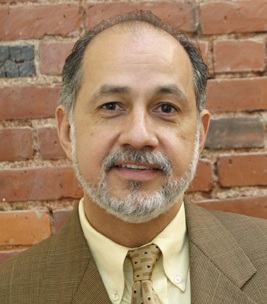
Author
Dr. Roberto Miranda
Summary: The fifth virtue of effective leadership is knowing oneself. It is essential to take time to reflect and examine one's life in order to grow as a human being and as a leader. The effective leader knows how to balance work with intentional rest and solitude, and takes time to recharge their batteries and sharpen the saw. It takes courage to prioritize intentional rest, but it is important for personal growth and effective leadership. The ability to know oneself is related to the ethic of intentional rest and reflection.
Knowing yourself is crucial for effective leadership in ministry. This requires reflection on your life, environment, and spiritual journey. It also involves being honest about your past and how it has affected you, including any family system dynamics. Understanding these aspects of yourself can help you compensate for your weaknesses and tendencies, and make better decisions in leadership, including choosing a team that complements your strengths. It's important to know your gifts and spend more time in those areas, while also being aware of your limitations. Surrounding yourself with people who are strong in areas where you are weak can help you achieve balance and be a more effective leader.
Knowing oneself and one's strengths is crucial in leadership. Leaders should focus on using their strengths to benefit the company or ministry, and delegate tasks that are not their strong suit to others. It's important to take time to develop and cultivate one's gift, even if it means sacrificing time that could be spent doing other tasks. Self-reflection and asking for help from other leaders can also be beneficial in identifying weaknesses and areas for improvement. Transparency and courage are necessary in admitting faults and seeking healing. Asking someone for their honest opinion on areas for improvement can also be helpful.
The ability to observe one's environment is an important virtue for leadership. This includes examining and knowing the environment in which one moves, getting in tune with the environment, and adapting leadership to that environment. For example, understanding cultural temperaments and adapting behavior accordingly can make a leader more effective. Observing the environment also allows a leader to obtain valuable information and adjust their leadership accordingly. Confessing offenses and praying for one another is also important for healing and mutual support. Finally, honesty, sobriety, humility, transparency, and self-knowledge are all important virtues for effective leadership.
The importance of observing and analyzing one's environment and oneself in order to adjust and act appropriately is discussed. The speaker emphasizes the need to observe and understand the human dynamics of a situation, including the educational level and temperament of those involved. The importance of waiting and gaining intelligence before speaking is also emphasized, as well as the need to read signals from others and adjust accordingly. Finally, the speaker stresses the importance of knowing oneself and one's environment in order to be a successful leader. A question is raised about whether observing reactions could be limiting or pressure-inducing, but the speaker encourages the practice as a valuable tool for effective communication and leadership.
In this teaching, Pastor Roberto Miranda emphasizes the importance of having various qualities such as transparency, humility, self-knowledge, and sobriety while intervening in someone's life. These qualities are like tools that one has in a tool bag, and if used properly, they can make a person an effective leader. Miranda also stressed the importance of knowing the person's environment before intervening and being careful with one's words. The prayer at the end asks for God's direction, wisdom, and conviction of the Holy Spirit so that one can analyze themselves and take appropriate actions to have an effective and efficient service in the midst of God's kingdom.
(Audio is in Spanish)
I promised sister Cecilia that I was going to be the first to make an observation and I know that she wanted to do it in the end but we couldn't, so sister let us know what you had.
Cecilia: Honesty
Cecilia: That many times we base ourselves on the fact that I am honest and then what you also said, we seize people with truths according to us, because I am so honest, even at that moment is when we should ask the Lord for wisdom the most, how respond to people, not based on me being very honest and letting him go. No, we must ask God for mercy because he had it for us, for others.
Amen. Amen. That is very important. So now there is a fifth virtue that I want to identify. For summary purposes remember that we have talked about integrity, sobriety, humility, transparency, the fourth virtue, and the fifth virtue is knowing yourself.
The ability to know ourselves is absolutely essential. The effective leader is a person who knows himself. One of the great Greek philosophers and also the Greek oracle, a place in Greece, in Athens, he said know thyself. Someone also said, a philosopher, that the unexamined life is not worth living. That's very true.
If we do not reflect on ourselves, on what we are living the truth is that life, the effective, growing, influential, creative person, is a person who reflects on himself and knows himself and examines himself, and it takes time to think, to reflect.
One of the things I say about the life of leadership is that it requires silence, it requires withdrawal, it requires reflection, it requires time apart. Something that modern culture does not recommend many times. Modern culture is in the frenzy, the continuous action, the continuous noise.
I was in New York with Meche this past weekend, brothers, and New York is a place of continuous frenzy. You get into Times Square, and this is science fiction, this is a crowd everywhere. He is assaulted by all kinds of sounds, images, lights, it's incredible, people live in a perpetual state of stimulation and that's why when they come to Massachusetts they feel like they have to be taken out in an ambulance because they can't tolerate the silence, the stillness of a city which is much quieter. The frenzy of life, while the person, look, the leading person, the person who is living a creative life, I have always said that to my daughters, learns to live with herself in solitude. You have to feel comfortable in your own skin. I love solitude and silence, I am a monk who lost his vocation somewhere, but I love silence, I love solitude, I love a place apart, I love nature, I love stillness. And that's where I nurture myself for the public.
I believe that one should have their separate place where one takes refuge and where one heals and gains strength and reflects on their experiences. And then from that place of refuge and retreat you leave with charged batteries to intervene, heal, bless, dialogue, talk, preach, teach, influence, but what happens with a cell phone after you use it a lot? It's true that this little thing, the bar begins to be made... and then it begins to beep, beep, beep... meaning I'm going to cut off your light and water right away. And you have to reload it, you have to put it in again... everyone is like that. Every object, every organism needs to stop and recharge because every organism feeds on energy. Everything that exists to produce something needs energy and energy is spent and has to be replaced.
Many people are simply doing, doing, doing, working, working, working and don't take time to reflect on what they are experiencing. And they never get to know themselves. We could talk a lot about that, about retirement and silence and stillness and solitude. That to me is one of the great hallmarks of leadership. The person who always needs to be listening to a radio, watching television or with the window down to hear the other cars that are running, is because they don't feel comfortable with themselves. There's something he's running from. But when you are comfortable with your life and with your demons as well, you can reflect on those things and you enjoy the process of examining and then returning to action again.
But when you are only working, working, working, you will never know yourself, you will never have the opportunity to fix the internal house. All the objects of your internal house are going to be thrown everywhere and what happens if we do not take time to fix the house there is a continuous and growing chaos, and the experiences of life, the contacts, the failures, the triumphs, we do not locate them in the right category and we cannot grow as human beings. But how beautiful it is when we learn to reflect on life and take time to order the interior. And then return with more power than ever to active work.
And because it is so important that we, if we want to know ourselves, we are going to have to take time to reflect. Brethren, if you are too busy to take time to reflect, you are too busy. Even with the things of the Lord. Because if you see the Lord, he says that he withdrew to a deserted place, he says, to pray from time to time. He took time, he left the crowd because he knew it was important to recharge, in his human dimension, in his incarnation as a human being he had to submit to that human dynamic, to that need of the leader to take time. And from time to time you must take time, go to Gloucester, go to Rockport, go to Maine, and spend a day there alone or alone, at first you are going to get parakeets, you are not going to know what to do with yourself because you don't she's used to it, but then you're going to find that wow, look, I'm not so bad after all, there's enough here to think a little bit and listen to the voices within. And you discover that this is good and you come back refreshed, refreshed. Look, tie the boys to the leg of the table and leave them there, go away and pray to God that social service doesn't come to check on you, but find some way, find some way. Leave your husband or someone with them and take time because I tell you that circumstances are never going to give you time, life is going to tell you, oh, you know what? When you can say one day that you are leaving, Estela, you can say one day, wow, I am here and I have nothing to do today. Because we are leaders, it is because we are active and busy people, so the leader has to take time to recharge the batteries.
Steven Covy in his famous book Seven Habits of Highly Successful People, which I highly, highly recommend. Seven habits of highly effective people. It is one of the most powerful books and it is in Spanish, it has been translated a lot. He talks about taking time to sharpen the saw and he uses the story of a tree feller, the lumber jacks, a tree feller in the woods, a sawyer, let's say a sawyer, let's call him a sawyer, we call him a sawyer. He says, think of a sawyer who has his saw there, and who is cutting trees all day, over time the saw loses its edge. And then the sawyer has to apply more force to cut the same amount of tree and he says, I'm too busy to think about sharpening the saw and what happens? Over time it wears out more and more and the saw wears out and itself wears out because it has to apply more force. Instead of stopping, go somewhere, sharpen the saw and come back again and then do it more effectively.
And so are many of us. Many times we are tired and we are gradually losing energy, we no longer love the ministry so much, we lose our taste for words, we become irritable, our marriage, our friendships begin to decline in quality, we begin to get depressed, we sleep badly, we We lose the taste for life. Because? What's going on? We're giving, giving, giving, working, working, working and we're not taking time to sharpen the saw and we don't have the courage to say, you know what? I need a morning or I need…
Look, you know what I do sometimes, one of my therapies in life is when I'm really burned out. Sometimes I go to bed at 6 in the evening and sleep until 8 in the morning. I don't sleep, unfortunately because at midnight my eyes are like two light bulbs on, but I stay there and then I fall asleep, I wake up, I pray, I think, I solve the problems of the world and I get up now, but I saturate my body with rest and my mind at least with silence and stillness. And the next day I get up and I feel ready to continue. That's the only thing that heals me sometimes. People have been predicting my death years ago and what keeps me in love with the ministry and working is that, that sometimes I can take a moment and heal myself and do something that I have a little fun for half a day, one morning, what that is, an outing, a weekend and that, well, keeps me going, allows me to return to the charge because otherwise one burns and forget it, and when they come to see there is a corpse instead of a servant of the Lord, a servant of the Lord
So one has to have the courage. Look, brother, let me tell you, if you want to grow in your life, your ministry, take time to rest, reflect, think, meditate, recharge your batteries, sharpen the saw. That is a very powerful concept for life and for leadership and you must do it by yourself, by yourself. I have visited many monasteries, for example, here in the United States, because I like to take time to go to those places that are loaded with historical associations of rest, silence, stillness, and that is beautiful.
You take some time to recharge your energies and refresh your outlook on life, your ministry, your family, your inner self, whatever, but it takes incredible courage because life is going to tell you that if you take your hands off the machine is going to fall to pieces soon. And that's a mistake, that's like a wrong messianism, we believe that if I stop for a moment the world is going to fall apart. The world will continue to be happy and the day you die they will sing 3 hymns for you, they will nail the coffin well and then they forget about you, at 6 weeks she is looking for another husband or whatever, or the children are happy over there . Don't let Meche hear me, the children are happy. Oh, yes, dad was good, that this, that that.
But look, the world goes on, the world goes on, life goes on and you discover that you are not as essential as you thought. That is why God invented Saturday, to remind us that the world does not depend on us, but depends on him. That was the reason why God invented the Sabbath. It is an exercise for humanity to remember that if you take your hand off the wheel the car continues to travel as well, because God is the one who is driving it, not you. He lets you believe like parents do to children, that it's you who has the wheel, but it's God.
And I believe that one of the most powerful things that you can do as a leader, one of the most powerful investments, I assure you, in your life is that. Learn to take time and all your emotions and your mind and your instincts will be screaming at you, don't do it because the world is going to collapse. do it.
Many times I am packing my bags to go on vacation and I feel guilty but you know what? Not anymore, I put the suitcases in, I get in the car and I go quietly. They don't hear from me until two weeks later, not that much, but… I've learned that the world goes on and that you have to learn, please do that. Remember, take time out of life and effort and invest in yourself and your ministry, your growth, and every day we must do that, take a little bit of time. My favorite time is the morning, early morning, when it is still dark outside and I sit with my cup of coffee in my favorite place to read, reflect, and pray. Look, I don't want to get out of there, it's 8 in the morning, I have to get out, no, I don't want to because you get used to that.
And if you have those times, every day life is much better. And then also take more time, a weekend, a noon, learn to establish rhythms in your life of rest, work. Work hard, give your all to life but also right now rest hard too, rest with intention and purpose and enjoy every second and forget about the rest. Because sometimes we are resting but we are contaminating time with other things. Do your best to learn the art of rest and reflection and recharging your batteries and sharpening the saw. This phenomenon is very important. Yes, Stella.
Stella: ………….
Exact
Estela: …….. it's going to happen to us by itself, …….. time or one day to do that, it's not going to happen.
If you don't have that ethic of intentional rest, it's never going to happen. And as I told you, one has to have the courage to say, you know what? God is powerful to reserve things while I do what he has told me to do.
He says be anxious for nothing, and that applies to ministerial life. But again, all of that is related to that quality that is there, of knowing ourselves. That is just the prelude. You cannot know yourself if you do not reflect on your life and your environment, and on your spiritual journey.
The person who knows himself is a person who is in tune with his wounds and personal defects. The person who knows himself knows what his deformations are. Let me finish this for no, and then I'll get back to you in a little bit. That is one of the very important things, that you are in tune with your wounds and your personal defects. Many times we believe that if I look at myself honestly I am not going to love myself and many times we do not want to know ourselves because we are afraid of what we are going to find there.
Look, assume the worst. We are all a mess and we are all scarred by sin and distorted so right now take a deep breath and say ok Lord thank you that I am a mess. And from then on it starts working, but just assume it is so and don't worry about what you find there. Your neighbor is probably worse off than you are so relax and be honest with yourself. You can afford to say, what human being can say that he does not have serious and serious deformities, we are a disaster. Only the grace and mercy of God allows him to see us with hope.
But then after assuming that, examine your past, examine how your life has affected you, examine your parents. Many times we are afraid to admit that our parents made serious mistakes because we think again that if we admit we are being disrespectful, irreverent, dishonoring them, or whatever. No, I think we can admit, yes, my parents failed in many things. Because if you are a father or a mother, you will immediately know that you have failed in many things too. That doesn't mean anything, every father fails and every mother fails, but many times our family past has distorted us and that affects our leadership.
You know, studies have been done, for example, of people who work in caring for people, psychiatrists, psychologists, sociologists, pastors, people in the area of social work, it has been discovered that people who work in the areas of care of souls and people, many times they come from backgrounds where they were what they call an 'adult child', an adult son. And many of these people sometimes played stabilizing roles in their family, between mom and dad. They were the person who answered when dad came in drunk, whatever, calmed dad down or got in the way. She was the person who often got sick when mom and dad were going to get divorced so that mom and dad would pay attention to her so they would forget about their problems and not get divorced. There is a lot of play that human beings do. All this is called under the family system, that there are many things that people do to stabilize a home and adult children many times, they were people who stabilized homes, who cared for minors, who comforted mom when dad left with his beloved , or abused her or whatever, and then these people already create a need to serve others, and when they reach adulthood they subconsciously go to professions that continue to do the same thing they did as children.
So, look, we don't know that, but it is there and that prevents us from understanding why we are doing things. Many times we are obeying hidden agendas that we have. We need people to approve of us, we need to feel needed and all of this often distorts our performance as leaders and prevents truly transparent leadership, we are doing things for the right reasons and not for others. And that makes our leadership often fragile and we break easily when certain pressures come, of which we are not aware that we are fragile to them.
So, the more we know about these aspects of our life, the more we can then take care of them. It is not that we are going to completely overcome them because unfortunately I have to say that these things are never overcome one hundred percent, even after the healings that God does. But by knowing them we can take care of them and be more aware of those areas, how they deformed us, affected us and then we can maintain a balance.
The person who knows herself knows how her past has affected her. That is what I am saying, the connection between the past and what you are now... if you were criticized by many when you were a boy or a girl, now as a leader you will not like it when they criticize you, you will be ultra sensitive to criticism. So you have to understand that to correct a little and compensate for that defect from the past and when you see them reacting strongly or too sensitively to a comment, wait, that's because I have that tendency and this, this and the other happened, and then you correct that and adapt to the true way of acting.
The person who knows himself also has what I call introspection. Introspection means the ability to look within and to see within. The introspective person is something very valuable, very important in the ministry, the introspective capacity is key. Examining ourselves, that's why I tell you that it's important to take time. For you to examine yourself and know your inner springs you need time for it.
But the person who knows himself takes time to look at that interior that I was talking about a moment ago. So, you also know its virtues and its limitations. What I said before about the Apostle Paul, Paul knew that he was a deep man, knowledgeable of the word of God, he had received great revelations, God had called him to minister to the Gentiles specifically as he rightly says. He knew his virtues but he also knew his tendency towards pride, the fact that what God had revealed to him could make him believe more than he was, all these things, so he also knew his limitations. And the leading person must know both one thing and the other. He knows well what you have, and what you are worth and where you have received it from, but you also know that you can have a tendency towards vanity, you are too, as I say, sensitive to criticism, you can be intolerant, you can sometimes be impulsive, you can sometimes commit to more.
For example, one of my defects is that I commit many times more than I can deliver, more than I can give or do. Because we pastors are like that, we want to please and when someone tells you something, oh yes, don't worry. And Meche tells me, look, don't promise so much. Sometimes I tell people, yes, call me. I meet people on the street, I give them my email and then they write to me and I don't return the email because I can't, but it is a defect that one has, because one wants to please but at the moment I am willing to do whatever for that person, but later, wow, time, lack... and I ask the Lord to always help me, Father, to put a zipper in my mouth sometimes when I see needs, because the tendency one has to promise, to want heal, save, help, I want to be accessible to everyone, but the truth is that it is a lie. I can't do it, even when I want to. Also, there comes a time when I no longer want to be with so many people.
So it's good not to promise so much, but I know that, and every day I ask the Lord, help me, Father, to be more sober, and help me not to say so many things. And sometimes when I go on a trip I have to tie myself with a hundred ropes from the beginning mentally to say no, I'm not going to say that I'm going to do this, that I'm going to do that. And I ask the Lord, Lord, help me not to commit more than I can or speak more than I should. Because I know that this is a trend so I have to correct it. It's like the sniper who knows that the rifle when fired tends to go a little to the right. So what does he do? When he shoots, he throws it a little to the left so that it goes in the center. And one often has to balance their defects and tendencies, knowing what they are and turning a little in the opposite direction to stay in the center. That is the idea of knowing ourselves.
Another thing that I do not have written here, but that is where the importance of observing ourselves comes from. I also say here, take time to reflect, I already discussed that. Read about counseling, psychology. That is very important. Read, there are so many good books, when you read about how psychologists think, how they analyze things, then you yourself will learn how to examine yourself. There are good books out there on psychology, on family systems.
Another thing, I already said honesty with respect to parents, to the family. I remember what Romans says, Chapter 12, no one has a higher opinion of himself than he should have, but think of himself with sanity, according to the measure of faith that he has received.
It is the balance that we have to have, not think higher nor lower by implication, than we should. This is the starting point for many key decisions in leadership, knowing ourselves.
If you know yourself, you will be better prepared to guide your leadership performance. What do I mean? For example, in how you choose your team. If you know that you are not strong in the area, let's say, of organization, but you are strong in the area of vision, that is, you are very good at conceiving ideas, plans, visions. There are people who have a very good capacity to develop ideas and ministries and things, but they are very bad in the area of execution and organization. They are not good in the area of detail or planning or writing things down, or keeping records. The left side of his brain has not developed as much as the right. The right is the area of vision, art, all that; the left is analysis, system, reasoning, numbers. So there are many people who have the right side, the more developed artistic, conceptual, visionary side. The left side, the more mathematical, systemic, rational area, so to speak, is less. What should a person who is more visionary than anything else do, what should he do? Let's see, Patty, what should I do?
Patti: …. A person who likes to pay attention to details
Exactly, so make sure that you have people with you who are people who cater to that and who are 10 times better than you in that area. That's why you have, in your team, you have to have people sometimes who are better than you.
Who was? Henry Ford, I think it was, you know who Henry Ford was, right? The inventor of the car, the first car and one of the great industrialists of the United States. I think it was him, he says he asked that they write on his epitaph, on his grave, he always knew how to surround himself with better men than him. That was his epitaph. Because thank God for the person who knows what their flaws are and knows how to adjust.
It is said of another great industrialist that he was accused of being stupid, ignorant and he sued the magazine that did the article. What interested him was proving that these people did not know what he was talking about, so in his testimony they asked him as if he did, do you know the circumference of the world or something like that? They asked him a question like that, and he said, no, I definitely don't know. What's more, he said, there are a number of things that I don't know, but I have a person in my office that I press a button and he gets me all that information in a moment.
That is, in other words, he knew that this was not what he needed, for him his skills were, his organizational capacity, his broad vision, his ability to deal with people, what do you need, today, on the Internet? there are a number of things that you can discover in an instant, but there are other things that you have to balance. So if you have a weak area, surround yourself with people who are strong in that area. You don't have to be a know-it-all, nor can you. But make sure you have people who complement your skills.
The great politicians, the great presidents surround themselves with very, very great people. Ronald Reagan was another one of those people who was not a great brain. Ronald Reagan was not a very intellectual man but he surrounded himself with very capable people who then allowed him to shine in his area of strength. That is so, but if you do not know yourself, if you do not know that this is your weakness, what will happen? You will not be able to know then who to surround yourself with.
Now, if you know and admit that your weak area is, say, organization, well, surround yourself with people then who know how to deal with organization. If you know that your area is not human relations and that you could live on a deserted island and not care if there are people in the rest of the world, and you know that you are a sometimes confrontational person or that you do not have much patience , surround yourself with people who can work with people, find yourself a good public relations officer, have a person by your side who makes you shine and who fixes the mess you create when you say something you shouldn't have said. Then you have to have plugins yourself. And I'm not afraid to admit, that's not my area of strength, but I do look for people who can complement you and strengthen that area.
But if you don't know yourself and you don't know which foot you're limping on, you're not going to be able to find a good-sized cane, so it's a balance that's needed. Many of the leadership decisions come from there. Knowing your gift is important. What is your strong area? And use that area and spend more time in that area.
For example, if your area of strength is, again, let's say your area of strength is human relations and your firm or your ministry, let's say a businessman, a businesswoman, or a person who runs a non-profit company, a non-profit agency, if you know that your strong area is human relations, that's tremendous because with human relations you can get money, you can get influence, you can get clients, you can get human resources for your business, for your firm. A person who has skills in the area of human relations is a treasure for an organization and if the main leader is his strong area, look, it is tremendous.
So, that leader should not be in his office writing publicity materials for the agency or crunching numbers, crunching numbers from statistics. It's a waste of your skills and your time, and the firm is losing. No, put that person out there, on the street to bring millions of dollars to the Company and to put the face of the Company before the public. That is his strength and that is his gift. Find a person who is good with numbers or who is good with the area of planning and, as much as possible, let that person work in your strength, because that makes much more money for the Company and that has more leverage, as they say. he has more influence, more drag in the performance of the Company or the ministry.
But for that one needs to know what his gift is and then work more in that direction. And we could be here for a long time, for example, in the ministry, in the pastorate, what are the gifts of the pastor and how those gifts can elevate the congregation, develop it further. It is an area, for example, right now in my life in which I have to… what are the gifts that God is developing in this stage of my life. And I have to be emphasizing that area because that is going to be of more benefit to the congregation. So I have to surround myself with leaders, develop leaders, that's why we're on this issue.
Why am I here today spending 4 hours of my life with you? Because you have incredible power to advance our church. And as you grow in your leadership that gives me more freedom to do other things and to be in other dimensions that can bless the church in more extraordinary ways.
Let me tell you because this has no limit. On Tuesday I went to a men's cell meeting and they threw me the chick that they always throw at me from time to time: pastor, we don't see it enough around here. Several times they threw it at me. Yes, then I told them, brothers, in fact it is the third time I have gone to the group and Omar has gone, Gregory has gone, Samuel has gone, Pastor Sabano has gone, Gonzalo has gone. Those people have received more than any other cell in the world from the top leaders of the church.
But I told them, brothers, I cannot spend all the time rubbing the tummy of... I do everything possible but my position demands that I be in other things because one has to... the best use of time and I believe that according to a church As it develops and matures, it has to understand this more and more, give more space to its leaders so that they can be where they can have the greatest impact on the development of their congregation.
And likewise you in your ministerial work, for example, half a day that you take to reflect on, say, the ushers or the person who leads a group, buy a book on ushers, or on adoration and take time, take a Saturday to read 20 pages on how I can improve my ministry and what are the things I must do to take it to another level. That time you may not be able to do other things in your ministry, but that time that seems worthless is precious time. Because when you already invest then you will be able to better understand how to direct your ushers or how to better direct a time of praise or how to better prepare, what are the dynamics of worship or whatever.
In the area, let's say, the financial campaign. Ok, take a morning and read about what is done to clean up a financial campaign in a church, in an institution. That time, perhaps you will not be able to have a meeting that you would like, but it is much more valuable because it will develop you in that important area that is of value to you, of necessity to you.
So, it is important that one, in order to know one's strong areas and then use and develop them, that means that many times you have to, we go back to the same thing about taking strategic time to use it to the maximum, use your gift, the gift that You know that you have, you have to use it to the maximum and that requires, then, that you develop that gift. Or if you don't have that necessary gift, at least learn a little about it so that even if it's not your strong part, you at least know a little about it.
Do you see how these things blend into each other? Leadership is something very complex. But many times we don't take time to strengthen our gift or to use it strategically. So we are simply doing, doing, doing, working, working, working and we don't take advantage of it. Because? Because we are not using the gift properly, we are not developing it strategically, we are not exerting influence at the point of maximum palpation where any intervention obtains a maximum result, but what we are doing is little things.
One of the problems of leaders is that we are constantly working and we do not take fertile time, what I would call fertile time, where it seems that you are not using it well, but it is a deeply pregnant time that when you invest it, it goes to pay incredible dividends in the future.
So we have to have that capacity to understand how to take time to cultivate the gift that God has given us, develop it more in secrecy, in stillness, in silence, in inaction and waiting for then when we trigger that gift, have maximum impact. But for that we have to know what our gift is, if we don't know it, then we don't know what it is and how we should use it. But in our ministry that is very, very important.
That also means then that other people are going to have to develop, while you are doing that, you are going to have to have other people who can take the slack, the rope that was released now someone else has to take it, because you released it a little to do what you have to do, but there are two people who can…
That is why I am here, because this time that I invest in you, I hope that with the help of the Lord, it will pay dividends that will allow me then, if I took 4 hours for this and the preparation time, but possibly that Let me have 24 free hours in the future, so it's not bad, a 600% return, right on the investment? But you have to think like that strategically and long-term in order to develop your skills and develop your leaders.
Patty: In the same line of thinking about how to know yourself, I think that in recent years I'm learning that sometimes you spend your whole life doing things, developing your leadership, but very rarely do you ask yourself, you ask well clear and fundamental that will help the person to identify those weak areas and complement what is being done. And there are 3 questions that I read in an article that struck me because they are very deep questions and one can extract so much material from them and one of them was, one wondering, what is my leadership style? And from there one can get so much because if you know that your leadership style is just giving orders, obviously you have your weaknesses and then it helps you to know how to improve that.
Another question was how do you make decisions, what is your decision-making style? Again, that will help you then to see who you need around you. And the last question was, how do you balance your life and work? That goes a lot with the previous point, then realizing, there are going to be moments in my life that I am going to have to say no, and that does not mean that you are a bad leader or an ineffective leader, so I have learned that These questions are fundamental and then help to know your strong areas, your weak areas, and be realistic with yourself.
Totally, well said. One of my weak areas is precisely knowing when to say, I can't, and saying no, that little word is one of the most powerful words in the whole world: 'no'. It has a lot of power, those two letters have a lot of power and we have difficulty using them because we want to please and we want to bless. However, now knowing that this is a problem that you have helps you, as I said, when you shoot, throw the rifle a little to the side to correct its tendency.
You have to surround yourself with people who will keep you accountable in that area of not saying yes too much, or committing too much, or approving too much. Many pastors do not know how to say no, and it is one of the things that weakens our leadership because we want to serve, love, please, so sometimes they take us by foot, as we say in good Dominican, they abuse us and then they are throwing us around here And over there and the church is a disaster, everyone does what they want and sometimes people even emotionally bribe themselves, they blackmail you, they blackmail you, telling you that you are a dictator, that you don't know how to listen to people , and all that, because what they are saying is, let me do what I want, if you don't let me do what I want, then you are a dictator. You have to be careful with that, because we want to be liked and people kind of manipulate that a little bit.
Fanny here, sorry I haven't been in a while...
Fanny: It is important…..not only to set aside and plan the time but to plan what is going to be in the time of retirement
Totally intentional.
Fanny: and an important part, for example, to get to know ourselves…. I don't see, or I don't see them or sometimes I blocked when…. certain area of my life and I don't see it, but I learned that the Holy Spirit can dominate those areas. …. that time of withdrawal to leave a time to ask the Holy Spirit for that...... wisdom..... about myself, ask the Holy Spirit.... He shows them to us, then from there… work with the gifts in these areas. First…..inner healing,…he needs to be healed…so that he can then work on his gifts and…easier…. also the weaknesses, the Holy Spirit guides us, the books, planning the retreats so that…. hence with something tangible that…. or not yet… Holy Spirit……. at the same level, you're still there, you have to keep fighting with that area…. books and prepare one ahead of time….. that's good too
Of course, prepare before taking time to reflect, so that we make the most of it and ask the Holy Spirit for wisdom. I had written here, psalm 139, end of psalm 139.
"...Search me O God and know my heart, try me and know my thoughts and see if there is in me a path of perversity and guide me on the eternal path..."
That path of perversity does not necessarily have to be lewdness or immorality. A perversity path is anything, a twisted path, I would say, anything that deforms or distorts your life, your ministerial performance, your leadership. Lord teach me show me and then guide me on the clear, straight, true path. This is very important. That is one of my key verses in life because it points to knowing ourselves as leaders.
He has waited so long that I am going to give you time with interest.
¿: Brothers, I have been thinking…. You know yourself and you were talking about the time you have to take to reflect on yourself and recharge your batteries. But it also came to mind to be able to recharge the batteries but also to be able to have another brother leader to be able to ask him for help because when you are a leader and you work a lot with brothers spiritually you also wear yourself out, then you need help. And sometimes one as a leader doesn't want to say certain things, because as you said, because I don't want to, I feel ashamed for what I'm going to say, but I think that when one manages to break that barrier and manages to arrive as another brother and tell him , look, am I failing or have this problem, this and this, it helps a lot. That also injects us with more strength.
That is where transparency also comes in, which is one of the most difficult things, when you are in an area that will lower your image, which you protect so much, being able to tell someone and trust someone and confess, but it is tremendously healing. And that requires people then who can keep the secret and who don't underestimate you because you had the courage.
Look, in that office, brothers, incredible things are written on the walls, invisibly but they are there. There people talk about everything. And many times I have found myself with great joy telling them, you know what? Thank you, now I respect you more than I respected you before. And they say things that are heavy because I love and admire people who bring things to light and commit themselves because they want to experience the Lord's healing. And that instead of lowering them in my eyes, what it does is that it magnifies them and lifts them up because they have had the courage. That requires courage.
Natalia: ….. if you considered…. To ask someone what they are, someone of course that one considers excellent, if it was prudent to ask, what do you see in me that doesn't work, that I can't see.
Of course, that is a good question and again, it requires a person with maturity and observant capacity to give you a good answer, and also with spiritual strength that can tell you things in an appropriate way.
Because I definitely believe that if you find that person, do it without hesitation. Now, having said that, again, that's my answer. Now I simply add an asterisk to it and it is that we be careful who we trust with such a great privilege because it is a very delicate privilege. You are giving that person a glass of a delicacy that if he squeezes it too much he will break it immediately. So many times when we entrust a vision, for example, very dear, very loved to someone and if they don't know how to handle it, many times it will dirty it and it will kill it or at least it will complicate it. So one has to know with whom one shares those levels of intimacy and delicacy because if not many times they will not know how to handle it and it will impoverish you instead of enriching you. So one has to be careful because sometimes people also project their own issues onto you and then they are seeing things that they are not really seeing. They are seeing them through their own shortcomings and then they are going to tell you things that are not really you, it is them projecting their issues and their problems onto you.
So it is good to be careful, to choose people who are truly capable of handling that beautiful cup, that treasure that you are placing in their hands.
Carmen, this way, and then Gloria here. I want to target people who, to balance a little, but we'll go back there but I want there to be a good diversity. Carmen.
Carmen: …… what I was precisely going to share was what I know… about talking and I give an example, the women's retreat that we women look forward to this time where they are also given the opportunity to dialogue…… and sometimes when people who have seen how the event has developed and who are satisfied in the evaluations see things as horrible and that is where the leader has to see well planted what he wants because if we take people away we would be changing for …… to satisfy, and all the people will never be satisfied no matter how good the event is. There then we need God's direction, to know in God's eyes, if what I am doing is satisfied by God, if God is satisfied with my work to please him.
There has to be that balance, again, same thing, there has to be a balance in those areas.
Gloria: ……… about…. Someone comes to ……… from a situation. The leader must be aware that …………. the situation and not the person because that creates a complex situation. If he is clear ………….. the reaction will be healthier …….. when he takes …. Staff. Many times ………..
Very good, separate the situation from the person. It is speaking to me or it is speaking to my situation or action. Yes, because if we don't personalize and I also think that the person who speaks those things should also try to separate that too. If you are going to offer criticism, as much as possible use language that is not judgmental and does not tend to put the person down or make the person feel condemned or targeted, but instead choose language that is rather edifying and that strengthens instead of weakening. That is very important.
Cecilia: It's just that I think, always going back, we're talking about the same thing, but about honesty and everything, with regard to being honest, I always knew that the Lord taught me that the main cell is the home where everything begins, kids life principle and all. Being honest with your children, all that is possible, always speak the truth and based on that if they ask you if you are honest or not, because I am admired 8 days ago I had a conversation with a person who said that They bring people with testimonies and everything, and from their own congregation, there are no people with good testimonies. Do you know what happens, sister? Many times the family does not know the good testimonies because some things have been wrong, and so they prefer to go and tell them elsewhere, rather than tell them in the congregation itself. Wow, I was frozen because I believe that God taught me to be honest with my children. My children know my life, you know my life, and it is a testimony that I give and I am not ashamed but because God rescued me then I believe that this is an important part of honesty, but if there is honesty in a home , there is communion with the children, first of all it is so important and to go out and give it because if there is no communion in a home it cannot be…. And the church expects the family to come honest because sometimes we think honesty is in the church, ………. From everything I did or do. No, you have to be honest from home, so that children grow up knowing that they can face everything with truth and honesty. So the church can be an honest church because it has honest families.
Amen. Amen. The family is the ministerial, missionary front number one and that is where we have to practice these virtues. The primary leadership we have to carry out in our home, with our own, those closest to us. And that is where we really test ourselves because there we have people who are seeing us 24 hours a day many times and know all areas of our life. And if we can't deal with that, the one who can earn the respect of his family and loved ones is more important than the one who can earn the respect of his congregation, I would say, because his family knows everything there. And we must aim, that is our primary rule. That is very important.
What the Apostle Santiago says here, "... confess your offenses to one another and pray for one another so that you may be healed..."
There then two words, confess and pray for each other. First comes the confession, mutuality, I call that mutuality, where the leader, the leader, you know that the Pope has his confessor, right? Who confesses to the pope, imagine? There has to be a human being who confesses according to Catholic theology, and who confesses that man. But there is a person who is the pope's confessor, there is such a thing. And that is the person to whom the pope confesses. Can you imagine that? What kind of person does that have to be? First able to keep a secret because Oprah would give anything for that confession, to have her on her show. Because? because it is recognized that we all need to confess something and speak and in the confession there is healing.
Now, after confession comes prayer, ministering to one another. Another receives then prays for God's forgiveness, healing to come upon that person. That part that you also point out about that other aspect, once you know something, well, speak about it in a very appropriate way, very carefully, because there are people who will not be able to receive what you are saying. And it is important.
Well, there is one last one, well there are two more, there are 8 virtues that were here but I want to be faithful to 12:30, okay, but we are going to do one more and we are going to leave it there then.
Another important virtue and again for purposes of summarizing the virtues that we have indicated: integrity, sobriety, humility, transparency, knowledge of oneself, or of ourselves, and a sixth virtue that I want to point out, very important for leadership is the ability to observe our environment, what we call the environment. What is the environment? The environment, the area in which we find ourselves or move.
That comes with the ability to know ourselves, but it's a different thing. Here it is not so much knowing ourselves as knowing the water we are navigating, the area where we are moving, the community in which we are ministering, the place or situation where we find ourselves at a given moment in the ministry.
And that person observes his environment, among other things, 1) examines and knows the environment in which he moves and gets in tune with the environment. For example, I am Dominican but a minister…. I dominate myself and when I preach I'm only talking about rice with beans, sancocho and Dominican sayings and all that. What's happening? I alienate and lose 90% of my congregation, 80% of my congregation. I have to know my environment and adapt my leadership to that multinational, multiethnic, multicultural environment that I minister in order to get in tune and be effective. In a sense I have to question and bracket my personal human aspect and get in tune with something much bigger, broader than me.
That is to say, if I do not examine my environment then I cannot be effective. There are many people who cannot be effective because of this because they are too much from one country, so what happens? That then they can only have people from their country in their congregation and the rest feel alienated, they feel ignored. So the leader has to understand that, if you are ministering in your leadership to a different group of people, you have to understand that in order to balance things.
For example, in the area of worship, I say, well, from time to time include hymns because there are people who were raised and nurtured on those old hymns and not everyone grew up only on praise and adoration. So, if you know your congregation is going to swing from time to time, put a hymn in there, Strong Castle of our God or How to be sad, or whatever. Throw your hymn there so they chew a little and feel that they can transport themselves to their old time there in their country or whatever, and they will feel grateful.
If you have Caribbeans in your group, look, from time to time, skip a joke there because Caribbeans like the joke or make a reference to mangú or whatever and you'll have them eating out of your hand, because they say, wow, this person knows where i come from and who i am. And then when you want to put the knife in for a criticism, they will receive it because they are already happy.
You have to understand these things, that is part of effective leadership because you know your environment. For example, the South American is more formal in his things and if you get to a South American group and start addressing people immediately, you, you, that sometimes shocks the South American because the South American is, it's more Colombian, your grace, and... And they do twenty thousand genuflections and things because they're formal. The Puerto Rican and the Dominican, right away you, because we are more informal and so if you know your surroundings and your environment, you will adapt. If you're among Central Americans, for example, again there's a level of more formality so you can't come up with jokes that are too fast or show off too much confidence because it will alienate you. And sometimes people commit those things because they don't understand their environment.
And sometimes as leaders, because we don't know the people we're ministering to and serving, we don't understand the cultural temperaments, the temperaments of the people we're dealing with, and so we miss opportunities to be more effective in our leadership. Whereas when one learns one develops that eye, from the moment you enter an environment you immediately understand where you are and you adapt your behavior to that environment and you can be much more effective.
So if you go to China or Japan you already know that even if you don't know all the culture, these people are much more formal, you have to take time with them, you have to be much more courteous and use more formulas in all things.
One of the things, for example, Americans, American businessmen when they come to Japan and go, let's say, to have lunch, they have a business meeting and they go to have lunch. The American wants to start talking business right away, and the best way to lose a Japanese client is to start talking business right away. Because the American comes with the thing that you have to take advantage of time, time is money and this is a business and we will immediately go back to what we came here for. The Japanese no, the Japanese want to sit there to talk to you, to talk about the family, to talk about the culture, and then after about 3 hours then yes, if everything goes well, in 15 the business is resolved because they already love you and they like you, etc. and it's a matter of closing the matter. But when Americans start talking about business right away, it's offensive and they're probably hurting their chances of success because they don't know the culture, they don't know the environment.
So, the leader has to know his environment, he has to examine and know the environment in which he moves: who are your leaders, what are their temperaments, what is their culture, what are the problems of your ministry, what are the faults, the weaknesses, what are the styles of the different people that are under your leadership or with whom you are associating and make sure that you adapt the leadership machine to that and calibrate it according to those different coordinates so that you lose the ability to observe what is happening and then you lose the opportunity to obtain a lot of valuable information from your environment.
If I see that I am speaking and I see several people looking at their watches, I already know that they are telling me something. It's not that they're saying it to me but their body is saying something to me. They think they are the only ones looking at the clock but I am here, I am seeing that several are looking at the clock and that is already one thing, look it ends. You're not as interesting as you thought.
And if I see someone do that and drip, boom, and fall off the chair, I should understand that this is telling me something about my soporific effect on that person in particular. And then I have to adjust. But there are many people who don't. Look, they're in a conversation and you've already done everything you can to let him know that you want to leave. You have changed position, you have completed the sentences. That is something else, when I see people who are completing the sentences for me, I already know that they are telling me, I have to go. I have learned that this is a clear indication. And you know what? Since I know that, when I find myself doing that, I fall because I know that if the person is observant, they will understand what I am saying, that I want to leave. Notice how demonic things are in that case. Yes, because one has to see oneself seeing, and being seen, which are triple and quadruple things of lucidity. But one has to observe it.
Psychiatrists, psychologists are very good in that area. they know that if a person crosses their legs and arms is saying, I don't want any more or I'm resisting what you're saying, or I'm uncomfortable with what you're saying, or whatever. If he starts making quick, volatile movements, you know, he's saying… if he starts blinking really fast, he starts foaming at the mouth, turn the volume down a little bit, things like that. There are a lot of signals that people give, a lot of signals that people give all the time to let you know what they're thinking, and a lot of us, unless you're an 18-wheeler, running over us, don't take it for granted. of what is happening. But the person who cultivates the ability to observe others and observe their environment, has an incredible amount of information that people are giving them without realizing it and that helps you to adapt your behavior and your interventions. And he also tells him if someone is preparing to shoot him, yes, shut up, enough for today, let him cool down a bit.
Carmen: I also know that I am including what you have talked about, but it is important to observe the educational level of the group that we have, because if they use very fine words or terms, the other people will…..will not understand, and everyone They are necessary because even if we think that... that person or what they say is important in the group. In the discipleship class we give tests. There are people who are terrified of the exam but that does not mean that the one who knows a lot and who takes the exam has assimilated more than the one who does not like it…. But maybe he doesn't have a very open upbringing and that's very important when he's in… a group.
Absolutely.
Carmen: Use the terminology that …… use
And knowing what your class is made up of and how to make sure that every person has an opportunity to receive something. In a class there can be very quiet people and that does not mean that that person is not very deep, or that they are not paying attention to everything they are saying, but these people often like to be invited to speak so if you understand that of that person, you are not going to wait for him to raise his hand, because if you wait for him to raise his hand, he will never raise it but as you already know, you have observed that of that person, so ask him a question and ask him to speak and then You are going to discover that yes, she has a lot to say but simply that she is more reserved.
Others have to be told to shut up. And if you ask a question, don't look at them because you know they're going to tell you right away, so what you do is you have to ask the question but not see the person here, because forget it, it's an invitation to be given a sermon 3 hours with three points and a poem. So, you have to know how it is composed, because each person has a different temperament.
Another if you ask them and they don't know the answer, you're going to embarrass them and they're going to feel bad, so you have to be careful with that person too. That's all, a lot, Ramón, welcome, you're there, look Ramón is one of those who hasn't said anything but he's a deep and observant man so I want to hear what he has to tell me, Ramón.
Ramón: what we are playing here makes me laugh a little when you mentioned that we have to ……. Or any situation, but it brings me then to what happened with Pablo, and that's why I laugh because I would like to know then what…. You can understand the situation that happened to Pablo when the person fell out of the window.
There I think Pablo, you know what? The good thing about Pablo that he knew he had the gift of healing, if he dropped it, he could fix it. I think that the problem there was not so much with Pablo as with Tíquico who fell, that even the poor name no longer promised much. It's true, maybe Paul, but maybe culturally those people were accustomed to long preaching and that's when poor Tychicus fell into the trap but thank God that Paul knew what it was he restored him, healed him and the poor man came back to life. It is one of the funny moments of the Bible. If there are funny moments, it's one of those. But it is true, brothers, sometimes I can sin that, the preachers that we are not in tune with what is happening with the people.
That also happens with worship leaders, for example, here we are talking about different ministries, but worship leaders, and I am guilty of that, because as a preacher many times I can be so involved in my preaching and I think I am revealing that never again has humanity listened, and people are already saying, Father, please shut up, I want to go now. And I have learned that I am not as interesting as I think, many times, do you know what I don't like sometimes? It's looking at myself in the video and on the Internet because there I see all my seamstresses and my wrinkles. I thought it was powerful, but it wasn't so. That's good, I do it sometimes to be more sober.
But many times, for example, the worship leaders, many churches where I go and see this phenomenon, many times when you are up there remember that you are in a very artificial situation, you have an amount of adrenaline running through your system that anything you say and sing sounds beautiful and you can sing a chorus 38 times and still could go on with 62 more to make a hundred. But the person sitting there doesn't have as much adrenaline as you above. And that person is ready to go home, on the fifth time you repeated it.
So the person on top has to correct, again, using the image of the rifle shooting to the right and then you have to adjust so that it's in the center, one has to factor that in when you're aiming so that you know what you are experiencing is not so much the anointing of the Holy Spirit as simply the adrenaline that is within you that makes you continue and that is why many times people have packed their suitcases and gone on a mental trip for a long time, but You still believe that you have the congregation with you, but you see how the people start, first they stop singing, then they sit down, after a while they simply turn around and the group is still there hitting the handle.
No, it doesn't happen in any church. But no, and that's the way it happens with so many things, we preachers sin on that. I tell him on my own, continually. The teachers sin of that. Sometimes they talk too much about things or we whip the poor horse to the point that it's already dead and there's nothing left, the bones, but we keep giving it. And the point is long since you completed it. Go on, go somewhere else.
And that's how it happens with children, sometimes I've realized that, sometimes I'm saying things to my daughters, and you can tell that their eyes are glazed over, the blinds have been lowered for a while now, they're not listening to you. But one, since he is so enthusiastic about what he is saying, one believes that he is imparting words of eternal life to her, but she has long since left the environment. But one, as a father, one is so involved in what one is saying that one believes that no, that this, then one has to know when you have already used your time, you have skipped homework, jump rope for someone else to jump.
And that is something that we all sin about. But that is because many times we are not observing the signs. If the person already begins to turn away and do other things, look, now, say goodbye, another day you give the New Testament, you already gave the Old, now you will preach the New on another occasion.
¿: ………….
Yes, that usually happens to me around 12, 12:15. Bring your lunch and then eat. It is true, there are things that we all have our distortions, our tics that we always abuse. That is why it is also good to know these things and you to adapt. Observe yourself which are your areas where you have to learn in that.
So, all this to observe your environment, examine, know the environment, we have already said that you examine the human dynamics in which you find yourself and make the necessary adjustments, analyze your reactions, your own reactions to the environment, why am I, why I feel uncomfortable with this person, why do I feel… many times something is already telling me that I should retire, I should leave or that person is not suitable for this conversation or whatever, but we are not making the necessary adjustments. Listen to your own instincts, what your body is telling you, your emotions at any given moment, and take information from that as well.
I like that verse, that passage from First Corinthians where it says "love is not unseemly." That unseemly in the original Greek refers precisely to love, it often leads us to no, it allows us not to do things that are inappropriate for the moment or the person or the environment where we find ourselves. That is what it means, it is not improper, it does not mean that it is not, for example, immoral. No, I always asked why did Paul put that there, inspired by the Holy Spirit? What does love have to do with not being unseemly? And I have come to the conclusion that love allows us to be in tune with others. Love is that ability for you to get out of yourself and focus your attention on the needs and condition of the other.
The person who has the love of Christ is a person who can get in tune, he is an empathetic and compassionate person, he can feel what others feel, he can get out of himself and get in tune with the experience of others. So, the person who can get in tune with the experiences of others can listen to what others are saying, and can pay attention to it, can devote energy to knowing what others are thinking and feeling, because love is like a radar that allows you to hear and feel what others feel. So that is why the person who has love, when he is in an environment and cares about what others are feeling and what they are, that allows him to adjust so that his actions are not improper, they are not inappropriate.
See what I'm saying then? It is not unseemly because that person, his love allows him to feel what is appropriate for others and for his environment. If you are in Japan you get in tune with that culture, if you are among the poor, you know that you are not going to start talking about the Lexus that you left behind in Boston and if you are with a married couple that has family problems you will not be saying how beautiful your marriage is, and how God blessed you with an ideal wife, or whatever. If he has a problem with his children, don't be squeezing him in the face that your children are a paragon of virtues, because the love that is in you allows you to understand the wounds and get in tune. That's what I wanted to say, it's not unseemly and that has a lot of tail, I assure you.
Another thing, the person who observes his environment takes his place. I want to stay true to this here, so watch the reactions of others and adjust, we've already said about that. Another thing, before speaking, observe and wait and then speak because you have to gain intelligence. Intelligence in the sense of espionage. You enter a place, gain intelligence, take a good look, listen to the people, try to set yourself up and then you intervene and speak.
...he said that lucidity is important to you, you have to be lucid, you have to put yourself in the corner and look at yourself and look at others while you yourself participate in a situation. He knows when to stop talking or walk away, I've already said that. He reads the signals that others give him and makes adjustments, I already said that. You have to know what is inside yourself, and what is outside, your environment. Those two things is to observe the environment.
You have to observe yourself, know yourself and know your environment, that's why he put it one after the other. Knowing yourself is important and knowing your environment is equally important. If you can combine these two knowledge you are a spiritual giant. If in addition to knowing yourself and your reactions, your defects, your wounds, your tendencies, your deformations, your fears, and also knowing the environment in which you move, listen to me, you are far above what other people have for performance social. And that will help you a lot, a lot in your performance as a leader. Amen.
Those are some of the qualities, we still have much more to do, I hope that the next time we meet we can continue. And let other people know so they can be with us and take advantage of this. Yes, ……., a question out loud.
: With reference …………. Knowing the reactions, couldn't that put a lot of pressure on one as soon as one……..what one has to do………?
Couldn't complete or limit?
¿: …………. I think that the others, or I think that the others are not thinking and bring the message ………….
The question is excellent and it goes back to what I originally said that these qualities are dynamic and are in tension with each other and that you have to qualify them, they color each other mutually and that many times it is not black or white, but it is an intermediate point between the two. I think that for example, this ability to observe your environment would seem to be in conflict with integrity, because integrity tells you, say what is true and fair, and this ability tells you, be careful when you say it and who you tell it to. , and how do you tell him and if you have exhausted the time you had to say it or if you are throwing your pearls to the pigs and if it is worth it for you to get into a fight that you are not going to win or that you are not going to get anything out of she.
So one thing nuances the other. Now, also if you know the person to whom you are speaking and if you know that that person, for example, her husband hits her or denigrates her, or does not value her and you have something to say that could be negative and shocking, your You are going to have to be very careful how you say it, because once you know the environment in which that person is intervening, you are going to say what you are going to say very carefully so that that person can receive it and that you do not find yourself your adding to her problems instead of helping her.
And so we could add that then, is where these things color each other. That is also where it comes in, I can tell you, for example, how in a situation like this many of these qualities are mutually nuanced because knowing yourself also comes in there because you have to know first your tendency perhaps to say things too clearly and too bluntly and so if you know that this is a problem that you have, that is something that I have many times, I confess that sometimes I believe as I say that I am wearing kid gloves, and I am using a bat with a nail through the middle. But then, if you know that area of your life you have to lower the volume to the maximum, it will seem that you are whispering but in reality you are going to be speaking in a proper voice because your ear betrays you. Or if you know that perhaps that person is simply reminding you of someone you disliked and who did something bad to you in the past and that is why you have… then you are also going to measure yourself before saying.
Transparency also takes place there because if you know that, look, in the past you did something similar or you faltered a little in the same way, that will also help you how you intervene if you use patience and tolerance, if you intervene quickly, if you confess what you have done too, or what you have said in the past so that person feels better and better accepts what you are saying.
We could say the same in all the others: humility, if you have humility you will intervene with that person knowing who you are, that you went through the same thing in the past. As the Apostle Paul says in Galatians, my brothers, if any of you were caught in a fault, you who are spiritual, correct him with a spirit of meekness, knowing that you also sinned in the same way, lest you also fall into the same trap. So here comes humility.
Sobriety, before all talking to that person, you're going to think a lot and instead of shooting yourself at a given moment, you're going to wait for the right moment, the right occasion, and all that. You see how these different qualities, if you have them in balance, will impact the intervention that you are going to make, and it will make it much more accurate, more accurate. And that's what happens, these are like tools that one has in a tool bag, at one point you might take out a laser beam to operate on an eye, at another you take out a 7-foot saw to cut a femur, it all depends of what you are going to do and if you have those tools and can use any of them: transparency at some point, humility at another, sobriety at another, integrity at another. Everything varies and self-knowledge, self-control, all these things are very beautiful, very important qualities that make us truly effective leaders. Amen.
We are going to stand up, we are going to ask the Lord that this material that we have shared, we can retain and use properly. Omar, please.
Dear God, we thank you for the opportunity that you have given us to be here this morning, Lord Jesus, and to be nourished with a word that comes directly from your heart through our pastor Roberto Miranda. Lord, we ask that all these things remain very solid, engraved in our hearts and that when the dimmed moment arrives, the opportune moment, that we know how to proceed according to this teaching, Lord.
We ask for your direction, we ask for your wisdom, we ask for the conviction of your Holy Spirit in the midst of our hearts so that we can analyze ourselves in the light of all these things and see the areas that need to be corrected and be able to take the appropriate actions and those areas that are strong in We can strengthen them even more to have an effective and efficient service in the midst of your kingdom, Lord, with the different people that you put around us.
I bless my brothers, Lord, even the people who will see us later through the Internet, may this teaching be a blessing to each one of them. And to you be glory and honor forever and always through your Son Jesus. Amen. Amen.
See more presentations recorded November 22, 2008.