Stand Firm in the Faith
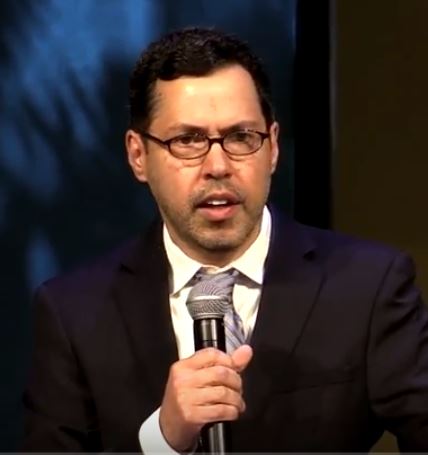
Author
Benjamin Valentin
Summary: Benjamin Valentin, a member of the church and a professor at Hamilton Gordon Theological Seminary, preached on the parable of the sower from Matthew 13:3-9. He explained that while we often interpret the parables superficially, there is a deeper meaning to them. In the case of the parable of the sower, the message is that unexpected and miraculous things can happen in our spiritual life if we remain firm in our faith and continue diligently, patiently, and perseveringly. Valentin emphasized that it is not easy to be a Christian today, and we must not allow ourselves to be distracted or discouraged by the difficulties and frustrations we may encounter along the way. We must keep our eyes on the prize and remain steadfast in our faith.
Being a believer today is not easy, as there are external factors such as the fast-paced nature of life and rising living costs, as well as internal factors within the church that make it difficult. The parable of the sower is a message to hold onto faith and not let anything frustrate the Christian walk. Reflection should be done on the spiritual condition of one's life and steps should be taken to improve it. The message calls for dedication and surrender to Jesus.
Video: Spanish and English
Dr. Benjamin Valentin, stop by Benjamin. We welcome Benjamin. And Benjamin is a member of our church and you see him there always sitting humbly playing the guitar, he blesses us, he is a great guitarist too, a multifaceted man and he is also a professor at Hamilton Gordon Theological Seminary, right here near Boston, an excellent preacher. , theologian, author of books and a man who loves the Lord very much and who has given his talent to serve God.
We feel happy and I know that many of the graduating students here are happy to see young people like Benjamin giving their intellect to the Lord to train pastors and servants of God in different parts of this nation and the world. And this morning we were blessed with the word that he is going to preach to us. Benjamin, although he speaks Spanish very well, as he is going to explain, he is going to present his sermon in English and I am going to translate for them, so let's see, how many think we can do this trick and that it will work out for us? ? Will they pray for us? Amen. We already rehearsed this morning so you are now going to have the product developed a little better. So, Benjamin, welcome to the house of the Lord, we are glad to have you and thank you for sharing this message with us.
It is more important that they listen to him than to me, by the way.
If you have your Bibles with you, I'm going to ask you to turn to the Gospel according to Saint Matthew, Chapter 13, I'll be reading from verses 3 to 9, Matthew 13, 3 to 9. While you search I'm going to To say this morning I mentioned that my style of preaching has been very greatly influenced by the African American style of preaching. And I will explain why.
When I lived in New York, I would often sneak away from my father's church, who was a pastor, to go to African American churches and see and hear some of the best preachers in our community. nation, who happened to be African American, and I loved their style of preaching. And it seems like I went so many times that some of it kind of rubbed off on me, too. So today may possibly be a day that you see your shepherd risen. Amen. Even I'm going to get a little Afro-American.
Matthew 13, verses 3 to 9. I'm going to read it in English and Pastor Miranda will read it in Spanish.
“... And he spoke many things to them in parables saying, 'behold, the sower went out to sow, and while he was sowing part of the seed fell by the roadside and the birds came and ate it. Part of it fell on stony ground, where there was not much soil, and it sprouted soon, because it had no depth of soil. But when the sun came up it was burned and because it had no root it withered up. And some fell among the thorns and the thorns grew and choked it, but some fell on good ground and bore fruit one hundred, one sixty, and one thirty. He who has ears to hear, let him hear." Amen. We can say amen.
If while I'm preaching you feel the urge to yell amen, or say ouch, it hurts, or clap your hands or whatever you want to do, feel free to do so. Absolutely, it's quite ok.
No wonder I decided to choose one of Jesus' parables for the theme of our message. For as long as I can remember, I have always been fascinated by the parables of Jesus. Part of this has to do with the fact that I grew up in a church context in which a narrative style of preaching was favored. So in that context, parables were a favorite of many Pentecostal preachers.
Growing up I heard countless sermons based on Jesus' parables. Some very good, some not so good, but that's okay. But more recently, it has been my vocation as a theological educator that has given nourishment and encouragement to my fascination with parables, my theological practice in other words.
We educators are always looking for creative ways to communicate biblical insights and insights, and in that light I have come to appreciate parables, seeing them as creative stories that not only gave memorable expression to teachings of Jesus, but what he did was that those who listened to the parables had to take responsibility for a personal interpretation of them. So the parables are fascinating stories that show us this interactive dynamic of preaching and show us that they are also a very advantageous form of religious, theological reflection. But I have finally come to the discovery today that many times we fail, we miss, to discover the deeper and fuller meaning of these stories. To be honest with you I don't think we even found out its true meaning. We think we are correct in understanding them but in fact we misinterpret them. And this is understandable when we think about it a little carefully. These stories after all were told a long time ago and were told in a religious and cultural context very different from our own.
In addition, they were told in a totally different language from ours as well and therefore it is very difficult for us today to be able to understand, for example, the images, the analogies that Jesus used to tell these stories. And for these reasons, it is often very difficult for us to fully understand these stories.
The parable of the good Samaritan is an example of this dynamic. In this parable many times we have tended to interpret the story simply as the story of a good guy, a good-natured guy who did a good deed in his life. And so we finally end up interpreting that story as every once in a while we too should do something nice for someone. But in interpreting the parable of the Samaritan in this way we miss the deeper, more mysterious meaning of that narrative. We missed discovering that in this parable, the Lord Jesus was rather hitting hard at those religious people who thought that merely living a good religious life means simply going to the temple, reading the scriptures, praying, fasting, and paying tithes. And all those things are very, very important... let there be no doubt about that. But what Jesus was saying is that it's not just about doing those things. In addition to that, you have to respond, for example, to people who are in need. The Lord was essentially saying 'those who think in that superficial way have missed the mark. I was telling them that faith without a concrete expression of love, without concern, without compassion is irrelevant and not acceptable in the eyes of God. Faith without works is unacceptable. The Lord was saying 'you cannot consider yourself a doer of God's will and a genuine follower of Jesus Christ, if you do not care about those who suffer in society. And the Lord also through that parable was saying that the Christian life cannot simply be about a merely internal dimension of holiness, but must also contain a dimension, an external social expression.
So as we can see the parable of the Good Samaritan has a deeper meaning than what we often assign to it. This parable is not just about such a spontaneous, merely spontaneous act of good will, but that it is a call to a more determined, more deliberate, more responsible spiritual life that must include a concern for those who are in need.
Now, Pastor Miranda, in a time like ours when there is so much suffering due to the social inequalities that exist in the world, when immigrants in our nation are often being mistreated and are not being properly cared for When so many people have to endure violence, we could certainly benefit from a reconsideration of the social justice element in that parable of the Good Samaritan.
But let's go back to my original point. The point is that we often miss the deeper meaning of Jesus' parables. This parable of the good Samaritan is an example of what we are talking about, but we can also see this in the parable of the sower.
In most of the common interpretations we have of this parable of the sower, we take the message of the story superficially and determine that it means that when the message of the Gospel lands on a receptive heart, it can then bear fruit. appropriate.
Certainly that is an important part of the message, but there is more to the original intent of this story. There is a deeper, more important message that the Lord is trying to make us aware of, and to get to that deeper meaning it is important to take into consideration the moment, the context in which this story was told. It is also important to take into consideration what was happening around Jesus at the time when he told this story.
Now, in earlier passages in the Gospel of Matthew, the Gospel makes it clear that when the Lord told that story of the sower, many of the people in the crowd and even some of his disciples were beginning to question his decision. to follow Jesus. They were still questioning their decision to follow him, some for example, had already experienced rejection and had also been ridiculed by others for their decision to follow Jesus. Some had thought that following Jesus would be easy and safe. Instead they discovered that it was very difficult and risky. Some had even thought that getting others to follow Jesus would be relatively easy, but they also discovered that it was not so easy. Some had hoped that perhaps by then the following of Jesus would be much more numerous than it was at that time. But many had encountered forms of resistance and adversity, and had now come to the conclusion that being a follower of Jesus was actually much more difficult than they had anticipated.
So many were asking questions internally and had reservations, questioning, and were asking questions like the following: why haven't more people embraced the teachings of Jesus for this day and age? Why this good news of the Kingdom of God that is coming, why has it engendered so much suspicion, so much opposition from the people? And they wondered, should I continue to be a follower of Jesus Christ or not?
And these thoughts were going through the minds of those who were in the crowd listening to Jesus. And the Lord understood this. And then what do you think he did? He told them a story. He told them this story of the sower. But why did he tell them this particular story? And what was his purpose in telling this story? The parable of the sower was intended to encourage, stimulate people in their journey of faith. The parable of the sower can be understood as a word of encouragement for those who want to follow the Lord Jesus Christ in difficult times. The main message of this parable is that unexpected things, miraculous things, very good things can happen in our spiritual life, but for that to happen we need to remain firm in our spiritual calling and continue diligently, patiently, we have to remain firm in our calling. Christian, persevering, with focus. We have to have the faith of a farmer who sows seeds and then expects to receive a good harvest despite all possible situations that may occur.
How many can say amen in the name of the Lord? The moral of this story is that we shouldn't expect things to always go well for us, we shouldn't expect everything to go smoothly in life, we can't always expect everything to go the way we hope or want. The moral of this story is that when things get rough and tough, when things don't work out the way we want them to, when they don't turn out the way we expect, we can't walk away from faith. The moral of the story is that when difficulties and impediments come our way we should not stop following Jesus. How many say amen? Glory to God. The moral of this message is that we should not allow ourselves to be distracted by what is happening around us or by the frustrations we may encounter along the way. We must keep our eyes on the prize, no matter what difficulties may come, we must remain steadfast willing to follow Jesus, despite all possible difficulties, we must continue with our Christian lives believing that it will be well worth it in the end. Glory to the Lord. I am preaching well, brothers, glory to God. Glory to the Lord, amen, good message. Glory to God.
And you know what, brothers? We're just warming up. Do not scare me. Despite all possible distractions we must tend to our spiritual responsibilities. The parable of the sower offers us this truth, both a word of encouragement and a word of challenge to stand firm, to be patient in our walk.
Now, I know that Jesus' disciples needed to hear this message. I know there were many in the crowd who were looking at Jesus and who needed to hear these encouraging stories. And I am also aware that there have been times in past history when the Christian church has needed to hear this message of encouragement. But if ever there was a time when Christians needed to suck it up and hold on to that kind of hope and encouragement, it's now.
Regardless of what people may think, it is not an easy time to be a believer today. I have sometimes heard people say that it is easy today to be a Christian, and perhaps they say this because we are not necessarily being thrown into lions' dens, or being stoned, or crucified for our Christian beliefs, at least in some ways. parts of the world.
And it's true, but I want to note that there are other factors today that make being a Christian something that is quite difficult. Sometimes our Christian living is made more difficult by various factors, social, cultural, and economic, and we may not even be aware of them. For example, sometimes the fast-paced lifestyle we currently live becomes an obstacle to our spiritual progress. Nowadays we live such fast-paced lives that many times we have difficulty in being able to slow down and be able to appreciate the truly beautiful and important things in life.
In a recent New York newspaper article, the New York Daily News reported on an experiment conducted by various social agencies. These agencies hired one of the most accomplished violinists of our time, a gentleman named Joshua Bell. Now this man has played for some of the most famous symphony orchestras of our time. Normally if you want to hear this great artist play the violin, you have to pay hundreds of dollars to be able to hear him in a concert hall, but for this particular occasion these social agencies hired this man and took him to one of the stations busiest train in Washington DC to play their music for a whole day for free. This study, this experiment was designed to record how the public would react to seeing this great artist play for free at one of these train stations. Would people recognize him? Would you stop to listen to this beautiful music? Would people take the time to stop for a while and listen, stop from their fast-paced life to listen to even a little bit of that sublime music? Would people perhaps be willing to get to work even a little late to listen to the great music that was being played?
To the great surprise of the agencies that were conducting this experiment, this study, although thousands of people passed by this great violinist, hidden cameras caught only a handful of people who stopped. The rest of the thousands of people were in such a rush to get to their workplaces that they couldn't take the time to enjoy something so beautiful.
And so it is with many of us if we're being honest. Our lives can be so fast-paced, so busy many times that we can't even take the time to enjoy things of beauty and things that are of real importance in life. Sometimes we are so preoccupied with simply making a living that we forget to live. And this also happens many times with our spiritual life. Sometimes we are so busy that we forget to tend to our spiritual garden, to tend to our spiritual lives and our souls.
For example, now the rising cost of living can often be another problem. The rising cost of living makes it necessary for us to work longer hours, longer simply to earn what we need. There have been recent social studies that have found that Americans, we too, are working longer hours today than ever before in the entire history of this nation.
A few years ago a book called “The Overworked American” was published, and it provided many statistics regarding this phenomenon and also related what were the negative implications, the negative consequences of that type of lifestyle. . And in other cases it is not necessarily that we are working more time but that we are spending more time traveling from work to home and vice versa. All these things what do they do? They contribute to living increasingly busy, fast-paced lives that leave us little time to invest in other things. And not only does this affect our ability to stop and listen to sublime violin music, or to spend quality time with our loved ones, but it also gets in the way of our ability to take time to pray, take time to read scriptures, or sit down. it gets in the way of our ability to be able to participate in church programs, or to come to church on some Sundays because we have little time, little energy left after our week of hard work. And so this could also be a problem in our spiritual lives.
These factors often get in the way of us from living fruitful Christian lives. But if we are honest, it is not only external factors like the ones we have related that frustrate our spiritual life today, but sometimes there are also internal factors, within the church that make being a Christian in our time increasingly difficult. more difficult. Preachers attack the ills of our secularized culture, and certainly I have done that many times. But very rarely are we willing to point the finger at ourselves and accept the blame for many of the things we are doing wrong within the church itself.
For example, some of the scandals that we have seen in some of the churches have served to undermine public confidence and confidence in the church and this has served many times as an obstacle to the faith of many, both outside and inside the church. And I can notice that many times it also seems that the liberal churches, called liberals for which they have sometimes lost sight of their prophetic word, while the more conservative evangelical churches for which they have sold their souls to the Republican party. And this has also served to cool the faith of many.
The truth is, the church should never align itself so closely with a particular political agenda that it loses its ability to be a critical eye.
One of the things that I have learned about Jesus in the Scriptures is that he is what I would call an equal opportunity critic and yet that is what happens many times. times and this has led to many people feeling a bit suspicious about the church and has also negatively affected the faith of many within the church. Apart from these factors that I have mentioned, I notice that the church has sometimes forgotten to pay enough attention to the preparation of disciples. Many times I have noticed that we have given more importance, as we should, to things related to worship, praise and things that have more to do with Christian public conduct and things like that, but many times we have not given enough attention to the importance of the deep study of the Holy Scriptures, the deep study of the convictions of the Christian faith.
I find many times that less and more of us have an adequate understanding of the Scriptures, of the history for example, of the Christian church and of the composition, the constitution of the faith that we say that we embrace . So many times we miss the opportunity to fully know what it means to be a Christian. We come to church and sing, we get on a superficial emotional high, maybe we leave church feeling a little better about ourselves, but in reality we lack grounding in the Holy Scriptures and in the Christian faith, and because of this We lack the roots that can help us to be better Christians.
How many say love or complain? Now, I teach in a Christian seminary, so I know what I'm talking about and I'm talking from personal experience. One of the things that often frustrates my mind is how I can possibly have seminary students in my classes who know very little about the Scriptures or about the very faith they have embraced. And it's not just about my seminar, other seminars as well. And what is my point with this? My point is that many times these students have been in the church a very long time so we need to do a better job of preparing Christian disciples.
I raise all these considerations to simply point out that there are many factors that can frustrate our spiritual journey. Many things can get in the way of us living strong Christian lives. There are many frustrations, many disappointments that we can experience while we seek to be faithful to our God and the Lord Jesus Christ, so the summary of all that is said is, it is not easy to be a follower of Jesus Christ in our time.
I believe that this parable of the sower was intended for times like the ones we are living in. This parable was intended for people who were experiencing frustration in their lives, crises in their faith. This parable was thrown at people who were losing faith in their spiritual calling. It was intended for people who were losing sight of the spiritual foundations of their lives. This parable was directed to people who were feeling discouraged by everything that was happening around them. This parable was cast for people who were losing their faith, their hope in the validity of the Gospel. In other words, this parable was launched and intended for us today. This parable is for you and me.
How many can say amen to this? Now I am almost reaching the end but that means that now we have to reach a crescendo. The message of the parable is the following: the message is hold on as best you can, hold on to your faith, hold on to your faith, do not allow anything to frustrate you in your Christian walk so that you lose sight of the greater prize. Do not get so distracted by the things of the world that you forget to attend to the spiritual matters of your life. Don't be so disappointed with the present that you sacrifice your hope for a better tomorrow. Don't lose sight of God in Christ Jesus, no matter what.
I want to end this evening by asking each one of you, asking you to look deeply within yourself, asking you to reflect on the spiritual condition of your life today. Examine yourself. Be honest with yourself and ask yourself some questions such as what things have you allowed to frustrate your Christian walk. Can you find within yourself the energy to put those things aside and to renew your faith? What things prevent you from nurturing your spiritual walk? Can you find within yourself the energy to overcome those things to strengthen your walk of faith? What things in your spiritual life do you think are a bit shaky right now? Dare you try to improve those areas of your life? Do you feel that your spiritual life is not all that it can or could be? Can you find within yourself the energy to be a better Christian? Or perhaps you have not yet entered into a personal relationship with Jesus, would you like to begin today?
And if you think that today's message has spoken to some part of your being and you would like to somehow restore your spiritual life, this could be a good opportunity for you. If you would like to rededicate yourself to your Christian vocation, this could be an opportune occasion for you. If you would like to recommit yourself to continue cultivating your spiritual life, this could be a great opportunity for you.
If in any way you are reflected in this story that I have related and you would like to ask the Lord, the Holy Spirit to come and help you to be a better follower of Jesus and have a better life in the faith, I simply ask you to get up wherever you are. You don't necessarily have to come up here, you don't have to have anyone come to you and lay hands on you, this simple act of you standing up will be a symbolic expression of your desire to be a better follower of Jesus.
Now, Pastor Miranda seems that evidently the vast majority of the congregation has stood up, this is a good sign of things to come. Amen. Forward in your faith. Forward in your faith. Forward in your faith. Don't let anything get in your way. I am going to give the microphone to Pastor Miranda so that he can pray for all of us. May the Lord bless you. Glory to the Lord. Amen. Amen. Glory to God. Hallelujah! Hallelujah!
If you have made that decision in your heart to give your life to Jesus, if the Lord has spoken to you in any way, whether it be enhancing an ongoing spiritual life, or simply starting a relationship personal with Jesus Christ, the Lord is calling you on this day to react to what you have heard. Do not leave here simply saying, well, great, what I have heard is very nice, very stimulating, but as we said, you have to interact with the word. You have to have a reaction, you have to interpret it in a personal way. The Lord may be calling you to give your life to Jesus. I encourage you right now, there inside you, say, Lord, I surrender, I surrender to you and I want you to walk with me, that you manage my life and that you be the Lord, the director of the rest of my destiny.
And the brothers who already know the Lord, the Lord is calling us to reconfirm our pact with him. The Lord does not delight in lukewarm people, in casual people, but he wants hearts totally delivered to the Lord. So let's take a moment there to reconsecrate our life to God and say, Lord, I surrender to you. I give myself to you in all ways.