The Paradox of Divine Glory: Embodying the Servant's Path to Lordship
He said to Me, “You are My Servant, Israel, in whom I will display My glory.” — Isaiah 49:3
Let this mind be in you which was also in Christ Jesus: Who, existing in the form of God, did not consider equality with God something to be grasped, but emptied Himself, taking the form of a servant, being made in human likeness. — Philippians 2:5-7
Summary: God's profound redemptive plan, revealed in Jesus Christ, shows us that true divine glory is found not in grasping power, but in humble surrender. Christ, though God, emptied Himself to become a servant, obeying even to death on a cross, just as the prophesied Servant was despised yet ultimately exalted. This ultimate act of self-giving led to His cosmic exaltation. For us believers, this calls us to embrace a servant's mindset, finding true glory, purpose, and impact in humility, sacrificial love, and pouring ourselves out for others, confident in God's ultimate vindication.
The profound story of God's redemptive plan is etched into the very identity and mission of Jesus Christ, a story deeply rooted in the ancient prophecies of Israel and majestically revealed in the early Christian understanding of His nature. At the heart of this revelation lies a compelling paradox: divine glory is not displayed through power grasped, but through power humbly surrendered, leading to ultimate exaltation. This truth, initially shadowed in the Servant Songs of Isaiah, finds its dazzling fulfillment in the life, death, and resurrection of Jesus, as celebrated in the Christ Hymn of Philippians.
For believers, this theological interplay offers not only a robust understanding of Christ's identity but also an edifying blueprint for life, mission, and the very nature of true greatness. The God we worship is fundamentally a God who serves.
The prophet Isaiah wrestled with a seemingly contradictory vision. He foresaw a "Servant" whom God explicitly called "Israel," indicating a deep identification with the chosen nation. Yet, this same Servant was given a mission to Israel – to restore its scattered tribes and to be a "light to the nations." How could Israel restore itself, especially when the nation had often failed in its covenantal duties, experiencing the futility and despair of exile? The Servant even voices this struggle, lamenting that he had "labored in vain," his strength spent for "nothing and vanity," deeply despised and abhorred. This tension points to a singular figure who would represent and embody the ideal Israel, fulfilling its vocation where the collective nation fell short. God promised to display His "splendor" through this Servant, but how could splendor emerge from such a state of perceived failure and profound humiliation?
Enter Jesus Christ, the one whom the Apostle Paul and the early church understood as the answer to Isaiah's enigma. Christ, existing in the very "form of God" – sharing in the essential nature and reality of the Divine – did not regard His equality with God as something to be selfishly held onto or exploited for personal gain. Instead, He voluntarily "emptied Himself." This emptying was not a divestiture of His deity but a profound act of self-giving, revealed by His taking on the "form of a servant." Paul intentionally chooses the term "slave," the lowest rung of society, stripped of all rights and honor in the Roman world, echoing Isaiah's portrayal of the Servant as "deeply despised" and a "slave of rulers."
In becoming human, Jesus assumed the covenantal role of Israel, becoming the "True Israel" who perfectly obeyed God. He embraced the very path of perceived futility that the Servant of Isaiah experienced, culminating in obedience "even to death on a cross." The cross, therefore, is not a failure but the very crucible where God’s "splendor" is most vividly displayed. It is the ultimate act of self-giving love, where divine nature and humble servitude converge. The "labor in vain" spoken of by the prophet is transformed by Christ into redemptive "obedience unto death," turning emptiness into salvation.
God's response to this ultimate act of humility was equally profound: "Therefore God has highly exalted Him and bestowed on Him the name that is above every name." This cosmic vindication fulfills Isaiah's prophecy that kings and princes would prostrate themselves before the Servant. The one who was a "slave of rulers" became the "Ruler of Kings," before whom every knee in heaven, on earth, and under the earth must bow, and every tongue confess His Lordship. By applying this prophecy, originally spoken of Yahweh, to Jesus, Paul underscores Christ's unique inclusion in the very identity of the one true God.
This majestic narrative carries profound edifying messages for all believers:
- Embrace the Servant's Mindset: We are called to embody the same mindset that was in Christ Jesus. True spiritual authority and influence stem not from self-assertion or grasping for power, but from humility and self-giving love. Our worth and impact in God's kingdom are defined by how we serve, not by how we are served.
- Find Glory in Humiliation: In a world obsessed with status and superficial success, the Christian path redefines glory. God's ultimate splendor was revealed on a cross. This teaches us that sacrificial love, quiet service, and even suffering for the sake of others are not weaknesses but the very manifestations of God's character working through us. Our "labor in vain" in faithful service is never truly wasted in the eyes of God.
- The Church as the Servant Community: Just as Jesus was the "True Israel" and a "light to the nations," so too is the Church, His body, called to continue this mission. We are to "shine as lights in the world," not through domination, but through loving service and pouring ourselves out for humanity. Our participation in Christ's mission means embracing His path of self-emptying.
- Assurance of Vindication: The Servant's ultimate vindication and Christ's cosmic exaltation offer immense comfort and hope. When our efforts seem futile, when we are overlooked or even despised for our faithfulness, we can trust that God sees, God remembers, and God will ultimately exalt those who walk in the path of humble obedience. Our sacrifices are not forgotten; they are woven into God's grand plan of salvation.
The intricate dance between Isaiah 49 and Philippians 2 unveils a God whose very nature is self-giving love, perfectly modeled in Jesus Christ. For believers, this is both a profound theological truth to adore and a radical ethical call to imitate. To possess the mind of Christ is to live a life poured out in service, confident that this is the path to true glory, eternal joy, and participation in the cosmic triumph of our Servant King.
What do you think?
What do you think about "The Paradox of Divine Glory: Embodying the Servant's Path to Lordship"?
Related Content
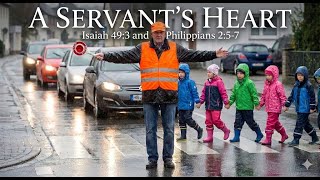
A Servant's Heart
Jesus Assumed the Form of a Slave Even Though He Was Equal to God
The idea that we are servants, we are slaves, we are totally dependent on the Will of God, is part of the whole context of the Gospel. And that is why...
The Servant’s Form and the Splendor of Israel: an Exhaustive Intertextual Analysis of Isaiah 49:3 and Philippians 2:5-7
Isaiah 49:3 • Philippians 2:5-7
I. Introduction: The Hermeneutical Nexus of Identity and Vocation The relationship between the Hebrew Scriptures and the New Testament Christological...
Read in Context
Click to see verses in their full context.
Song (Other Languages)