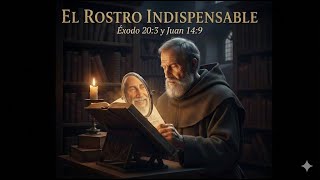
The Indispensable Face: Why All True Worship Must Be Christocentric
You shall have no other gods before Me. — Exodus 20:3
Jesus replied, “Philip, I have been with you all this time, and still you do not know Me? Anyone who has seen Me has seen the Father. How can you say, ‘Show us the Father’? — John 14:9
Summary: We worship an invisible God, yet He has always revealed Himself through His "Face," culminating in Jesus Christ. The First Commandment, correctly understood, prohibits having other gods *apart from* God's Revealed Face. This divine presence, hinted at throughout the Old Testament as the "Angel of His Presence," finds its full and final embodiment in Jesus. He is the incarnate "Face" of the invisible Father, making genuine worship and fellowship possible. Thus, to truly live before God means to fix our gaze solely on Christ, the exclusive way to the Father.
The very foundation of faith rests upon a profound paradox: we are called to worship a God who, in His absolute essence, cannot be seen. This central mystery of the divine is addressed in the First Commandment, an ancient prohibition that has shaped worship for millennia. Traditionally understood as a command against having other gods before God, a deeper look reveals an even more profound truth. The original Hebrew term implies a prohibition against seeking God apart from His Face . This "Face" is not merely a metaphor for omnipresence, but a distinct, active manifestation of God through whom He interacts with humanity.
Throughout the Old Testament, God's "Face" (Panim) functions as a dynamic presence, an authorized point of encounter. It is seen in the "Bread of the Presence" in the tabernacle, symbolizing divine sustenance, and most powerfully in the "Angel of the Lord" or "Angel of His Presence." This divine messenger speaks as God, carries God's very Name, and is the agent of salvation, yet is distinct enough to be seen and encountered without destroying the beholder. This tradition, even in Second Temple Judaism, hinted at a "Second Power" in heaven, a revealed aspect of the Most High. This pre-incarnate figure was the means by which humanity could genuinely engage with the otherwise unapproachable Deity.
This ancient understanding illuminates the New Testament's revelation of Jesus. When a disciple, yearning for a direct vision of God, asks to "show us the Father," Jesus' response is startlingly direct: "He who has seen Me has seen the Father." This declaration isn't merely an assertion of divine similarity; it is a claim of identity . Jesus is the incarnate "Face" of God, the visible manifestation of the invisible Father. He is the long-awaited embodiment of the divine presence that Moses encountered and Jacob wrestled with. The paradox of "no one can see God and live" is resolved in Christ: His human flesh acts as a veil, shielding us from the Father's overwhelming glory while simultaneously revealing His character, love, and redemptive purpose. Through Jesus, we can look upon God's Face and not only live, but find eternal life.
Therefore, the First Commandment, rightly understood in light of Christ, becomes a foundational mandate for believers: "You shall have no other gods apart from Jesus , My Revealed Face." This means that genuine worship, true fellowship with God, is possible only through Jesus Christ. Any attempt to conceive of or worship God abstractly, outside of His self-revelation in the Son, is a form of spiritual idolatry. It is to construct a god of our own imagining, rather than embracing the One True God who has fully and finally revealed Himself in Jesus.
For believers, this truth is both challenging and profoundly edifying. It provides unparalleled clarity in worship, reminding us that Jesus is not merely a way, but the exclusive and indispensable way to the Father. It calls us to discard any notion of a generic deity and to fix our gaze solely on Christ, the perfect image of the invisible God, where the full glory of God shines forth. In Jesus, we encounter the very heart of the Father, experience His favor, and receive His salvation. To live "before the Face of God" now means to live in the saving, revealing presence of Jesus Christ, the one through whom all creation was made, and through whom all true worship ascends.
What do you think?
What do you think about "The Indispensable Face: Why All True Worship Must Be Christocentric"?
Related Content
The Indispensable Face
The Scandal of the Face
Exodus 20:3 • John 14:9
There is a particular arrogance in preferring the God of the philosophers to the God of the fishermen. We often hide behind a sophisticated, abstract ...
The Face of the Invisible: a Christological Examination of the First Commandment and the Johannine Theophany
Exodus 20:3 • John 14:9
1. Introduction: The Hermeneutics of Divine Presence The theological architecture of the Judeo-Christian tradition rests upon a paradox of perception...
Read in Context
Click to see verses in their full context.
Song (Other Languages)