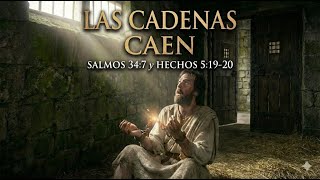
Angelic Agency and Missional Deliverance: a Comprehensive Analysis of the Interplay Between Psalm 34:7 and Acts 5:19–20
Psalms 34:7 • Acts 5:19-20
Summary: The biblical narrative consistently demonstrates divine intervention in moments of human peril. Our exploration focuses on Psalm 34:7 and Acts 5:19–20, two monumental texts that define the theology of angelic intervention. Separated by millennia, genre, and the pivotal event of the Incarnation, these passages engage in a profound dialogue, revealing the mechanics of how the Divine preserves His servants. This analysis posits a fundamental shift in paradigm, moving from the static preservation characteristic of the Old Covenant to the dynamic, missional liberation evident in the New.
Psalm 34:7, stemming from David’s desperate flight from Saul to Gath and his subsequent refuge in the Cave of Adullam, establishes the Old Testament prototype. "The angel of the LORD encamps around those who fear him, and delivers them." This imagery of *chanah*, an encircling, military-like presence, provided comprehensive protection for David and his ragtag band of followers. His deliverance, born from abject humiliation and expressed in a thanksgiving psalm, was primarily for the psychological and physical safety of the righteous remnant, demonstrating God's abiding presence in their hiding place.
Moving to the heart of Jerusalem, Acts 5:19–20 presents a striking fulfillment and transformation of this promise. Here, an angel of the Lord intervenes for the apostles, arrested by the Sadducees who denied the very existence of angels. The angel's action is not *encamping* but *opening* the prison doors and *bringing out* the apostles with a clear commission: "Go, stand in the temple and speak to the people all the words of this Life." This act is rife with polemical irony, defying the Sadducean worldview and demonstrating God's sovereign power over human authority.
The interplay between these two accounts illustrates a typological escalation from preservation to proclamation. While Psalm 34 emphasizes a defensive "encamping" for survival within a perceived fortress, Acts 5 portrays an "opening" and "leading out" for an offensive mission. The ultimate purpose of divine rescue shifts from safeguarding David in a cave of retreat to empowering the apostles to preach boldly in the Temple courts, the very epicenter of danger. Both demonstrate the condition of deliverance rooted in the "fear of the Lord," yet safety is redefined not by the absence of threat, but by God’s powerful presence enabling us to engage within the danger.
Thus, Psalm 34:7 lays the theological foundation of God as Protector, while Acts 5:19–20 operationalizes this promise for the Church’s mission. The Angel of the Lord serves as the bridge, transitioning from ancient guardian to herald of New Life, breaking physical and spiritual bonds to ensure the Word of God remains unbound. This progression highlights that God's protection is not merely for the preservation of His people but for their empowerment to overcome the world through active proclamation of the Gospel.
I. Introduction: The Theological Architecture of Divine Intervention
The biblical narrative, spanning from the Patriarchal wanderings to the Apostolic expansion, is punctuated by moments where the transcendent power of God intersects violently and mercifully with the immanent reality of human peril. Within this vast canon of deliverance literature, two specific texts—Psalm 34:7 and Acts 5:19–20—stand as monumental pillars that define the theology of angelic intervention. While separated by a millennium of history, distinct literary genres, and the pivotal cosmic event of the Incarnation, these passages engage in a profound intertextual dialogue. They articulate the mechanics of how the Divine preserves His servants within a hostile world, shifting the paradigm from the static preservation of the Old Covenant to the dynamic, missional liberation of the New.
Psalm 34:7 declares, "The angel of the LORD encamps around those who fear him, and delivers them". This aphorism, born from the desperation of David in the Judean wilderness, establishes the fundamental Old Testament premise of the Malak YHWH (Angel of the LORD) as a protective, encircling presence for the covenant faithful. Conversely, Acts 5:19–20 recounts a specific historical event in the life of the primitive church: "But during the night an angel of the Lord opened the doors of the jail and brought them out and said, 'Go, stand in the temple and speak to the people all the words of this Life'".
This report offers an exhaustive analysis of the interplay between these two critical texts. It rigorously examines the historical Sitz im Leben of David’s feigned madness at Gath versus the Apostles’ bold proclamation in Jerusalem; the ontological identity and functional agency of the angelic figures involved; the linguistic nuances of "encamping" (chanah) versus "opening doors" (anoigo); and the polemical irony of angelic intervention in the face of Sadducean skepticism. The analysis posits that Psalm 34:7 establishes the theological promise of preservation for the righteous, while Acts 5:19–20 represents the fulfillment and transformation of that promise utilized for the expansion of the Gospel. The interplay reveals a movement from the "Cave of Adullam"—where deliverance is a shield for the survival of the remnant—to the "Temple Courts"—where deliverance is a sword for the advance of the Kingdom.
II. The Davidic Prototype: Exegesis and Context of Psalm 34
To fully grasp the resonance of Psalm 34 in the New Testament imagination, one must first deconstruct the Psalm within its original historical, psychological, and theological framework. It is not merely a hymn of praise; it is a "Todah" (thanksgiving sacrifice) born from the trauma of a near-death experience in enemy territory.
A. The Historical Crisis: Madness at the Gates of Gath
The superscription of Psalm 34 provides a precise historical anchor: "Of David, when he changed his behavior before Abimelech, so that he drove him out, and he went away". This title directs the reader to the narrative of 1 Samuel 21:10–15, a moment of profound vulnerability in David's life.
1. The Geopolitical Peril
David, fleeing the wrath of King Saul, made the desperate decision to seek refuge in Gath, a Philistine royal city. This was the hometown of Goliath, the giant David had slain, making David’s presence there fraught with danger. He was recognized immediately by the servants of the King, who identified him not merely as a refugee but as the rival king of Israel, quoting the victory songs of Israeli women: "Saul has slain his thousands, and David his ten thousands". The text notes that David "took these words to heart and was much afraid of Achish the king of Gath". The superscription of Psalm 34 refers to the king as "Abimelech," likely a dynastic title (similar to "Pharaoh" or "Caesar") for Philistine rulers, while the historical narrative identifies him by his personal name, Achish.
2. The Strategy of Feigned Madness
Trapped in the court of a hostile monarch, David resorted to a strategy of degradation. He "changed his behavior" (Hebrew shanah, from which the title of the Psalm derives), feigning insanity. He scribbled on the city gates and let spittle run down his beard—actions that rendered him ritually unclean and socially repulsive in the Ancient Near East. This was the "poor man" crying out (Psalm 34:6)—not in dignity, but in abject humiliation. The ruse succeeded; Achish, repulsed by the display, drove David away, sparing his life.
3. The Cave of Adullam: The Genesis of Community
Following his expulsion, David retreated to the Cave of Adullam. It is crucial to understand that Psalm 34 was likely composed or sung in this cave, surrounded not by the elite of Israel, but by a ragtag band of "everyone who was in distress, and everyone who was in debt, and everyone who was bitter in soul" (1 Samuel 22:1–2).8
This context transforms the reading of verse 7. When David sings, "The angel of the LORD encamps around those who fear him," he is speaking to a group of outlaws and refugees. The "encampment" of the angel stands in stark contrast to their physical reality—hiding in a limestone cave, hunted by Saul, and rejected by the Philistines. The Psalm functions as a pedagogical tool to reconstruct the worldview of these desperate men, teaching them that their true security lies not in the cave's walls, but in the invisible, encircling presence of Yahweh.14
B. The Ontology of the Protector: Malak YHWH
The central figure of deliverance in Psalm 34:7 is the Malak YHWH—the Angel of the LORD. This figure occupies a unique and complex space in Old Testament theology, often blurring the distinctions between a created agent and God Himself.
1. The Ambiguity of Theophany
In many patriarchal narratives, the Malak YHWH speaks as God, receives worship, and is identified as God by those who encounter Him (e.g., Hagar in Genesis 16, Abraham in Genesis 22, Gideon in Judges 6). He is the "Angel of His Presence" (Isaiah 63:9) who saves.
-
Encamping Presence: The specific imagery used in Psalm 34:7 is that of encamping (chanah). This verb evokes a military siege or the protective formation of an army. The Angel does not merely visit; He establishes a perimeter.
-
Collective Power: While the noun "Angel" is singular, the action "encamps around" implies a plurality of force, or a singular being with the power of a host. This anticipates the vision of Elisha in 2 Kings 6, where the mountain is full of horses and chariots of fire. The singular Angel commands the invisible armies of heaven.
2. Christological Interpretation
Christian theology has historically identified the Malak YHWH as the pre-incarnate Christ (Christophany). Commentators such as Spurgeon, Maclaren, and contemporary theologians argue that this figure acts with a divine authority that belongs to the Second Person of the Trinity. If this interpretation is held, the interplay with Acts 5 becomes electric: The same Lord Jesus who "encamped" around David in the cave is the one who, post-ascension, dispatches a created angel to liberate His apostles. The Protector of the Old Testament becomes the Liberator of the New.
C. Linguistic Analysis of Deliverance
The Hebrew terminology employed in Psalm 34 reveals the nature of the deliverance David experienced.
| Hebrew Term | Definition | Contextual Nuance |
| Chanah | To encamp, pitch a tent, lay siege |
Suggests a static, abiding presence. God establishes a fortress around the believer, creating a zone of safety amidst danger. |
| Sabib | Around, circuit |
Total encirclement. There is no gap in the perimeter; the protection is comprehensive. |
| Chalats | To pull out, strip, rescue |
Originally related to stripping spoils of war (chalitsah). It implies snatching a victim from a tight space or stripping the enemy of their power. |
| Yare | To fear (reverentially) |
The prerequisite for deliverance. It is not terror but a covenantal submission to Yahweh's authority. |
The use of chalats is particularly evocative. It suggests that David felt tight, constricted, and trapped in Gath. God "pulled him out" of that constriction. The deliverance was "from all my fears" (v. 4), indicating that the primary liberation was psychological and spiritual, which then manifested in physical safety.
III. The Apostolic Fulfillment: Exegesis and Context of Acts 5:19–20
Moving from the Judean wilderness to the heart of Jerusalem, the narrative of Acts 5 presents a different modality of divine intervention. Here, the "poor man" is not a solitary fugitive king but the corporate leadership of the Messianic movement.
A. The Crisis of the Primitive Church
The events of Acts 5:17–26 occur during a period of exponential growth for the early church. The believers are meeting in Solomon's Colonnade, and the populace holds them in high esteem (Acts 5:13). The miraculous power of God is so prevalent that Peter’s shadow is sought for healing.
1. The Sadducean Animus
The opposition is specific and theological. The High Priest and his associates are identified as the "sect of the Sadducees" (Acts 5:17). This group was the priestly aristocracy, collaborating with Rome to maintain the status quo. Their animosity toward the apostles was driven by two factors:
-
Jealousy (Zelos): They were "filled with jealousy" because the apostles challenged their spiritual authority and popularity.
-
Theological Threat: The Sadducees explicitly denied the resurrection of the dead and the existence of angels or spirits (Acts 23:8). The apostolic preaching of "Jesus and the resurrection" was a direct assault on their dogmatic foundations.
2. The Public Prison
The apostles were arrested and placed in a "public prison" (teresei demosia). The use of the word "public" or "common" suggests an intent to shame them, classifying them with common criminals and stripping them of their religious dignity. This confinement was intended to silence the "Words of this Life."
B. The Agent of Liberation: Angelos Kyriou
In contrast to the Malak YHWH of Psalm 34, the text of Acts 5:19 uses the anarthrous phrase angelos Kyriou—"an angel of the Lord".
1. A Created Servant
The absence of the definite article (though not always definitive in Greek grammar) and the context of the New Testament suggest this is a created being, a "ministering spirit" sent to serve the heirs of salvation (Hebrews 1:14). The angel is not the focus; the sender (the Risen Lord) is. The angel acts as a functional tool of Providence, executing a jailbreak with efficiency and stealth.
2. The Polemical Irony
The choice of an angel as the agent of deliverance is deeply ironic. The Sadducees, who ordered the arrest, did not believe in angels. God used the very being they erased from their theology to erase their authority over the apostles. The empty prison cell the next morning was not just a sign of escape; it was a theological emptiness that mocked the Sadducean worldview. The angel’s intervention served as an objective falsification of the Sadducees' doctrine, executed within the very shadow of the Temple they controlled.
C. The Nature of the Action: Exago and the New Exodus
The angel’s action is described with verbs that carry heavy theological weight.
-
Opened (Anoixas): The angel "opened the doors." This echoes the rolling away of the stone at Jesus' tomb. It signifies that no human barrier—whether a seal of the Sanhedrin or the bars of a Roman-style prison—can contain the Gospel.
-
Brought Out (Exago): This verb is frequently used in the Septuagint (LXX) to describe God "bringing out" Israel from Egypt (Exodus 6:6, 7:4). By using exago, Luke frames the apostolic deliverance as a "New Exodus." The apostles are being led out of the bondage of the old religious structure to serve God in the "wilderness" of the public square.
D. The Commission: "Words of This Life"
The most distinct feature of the Acts 5 deliverance is the immediate commission. The angel does not say "Hide" or "Flee," but "Go, Stand, and Speak".
-
Go (Poreuesthe): A command of immediate motion.
-
Stand (Stathentes): This implies a posture of boldness and defiance. They are to take a stand in the hieron (Temple courts), the very center of Sadducean power.
-
Speak (Laleite): Continual proclamation.
-
"Words of this Life" (Ta Rhemata tes Zoes Tautes): This is a unique phrase. "This Life" refers to Zoe—the eternal, resurrection life of Christ. It stands in contrast to the "death" dealt by the Sanhedrin. The message is not a political manifesto but a proclamation of a new vital principle operative in the world through Jesus.
IV. The Interplay: From Preservation to Proclamation
Having examined the texts individually, we now synthesize them to understand their interplay. The relationship between Psalm 34:7 and Acts 5:19–20 is one of typological escalation. Psalm 34 provides the theological infrastructure (God protects), while Acts 5 demonstrates the teleological purpose of that protection (God protects for mission).
A. The Shift from "Encamping" to "Opening"
The primary linguistic contrast lies between Chanah (encamp) and Anoigo (open).
| Feature | Psalm 34:7 (David) | Acts 5:19–20 (Apostles) | Theological Implication |
| Action | Encamping (Chanah) | Opening (Anoigo) | The OT emphasizes defense; the NT emphasizes offense. |
| Direction | Around (Sabib) | Out (Exago) | David is surrounded by protection; Apostles are led out to engage. |
| Purpose | Preservation | Proclamation | David is saved to survive; Apostles are saved to preach. |
| Outcome | Cave of Adullam | Temple Courts | Safety in hiding vs. Boldness in public danger. |
In Psalm 34, the angel creates a fortress around the believer. It is a siege mentality where the goal is the preservation of the "poor man" from the surrounding enemy. In Acts 5, the dynamic is reversed. The angel does not create a fortress; he breaks one open. The purpose is not to keep the world out of the church, but to let the church out into the world. The "encampment" of Psalm 34 is the prerequisite for the "breakout" of Acts 5—one must be secure in God (encamped) before one can be dangerous to the enemy (brought out).
B. The Geography of Faith: Cave vs. Temple
The geographical trajectory is significant. David’s deliverance led him to the Cave of Adullam, a place of retreat and hiding. This was necessary for the preservation of the Messianic line during the reign of a mad king (Saul).9
However, the angel in Acts 5 forbids retreat. "Go, stand in the Temple." The deliverance leads the apostles back to the very scene of their arrest, into the "lion’s den" of the Sadducees.31 This signals that the era of hiding is over. The resurrection of Christ has emboldened the servants of God to occupy the center of religious and public life, regardless of the threat level. The angel of Acts 5 delivers the apostles from the prison of silence to the pulpit of danger.
C. The Condition of Deliverance: The "Fear" Polemic
A crucial conceptual link between the two texts is the "Fear of the Lord."
-
Psalm 34:7: The angel encamps around "those who fear Him."
-
Psalm 34:9: "O fear the LORD, you his saints, for those who fear him have no lack."
Acts 5 presents a dramatic commentary on this "fear."
-
The Counter-Example (Ananias and Sapphira): Acts 5:1–11 precedes the angelic deliverance. Ananias and Sapphira attempt to deceive the Spirit, proving they do not "fear the Lord." The result is death—the opposite of deliverance. Their lack of fear leads to destruction, validating the warning of Psalm 34:16 ("The face of the LORD is against those who do evil").
-
The Apostolic Example: The apostles, conversely, demonstrate the true fear of the Lord. When the High Priest demands obedience, they reply, "We must obey God rather than men" (Acts 5:29). Because they feared God more than the Sanhedrin, they qualified for the angelic deliverance promised in Psalm 34:7.
-
The Resultant Fear: Following the judgment of Ananias and the miracles of the apostles, "great fear came upon the whole church" (Acts 5:11). This restoration of holy fear in the community creates the spiritual atmosphere in which the Angel of the Lord operates freely.
D. The Irony of "Safe"
The interplay redefines safety. In Psalm 34, David is safe because he is delivered from the immediate presence of Achish. In Acts 5, the apostles are "safe" even though they are sent back to the presence of the High Priest.
This suggests a development in the theology of providence: Safety is not the absence of danger, but the presence of God within the danger. The "Angel of the Lord" in Acts 5 does not remove the threat (the Sadducees remain in power); he neutralizes the threat's ability to stop the mission. The apostles are "delivered" not to retire, but to endure "many afflictions" (Psalm 34:19) for the sake of the Name. As Acts 5:41 notes, after their subsequent beating, they rejoiced—an echo of Psalm 34:1 ("I will bless the LORD at all times").44
V. Second and Third-Order Insights
Synthesizing the data reveals deeper layers of meaning regarding the nature of spiritual authority and the economics of the Kingdom.
A. The Subversion of Institutional Keys
The "opened doors" in Acts 5 serve as a profound political symbol. In the ancient world, the power to bind and loose (prison keys) was the ultimate sign of authority. By opening the doors without breaking the locks or waking the guards (Acts 5:23), the angel demonstrates a "sovereign stealth" that mocks human power.
-
Insight: The Sadducees believed they held the "keys" to Israel's religion and the "keys" to the prison. The angel showed that they held neither. This connects to Psalm 34:22, "The LORD redeems the life of his servants; none of those who take refuge in him will be condemned." The verdict of the Sanhedrin (condemnation/imprisonment) is overruled by the verdict of the Angel (liberation/commission).
B. The Economics of Providence
There is a subtle economic link between the texts.
-
Psalm 34:10: "The young lions [powerful, predatory leaders] suffer want and hunger; but those who seek the LORD lack no good thing."
-
Acts 5 Context: The Sadducees were the wealthy aristocracy, yet they are depicted as spiritually "hungry"—jealous, insecure, and lacking authority. The apostles, who had "left everything," lacked nothing—not even freedom from a maximum-security prison.
-
Insight: The "young lions" of Psalm 34 find their counterpart in the "jealous high priests" of Acts 5. Their power cannot secure them, while the "poor man" (the apostle) is sated with the "Words of Life."
C. The Trajectory of "No Broken Bones"
Psalm 34:20 contains the prophecy: "He keeps all his bones; not one of them is broken." This was fulfilled literally in Christ (John 19:36).
-
Insight: In Acts 5, we see the corporate fulfillment of this promise. The Apostles are the Body of Christ on earth. Despite the rage of the Sanhedrin (who wanted to kill them, Acts 5:33) and the beatings they eventually endured, the "bones" of the church were not broken. The skeletal structure of the church—its apostolic leadership—was preserved supernaturally to ensure the body could continue to move and function. The Angel of Psalm 34 protects the structural integrity of the mission.
VI. Conclusion: The Unbound Word
The interplay between Psalm 34:7 and Acts 5:19–20 offers a comprehensive and robust theology of divine rescue. Psalm 34 establishes the character of God as the one who "encamps" around the vulnerable, transforming their fear into radiance. Acts 5 operationalizes this promise in the age of the Church, demonstrating that angelic deliverance is not merely for the preservation of the saints, but for the proliferation of the Gospel.
The angel in Acts 5 does not lead the apostles to a safe house, as David fled to Adullam. He leads them to the Temple. This shift marks the maturity of the people of God. In the Old Covenant, the "poor man" cried and hid in the Lord. In the New Covenant, the "poor men" (Galilean fishermen) cry out, are set free, and stand publicly to offer the "Words of Life" to their persecutors.
Thus, Psalm 34:7 is the theological foundation: God is the Protector. Acts 5:19–20 is the missional application: God protects so that His people may proclaim. The "Angel of the Lord" serves as the bridge, the ancient guardian who becomes the herald of the New Life, breaking iron bars to ensure that the Word of God remains unbound. The promise of the Psalm is kept not by removing the righteous from the world, but by empowering them to overcome it.
Appendix: Comparative Linguistic Table
The following table summarizes the key linguistic shifts between the Septuagint (LXX) text of Psalm 34 and the Greek text of Acts 5.
| Feature | Psalm 34:7 (LXX Ps 33:8) | Acts 5:19–20 | Theological Nuance |
| The Angel | Angelos Kyriou (reflecting Heb Malak YHWH) | Angelos Kyriou (Anarthrous) | Shift from Theophany (Divine Person) to Angelophany (Created Servant). |
| The Action | Paremballei (Encamps/Garrisons) | Anoixas (Opened) & Exagagon (Led out) | Shift from static defense (fortress) to dynamic liberation (exodus). |
| The Beneficiary | Touphoboumenous (Those fearing Him) | Autous (Them - The Apostles) | The Apostles validate their "fear of God" through obedience (Acts 5:29). |
| The Result | Rhusetai (He will rescue/deliver) | Poreuesthe... Laleite (Go... Speak) | Deliverance is not an end in itself but a means to proclamation. |
| The Context | Thlipseon (Afflictions/Troubles) | Teresei (Prison/Custody) | God's rescue transcends both generic trouble and specific incarceration. |
This comparison highlights the continuity of God's saving nature while emphasizing the distinct missional thrust of the New Testament era. The fortress of the Psalm becomes the forward operating base of the Acts narrative.
What do you think?
What do you think about "Angelic Agency and Missional Deliverance: A Comprehensive Analysis of the Interplay Between Psalm 34:7 and Acts 5:19–20"?
Related Content
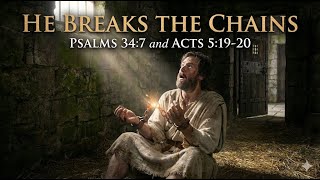
He Breaks the Chains
Guarded for God's Glory
Psalms 34:7 • Acts 5:19-20
My beloved brethren, cast your minds to the wondrous care of our God, whose eye never slumbers, and whose mighty hand is never shortened! We find ours...
The Unbound Word: God's Deliverance for Daring Proclamation
Psalms 34:7 • Acts 5:19-20
God's intervention in human affairs is a cornerstone of the biblical narrative, showcasing His transcendent power intersecting with the immanent reali...
Read in Context
Click to see verses in their full context.
Song (Other Languages)