A Successful Person Rules His Tongue
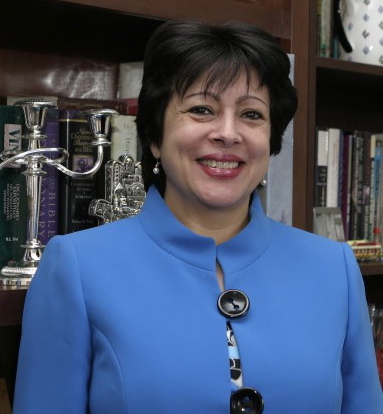
Author
Mercedes López-Miranda
Summary: The power of the tongue is emphasized in Proverbs 18:21, which states that "death and life are in the power of the tongue." Words can either build or destroy, promote encouragement or discourage, infuse life or extinguish it. Words of criticism, epithets, jokes at someone's expense, mockery, gossip, slander, sarcasm, and bad language are all types of destructive words that bring death. Instead, we should use words that are uplifting, bring glory and honor to the Lord, and meet a specific need. These words of life give truth, comfort, hope, appreciation, affirmation, gratitude, a new perspective, exhortation, inspiration, and enliven dreams. As children of God, we should be prepared to give freely words of life to everyone who needs them, spreading the good news of the Gospel.
The use of our words is a gift from God and we have a responsibility to use them wisely, especially in relationships. We must use words of life and avoid returning hurtful words, even when we have been offended. The principle of sowing and reaping applies to our words, so we should sow generously with words of praise and affirmation. We are accountable for every word we speak and the command of the tongue is the mark of a true Christian. We cannot be inconsistent with our use of words and must strive to use them for good in all our relationships.
The use of the tongue is an essential part of our witness as Christians. Our words are directly linked to the condition of our hearts, and we must have qualities such as a secure, loving, positive, visionary, sensitive, discerning, intentional, and wise heart in order to give words of life. We should be intentional about giving words of life and be rooted in the knowledge of the word. Our conversations everywhere have to be conversations where purity and the truth of God reign, and that are edifying words.
The speaker shares her favorite verse from Isaiah 50:4, which gives her confidence that God will give her the words she needs to counsel others. She emphasizes the importance of being positive, intentional, and wise in our words, as it not only benefits others but also ourselves. She encourages listeners to use the gift of giving words of life to bless those around them, and promises that it is a gift that can be used throughout one's life. She ends with a prayer for guidance in using our words to build up others and to be responsible for them before God.
Congratulations to the fathers of our church. You are essential and when I arrive at the church and see a group of men like this, delivered to the Lord, whose reason for being is to worship the Lord, that fills me with security and joy, because I know that God is working. And I urge you men to do the same in your home as bearers of words of blessing, to do the work that God has entrusted to you, not to be afraid to do it biblically, to be a person who blesses your home in every way, his community, his church. You are important, not just important, essential, and there is no one who can replace you. So do your work as for the Lord, because it is for the Lord that you do it.
And I also want to encourage you parents, who have children far away, who do not live with you for different reasons: because there has been a divorce, because you are here and your children are elsewhere , to maintain contact with them; be it by letter, by phone, to support them financially.
On many occasions when I meet with someone in counseling sessions, the wound arises that they have not had contact with a father, that the figure of a father was not there, was absent or was halfway there. , or did not give words of blessing. So that's essential. You can never bless your children too much with your word and your presence. So I encourage you to do all that you can by being present parents that bring honor and honor to the Lord, right there in the middle of the home, which is what matters most. Although you are very effective in other areas of your life, if at home you are not the bearer of God's blessing, something very serious is missing. So I encourage you to do the best you can and I admire you and we need you and it fills us with joy to see you doing the work of the Lord.
In recent weeks Roberto has been preaching about principles of a successful life based on Hebrews 12, 1 to 2, which I imagine everyone already knows by heart because he has gone into great detail, breaking, breaking down that word to apply it to lives.
And this morning I want to add one more principle to those principles of a successful life and this principle, I have called it that, is that a successful person governs his tongue and edifies others with his words.
Another, I'll repeat it: a successful person rules his tongue, has rule over his tongue, and edifies others through his words.
I want to share with you what the word of God says about the use of the tongue, and one of the verses that perhaps all of you know is Proverbs 18:21 and it says that “....death and life are in the power of the tongue.
Imagine what a great power, such a small member of the body, and it says that "... death and life are in the power of the tongue." The language is what determines that, death or life. Because our words are not neutral. They are never neutral, they always have a reaction, an influence.
With the words we can build or we can destroy, that is, we can be builders or we can be demolishers, which is the opposite. We can promote encouragement or we can cause discouragement. We can infuse life or extinguish life. So that's the power that's in our tongue.
And, today I want to focus mostly on what are words of life, but before that I want to establish let's say the other side of the coin. I know we all know these things, but I want to establish the contrast between what are some types of words of destruction, which bring death, and what are the words of life later.
And among the words of death I am going to mention some, one is destructive criticism, which is precisely when we do that, criticism, and what it does is that it creates distance between people, because it is not a complaint, it is a criticism, we are dealing a blow, perhaps to the character of the other person. So that's a word that is destructive.
Other types of words are epithets like fool, stupid, you are useless, and other types of words that we cannot mention here, that you may have heard. The jokes, the jokes we make in front of another, sometimes at someone's expense. The mockery, use the mockery; gossip, slander, sarcasm, knows when we assume that we have a position of superiority over another and it is a type of mockery.
And actually psychologists have studied sarcasm and they say it's one of the main indicators that a divorce is coming up in a marriage, when we use sarcasm. It seems kind of innocent, but a habitual sarcasm destroys a relationship.
Another is the bad words, which contaminate the environment, that many times we have grown up in a home where those words are given day by day, but when we come to the Lord, well, we have to renounce all those things and many more that I am not going to mention due to lack of time, which are destructive words.
Our environments are often loaded with these types of words and we have to avoid allowing these words into the environment where we are because we are light and where we are there cannot be, or should not be, words destructive of this type.
Because if you look at all that list that I have mentioned, you think that something good can come out of those destructive words. right not? Nothing good can come from there. And if we are called to precisely bring blessing to the environment where we are, we have to renounce all kinds of words that bring destruction.
And in fact James calls all those words destructive, he calls them 'deadly poison.' That's what we use or are disseminating, deadly poison, if we use those kinds of words.
I think it is very easy, when you receive, you are the recipient of one of those words, it is easy to recognize it. Right away you say sarcasm, disrespect, jokes you shouldn't have made, that word is hurtful; It is easy for us to recognize when we receive them, but it is more difficult and less common to recognize that we are the ones who are using those words.
And I know, I know from experience that I have fallen into those traps sometimes, of using some sarcasm, of saying a hurtful word, of remembering things from the past that I should not be bringing to light at that time. moment, so I know, that we fall for it. But the important thing is that we recognize that, that we prevent that from becoming a habit in our lives and that we ask for forgiveness.
First, have repentance before the Lord because unless we do not recognize that we have a trait in our character, in our habits that does not please the Lord, and we do not grab the bull by the horns and truly ask for forgiveness Let's seek repentance, let's seek repentance before the Lord and receive God's forgiveness, we are going to continue doing those same things.
So, let's face it. And if we have hurt someone we must go to that person and ask for forgiveness, and more than anything make a resolution to never fall into those traps again. Those are traps. These are things that poison any marriage, they are things that poison relationships between parents and children, that poison relationships between siblings, between co-workers. So we have to renounce all this, and instead of doing these things we have to replace them with words that are uplifting, that bring glory and honor to the Lord.
In Ephesians 4:29 God commands us the following. It says "... no corrupted word comes out of our mouth, but the one that is good for the necessary edification and in order to give grace to the listeners."
It's blunt, “......no corrupted words come out of our mouths”. This means that if you are about to leave you put a Stop on it, stop with that and do not let that word because it will bring destruction, something will be damaged, something ugly will happen.
And when he speaks there, in that verse of Ephesians 4:29 he speaks about a corrupted word, that means a rotten word. What can be more harmful and more polluting than something rotten? TRUE? When you get home and something doesn't smell good, you run, the garbage,... take out the garbage... until we get out of it we don't feel calm.
So the words that come out of our mouths that are corrupted are rotten words, which we also have to eliminate because they give off a bad smell, they pollute the air. And on the contrary, instead of giving those words of corruption, we have to speak only what is going to have a positive effect on those who listen to it. That is our function, to speak positive words that fill a specific need, as it says there in the verse, it says "... but the one that is good for the necessary edification". It is seeing the need and giving a word that fills that need.
So your day-to-day conversation wherever you are, as a believer, should extend God's grace to everyone you interact with. Remember that we, as believers, are perhaps the only Bible that people around us are going to read. If that Bible that we are speaks corrupt words, we are going to do harm. So in all our conversations we have to use words that are uplifting.
If you remember in your past, don't you all remember hurtful words? Do any of you remember hurtful words that you have received in your life? TRUE? We have all had those opportunities where we have received very hurtful words that have, it is like a dagger in the heart many times. But we can also remember the uplifting words we have received.
So we can't do anything about what we've received, not even about the words we've given that aren't edifying, but do you know what we can do? Make a resolution from now on to assume the responsibility of governing our tongue so that only what is edifying comes out of our mouths.
Because our words bring honor to the Lord or bring dishonor to the Lord.
As we said at the beginning, there are no neutral words. They all have an effect and they are all going to bring grace to the listener or they are going to have the opposite effect.
In other words, I think that this is enough in terms of talking about things that.... words that are not of life, or the destructive use of the language, and I want to start now to talk about what that... regarding what are words of life.
For a moment I ask you to interact with me there in your seats and define in your mind what is a word of life? If you are told to write two sentences about what a word of life means to you, think about it for a moment, what would you say is a word of life?
My definition of what a word of life is, is a word that brings truth, gives truth, gives comfort, gives hope, appreciation, affirmation, gratitude, a new perspective. Many times we need the gift of a new perspective, we are stuck and we need someone to renew our perspective to move forward. They are words that exhort, that inspire, that inspire, that enliven the dreams that we have lost.
How many times have I talked to people who had dreams at one time and have stopped dreaming because life has hit them so hard, or perhaps they have made wrong decisions and their dreams have died or are there like on a shelf collecting dust. A word of life also enlivens dreams.
Another thing that the words of life do is that they push us to take the right action. So all those things, that's a living word. The distinctive word of life will always have a positive effect, it will have an effect and the effect will be positive.
How many of you need such a word? We all need, right? We all need words like this, because we will always have a need. We live in a social environment, God made us like this, social creatures, so we are fed and nourished when we receive words of life and also those around you, no matter who it is, everyone around you needs your words of life, don't keep them. Take them out, let them catch air and fulfill their purpose.
I think that the children of God, more than anyone else in the world, should be prepared to freely give words of life to everyone who needs them. And we can do it because at one time we were in darkness, we were without hope and God, the Lord, brought us from a position of darkness to a position of light, in the light of his Gospel.
And what is Gospel? What is the definition of Gospel? Good news, in other words, good news. So it is essential that we, through our word, be able to give that good news, through words of life.
In the entire universe, they know that only human beings have the ability to communicate ideas, dreams, opinions, perceptions-only human beings can do that through words and even in that we are similar to our Heavenly Father. Our Heavenly Father is a communicator and he is such a communicator that he embodied his love, a love letter for us, for humanity where he gives a plan of salvation in the written word. So God is a communicator God, he continually communicates with us and as if that were not enough, he still communicates to our spirit through the holy spirit today. So God is continually giving us words of life in many ways, through his word, through his presence, through dreams, through prophetic words, through coexistence with our brothers. All of these are ways that God uses as tools to bring us life through the word.
By creating us in his image and likeness, our Heavenly Father also placed in us the gift of imparting life through words. We also have that gift that we must use. And God takes the use that we give of that gift of words absolutely seriously, which is why he took care of including in the Bible many passages and many verses that teach us about how to use the tongue responsibly.
There are many verses, my temptation was,... or my problem was which one to use, because there is so much that the word says about the use of the tongue and these passages teach us about the stewardship of the tongue , that is, how we are going to use that gift. And remember that spiritual stewardship by definition is supernatural in nature and is opposed to what our flesh believes and wants to do.
Paul talks about that struggle of what he wants.... in one of his epistles, of what he wants to do, he doesn't do.... so all of us are in that struggle. If we are sincere, we know that this fight is within us.
How many times have you not already been willing to use your tongue to hurt in a way?, and the Lord speaks to you and makes you aware that it is going to hurt and you have to put up with it. That is almost a lifelong job. While we are in the process of sanctification, we are learning, but we are always going to have some temptation to misuse the word and so we have to apply the concepts of spiritual stewardship, which is not only human effort, mental effort, it is knowing the word and be obedient to what the word says about the use of the stewardship of the tongue.
Because one of the greatest challenges of human coexistence, especially in marriage and in the family in general, is to return words of life when we have been offended or hurt. That is extremely difficult or am I the only one having difficulty there or...? TRUE? We all have difficulty when we have been hurt or offended, whether it is true or because of our perception, the first thing that the words of life leave and the temptation that comes is to use what they offend and return..... if we have received words of death, return words of death
But guess what? That someone has to be strong enough in each place not to succumb to the temptation of returning words of death for words of death received. Someone has to say, 'I'm not going to fall for this'. Someone has to say 'I am going to break this vicious cycle that has been established in my work, in my home, in my marriage.' Someone has to be the first. And you don't expect it to be the other.
Generally in relationships when there are problems, I do when he does, and one becomes very dignified. And he is waiting for the other to do by then one to do, but that is not what the word of God tells us. We have to take the initiative and at least we must avoid giving words of death when we have received words of death. That, nothing more. If we only did that we would gain great ground and we could have victory in our relationships.
A few years ago I was counseling a couple who were getting ready to get married and they were... the relationship was very, very negative, where one threatened the other: if you do such a thing, I'll kill myself; and you are this and this and this; and the other said 'if you continue like this, I'll leave you, and this and this and this.' And they added many epithets, many very strong words to each other.
In the first session that I had with them I was very clear: I told them 'unless they don't change the words here nothing is going to happen and we are all wasting time.' I thank God that this couple took the desire to be proactive, took the challenge and the situation changed dramatically in a few days. Only with them choosing, retaining those words of death and not saying them, they still thought them, they were still there, but they decided not to follow them up, not to air them, and the Lord has blessed them so much. The relationship changed, but I still see it and I don't believe it, how God has blessed them, because they only accepted advice to control the language and not use the word against the destruction of the other. That is what God can do.
I have another example of a young man who had problems at home, he was a young adult with problems with his mother. The mother gave him harsh words and he returned them equally harsh, and it got to the point that this was the only communication between this mother and this adult son, it was difficult and ugly communications, with harsh words, and they didn't even like each other anymore see. The schedules have already changed so as not to even see each other at home, the situation was already so ugly. And I again, I gave this young man the challenge, I told him, 'well, someone here has to be the first to break this negative cycle', and he, thank God, took up the challenge too and started... I told him, 'You have to give to your mother, even if you don't feel it at first, you have to give her words that honor her and show that you appreciate what she does, at appropriate moments.' I explained how to do it.
He did the same thing, at first his mom was very suspicious thinking what is it that he really wants? But when she realized that it was something true, sincere, she also began to return edifying words and words of life. The point is that after a month they had already reconciled, they were already spending time together and they made the resolution between the two of them, they made a pact never to use hurtful or destructive words in their home again, even when there were inconveniences. Because there will always be discomfort. Isn't it true that where there are people there is a problem? That is the truth, there will always be something that I do not like even if the other person likes it.
So they made that pact and the Lord blessed them again because one person took up the challenge to rule their tongue, then the other also changed. Because we are responsible for ourselves. I cannot be responsible or control what another person thinks, says and speaks. That's impossible. Nobody can do that, but I can control what I say, what I think and what I do. So my responsibility as a believer is that: it is to control myself, it is to build myself up, to revive myself, to be obedient, to sanctify myself so that I can then bring those words of life and change the cycle we are in.
And many times our environments are contaminated and what is needed is a person, do it in faith. A person who begins to break that cycle and you will see that most of the time he will have a good result.
A principle that governs the stewardship of the tongue is found in Galatians 6:7 and 8. There it says “everything that a man sows, that he will also reap because he who sows for his flesh will reap from the flesh corruption, but he who sows to the spirit, from the spirit will reap eternal life.
Again, “whatever a man sows, that he will also reap”. If you go down to a depot to the gardening section, buy some corn seeds and plant them, what are you going to reap? Corn, right? If you buy tomatoes, plant them, what will you harvest? Tomatoes, right? I hope so, if you have a green thumb, that is, if you are a good harvester you will harvest tomatoes, if you sow tomato seeds.
If you sow destructive words, what will you reap? Destructive words at the same time. And what happens if you decide to sow words of life, what will you reap? You will reap words of life. So that's how it is, you're going to reap what you sow. It is a principle that we all have to follow, therefore we have to sow generously so that we can also reap words of life generously.
Be generous with your praise of others, with your affirmation of others. Speak well of people in public and in private. You will find that when you say something nice about someone in private, you can be sure that it will reach the person you are talking about. How nice, right? for someone to come to you and tell you, 'So and so told me that you are this, this, and this.' How beautiful! TRUE? That lifts your spirits and you walk like on clouds, because that's what words of praise do, they help us grow and encourage us to be even better.
A saying, or a teaching that I received in my home, which was instilled in all of our children is 'if you don't have anything good to say about someone, keep your mouth shut'. Have others heard it? Yes, if you don't have anything good to say, don't say anything, better. That is a good principle that we should practice and teach our children as well.
Be generous in declaring sincere words of life to everyone who needs it around you, in all your circles of influence, because everyone needs it as we have said before, but especially at home. One of the most effective ways to raise healthy children, who in turn build healthy homes, is to raise them in a home that actively blesses them with words of life and affirmation.
Children who have been raised in such a home are very unlikely to fall into destructive or abusive relationships because they know what a healthy environment is and know how to recognize when something is unhealthy. So that is essential, we give these words of affirmation in our homes, husband praise your wife, wife praise your husband especially in the presence of your children, because when the children see that, they see dad praising mom and mom praising dad, saying nice things about each other, that will give them a sense of security and joy and belonging, and they too will learn to do the same in their homes when they have them.
So we are responsible for the quality of the air that we breathe in our home and although we may not be responsible for the other, we can at least do our part in our family to make it what it is. best possible by our words.
A moment ago we said that God takes very seriously the use we make of the gift of words. But many times we are irresponsible and careless and it is because we forget certain spiritual principles about the use of words, the perspective that God has about it.
And the first of these perspectives is found in Psalm 139, in verses 1 and 4. There it says “Oh, Jehovah, you have examined me and known me, for the word is not yet in my language and behold, O Lord, you know it all."
So we do not say our words in a vacuum, we say them and they are heard first of all by the Lord, who even before we utter them, already knows him. In other words, none of our words are given in the hidden, or in a vacuum of privacy, but rather they are given in the presence of God and therefore we have a great responsibility.
If we really saw with our spiritual eyes the Lord sitting in our home while we converse, would we change the way we speak? But what happens is that we are not so careful because we are not so aware of that truth. So remember that all your words are given in front of the Lord, in the presence of the Lord.
The other truth is that we are going to account for every word. Listen to the words that Jesus says in Matthew 12:36 and 37. "But I say that men will give an account of every idle word that they speak on the day of judgment, because by your words you will be justified, and by your words you will be condemned."
So we're going to account for every word we say. A great reality that we should not avoid giving words of death out of fear, but it is good to remember that one day we will give an account of all the words we do. In heaven there will be a video with all the words and we will want to hide so as not to hear what that video says many times.
The other thing is that command of the tongue is the mark of the true Christian and we cannot be inconsistent with the use of the tongue. In James 3:12 he declares that “..... out of the same mouth come blessing and cursing. My brethren, this should not be so, perhaps some spring pours sweet and bitter water from the same opening?
So we can't be inconsistent, we have to have one or the other, and we can't mix them. We obviously have to give fresh water what our mouth should give.
And in another verse, also in James in Chapter 1 verse 26 says, "... if anyone among you thinks he is religious and does not restrain his tongue, but deceives his heart, the religion of such it is vain”.
In other words, we can practice all kinds of religious rites, we can do all the good we want, but if we don't govern the language, everything external has no value. It is necessary to do all these works but at the same time we have to govern the tongue to truly be a disciple of Christ. It is one of the first areas that the Lord has to disciple.
The use of the tongue is an essential part of our witness. Christians, if you remember in the passage that Roberto was preaching in recent weeks, which is Hebrews 12:1, he says "..... therefore we too, having such a great cloud of witnesses around us, let us throw off all weight and besetting sin, and let us run with patience the race ahead of us.”
In other words our words do not fall on a vacuum, there is always going to be a great cloud of witnesses around us listening. So we have to be very, very careful. We cannot take off the ambassador's suit of Jesus Christ in a moment and speak words that are not from God and then put them back on. At all times we are representatives of Christ, wherever we are.
So our conversations everywhere have to be conversations where purity and the truth of God reign, and that are edifying words. That we are not ashamed at any time of what we are saying, because we are speaking before the Lord and we know that they are pure and edifying words, because that is one of the main areas of our testimony.
Another great truth about the use of the tongue is that our words are directly linked to the condition of our hearts. There is a direct relationship, words that come out of our mouths and the condition of our hearts.
There is a verse that says that "...out of the abundance of the heart the mouth speaks", and it follows that verse further on it says "...the good man out of the good treasure of his heart brings forth good things, and the evil man out of the evil treasure of his heart brings out evil things."
So what we speak is tied to the condition of our hearts. And that is why I want to take the last few minutes to describe what are those treasures that must be in the heart of a person who uses words of life, what are the qualities of that person's heart.
And the first of these qualities is that it is a secure heart and by what I mean is a heart that knows, knows what his identity is in Christ, knows who he is in Christ. There is stability in that heart because you have no doubt about your spiritual identity, not just your natural identity, your supernatural identity.
For example, in the word it says that “.....we are the temple of the holy spirit, it says that we are salt of the earth, that we are more than victorious, that we are co-heirs in Christ, ministers of reconciliation , competent ministers”. There are many descriptions in the word that describe, despite the redundancy, our identity in the Lord.
So if we are all those things, how can we not have power to govern our tongue, how can we not be the light of the world and bring blessing to others? It is impossible. We are secure, so we have to give words of life based on that assurance.
Another thing that this heart is besides being a safe heart, is that it is a loving heart. Love from the heart is the quality that allows us to step out of our comfort zone where I am from, where I meet my needs and allow me to extend grace to others. That is being a loving heart, a heart that extends mercy, forgiveness, grace, words of life. And one place where he describes that heart of love for us is in First Corinthians 13, which I am not going to read due to lack of time, but you can meditate on it: those qualities of a loving heart.
So the heart of a person with words of life is safe, loving and also positive. And what I mean by being positive is that he struggles to overcome any bad attitudes or negativity within himself. One of the biggest barriers for us to give words of life is that sometimes there is negativity within ourselves, and so when we open our mouths we bring negativity into our environment as well. But a positive heart fights and wins against that negativity and decides to speak words of life. It is a heart that has set itself the goal of always seeing the good and always bringing something positive to wherever he is. That wherever you go, you bring something positive to that environment. How beautiful would that be!
Can you imagine that in all your family gatherings, in all your church meetings, in all your work meetings, people were fighting not for saying negative things about each other, but for saying good things, because he wants to praise others, he wants to bless others, can you imagine what beautiful meetings those would be?
It wouldn't be material for the church's gossip column, that's right there.... nobody would be writing: “so-and-so said this, and this about so-and-so”. But you know what? they would do a great job to unify the church, to create more brotherhood and unity among all of us.
In Philippians 4:8 there is a verse that maybe some of you know well, that verse is one of my motto verses in terms of seeing the positive in others. That verse says ".... for the rest, brothers, everything that is true, everything that is honest, everything that is just, everything that is pure, everything that is kind, everything that is of good name, if there is any virtue , if something worthy of praise in this think."
How nice it would be if we could apply that to the people around us, right? and be looking all the time for the good in that person. As human beings we have the tendency, some have it a little more than others, to see the negative in others. Maybe the positive is something wonderful and great, but many times we focus on the negative, on what we don't like, on what clashes with my personality that I don't like.
Can you imagine that God would do the same with us, that he would be focused on our defects, on our limitations. But God doesn't do that. He sees the beauty in us and makes the most of it. So that's something we have to be aware of.
We are going to see the positive in others and we are going to be less willing to complain about what we don't like and more positive to give words of praise and affirmation.
Many times the words of criticism come out in full color, with details of luxury dates and all that stuff, but the words of affirmation, those take a little longer and we get a little stuck in the throat. So let's let those words of affirmation and praise also flow into our environments.
So the positive heart that we already declared, to that we add a visionary heart, which has to do with being positive, but goes beyond. The visionary heart is one that sees the potential of others, does not see the ugly piece of ugly coal that..... that rustic piece, does not see that, but rather sees the diamond in others; which is precisely what God does with us.
And in the word we see the example of Peter when, remember after Peter denied the Lord 3 times, when Jesus rose again he went to the lake where Peter and other fishermen were fishing, and when Peter He came to the shore acknowledging that it was his Lord, the Lord engaged him in a conversation that gave Peter some wonderful words of life. It was a transformative conversation. In that conversation he asked him 3 times: 'Peter, do you love me?', and Peter had the opportunity to declare his love for the Lord 3 times as well, canceling the betrayal he had done to the Lord.
So God not only reconciled Peter to himself and reconciled Peter to his Lord, healed him, restored him, but also gave him a commission to be a shepherd of his sheep. And we all know from Scripture all the great things that Peter did.
Who knows around us, how many people like this there are, whose lives would be transformed if we took the time to declare words of life about them, about our spouses, our children, our relatives and all kinds of people. people. So I encourage you to be visionary in how you see people.
In addition, a heart, in addition to being safe, loving, positive and visionary, is a sensitive and discerning heart, because saying words of life is not simply saying nice or 'nice' words, but is giving life for Through the word, it is a concept far beyond just nice words and what we have to do is look around us, look at human nature, look at our family, get to know them well to know what word we have to give each of them.
That takes time, right? and requires observation. In many families they are like sailing ships at night, the ships pass in the dark of the night at sea, one passes in one direction and the other in another, but there is no communication between these two ships, there is no meaningful communication. So this is an area that all of us have to promote more and grow more, in knowing the members of our family to be able to give the word that each one needs, being sensitive and discerning that need.
And linked to that is also another quality, which is that the heart that gives words of life is also an intentional heart. You are not going to give words of life unless you propose to give words of life because that is an art, a spiritual discipline so we all have to grow in that area, we have to recognize where we need to and then start moving in that, in give words of life, being intentional, listening to the Lord to see at what moment, how, how God wants us to give the word.
I don't know if this has happened to you, but sometimes God insistently brings a person's name to one, or the face in the mind of a person, brings a dream where there is a person. Many times what God is doing is encouraging us to make contact with that person, pray for that person.
A few years ago, a sister shared an example of her three times God, well, later she knew it was God, the name of a woman came to her mind, a friend of hers came to mind, on three occasions. And on one of those occasions it came to her like pain, like a sense of burden for this woman who was a friend of hers, but she didn't do anything about it, she didn't call her, she says she barely prayed for her. A month later he found her in the supermarket and there this woman told him that a month before she had been suffering from a terrible depression where she had contemplated suicide.
So that was a big lesson for her. You know, there she made a commitment to the Lord when the Lord brought a name to her mind, a face, to give a word of life. It may be that you are in a place, arrive at a place and see someone who does not feel part of the place, get closer, extend friendship, extend words of life so that that person feels in community. In other words, in all the places where you are, in all the places you can be intentional about giving words of life and remember that we are going to give an account one day of the words that we use, but also look at the words of Benjamin Franklin.
He said about this issue of being intentional about words, he said “...one day we will give an account not only for the inappropriate words we have said, but also for every unnecessary silence.”
So where there is a need for a word of life, give it. Be faithful, be obedient to that word.
And finally, a heart that gives words of life is a wise heart. Not wise by his own intellectual or mental knowledge, but because he is rooted in the knowledge of the word, in the truths that are eternal and that apply to all situations of life.
In Proverbs 31 there is a verse about the virtuous woman that says that “....she opens her mouth with wisdom and the law of mercy is on her tongue.”
That's very graphic, one would imagine the leniency law on the tip of one's tongue, right? And the mouth opening and bringing wisdom to all who hear it. Such is the word of God. There are some very powerful and very graphic images that help us to be obedient.
In Isaiah 50 verse 4, there is a verse that is one of my favorites which is one of the verses that the Lord gave me as a motto when he called me for counseling, he gave me this verse and Isaiah 50 , verse 4 that says “The Lord, the Lord, gave me the tongue of the wise to know how to speak words to the weary, he will wake up tomorrow after morning. It will awaken my ear so that I can hear like the wise.”
What a beautiful verse, right? He has given me a tongue, the Lord has given us the tongue of the wise, but to have the tongue of the wise, what do we have to do first? We have to have a wise ear and it is a day-to-day process, it is a learning process, because it says that in order to know how to speak... In other words we have to learn first in order to then know.
And that verse fills me with confidence because it gives me the assurance that if God has called me to give the word of life and that is a call for all of us who are here, he also takes care if I maintain my relationship with him, if I am attached to him, if I have my ear attentive to him, he will take care of giving me the words I need.
I always trusted that. When I go to talk to someone in counseling, the image that comes to mind is of me clinging to Jesus' cloak. I always ask him, 'Lord, that virtue come out of you', because I do not want the words that I give to be mine, but rather that they come from the Lord and that they are truly wise and edifying words.
So to the extent that your heart is more sure, more loving, more positive, more visionary, more sensitive, more intentional and wiser, so you can be an effective instrument in building the lives of all those around you. Because you are in the business of building lives and building lives.
And the last thing I want to tell you is that if we grow in all those qualities that I have mentioned, if those treasures are inside our hearts, do you know who will benefit the most? Who do you think? Every one of us, right? will be the person who benefits the most. Not those who receive the words, but ourselves because we are going to be more positive and nicer people and even our face is going to change. Our face is going to relax more, we are going to have less of this, and more of this, more relaxed, our face more beautiful, more attractive to others. People will be more attracted to us. We will be like honey for others. They will want to be close to us because they know that we are a source of fresh water, a source of words of life.
We are also going to be less self-centered, less selfish, and we are going to be more like Christ, we are going to learn to be more like Christ and we are going to spread this positivity to the whole world, because just like the negative is contagious, the positive is even more contagious. So others will want to imitate that and they will even want to be better than the teacher. So that would be beautiful, to see that in our home, in our church. And our relationships are going to improve one hundred percent, like some of the examples that I have mentioned this afternoon, and we are also going to develop a gift that never goes out of style and that we are going to be able to use until the last day of our lives.
I have an example of this in my mother-in-law, Toñita, who is 91 years old, she cannot move much, but at home she has a station of words of life, she spends all her time in the phone, they call her and she has words of life. So no matter what ministry you are in, no matter what season of your life you are in, this gift of the word, of giving words of life, you can always use to bless everyone around you.
So I hope I have convinced you with what the word says to go where you live, where you move to give those words of life and to multiply more and more in your family and bring blessing to their lives and the lives of everyone around them.
So if you'll join me in praying to finish this part, because we have the sacrament in a moment.
Thank you, Father. Thank you for your word, Lord, which is an effective guide. Thank you for that life manual that you have given us. Lord, thank you for bringing conviction to our hearts of what you don't like in terms of our use of words, Lord.
Father, we promise before you, Lord, to be better stewards of our words, so that no corrupt word ever comes out of our mouth, Lord, but only that which is edifying. Thank you, Lord, because you not only benefit others, Lord, not only does your kingdom expand, but we ourselves are edified, Lord, by using these principles wherever you have placed us. Thank you, oh god. Thank you for your presence, that we always develop the awareness that every word we speak, Lord, is given in front of your presence and that we are responsible for them before you, Lord.
Thank you, Father. Thanks for your love. Thank you for entering our life. thank you for renewing our mind and our tongue, Lord, so that we are a blessing, Lord, and that we are builders and builders of life, Lord. Thanks, Dad. In the name of Jesus, amen.
| Sermon by Mercedes Lopez recorded June 18, 2006 at Congregación León de Judá | Listen | | | View (100K) | | | View (400K) |