Nehemiah 1 - Those Who Cry and Those Who Act
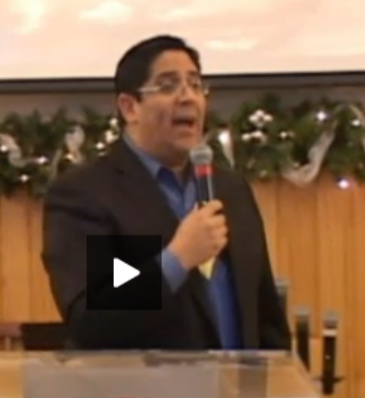
Author
Andrés Cisterna
Summary: The speaker opens with a reference to the Book of Nehemiah, Chapter 1, verses 3-4, where Nehemiah weeps and mourns upon hearing the news of the destruction of the wall of Jerusalem. The speaker identifies three types of Christians: crybabies, who are emotional and sentimental; those who pray and fast and mourn; and those who also act and position themselves in a defined structure. The speaker emphasizes the importance of Christians taking action and positioning themselves in a defined structure, rather than just crying or praying. Christians should present Jesus Christ as the banner and preach the Gospel with concrete actions. The speaker calls for practical churches, not theoretical churches, with members who are willing to act and rebuild.
The author encourages readers to reflect on their personal commitment to their faith and to consider the importance of action and practicality in their church community. The author cites the example of Nehemiah and encourages readers to prioritize their efforts to help others and rebuild their communities, rather than focusing only on their own problems. The author provides a challenge to readers to strive to be doers of the word, rather than just hearers.
I am going to ask you to open your Bibles to the Book of Neemiah in Chapter 1. While I had the opportunity to participate in the fast call, the Lord urged me to read this Book and also while I have been participating in the information and talks on the topic of immigration, the Lord of this Book brought me a topic for that.
And I thought that was everything and the Lord these days has been working on me a structure in the way how many times we see each other. In this Chapter of Neemiah in the verse that we are going to read, verses 3 and 4, Chapter 1, verses 3 and 4, he gives us a structure. And we are going to read these verses in the name of Jesus Christ.
And it says like this: “... and they told me the remnant, those who remained from the captivity there in the province are in great evil and shame and the wall of Jerusalem demolished and its gates burned with fire. When I heard these words I sat down and wept and mourned for some days and fasted and prayed before the God of heaven.”
Thank you, Lord, for your word. Thank you, God for this time, Lord, to be able to be ministered through this, your voice, Lord, in the name of Jesus, Lord, open our hearts, open our minds, open our understanding to be able, Lord, to understand what is the appropriate message for us, in the name of Jesus. Amen.
I don't know if you have had the funny opportunity to look at yourself in these mirrors that disfigure you. Have you gone through those mirrors where sometimes it looks small, sometimes it looks very long, some look thicker? Some, in normal mirrors, we see ourselves chubby too, but that is already normal. I don't know if you have had the impression of being there and that it looks funny, and laughs, and especially when you are with children. The children there take advantage of laughing at you, at everything that they cannot laugh at home, they can laugh there when they see us in front of that mirror.
And I began to make a structure of my life related to how I am seeing myself, how God is seeing me through the mirror of Christ. If you are seeing me half deformed or not. If you are seeing me as very short or chubby or very long, or if you are seeing me more or less regular. I don't know, but when I started reading this book and I read this Chapter, I read it and in these verses I paradoxically found three characteristics, let's call it that, of Christians.
We're going to talk inward, we're not going to talk outward today. We always talk about the world and the mundane and all those people who are out there, and what about us? clean. We are clean and we come out well, very proud because our halo grows more. I don't know if there is a body that can hold a halo as big as the one we have in here. But the only thing I know is that sometimes that halo leaves us, the first time a motorist crosses us on the street. It is lost to us, or we keep it simply because we have the need to react.
But I want to get into three features that I see here. The first feature is about our brothers, I'm going to use a term, the crybabies, the crybabies. If we analyze verse 3, Neemias had received some news that was not very pleasant, right? He had received news that was sadder. He had received news that had impacted his feelings and what does he say? He says, when I heard this I sat down and cried.
This is the first branch of Christians, of some Christians who are in the churches. Thinking this week about the way I can learn to define myself, thinking this week about the way I can learn to position myself in what God wants for me and wants me to be, I began in some way to say: Lord, every time I receive information about situations or about my own situation, what do I do? Do I sit down and cry? Do I sit and cry?
There are very emotional Christians. There are very emotional brothers, who feel enormously sorry for the things that are happening and cry and in meetings we see people who are crying over the misfortune of others and their own misfortune many times. And they start to have a pessimistic attitude, they start to have a negative attitude, they start to have a questioning attitude, and they keep crying about the misfortune. They continue to cry over the bad news. They keep crying so they can somehow be seen, that is, well, poor thing, he already cried. Wow! How did the news affect you? It's good that the news affected you and you cried, how important. It seems that he had a good heart.
And there are some who remain in the whining. And the next day they no longer cry, because they already cried what they had to cry. And somehow, we are sometimes influenced by an emotional attitude. Emotionalism in our life will always be there and many times it will be superior to our spirituality. The important thing is to learn to control these emotions and start doing other things that go hand in hand with emotions.
In the second structure of the text it says that Neemias, when I heard these words, says, I sat down and wept. I don't know if you are one of these crybabies, but then you say "and I mourned for a few days, and it also says, I fasted and prayed."
Here comes the other characteristics of the other group of Christians, those Christians who not only cry, not only feel affected, but also proclaim prayer and fasting. And they proclaim a day of mourning, and they proclaim a day of spirituality and they even make retreats, and that day they don't eat breakfast, or that day they don't have lunch. That day they read the Bible. Excellent! We are happy because we need to strengthen that spiritual part of us. The churches, listen to me carefully, the churches have a large percentage of this type of brothers, who are not only sentimentalists and emotionalists, but are also spiritual. That is evangelical spirituality, the spirituality of just crying, but I am going to pray for you and I am going to fast for you. But not tomorrow. It is only today for you to see my spirituality.
And we structure a second characteristic of people who are in a common place, in a church. But do you know? There is a third characteristic that we should meditate on in terms of defining ourselves and positioning ourselves. I really liked that word 'position ourselves'. I haven't heard it for many years. Position ourselves, I loved that word, in fact we used it I don't know how many times this week.
In Chapter 2, in verse 4 and in verse 5 here are the ones the Lord is looking for. The Lord is looking for those who cry. The Lord is looking for those who fast, pray and mourn. But he is also looking for those who fast, pray, cry, sit and act. And they begin to define a way of living, they begin to position a way of structuring that they are guided, instrumentalized by God. And in that structure I see a complete Neemiah that teaches us, in a way, the three characteristics of Christians who live in a church.
There are some who skip Sunday and some of us may know each other and sometimes we skip Sunday and end up tired. But the meeting ended and we ran out. There are others that last a couple of hours longer, there are others that last a few days. But there are some who receive this spiritual bread and begin to eat it, to recommend it, as the cow says to chew the cud, they recommend it and they remove all the nutritional structure from it and begin to do what? To put into action, to act. That is what God is looking for today: Christians, children, children of God who act on the word of the Lord, who position themselves in a defined structure, who position themselves by presenting Christ above anything else. That is what God is looking for. I really like what Neemiah says in verses 4 and 5, he says: “.... the king said to me, what do you ask for? Then I prayed to the God of heaven, and said to the king: 'If it pleases the king and his servant, and your servant has found favor with you, send me to Judah, to the city of my father's tombs,' and he says ' and see if I can rebuild it.' No, it says "I will rebuild it."
He did not walk with possible things. He walked with concrete things. Let me go because I'm going to go build that. He couldn't imagine how he was, they had only told him half the story, no more. They had only told her the affective part, the family part, the sentimental part of friends, but they had not told her that the wall was completely down. They had not told him how the doors had turned out. They had not told him how the city itself had turned out, detail by detail. The important thing about this is that Neemias represents us today as a disciple who is committed to the work of the Lord, no matter what price he has to pay to be able to position himself in that structure of being an instrument of the Lord.
And each of us should take an example of this. Each one of us must take an example when it comes to being able to present Jesus Christ as the banner. We are called to preach the Gospel of the good news of salvation. We are called, not only to believe in a beautiful Gospel and a great show, we are called to preach a true, real Gospel, with concrete actions, with defined actions, with a defined position. It doesn't depend on how I get up, it doesn't depend on how the moon is. It does not depend if it rained or not.
Neemiah had no problem, he had no hesitation in going before the king ....... and saying: 'look, king, I need to go. Look king I need to go rebuild my people.'
Look, when in this society they begin to see Christians positioned and defined in the word and in the structure of Christ, I am sure that revival will begin to be seen there outside, not in here. We are waiting for a revival like Azuza's. Forget it. It is out there where the name of Christ has to be glorified, not in here. In here we see all our faces, out there is where we see how we act. If we don't go to the parking lot one day, no... I invite you to the parking lot there one day. Really, it is a very personal criticism, it is a very personal criticism of us. Go there, go to work one day parking cars and you will see those little brothers who sit down to smile and poor that they let you park in the middle, because that is like a punishment. That's how he behaved badly during the week and there, poor Francis, he had discernment and you put yourself in the middle.
Position ourselves in a way of being, happy. Nobody likes to laugh when Francis sends you into the middle, right? Position ourselves in a way of seeing how Christ would view the situation. Position ourselves in a way of feeling how Christ would feel this. There are people, out there, who have been destroyed, their walls have been destroyed by the devil, their doors have been burned by the devil, their lives have been battered, destroyed and degraded to the bottom by the devil.
You know? And many of us just cry, at most we fast. But we are not acting yet. We are not yet taking that challenge to go. I'm going to go and rebuild those walls.
They know that each person outside is a nation. Every person outside is a nation. Each person outside is a people, a country, represented in their way of being, in their education, in their culture, in their way of living, in their habits. Many times we are called to rebuild those nations, those cities, but we are here and many times we do not realize that outside... we only lament.
What a pity! What a pity for him! What a pity for her! What a pity for the drunk on the corner! Shame on the junkie on the other corner! What's more, we cross paths so we don't bump into him. Let's learn to position ourselves with that authority that Christ has given us.
Christ gave us an authority, the authority to be made children of God and the children of God love. The children of God feel like God. God's children look like God. God's children live like God. The children of God go and rebuild. The children of God do not look at their physical, economic, or social position now, they look at what is happening there to be able to make a contribution, you know what? With the word and the life that Christ has given us.
That's the way: practical churches, not theoretical churches. There are churches where there are many bigheads. Yes, and when they arrive they all headbutt. And I prefer churches with people with big feet, because it means that they have walked a lot and they walk on each other, that they have tried, they walk with arms tired from so much acting and doing so much the word they have heard.
It says, there is a text in the New Testament, 'not to be hearers only but doers of the word.'
We forgot the last part. We are happy with the sermons on Sunday and the sermons on Wednesday and the cell teachings on Friday, and wherever we meet we are super happy. How much of that is what we practice in the week? How much of that do we actually have cash in our life.
I want to invite you to make a personal reflection on your life. In Neemiah 4:20 and 21 he says the following: “...in the place where you bring the sound of the trumpet gather there with us, he says, our God will fight for us. We, then, will work on the work.”
If you are worried about your problem and not having time to work for others on the site, I want to give you good news. The Lord is already in charge of your problem, the Lord is fighting your battles. Let's not allocate energy only to ourselves. Let's start allocating energy, others need it too, especially those who have not known the word of the Lord yet. Neemiah is an example, what kind of Christians are we, what kind of disciples are we.
We are whiners or spiritually evangelical or we are trying to act, or we are trying to do what we have learned. A church that acts is a church that really grows as God wants it to grow and you are his church.
This is a structure but you are the Lord's church today. You are the church that God is looking for today. You are the church that has to say: 'Lord, I want to go and rebuild the walls and the burned gates of the nations and peoples that were destroyed and are being destroyed by the devil.'
What It seems to them if we close our eyes. And we put our hearts before the Lord, and somehow we can reflect on this. Are we only going to sit and cry when we have to face external or internal situations? Or are we going to assume our typical religiosity of kneeling down because we are there afflicted at that moment? Or are we going to get down to business and act?
The way of the Lord is not easy, but we don't have to carry it ourselves. It is the Lord who goes with us. The Lord does not ask of us more than what we can really give and does not give us more than what we can really carry.
I want to give you a challenge. I want to challenge you to keep in your heart and in your mind, not only to be a hearer of the word of the Lord but to be a doer. And the one who started the good work will be faithful to complete it in you.