Luke 16:1
Author
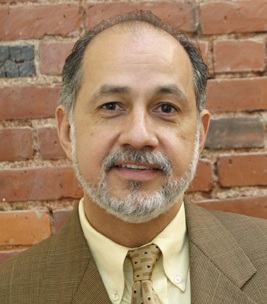
Dr. Roberto Miranda
Summary: The sermon focuses on the concept of stewardship in relation to the building of a new temple for the church. The pastor reads from the Gospel of Luke, where Jesus speaks about money in relation to the Kingdom of God. The pastor encourages the congregation to see the financial campaign not as an effort to get money but as an opportunity to reflect on Christian stewardship and the correct administration of goods. He shares a vision of having 200 people commit to giving $5,000 over two years, which would raise $1 million for the temple. The pastor believes that the congregation can achieve this goal without hiring an expensive company to guide them through the campaign. He encourages the congregation to pray and ask the Holy Spirit if they are called to be part of this vision.
The speaker encourages the audience to be joyful givers for the Kingdom of God. He emphasizes that everything we have belongs to God and that we will be held accountable for how we use it. He also notes the importance of planning for the future and investing in eternal treasures. The speaker encourages the audience to commit to a life of joyful giving and not let fear or anxiety stop them from giving to the Lord. The message ends with a prayer for wisdom and guidance in stewardship.
Let's go to the Gospel according to Saint Luke, Chapter 16, beginning with the first verse. I'm going to read it in Spanish. Let's go straight there now. Chapter 16, verse 1: “...he also said to his disciples, “there was a rich man who had a steward and this man, that is, the steward, was accused before him of being a wasteful man (that is, misusing his property). Then the rich man called the steward and said to him: What is this I hear about you? Give an account of your stewardship because you will no longer be able to be a steward. Then the steward said to himself: what will I do because my master takes away my stewardship? I can't dig, I'm ashamed to beg, ah! I already know what I will do, so that when I am removed from the stewardship they will welcome me into their homes. And calling each one of his master's debtors, he said to the first: how much do you owe my master? He said: “one hundred barrels of oil”, and he said: “take your account, sit down quickly and write 50”. Then he said to another: “and how much do you owe?”, and he said: “100 measures of wheat”. He told her: "Take your account and write 80". And the master praised the bad steward for having done sagaciously because the children of this century are more sagacious in dealing with their peers than the children of light. And I tell you, win friends through unjust riches so that when these are lacking they will receive you in eternal dwellings. He who is faithful in the very little is also faithful in the most. And he who is unjust in the very little is also unjust in the most, for if you were not faithful in unjust riches, who will trust you with what is true? And if you were not faithful in what belongs to others, who will give you what is yours? No servant can serve two masters because either he will hate one and love the other, or he will esteem one and despise the other. You cannot serve God and mammon." May the Lord bless his holy word. Of wisdom to expose it.
The last time I preached I almost informally started a series of messages on the concept of stewardship. I am going to continue this as part of what is going to be a kind of financial campaign towards raising funds for our temple. What we want through this financial campaign is not only to obtain money from you, and from us too, because I am also part of that, all the leaders of this church are part of this process. We also want to enrich their lives, our lives with a reflection on what Christian stewardship is, what is the correct administration of the goods that the Lord places in our hands.
We want to put this in its proper biblical context, we don't want to manipulate people. We do not want to exploit anyone nor do we want to use emotions or a sense of guilt. We want to do this in a truly biblical way. God's word has many, many themes in that direction.
You know that it has been said that the Lord Jesus spoke more about money than anything else in His teachings and He did so in many different ways. The Lord was not afraid to talk about money. But He always spoke of money in relation to the Kingdom of God. And he always sought to make that connection between our identity as belonging to an ultraworld kingdom and our relationship with our possessions and our life here on earth. The Lord always spoke about it in many ways and praised people who gave generously to the Kingdom of God. Remember, for example, the story of the poor widow who gave everything she had. Some would hope that the Lord had perhaps even seen it inappropriate for that poor woman to give everything she had, but the Lord did not criticize her but rather said: hey, look, that is the level of dedication that there should be towards the Kingdom of God. And whenever God wants to do something in the world He uses men and women, He does not act unilaterally. The Lord always likes to work in unity with his people and there is a lesson in that and that is that God wants to treat us as adults. He allows that for a purpose. Our church now has this great dream, this great vision of building a temple for the glory of God. A place where many souls can come to hear the Gospel of God, a place where we can worship the Lord comfortably and with much more space and more freedom and more comfort than what we do now, and the Lord has been generous with us even here we know. And we want it to be a place that is also a declaration to the city that God is blessing his people, that God prospers immigrant men and women, many of us, as we are humble, but God is allowing us because there is a passion for Kingdom of God and that is an example for the whole world, for the whole community.
This past week there was an article written by a reporter who was here visiting us a few weeks ago, and I've been in communication with him for several months, and he writes for a local newspaper, the Boston Globe, but he also writes for Associated Press, for the associated press that publishes articles in many different US newspapers. And this reporter wrote about the quiet revival he's seeing in the city of Boston, and he used our church as an illustration of that revival. There's a very nice photo, actually, in that article and there are many different newspapers. All over the nation we have been called to say they read that article. And the reporter came precisely the day I announced that the city had given us permission to build the temple. And he writes about it in his article as an example of how God is blessing those congregations that are being faithful to the word of God as opposed to many other churches that are declining because they are straying from the word of God. God that way the Gospel was already being preached to people who read that article by a man whose interest was not at all to promote fidelity to the word of God. He is simply a reporter who is reporting on a phenomenon.
What I want to say, brothers, is that many times the things that one does not only resonate with some but also with others, and I believe that this building is one of those things. That is why we have a great cloud of witnesses around us. There are many people who are watching to see the power in our lives and to see if we truly stand for what we say, if the rhetoric matches the experience. And for this reason, brothers, I encourage you to see this financial campaign, not as an effort to get money, because ultimately that is secondary. It is to take us to a new level of fidelity in the Lord and also to take us to a vision that will allow much glory for the Lord to be realized.
In fact, before I continue I would like you to take a moment to pray about this, to put this campaign in the hands of the Lord. Let it be an act of worship to the Lord. Father, right now we place in your hands, Lord, this financial campaign and we ask that it be for your glory. May your name be glorified, may the values of your kingdom, Lord, be exalted. Give me wisdom, give us wisdom as a church. And Father, right now I ask that your holy spirit take control of every man, every woman in our congregation and be Your Lord speaking to hearts. Crown this effort, Lord, with success, that at the end of this process we say: the Lord did it. Father, just as we were able to thank you for the success we experienced with respect to the city of Boston and the effort we made, likewise, Lord, at the end of this campaign we can give you glory and honor and say: God He did, and we will give you, Lord, all the success, all the credit, Father. Thank you Lord in Jesus name amen. Amen.
I'm going to jump right in, but I want to put something on your heart brothers. Look, we have considered bringing a company like many North American churches do above all, and guide us through that campaign. It costs tens and tens of thousands of dollars and none of them are adjusted to the Latino context, to the Latino culture. And after considering all of that we decide it's not right for us. And you know what, brothers? I believe that we do not need it, because I believe, brothers, that we have a committed congregation. I believe that we can do it without having to give 100,000 dollars or 75,000 dollars to a company, we, brothers, keep that money. $75,000 is an elevator, by God. We can do it. Do you know why sometimes you have to spend so much money? Because hearts are hard. Sometimes it's like we need a great force for that machinery of hearts to start moving, for people to give. But I believe that when we have a tender people who know the word of the Lord, we don't have to fight so much, we don't have to fight so much and things are done more organically, more spontaneously, without so much pain.
And the Lord gave me something simple that I'm going to share with you for the first time like this in public terms and we're not going to do anything about it for quite a while, but I'm going to put it out there for the spirit to start working. in you, as he already worked in me. I believe, brothers, that there are simply two parts to this campaign:
If we can get a church of more than a thousand people like this one, who associate with our congregation in one way or another, if we can get 200 people commit to give in two years, 24 months, 5000 dollars, there we have a million dollars that is the goal of this campaign and I believe, brothers, that for something of this nature it is worth it. The first, since he made a commitment to the Lord, is this one here, because I believe that things begin with senior leadership. By the way, this is a project that is going to cost us about 4 million dollars, when it is finished, because it has to be done through a company and it has to be done fast. And through the years, brothers, I have seen that when one gives generously to the Lord, God blesses beyond what we expect. And I want to leave that vision there in your heart, right now. I ask the holy spirit to begin to speak in my brothers and that you there in your heart without eagerness, without struggle or anything, you ask the holy spirit if you can be one of those 200 people who can in two years, in 24 months. That means, brothers, if you give 50 dollars a week, it's 2,500 dollars in one year and it's for two years, because the project will take us 2 years to complete. It is our goal. And that is clear, above the tithes, because if you take him out... because if you undress a saint to dress another then it doesn't make sense.
Let me clarify that, I wanted to include a little bit of lightness for them to breathe. Breathe like this, brothers. breathe. breathe. I know that people get a little tense when talking about money, right? Think about it, I place that vision there in your heart. Brothers, I believe you will not have the opportunity to participate in something so glorious, you will not have much opportunity to participate in something as glorious as in this vision. I thank the Lord because I was part of this project here, to see this building and many of you were too, you gave time, you gave work, you gave your gifts. I look here, and I see many of you as you participated to see this place that has brought so much glory to the Lord. How pleased we are with our building! TRUE? We, ethnic communities that people think, are poor, are miserable, are problematic, are dysfunctional, how good it is to change people's minds every time they come to a nice, beautiful, well-prepared, well-groomed building and see the blessing that God has given to our community, the genius that he has given to our community. And for this reason, brothers, I want to encourage you in the name of the Lord to dare from now on because this... look, there are congregations that give much more than we do in this, so this is not a heroic effort in a sense of the word, either. this requires us to push a little, to go a little beyond what is comfortable. And that is what requires that you and I make a little effort, stretch the membranes of our generosity a little to give to the Lord, for something glorious that we can do, and we are going to celebrate, I can already see that celebration that day when we are in our temple. I put it there in your heart, we will be talking about it but from now on I want you to start praying to see if God is not calling you to be part of that great vision of 200 people who give 5000 dollars in two years. 200, 5,000, 2,200 people, $5,000, 2 years. There you have it in your heart.
Let's go to the word of the Lord to see how that is embodied. First, brothers, here in this passage it says that there was a rich man who had a steward. Oiconomos is the word that is translated butler, from where the word economy comes from. And from there we already begin to see something about the word of the Lord, that idea of an administrator. Of course, it refers to us, it is an image of a man, a person who can be us. This man is not the owner of the wealth, he administers the wealth to the one who is the owner, who is the rich and there is an idea already. It is the idea, brothers, that everything belongs to God and who are the administrators? Us. You go to the book of Genesis and there God created the earth and put man to manage it. From then on all the Scripture tells us, everything in this world belongs to God and we are administrators of it, and for this reason God has the right to ask us what He wants from us.
Look at Psalm 24. What does it say there? The earth is the Lord's and its fullness, the world and those who dwell in it, because He founded it on the seas and established it on the rivers. So there is the idea, brothers, that everything you have... Look at the work you do and the profit you get from your work is from God, do you know why? Because the brain with which you carry out the process and the body with which you work is from God, God created it and that is why what you earn is not yours but ultimately God's. The atoms that make up your matter belong to God. The floor on which you walk, the health that you have is a product of God. That is to say that everything you do, you cannot leave the lordship of God because everything you breathe, everything you do is a product of God's creation, God's creative act. Everything you think, what you do, what you aspire to be, your talents, your gifts, everything is from God and that is the key, that is the central thought in the concept of stewardship. And the Bible is full of that principle, I don't have time to fully unpack it. So that's the first teaching.
Here is something else that is also very important and that is, look, there comes a time when the owner of the wealth tells the butler: come, and give an account of what you have done with my money. And that is also a principle that there are many times in the Scriptures that one day all of us will be asked to account for what we did with what belongs to God that was entrusted to us. That, brothers, the Bible is full of that, of that principle. The Lord Jesus Christ in many of his parables spoke that for example in the parable of the unfaithful servant that the Lord of the earth leaves and tells him: work and while I come, and then returns and says: what did they do with their talents. And each one has to give an account. And I am always impressed by the tone of those moments, it is not a tone of favor and of: would you like to tell me what you did? No, it's: Hey, what did you do with what I gave you? And the idea is that it is expected, it is expected that you use what God gives you, your money, your time, your talents, to advance the kingdom of the one who is the owner of that talent and that you do something, that you invest, that you use your creativity, that you use your vision, that you take risks, but that in some way you surrender what the Lord of the earth has entrusted to your hands. So that's something that haunts me, that thought. And I believe that you and I want, that is something that continually persecutes me as long as I can, when I come before the Lord and tell him at least with some confidence: Father, I did everything I could to advance your kingdom, while I was in the body and on the earth.
I think that each one of us, if we take our Christian identity seriously, has to be thinking about that. We take so many liberties, brothers and Christians, and we believe that this is something optional. Well, do I give to the Lord today or do I give to him tomorrow? Do I take an active part in the Christian life or am I just a bench warmer? That is not an option, you have to produce for the Kingdom of God. God expects you to produce. He has given you the kingdom of heaven, he has given you the eternal salvation of your soul and he expects you to work for his kingdom and give him what he puts in your hands.
There is another very important point here and that is what it says later. I'm going to jump around a bit. He says in verse 9, he says: "...and I tell you win friends through unjust riches so that when these are lacking they receive you in eternal dwellings." What does that mean? This man when he realized he was being a bad steward and we don't want to be a bad steward, say amen, this man when he realized he was going to be fired he quickly got to work to prepare for his departure and began to forgive him debts using the last moment he had left, forgiving him large debts, because that was a lot of money that he was forgiving the owner's debtors to prepare for his exit at the end. And he was cunning, he planned for the future. This was what the Lord praised. It is not that the Lord is saying that it is good to steal and be dishonest like this man, because I know that sometimes you take things where you do not have to take them. No, what the Lord praised was his shrewdness in planning for the future, instead of just obsessing over what was happening at the moment. There is a great teaching there and it is the following, brothers: many of us Christians are so consumed with the crises and the needs of the moment that we do not plan about what the future is going to be.
And what the Lord is saying is: look, there is a connection between how you behave with your money and your belongings here, and there is a connection and what you are going to have in the Kingdom of Heaven. I am not saying that salvation depends on works and what we give, I clarify that. What I'm saying is, brethren, that in many passages of Scripture we are mysteriously told that in the world to come it's not like we're all going to have a little white robe and a harp and a cloud and that's it, the world to come is going Being a world of great dynamism and different states of glory and responsibility and action, we are not going to just be eating grapes there continuously for all eternity. I believe that this is going to be something wonderfully active, if this here on earth is immensely creative and challenging, how long will eternity be, brothers? Think about that only. The truth is that I would not want to go there with a white coat, if that is what God wants, amen, I do not want to be a heretic either, but I believe that God has much more for eternity and that this will depend on how we How we behave here with riches will determine whether they give you a huge planet to govern or they give you a little piece of land there on one of those cold and hellish planets there at the end of the universe. I don't know, but everything will depend..... that is to say, the glory that you have, the level of reward that you receive, the level of approval, the degree of responsibility, something, your future state will depend on how you are here. invest for the Kingdom of God. It says that over and over again, Scripture suggests it in different ways. The Apostle Paul speaks of different crowns, he speaks of a throne where we will be given different degrees of reward.
It's this idea that as we plant here in the future there, it will be the same way. Look at another interesting passage regarding that, in Chapter 12 of Luke. Luke 12:33: ".... sell what you possess and give alms, make bags that do not get old, treasure in heaven that does not run out, where thief does not come nor moth destroy." The idea is treasure for heaven because there it is possible to affect heaven through what you do here in other words. There is a very subtle but very real connection between those two dimensions, the next dimension and this dimension. I end here. There are many very important things in this text but I am going to leave it there and perhaps continue next Sunday. But it is this idea, brothers that I do not want to lose, that in the future we are going to be asked to account and that how God treats us according to what we did, as the Lord treats the unfaithful servant and the servants who gave. To the unfaithful servant he says: take him out, if we are going to be faithful to the text one could even say, well, this person did not use his goods so he simply did not believe in Jesus. Because you could also say that, a person who has a real experience with Jesus Christ gives to the Lord, there is no possibility that he does not give, and if he does not give, it is because he does not have a personal relationship with Jesus. One could use that argument.
Brothers, God is calling us to a commitment, not only now, I would like brothers that in the rest of our lives, wherever you see a need in the Kingdom of God, you say, that is for me, they are telling me my, take part in this matter. I want you to commit yourself, my brother, my sister, to a life of joyful giving, 24 hours a day, 7 days a week, 365 days a year. There is no better life than being a cheerful giver. I have seen the Lord bless me and bless many of us, we can say the same thing, in the little bit that I have given him, every time I give him he gives me more and more and more, so commit to being a cheerful giver. I want us to be blessed with this time brothers, amen.
Let's put our heads down for a moment. Let's embrace that vision of a joyful giving attitude. God loves a cheerful giver, says the Bible. The Lord blesses the cheerful giver, he rejoices in giving him more and more and more, those who take risks, those who dare, the unfaithful servant in the other parable did not invest the gift because he was afraid of losing it, so he kept the gift only. Never let fear stop you from giving to the Lord. Giving is a matter of the will and reason, illuminated by the holy spirit, it is not a matter of emotions or circumstances. It is one of the most powerful principles that I can share with you on this day. Lord, I want to be a cheerful giver, tell him. I want to give myself first. When you have me you will have all of me. Hallelujah! Thank my Lord. Thank you. We embrace your call. Father we reject the anxious mentality and that grabs hold of things. We strip ourselves of everything we love and give it to you only, Lord. We deliver everything to you. Father, we give it all to you. Give us only what you want to leave us. Help us to be wise, upright stewards. Thank my Lord. Thank you Jesus. In your name, in your name, thank you. Amen. Amen. Glory to the Lord. Give the Lord a round of applause, brothers. Amen.