Advice to Parents : 1 Lifetime Commitment + 1000 Interventions = 1 Healthy Child
Author
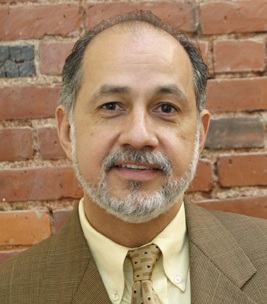
Dr. Roberto Miranda
Summary: Being a parent is a lifelong and intensive commitment that requires continuous investment of time and effort to instill solid spiritual values, discipline, and a love for excellence in our children. It is important to approach fatherhood/motherhood with a serious and disciplined mindset and to create opportunities to spend time with our children, share experiences, and model good behavior. In urban societies, these opportunities must be created artificially, and the word of God is a great resource for guidance on effective parenting.
Video: Spanish and English
I believe that one of the most important things for parents is to understand that being a parent is a lifelong commitment but that it is also an intensive, demanding commitment that requires many, many continuous hours of our lives being invested to form the sensitivity of our children.
If we want to produce children with solid spiritual values, hard-working, disciplined people, hungry for excellence and self-improvement, subject to authority, lovers of God, filled with the Holy Spirit, humble, merciful to others, able to relate productively with other people.
To produce this type of being, continuous interventions are required, repeated during each day, each week, each month, each year. Being a father is a mission, it is a job that demands everything from us and that job also has great benefits and great rewards. It blesses us to have the privilege of seeing that child growing in front of us and knowing that we have played in a sense, in a very minimal form, a role similar to that of God.
We are infusing that life with values and determining what that life is going to be and do in the future. In other words, it is so important to me that when we approach fatherhood or motherhood we arm ourselves with the idea that this is something tremendously serious, it is not a part-time job, optional, when we feel like it, when we have desire, it is something that has to be there continuously, as a discipline of life, sitting down with our children and sharing experiences, trying to get opportunities to have dinner together or give them a little kiss before they go to school, or if we have the opportunity to pick them up at school, be with the teachers and get to know us, and see us and know that there is a father, a mother who is worried about that child, take them out for a walk, take free time to be with them, ask them questions about their day, being vigilant about the friendships they have, inviting their friends over to the house, letting them feel free to be there with us, so that we can get to know them better, opening our hearts to our children, who don't They see us living life and therefore they can learn through life modeling how life is lived.
These are things that urban life has stolen from parents. In the more rural underdeveloped countries, children have many more opportunities to share farm chores with their parents and at night, there is not much to do so the family is forced to be together and share and live in a family extended. Unfortunately, all of this has been lost many times in the urban world and so we have to artificially create those opportunities. There has to be a prior vision on the part of the father that this is what is required. In other words, there has to be a greater understanding of how to be a father.
In many other countries and in many other societies being a father is something spontaneous, natural that has already entered the collective sensibility of the race and there are simply established mechanisms that facilitate being an effective father. But in the urban, modern, ultra-industrialized world, those opportunities don't come so easily. We live in a much more atomized society, more separated, with great demands on our time, on our emotions, and if you want to be effective as a parent, these conditions have to be produced artificially and have to be the result of a previously conceived vision, of an awareness that has been taken, of what is required to be an effective parent.
In fact there is no source that I know of that is more adequate to instruct us in fatherhood or motherhood than the word of God. God is the quintessential model of fatherhood and by seeing how God treats us, and how God disciples us, loves us, disciplines us, confronts us, instructs us through the holy spirit and his way of working with humanity, we We can also learn to be effective mothers or fathers, so my great advice, number one, from a fully human perspective is: invest time in your children, energy, love, commitment and look in the word of God for the means, the source, the norm, the main resource that determines what qualities are going to rule and govern your relationship and your interventions with your children.