The Dilemma of Christianity and Politics
Pharaoh said to Joseph, "Because God has shown you all of this, there is none so discreet and wise as you. You shall be over my house, and according to your word will all my people be ruled. Only in the throne I will be greater than you." — Genesis 41:39-40
Jesus said to them, "Then give to Caesar the things that are Caesar's, and to God the things that are God's." — Luke 20:25
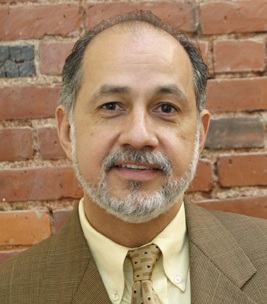
Author
Dr. Roberto Miranda
Summary: The idea of Christianity as a comprehensive vision that governs all aspects of life can be uncomfortable for modern Christians in secular societies that emphasize pluralism and individual rights. While the Old Testament shows the integration of civil and divine law, Christians are hesitant to impose their beliefs on others and recognize historical failures of the Church when it held concentrated power. The Church must proceed with caution when advocating for greater integration with government and not be manipulated by politicians who identify as Christian but neglect gospel values once in power. Christians must earn society's respect through competence and honesty, exemplifying a healthy mix of revelation and aptitude.
The recognition of Christianity as a comprehensive vision that governs all dimensions of human life is sometimes deeply uncomfortable for modern Christians. In the West, we operate in a society that emphasizes secularism, pluralism, and individual rights. Modern culture goes to great lengths to avoid favoring one religion over another. This often results in confused and insecure Christians. On the one hand, we want to see the principles of the Gospel penetrate the different areas of life in our society. On the other, it hurts us to hear accusations that we want to forcibly establish a theocracy, suppressing the rights of each individual.
On the one hand, our respect for human dignity makes us hesitate at the idea of imposing a religious dictatorship. We do not want to violate the conscience of others. We look in scandal at the atrocities committed in the Muslim world in the name of a religious fundamentalism devoid of grace and mercy. We wonder how to honor God's word at the social and collective level without trampling on the rights of those who see the world through a different religious lens than our own. We remember the heinous religious wars of the sixteenth century in Europe, the terrible violence of brother against brother in the name of Jesus Christ. We are ashamed of the atrocities of the Catholic Inquisition in Spain, or the violent and ruthless expulsion of the Jews from that same country in 1492. We recognize that the hegemony of Christianity over the nations has not always been as blessed as might have been hoped.
But on the other hand, as we read the Scriptures we reverently observe the Old Testament patterns, where civil law and God's Law are intimately intertwined. We see that in Scripture the moral and the spiritual, the religious and the political, are inextricably linked. There we are shown a world where collective sin can curse the earth, where disobedience to divine law can lead to defeat in war, where persistent idolatry can lead to the banishment and captivity of an entire nation. We ponder the practical implications of the Great Commission— “All power is given to me in heaven and on earth. Go therefore and make disciples of all nations, baptizing them in the name of the Father, and of the Son, and of the Holy Spirit, teaching them to observe all that I have commanded you ”(Mat 28: 18-20) —and we We ask how it would be possible to obey the command of Jesus Christ to disciple the nations without subjecting them to the values and principles of Christianity.
It is inescapable to conclude that God wants much more than the simplistic and blunt concept of the separation of Church and State that is currently being implemented in so many secularized societies. Still, we have to acknowledge that historically the Christian Church has not handled power very well when it has had it in a concentrated form — during the time of Constantine, the Middle Ages, or the Renaissance in Europe, for example.
Many times, the Church has become corrupted and lost its vision during times of prosperity and influence. At other times, as has happened in Latin America with the Catholic Church, the position of power has led it at times to collaborate with oppressive and corrupt regimes, and to help perpetuate a dehumanizing status quo for the poor and marginalized. Even great sixteenth-century Protestant theological thinkers such as Calvin and Martin Luther, who came to wield great political and religious influence in their day, made the occasional mistake of using their power to promote anti-Semitism, intolerance, and religious persecution. .
For these and many other reasons, we must proceed with great sobriety and caution when we advocate for greater integration between church and government, or when we protest the resistance of so many to the idea of Christian government in countries like the United States.
The evangelical Church in our countries has to be very careful not to allow itself to be manipulated by candidates who identify themselves as evangelical to take advantage of the Christian vote, but who, once in power, proceed with total neglect of the values of the gospel. The public eye will be firmly on candidates who identify as Christian to see if they behave according to the high values they represent.
We have to earn the respect of society by being more competent and honest than others, not simply by wearing a Christian label. Like Joseph and Daniel, who played political roles amid societies hostile to Kingdom values, we have to exemplify a healthy mix of revelation and aptitude in order to win the hearts and respect of a world skeptical of gospel values.