Revival Means Brokenness and Complete Transformation
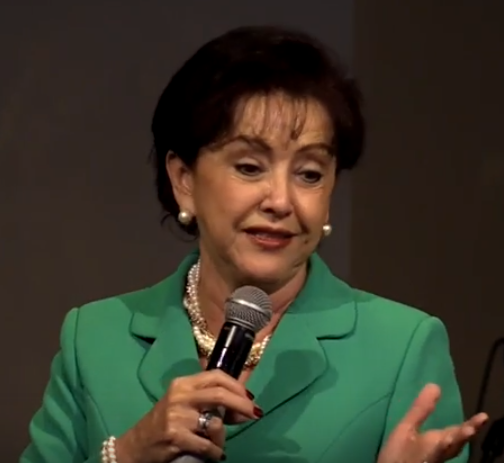
Author
Igna de Suárez
Summary: We gratefully remember Toñita’s legacy: a holy life, devoted to the Lord and rooted daily in the Word until the age of 91. Her example introduces the call of Nehemiah 8: after the walls of Jerusalem had been rebuilt, the people still needed inner restoration. Therefore, they all cried out together for the Book to be brought, listened attentively, and received clear instruction.
We must approach the Word with prepared hearts, delve deeply into it, obey it, and then teach it from the foundation of a consistent life. Scripture—not the preacher’s personality—must be central. When it is understood, it produces brokenness and repentance, worship, joy, obedience, separation from sin, and sincere confession. It is not enough to listen to sermons or keep notes: we must apply and live out what we receive each day.
True revival does not consist primarily in extraordinary manifestations, but in coming back to life through the Spirit: humbling ourselves, forsaking sin, and experiencing complete and lasting transformation. Every personal, church, or national revival begins with a resurgence of the Word. Let us embrace it, especially by passing it on to young people not only through our words but also through our conduct.
God bless you. Exactly one year ago, on November 4, we were celebrating the women’s retreat, and at the very moment our retreat was ending, God took her—He extended an invitation to a great and humble woman to live with Him for eternity, the eternity He had covenanted with her 51 years earlier, when she accepted the Lord. There is still sorrow in our hearts, but at the same time we rejoice that Toñita is more alive than ever. Although she is not here, she is more alive than ever at the Lord’s side, enjoying the reward the Lord had promised her.
Toñita had many names: to one person she was Tonia—to one person specifically, she was Tonia—to others she was my mommy, a mother-in-law, a grandmother, an aunt, a friend, a counselor, an intercessor. She extended her motherhood far beyond the bounds of blood, and she belonged not only to her family but to many more, just as I know she was part of the lives of many of you. And that is why today we want to remember her.
The Apostle Paul once said, “Be imitators of me,” and he said it because he had lived a life........ We believe that we can imitate Toñita because she has left a great legacy. She was a woman who lived fully for the Lord. She never stood in a pulpit, never went to a university, and perhaps had very little formal education, but when you spent time with her and looked at her, what she always brought was the Word and power of God lived out in a holy life, a worthy life, worthy of imitation. And that is why we mention her today.
One of our memories of her is that every day, even in her times of greatest frailty, when her eyesight was already failing, she still faithfully read the Word every day. If you could see her Bible, it is a Bible very worn from use. In that, then, there is a great example for my life and for yours.
And so today we remember her; we remember her with affection. She meant so much to so many of us. And there is something her oldest grandson once told me: a few months before she died, while he was visiting, she said to him—she was sitting on the edge of her bed, where she often sat to receive visitors, not only from her family but many others—she said, “I have nothing else; I have everything.” That is a perfect description: a woman who perhaps did not have much materially, but spiritually was a woman of great, great wealth. And may God grant that we can live our lives as she lived hers. She was a woman—and she is today, because she is more alive than ever, as I said at the beginning—a blessed woman. And connecting her with Igna’s words, because Igna was here last year—perhaps you heard her—she mentioned and preached a sermon about “no reserves, no retreats, and no regrets.” That was Toñita’s life. It was without reserve: she surrendered everything to the Lord, everything, everything; with no retreat, because she had nothing to repent of; and with no regrets, because by the end of her days the presence of the Lord was already so strong in her life that there was nothing to regret. She had given everything; she had emptied everything and, at the same time, filled everything. So I am going to pray, giving thanks to God for her life. We obviously know where she is, and that fills us with joy. We do not pray for those who have gone, but we pray for those of us who remain, and we pray with thanksgiving to God for her memory. So please join me:
Lord, I thank You for the life of that woman, of Toñita. Lord, You allowed us to draw near to her. Father, many here testify even today, Lord—and will continue testifying for a long time—to her example, to her holy life devoted to You, to the continual word of encouragement on her lips, Lord. Thank You for that woman. Father, I ask that every one of us—both her close family, Lord, and those who loved her—that every one of us may remember this woman’s legacy and imitate that legacy, Lord. Just as Paul imitated You, Toñita imitated You, Lord, and we want to follow that legacy. Lord, let it be so. Once again, we thank You for the life of that woman, for her 91 years, well lived and well used for Your honor and Your glory, Lord. Thank You, Father, in the name of Jesus. Amen. Amen.
And now I have the privilege of introducing our preacher today. As you know, many of you took part in the retreat yesterday. It was a glorious time, with 850 people present, including 115 young girls who participated in the young girls’ retreat. And on this occasion we have the privilege of hearing Igna de Suárez, as you also heard her last year.
Igna was born and has lived her entire life in Colombia. She is a very humble woman, passionate about the Lord and filled with joy in the Lord and with the fruit of the Spirit. Today she is going to share the Word with us, so let us listen very attentively to what the Lord wants to tell us through Igna today. Welcome, Igna.
I don’t think they are going to get us out of this church. You have gotten very, very deeply into our hearts, and Susan and I are so grateful, because returning to a place... Someone said that when you come for the first time, it is an honor, but when they invite you a second time, wow, that is a threefold honor. So thank you, Roberto; thank you, Meche, for trusting what God has entrusted to us and allowing us to be blessed through such a beautiful congregation, such lovely men and women. I say that because yesterday there were men involved in the praise and worship. The fabulous praise and worship team you have truly ministered to us so deeply.
I can see that it is a very fruitful team, because when we came last year there was a pregnant young woman singing, and this year at the retreat there was another pregnant woman. I think you all are very active. I was in a tremendous struggle because I am convinced that when you have the honor of sharing the message of God’s Word, you also have a great responsibility. Susan and I got up very early to seek the Lord—both she and I—to discover what God wanted for you. And the problem I had until just a little while ago was that I had three messages and did not know which one. We have been praying since first thing this morning, and nothing; praying and praying. Susan knew about my struggle, and every so often she would turn to me and say, “Well? Well, my friend?” I would tell her, “Nothing. I don’t feel drawn to any of them.”
And I said, “Lord, all right.” Sometimes the Lord gives me a message as I am going up the stairs, and I have to come back down and say, “Please give me the cassette or the CD, because it was born right here.” We do not improvise. Susan and I have a motto: we live prepared but never programmed. God is the One who sets the program. But thank you, Meche, because I thought it would be the praise and worship. Sometimes it is while hearing a song or something else that God confirms it. I was paying attention to Pastor Roberto to hear what else he might say that would confirm it, and nothing. But once again, our sister Tonia confirms His Word.
And as Meche spoke about something so important, about a legacy she left of a holy life, a committed life, a life that truly gave itself completely to God, to her family, and to her other family, which is the family of God, she mentioned something at the end that did confirm one of my messages. She said, “Something that always touched us deeply in Toñita’s life is that she read the Word every day and that her Bible, if you looked at it, was completely marked up.” At the age of 91, she never stopped reading the Word.
I believe that is the best legacy anyone can leave us, because that legacy contains the testimony; that legacy contains a life of commitment; that legacy contains a life of holiness. And I remembered that in May our pastor also departed to be with the Lord, after more than 45 years of service in Colombia and after being a man, an Apostle on a national level, with a vision for the Body and for unity. His death deeply affected the nation. Of course, it deeply affected us, my husband and me, because we are part of the church. We have been in our church for 29 years, and we lead in our church. On the day of the funeral we were very close to our pastor’s wife, who is also our friend, our very dear friend, and I said something to her: “The only thing I want you to give me of my pastor’s is his Bible. You can keep the English one, because he was Scottish, but give me his Bible in Spanish.” And that was my legacy: a Bible he had used.
Why am I telling you this? Because my pastor was one of the best teachers of the Word, and I was trained that way, from the time I was a child in the Lord. He was never my homiletics professor at seminary, but he was my homiletics professor for an entire lifetime. He was the man whose sermon you would listen to and you had to be prepared, because there you might cry, laugh, and be confronted, but you could follow it all the way from the title to the conclusion and the application. His message always had order and clarity.
And that was my legacy, the legacy he left me. Not only his Bible, which I asked for, but I was also trained in the Word. And one of the three messages that was on my heart, but about which I did not know whether the answer was yes or no, is a message that I am going to share with you called “Bring the Book.” That is the title. And we are going to turn to the book of Nehemiah, chapter 8. Please open your Bible, and let us prepare our hearts.
Nehemiah, chapter 8, verse 1, says: “....And all the people gathered together as one man in the square before the Water Gate, and they told Ezra the scribe to bring the Book of the Law of Moses, which the Lord had given to Israel. And Ezra the priest brought the Law before the congregation, both men and women, and all who could understand, on the first day of the seventh month. And he read from the Book in the square before the Water Gate, from dawn until noon, in the presence of the men and women and all who could understand; and the ears of all the people were attentive to the Book of the Law. And Ezra the scribe stood on a wooden pulpit they had made for that purpose, and beside him stood Mattithiah, Ema, and other men whose names I am not going to read. Ezra then opened the Book in the sight of all the people, because he stood above all the people; and when he opened it, all the people were attentive.
Then Ezra blessed the Lord, the great God, and all the people answered, ‘Amen, amen,’ lifting up their hands. And they humbled themselves and worshiped the Lord with their faces bowed to the ground. And the Levites helped the people understand the Law, and the people remained attentive in their places. And they read clearly from the Book of the Law of God and explained its meaning, so that the people understood the reading. And Nehemiah the governor, Ezra the priest and scribe, and the Levites who helped the people understand said to all the people, ‘This day is holy to the Lord our God; do not mourn or weep,’ because all the people were weeping as they heard the words of the Law. Then he said to them, ‘Go, eat rich food and drink sweet wine, and send portions to those who have nothing prepared, because this day is holy to our Lord. Do not grieve, because the joy of the Lord is your strength.’
The Levites therefore quieted all the people, saying, ‘Be still, for this day is holy; do not grieve.’ And all the people went away to eat and drink, to send portions, and to rejoice with great joy, because they had understood the words that had been taught to them....”
If I can leave you with just this, it will be my greatest joy. Let me give you a brief overview and provide a little context. Nehemiah was a tremendous man used by God. When you see Nehemiah in chapter 1 of the book of Nehemiah, which bears his name, he is in the empire; he was the king’s cupbearer. That meant he was a trusted man. He was the one who tasted the wine; he was the one who was very close to the king. He had a position, he was in the palace, he was close to the king, but even though he held that position, he had a tremendous burden in his heart. And Nehemiah’s burden was his city, Jerusalem, and his people, because although he ate well, dressed well, and earned well, there was pain in his heart for his brothers.
And I am going to begin making applications even during the introduction, because the pastor mentioned that you need to evangelize the city of Boston; every one of you is responsible. But there can be no effective evangelism without passion and without vision. And in Nehemiah’s life there was a vision for his city, and there was a passion for his city. You may be a recent convert, but you must have passion and vision for your family and for your city. And when you see Nehemiah in that first chapter, some..... friends arrive in the kingdom, and he asks them a question. He greets them and asks them, “How are my brothers in Jerusalem, and how is the city of Jerusalem?”
Notice that he asked nothing else, but went straight to a purpose he felt beating in his heart. And they answered, “The people are in great distress and disgrace; they are living in reproach. And the city, Nehemiah, is in bad condition: its walls have been torn down and its gates have been burned.”
And weeping arose in Nehemiah’s heart. Verse 3 describes how he tore his garments and began to connect directly with God, and he began to cry out to God, and the vision was confirmed. And he was willing to leave the kingdom. He spoke with the king; his face was sad. He had never been sad before. The king was surprised: “What is wrong with you, Nehemiah? You have never been sad, and today I see you deeply distressed.” “O king, my people are in a bad state; my city is in a bad state...”
And I wonder how many Nehemiahs need to rise up. You may be Colombian, Guatemalan, Puerto Rican, but God placed you in this city. I am not from Bogotá, but God placed me in Bogotá, and I love Bogotá as though it were my city, and I passionately love Colombia, and I will not stop praying until my nation is restored and the glory of God comes, and the whole world stops hearing bad news about Colombia, and the whole world knows that it is a nation changed and transformed by a revival that will come upon my nation, that is coming, that is arriving, and that will not be falls, shaking, tongues, or healings—that will be what is added; it will be a transformation. Violence will end, drug trafficking will fall, the guerrilla war will end, wars will end, and we will be able to see a nation as God wants to see it.
What vision and what passion Nehemiah had. Chapter 2 describes how he goes up and personally inspects everything; a man or woman with vision is always at the site of the problem in order to know the situation and the heartbeat of God up close. In that same Chapter 2, Nehemiah confronts the people. First he goes throughout the city and sees the fallen walls and the burned gates, but then he goes and confronts those who were living in disgrace and issues them a challenge. The challenge was in verse 17 of Chapter 2. He told them:
“...you see the trouble we are in...” Notice that he did not say you are in; he said we are in. “...Jerusalem lies desolate, and its gates have been consumed by fire. Come, and let us rebuild the wall of Jerusalem so that we will no longer be in disgrace.” And his vision spread to others. “Then I told them how the hand of my God had been good upon me, and also the words that the king had spoken to me.” And they joined together and said, “‘Let us rise up and build.’ And they strengthened their hands for the work....”
If you look at Chapter 3, every family group built; all the people built, from the young to the elderly, from those who had something to those who had nothing. And when you reach Chapter 6 of the book of Nehemiah, verses 15 and 16:
“...the wall was finished, the gates were put in place, and it says, so the wall was finished on the 25th day of the month of Elul, in 52 days...—listen carefully—...in less than two months, the wall was restored. And when all our enemies heard of it, all the nations around us were afraid and felt humiliated, and they knew that this work had been done by our God...”
Now, the wall had been restored, and the people were encouraged. Despite all the opposition that you can see in Chapter 2 itself, and Chapters 4 and 5, in 52 days the vision of one man and the passion of one man became a reality. Because nothing is impossible for God, and the Bible says here that it was God, by the hand of God. The glory belonged to God; the glory did not belong to a man; the glory belonged to God.
But then a second vision came into Nehemiah’s heart. The walls had been restored, but the people who were inside the wall now had protection; now there were gates, security, and walls. That meant that no one could simply come and go anymore; there was no way to combine or intermingle, because walls speak of separation. And the problem Nehemiah saw was that there was now a wall and the gates were there, but inside the wall was a people who needed change, who needed transformation, who needed their inner walls rebuilt.
Why? Nearly 70 years of captivity had already passed. During that time of captivity, beloved, the people had no services, no worship gatherings. Some were in Jerusalem, others in Babylon. It was over: there was no praise, there were no singers, there were no Levites. The wall was destroyed and the temple was destroyed. And throughout all those years there was no word from God, there was no message from God. And when there is no message from God, the people’s hearts are not in optimal condition. When there is no word from God—listen carefully to this—when there is no message from God, we can say that we are looking at a superficial people.
What is happening today? The same thing is happening. We have walls that have been built; we hear reports of magnificent churches, billions of dollars, pulpits almost made of gold, and sadly I have to say that there is a lack of the word of God; the word of God is absent. The messages we hear are reheated; they are far too superficial. If you turn on the television—I do not know about here, but in Latin America I would say that ten percent is good, or, well, of course, there are people who eat anything. There are people who eat whatever hamburger they are given, whatever instant tacos they are given, not the ones you prepare at home—the spiritual pizza—and it seems good to them. There is no substance. There is a great deal of superficiality, a great deal of improvisation. You can tell when someone is improvising.
That is troubling, because what awaits the generation coming after us? What awaits 12- and 13-year-olds? How tremendous that at 91 years of age, a woman never stopped reading her Bible, and at 91 she was receiving messages from God, because if she underlined her Bible, it was because God was speaking to her. What a tremendous testimony. If that alone is what I take away, may it challenge her generation.
Thank God for the program you have; I encourage you. I was preaching here with Susan last year. Once, in Guatemala, I received a call from one of our disciples, who told me, “You know, I was feeling down today, so I went online, connected to the Internet, searched for Lion of Judah, and there you were, and I listened to the message you preached on Sunday. God lifted me up; I downloaded it and preached it to the young people.” I arrived in Cali three weeks ago. I was preaching in the city of Cali, Colombia, and on the first night of the event, the girls who had been up here, who had been the pastor’s ministry team, came down and walked along the front row. One of them came up to me and said, “Wonderful.” I asked her, “What?” “No reserves, no retreats, no regrets.” And I asked her, “Where did you hear it?” “On Lion of Judah over the Internet.”
Lion of Judah has become famous in Colombia. I was being interviewed, I think about six months ago, on a very good television program. The interviewer was a young Christian—well, that is his career—fabulous... and at the end of the program he said to me, “Well, Sister Igna, explain to me that thing about ‘no reserves, no retreats, and no regrets.’” And I said to him, “And where did you get that?” He said, “From Lion of Judah over the Internet.”
Beloved, there is sorrow in my heart. That is why I told the women yesterday, do not wait. I preach strongly to women, because I do not want to see superficial women, but women like Ulta, women who are deeply grounded in the word of God, women who can preach not only to women but also to men, women who truly rise up with zeal and passion for the Word—and men too, of course, but you know that you tend more toward that.
There is concern in my heart. That is why the book must be brought; it is necessary that today, when we finish, the Holy Spirit kindle such a powerful passion for this blessed Word.
Not long ago, I was preaching somewhere, and someone came up to me and said, “I am going to give you a Bible because the one you have is already hurting you.” I said, “No, please. Who knows how much longer it will last me? The thing is, I have treasures in here.”
There is a people here. I am going to discuss two things concerning the passage we read. The title is “Bring the Book.” Why? First, I am going to speak to you about the cry of a people. That is point number one: the cry of a people.
Verse 1 says, “...and all the people gathered together as one man in the square before the Water Gate, and they told Ezra the scribe to bring the Book of the Law....”
Say, “To bring the Book of the Law.” ... Now, I am going to take this piece by piece. It says that all the people gathered together. The wall had already been completed, the gates had already... the Levites had already begun to be restored, Nehemiah already had a complete vision, and the people gathered together. What catches my attention is that they gathered by the Water Gate. The Water Gate had been restored, and the Water Gate speaks to us of water; water speaks to us of the word of God.
Jesus said, “You are already clean because of the word I have spoken to you...” And there they gathered, and they gathered as one man, and they raised a cry and said, “Bring the Book.”
Say with me, “Bring...” Do this... “Bring the Book.” Tell the person beside you, “We need to bring the Book.”
And their cry was... once they were together, they said, “Bring the Book.” Nehemiah did not do this; Ezra did not do it. A hungry people did it, a people who were witnessing the fulfillment of God’s faithfulness and who finally remembered the Book of the Law, and they began to cry out, “Bring the Book.”
There is a passage in the book of Amos, in Chapter 8, verse 11, that says, “...behold, the days are coming, says Jehovah the Lord, upon the earth, when I will send a famine upon the land—not a famine of bread, nor a thirst for water, but a hunger and thirst for the word of God.....”
And I love that word, and I declare that these are those days when God’s own people—I know that you, I know you receive good messages, I know you have pastors who feed you well, but these are needs in the church in general. Days are coming when there is a need for the Book to be brought.
And they said, “Bring the Book,” all united as one man. That was their cry. Then it tells me that those people were willing. Those people asked for the Book to be brought, and it says that the people were attentive. Verse 3 says:
“...and he read the Book in the square before the Water Gate, from dawn until noon, in the presence of men and women and all who could understand; and the ears of all the people were attentive to the Book of the Law.” Listen carefully. Their ears were attentive to the Book of the Law.
Now, there are several things here: Ezra had built a very large pulpit so that the entire multitude could hear, and it says, “...and all the people—no one spoke, everyone turned off their cell phones”—and there they were. And do you know what they were like? They were like this: attentive to the Book. Listen carefully to this: they were attentive to the Book, not to the preacher. They were attentive to the Book, not to the preacher.
The preacher disappeared; the Book appeared. That is what is needed today. Today we need the Book to appear, the Word to appear, the Word of God to appear, and we preachers to disappear, because the glory belongs to Him alone. They were attentive. They were attentive to the Book.
There is an absence. Forgive us for making such frequent use of our grandchildren and our family; they are my closest examples. Jonathan, my eldest grandson, has a very strong calling; he has a very strong prophetic calling. From a very young age, he developed—a very profound word of knowledge that God has given him. I always say, “Be careful about falling into sin in my house, because if my grandson is there, he will bring it to light.” He is amazing. That child is amazing.
When he was six years old, my brother came to visit our home one day and brought along a friend from my hometown who is a doctor and whom I had not seen for many years. I was not there that day, but my daughter, my mother, my husband, and my grandson were. And my brother said to him, “Look, Jonathan, I want you to meet my friend José.” And he held out his hand to greet the six-year-old boy, but the boy pulled his hand away. And he asked him, “Why won’t you greet me?” And the boy pointed his finger at him and said, “Because you do not love God.” He had never seen him before. He said, “Why do you say that I do not believe in God?” “Because you do not believe in God.” And the friend turned to my brother and said, “Who told him that?” And my brother went over to my daughter and asked her, “What did you tell the boy?” My daughter said, “I do not even know your friend.” He was a Buddhist, and that had a great impact on my brother.
And Jonathan has grown up with zeal for God and zeal for the Word. He is the child who can already tell you where God has spoken to him; he already has messages underlined that the Lord has given him. And a few months ago—they attend a very good church with their parents—but just look: last year, the boy asked his pastor for permission to stop attending children’s school. He said to him, “It is good, but would you allow me to attend the adult service?” The pastor asked him, “Why, Jonathan?” And he replied, “Because I want to hear the word of God the way they preach it to the grown-ups.” And his pastor allowed him to attend.
And a few months ago they had a guest at church, and he supposedly began to preach, and after 15 minutes the boy turned to his mother and asked, “And what time is he going to get into the message?” And the preacher continued making jokes, and the people were bursting with laughter. Half an hour passed; they kept laughing, and the boy kept asking, “And what time is the message going to begin?” Then he said to her, “Mommy, turn off that cell phone for me.” Then he turned to her and said, “Mommy, he is burning time.” And he left the service saddened, got into the car—a little boy who was not yet 12 years old—sat in the car, and said, “How sad; there was no Word.”
My beloved, those people asked for the Word, those people cried out for the Word, and they were attentive to the Word. But there is something more: those people asked Ezra to read the Word to them. They did not ask just anyone; they did not ask any one of the... no, they went to Ezra the priest, and here verse 2 says that they asked Ezra the scribe. Verse 1 says:
“...they said to Ezra the scribe.....”
And when you see Ezra later, in verse 6 it says, “...then Ezra.....” and there is another passage that says, “...Ezra the scribe....”
Now, let me tell you something: they knew who Ezra was. They did not go to anyone else but Ezra, because Ezra was a scribe. Who was a scribe? A scribe was a priest, but not just any kind of priest; he was a priest who delved deeply into the Word of God.
If you want to see the description of a scribe, you can find it a little earlier in the book of Ezra, there in Chapter 7. I am going to show you who a scribe was. Verse 10 says:
“...for Ezra had prepared his heart to seek the law of the Lord, and to do it, and to teach its statutes and ordinances in Israel....”
That verse says four extremely important things. Number one, it says that Ezra was a priest, but that he delved deeply; he prepared his heart to seek. What does that mean? Ezra did not come to this book just any old way. Ezra prayed to God. Now, I am not talking about making it a religious ritual, but when Ezra came to the scroll, he said, ‘God, I want Your Holy Spirit to prepare my heart so that Your Word may fall on good soil and I may understand it. Give me wisdom and give me revelation.’
Do we ask for that? And it says, “...he prepared his heart....” What else did it say? Preparing his heart was not only praying; it was examining the condition of his heart, seeing what was wrong. Perhaps many times he went to his wife and said, ‘Forgive me for the way I answered you yesterday, because I am going to enter into the book, and I want God to speak directly to me and for nothing to get in the way—not a sin, not a bad attitude.’
It says, “...he prepared his heart to seek...,” but the second thing it says is, “...to do it....” He read it, he understood it, he savored it, but then he applied it. Say, ‘He applied it.’
Yesterday you may have finished the conference and the retreat—to please both—and you may have savored it, okay, and I know that many women were touched and it was wonderful, but you have to apply it. It cannot remain on a DVD, it cannot remain on a CD, it cannot remain in your notes; you have to apply it, you have to live it, you have to do it. It has to transform you and produce right conduct.
And he said that he understood it in order to do it, to live it. And then, at the end, it says, “...to teach it....” That is the process. I go to the Word, I prepare my heart, I receive the message. What I am preaching to you, what I preached to you yesterday, is because it has already been lived, because I can preach what I do not live, but I should not preach it. Because a message backed by lived experience has power; it transforms.
And this was a scribe: someone who prepared his heart, who valued the Word of God, someone who obeyed it and someone who could teach it. And the people chose Ezra, and Ezra chose his team; they were the Levites, who have many names. Do not go giving those names to your children.
And it says that this team stood beside Ezra, and Ezra read, and he read it with such emphasis. He did not preach it; he merely read the book. I am preaching, but he was reading the book. And it says in that Chapter 8 that when he read, the people were attentive, and verse 8 says: “...and they read from the book of the law of God—Ezra read it, and his team read it—they read it clearly and gave the meaning, so that they understood the reading....”
Verse 5 is beautiful because it says, “...Ezra opened the book in the sight of all the people, because he stood above all the people; and when he opened it, all the people were attentive....”
That man gave it meaning, gave it life, gave it passion; he showed his concern in such a way because he wanted the people to be able to assimilate it, understand it, comprehend it. Now, when you preach it, you use illustrations, you use examples; you are trying to communicate it so that there will be light from that message, from that Word, so that it will never be forgotten and will penetrate. But he was only reading it, and what a transformation the mere reading of the Word of God brought—what a transformation! And they mingled among all the people so that the people could understand.
As my second point, I want to take you to see the results of what happened. And there are several results. Once the people heard the Word of God, the first result was that it brought—this reading brought—deep brokenness and repentance, because it says here in verse 9:
“...And Nehemiah the governor, and Ezra the priest and scribe, and the Levites who helped the people understand, said to all the people: This day is holy to the Lord our God; do not mourn or weep, because all the people”—say it with me—“all the people wept when they heard the words of the law.”
All the people began to weep when they heard that Word. Imagine the sound of hundreds of people weeping. Jeremiah Chapter 23, verse 29 says:
“...Is not My Word like fire, says the Lord, and like a hammer that breaks the rock in pieces?...... Is not My Word like fire, like a hammer?”
Look, you do not need to manipulate. Hebrews 4:12 says that “...the Word of God is living and effective.” It says that it is sharper than any two-edged sword, that it penetrates even to the dividing of soul and spirit, joints and marrow.... It is speaking of the deepest parts, “...and it discerns the thoughts and intentions of the heart, and there is nothing hidden that will not be revealed before this powerful Word of God....”
Many years ago, at my church, I used to teach Sunday school after the first service. We had Sunday school between one service and the next, and I had the privilege of teaching in that Sunday school. I will never forget it: we had a series of books that were wonderful. I still have them; I keep them because I studied at Bible seminary, but I believe those books were such a great treasure to me. The teaching was systematic, and my pastor taught one Sunday and I taught the next, but we followed the sequence. And one Sunday, according to the sequence we were following, it was my turn to teach about David’s sin, his adultery with Bathsheba, the consequences, all of that. It was a half-hour class. I would stay up until one in the morning preparing my class. Teaching Sunday school was the greatest privilege, and I got everything ready there; I prepared everything. I told Meche, ‘I am very domestic,’ and I told the women yesterday that I am a good cook and I like to season food. Love cannot be left out of the food, nor can Maggi broth. And that is how it is when I prepare messages: I look for everything the Holy Spirit tells me to put in them. If He tells me to add spiritual basil, I add it. The only thing I do not add to messages is a Maggi bouillon cube, because that is chemical, but I do add everything spiritual and natural.
And God had given me a treasure in that teaching, and I saw a woman in the third row begin to cry, and cry, and cry, until she fell from her chair in the third row and crouched down. I could no longer see her, because from the middle of the teaching until the end, all she did was cry and cry.... I finished the teaching, prayed for the people, and when I came down, this woman came, threw herself at me, and said, ‘I have to talk to you.’
Then we went into a little room, and it was so beautiful, and she told me, ‘I need to confess my sin.’ And she said, ‘Eight years ago, I took another woman’s husband, and from that union I have my five-year-old daughter, who is here in the church. I have been coming to church for two years; no one knows. I love that man, and we get along very well, but today I understood that this man does not belong to me. And today I want you to help me, because the Word was clear to me. What we used to call a coupling because he did not get along with his wife, I now clearly understand is called adultery. And today I have made a decision,’ she said, ‘and I need you to help me, because today I have to give back the man I stole. How do I do it?’
So on Monday, I spent the entire day counseling her. Her repentance was genuine. ‘My daughter needs him; he is her father. I love him, but he is not my husband, and what God spoke to me is so clear. It was as if you were preaching everything directly to me.’ And within a month, she gave the husband back. He did not want to leave, and she told him, ‘I do not know whether you want to return to your wife’s side, but you cannot stay by my side. You do not belong to me; I caused a great deal of harm.’ And she went and spoke to the wife and asked for forgiveness.
She loved him—listen, she loved him. It took her two years to forget him, but the Word penetrated. Last Sunday I was preaching at my church, and she now serves wholeheartedly in my church. She raised that daughter; God blessed her and prospered her; she is more beautiful than ever. And whenever she can hug me, she tells me, ‘I will never forget the day God confronted me with my sin,’ and she says, ‘That day I was set free.’
Beloved, the Word must produce brokenness and repentance in us, because through the law comes the knowledge of sin.
It also brought profound worship. Look at verse 6; it says: “...Then Ezra blessed the Lord, the great God. And all the people answered, Amen and amen, lifting up their hands; and they humbled themselves and worshiped”—say, ‘worshiped’—“the Lord with their faces to the ground....”
They worshiped God. The Word was so clear that it produced worship. Now, beloved, the Word must produce that in us—not only on Sundays, listen, not only on the days you have, not only on Saturdays; this is part of what God is going to speak to us about. Sunday is a day when, as a congregation, we all receive the Word our pastors have prepared. But listen carefully: every day the Word must speak to you, and you must not say, ‘Eeny, meeny, miny, moe... ay, cucara maca, puppet, speak to me here.... Wherever I put my finger, speak to me.’
No, there must be meditation; there must be a seeking of God, not only in prayer but through the Word of God. Every day you have to meditate on this blessed Word, and that Word has to bring brokenness, it has to bring repentance, it has to bring worship.
Beloved, if this Word does not give us goosebumps, if this Word does not make us cry—not the preached word, obviously; that is different—but I am talking about when you come to this book: if this Word is not marked like this, noted, underlined, annotated, then this Word has to have an effect on us; that Word has to be highlighted again. Today we hardly carry Bibles anymore.
Technology is wonderful; it is good that they put the passages up for us, but we no longer bring our Bibles because the text will appear on the screen. And I have said, ‘I like them to put up only the reference that is mentioned, but let the people look it up. Let the sound of Bible pages be heard, let the shshshshssh be heard...’ Because today you do not know where anything is: you start looking for Malachi where Revelation is and for John where Hosea is. We need the people to know how to handle the Word of God; we need the people to have the Word of God. And this must produce worship.
I do not know whether it has happened to you, but sometimes I am there reading and I begin to cry. You know, flights—for us, flights, traveling for hours and hours on an airplane—I like them. You know, they are my delight. When I have to travel for five hours, six hours, eight hours, ten hours on an airplane, I love it. Why? Because the only thing I do is lower my tray table, take out my Bible and a notebook, and simply say, ‘Lord, we have eight hours, five hours; now speak into my life....’
I was traveling to Mexico last year, and I was seated beside a gentleman. I was reading my Word, and I reached a point where, as I was reading it, I began to cry. God began to break me, and I just could not stop. And I cried and looked for a Kleenex; even the gentleman handed me a tissue, and I kept reading and crying. I could not stop; there was a presence. Finally, the gentleman said to me, ‘What is wrong, ma’am? Are you very sad?’ And I told him, ‘No, you do not understand. I will explain it to you later....’
I love it. You know, my best ones are born on airplanes because I have no concordance, I have no commentaries, I have no books, I have no history, but I have the Holy Spirit, and I am closer to heaven, and His revelation comes powerfully upon my life. And that is where it is born. This Word has to burn in our hearts. We must have bibliomania for this Word.
Tell the person beside you, ‘You must become addicted to the Word of God.’ This book brought profound worship, but do you know what? It also brought profound joy and gladness.
At the end of verse 10, it says to them, “...do not grieve, for the joy of the Lord is your strength....” And verse 11 says, “...So the Levites quieted all the people, saying, ‘Be still, for the day is holy; do not grieve.’ And all the people went away to eat and drink, to send portions, and to rejoice with great gladness....”
Say, ‘Great gladness.’ Say, ‘Because they had understood the words that had been taught to them.’
Oh, I will never forget when the Word of God was first taught to me. Do you want to know? The person who began teaching me the Word of God was an evangelical pastor who had only completed the fifth grade. He was the pastor in my town, but we were full of social and religious prejudices. I was not going to attend an evangelical church, but I was going to have a pastor make house calls. One afternoon, he began coming and teaching us the Word. And I told him two afternoons—I told him, three afternoons—and that man, who had not attended even one Bible seminary but had the wisdom of God, would sit down and teach us the Word, and he taught it to us simply. Such a passion for this Word arose that I embraced this Word. My husband had not been converted, but I would not let go of this Word. I put it in my purse, I carried it in my hand; wherever I went, I carried my... I slept with the Bible, and my husband was already becoming jealous. ‘And what are you doing with that book there all night?’ I do not know, but just the fact of having it close to me.
I want you to know that I have never forgotten my Word. Twice in 32 years—twice—I left it at home. I never leave it behind, because I do not know when I might meet someone with whom I can share it. That Word brought deep joy, profound gladness, and when you come to this Word and read God’s promises, and God speaks to you, and God’s rhema comes into your life, then in the greatest difficulty and the greatest need, this Word, when you meditate on it, leaps into your heart, and sometimes you begin to laugh because God is telling you that in the midst of your desert there is hope; that no matter what happens, He will come, He will act, He will change things, He will touch you.
Do you know what Jeremiah says in Chapter 15, verse 16? It says: “.... Your words were found, and I ate them, and Your word was to me the joy and gladness of my heart, because Your name was called upon me, O Lord God of hosts.....”
It says that the words brought him joy and gladness, and in Ezekiel, Chapter 3, it says that God told him, “Ezekiel, eat the scroll, take the scroll, put the scroll in your mouth.” Lord, the scroll—and it says that he ate it, and the words were as sweet as honey to him.
Oh, the words were as sweet as honey. And there is no surer way for God to speak to you. Stop going around looking for someone to prophesy over you. If God sends someone to prophesy to you, fine... but do not go looking for it. This is the surest prophetic word; this is the firmest prophetic word; this is the prophetic word through which the Lord will speak to your heart, and it will produce deep joy and profound gladness.
And the fourth thing it produced was profound obedience. Verse 13 onward says:
“... On the second day, the heads of the families of all the people, the priests and the Levites, gathered around Ezra the scribe to understand the words of the Law...”
Look, they were addicted. The next day came, and they wanted more: “Ezra, we want more.” And verse 14 says:
“... And they found written in the Law that the Lord had commanded through Moses that the children of Israel should dwell in booths during the solemn feast of the seventh month, and that they should proclaim and spread the word throughout all their cities and in Jerusalem, saying, ‘Go out to the mountain and bring branches of wild olive trees, myrtle trees, palm trees, and every leafy tree to make booths, as it is written.’ So the people went out, brought branches, made booths, and that Word brought profound obedience...”
What God had decreed came forth, and the people obeyed, and the Feast of Booths, which had not been observed since the time of Joshua, was celebrated again. But there was something even more tremendous about their obedience. Look at what Chapter 9, verse 1 says:
“...Now on the twenty-fourth day of the same month, the children of Israel assembled, fasting, wearing sackcloth and with dust on themselves—verse 2—and the descendants of Israel had already separated themselves from all foreigners....”
Obedience brought separation, beloved. It brought separation. When they heard, they realized that they had intermingled; that God had said not to marry, not to mingle, not to unite with foreign women from the land of Canaan or from among the Babylonians, but they had intermingled.
And the Word—Ezra did not have to do anything, and the Levites did not have to force them. The Word came, cut, and separated, and they themselves made the decision. There was perfect obedience, but there was something more: it brought deep confession and identificational repentance.
Verse 2 says, after saying that they had already separated themselves: “...and standing in their places, they confessed their sins and the iniquities of their fathers....”
Beloved, sin separates us from God, but the Word separates us from sin. And that was what had happened. And now they were there, and it says: “...all the people had now separated themselves and began to confess, first their own sins...”
They confessed there publicly; they were not ashamed. They began to confess their sins. If you notice, in this passage the priests and Levites never said, “You have to do this or that.” It was the Word itself that was cutting. And it says they confessed their sins, but they also engaged in identificational repentance: they asked forgiveness for the iniquities of their fathers.
You see, it speaks of sins, and it speaks of iniquities. Iniquities are what we carry down from generation to generation. They wanted to be clean; they wanted to be free. They knew that this was a decisive moment, and they asked forgiveness for the iniquities of their fathers.
Now they understood that God’s judgment had been just. Perhaps for years—70 years of captivity—they had said, “Why did God have to take us out of Jerusalem? Why did He have to allow the city to be destroyed?” They never understood it, but now, as the Law was being read, they understood. They understood that God is just; they understood that God had been exceedingly patient; they understood that they had turned away from God’s ways; they understood that their past generations had turned their backs on God, that they had worshiped the Baals, that they had even erected countless idols in the very house of God. They understood everything, and they understood divine justice. And that is why they wept over their own sin, and they wept over the sin of their ancestors.
And the conclusion of all this, beloved, is this. It says: “.... And standing in their places, they read from the Book of the Law of the Lord their God for one-fourth of the day, and for another fourth they confessed their sins and worshiped the Lord their God...”
It does not say the God of Israel, but their God. And if you keep reading, Ezra offers an exceedingly beautiful prayer, and after this revival came—revival came.
Now, we want revival. When we were singing that beautiful song about God sending rain, it was speaking of revival; that He is going to come with a visitation—it was speaking of revival.
The United States needs revival. The United States needs evangelization. The United States needs transformation. God has reserved Latinos for the latter part of the end times. God is going to use the Latino people with Islam, with Buddhism, and with Hinduism. Our features were designed for this time.
You look Moroccan; you look Arab. Yes, our features. And God has prepared us, as well as other nations. But as for the Latino people, if you look at Latin America, it is no longer a mission field. When I hear that others are going to plant churches in Colombia or Central America, I say, “Why are they going to plant a church when we already have churches in abundance?” Colombia is no longer a mission field. Colombia is a missions base. El Salvador, Guatemala, Nicaragua—there is very well-established national leadership in every nation, and God is bringing the early rains to Latin America. But the Word of God is needed. Every revival in the Bible is marked first by a resurgence of the Word of God. A personal revival in my life must come through a resurgence of the Word of God.
Now, as I conclude, let me explain to you what revival is. We get revival confused.... “I want revival; I want spectacular falls under the anointing of the Spirit...... I want miraculous healings, the dead raised, an emerging prophetic word every day.” And I want to tell you this: that is the added blessing of a revival. But revival is characterized by repentance. Revival is the complete transformation of a church, a city, or a nation, where the rate of violence and death comes to an end, where homosexuality comes to an end because God has come not to visit, but to remain. Because a visitation comes and goes. Azusa came and went, but they did not sustain it.
But it is transformation; it is change. And this people began their revival. Someone said that revival is living again. It is something that was dry and dead being given life again, and that is what the Holy Spirit does. Revival is a time of change, humility, and transformation.
Charles Finney said, “Revival is a time of brokenness of heart, bowing down to the dust in humility and forsaking sin.” That is revival.
And this Word produces that revival, because, as I conclude, let me tell you: this Word will produce many things in your life. This Word heals you; this Word restores you; this Word revives you; this Word builds you up; this Word establishes you; this Word gives you power; this Word brings deliverance. Hallelujah! This Word lifts us each day out of oppression and depression. This Word, it says, is medicine. This Word is water that cleanses and washes. This Word is a fire that burns down to the bones. This Word is honey that gladdens your heart. This Word is power. This Word—and let me tell you what you want to hear—this Word brings prosperity.
Not the prosperity you hear about today, not false prosperity: say it, and tomorrow you will have it; kick it, and you will receive it tomorrow. Not manipulated prosperity. When you enter the dimension of this Word, this Word will prosper all your ways, which is what the Lord told Joshua. Joshua, never let the Word of the Law depart from your heart. Do not turn away from it, either to the right or to the left. Meditate on it every day, because then you will make your way prosperous, and everything you undertake will turn out well.
“Blessed is the man who has not walked in the counsel of the wicked, nor sat in the seat of scoffers, but his delight is in the Law of the Lord, and on His Law he meditates day and night, and everything he does shall prosper.”
And I want to tell you: I consider myself a prosperous woman. I do not have millions in the bank; I do not have the latest-model cars. But if you want to see, live and in person, someone who is prosperous, it is me; it is Susan. We live happily with what God has given us. We are not complacent, because we believe in and have a God who takes us from glory to glory and from victory to victory. So when you live happily with this, He takes you to another level and then to other levels.
And what I want to tell you about is holistic prosperity, which begins in the spirit, which begins through this blessed and wonderful Word, because that is the key: seek first the Kingdom of God and His righteousness, and all the rest will be added to you. May God kindle a fire for this Word in our hearts this morning. May God revive us; may God produce hunger and thirst.
Stand up right where you are, please. This Word is what inspires new songs. This Word is what gives new prophetic songs. This Word prophesies all by itself. Just let me tell you this while you are standing:
Young generation, stand up where you are. I want to tell the young generation: you need to embrace this Word. It will keep you from falling, from going astray, and from anything else; and may we be able to pass it on to you not only by speaking it, but by living it. Lift up your Book, your Word; take it in your right hand and say right there: Lord, I confess this afternoon that Your Word is power. I confess with all my heart that Your Word is life; that Your Word lifts up, builds up, restores, makes restitution, works miracles, brings healing; that Your Word opens a way, Your Word opens the heavens, Your Word breaks my heart, Your Word touches my family and touches my nation. And today, Holy Spirit, I ask You to fulfill that Word of love in my heart. Today I embrace it with both arms and place it at the center of my life, and I ask You, Lord, to bring revival to my own life. Produce hunger, Lord, and thirst for Your Word in my heart.
Give me wisdom, give me revelation, and give me the anointing now. Give me Your anointing, which destroys every yoke in my uncomprehending mind. May Your anointing open my eyes to behold the wonders of Your Law; may scales fall from my eyes, and may Your revelation be given to me deeply, Lord, as it was given to the disciples on the road to Emmaus.
Fill me with Your Word. Make me a channel of Your Word so that I may love it, live it, and teach it, so that it may produce right conduct. Revive my life, Lord, and revive my church in the blessed fire of Your Word. I thank You, Lord, in the name of Jesus. Amen. God bless you.
Brothers and sisters, you have just heard a foundational sermon, and it deserves to be heard more than once. And really it is—I mean—foundational, fundamental, because any revival we wish to receive or aspire to must begin with that foundation. The Lord has been speaking to me a great deal about repentance and about the consecration and sanctification of the people, and that begins through this sermon. And I encourage you to look for that sermon and listen to it again. I consider it a prophetic word that will reverberate for a long time within the walls of this sanctuary and in the hearts of our people.
So let us receive that in the name of Jesus, and let us be a people of the Word, brothers and sisters, because a people of the Word is an invincible people, a people full of power, irresistible. Let us be a people of the Word.
May our young people come to love and know the Word more and more each day. Thank You, Father. We receive it, Lord. We humble ourselves before Your Word, O God, and we consider it—we consider this Word, Lord—a prophetic word that You have sent for such a time as this, Lord, and we receive it into our hearts. We will treasure it, Lord, and we will live by it with Your help and Your blessing.
Bless our sisters who have given us so much today, Lord—Susan and Igna—and renew their strength; and bless these people, Father, who want to serve you, and help us to align ourselves more each day with that precious word, Lord, which you have entrusted to us, in Jesus’ name. Amen and amen. Glory to the Lord. Amen and amen.