Revealing Jesus
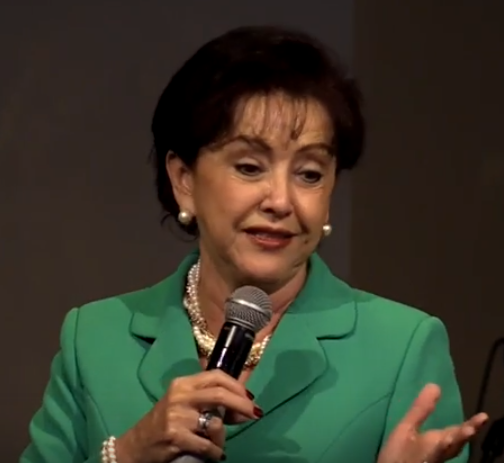
Author
Igna de Suárez
Summary: Jesus could not remain hidden, and those of us who have experienced that He is real cannot keep Him hidden either. This is not about emotionalism or religion, but about a life transformed by genuine conviction. The Father revealed the Son to the crowds, to Peter, and to Paul, and He continues to make Him known through creation, all of Scripture, and works of power. These works must not exalt the minister: glory, honor, and praise belong to Christ alone.
We can hinder that revelation when, like Peter before Pentecost, we deny Him out of fear. But the Holy Spirit empowers us to speak boldly about what we have seen and heard. We reveal Jesus both through simple, passionate words and through our daily conduct. At home, at work, while traveling, or in any encounter, our lives should be an open book displaying His love and transforming power. Every person who crosses our path is an opportunity to share Him. Rising above fear, we must make Him known in season and out of season, so that others may receive the life, fellowship, and joy found in Him.
The Gospel of Mark, chapter 7, verse 24, says: “He arose from there and went to the region of Tyre and Sidon, and when He entered a house, He did not want anyone to know it, but”—say it with me, “but”; say it louder—“He could not be hidden.” Tell the person next to you, “He could not be hidden.”
One of the beautiful characteristics of the ministry of the Lord Jesus—when you read His Gospels, you will find a characteristic that marked His ministry—was the crowds. Wherever the Lord was, the crowds came. Those were days when people were hungry and thirsty. The political systems of the Roman Empire had not been able to meet their needs, and neither had the religious systems.
The people were so tired of so much sacred ritual, of so much religiosity, that when Jesus appeared on the scene, everything changed. There was a grace in Him; there was an anointing in Him. He came to break many things by His Presence alone, and that is why you see that the Gospels of Mark, John, and Luke beautifully describe how the children ran after Jesus. The women—the pots at home cooked by themselves—the carpentry shops were left empty, and so were the children’s playgrounds, because when He appeared, the people ran. What He said filled them; what He expressed touched them. There was a spiritual awakening.
And here we see the first time He goes to the region of Tyre and Sidon. He goes with His disciples; perhaps He wanted to have some time alone. I do not know whether this has happened to you, but when you are in ministry, it is a blessing. I love people; I delight in people. I would say I could not live without people, because a ministry without people is a tragedy. Blessed be the Lord for people.
And even more so when we have Latin people, because that is how we are: we love it; we are not reserved—oh! A kiss here, a hug there—and it is beautiful, and I love it. But there are moments when I want to be alone. I love being with my husband—47 years of marriage; relax, I married very young (laughter)—47 years of marriage, and we enjoy them to the fullest. I love being with my husband, but there are moments when I want to be alone, alone with Him, and those are my best moments, right?
Every morning I have to get up very early to be with Him before the cell phones and everything else start ringing, and I have an encounter with the Lord at five or five-thirty in the morning. I make the best coffee in the world. He told me, “Bring two little cups of the best coffee I have made in the world: Colombian coffee.” Sorry! (Laughter.) The Costa Ricans tell me, “No!” And I tell them, “Talk to God; that is what He told me.”
And there is no better time in my life than being able to be alone with Him. And I understand: He wanted to be alone. When you are in ministry and God has given you grace, sometimes you will not be able to have privacy anywhere, because people know you. That also means you have to walk the straight and narrow, right? Sometimes the traffic in the city of Bogotá is terrible, and sometimes a car nearly sideswipes you, and you say in your own reasoning, “What does this man think—that because I am a woman he can run me over? Fine, I will show him!” And you put your foot down, and the Holy Spirit tells you, “Be careful; that man may be at the next service where you are going to preach.” And I say, “Oh yes, Lord, forgive me.”
And we want to be alone with Him. Jesus was here and said, “Let us go to Tyre and Sidon.” They found a house and entered that house for a time of intimacy. And the beautiful way this verse 24 ends is by saying, “He entered the house, but He could not be hidden.” And this is the title of my message: We Cannot Hide Him.
Every one of us who has had an experience with Him, who has made a decision in our lives to love Him and surrender our hearts to Him—but more than a decision, every one of us who has been able to experience that He is life, that He is real, and that your knowledge, your gnosis, becomes ginosko, knowledge carried into a real experience.
And every one of us who has had experiences with Him—I am not speaking of emotionalism; please do not misunderstand me. I am speaking of conviction; I am speaking of a reality, because we speak of a Christian life, not a Christian religion, but a life: that which beats every day, that which is real, the One whom we love more passionately each day, who is Him. And if we have had an experience with Him, we cannot hide Him.
Tell the person next to you: “We cannot hide Him. Wherever we go, we will never be able to hide Him.” And I am going to tell you why we cannot hide Him; I am going to speak to you precisely about why you and I cannot hide Jesus. Number one: we cannot hide Him because the Father never hid Him; the Father revealed Him.
When you read the Gospel of John, you will realize that there is what I call within myself that longing to present the One to the other and the other to the One. Jesus came with the purpose of redeeming us, saving us, paying our debt, and shedding His blood for us; but He also came with the purpose that you and I might know the Father.
In chapter 14 of the Gospel of John, when He is speaking about going to prepare a dwelling place for us, in verse 6 He spoke those words we know so well. He said, “I am the way, I am the Truth, and I am the life, and no one comes to the Father except through Me.” And if you go to the Old Testament, there are very few times when the name Father is made known in the Old Testament. Isaiah mentions it a few times, and the people describe Him that way at certain moments, but not as Shaddai, Shalom, Elyon, and all the names of God were known, because the prophets could not make Him known. The Son had to come in order to make the Father known.
And that is why, in that beautiful chapter 14, when He says, “No one comes to the Father except through Me,” Philip asks, “Lord, show us the Father.” And Jesus said to him, “Philip, I have been with you all this time, and you have not known the Father? He who has seen Me, Philip, has seen the Father, because the Father and I are one.”
And when you look at that journey, the Son wants to reveal the Father, but at the same time the Father reveals His Son. And that is why we cannot hide Him: because the Father revealed Him. Let me show you the processes through which He revealed Him. The Father revealed Him beautifully to the crowds on the day of His baptism. When you go to Matthew, chapter 3, verses 16–17, John was baptizing Jesus, and verse 17 says, “When He came up out of the water, the Spirit of God descended in the form of a dove, and then the heavens were opened,” Scripture says, “and a Voice was heard from heaven saying, ‘This is My beloved Son, in whom I am well pleased.’”
And the people heard it. They did not see anything, but they heard it. And there the Father was presenting, after His baptism at the age of 30, His oikos, His Son—He was, so to speak, presenting Him to society—and He revealed Him to the crowds who were there. The crowds heard the Voice of the Father saying, “This is My beloved Son, in whom My soul delights.” He did not reveal Him only to the crowds; the Father revealed Him to Peter, because Peter was the disciple called to open the door to the Gentiles, and his mission was also to take the Gospel to the Jews. And I cannot speak about or make known what I do not know.
That is why the Father had to reveal Him to Peter. And when you look, that revelation occurs in Matthew, chapter 16, verses 13 through 17. Jesus is with His disciples. He is no longer with the crowds; He is with the disciples. And Jesus speaks to His disciples—because He was preparing and training them—and asks them two questions. The first question He asks them is, “Who do men say that I am?”
And that was easy to answer. Some said, “Well, Lord, in the streets people say that You are Elijah, that You are Jeremiah, that You are John, that You are one of the prophets.” And then Jesus poses the second question to them, no longer about what the people were saying, but—in other words, I am going to paraphrase it for you—“And now you, the twelve who have walked with Me—we have slept in the same room, we have eaten, we have walked together—who do you say that I am?” And there was silence.
And one can imagine each disciple searching for the most beautiful words with which to express it, but he could not. That is what sometimes happens to us when we try to speak about Him. It is as though our words become limited, as the song says: “♪ There are moments when words are not enough ♪”—they are not enough—“♪ to tell You what I feel for You, my good Jesus ♪.” And there was silence, but then Peter said to Him, “You are the Christ, the Son of the living God.” Wow!
And Jesus turns and says to him, “Blessed are you, Simon son of Jonah, because what you have just said was revealed to you neither by your blood nor your flesh, but by My Father who is in heaven.” Blessed be the Lord! “But by My Father.” “But by My Father.” The Father reveals Him to the crowds, but the Father reveals Him to Peter. Peter would be the spearhead. Peter had to speak to the Jews, but in chapter 10 Peter arrives at Cornelius’s house for the first time, and he did not want to: “No, it cannot be for the Gentiles.” But Jesus takes him there, sends him, and there, for the first time, the Gentiles are touched by the revelation of the Son of God.
I cannot make known what I do not know. The Father reveals Him to the crowds; the Father reveals Him to Peter; but the Father reveals Him to Paul, because Paul was the apostle to the Gentiles. Peter opened the door to the Gentiles, but Paul would be the one to carry that message. When you go to the Book of Galatians, chapter 1, verses 15 and 16, he himself speaks of this experience, and look at what he says: “But when it pleased God, who set me apart from my mother’s womb and called me by His Grace,” and then he says, “it pleased Him to reveal His Son in me, so that I might preach Him among the Gentiles.”
The Father reveals Him to Peter, but the Father reveals Him to Paul. Why? Because Paul had to carry this message to the Gentiles. He was not one of Jesus’ disciples; he was a later disciple. That is why Paul’s Letters have so much life when you read his epistles: they are life, they are maturity, they are depth, they possess an incredible substance, because the Son would sit with him and the Son would dictate to him. And he was able to know the Son because the Father revealed the Son to him, so that Paul could make the Son of God known.
So we cannot hide Him because the Father revealed Him to you, because today we know Him, because the Father has revealed Him to us through His Holy Spirit. You and I who are here, who have had an experience with Him, cannot hide Him.
Let me now tell you the means the Father uses to reveal His Son. And the first means He uses to reveal His Son is creation itself. Psalm 19, written by David, begins by saying this: “The heavens declare the glory of God, and the firmament proclaims the Work of His Hands. Day after day pours forth speech, and night after night declares wisdom.”
Then it says, “There is no language, nor are there words; their Voice is not heard.” And if you continue through that Psalm, you find that the first thing God establishes to reveal His Son to us is creation itself. If you have seen a sunset, if you have seen the sun going down, you will know that sunset speaks to you about its Creator, who is the Son of God. If you see a sunrise and have a romantic heart, you will fall down in worship. The mountains.
I was ecstatic—and it is already passing—because I was told that autumn in Boston is exceedingly beautiful, and I am trying to capture a photograph of a red tree, but I have not had time; we rush by like this—zshck! I want to take some red leaves with me, and some yellow ones, and then some green ones, so I can have the process. Everything around us—the sky, the Earth, all that has been created—God established it to reveal His Son.
Now, why am I telling you this? Because if you go to the Book of Colossians, chapter 1, verses 15 through 19, Colossians speaks of that Creator whom the Father reveals to us. Verse 15 is beautiful. Speaking of Christ, it says—read it with me; it is on the screen—say: “He is the image of the invisible God, the firstborn of all creation.” Say the following text louder: “For in Him all things were created, those in heaven”—say it loudly—“and on earth, visible and invisible, whether thrones or dominions or principalities or powers.” Say it: “All things were created through Him and for Him. And He is before all things, and in Him all things hold together.” Blessed be His Name!
He was the Creator of this Earth. He made the mountains; He made the valleys; He made the plains; He established the rivers; He placed all these beautiful things here, which we have depleted and damaged. But all creation proclaims—proclaims the existence of the Son of God; it reveals Him. And from now on, when you look at that creation, you cannot see it as you saw it before. He created it for you and for me, and the Father uses creation to reveal His Son at the top of His voice.
But the second thing the Father uses is His Word. If you have His Word, please lift it up. Say: “This Word, from Genesis to Revelation, speaks to me about the Son of God. This Word centers on the Son of God from Genesis to Revelation.”
Chapter 1 of the Gospel of John, verses 1 and 2, says: “In the beginning was the Word”—and the Word is the spoken Word—“and the Word was with God, and the Word was God. He was in the beginning with God.” And if you go down to verse 14: “And that Word became flesh and dwelt among us, and we beheld His Glory, glory as of the only begotten of the Father, full of Grace and Truth.” Blessed and praised be His Name!
This Word, from Genesis to Revelation, declares the existence of the Son of God; this Word reveals the Son of God to you. When you go to Genesis, you find the proto-gospel; when you go to Genesis chapter 3, it speaks there about the seed of the woman. As you go through every part, when it speaks of Noah’s Ark, it is a type of Christ. When you look at the people of Israel coming out of slavery that night, that Passover lamb they had to sacrifice in every house, which every family had to eat, which was not set out as bait, which was eaten, and of which nothing could be left, speaks of the Lamb of God who takes away the sin of the world.
He is everywhere. Everything in the wilderness was a type of Christ, a shadow of what was to come. The manna speaks to you of Christ, the rock speaks to you of Christ, the uplifted serpent speaks to you of Christ, the tabernacle speaks to you of Christ; you see Him in the Angel of the Lord: He is a manifestation of Christ in the Old Testament.
When Melchizedek appears to Abraham, it is speaking of Christ; the whole Word does—the door of the tabernacle was Christ. The Father uses not only creation; He uses the Word. Behind the words is the Word.
When you read this Word, you will realize it as the Holy Spirit leads you and you begin to mark it. Because if you are in that dimension of the Spirit, you will see Him throughout this wonderful Word. It is not only in the New Testament; it did not begin when He came and was incarnated in Mary’s womb—no, no, no. All the prophets spoke of Him: Zechariah spoke of Him, Isaiah spoke of Him—the entire Old Testament.
That is why the Old Testament is of incalculable richness. The Father uses creation to reveal His Son, the Father uses the Word to reveal His Son, and the Father uses works of power to reveal His Son.
In Luke chapter 5, verses 12 to 15: “And it happened that while He was in one of the cities, a man full of leprosy came forward. When he saw Jesus, he fell facedown and said, ‘Lord, if You are willing, You can make me clean.’ Then He stretched out His hand, touched him, and said, ‘I am willing; be clean.’ And immediately the leprosy left him.” And look at this: “And He commanded him not to tell anyone.”
See, He told him: “Show yourself to the priest and offer for your cleansing what Moses commanded, as a testimony to them.” I want you to read verse 15 very loudly with me: “But”—say it loudly—“but His fame spread more and more, and great crowds gathered to hear Him and to be healed by Him of their diseases.”
He insisted on that many times. That is not the first passage; in many passages He performed the miracle and said, “Do not tell anyone.” How different things are today, aren’t they? Today I see that at the big crusades there is all kinds of fanfare.
“Examine yourself! Run up here to the platform! The power of God!” Jesus performed healings, and He did them in such a way that the crusades Jesus held always ended by saying, “And they were all healed.” When the disciples began ministering in the power of the Spirit, it also says, “And they were all healed.” Today just a few are healed, and we make all kinds of fanfare about it, drums and all. We have new manifestations that I do not know whether they exist in heaven, but people talk, for example, about the domino anointing.
The drums sound—brrr—and the preacher says, “And a domino anointing is going to come, and when one person falls, everyone will fall,” and everybody swallows the story, and they all go, “Brrrrr.” If he is Dominican, he says, “Now, get up,” and goes to the other side: “Brrr.”
Beloved, what I want to tell you is that Jesus never, never made so much noise. People were healed; the Father was glorified. When God uses you, He will heal, He will be glorified, and He will receive the glory, the honor, the power, and the praise because, as we were singing, He alone is worthy; there is no one else.
So the Father reveals the Son, and the Father uses nature, and the Father uses His Word, and the Father uses the works of power that flowed around Jesus. But I am coming to my third point, which is confrontational for you and for me. The Father wants to reveal His Son; we are the only ones who can hinder Him from being revealed and made known to others.
We are living in a very difficult yet very wonderful time. I come from a country where, let me tell you, I believe this is happening all across Latin America. We travel through many nations and have many engagements, and you can have a particular view of your church. This church is a beautiful church. I have been able to observe your pastors on the occasions when I have come, and I told Pastor Roberto—and I am not saying it to flatter him, because I have already won both of their hearts, so I have no need to do that—but I said, “If I lived in Boston, I would be in this church and under this covering, without a doubt. Do not doubt it.”
And I have been able to see beautiful things in both of them, because God placed both of them here. Meche has been a gift, and I can see the way they complement each other. I can see that she is an extremely organized woman—not that you are not organized (laughter)—everything, everything. When you arrive, everything is ready. They even had umbrellas ready for us in case it rained, right? And like good women, we went to the mall the next day, and when we left the mall it started to rain. I said, “Susan, your umbrella!” “Oh, I left it at the hotel.” “Well, come under mine, because Meche said we had to carry them in our purses.”
But everything was there; we had everything. We did not even have to check in at the hotel, because when we arrived she already had the keys for us. But I have also observed him, heh-heh (laughter). And I—we have not discussed this with Susan, but it is what I feel in my heart, and I am sure she feels the same way—it does not always happen. We go somewhere, we preach, and we minister with all the passion in our hearts, because this is not just another job; it is a very great responsibility for us. That remains the same as it was when we first began; we tremble as we seek to know.
We know that God blessed, but he did several things. For example, last night we were eating with Meche, and he called. He called to bless us; he called to say that our work had been edifying and that the women had been blessed. He is a pastor who hands you the pulpit to preach and remains there, because nowadays pastors hire you for a certain time, hand things over to you, and leave, and then come back; worship singers do the same.
But I have seen in this man the heart of a true pastor and a father; he and she are parents. I saw him in the video carrying the carpet. I caught sight of his little bald spot in the back and assumed it was him, but I like that. Do you know why? Because today there is so much sophistication among ministers. Some time ago, a very anointed man came to Colombia. He had a meeting with pastors from rural areas, people who, as you know, endure many hardships. When his first session ended, after he had prayed, one of the country pastors approached him. The bodyguards removed him: “Do not touch the Anointed One! He is under the anointing; you could die.” And that country pastor said in such a lovely way, “How strange. When Jesus came, whoever touched Him lived. I do not know this anointing” (applause).
I do not know this anointing either. I know the One who came and allowed Himself to be touched, the One who came and mingled with the people, the One who came and mingled with the people, the One who came and loved the people and gave His life to His last breath.
And because we travel to so many places, we have a broad perspective of what the Church is like today, and one of the things that hits me hard is that we have lost the vision of how to reveal Him. We have lost the priority of making Him known. I came to the Lord in the 1970s, and evangelistic campaigns were being held all the time. A great man of God, Yiye Ávila, has just died—a faithful man of God, that man who cast the nets and simply exalted the Lord with his message, “Christ is coming soon,” which led us to live lives of holiness because we did not know whether He might come that very night.
There are no longer evangelistic campaigns. I come from a country where, let me tell you, people—this has literally happened to us—come up and ask, “What do you have? I want what you have.” Just like that, just like that. It is a place where, if you are not careful, you fail to cast your nets, because so many people are seeking God, and there is so much struggle in what they are living through that they are looking for a solution to their problems. You and I have the solution, yet we have forgotten evangelism; we have forgotten to make Him known.
And you and I are the only ones who can become an obstacle to His being revealed to others. Come with me to a passage in the Book of Matthew, chapter 26, verses 69 through 74, and listen to this. Verse 69 says: “Peter was sitting outside in the courtyard, and a servant girl came to him and said, ‘You also were with Jesus the Galilean.’ But he denied it before them all, saying, ‘I do not know what you are talking about.’” Verse 71: “When he went out to the gateway, another girl saw him and said to those who were there, ‘This man also was with Jesus the Nazarene.’ But again he denied it with an oath: ‘I do not know the man.’”
“A little later, those standing there came up and said to Peter, ‘Surely you are also one of them, for even the way you speak gives you away.’ Then he began to curse and swear, ‘I do not know the man!’ And immediately a rooster crowed. Then Peter remembered the words Jesus had spoken to him: ‘Before the rooster crows, Peter, you will deny Me three times.’ And he went outside and wept bitterly.” This was one of the Twelve, but more than merely one of the Twelve, he was one of the three.
The ones closest to Jesus were Peter, John, and James. This was the disciple who went up with Him to the Mount of Transfiguration and saw Him transfigured. This was the only disciple who walked on the water. In the midst of the storm, on that dark night, when they saw Him and thought He was a ghost, Peter himself said, “Lord, if it is You, order me—command me to come to You, walking in the same way that You appear to be coming toward us.” “Peter, get out of the boat and come.” And Peter walked and overcame the natural law of gravity because Jesus was there.
This was the disciple who had just spoken those words I read in Matthew 16: “You are the Christ, the Son of the living God.” Peter was the one who, a short time earlier at the Last Supper, had said to Him, “Lord, even if everyone denies You, I will never deny You. I am willing to go with You and, for Your sake, even to death.” He was the disciple who saw the multiplication of the loaves and fish and saw the paralyzed rise. He saw the mute speak, the deaf hear; he saw the supernatural power that was in Jesus. Yet here, three times and with curses, he said, “I do not know the man.” Then the rooster crowed, and his heart was grieved. He realized that he was denying Him.
It says that Jesus’ gaze brought Peter’s heart back to Him. This was that same disciple. Later, we find a different Peter in Acts chapter 2, when the Holy Spirit descended at Pentecost, and we see him transformed. We see Peter rise in the power of the Spirit and with boldness, making the Son of God known and revealing Him supernaturally to that multitude, taking the Scriptures and confronting them with the writings of the prophets.
He put his finger on the sore spot: “You crucified Him,” and touched them in such a way that, cut to the heart, they repented, and on that first day three thousand people came to know Him. This was the man who later, in Acts chapter 4, verses 12 and 13, after coming out of prison, was told, “We are going to release you, but you must never preach in that Name again.” Peter stood up and told them, “Judge whether it is right for us to obey men rather than God. Never ask that of us, because we can never stop speaking about what we have seen and what we have heard.”
And I have to tell you something: you and I are the only people who can truly hide Him. We need to reveal Him not only by speaking; your life must be a revelation of Christ in your home, because many husbands do not come to the feet of Christ. You can come to church and serve as much as you want, but what is your conduct like as a wife at home?
What is your conduct like as a son or daughter—as a young person who has come to know the Lord, who comes to church, who is happy and perhaps even serves in a praise and worship ministry? How can your parents, with the very traditional religious mentality of our Latin American countries, come to know Him? Do not preach Sunday’s sermon to them; they do not understand it. Do not tell them they are worshiping virgins and saints; they do not understand. They do not understand—the Holy Spirit must bring them a revelation so that they can understand. Do not burn their statues. Live out Christ in your life as a young person. When you see your mother there washing the dishes and tidying up, say to her, “Mother, I want to honor you. Let me do it.”
When Mom comes into your room, let her find it sparkling clean and say, “What happened to this boy? I do not see his underwear hanging on the wall; I do not see his socks. No, something has happened. Where has he been going?” There are no words; there is Presence.
I heard the testimony of an alcoholic woman who was trapped in dreadful alcoholism. She said that one night she was returning from the bars. Back then, services were still held at night, and a church had its doors open, much like Lion of Judah, and the woman thought it was a bar playing lively tropical music. Drunk as she was, she stood in the doorway and heard the songs, and God began to touch her. Then the pastor came, preached an evangelistic message, and gave the invitation. She was the only person who came forward from the doorway; staggering, she fell to her knees, weeping on the floor. That night, that woman received God into her heart.
Afterward, the pastors prayed for her, sat her down, took down her information, and promised to visit her. Eight days later, the pastors went to visit her. The house was behind an auto repair shop; the shop was in part of the garage, and when they arrived, the man who greeted them was filthy, covered in grease. They asked him about the woman, and he became alarmed and said, “What has she done now?”
Then the pastor said, “No, look, we are pastors from a church. Eight nights ago she received Jesus into her heart, and today we want to come disciple her and pray for her.” Furious, the man threw them out: “Get out of here! I don’t want to know anything about it! I’m an atheist; I don’t believe in God!” And he sent the pastors running.
That woman went to church on Sundays. Six months passed, and one afternoon this man came to the church asking for the pastor. When the pastor showed him into his office, he said, “Have a seat. How can I help you?” This is what the broken man told him: “Pastor, I have been an atheist all my life. I have refuted every Christian book that has come into my hands; I have mocked your God and God’s Book. But for the past six months, Pastor, I have had an open book in my home that I have been unable to refute. It is a silent book, Pastor.”
And he began to cry and said, “Today my little children at home are bathed and changed. Today I have a hot meal at home, something I had never had before. No more foul language has ever been heard in my house; we stopped fighting; my clothes are clean. My wife takes care of me and loves me. That open book, Pastor, is my wife’s life, and I am here because I want to know what she came to know.”
We will never be able to hide Him. If you have had an experience with Him, you cannot hide it. Let me tell you this: I met the Lord 38 years ago. I did not meet Him in a church—do not be scandalized. Many evangelicals knocked on the door of my house to bring us a message, and we would close our door and say, “We are Roman, Apostolic Catholics, and we do not want anyone to change our religion.”
My husband and I were at a wedding where we were the sponsors, and at that wedding we were at a party—a wedding is a party—and we were introduced to a couple from the national navy who were coming to fill the position of harbor captain in my city, which is a seaport. The husband had belonged to a Rotary club in another city and was now coming to this city, so they wanted to connect them: my husband was the Rotary president at that time. They came over and introduced them to us; my husband began talking with her husband, and I began talking with this woman. I started asking her questions, making her feel at home, welcoming her to the city, and, well, many other things.
We were chatting, and this woman began talking to me. I do not know why she began telling me about this wonderful Christ. But she did not speak to me in religious terms; she spoke with a passion—and for me to stop dancing for two hours, this had to be very good. And I was mesmerized. She spoke simply, not theologically. Listen: simply. It was wonderful. When my husband came over, I said, “Let’s go now.” So we invited them to have dinner at our house the next day. They came that evening; later, my husband went into the living room with her husband, while I stayed with her, and I said to her—her name was Huester, and she has already gone to be with the Lord—I said, “Huester, keep telling me about what you told me yesterday. Keep telling me about Jesus.”
And she said to me, “No, I can’t talk to you anymore. Now you have to make a decision.” And I said to her, “What is that?” She said, “Now you have to receive Him into your heart.” I said, “How can I do that? What do I have to do?” I will never forget: she took out a little booklet about this size and said, “Look, the Bible says, number one, that we are all sinners; number two, the Bible says that sin caused a separation between us and God; number three, the Bible says that God so loved the world that He sent His only begotten Son so that He would die for you, for me, and for our sins.
“Number four: the Bible says that He came to reconcile us to the Father. And number five,” she told me, “the Bible says in Romans that if you confess with your mouth that Jesus is Lord and that God raised Him from the dead, you will be saved, because with the heart one believes unto righteousness, but with the mouth confession is made unto salvation.”
And I was crying at that moment. What she was reading to me had broken my heart, and I said to her, “So how do I do it?” I closed my eyes, and she began to say a very simple prayer: “Lord Jesus Christ, I acknowledge that I am a sinner. I come to You because I need a Savior. I ask You today to forgive my sins, to let Your precious blood wash and cleanse me, and today I surrender my life to You forever and ever. Amen and amen.”
And I was crying and could hardly repeat what she was saying. Then she said to me, “Amen,” and I kept crying. “Amen, amen,” I said, and “Amen and amen.” She told me, “Open your eyes.” I opened my eyes, and she said, “That’s it.” And I said, “What do you mean, ‘That’s it’?” “Jesus has come in.” “And how do you know?” “Because it says so here.” Do you know why? Because that woman who led me to the feet of Christ had received that Christ she was telling me about only eight days earlier. Eight days.
And do you know what, beloved? That night I told her, “Lend me the little booklet,” and she said, “No, it’s the only one I have.” I told her, “I promise that tomorrow…” Do you know how late I stayed up? I copied it by hand and stapled it together; there were no photocopiers at that time. I want to tell you: on December 24 at six in the evening, I had done the same thing and had led my two best friends to the feet of Christ.
And I want to tell you something else: 38 years have passed, and I have never done explosive evangelism, dynamic evangelism, reactive evangelism, or nuclear evangelism, because we always say, “But I don’t—I don’t.” The only thing I have done since that day is tell others what great things God had done in my life.
I do not know how many thousands upon thousands of souls I have led to the feet of Christ. I can do it from a pulpit, but I want to tell you: on an airplane, in a car, in a taxi, at the market, paying for my groceries at the checkout—I will never be able to stop talking about Him. Never, ever. I have brought Him to generals of the nation as well as to exceedingly humble people. Wonderful experiences—and with Susan, wherever we go, wherever we walk, wherever we stop, this nation needs the Christ of glory to be revealed once again.
This nation gave Latin America the most wonderful missionary contribution ever seen. We came to know Christ because this nation sent out its missionaries, and they gave their lives. Today God has brought us so that we may impart to them the revelation of the Son of God.
Do not tell me that you do not know the language. You heard the testimony this morning. Susan spoke about how we shared with Moroccan people. In Russia, we shared with a girl on the streetcar; all we knew how to say was “nyet,” “da,” and “spasibo,” nothing more. How? Do not ask me, but that girl received Christ even though she was Russian.
The Holy Spirit is going to come and equip you; the Holy Spirit is going to come and anoint you. But the most important thing is that whatever you share, you share it with the passion of that wonderful Christ who has touched our lives. We will never be able to stop speaking and telling what we have seen. Every person who crosses your path is an opportunity.
Hell knows me, because hell knows that wherever I go, I snatch away the souls that are headed for hell and redirect them toward heaven. Our family, our children. About four years ago, Jhonatan and Stephanie, our oldest grandchildren, said to Susan and me, “We want to learn how to evangelize. How do we do it?” And I said, “Walk with us, listen to us, watch us, and you will learn.”
We were returning from Mexico with Jhonatan in July, and when we got off the plane—I had been sent to first class, and he kept coming and going over there—Jhonatan, my grandson, said to me, “Oh! I shared with the woman sitting beside me!” And I said, “Did she get converted?” He said, “No, something even better: she had been a Christian, but she had strayed and grown cold, and she reconciled with God.”
It is a wonderful passion. I was coming from the city of Chihuahua, very tired. I had had a very packed schedule, and on my way back I had to fly Chihuahua–Mexico City and Mexico City–Bogotá. I was very tired, and I said, “Lord, You know that I love talking about You, but I’m tired. I have to prepare a topic for another conference taking place in two days, and then I have to travel again. I’m going to make use of these two hours, Lord. Please, You know that I love talking about You, but don’t put anyone beside me. I don’t want to talk to anyone; I want to study, I want two little hours to prepare.”
I arrived at my seat. An eight-year-old boy was by the window, and a young woman was in the middle wearing her headphones, and I said, “Amen. Keep your headphones on; I don’t want anything.” So once the plane had taken off and we were allowed to open our things, I took out my iPad, took out my Bible, and began transferring some notes I had from a message. Then I saw the girl—a very pretty girl—take off her headphones, turn around, and say to me, “May I ask you a question?” “Yes,” I said. “Are you a writer?” And I said to her, “Well, not so much a writer. Yes, I have already written a little book,” I told her, “and I was writing another, but more than a writer, I am a speaker.”
“Oh, really? About what?” And I know that heaven sent me the signal right then: “Forget it. I’ll answer for you, but straighten this out.” Two hours—two hours with a girl barely 24 years old, with an eight-year-old little boy and a very sad life. Two hours ministering to her, two wonderful hours. Two hours in which God brought this girl to His feet, restored her life, and changed many things.
As we were arriving and landing, she said, “No, I can’t miss this opportunity,” and she said to the boy, “Take a picture of us.” And I said, “And one for me too, because that one is going into my collection of all those we have won.” I received an email she had sent to a pastor in Playa del Carmen, because she was going to Playa del Carmen to do her work, and I connected them. And can you believe it? She wrote there: “Those two hours were wonderful. In those two hours I learned to love her; in those two hours my life changed; those two hours left their mark, and from the time I stopped seeing her until now, you have no idea how many wonderful things have happened and changed my life.”
We will never be able to hide Him. Please put this Scripture on the screen, and we will close with it. First John, chapter 1, is our challenge, verses 1 through 4. You can never hide Him, never. First John, chapter 1, verse 1—and read it very loudly; it is on the screen: “That which was from the beginning, which we have heard, which we have seen with our eyes, which we have contemplated and our hands have touched concerning the Word of life. For the life was manifested, and we have seen it and bear witness and proclaim to you the eternal life, which was with the Father and was manifested to us.” Say verse 3 loudly: “That which we have seen and heard we proclaim to you, so that you also may have fellowship with us; and truly our fellowship is with the Father and with His Son Jesus Christ.”
“These things we write to you so that your joy may be full.” We can never hide Him. If you have seen Him, if you have contemplated Him, if you have touched Him, if you have loved Him, if you have had an experience with Him, let me tell you: you can never hide Him. Say it there: “I will never be able to hide Him, never.”
Our fears must not stop us; we need to rise above them. We need to speak about Him in season and out of season, with our words but also with our attitudes. People have to see Him in us; they have to see Him in your life. You have to prompt a question: “What do you have that makes you different?” And you answer, “It’s not what I have, but whom I have that makes me different. I have Him. He changed my life, He transformed my life, and He can transform your life.”
Say it with me: “We can never hide Him.” I want you to stand up for just a moment. Oh yes, Lord. Before praying for the entire congregation, allow me to ask a question. My question is whether there are people here who were invited to this service by a family member or a friend, and this is your first time. We must come to know Him as I did some time ago. Raise your hand there and allow me to pray for you.
God bless you; keep your little hand raised. God bless you. And I want to ask you to come forward. Allow me to pray for you, and let’s give them a round of applause as they come. Come forward, come forward. God bless you, God bless you. Keep applauding the King of Glory. Come, welcome, welcome, welcome. Come forward, come forward. Wow, how lovely! Wow! Praise Him. We will never be able to hide Him. We have seen Him, we have touched Him, we have heard Him.
It is so that your joy and ours may be one. Walk forward here and allow me to pray. Look—whole families. How beautiful! Lord, we thank You. Is there anyone else, anyone else, anyone else? This is not a change of religion; it is a change of life. It is a transformed, changed life. Never again will we be the same as we were. Today is your day. What a blessing, what a blessing! And thank you for giving me the privilege today of leading you to the feet of the Lord.
I want you to do the same thing I did 38 years ago. Please close your eyes for a moment, and I want you to repeat in a very loud voice: “Lord Jesus Christ, I acknowledge that You died on Calvary’s cross for my sins. Today I come to You, Lord, because I need a Savior, and I need to ask You to forgive all my sins. I open the doors of my heart to You and invite You to enter my life and govern my life from this day forward, forever. Thank You, Lord, for Your death on the cross for my sins. Today I publicly confess You as my God, as my Lord, and as my personal Savior. Amen.”
I want you to stretch out your hands toward them. Those who are nearby, could you please place your hands on them? Father, we thank You for this beautiful harvest You have given us in every meeting, Lord. Thank You, Lord, for the life of each one and for the families. We ask that Your blessing come upon them now. Father, I do not know their needs, but You know them, and I ask You, Lord, to touch every need, every family, every man, every woman, every child, and to fill them at this moment with Your peace and Your love.
Today we give them the most glorious welcome into the family of God, and we thank You for them in the Name of Jesus. Amen.