A Right Attitude
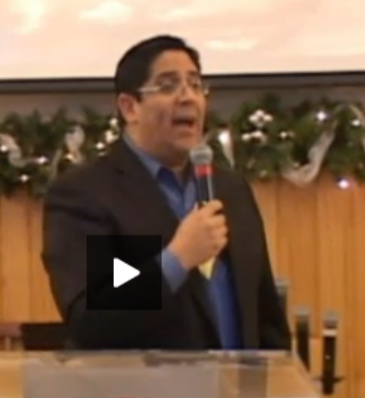
Author
Andrés Cisterna
Summary: The right attitude before God is to humble ourselves: to acknowledge our need, dependence, and weakness, and to submit our will to his sovereignty. Unlike worldly humiliation, which degrades and belittles, humility before the Lord leads to forgiveness, restoration, joy, comfort, and blessing. We do not receive his favor through merit, church attendance, offerings, or good works, but by coming before him with a contrite heart that seeks his face, prays, and turns away from sin. Abraham, Moses, Saul, and John the Baptist acknowledged their inadequacy; Jesus is the perfect example of meekness and humility. Therefore, we must cast aside pride, associate with the humble, and remember that our abilities come from God so that we may bless others. When we surrender our burdens to him, he heals the land poisoned by the works of the flesh and produces the fruit of the Spirit. A humble church depends on God, moves forward in healing and restoration, and shows the world that in him there is hope, change, and transformation.
We can be grateful for the mercy the Lord has for each one of us, and he demonstrates it in different ways. So, what do you say we close our eyes for a moment and tell the Lord what is in our hearts? Let us come before him, acknowledging that he is our sovereign Lord and that we recognize that our lives depend on him. Each of his answers, each of his signs and wonders, is designed with a purpose for each one of us, and he gives them so that his name may be glorified, so that his name may be exalted, so that the world may see that even this God whom some of us crazy people preach is real and that nothing is impossible for him. Thank you, Jesus. Thank you, Jesus. Thank you, Lord. Thank you. Amen. Amen.
I want to thank you once again for the opportunity to be here. I want to give thanks because I believe the Lord always has a fresh word for our lives. And today I have given a title to this brief reflection the Lord gave me, and it is called “The Right Attitude.”
And I want to invite you to open your Bible to the book of Second Chronicles, chapter 7, verse 14, a very well-known passage. The second book of Chronicles, chapter 7, verse 14. It reads as follows, in the name of the Father, the Son, and the Holy Spirit:
“…If my people, upon whom my name is called, humble themselves and pray and seek my face, and turn from their wicked ways, then I will hear from heaven and forgive their sins and heal their land…”
What would be the right attitude for us before the Lord? It is a good question. And this is a passage that can be interpreted and presented to the church in many ways. But I only want to focus on one of the main and most powerful words in this passage. Not only on the benefits of what it means to obey the Lord, but on the fact that the right attitude for each one of us when we come before the Lord is to humble ourselves.
And I want us to look briefly at what the Lord means by this. In a world where humiliation probably represents cruel mockery of a human being, where humiliation represents an attitude of contempt, an attitude of belittling a human being, God uses it as a means to answer, to forgive, to save, and to fill our lives with blessings.
When the world uses humiliation, it uses it to demean you, to make you feel unworthy as a human being. Has anyone here ever gone through a time of humiliation in this world? Have we ever suffered some humiliation, when people laughed at us and wanted to trample us underfoot and wanted to throw us out of a place, and wanted to belittle us and mocked each one of us, with no way to come out of it with much dignity?
But when the Lord, Almighty God, asks his people to humble themselves, it is because he wants to glorify himself among his children. And I believe that you and I today are living in an opportune time, a privileged time in which God wants to reveal himself through each one of us.
If my people humble themselves… that is the right attitude that the man and woman of God, and the people of God, must have so that their lives may be prosperous, so that their lives may be abundant, so that their lives may be filled with blessings and filled with answers from the Lord that will demonstrate that God remains the same.
In this case, the Lord is calling us to humble ourselves, to acknowledge our need for him, and to have our human nature submit to his power. Do you know what it means to humble oneself in ordinary language? It means the need to subdue a human being’s will and strip that person of dignity. In the Spanish dictionary, humbling oneself has to do with an act of belittling, of bringing someone under another’s power, sometimes involuntarily, with force and severity. And that is not far removed from the reality of what God wants to do with us.
The difference between what the world understands by humiliation and what God asks of us as a humbled people is the final outcome: God wants to bless us; the world does not want to see us blessed. God wants to bless a humbled people. If my people, upon whom my name is called, humble themselves.
How many call upon the name of the Lord in this place? How many declare that the name of the Lord is the name above every name? How many declare it? How many open their mouths to declare praise to the King of kings and Lord of lords? These are the people who need to humble themselves before the Lord every day. Do you know why? So that their prayers and their search for God may bear fruit.
We were taught that we were probably independent. Some, when they turn 18, cannot even wait until they are 18 to leave home because they are independent. They want to live alone, even though Dad has to pay the rent for their room. But they live alone; they are independent. Yet if Dad does not pay for their cell phone, they will have no way to communicate. I am independent, but if Dad does not buy me sneakers, I have nothing to wear when walking down the street. I am independent.
The world favors independence. Society and the system favor independence. The Lord’s church favors dependence on its God. We depend on him. We depend on his grace. We depend on his love. We depend on his provision. He is not merely the provider, to give one example; all provision flows from him. He is the one who makes it, he is the one who sends it, he is the one who produces it. He is not the intermediary; he is the provider. He is not merely a God of love; he is love.
When the Lord’s people begin to have this right attitude of humility, we begin to see great victories in our lives. The Bible says that everyone who calls upon the name of the Lord must humble themselves before him. There are some examples in the Bible that we can recognize. In Genesis, chapter 18, verse 27, Abraham acknowledges that he is dust and ashes. He says, “…I am dust and ashes; what am I going to do, Lord?” This has to do with the story of Sodom. God was calling him—the mighty God—and Abraham acknowledged that he was nothing before this God who was sending him.
In Exodus, chapter 3, verse 11, Moses acknowledges his inability to be the intermediary between God and Pharaoh on behalf of his people. Moses also acknowledges his inability. He acknowledges that God is more powerful. He needed—needs—to humble himself before God because he could not do what God was asking him to do.
In Exodus, chapter 4, verse 10, Moses also displays his inability and feels afraid to fulfill what God was asking. There is a sense of humbling ourselves. Each one of us must put an end to every spirit of pride, every spirit of undeserved self-exaltation, because everything is from God, for God, and in God. There is nothing else.
If you have any ability, it is because God ordained it that way for your life, in order to bless others. It is not so that you may boast, not so that you can show that you are a superior being. God is superior, and he wants a church that learns to humble itself before him, a church that acknowledges its weaknesses, a church that acknowledges its difficulties, a church that acknowledges that only he can sustain us.
The sister said, “I am going to go to church; I am going to hold on to Jesus’ hand.” Just imagine: if that happened from holding one hand, and they gave her a large contract, if she holds on with both hands, who knows what might come her way.
In First Samuel, chapter 9, verse 21, Saul also acknowledges his insignificance before God… God was proposing that Saul become king, but Saul felt insignificant. In his heart, he acknowledged that he was not capable unless God was with him.
In Mark, chapter 1, verse 7, speaking about John the Baptist, John acknowledges that he is not even worthy to untie the footwear of the one who comes after him. An attitude of humility before God is the right attitude that God’s people must have in order to enjoy God’s blessings, in order to enjoy God’s forgiveness, in order to enjoy the Lord’s miracles. There is no other way. It is not by merit; it is not because I always come to church; it is not because of the amount I give in tithes; it is not because of how much help I provide. It is because my heart is bowed before the Lord every day, and every morning I get up and acknowledge that on this day it is God who must be glorified in my life, it is God who must be praised in my life, it is God who must be honored through my actions and my words. And there the Lord goes on perfecting his work among us.
Do you know what? In James, chapter 4, verse 6, it says that God gives grace to the humble. In Second Corinthians, chapter 7, verse 6, it says that God gives comfort to the humble. In Romans, chapter 12, verse 16, he urges us—you know, it is a very interesting text—he urges us to keep company with, to associate with, the humble.
Do not seek out those who like to talk too much. Do not seek out those who say, “No, I am not gossiping; I am only giving my opinion.” Do not seek out those who find something negative in everything. Do not seek out those who use Scripture for their own convenience to do what they are doing, which is not pleasing in the Lord’s eyes. Seek to associate with people who acknowledge that they depend on God, because we are weak, because we are changeable, because we need the Lord’s loving correction every day.
A church like that is a church that moves forward in healing, that moves forward in restoration. A church that associates with the humble is a church that develops a mindset centered on an Almighty God, on a God who can do all things, on a God for whom nothing is impossible.
Is there anyone who has a need that is impossible for man to meet? We all probably have some need that is impossible for man, but with God all things are possible. So let us humble ourselves before the Lord. And it does not necessarily have to be something related to our own interests; it should also be reflected in how we live.
In Matthew, chapter 11, verse 29, Jesus is our best example of humility. If you want someone to model humility for you, do not look at the person beside you; go to the Bible and look at Jesus’ example. “See that I am gentle and humble in heart…” That is Jesus, the best example.
In Zephaniah, chapter 3, verse 12, he is willing to remove our rebelliousness and pride and transform us into a humble people who acknowledge him.
If there is anything in us that remains displeasing in the Lord’s eyes, God wants to replace it with humility. God wants to replace it with a contrite and humbled heart.
In Isaiah 57:15, “…he dwells with the humble and the broken…” In Isaiah 29:19, “…the humble grow in joy…”
This is the difference between being humbled before God and being humiliated before the world: no matter how you look at it, humbling ourselves and having a humble attitude before the Lord brings benefits, brings joy, and brings growth.
The church often forgets this attitude of humbling itself before the Lord. We often forget that God resists the proud. That is where the Lord’s answer is found.
“If my people, upon whom my name is called, humble themselves and pray and seek my face, and turn from their bad friends, then I will hear from heaven and forgive their sins and heal their land…”
And this “healing the land” means restoring your life. No matter what you have been, the Lord has the power to make it green again, as Isaiah 42 through 44 says, to make it green again, to make it blossom once more.
You know, the land the Lord rejects is the one mentioned in Galatians, chapter 5, verse 19, where the works of the flesh are evident, followed by a list of many things. That is land being poisoned by sin. The Lord wants to heal this land and produce worthy fruit. But the fruit of the Spirit, according to Galatians 5:22, is love, joy, peace, patience, kindness, goodness, faith, gentleness, and self-control. That is the land the Lord wants to give us.
You know that behind every characteristic of this fruit there is a tremendous blessing for those around us and for ourselves, for our family, for the church, and for the community. A church that humbles itself before the Lord is a church that moves forward by leaps and bounds. It is a church where there are not only conquerors, but more than conquerors.
It is a church that is not satisfied merely with achieving good results, but sets out to conquer what the devil has taken from it and to take possession of what God has promised. That is the church that is humbled before the Lord. It is a church that acknowledges his dominion; it is a church that acknowledges its dependence.
Let us therefore humble ourselves under the mighty hand of God so that he may exalt us in due time, so that his answer may begin to flow through us, so that others may come to know the Lord.
You know, the great challenge facing the church today is to present itself as the one unique alternative in a world where there are hundreds and thousands of alternatives. The great challenge facing the church today is to show the world that in acknowledging Almighty God, there is hope, there is change, there is transformation, there is power that comes from the Lord to flow through his church.
Are we a people who humble ourselves every day? Are we a people who acknowledge the Lord above all our interests? Are we a people who are constantly seeking God’s confirmation for our lives every day? I want to invite you to close your eyes for a moment and reflect on what our lives need to develop before the throne of the Lord.
The Bible says, “Cast your burden upon me, and I will carry it for you; cast your burden upon me.” You know, the most beautiful thing about this biblical expression is that the Lord says, “My yoke is easy, and my burden is light.” He is telling you, “You can still carry me; you can carry my faith; you can carry me with you, and I will not be a hindrance to you. I will not cause you depression, I will not cause you illness, I will not cause you financial problems, because my yoke is easy, and my burden is light.” But your burdens, your problems, your difficulties are taking you down a path that grows heavier every day. Why don’t you surrender, bow your heart before the Lord, and let him begin to heal your land? Why don’t you let him begin to make a way where there is no way?
Close your eyes; let us pray. Thank you, Lord Jesus. Thank you, Lord, because this is the attitude that each one of us must face and choose every day. Lord, may we humble ourselves before you and come before you with a contrite and humbled heart; Lord, the psalmist says that you will not reject it. Lord, teach us to be a church that is a church that humbles itself and acknowledges you, that does not wait until it experiences bad moments, and that does not wait until it experiences difficult times to acknowledge that you are the Lord.
Lord, may these people who call upon your name, these people who pray, these people who seek you—may these people, Lord, truly turn to you, and may their hearts, Lord, their way of living, their way of speaking, and whatever we may think and feel always be humbled before you, Lord.
Teach us, God, that humbling ourselves before you brings blessing, brings well-being, brings healing, and brings peace to our lives. Thank you, Jesus. Thank you, Holy Spirit. Thank you because you are good. Amen. Amen. May the Lord bless you.